


Erhalten Sie Zugang zu diesem und mehr als 300000 Büchern ab EUR 5,99 monatlich.
- Herausgeber: Musaicum Books
- Kategorie: Poesie und Drama
- Sprache: Englisch
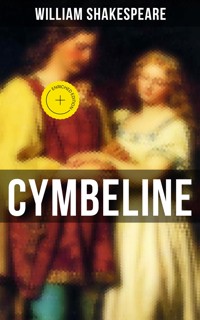
In William Shakespeare's epic play 'Cymbeline', the reader is taken on a journey through themes of love, betrayal, and redemption set in the backdrop of ancient Britain. Throughout this tragicomedy, Shakespeare merges elements of romance and intrigue with the complex relationships between characters to create a tapestry of emotions and moral dilemmas. The play is known for its intricate plot twists and the lyrical poetry that is characteristic of Shakespeare's works, making it a captivating read for those interested in Elizabethan drama. William Shakespeare, often regarded as the greatest playwright in the English language, drew inspiration from various sources to create his diverse body of work. 'Cymbeline' showcases Shakespeare's ability to blend genres and challenge traditional notions of storytelling, solidifying his reputation as a master of the craft. It is believed that Shakespeare wrote 'Cymbeline' towards the end of his career, bringing together his years of experience and creativity. I highly recommend 'Cymbeline' to readers who appreciate Shakespeare's unparalleled skill in crafting compelling narratives and exploring the depths of human emotion. This play offers a unique blend of tragedy and comedy that will leave a lasting impact on anyone who delves into its pages. In this enriched edition, we have carefully created added value for your reading experience: - A succinct Introduction situates the work's timeless appeal and themes. - The Synopsis outlines the central plot, highlighting key developments without spoiling critical twists. - A detailed Historical Context immerses you in the era's events and influences that shaped the writing. - An Author Biography reveals milestones in the author's life, illuminating the personal insights behind the text. - A thorough Analysis dissects symbols, motifs, and character arcs to unearth underlying meanings. - Reflection questions prompt you to engage personally with the work's messages, connecting them to modern life. - Hand‐picked Memorable Quotes shine a spotlight on moments of literary brilliance. - Interactive footnotes clarify unusual references, historical allusions, and archaic phrases for an effortless, more informed read.
Sie lesen das E-Book in den Legimi-Apps auf:
Seitenzahl: 864
Veröffentlichungsjahr: 2017
Das E-Book (TTS) können Sie hören im Abo „Legimi Premium” in Legimi-Apps auf:
Ähnliche

















CYMBELINE
Table of Contents
Introduction
A kingdom poised between Rome’s demand and a daughter’s defiance becomes a labyrinth where trust falters and identity is put to proof.
Cymbeline belongs to Shakespeare’s late phase, where the contours of tragedy and comedy soften into romance and marvel. The play threads peril and wonder, testing fidelity, statecraft, and the shaping power of narrative itself. Audiences enter a world at once antique and psychologically modern: rumors travel faster than armies, and private vows jostle with public oaths. In this charged atmosphere, Shakespeare explores how appearances mislead and how steadfast hearts are asked to endure. The result is a drama whose tonal range—by turns courtly, pastoral, and martial—expands the boundaries of what a stage story can hold.
Written by William Shakespeare and generally dated to around 1609–1610, Cymbeline was first published in the 1623 First Folio. Set in ancient Britain during the reign of King Cymbeline, with Rome asserting imperial claims, the play begins as the king’s daughter, Imogen, secretly marries Posthumus Leonatus, a match the monarch forbids. Posthumus is banished, and the fragile order of the court frays as intrigue gathers. Meanwhile, pressure from Rome intensifies, forcing Britain to choose between tribute and resistance. Without disclosing outcomes, it is enough to know that personal oaths and political demands soon collide, drawing distant places and hidden motives into alignment.
Shakespeare fuses disparate sources with inventive freedom. The British chronicle strand derives from legendary history preserved by Geoffrey of Monmouth and retold by Raphael Holinshed, while the story of a husband’s wager on his wife’s chastity comes from an Italian novella tradition, notably a tale in Boccaccio’s Decameron. From these materials, the playwright forges a structure that is both intricate and surprisingly nimble, moving among courts, caves, and battlefields. The interplay of native legend and continental tale-making lets the work weigh competing claims—honor and cunning, lineage and merit—within a plot that tests the reliability of both testimony and sight.
Formally, Cymbeline exemplifies Shakespeare’s late-style daring. It blends high rhetoric and intimate confession, often letting lyrical passages open windows onto private feeling amid public tumult. Scenes shift with cinematic agility—from royal chamber to rough-hewn wilderness to Roman embassy—displaying theatrical resourcefulness and a poet’s ear for contrast. Songs and ceremonial moments punctuate the action, not as digressions but as counterpoints that enlarge meaning. The language is supple: swift for intrigue, expansive for reflection, tart for satire. This stylistic breadth supports a design in which misreading and revelation travel together, gradually teaching characters—and audiences—how to discriminate surface from substance.
At the thematic center lies a contest between reputation and truth. Rumor corrodes trust; forged proofs masquerade as certainty; and tokens, letters, and tales are handled like evidence in a trial where the jurors are fallible. Shakespeare probes how quickly suspicion can occupy the mind and how arduously clarity is won. The play’s fascination with disguise, concealment, and misprision is not merely theatrical; it is moral and epistemological, staging the hazards of hasty judgment. Yet the same world that permits deception also permits recognition, as patience, courage, and constancy offer remedies for the errors of pride and fear.
Cymbeline also develops a political dimension that complicates its intimate story. Rome’s demand for tribute confronts questions of sovereignty, law, and pragmatism, while Britain’s response tests leadership under pressure. The court itself is a microcosm of governance: counsel can be wise or corrupt, and succession plans, if mishandled, invite peril. By setting personal promises against imperial claims, the play considers what it means to belong—to a family, a nation, an imagined community—and how allegiance may be honored without surrendering conscience. Politics here is neither abstract nor merely topical; it is lived through choices that bind or liberate.
The characters are drawn with vivid variety. Imogen emerges as one of Shakespeare’s most resilient heroines, poised, eloquent, and steadfast under trial. Posthumus, noble yet impetuous, must learn to separate honor from rashness. Iachimo, a cunning traveler, turns wit toward predation, testing the limits of persuasion and proof. Cymbeline presides over a court unsettled by a scheming queen and her boorish son, Cloten; the memory of abducted royal heirs shadows the throne. Each figure carries a distinct moral weather, and their crossings generate sparks that illuminate the play’s abiding questions about loyalty, credulity, and the cost of error.
Cymbeline has long been counted a classic because it enlarges the dramatic possibilities of reconciliation without denying the pressure of suffering. Its architecture demonstrates Shakespeare’s mastery of suspense and release, arranging parallel plots that mirror and complicate one another. Critics across centuries have engaged its daring—registering the improbable as a deliberate artistic choice that delivers deeper fidelity to emotional truth. Eighteenth- and nineteenth-century commentators, including Samuel Johnson, William Hazlitt, and S. T. Coleridge, weighed its beauty and boldness, while modern scholars continue to trace its intricate designs of narrative echo, symbolic doubling, and thematic return.
The play’s influence flows through theater history and beyond. It helped secure the appeal of tragicomedy for later dramatists, showing how severe trials could coexist with restorative outcomes. Across languages and stages, adapters have rebalanced its elements—politics, romance, satire—according to their moment. Directors have found in it a laboratory for movement, music, and atmosphere, using its swift geography to explore spectacle and intimacy in the same evening. That the work sustains wildly different readings—patriotic allegory, feminist resilience, psychological thriller—attests to its capaciousness and to Shakespeare’s instinct for creating scripts that invite reinvention.
As part of the quartet often labeled the late romances—alongside Pericles, The Winter’s Tale, and The Tempest—Cymbeline participates in a larger meditation on loss, endurance, and renewal. Without revealing its destinations, one can say the play trusts in the possibility of restoration hard-won rather than cheaply granted. Trials purify; testing clarifies; and compassion, where it appears, is a principled strength. The work’s intricate knots are not puzzles for their own sake but instruments for sounding how human beings find their way back to one another after error, pressure, and peril have done their worst.
For contemporary readers and viewers, Cymbeline remains timely. It dramatizes the perils of misinformation, the ethics of witnessing, and the ongoing tension between personal autonomy and public obligation. Its Britain, oscillating between isolation and entanglement, feels recognizable in an age of contested borders and competing narratives. Yet the play’s lasting appeal lies in its confidence that courage, humility, and imaginative sympathy can outlast manipulation and fear. In language that still quickens the ear, Shakespeare offers not an escape from difficulty but a way of regarding it—clear-eyed, capacious, and finally, life-affirming.
Synopsis
Cymbeline, a late Shakespearean romance likely written around 1609–1610 and first printed in the 1623 First Folio, unfolds in ancient Britain during a tense standoff with Rome over unpaid tribute. The play blends court intrigue, romantic fidelity, and national politics, moving between palace chambers, foreign cities, and the Welsh mountains. At its center is King Cymbeline’s daughter, Imogen, whose integrity anchors a narrative crowded with disguises and misdirection. Surrounding her are exiles, plotters, and soldiers whose shifting loyalties fuel the action. The drama opens as personal choices collide with royal authority, setting in motion a chain of banishments, vows, and retaliations.
Imogen has secretly married Posthumus Leonatus, a worthy but low-born gentleman raised at court. The revelation enrages Cymbeline, influenced by his politically ambitious Queen, who wants Imogen to wed her boorish son, Cloten. Posthumus is banished to Rome, leaving behind his wife and his loyal servant Pisanio. At court, the Queen advances schemes that imperil Imogen’s safety while presenting a veneer of concern. The marital rift from the banishment crystallizes key tensions: questions of lineage versus merit, parental authority versus personal choice, and the precarious status of virtue when surrounded by envy and manipulation.
In Rome, Posthumus encounters Iachimo, a suave skeptic who mocks the idea of inviolable chastity. Iachimo persuades Posthumus to a reckless wager about Imogen’s fidelity, then sails to Britain to test—and to sabotage—it. Finding Imogen hospitable but steadfast, he resorts to stealth and suggestion, collecting tokens and observations that can be twisted into proof. Returning to Rome, he narrates his triumph. Posthumus, shocked by what appears to be evidence, accepts the lie as certainty. The wager metastasizes into a melodrama of jealousy, showing how manufactured appearances can overpower trust even in seemingly unshakeable bonds.
Consumed by jealousy and shame, Posthumus sends a command to Pisanio that places Imogen in mortal danger. Pisanio, however, is torn between obedience and conscience. He warns Imogen and crafts a plan that will protect her while preserving options for eventual reconciliation. Imogen adopts a masculine disguise and sets out for Milford Haven, where she hopes to reconnect with her husband amid rumors of Roman movements. Before she departs, a mysterious potion taken from the Queen’s cabinet enters the story. Ostensibly medicinal, it introduces an unpredictable element with the power to suspend or distort the appearance of death.
Imogen’s flight carries her to the Welsh mountains, where she stumbles upon a secluded household living far from courtly life. They welcome the disguised traveler, who calls herself Fidele, and a fragile sense of refuge develops. Meanwhile, Cloten pursues Imogen with violent intentions, taking on a borrowed identity that deepens the play’s maze of mistaken appearances. His intrusion into the wilderness sparks confrontation and consequence, tightening the web of misunderstandings. The juxtaposition of remote simplicity and courtly corruption underscores a recurring question: where does honor thrive—within institutions and lineage, or in the unadorned virtues of exile and obscurity?
The potion’s effects intervene, leaving Imogen in a deathlike state that leads to harrowing misrecognitions. Awakening alone, she finds tangible signs that convince her of Posthumus’s violent end. Lost in grief yet resolved to live, she enters the service of Lucius, a Roman general preparing for war with Britain, still disguised as Fidele. This alliance reframes her predicament: personal betrayal becomes entangled with international conflict. As Lucius advances, Imogen’s loyalty is tested on multiple fronts, and her concealed identity positions her to observe both compassion and ambition at close range, gathering knowledge essential for later reckonings.
Back in Britain, Cymbeline rejects Rome’s demands, and both armies converge near Milford Haven. Posthumus returns in humble attire, seeking a form of expiation through service and risk. The reclusive mountaineers are drawn into the fighting, their courage contrasting with the posturing of courtiers. In the din of battle, private motives—love, revenge, restitution—interlace with public causes, and unlikely valor changes the tide. Posthumus experiences a dreamlike vision that gestures toward a providential design greater than individual schemes. The war sequence propels characters out of disguise or into deeper concealment, pressing everyone toward a decisive public accounting.
In the aftermath, prisoners are taken and petitions heard at Cymbeline’s court. The final act becomes a careful unspooling of evidence: letters are produced, falsehoods confronted, and obscure histories retold. Iachimo faces questions about his role in the wager; Pisanio explains his divided duty; the wanderers from the mountains are brought into the royal circle. Identities long hidden or misread begin to align with their true names and deeds. Without detailing the outcomes, this extended scene orchestrates confessions, recognitions, and pardons, showing how truth, once given a forum, can reorder a realm disfigured by rumor and disguise.
Cymbeline closes by balancing personal restoration with political resolution, steering its storms of jealousy and ambition toward a vision of mercy. The play’s enduring interest lies in how it tests trust against the pressures of status, distance, and contrived evidence, and in its belief that identity can be both masked and recovered. As a late romance printed in the First Folio, it fuses tragic peril with comic release and pastoral retreat with imperial negotiation. Without depending on a single revelation, the drama’s broader message celebrates constancy, forgiveness, and a hard‑won concord that stands as Shakespeare’s answer to chaos.
Historical Context
Cymbeline is set in a mythic version of ancient Britain under a native king in tense relation with imperial Rome. The imagined time loosely aligns with the early Roman Empire, when Britain’s rulers negotiated tribute, alliance, or resistance. Dominant institutions shaping the story are monarchy, dynastic marriage, and the far‑reaching legal and military authority of Rome. Patriarchal power governs inheritance and female conduct, while kinship and fealty determine political order. Geography matters: the British court, the frontier, the sea routes to Italy, and a western harbor become decisive spaces. Though ancient in costume, these institutions echo concerns familiar to Shakespeare’s Jacobean audience.
Shakespeare’s Cymbeline draws on the legendary British king derived from Geoffrey of Monmouth and repeated in Raphael Holinshed’s Chronicles (1587). The name resembles Cunobeline (Cymbeline), a historical ruler of the Catuvellauni in the early first century CE, known from inscribed coins and Roman writers. Shakespeare, however, follows the chronicle tradition rather than strict history, situating a British monarch who contends with Rome over tribute and sovereignty. By blending legend with antiquity, the play invokes a prestigious pre‑Saxon past that early modern English audiences associated with native kingship, continuity, and the long memory of British identity.
The play references earlier Roman demands on Britain and the prospect of invasion, themes that recall well‑known Roman incursions. Julius Caesar made expeditions to Britain in 55–54 BCE, establishing diplomatic ties but not conquest. Permanent occupation came later, beginning in 43 CE under Emperor Claudius, with extended military campaigns and client‑king arrangements. Shakespeare compresses and adapts this timeline, framing Britain as a tributary that debates submission and resistance. The resulting conflict mirrors the diplomatic calculus of ancient client kings: whether to buy peace with payments, claim independence at arms, or negotiate a third way that preserves honor and stability.
Trade and cultural contact between Britain and the continent, historically intensified under Rome, are refracted through the play’s fascination with luxury objects and intimate tokens. Archaeology and ancient sources attest to the circulation of jewelry, glassware, and textiles linking Britain, Gaul, and Italy. Shakespeare exploits this worldliness by making rings, bracelets, and garments carriers of trust, status, and proof. Such objects function as social technology: portable wealth, signs of contract, and emblems of fidelity. Their theatrical visibility echoes early modern London’s awareness of imported finery and the symbolic economies that governed exchange and reputation.
The drama’s turn toward Wales and the haven at Milford anchors the action in a landscape charged with recent political meaning. Milford Haven on the Pembrokeshire coast was famous in Tudor memory as the 1485 landing site of Henry Tudor before his victory at Bosworth. By Shakespeare’s time, that harbor evoked successful dynastic change and the idea of a united realm. Using this coastal gateway, the play connects Britain’s western marches with national renewal. For audiences familiar with Tudor history and Welsh contributions to English state formation, the Welsh setting inflects exile, concealment, and return with a rhetoric of restoration and legitimacy.
Italy in the play represents cosmopolitan commerce, refined manners, and dangerous sophistication—conventions long established on the English stage. Sixteenth‑century English merchants, diplomats, and travelers frequented Italian states for trade, law, and arts; Italianate fashions and tales circulated widely in print. Dramatic stereotypes associated Italians with wit, intrigue, and sensual allure, reflecting both admiration and anxiety. Shakespeare uses this dramatic shorthand to place characters in international networks of credit, rumor, and wager. Italy becomes the testing ground where reputation crosses borders, and where English and British virtues face both temptation and misrepresentation in a competitive, urbane milieu.
A central plot thread descends from a well‑known Italian novella tradition. Shakespeare adapts the wager on a wife’s chastity from Decameron II.9, the tale of Bernabò and Ambrogiolo, available in English via William Painter’s Palace of Pleasure (first published 1566). The novella’s motifs—boast, bet, deceitful bedroom proof—had wide European currency. By transplanting this material into ancient Britain and Roman relations, Shakespeare fuses continental storytelling with insular legend. The hybridization lets him test private honor against public allegiance, showing how intimate slander can trigger diplomatic and military consequences in polities where lineage and marriage underwrite political order.
The play’s British history derives from medieval and early modern chronicles that furnished a patriotic longue durée. Geoffrey of Monmouth’s twelfth‑century Historia Regum Britanniae supplied a legendary roster of kings, later mined by Holinshed. In Tudor and early Stuart culture these narratives supported arguments about sovereignty, succession, and national antiquity. Shakespeare’s choice of Cymbeline thus aligns with a fashion for turning Britain’s fabled past into political theater. The legendary frame permits extravagant reversals while inviting audiences to contemplate continuity—how a storied Britain could both resist and accommodate larger empires without losing its distinct identity.
Political debates in Shakespeare’s own time sharpened the play’s relevance. After 1603, James VI and I sought closer union of England and Scotland and adopted the style King of Great Britain in 1604. Parliamentary debates about the legal nature of that union ran through 1604–1607. James also made peace with Spain in the 1604 Treaty of London, emphasizing negotiation over protracted war. Cymbeline’s movement from threat to settlement, and its interest in titles, tribute, and recognition, resonated with these policies. While not a simple allegory, the drama reflects a contemporary appetite for concord achieved without erasing local liberties or royal dignity.
Religious tensions likewise formed the backdrop to Shakespeare’s audience. Following the Reformation, England established a Protestant settlement while confronting Catholic powers abroad. The Gunpowder Plot of 1605 intensified surveillance, oaths, and anxieties about treason and divided loyalty. In this environment, plays often staged conspiracies, spies, and the testing of fidelity. Cymbeline participates in this climate through its concern with false accusation, hidden identities, and the challenge of discerning truth across borders and confessions. Italian settings on the English stage frequently suggested Catholic courts and crafty diplomacy; here they sharpen questions about conscience, allegiance, and trust.
The court culture of James I prized pageantry and masque, genres developed by Ben Jonson and Inigo Jones that combined verse, dance, music, and elaborate machines. Shakespeare’s late plays increasingly incorporate masque‑like episodes and divine apparitions. Cymbeline includes a theophany whose descent and music recall court spectacle, blending popular theater with elite taste. Such moments project a higher, harmonizing order that can reconcile fractured households and warring states. For Jacobean spectators accustomed to allegorical masques celebrating dynastic peace, these intrusions of wonder suggested that mercy and magnificence could stabilize politics where force and crafty counsel had failed.
Institutionally, Cymbeline belongs to the repertory of the King’s Men, Shakespeare’s company under royal patronage from 1603. After plague closures, they began performing at the indoor Blackfriars playhouse around 1608–1609, complementing the open‑air Globe. Indoor theaters permitted candlelit effects, music, and refined soundscapes suited to romance. Cymbeline was likely composed around 1609–1610 and first published in the 1623 First Folio. Its blend of musical interludes, intimate scenes, and sudden spectacle matches the technical capacities and audience expectations of both venues, while boy actors playing female roles underline the play’s interest in disguise and the performance of identity.
Genre fashions also guide its design. Cymbeline is one of Shakespeare’s late romances or tragicomedies, works that move through peril, apparent loss, and near‑catastrophe toward recognition and reconciliation. This mode, shaped by Italianate narrative and classical theories revived in the Renaissance, appealed to early seventeenth‑century audiences emerging from years of war scares, plague disruptions, and faction. Romance allowed exploration of providence without requiring classical tragedy’s irreversible doom. The play’s wide geography, ship travel, pastoral refuge, and surprise reunions all belong to a pan‑European repertoire that promised emotional repair while acknowledging the world’s hazards.
Underneath the story lie contemporary debates about sovereignty and the law of nations. Early modern thinkers such as Jean Bodin analyzed indivisible sovereign authority, while jurists and diplomats weighed tribute, league, and immunity. England’s lawyers and parliamentarians argued over prerogative and the common law. Cymbeline dramatizes these pressures by staging tribute as both economic payment and recognition of hierarchy, a matter at once legal, symbolic, and practical. The drama considers whether peace requires subordination, whether independence must reject all bonds, and how mutual recognition might allow coexistence among unequal powers without dishonor.
Economic and technological developments from Shakespeare’s London inform the play’s texture. Expanding overseas companies, including the Levant Company (chartered 1592) and East India Company (1600), widened horizons and familiarized audiences with long‑distance trade, credit instruments, and travel risks. Inns, carrier networks, and improving postal relays facilitated communication, while jewelry and garments functioned as portable capital and status markers. The play’s reliance on letters, tokens, and credible witnesses reflects this everyday infrastructure. Italian mercantile cities, famed for banking and craftsmanship, provided a realistic matrix for plots built from wagers, debts, and reputations that could cross national borders.
The social regulation of marriage, inheritance, and female honor equally shapes the narrative. Early modern conduct literature and legal custom emphasized paternal authority in matches, the centrality of dowry and jointure, and the fragility of women’s reputations in a culture policed by rumor. Disguise and cross‑dressing onstage, a conventional theatrical device, allow heroines to navigate dangers by suspending gendered expectations. Cymbeline draws on these norms to test chastity and obedience against autonomy and prudence. By exposing how quickly slander corrodes family and state, the play interrogates the criteria by which male honor is judged and female virtue is proved.
In sum, Cymbeline turns a legendary British past into a mirror for Jacobean concerns. It juxtaposes Rome’s imperial law with native kingship, blends an Italian novella’s intimate trial with national crisis, and borrows courtly spectacle to imagine concord after division. The result neither simply glorifies submission nor celebrates isolation. Instead, it explores negotiated peace, the recovery of trust, and the formation of a British identity capacious enough to acknowledge entanglement with wider powers. Through this ancient mask, Shakespeare’s audience could examine their own era’s debates over union, sovereignty, fidelity, and the cost—and value—of reconciliation.
Author Biography
Introduction
William Shakespeare (1564–1616) was an English playwright, poet, and actor from Stratford-upon-Avon whose works reshaped early modern drama and remain foundational to world literature. Active in London from the early 1590s, he became a leading member and shareholder of the Lord Chamberlain’s Men, later the King’s Men. His comedies, histories, tragedies, and late romances—among them Hamlet, Othello, King Lear, Macbeth, A Midsummer Night’s Dream, The Merchant of Venice, Twelfth Night, and The Tempest—exhibit exceptional range in language, character, and theatrical invention. He also produced long narrative poems and a sonnet sequence, expanding his reputation beyond the stage.
Shakespeare’s works were performed in public playhouses and at court, reaching diverse audiences in a period of rapid theatrical growth. After his death, colleagues John Heminges and Henry Condell prepared the First Folio (1623), which preserved 36 plays and secured much of the canon known today. His writing has influenced authors, actors, and audiences across centuries, with phrases and dramatic structures entering common usage. Continual performance, adaptation, and scholarship attest to the durability of his artistry and to the historical significance of his company’s repertory practices in Elizabethan and Jacobean England.
Education and Literary Influences
Shakespeare was baptized on 26 April 1564 in Holy Trinity Church, Stratford-upon-Avon, the son of John Shakespeare, a glover and town official, and Mary Arden. No documents record his schooling, and none of his letters survive. Based on his family’s civic standing, scholars consider it plausible that he had access to the local grammar school, where Latin authors and rhetoric were central, though this cannot be verified. The breadth of classical reference in his works suggests sustained engagement with such materials. In 1582 he married Anne Hathaway; their children Susanna (baptized 1583) and twins Hamnet and Judith (baptized 1585) were baptized in Stratford.
Shakespeare’s writing draws on a wide array of identifiable sources. He adapted narratives and history from Holinshed’s Chronicles and from Plutarch’s Lives in Sir Thomas North’s English translation. Ovid’s Metamorphoses (in Arthur Golding’s translation), Senecan tragedy, and Roman comedy by Plautus provided dramatic and poetic models. Italian novelle, including stories retold by Bandello and others, entered via English intermediaries such as Arthur Brooke’s poem on Romeus and Juliet. Biblical phrasing, the rhetoric of law, and civic discourse appear throughout. Critics have also noted clear correspondences with John Florio’s translation of Montaigne’s essays, reflecting the period’s broader intellectual currents.
Literary Career
By the early 1590s, Shakespeare was working in London’s theater world as actor and playwright. A 1592 pamphlet by Robert Greene mentions him, indicating his emerging prominence. During plague-related theater closures in 1592–1594, he published the narrative poems Venus and Adonis (1593) and The Rape of Lucrece (1594). He later oversaw publication of a sonnet sequence (1609). From 1594 he was a shareholder in the Lord Chamberlain’s Men, a position that tied his fortunes to the company’s repertory and finances and placed his plays at the center of London’s commercial and courtly stages.
In the later 1590s he produced comedies and histories that consolidated his reputation. Comedies such as A Midsummer Night’s Dream, The Merchant of Venice, Much Ado About Nothing, As You Like It, and Twelfth Night displayed structural ingenuity and verbal play. Histories like Richard II, the two parts of Henry IV, Henry V, Richard III, and King John explored politics, legitimacy, and the pressures of rule. In 1599 the company opened the Globe Theatre on the Bankside, where many of his plays were first staged and refined through performance before large, mixed audiences.
Around 1600–1606 Shakespeare wrote several tragedies that became landmarks of the Western canon, including Hamlet, Othello, King Lear, and Macbeth, as well as Roman plays such as Julius Caesar. These works broadened theatrical scope through complex characterization, soliloquy, and rhetorical intensity, while employing flexible blank verse and incisive prose. They were performed by leading actors of the company and at court. By 1608 the company also used the indoor Blackfriars Theatre, enabling productions suited to smaller, elite audiences and to effects—music, lighting, and intricate staging—less feasible at outdoor playhouses.
In the early 17th century Shakespeare turned to plays often termed late romances or tragicomedies, including Cymbeline, The Winter’s Tale, and The Tempest. These works combine peril and restoration, testing the possibilities of forgiveness and theatrical wonder. Collaboration, common in the period, appears in some late plays; evidence indicates he worked with John Fletcher on Henry VIII, among others. Across genres, his dramaturgy blends heightened poetry with resourceful stagecraft, integrating masque-like spectacle, songs, and narrative experiment while remaining responsive to company strengths and performance venues.
Shakespeare was also a practical man of the theater. He held shares in the Globe and, later, in the Blackfriars, linking his income to performances and fostering stability for the King’s Men after 1603. He acquired property in Stratford, including New Place (purchased in 1597), and managed family and business affairs alongside writing and acting. His plays circulated in quartos of varying authority during his lifetime. The posthumous First Folio of 1623, prepared by fellow actors John Heminges and Henry Condell, preserved many texts not previously printed and helped define his canon for future readers, editors, and performers.
Beliefs and Advocacy
Direct evidence of Shakespeare’s personal beliefs is limited. He left no treatise of opinions, and surviving records chiefly document professional, legal, and property matters. His poems were formally dedicated to Henry Wriothesley, Earl of Southampton, a public gesture of patronage. Working within a licensed company and subject to the Master of the Revels, he wrote plays that engaged pressing issues—law and mercy, monarchal authority, civic order, religious tension—without overt public advocacy. Rather than declare positions, his drama stages competing viewpoints and tests them in action. The persistence of this balanced inquiry helped his works speak across changing political and cultural climates.
Final Years & Legacy
In his later years Shakespeare appears to have spent increasing time in Stratford while maintaining ties to the King’s Men. In 1613 the Globe burned during a performance of Henry VIII; the company rebuilt it the following year. His final period included the late romances and collaborative work. He made his will in early 1616, arranging property for family and leaving small bequests to theatrical colleagues. Shakespeare died in April 1616 and was buried in Holy Trinity Church, Stratford-upon-Avon. A monument in the church and a ledger stone mark his resting place, reflecting community recognition soon after his death.
Shakespeare’s legacy was consolidated by the First Folio (1623), which preserved many plays that might otherwise have been lost. Subsequent centuries of editing, performance, and criticism established his works as a touchstone for dramatic art and poetic expression. His characters, stories, and phrases circulate globally through stage revivals, translations, adaptations, and new media. The plays invite reinterpretation while sustaining their structural and linguistic vitality. Institutions of learning and theater continue to engage his works as models of dramatic construction and language. The ongoing vitality of performance underlines a legacy built on the interplay of text, actor, and audience.




