


0,99 €
Niedrigster Preis in 30 Tagen: 0,00 €
Niedrigster Preis in 30 Tagen: 0,00 €
Mehr erfahren.
- Herausgeber: DigiCat
- Kategorie: Gesellschafts- und Liebesromane
- Sprache: Englisch
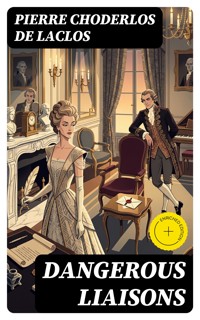
In "Dangerous Liaisons," Pierre Choderlos de Laclos presents a masterful epistolary novel that delves into the intricate web of seduction, manipulation, and moral ambiguity among the French aristocracy of the late 18th century. The narrative unfolds through a series of letters exchanged by the cunning Marquise de Merteuil and the dissolute Vicomte de Valmont, whose games of love and treachery expose the darker sides of human nature and the societal constraints of their time. Laclos employs a sharp, revealing prose style that encapsulates the elegance and hypocrisy of aristocratic life, simultaneously offering a critique of the libertine values that pervade their interactions. The book stands as a powerful commentary on gender politics, virtue, and the consequences of deceit, resonating well beyond its historical context. Pierre Choderlos de Laclos, a French army officer and intellectual, penned this provocative novel in 1782, drawing inspiration from his own observations of the elite society around him. Trained in the art of rhetoric and experienced in the intricacies of social maneuvering, Laclos infused his characters with a psychological depth that reflects both personal and societal conflicts. His work emerged during a period of Enlightenment thought, where questions of morality, freedom, and human behavior were increasingly under scrutiny, setting the stage for modern realism. "Dangerous Liaisons" is a timeless masterpiece that continues to be relevant in its exploration of power dynamics and human relationships. It is a compelling read for those intrigued by psychological complexity and the moral dilemmas that arise from desire and manipulation. Scholars, students, and casual readers alike will find within its pages not only a thrilling narrative but also a rich source for understanding the complexities of human behavior and societal structures. In this enriched edition, we have carefully created added value for your reading experience: - A succinct Introduction situates the work's timeless appeal and themes. - The Synopsis outlines the central plot, highlighting key developments without spoiling critical twists. - A detailed Historical Context immerses you in the era's events and influences that shaped the writing. - An Author Biography reveals milestones in the author's life, illuminating the personal insights behind the text. - A thorough Analysis dissects symbols, motifs, and character arcs to unearth underlying meanings. - Reflection questions prompt you to engage personally with the work's messages, connecting them to modern life. - Hand‐picked Memorable Quotes shine a spotlight on moments of literary brilliance. - Interactive footnotes clarify unusual references, historical allusions, and archaic phrases for an effortless, more informed read.
Das E-Book können Sie in Legimi-Apps oder einer beliebigen App lesen, die das folgende Format unterstützen:
Veröffentlichungsjahr: 2022
Ähnliche















Dangerous Liaisons
Table of Contents
Introduction
In a gilded world where reputation is a currency and desire a blade, letters become the duelists’ rapiers and the battlefield is the human heart.
Dangerous Liaisons, the epistolary novel by Pierre Choderlos de Laclos, first appeared in 1782 and is set amid the salons of late Ancien Régime France. Its central correspondence revolves around the Marquise de Merteuil and the Vicomte de Valmont, two aristocrats who turn seduction into strategy and curiosity into conquest. They write, plot, and maneuver, testing the limits of virtue and the resilience of reputation among their acquaintances. Without anticipating outcomes, the premise is clear: language itself becomes an instrument of power, and the most polished courtesies conceal designs as sharp as any weapon. The reader is invited to decipher motives hidden between lines.
Dangerous Liaisons holds classic status because it fuses narrative innovation with moral inquiry in a way that has remained compelling for centuries. The novel exploits the possibilities of letter writing to create a choral, shifting perspective where truth is negotiated rather than declared. Its psychological acuity, cool irony, and pitiless clarity make it both a precise social document and a timeless study of manipulation. By refusing easy moral verdicts while never glamorizing cruelty, it forces readers to examine complicity—how charm, wit, and elegance can naturalize harm. This demanding balance has secured its place in the canon of European literature.
Pierre Choderlos de Laclos (1741–1803) was a French artillery officer and man of letters who wrote at the intersection of Enlightenment debate and aristocratic leisure. Composed in the late 1770s and early 1780s and published in 1782, his novel arrives on the eve of the French Revolution, capturing the manners, amusements, and anxieties of a society confident in its polish yet fragile in its foundations. Laclos adapts the epistolary tradition made famous by Samuel Richardson and Jean‑Jacques Rousseau, but injects into it a mordant lucidity about pleasure, power, and self‑presentation. The result is both of its moment and startlingly modern.
The epistolary form is not a mere device here; it is the plot’s bloodstream. Each letter carries the pulse of calculation, misunderstanding, or sudden feeling, and different hands reveal distinct rhythms of thought. Readers become active arbiters, weighing contradictory accounts, noticing omissions, and sensing the pressure of what is never written. The polyphony yields dramatic irony of uncommon exactness: promises answered by delays, boasts undercut by events relayed secondhand, sentiments echoed or distorted in transit. Because nothing is narrated from an impartial perch, the novel demonstrates how stories are manufactured, framed, and sold—how narrative itself becomes an instrument of influence.
Laclos’s characters dramatize the politics of gender and class without didactic scaffolding. The salons are arenas where women’s wit must compensate for structural constraints, and men’s privilege often arrives pre‑armored. The Marquise de Merteuil, operating within and against the strictures of her rank, treats reputation as both shield and sword; the Vicomte de Valmont cultivates gallantry as a theater of conquest. Around them circulate younger and more credulous figures whose ideals make them vulnerable to design. In this interplay, the novel maps how desire intersects with calculation, and how the social scripts of civility can mask coercion, negotiation, and resistance.
Part of the book’s enduring power lies in its style: balanced, exact, and keenly attuned to rhetorical posture. Laclos crafts voices that glitter with courtesy while edging toward cruelty, turning compliments into traps and confessions into leverage. The letters are feats of performance, calibrated for particular audiences and purposes, which means the reader must attend to cadence as much as content. Irony arrives through juxtaposition, understatement, and the friction between professed motive and practiced act. The elegance is never ornamental; it does the ethical work, showing how fluency can anesthetize judgment and how grace of expression can enable calculated harm.
From its first appearance, Dangerous Liaisons provoked fascination and disquiet. Many contemporaries recognized in it a disenchanted mirror of high society and debated whether the portrait was corrosive or corrective. Some attacked its frank depiction of libertine tactics; others admired the technical mastery with which those tactics were anatomized. Over time, the novel survived shifting fashions precisely because it stayed legible as both a scandalous entertainment and a rigorous study of motive. Critics and readers have returned to it for its unsentimental intelligence, its structural finesse, and its refusal to reduce complex behavior to simple moral slogans or consoling outcomes.
The book’s influence extends well beyond print. It has inspired notable stage and screen adaptations, including Christopher Hampton’s play Les Liaisons Dangereuses and Stephen Frears’s 1988 film based on that play, as well as Miloš Forman’s Valmont. Heiner Müller’s Quartet reimagined the combat of its central pair in a stark theatrical duel, and Conrad Susa’s opera The Dangerous Liaisons brought the letters to the lyric stage. Modern transpositions such as the 1999 film Cruel Intentions attest to the story’s elasticity. These adaptations demonstrate how the novel’s core dynamics—performance, strategy, and the erotics of power—translate across media and eras.
Within the history of the novel, Dangerous Liaisons stands at a crossroads between the sentimental epistolary tradition and the emerging realism of social analysis. It converses with Richardson’s moral gravity and Rousseau’s explorations of feeling while inverting their assumptions about sincerity and virtue. By foregrounding manipulation as a social art, it anticipates later fiction invested in motive, self‑fashioning, and the economics of desire. Its example sharpened attention to voice, to the ethics of narration, and to how systems of privilege shape intimate relations. Writers and critics alike have mined it as a model for psychological precision and structural audacity.
Reading Laclos is an exercise in interpretation under pressure. Because every letter is both message and mask, the reader must weigh probability, detect self‑deception, and resist the seductions of eloquence. The absence of an authoritative narrator forces a kind of ethical apprenticeship: one learns to distrust charm, to track persuasion, and to ask what power wants from the scene of confession. The book’s satisfactions come not from spectacle alone but from the awakening of this vigilance. One finishes each exchange with sharpened attention to how people present themselves—and to how easily admiration can be recruited into another’s private project.
For contemporary readers, the novel’s relevance is unmistakable. In an age of curated profiles, strategic messaging, and performative intimacy, its anatomy of persuasion feels newly diagnostic. The questions it poses—about consent and coercion, about the theater of virtue, about the uses of charm in systems of advantage—continue to press. Dangerous Liaisons endures because it offers neither outrage nor absolution as shortcuts; it offers clarity about how power moves through language and desire. To encounter its pages is to confront the enduring human appetite for influence and the costs of treating other people’s lives as material for one’s own design.
Synopsis
Pierre Choderlos de Laclos’s Dangerous Liaisons, first published in 1782, is an epistolary novel set among the French aristocracy in the final decades of the Ancien Régime. Composed entirely of letters supplemented by editorial notes, it presents a mosaic of voices that reveal, conceal, and interpret the same events. The work follows the maneuvers of experienced libertines who turn seduction into a competitive art, using reputation as both weapon and shield. Through the intimacy of private correspondence, the novel examines how desire, pride, and social performance intertwine, while the apparent authenticity of the letters invites readers to weigh motive against confession.
At the center stand the Marquise de Merteuil and the Vicomte de Valmont, former lovers who remain allies and rivals. They treat seduction as a test of skill and an arena for prestige. Merteuil seeks revenge against the Comte de Gercourt, planning to compromise his future bride, Cécile de Volanges, as a calculated blow to his honor. Valmont announces a separate conquest: the Présidente de Tourvel, a devout married woman of unblemished reputation. Their early letters set terms, praise finesse, and demand proof, establishing a game in which affection is feigned, confidences are weaponized, and social credit is the ultimate prize.
Cécile, newly released from a convent and engaged to Gercourt by arrangement, enters society with little knowledge of its codes. She develops a tender attachment to the Chevalier Danceny, her music teacher, whose idealism contrasts with the calculating voices around them. Merteuil positions herself as Cécile’s advisor, encouraging secrecy and shaping the young woman’s responses to desire and duty. Madame de Volanges, Cécile’s mother, warns Tourvel against Valmont’s reputation, adding a protective vigilance that echoes through the correspondences. The web of letters thus forms a parallel society where guidance, surveillance, and temptation intermingle under the guise of mentorship.
Valmont pursues Tourvel while staying at the country estate of Madame de Rosemonde, his elderly aunt, whose affection provides him legitimate access to the household. He punctuates his courtship with acts of charity and gallantry intended to erode Tourvel’s resistance without overt scandal. Tourvel’s letters register conscientious struggle, appealing to faith, friendship, and self-control. Valmont reports progress to Merteuil with bravado, yet he calibrates tactics with painstaking care, oscillating between patience and pressure. The contrasts between piety and libertinism, sincerity and performance, animate the exchanges, while observers and intermediaries—servants, relatives, and friends—complicate the boundary between private intention and public impression.
Merteuil advances her design on Cécile by manipulating correspondence, encouraging risky confidences, and exploiting the gap between innocence and experience. Danceny, earnest yet malleable, is drawn into patterns of secrecy that place him at odds with social expectations and parental authority. Valmont supplies counsel that appears helpful but serves his and Merteuil’s purposes, entangling the lovers in a network of obligations. Letters are copied, delayed, or redirected, transforming honest feeling into instruments of leverage. The novel probes the ethics of instruction and consent, showing how language itself—pleading, admonishing, confiding—can be turned to ends the original authors barely recognize.
As the libertines compare achievements, their alliance acquires the tension of a duel conducted by pen. They frame seduction as a wager, staking reputation against difficulty and savoring the spectacle of control. Small triumphs encourage bolder ventures, and each success raises questions about sincerity, pride, and dependence. The narrative tracks the micro-mechanics of influence: how feigned indifference provokes pursuit, how calculated generosity buys gratitude, how rumor preemptively disarms criticism. Around them, prospective marriages, inheritances, and friendships shift accordingly, demonstrating the reach of private schemes into public arrangements that sustain the aristocratic order.
Tourvel’s internal conflict intensifies, as duty and sentiment pull in incompatible directions. Counsel from friends urges steadfastness, while Valmont’s presence undermines certainty through alternating sensitivity and detachment. Cécile’s position grows fragile, pressed by maternal surveillance, promised marriage, and her own inexperience. Danceny must reconcile chivalric notions of love with techniques of secrecy he has been taught to adopt. The letters register guilt, rationalization, and longing, mapping the psychological costs of double lives maintained for honor or desire. The fragile equilibrium depends on continued concealment, and the burden of concealment grows heavier as each participant seeks relief through new confidences.
Society’s echo chamber amplifies every hesitation into news. Salons, visits, and casual notes convert private gestures into public stories, and reputation becomes a moving ledger that must be constantly managed. Merteuil crafts an image of impeccable discretion, presenting herself as a guardian of virtue even as she coordinates plots; Valmont cultivates a persona of brilliance and generosity to mask design. Secondary figures register the ripple effects in postponed weddings, altered alliances, and appeals to principle. As accounts compete, alliances strain, opening the possibility that carefully arranged narratives may collide with evidence, and that mastery of appearances may prove unstable.
Without disclosing later turns, the novel’s power lies in its anatomies of manipulation, its critique of gendered double standards, and its relentless attention to the social manufacture of feeling. The epistolary form foregrounds subjectivity and misreading, inviting readers to compare versions of truth and to note how self-justification can resemble confession. Dangerous Liaisons endures as a portrait of a society fluent in performance yet vulnerable to its own games, where the language of virtue is deployed to negotiate power. Its questions about agency, responsibility, and the costs of treating others as means remain resonant beyond its historical milieu.
Historical Context
Set in late eighteenth-century France, Dangerous Liaisons unfolds within the institutions and sensibilities of the Ancien Régime. The monarchy of Louis XVI presided over a hierarchical society anchored by hereditary nobility, the Catholic Church, and royal courts and parlements. Paris functioned as the hub of elite sociability, while provincial estates sustained aristocratic wealth and influence. In this environment, social position, reputation, and patronage governed daily life. The novel’s Parisian salons, private apartments, and country houses mirror spaces where etiquette, secrecy, and maneuvering thrived. These locations, and the customs that animated them, provide a realistic frame for the book’s exploration of power, desire, and moral pretense.
The aristocracy’s elaborate codes of honor and civility shaped both public behavior and private ambition. Courtly politesse, conversational wit, and the art of refined seduction were cultivated skills, polished in salons and in the hôtels particuliers of Paris. Patronage networks secured offices, pensions, and marriages, while gossip could make or unmake reputations. The novel reflects a world in which status often shields transgression and where skillfully managed appearances can outweigh moral substance. By dramatizing the uses and abuses of courtesy and discretion, it probes the distance between the rhetoric of virtue and the strategies of self-interest that sustained elite society.
Marriage, inheritance, and guardianship laws provided the structure for many aristocratic calculations. Families arranged unions to consolidate property, titles, and alliances; dowries and settlements were meticulously negotiated. The Catholic Church regulated marriage and divorce was not legally available, though separations of bodies or property occurred in certain cases. Convents served both as educational institutions for daughters of the nobility and as places to seclude women for reasons of piety or family convenience. Instruments such as lettres de cachet could be used to enforce family discipline. In the novel’s world, reputation has legal and material consequences, intensifying the stakes of desire and rumor.
Debates about women’s roles and education were prominent in the 1760s–1780s. Jean-Jacques Rousseau’s Émile (1762) influenced discussions by imagining a domestic, modest education for women, while salon hostesses exercised cultural influence despite legal subordination. Pierre Choderlos de Laclos, an artillery officer and man of letters, joined these debates by publishing an essay on women’s education in 1783, arguing for broader instruction. Dangerous Liaisons participates in this conversation by displaying the constraints and resourcefulness of elite women, revealing how intellect, letter writing, and social strategy could serve as tools of agency within a legal and moral order that limited female power.
Libertinism, both a philosophical posture and a social practice, informed much of mid- and late-eighteenth-century literature. It prized skeptical views of morality and religion, playful or predatory eroticism, and a frankness about desire that clashed with Church teaching. French libertine fiction, developed earlier by authors such as Crébillon fils, mixed seduction with social satire. Laclos’s novel engages this tradition but situates it within the polished surfaces of high society, where discreet transgression coexists with public decorum. By showing seduction as a form of strategy and domination, the book interrogates libertine bravado and the institutional indulgence that enabled it.
The epistolary novel had become a favored form for exploring feeling, morality, and social observation. Samuel Richardson’s Pamela (1740) and Clarissa (1748), and Rousseau’s Julie, ou la Nouvelle Héloïse (1761), used letters to create psychological immediacy and to stage debates about virtue and sensibility. Dangerous Liaisons adopts this form to different ends. It harnesses the authenticity effect of letters—dated, sealed, exchanged—to expose manipulation as well as tenderness. By letting multiple correspondents narrate, the book scrutinizes the culture of sensibility, suggesting how rhetoric of feeling can mask calculation, and how language itself becomes a weapon in contests of power.
Eighteenth-century improvements in roads and the royal postal service facilitated a burgeoning letter culture. The Crown’s investment in the Ponts et Chaussées, especially from the mid-century, made carriage travel faster and more reliable, while regular postal routes linked Paris with provincial towns. Letter writing—on fine paper, with cipher, code names, and sealing wax—was both an intimate art and a practical necessity for maintaining networks. Yet letters could be delayed, intercepted, or copied by servants and officials. The novel uses these realities—dispatches, secret enclosures, misdeliveries—to show how communication technologies enabled, and endangered, clandestine relationships.
Large aristocratic households relied on layers of domestic service—valets, ladies’ maids, porters, coachmen—who managed doors, correspondence, and schedules. These servants enforced privacy yet also saw and carried everything. In a society dependent on discretion, their presence introduced constant risk that letters might be read or confidences betrayed. The novel’s intricate exchanges reflect this dependence on staff and couriers, highlighting how power extends through invisible labor. The possibility of surveillance—by domestics, neighbors, or priests—heightened the value of appearances and cover stories, and made strategic use of time, space, and intermediaries crucial to elite intrigue.
Publishing operated under royal censorship and a system of permissions, yet the 1780s were marked by porous controls and an expanding market for novels. Works often appeared anonymously, with paratexts framing them as morally instructive to appease censors. Dangerous Liaisons, published in 1782, quickly became notorious and widely read, provoking criticism for immorality and admiration for narrative finesse. Its framing as a “found correspondence” echoes common strategies to claim authenticity and caution. The controversy surrounding the book illustrates the period’s volatile print culture, in which scandal could propel sales and public debate, even as authorities tried to manage propriety.
The economic backdrop of the 1770s–1780s sharpened tensions. Noble incomes were tied to land, seigneurial dues, and venal offices, while conspicuous consumption—fashion, gaming, carriages, theater boxes—signaled status. Royal finances strained under long-term structural deficits and the costs of the American War of Independence (1778–1783). Fiscal pressure intensified resentment of privilege and scrutiny of aristocratic leisure. The novel’s depiction of idle plotting, expensive amusements, and the commodification of relationships reflects a world where wealth and prestige could shelter vice, yet also made the elite vulnerable to charges of corruption as public opinion grew more assertive.
Judicial institutions also shaped the climate. The parlements, high courts staffed by magistrates, claimed to defend the “fundamental laws” and exercised remonstrance powers against royal edicts. Chancellor Maupeou’s attempt to curb them in 1771, and their restoration under Louis XVI in 1774, politicized questions of authority and justice. Elite legal privilege remained intact, even as reform talk spread. Dangerous Liaisons resonates with this environment by dramatizing informal justice—reputation, retaliation, and social exclusion—operating in parallel to law. Characters maneuver within gray zones where official sanction is distant but social penalties are swift and often cruel.
Religion remained a powerful force in manners, education, and family life. The Catholic Church regulated marriage and moral conduct, and religious houses educated many elite girls. The suppression and expulsion of the Jesuits in France in 1764 disrupted a major network of schools and confessors, affecting elite formation and public controversy about casuistry and authority. The novel stages practices familiar to readers—spiritual counsel, charitable works, retreat—alongside libertine subversion of pious language. By juxtaposing devotional settings with calculated seduction, it exposes a cultural tension in which religious forms persisted while their moral authority was selectively observed or exploited.
Urban sociability provided the stage for elite interaction. Theaters, gardens, opera, gambling rooms, and salons created a calendar of encounters governed by etiquette and spectacle. Parisian hôtels particuliers allowed for both display and the security of private cabinets and boudoirs, while country estates offered seclusion under the guise of health or leisure. Carriages and public promenades turned movement into performance. The novel’s scenes unfold in precisely these spaces, where a glance, a note, or a carriage call could alter destinies. The city’s density of eyes and ears, however, made secrecy precarious and reputation perpetually at risk.
Honor and scandal were currencies as real as money. Dueling persisted despite legal prohibitions, and clandestine pamphlets—the libelles—circulated salacious rumors about public figures. Soon after the novel’s publication, the Affair of the Diamond Necklace (1785) showed how a single scandal could erode confidence in the monarchy. Dangerous Liaisons anticipates this atmosphere by tracing how letters, whispers, and reputational narratives can destroy lives. It also shows the fragility of honor codes that glorified gallantry yet condemned women more harshly than men, highlighting the asymmetry of blame in a society obsessed with appearances.
Laclos’s own trajectory illuminates the work’s vantage point. Born in 1741, he pursued a career as an artillery officer, an arm of service associated with mathematics, engineering, and meritocratic training. He began composing Dangerous Liaisons while in garrison in the late 1770s and published it anonymously in 1782. His subsequent public interventions included the 1783 essay on women’s education. In the revolutionary years he attached himself to the orbit of the Duke of Orléans and engaged in political activity. This blend of military discipline, Enlightenment debate, and proximity to high society informs the novel’s cool, analytical gaze on aristocratic mores.
The rise of a critical reading public intensified the novel’s impact. Literacy rates, while uneven, increased across the century, and subscription libraries, booksellers, and reading societies spread new works quickly. Newspapers and periodicals amplified literary quarrels, and correspondence networks extended salon debates beyond Paris. Dangerous Liaisons benefited from and contributed to this expanding public sphere, inviting readers to decipher motives and judge conduct. Its structure, which demands active comparison of letters, suited a culture adept at weighing testimony and rumor. The book thus functions as an exercise in critical reading at a moment when public opinion was becoming politically consequential.
On the eve of the Revolution, Enlightenment ideas challenged inherited hierarchies, even as many nobles embraced reformist language while preserving privilege. Philosophical critiques of arbitrary power, and calls for civic virtue, sharpened scrutiny of elite behavior. Dangerous Liaisons dramatizes the gap between professions of virtue and the ruthless pursuit of advantage. Its skeptical portrayal of rank, gender double standards, and instrumental reason resonates with a society drifting toward rupture. Although the book is not a political tract, its moral x-ray of the elite complements the period’s broader questioning of authority and foretells a crisis of legitimacy soon to come.
Author Biography
Pierre Choderlos de Laclos (1741–1803) was a French officer, novelist, and political actor whose career bridged the late Ancien Régime, the Revolution, and the rise of Napoleonic power. Best remembered for the epistolary novel Les Liaisons dangereuses (1782), he brought the analytical temper of the Enlightenment to a piercing portrait of elite society. His unusual path—combining technical military service with literary ambition and later revolutionary engagement—made him a distinctive figure in his century. The audacity and craft of his writing provoked scandal and admiration in equal measure, securing a reputation that has far outlasted the circumstances of its composition.
Born in Amiens, Laclos received a solid classical education before choosing a military career. In the early 1760s he trained as an artillery officer, a branch that emphasized mathematics, engineering, and disciplined reasoning. That formation complemented his exposure to the philosophes and to the European epistolary tradition, notably the moral and sentimental experiments of Richardson and Rousseau. Reading across libertine fiction, moral treatise, and social satire, he developed an ear for rhetoric and a taste for formal design. The habits of calculation and skepticism inculcated by artillery studies would later inform the strategic intelligence and structural precision of his literary work.
During peacetime garrison service and remote postings, Laclos cultivated literary interests alongside professional duties. He composed occasional verse and explored dramatic and narrative forms fashionable in the later eighteenth century. The relative isolation of certain assignments afforded extended stretches for drafting and revision, and he devoted them to honing epistolary technique and character study. While advancement in the corps demanded technical competence, he also sought a standing in letters that could not be achieved within the barracks. This dual pursuit—military exactitude paired with imaginative inquiry—prepared the ground for his decisive entry into the literary world at the beginning of the 1780s.
Les Liaisons dangereuses appeared in 1782, in four volumes, and immediately altered Laclos’s public identity. Constructed entirely from letters, the book turns social correspondence into a dramatic instrument, staging calculation, desire, and reputation within the codes of aristocratic life. Readers and critics praised the narrative architecture and psychological acuity, even as many deplored its perceived immorality. The novel’s meticulous control of voice, shifting perspectives, and implicit moral debate aligned it with Enlightenment inquiries into conduct while extending the libertine tradition in unsettling ways. Its success was instantaneous and durable, provoking defenses and denunciations that kept the work at the center of discussion.
In the wake of this success, Laclos published De l’éducation des femmes (1783), a tract arguing for more rigorous instruction for women as a matter of social good and civic reason. The essay pursued themes latent in his fiction—language, power, and responsibility—within an explicitly didactic frame. As political tensions heightened, he entered public life more directly, becoming an adviser and publicist for the Duke of Orléans during the first phase of the Revolution. His writings from this period, largely journalistic and polemical, reflect a commitment to institutional reform and the expansion of citizenship, consistent with strands of late Enlightenment political thought.
The Revolution pulled Laclos back into uniform. He served in artillery administration and on staff, bringing organizational skill to a rapidly changing army. Political volatility intruded: he was detained during the Terror, then released after the fall of its leaders, and subsequently resumed service. He attained general officer rank and worked on artillery reforms and logistics, particularly in campaigns on the frontiers and in Italy. In the early Napoleonic period he was sent south again; while on duty in the Kingdom of Naples, he died at Taranto in 1803. His end came far from Paris, in the milieu of military reconstruction he knew well.
Laclos’s legacy rests principally on his novel, which reshaped expectations for the epistolary form and set a benchmark for analytic portrayals of social maneuver. Its exploration of language as an instrument of power has influenced moral psychology in fiction from the nineteenth century onward and inspired adaptations across theater, opera, and film. Scholars continue to read the book alongside Enlightenment debates over virtue, education, and gender, as well as within the history of libertine discourse. His political and military careers underscore the permeability between technical modernity and literary experiment, a conjunction that keeps his work pertinent to contemporary discussions of ethics and strategy.
Dangerous Liaisons
"I have observed the Manners of the Times, and have wrote those Letters."
J. J. Rousseau, Pref. to the New Eloise.
VOL. I.
PREFACE.
This Work, or rather Collection, which the Public will, perhaps, still find too voluminous, contains but a small part of the correspondence from which it is extracted. Being appointed to arrange it by the persons in whose possession it was, and who, I knew, intended it for publication, I asked, for my sole recompence, the liberty to reject every thing that appeared to me useless, and I have endeavoured to preserve only the letters which appeared necessary to illustrate the events, or to unfold the characters. If to this inconsiderable share in the work be added an arrangement of those letters which I have preserved, with a strict attention to dates, and some short annotations, calculated, for the most part, to point out some citations, or to explain some retrenchments I have made, the Public will see the extent of my labours, and the part I have taken in this publication.
I have also changed, or suppressed, the names of the personages, and if, among those I have substituted, any resemblance may be found which might give offence, I beg it may be looked on as an unintentional error.
I proposed farther alterations, as to purity of style and diction, in both which many faults will be found. I could also have wished to have been authorised to shorten some long letters, several of which treat separately, and almost without transition, of objects totally foreign to one another. This liberty, in which I was not indulged, would not have been sufficient to give merit to the work, but would have corrected part of its defects.
It was objected to me, that the intention was to publish the letters themselves, and not a work compiled from the letters; that it would be as distant from probability as truth, that eight or ten persons, who were concerned in this correspondence, should have wrote with equal purity of style:—And on my representing that there was not one which did not abound with essential faults, and was not very open to criticism, I was answered, that every reasonable reader would undoubtedly expect to find faults in a collection of letters of private persons, since among all those hitherto published by authors of the highest reputation, and even some academicians, there are none totally exempt from censure. Those reasons have not convinced me; and I am still of opinion they are easier to give than likely to obtain assent; but I had not my option, and submitted, reserving only the liberty of entering my protest, and declaring my dissent, as I now do.
As to the merit of this work, perhaps it does not become me to touch upon it; my opinion neither can, or ought, to influence any one. However, as some wish to know something of a book before they take it in hand, those who are so disposed will proceed with this preface—the rest will do better to pass on to the work itself.
Though inclined to publish those letters, I am yet far from thinking they will meet success; and let not this sincere declaration be construed into the affected modesty of an author: for I declare, with the same frankness, that if I had thought this collection an unworthy offering to the Public, it should not have taken up any part of my time.—Let us try to reconcile this apparent contradiction.
The merit of a work consists in its utility, or its agreeableness, and even in both, when it admits of both. But success, which is not always the criterion of merit, often arises more from a choice of subject than the execution, more from the aggregate of the objects presented than the manner of treating them: such a collection as the title announces this to be, being the letters of a whole circle, and containing a diversity of interests, is not likely to fix the attention of the reader. Besides, the sentiments they contain being feigned or dissembled, can only excite an interest of curiosity, always infinitely inferior to that of sentiment, and less disposed to indulgence, as well as more apt to be struck with defects in the narrative, as they are constantly in opposition to the only desire curiosity seeks to gratify. These defects are, perhaps, partly compensated by the quality of the work; I mean the variety of style—A merit which an author seldom attains, but which here presents itself, and prevents, at least, a dull uniformity. Perhaps merit may also be allowed to many observations, either new or little known, which are interspersed through those letters: and this, to pass the most favourable judgment on them, will be found to constitute their best pretension to pleasing.
The utility of the work, which will, perhaps, be more strongly contested, appears more easy to establish: it is at least useful to morality, to lay open the means used by the wicked to seduce the innocent[1q]; and those letters will efficaciously concur for so salutary a purpose. There will also be found in them the proof and example of two important truths, which one would be apt to think unknown, seeing how little they are practised: the one, that every woman who admits a bad man to her society, ends with becoming his victim; the other, that every mother is at least imprudent, that suffers any but herself to gain possession of her daughter's confidence.
Young persons, of both sexes, may also here learn, that the friendship so readily held out to them by people of bad morals, is ever a dangerous snare, equally fatal to their happiness and virtue; yet, abuse or evil always unhappily confining too nearly on good, appears so much to be dreaded in this respect, that far from recommending the perusal of works of this kind to youth, I think it of the utmost importance to keep all such very far from their reach. The time when productions of the nature of the present may be no longer dangerous, but begin to be useful, was fixed by a lady of great good understanding. "I think," said she to me, after having read the manuscript of this correspondence, "I should render my daughter an essential service in putting this book in her hands on her wedding-day." Should all mothers think thus, I shall congratulate myself on having published it.
Yet I shall leave this flattering supposition at a distance; and I still think this collection will please but few.—Men and women of depraved minds will take an interest in discountenancing a work that may injure them; and as they are never wasting in ingenuity, they may bring over the whole class of rigorists, who will be alarmed at the picture we have dared to present of profligacy.
The pretenders to free thinking will take no concern in the fate of a devout woman, whom, for that reason, they will not fail to pronounce weak, whilst the devotee will be displeased to see virtue sink under misfortune, and will complain that religion does not sufficiently display its power. On the other hand, persons of a delicate taste will be disgusted with the simplicity and defective style of many of the letters, whilst the generality of readers, led away with the idea that every thing that appears in print is a work of labour, will think he sees in some of the other letters the laboured style of an author sufficiently apparent, notwithstanding the disguise he has assumed.
To conclude; it will be pretty generally said, that a thing is little worth out of its place; and that if the too correct style of authors takes off from the gracefulness of miscellaneous letters, negligences in these become real faults, and make them insupportable when consigned to the press.
I sincerely own that those reproaches may have some foundation. I believe also, I might possibly be able to answer them, even without exceeding the length of a preface: but it is clear, that were I to attempt to answer every thing, I could do nothing else; and that if I had deemed it requisite to do so, I should at once have suppressed both preface and book.
* * * * *
EXTRACT FROM THE CORRESPONDENCE ON WHAT CONCERNS THE HAPPINESS OF MAN AND SOCIETY.
[No. III.]
THE UTILITY OF NOVELS.
THE NOVEL OF DANGEROUS CONNECTIONS.
Are novels useful, or are they prejudicial to the morals? is a question long agitated, and not yet resolved; for the reasons on both sides are equally plausible. Undoubtedly Richardson[2], who is read and cited every where, though prolix and diffuse, has not a little contributed to the practice of pure morality; and yet, on the other hand, what mischiefs have been produced by the immense multitude of novels of all sorts with which France and all Europe have been overrun for some years past; and, as if the evil done by these temporary plagues was not sufficiently accomplished during their short existence, it is prolonged by reviving them in eternal collections. A novel, the morality of which is equivocal, is a very dangerous poison; a novel that only possesses mediocrity, is at best useless. Even a good novel is but aliment for a child, or some weak being, to whom morality unadorned is a disgusting object. Hence we may conclude, that every thinking man will take care to banish this kind of works from his library.
He will then likewise proscribe that novel, now so much prized, called Dangerous Connections, or Letters collected in a Society, and published for the Instruction of other Societies.
After having read a few pages of this work, one is almost led to think this title a piece of pleasantry; the letters of Madame de Merteuil, and of the Viscount de Valmont, published truly for the instruction of society. Is it in order to form people to the detestable art of seduction, or to inspire them with a horror of it? and yet this work has been censured, and approved; has had all the honours of war, while so many other useful works are like the manes of the ancients, to whom a sepulchre was denied, and who were forced to wander upon the gloomy banks of the Styx, and admitted only by stealth. O cæcas hominum mentes!
I am far from a wish to calumniate the author, who, I am assured, is a military man of the highest character for wit and good conduct; but his work, which seems to have a moral end in view, is in reality very dangerous. It has been said to be a picture of the manners of a certain class in society; and, if it was not a resemblance, where would be its utility? Must monsters be created to cause in us an aversion of ordinary vices? If it is true, it ought to have been concealed; there are shocking nudities which our minds revolt at rather than receive any instruction from. The veil that covers the Tiberiuses and the Messalinas[1], ought not to be wholly lifted up.
Young men will find in this novel easy means of seduction; young women will here see portraits of embellished vice; and old libertines will be amused by the exploits of Valmont. But what a monster is Valmont, if such a character exists; and those who know that class of society, assure us, they have met with many such. If there really are such beings, ought not their society to be avoided carefully? It is a forest filled with robbers: to enter it we should be well armed. It is a road full of great precipices, to avoid falling into which, we must be very circumspect.
What a character is the Marchioness de Merteuil! Sometimes she is a Medea, sometimes a Messalina. Read the tenth letter: vice is to be drawn; but should it be drawn in such seducing colours? Are there many young people who will prefer the character of a virtuous man to the brilliant and lively one of the profligate Valmont? Are there many who will not blush at the awkwardness of Cecilia? And when one blushes at being ridiculed, they are not very far from the vice that exempts them from it. In France, ridicule is too much dreaded; they would rather be vicious; and this book will rather assist that taste.
The style of romances may serve to lead us to the knowledge of the morals of ages and nations. Thus the country, which has lately produced the natural and moving Henrietta of Gerstenfeld, is far from the state of depravity of Paris and London. I form my opinion from the book. In the last age the French novels were full of gallantry and virtuous love, because then they were gallant and respectful. In this age, they have substituted wit to love, and the novels are stuffed with an unintelligible jargon of metaphysics. Of this they grew tired, and libertinism succeeded to it. From thence so many licentious romances. The immense quantity that are produced is a complete proof of the corruption of the age; the rapidity with which they are bought, the rage with which they are devoured, farther prove this depravation.
Doing justice to the zeal that seems to animate the author of those observations, we may be permitted, I hope, to make some farther remarks on the manner he has presented his? Before we begin to examine the degree of moral utility contained in the novel of Dangerous Connections, the author of the correspondence first begs leave to ask whether novels in general are useful or prejudicial to morals? This method is the most prudent; but is it not singular, that, acknowledging the indecision of this question, because the reasons for and against are equally seducing, he is still so bold to condemn, indiscriminately, all novels, without assigning any new reasons in justification of this definitive sentence? On the contrary, the author asserts, Richardson's novels have been useful to morality, to preserve them in their purity and in the same breath advises all thinking men to banish them from their libraries! Are the consequences suitable to the premises? Is not that confounding the genus with the species? But if it was even true, that the best novel is only food for infancy, or a weak being, for whom unadorned morality is a terrifying object, would the author's decision be the more justifiable? I will not determine; but I would ask what he means by those thinking men, for whom unadorned morality is not terrifying? It would be, perhaps, those declaiming misanthropes, who censure and despise every thing that does not bear a resemblance to their savage and austere way of thinking? I have sometimes had a good opinion of their understanding, but been ever diffident of their hearts; were we to attend to them, we should also banish from our libraries the divine poem of Telemachus, which is the first of novels, which modest qualification does not hinder it from being, if one may venture to call it, the first of our books; not only by the grandeur of the business it treats, but also by the manner in which it is treated. We should also banish from our libraries even the works of the Correspondence, the morality of which is become very interesting, by an ornamented, pure and elegant style; if, notwithstanding those qualities, this work has its opposers, would it find many readers if it was divested of them? God forbid I should ever intend making a general apology for all novels! that would be the idea of a Demoniac; I only mean to justify useful novels. If any one makes a bad use of this kind of writing, I most willingly acquiesce in their condemnation. Let us now examine whether the author of Dangerous Connections deserves to suffer.
What is a novel? A correct picture of morals put in motion.—What should be the aim of a novel? To blend instruction with amusement.—When the morals of the actors are corrupt, is it allowable, with deference to decency, to draw them in their proper shades and colours? Undoubtedly it is; but with the greatest caution, lest by giving vice, whose contagion must be dreaded, its true, though seducing and agreeable aspect, without resisting, diminishing, or rendering useless, the effect it may produce by the contrast of gentleness, peace, and happiness, which virtue secures. The author of the Errors of the Heart and Mind, and the other of the Confessions of the Count of ——, have gone wide of this mark; yet their characters are drawn after nature; the Meilcourts are still the ornament of the Bon Ton societies. But should irregularities be drawn without inflicting their punishment? Should vice, with impunity, applaud its infamous triumphs? Should innocence weep without being avenged? Certainly not. Those novels deserve the severest censure of the author of the Correspondence; those are the books which should be carefully concealed from the busy curiosity of young people. Let any one take the trouble to compare the works I have now quoted, and similar ones, with the novel of Dangerous Connections, shall we not always feel a certain aversion, a kind of antipathy for Valmont and the Marchioness de Merteuil, notwithstanding the brilliant cast he has given two performers. Let some attention be paid to the skill with which he has contrasted them in the gentle, sensible, and generous Madame de Rosemonde; how moving, how unaffected her virtue. The following letter, wrote to the victim of the profligate Valmont, is, in my opinion, alone sufficient to counterbalance, at least, the impression this same Valmont, and the infamous accomplice in his crimes, could make.
LETTER CXXX.
Madame de Rosemonde, to the Presidente de Tourvel.
* * * * *
"Why, my lovely dear, will you no longer be my daughter? Why do you seem to announce that our correspondence is to cease?1 Is it to punish me for not guessing at what was improbable; or do you suspect me of creating you affliction designedly? I know your heart too well, to imagine you would entertain such an opinion of mine.—The distress your letter plunges me in is much less on my own account than yours. Oh! my young friend, with grief I tell you, you are too worthy of being beloved ever to be happy in love. Where is there a truly delicate and sensible woman, who has not met unhappiness where she expected bliss? Do men know how to rate the women they possess?
"Not but many of them are virtuous in their addresses, and constant in their affections—but even among those, how few that know how to put themselves in unison with our hearts. I do not imagine, my dear child, their affection is like ours. They experience the same transport often with more violence, but they are strangers to that uneasy officiousness, that delicate solicitude, that produces in us those continual tender cares, whose sole aim is the beloved object. Man enjoys the happiness he feels, woman that she gives.
"This difference, so essential, and so seldom observed, influences, in a very sensible manner, the totality of their respective conduct. The pleasure of the one is to gratify desires; but that of the other is to create them. To know to please is in man the means of success; and in woman it is success itself.
"And do not imagine the exceptions, be they more or less numerous, that may be quoted, can be successfully opposed to those general truths, which the voice of the public has guarantied, with the only distinction as to men of infidelity from inconstancy; a distinction of which they avail themselves, and of which they should be ashamed; which never has been adopted by any of our sex but those of abandoned characters, who are a scandal to us, and to whom all methods are acceptable which they think may deliver them from the painful sensation of their own meanness.
"I thought, my lovely dear, those reflections might be of use to you, in order to oppose the chimerical ideas of perfect happiness, with which love never fails to amuse our imagination. Deceitful hope! to which we are still attached, even when we find ourselves under the necessity of abandoning it—whose loss multiplies and irritates our already too real sorrows, inseparable from an ardent passion. This task of alleviating your trouble, or diminishing their number, is the only one I will or can now fulfil. In disorders which are without remedy, no other advice can be given, than as to the regimen to be observed. The only thing I wish you to remember is, that to pity is not to blame a patient. Alas! who are we, that we dare blame one another? Let us leave the right of judging to the Searcher of hearts; and I will even venture to believe, that in his paternal sight, a crowd of virtues may compensate a single weakness.
"But I conjure you, above all things, my dear friend, to guard against violent resolutions, which are less the effects of fortitude than despondency: do not forget, that although you have made another possessor of your existence (to use your own expression) you had it not in your power to deprive your friends of the share they were before possessed of, and which they will always claim.
"Adieu, my dear child! Think sometimes on your tender mother; and be assured you always will be, above every thing, the dearest object of her thoughts.
"Castle of ——."
If the openness of the little Volanges, or her ignorance, should seem ridiculous to those of her own age, the unhappy consequences that resulted from it, will be an useful lesson to mothers to be cautious in what hands they intrust the education of their children. But can a young girl, who has once imbibed this bad education, avoid the consequences I mention, without any other guide but her timidity and absolute ignorance of vice? Is it in a corrupt world, in which she is just entering, that she will receive the fatal knowledge? Does not the author of the Correspondence himself say, "To enter it, we should be well armed; it is a road full of precipices: to avoid falling into which, we must be very circumspect." This is all well—But if, unfortunately, I am blind, or without a guide, who is to restore me sight, or lead me? I conclude, then, that a young person, who would be pleased, at first, with the brilliant character of the Marchioness de Merteuil, would soon change her opinion, and not be tempted to imitate her, when she would see the dreadful and examplary punishment inflicted on this guilty woman. She will shudder at the thought of the miseries to which one single fault condemned Cecilia Volanges. Valmont perishing in the bloom of life, by a violent death, loaded with the contempt and disgrace of all men of worth, disowned even by the wicked, will deter all those, whose vanity and a desire to shine might induce them to copy such a character, from attempting to imitate him.
(By the ABBÉ KENTZINGER.)
1 See Letter cxxviii.
LETTER I.
CECILIA VOLANGES to SOPHIA CARNAY, at the Convent of the Ursulines of ——.
* * * * *
You see, my dear friend, I keep my word, and that dress does not totally take up all my time; I shall ever have some left for you. In this single day I have seen more finery of attire, than in the four years we have spent together; and I believe the haughty Tanville1 will be more mortified at my first visit, when I shall certainly desire to see her, than she used to be every time she came to see us in fiochi. Mamma advises with me in every thing; she behaves to me no longer as a boarder in a convent. I have a chamber-maid to myself; a chamber and a closet of my own, and a very pretty scrutoire, of which I keep the key, and where I can lock up every thing. My Mamma has told me, I must be with her every morning at her levee[3]; that it would be sufficient to have my head dressed by dinner, because we should always be alone, and that then she would each day tell me what time I should come to her apartment in the evening. The remainder of my time is at my own disposal; I have my harpsichord, my drawings, and books, just as in the convent, only that the mother abbess is not here to scold. And I may always be idle, if I please: but as I have not my dear Sophy to chat and laugh with, I am as well pleased with some occupation. It is not yet five, and I am not to go to Mamma till seven: what a deal of time, if I had any thing to tell you! but nothing has been yet mentioned to me of any consequence: and if it were not for the preparation I see making, and the number of women employed for me, I should be apt to think they have no notion of my nuptials, and that it was one of old Josephine's2 tales. Yet Mamma having so often told me, that a young lady should remain in a convent, until she was on the point of marriage, and having now brought me home, I am apt to think Josephine right.
A coach has just stopped at our door, and Mamma has sent for me. If it should be my intended!—I am not dressed, and am all in agitation; my heart flutters. I asked my maid, if she knew who was with my Mamma? "Why," says she, laughing, "it is Mr. C——." I really believe it is he. I will certainly return and write you the whole; however, that's his name. I must not make them wait. Adieu, for a moment!
How you will laugh at your poor Cecilia, my dear Sophy! I'm quite ashamed! But you would have been deceived as well as I. On entering Mamma's room, I saw a gentleman in black, standing close by her, I saluted him as well as I could, and remained motionless. You may guess, I examined him from head to foot. "Madam," said he to Mamma, "this is a most charming young lady, and I am extremely sensible of your goodness." So positive a declaration made me tremble all over; and not being able to support me, I threw myself in an armed chair, quite red and disconcerted. In an instant he was at my knees, and then you may judge how poor Cecilia's head was bewildered; I instantly started up and shrieked, just as on the day of the great thunder. Mamma burst out laughing, saying, "Well, what's the matter? Sit down, and give Mr. —— your foot." Thus, my dear friend, Mr. —— turns out to be my shoemaker. You can't conceive how much I was ashamed; happily, there was no one but Mamma present. I am, however, resolved when I am married he shall not be my shoemaker. Well! am I not now much the wiser? Farewell! it is almost six, and my maid says it is time to dress. Adieu! my dear Sophy; I love you as much as I did at the convent.
P. S. I don't know whom to send with this, and shall wait till Josephine calls.
Paris, Aug. 3, 17—.
1 A boarder in the same convent.
2 Josephine was the portress of the convent.
LETTER II.
The MARCHIONESS DE MERTEUIL to the VISCOUNT VALMONT, at the Castle of ——.
* * * * *
Return, my dear Viscount, return! How can you think of idling your days with an old aunt, whose fortune is already settled on you! Set out the moment you receive this letter, for I want you much. A most enchanting idea has just struck me, and I wish to confide the execution of it to you.
This hint should be sufficient, and you should think yourself so highly honoured by my choice, as to fly to receive my orders on your knees: but my favours are thrown away on one who no longer sets a value on them; and you presume upon my kindness, where the alternative must be eternal hatred, or excessive indulgence. I will acquaint you with my scheme; but you, like a true knight errant, must first swear to undertake no other adventure until this is achieved. It is worthy a hero. You will at once satiate love and revenge. It will be an additional exploit to your memoirs; yes, your memoirs, for I will have them published, and I will undertake the task. But to return to what more immediately concerns us. Madame de Volanges intends to marry her daughter: it is yet a secret; but she yesterday informed me of it. And whom do you think she has chosen for her son-in-law? Count Gercourt. Who could have thought I should have been allied to Gercourt? I am provoked beyond expression at your stupidity! Well, don't you guess yet? Oh, thou essence of dulness! What, have you then pardoned him the affair of Madame the Intendante? And I, monster!1 have I not more reason for revenge? But I shall resume my temper; the prospect of retaliation, recalls my serenity.
You and I have been often tormented with the important idea framed by Gercourt, of the lady he intended honour with his hand, and his ridiculous presumption of being exempt from the unavoidable fate of married men. You know his foolish prepossessions in favour of conventual education, and his still more weak prejudices for women of a fair complexion: and I really believe, notwithstanding Volanges' sixty thousand livres a year, he never would have thought of this girl, had she not been black eyed, or not educated in a convent.
Let us convince him, he is a most egregious fool, as one day or other he must be: but that's not the business; the jest will be, should he act upon so absurd an opinion. How we should be diverted the next day with his boasts! for boast he will: and if once you properly form this little girl, it will be astonishing if Gercourt does not become, like so many others, the standing ridicule of Paris. The heroine of this new romance merits all your attention; she is really handsome, just turn'd of fifteen, and a perfect rose-bud; awkward as you could wish, and totally unpolished: but you men don't mind such trifles; a certain languishing air, which promises a great deal, added to my recommendation of her, leaves only to you to thank me and obey. You will receive this letter to-morrow morning: I require to see you at seven in the evening. I shall not be visible to any one else till eight, not even to my chevalier, who happens to be my reigning favourite for the present; he has not a head for such great affairs. You see I am not blinded by love. I shall set you at liberty at eight, and you'll return to sup with the charming girl at ten, for the mother and daughter sup with me. Farewell! it is past noon. Now for other objects.
Paris, Aug. 4, 17—.
1 To understand this passage, it must be remarked, that the Count de Gercourt had quitted the Marchioness de Merteuil for the Intendante de ——, who had on his account abandoned the Viscount de Valmont, and that then the attachment of the Marchioness to the Viscount commenced. As that adventure was long antecedent to the events which are the subject of these letters, it has been thought better to suppress the whole of that correspondence.
LETTER III.
CECILIA VOLANGES to SOPHIA CARNAY.
* * * * *




