


Erhalten Sie Zugang zu diesem und mehr als 300000 Büchern ab EUR 5,99 monatlich.
- Herausgeber: The Mystery Press
- Kategorie: Krimi
- Sprache: Englisch
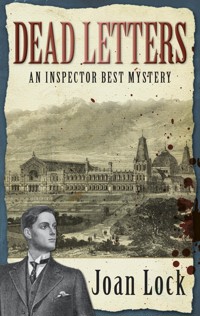
It is a beautiful warm August day in 1880: perfect weather for the annual Metropolitan Police Annual Fête held at Alexandra Palace. Inspector Best is summoned to uncover the identity of 'Quicksilver' who has sent an anonymous note threatening to cause an horrific explosion at the event. When a second note is received and its threats become increasingly confusing with their literary allusions, Best seeks out the help of Helen Franks, a close friend from the past. However, is Quicksilver really intent on causing mass injury on this fine day, or is his desire of a more personal nature?
Sie lesen das E-Book in den Legimi-Apps auf:
Seitenzahl: 297
Veröffentlichungsjahr: 2014
Das E-Book (TTS) können Sie hören im Abo „Legimi Premium” in Legimi-Apps auf:
Ähnliche
















Acknowledgements
My thanks to the staff at the Islington Public Library, London Metropolitan Archives, the Guildhall Library, the Metropolitan Police Service Library and Museum, the Theatre Museum in Covent Garden, the Crystal Palace Museum, the British Library, but, most particularly, Haringey Archives. These are housed at the excellent Bruce Castle Museum in Tottenham and contain marvellous material on the locality and Alexandra Palace, including daily programmes, some of which feature the extraordinary Police Fêtes which used to be held there.
Individuals to whom I am indebted are: Pains’ Chairman, John Deeker, for his identification of the fireworks and descriptions of their dazzling effects; Peter Lane, Executive Librarian of the Magic Circle, for information regarding the magician, Dr Holden – although I confess to filling in a small gap with a little fictional magic of my own; Ted Crocombe for getting me online; and my husband, Bob, for editorial assistance.
Except where actual historical events and characters are being described for the storyline of this novel, all situations in this publication are fictitious and any resemblance to living persons is purely coincidental.
Contents
Title
Acknowledgements
Chapter One
Chapter Two
Chapter Three
Chapter Four
Chapter Five
Chapter Six
Chapter Seven
Chapter Eight
Chapter Nine
Chapter Ten
Chapter Eleven
Chapter Twelve
Chapter Thirteen
Chapter Fourteen
Chapter Fifteen
Chapter Sixteen
Chapter Seventeen
Chapter Eighteen
Chapter Nineteen
Chapter Twenty
Chapter Twenty-one
Chapter Twenty-two
Chapter Twenty-three
Chapter Twenty-four
Chapter Twenty-five
Chapter Twenty-six
Chapter Twenty-seven
Chapter Twenty-eight
Chapter Twenty-nine
About the Author
By the Same Author
Copyright
Chapter One
Several people saw what happened. At least, said they did. Indeed, thought they had.
But, as commonly occurs at suddenly momentous moments, their attention was drawn by an alert which then caused them to witness the immediate aftermath – not the event itself.
In this case, the alert was the long and terrible scream which pierced through the music and happy laughter – and halted both.
Detective Inspector Ernest Best surveyed the scene and admitted that it was beguiling. The warm August sunshine glinted off the brass instruments and silver tunic buttons as bandsmen hurried towards their appointed places. Flower garlands were draped over the terrace railings and around the lamp posts. Pretty dairy maids caught the eyes of rugged soldiers come to demonstrate their fighting skills. Chalk lines were being drawn and hurdles erected down on the sports field below him, and circus hands glanced up gratefully at the clear sky as they busied themselves fastening back the flaps of the cheerful red circus tent.
No doubt about it, Best decided, the day was going to be a corker. The feeling of excitement and expectancy was growing.
He raised his eyes to the longer view, to the distant domes and spires of the City of London and well beyond. Could that even be the rival Crystal Palace he could glimpse in faraway Sydenham?
He had been furious when told to report for duty that day at the Alexandra Palace.
‘You can’t mean it,’ he’d exclaimed.
‘Oh yes I can,’ Detective Chief Inspector Cheadle had retorted belligerently, and fixed Best with his implacably baleful stare. ‘That’s just what I does mean.’
‘But what about the Chancel case?’ Best had pleaded. ‘It’s near to breaking. If I leave it now …’
‘You’re going,’ said Cheadle, ‘whether you wants to or not. What’s more, you’re taking six of the others as well.’
‘But the place will be swamped with police and the divisional detectives will be there,’ Best insisted, pointing to that day’s copy of Police Orders.
Cheadle stared at him stonily, refusing even to glance at the paragraph which required that two inspectors, five sergeants and fifty-seven constables (three mounted and four in plain clothes) be supplied by E, G, N and Y divisions to parade at the Alexandra Palace at ten thirty in the morning on the 19th August 1880.
‘Why would they also need seven of us from the Yard just to catch a few pickpockets? The place will be thick with off-duty coppers anyway.’
‘Shut up, Best,’ Cheadle commanded suddenly. ‘If you’ll just shut up I’ll tell you why.’ He paused, took a deep breath, leaned forward and whispered conspiratorially, ‘We’ve ’ad a warning.’
Oh God, it was worse than he had thought. The chief’s mind was going. They shouldn’t threaten to retire him like that.
The DCI slid a piece of blue writing paper across the desk. In large, loopy black writing it announced:
PEOPLE’S PALACE DISASTER – 19 AUGUST 1880! The Hensworth explosion will be as NOTHING compared with this tragedy! But you stupid bluebottles CAN’T STOP ME! Want a clue?
You would know me if you saw me but DARKNESS WILL HIDE MY FACE. Ha Ha. Catch me if you can!! Quicksilver
Best glanced up at Cheadle. ‘You’re taking this seriously?’
‘Ain’t got no choice, ’ave I?’
‘But the Hensworth explosion wasn’t deliberate, was it?’
‘Weren’t much left to show ’ow it happened, so everyone just supposed it was just another steam boiler accident.’
Best nodded. ‘Well, they are commonplace.’
‘Oh, “commonplace” are they?’ Cheadle mocked. ‘Anyways –’ he emphasized his words with more sharp jabs at Quicksilver’s note – ‘he never says that he done the Hensworth, does ’e – just that he’ll do something worse.’
Right again. No, his mind wasn’t going. Sharp as a razor as always.
Cheadle took a deep breath and held up his huge left hand.
Best knew what was coming – the pictures.
‘The way I sees it is, we got three possible pictures.’ He pointed to his knobbly forefinger. ‘Picture One: somebody wants to get back at the palace management – mebbe some ’ard feelings over the latest shenanigans.’
He held up his second finger. ‘Picture Two: them Fenians ’ave got goin’ again sooner than we expected – or they’re just tryin’ to confuse us.’
He extended his third finger. ‘Picture Three: there’s some old lag that ’ates police an’ wants to see us runnin’ about like ’eadless monkeys.’
Which we are going to do, Best thought with some irritation.
But it was true that the business doings at the palace were in flux – as usual. As usual, North London’s answer to Crystal Palace was being handed on like a parcel bomb in a grown-up game of musical chairs.
‘Could be some dodgy dealings goin’ on,’ said Cheadle, who had a poor view of human nature. ‘As for the Fenians, well –’ he shook his head – ‘bit out of the way for them, ain’t it?’
Cheadle sucked his teeth and twisted the ends of his once luxurious moustache. Stopped dyeing it, Best noticed. Mrs Cheadle’s sensible influence, no doubt.
Best nodded. The Irish American Brotherhood had not caused the Yard trouble for some time, but they had information that a London bombing campaign was in the early planning stage. ‘Doesn’t seem their style,’ Best agreed.
‘My money’s on an old lag who ’ates coppers.’
‘An Irish old lag who hates the English and coppers?’ suggested Best.
‘Mebbe, mebbe,’ grinned the Chief Inspector. ‘One thing’s sure, ’e ain’t given us much time to prepare – tomorrow’s the day. An’ let’s face it, ’e couldn’t pick a better place to get his revenge on coppers than at the Metropolitan and City Police Annual Fête, now could ’e?’
Chapter Two
There were several ways for those bent on pleasure to approach the Alexandra Palace, which was perched majestically on Muswell Hill in North London.
The quickest and pleasantest was in the manner chosen by Inspector Best – from the west, by rail – right up to the building itself on the Alexandra Palace branch line of the Great Northern Railway. He was on the first special excursion train to arrive just as the People’s Palace opened at nine. There was much to be done.
Already the weather looked promising. A pleasant warmth was beginning to dispel the chill early morning mists and the still-low sun glinted off the necklace of ornamental lakes to the north – diamonds peeping through wispy cotton wool.
Good news for the organizing committee who were anxious for funds for the orphanage’s new wing. Last year’s fête had been a dismal washout. The rain had been relentless. Bad news for the likes of Best needing to thwart Quicksilver’s aims.
Good weather would bring an estimated 40,000 visitors and more, making the catching of him more difficult and his possible target larger.
Best glanced back at the steam train now noisily tooting and puffing its way back to collect its second load of passengers.
Just one example, he thought, of how to bring in an infernal device. One which could be tucked among the picnic hampers, sunshades, umbrellas and wraps, and delivered right into the very heart of the building.
Best contemplated the palace’s internal map and sighed. He’d forgotten there were quite so many rooms and converging and interlocking passages and corridors – all which could provide endless hidey-holes and escape routes for Quicksilver. The man shouldn’t boast that he was smarter than the police. He didn’t need to be. It was an unfair contest.
Slicing right through the building from north to south was the well-named Great Central Hall. This concert hall, cum theatre, cum meeting place, was immense.
‘Holds twelve thousand,’ murmured Chief Inspector Billings when they went to have a look. He was the uniformed officer in overall charge and was looking worried.
Best gazed up at the multicoloured early Renaissance arched ceiling and along to the gabled ends where brick mosaics garlanded huge rose windows. At the south end a magical rainbow glow was already lighting up the flagstones.
The north end was dominated by the spectacular Willis pipe organ, quite the largest, newest and most advanced pipe organ in the country.
‘Powered by two massive, steam-driven bellows,’ said Billings. ‘They’re down there in the basement.’ He pointed to the spot at the foot of the organ.
Best groaned. Steam. And in just the place for Quicksilver to make maximum impact.
‘The engineer says that these steam boiler accidents are caused by bad maintenance, not explosives. This steam boiler is kept tip-top.’
‘Yes, but it could be tampered with, couldn’t it?’ retorted Best testily. That basement could provide the requisite ‘darkness to hide his face’, he thought to himself.
Above them, stagehands were already stringing high wires and lowering trapezes and a revolving globe.
‘Performances begin at two thirty,’ said Billings, reading Best’s mind. ‘An orchestral concert followed by the circus aerial items, then alternating concerts and indoor circus until eight thirty this evening.’
‘There’ll be police bands in here?’
Billings shook his greying head. ‘No. They’re all spread around the grounds.’ He showed Best the Great Police Fête programme.
A Division would be leading off at one with waltzes, gavottes, marches and quadrilles on the terrace; the premier spot for the premier police band. Divisions S and E would take over from them until seven.
H and R divisions were to present a brisk selection of waltzes, polkas and schottisches in the Banqueting Hall from two until seven, while T, V and L would provide suitably sylvan music in The Grove from one to seven. Two more were to keep the crowds jolly on the cricket ground during the afternoon. Ten divisional police bands in all. A static resource too useful to waste.
‘I think we should tell them,’ Best said.
Billings raised his grizzled and wayward eyebrows.
‘On pain of death if they pass it on.’
Billings nodded soberly. ‘Very well.’
With wives and children among the throng that would be a tall order, they knew. They had already decided, in conference with a frantic management, that the customers and performers, even though many were police officers, should not be told in case there was a panic like at the Liverpool Coliseum eighteen months ago.
There had been a bit of a fracas in the theatre bar and, perhaps to break it up, someone had shouted ‘Fire! Fire!’ The whole audience in that 3,000-seat theatre had rushed for the door at once. Thirty-two had died and many more were horribly injured.
Another reason for not alerting all policemen present was that, in Best’s experience, when too many became involved each imagined he wouldn’t have to bother so much because the others would notice anything untoward. However, in this case, he reckoned more would be better.
Best and Billings continued their tour of inspection which included two theatres, a concert hall, billiard room, reading room, rest rooms, retiring rooms, an Italian garden, a palm court and an exhibition hall furnished with ebony and glass showcases containing examples of British artefacts.
The men looked at each other. Flying shards could cause some awful injuries. As might the glass and crockery in the bank of refreshment rooms along the north side of the building.
As Best and Billings nodded and smiled at friends and acquaintances, a sense of uneasiness grew.
Maybe, thought Best, an attempt should have been made to call off the fête after all, despite the opinion that it would be impossible at so short notice and that such a move would only make matters worse. Maybe when the posse of superintendents arrived to hand out prizes and show the flag, they would change the strategy.
The spectre of all these senior men appearing to take responsibility was less than comforting to Best, who knew that the same principle applied to them as to the junior ranks – but even more so. More chiefs meant more pandemonium, less coherence.
Orders would be issued by one, countermanded by another, the men would become confused … He’d seen it all before at ceremonial events and riots. Some chiefs would jockey for supremacy, others to avoid overall responsibility. There’d be more of the latter in a case like this, he suspected.
‘What ho? What roguishness is afoot here!’ Best instantly recognized the cheerful voice and turned to see the ebullient Detective Inspector Littlechild decked out in splendid blazer, boater and necktie: one of the extra men he had been allotted.
‘Was coming anyway of course – to make my bow before the footlights – but I received a telegraph last night instructing me to arrive earlier.’ He rubbed his hands together. ‘What mysteries must we unravel here?’
Best explained. He was relieved to see the man. He might have a sometimes embarrassing relish for adventure and excitement but he was also keen and a hard worker.
‘Cheadle not coming?’
‘Not till later. Thinks an early arrival might start people wondering – same with the superintendents.’
‘Bothered about panic?’
Best nodded. ‘So, anyway, it’s all low-key.’
‘Right,’ said Littlechild, his eyes glistening. He was a handsome man around 5ft 9in, and in his early thirties but looked younger. Indeed, it was his boyish looks which had helped him get into the branch in the first place. They were a good cover. No one believed the young joker was a police officer. Best didn’t sometimes.
Littlechild’s moustaches and whiskers were now full and dark and he delighted in combing them into different styles for different characters from his favourite disguises: lugubrious for clergyman, close and smarmed down for a butcher and rather wild for a soapbox orator.
‘Keep a look out for any old lags who could have a grievance,’ Best warned. Littlechild, a very active officer, knew more of them than most.
‘Right,’ he said. ‘And this darkness thing, what do you reckon to that?’
Best shrugged. ‘Could be that he’ll do his deed in some dark corner, there’s plenty of those. Or after dark – but there won’t be much of that. Any other ideas?’
He shook his head. ‘Sounds familiar though.’ He knitted his bushy eyebrows in thought and pursed his lips dramatically. ‘Might come to mind.’ He grinned. ‘One thing’s certain. It’s not Dickens, Thackeray or Bulwer-Lytton!’
It was no secret that Littlechild not only swore by these three authors but thought no man need read any other. Indeed, he claimed that Lytton’s tales of derring-do had made him become a detective.
‘How about fire?’ put in Detective Sergeant 3rd class John George Smith, who had just joined them.
Sometimes, thought Best, the lad had a tendency to state the obvious.
Fire had been the curse of the Alexandra Palace. Only two weeks after its opening in 1873, the palace had burned down. The management, encouraged by the initial public response, had found heart and money to rebuild the gutted building. This time, four water towers and extra water storage tanks by the Great Hall were included in the plans.
‘It’s a possibility, of course,’ nodded Best kindly. ‘Anyway, we’ve got the palace brigade on standby.’ He paused. ‘I’m just off around the grounds. Shall I take Smith here,’ he asked Littlechild, ‘while you keep an eye out for the rest of our lot and a special watch on the comings and goings in the theatres and concert hall?’
Littlechild grinned and twirled his moustache like the evil Sir Jasper. ‘Righto. I could think of harder tasks than keeping an eye out for Little Dolly Daydream and a few rogues and vagabonds.’
‘Someone’s happy, anyway,’ said Smith as he and Best set off.
‘Oh yes,’ laughed Best, ‘and at least he’ll recognize which of the theatricals are the genuine article.’
Chapter Three
The customers were arriving. They looked like ants converging on a bowl of sugar, but grew bigger and more colourful as they climbed the southern and eastern slopes of the park, shedding their outer skins as they went. On the smaller of the species, white patches appeared which were gradually revealed to be wide, flounced collars, smocks and sailor suit trims.
Larger and faster black shapes overtook the ants. They in turn metamorphosed into ponies and traps and hansom cabs conveying the more well-breeched pleasure seekers and West End artistes who would perform in light comedies that afternoon and evening.
Lumbering along more sedately were heavily laden hay carts due to take part in the afternoon’s pastoral procession. This year’s theme was English Rustic.
It was half past eleven. The programme of events proper began at midday. Already a gaudy sprinkling of Morris dancers and fair milkmaids brightened the growing crowds by the maypole on the terrace.
In sober contrast, a detachment of soldiers from Chelsea Barracks was scheduled to perform hand-to-hand combat and an assault-at-arms employing a fiendish array of swords, bayonets, quarterstaffs and Indian clubs. Such men, Best thought, might well come in handy in an emergency. Unless, of course, they counted Quicksilver within their ranks.
The view over London was amazing. Just below was Wood Green and to the right, Hornsey village, then it extended for miles and miles till in the far distance one could even see Shooters Hill, near Greenwich.
Slivers of silver here and there hinted at the serpentine route of the River Thames. Now and then above the river drifted grey-white wisps which then rolled away in tiny, talcum-powder puffs.
Suddenly, Best realized what they were – steam from the Thames steamboats. He turned away sharply.
The last thing he wanted on his mind were memories of the worst moments in his life, when he was aboard the Princess Alice pleasure boat as she was rammed by the collier, the Bywell Castle. She’d sunk in a flash with horrific loss of life.
Beforehand, the passengers had been just like today’s crowds – innocently enjoying themselves on a well-earned day out.
He lowered his gaze to the sports field in the centre of the palace racetrack, where Chief Inspector Cutbush and his team were busy marking out the ground for putting the shot: the first of the police athletic contests scheduled for that afternoon. No need to worry too much about that area, Best thought.
These events would attract a great many spectators: proud families cheering on their menfolk and divisional colleagues urging on their favourites. But Cutbush had an eagle eye and was in the know about Quicksilver.
The detectives moved off again towards the huge Tudor Banqueting Hall squatting low down on the eastern slope facing Wood Green.
Now this was just the spot to cause maximum mayhem. All those families sitting down to their cold meats or veal and ham pie washed down with Allsops Pale Ale and ginger beer. But somehow Best couldn’t imagine Quicksilver using this for his Domesday gesture. Not spectacular enough, too domestic.
Best’s eyes were suddenly drawn to a short and stocky man stepping out ahead of them. There was something familiar about the back of his head and his jerky, stiff-legged gait. He nudged Smith and nodded at the man whose pace now appeared to be quickening as though he could sense he was under scrutiny.
‘He’s familiar,’ Best hissed. ‘Seen him at Pentonville, I think. Keep him in sight. You go left and I’ll go right.’
The steepness of the slope hastened their step anyway so they now appeared to be almost running – an impression they would rather avoid.
Who was that man? Best wracked his brains. Not a policeman, certainly. Too short. But that low balding patch edged by a lower fringe of too-dark hair and the centrally placed mole was very familiar.
Maybe he had arrested him recently? Or seen him on his last duty visit to Pentonville to inspect the line-up of soon-to-be-released villains? Odd that the man should be wearing such a warm tweedy suit on such a day, but that also seemed familiar.
Smith was gaining on the man and as he drew alongside he turned his head casually to the right. As he did so his face broke into a grin. He slowed down, fell back, and veered towards Best.
‘It’s Dr Roper, the divisional surgeon,’ he laughed. ‘The one the blokes call Stompy.’
‘Oh, blimey. I am getting twitchy,’ Best laughed, pausing to get his breath. ‘Fit little bugger, isn’t he?’
‘Must take his own medicine.’
They stood for a while, watching the children enjoying themselves on the funfair rides and pestering their parents for penny-lick ice creams and coloured balloons.
‘He’s not got the flick of the wrist right,’ said Smith nodding towards the Mister Hokey-Pokey ice-cream cart. Both men laughed. Smith had been obliged to master the flick when he posed as a penny-poke man in Islington on a baby farming case a couple of years ago.
A harassed father was trying to marshal his family to pose for the photographer while others began to queue up for their souvenir picture which would freeze the image of this day for all time.
Showing off to pretty girls in pale dresses were young swells with centrally-parted hair, high stiff collars, starched cuffs and gorgeous socks. Some carried straw boaters jauntily under their arms – quite the latest fashion.
The pace was hotting up and it all looked very jolly – and harmless, Best thought.
As he turned back to the fairground his eyes lit upon the gusts of steam belching from the chimney in the centre of the merry-go-round.
Riding on the carved and gilded horses below, laughing parents clutched giggling children as they swept up and down, up and down – such a new sensation; Three-Abreast Gallopers were a new invention.
They waved and shouted excitedly to their friends as they passed by again and again, but their voices were drowned by the roundabout’s thumping traction engine.
Best went cold. Of course, that would be just the place that Quicksilver would choose. There, where the fun and noise and laughter rang loudest in the sunshine. There, for all to see …
He began running towards the merry-go-round, a puzzled Sergeant Smith at his heels.
People turned to look at them, surprised at first by the sudden movement then startled by the urgency on their faces.
‘It’s steam operated,’ panted Best. ‘Why didn’t I think of it before …’
It was then that a scream rent the air. Then another, and another. Soon there was pandemonium and panic as others joined them in their run.
Chapter Four
The gilding on the magnificent Three-Abreast Galloper glinted in the sun as the ride continued turning merrily to the jangling accompaniment of ‘Polly Perkins of Paddington Green’.
But all eyes were riveted not on its splendid carved wooden horses with flaring nostrils, but on the rider on the centre row. She was hanging down over her gaily painted horse’s neck. As the creature dipped in the very latest fashion, her head smashed on to the wooden platform. When it rose again the bloodied result was jerked back for all to see. Small wonder people were screaming.
The woman’s body was slipping further down, Best realized, as she disappeared from view once again, and was becoming entangled with the poles of the adjacent horses. People mounted on these horses were trying to climb off but were frightened to put their feet on the platform. They, too, were screaming and shouting.
One of the showmen by the booth on the far side, his back to the roundabout, began to look round, puzzled. Another, younger roustabout, wearing a jaunty red cap, was casually making his way around the far edge of the platform – the noise of the music drowning out the screams. His attention was finally captured by the onrushing gesticulating crowd headed by Best and Smith.
‘Stop the ride! Stop the ride!’ yelled Best, waving his arms at the startled young man and pointing to the other side of the ride. The lad looked about, confused, but began to work his way in the direction Best had pointed.
The body was now almost fully on the floor, held in place only by her right foot caught behind a pole.
‘Now! Switch it off!’ Best shouted as the grotesque show moved out of sight once more. He made a turning motion with his hand and at the same time shouted again, ‘Switch off!’ mouthing the words in an exaggerated manner. The boy finally grasped the message and nodded.
At last, the huge steam roundabout began to slow and the awful tableaux crept into view again as the ride came to a halt. The body of the woman was now slumped fully at an angle across the floor and was beginning to roll towards the platform edge.
Best jumped on board shouting, ‘Keep people back!’ to a tall policeman. He beckoned two colleagues. Between them they ushered off the distressed customers, then formed a circular barricade behind which Best and Smith could assess the situation.
Best turned the woman over and felt for her pulse. There was none. He put his face to her mouth but could feel no breath. Her skin was icy.
‘I think she’s dead,’ he announced, glancing up at one of the young policemen. ‘Get the hand ambulance from the police office and inform Chief Inspector Billings that we need more help here. But be discreet – we don’t want panic.’
The climb back up the slope alongside the hand ambulance had caused something of a sensation despite the fact that Best had pulled up the hood to conceal the woman’s face and bloody head, and instructed the policeman pushing the wheeled stretcher to adopt his best matter-of-fact expression. People began to run alongside, trying to look in. Onlookers pushed each other out of the way. One woman fell, another tripped over her. This was becoming dangerous.
‘Go faster,’ ordered Best.
The increasing pace made the crowd more excited and eager. Thankfully, more off-duty policemen saw what was happening and also began to run alongside, arms outstretched, forming a barrier which helped hold the curious at bay.
Nonetheless, thought Best, as he got his breath back in the police office, it had been an unedifying experience.
The dead woman was middle-aged verging on elderly. Her gown was of grey and cream striped cotton, cream-fringed and piped at the neckline, wrists and hem. It appeared well-made but, like her once chestnut hair, a little faded. At the waistline there was a tiny, empty, watch pocket.
Her tight bun had been loosened as her head bumped up and down on the platform. Strands of hair straggled across her face and some were caught and held in the congealing blood on her temple. Her pinky-grey summer straw hat resembled a squashed teacake – either by design or from the treatment it had received being hung from the side of her head with the aid of a tenacious hat pin. It gave her lifeless face an unseemingly rakish air.
Best removed it.
‘Find that divisional surgeon, will you,’ he said to Smith. ‘Too late to do anything for her but I’d like him here just the same. See what he can tell me.’
Evans, the palace’s young acting manager, stood to one side wringing his hands and looking even more aggrieved than when told earlier about Quicksilver.
‘It’ll be a heart attack,’ he announced.
‘I didn’t realize you were a doctor,’ murmured Best.
‘No, of course I’m not,’ said Evans huffily.
‘Ah.’
A sensible older woman from the children’s nursery was helping him to undo the buttons and underwear tapes so that they could inspect the body for any other obvious signs of injury. They found none.
Best undid the tapes which supported the inner pocket of the dress, placed it on a polished mahogany sidetable and tipped out the contents.
They were sparse: a one shilling all-inclusive Police Fête entry ticket, a penny programme, a plain white pocket handkerchief, two hair pins, a pair of steel-rimmed half-spectacles, a black comb, a packet of Morson’s Pepsine capsules and a purse containing five pounds in notes and coins. Not poor, then.
‘It’s happened before,’ Evans insisted sulkily, staring at the inert body with an accusatory expression.
‘What’s happened before?’
‘These old people come here, forget their age and do all kinds of silly things they wouldn’t do at home …’
‘I thought that was the idea of the place,’ Best murmured half to himself. His patience was wearing thin.
While he examined the items more closely, Felix, the office’s jet black cat, leaped on to the table and knocked the purse and half its contents on to the ground. Best ground his teeth as they all scrabbled around retrieving them.
‘It’s a good job I’d taken note of these contents,’ he exclaimed crossly and glared at Evans.
The man’s distracting whingeing was becoming a hindrance.
‘I believe you are needed outside,’ he said to Evans eventually. ‘Your calm demeanour will reassure everyone that, as you say, this is nothing unusual. And,’ he added wickedly, ‘it might prevent the press getting hold of the story and making it into something it’s not.’
That made the acting manager sit up.
‘Make a short announcement about a lady falling ill while on the roundabout – something to do with the heat,’ Best suggested. ‘But tell them that everything is all right now and she is being attended by a doctor.’
Evans dashed out of the room. His presence among the lingering crowd might well, Best guessed, make things worse rather than better, but at least it got him out of his hair.
They ought to have taken the body to the police office as he had wanted to in the first place, but the only available space had been in a cell, and that was thought unsuitable.
Chief Inspector Billings put his head around the door. ‘How are things?’
‘No clue about her identity yet,’ sighed Best who was keen to get back out to look for Quicksilver.
‘Oh, dear, that’s a nuisance.’ He paused. ‘Look, do you mind carrying on with this for a while? I’ve got an emergency over by the triple lakes.’
‘Some idiot fallen in?’
‘No, a pickpocket they think – or maybe just a bustle-bumper.’
Best shook his head. ‘How they have the nerve with all these coppers around!’
‘Bigger challenge, I suppose,’ Billings shrugged. ‘Anyway, they’re not supposed to be able to stop themselves are they – with all these lovely ladies about?’ He smiled dryly. ‘We’ve closed the ride down and secured the scene. If you like, you can go back and have a look at it and bring the operators to my office for interview. We’ve taken the names and addresses from others on the roundabout – those we could trace anyway. I’ve told them to pop in here at around six this evening, just in case you need to speak to them.’
‘Right.’
Best was torn. This wasn’t quite what he was there for, to deal with an everyday sudden death – or what certainly looked like an everyday sudden death. He was loath to agree with Evans but he was probably right. A heart attack after too much unaccustomed activity and excitement.
Then again it might be a suspicious death. Possibly even something to do with Quicksilver. In any case, he and Smith had been the first officers on the scene which, technically in one sense, made it theirs. But suspicious? He looked at the body again; no, certainly not.
‘Oh, and I’ve telegraphed Wood Green and told them to get a hearse up here – but to make it discreet.’
Best wondered how they were going to manage that apart from garlanding it with daisies, mounting jolly haymakers on the roof and pretending it was part of the rustic procession.
‘I think,’ said Best decisively, ‘that Sergeant Smith can handle this small matter while I continue the hunt for Quicksilver.’
Chapter Five
Joe and Jack Hare looked out of place even in such a simple indoor venue as a police office.
Father and son were both strong, square-shaped men with short legs, barrel chests, red-gold crinkly hair and fair skin burnished by their outdoor life.
They sat uncomfortably before the plain desk overlooked by a filing cabinet and a dour portrait of Queen Victoria, Empress of India.
The older man’s chest rattled noisily as he breathed. The constant fresh air seemed to have done little to alleviate his asthma. Neither, Smith assumed, had the anxiety caused by the recent drama on their fairground ride. He must be wanting to get back to his roundabout to recoup some of the money paid out for such an expensive new machine, not to mention worried about his Alexandra Palace concession.
Despite feeling he should have kept a better eye on his customers, Smith took pity on the man, interviewing him first and in a conciliatory manner. No need to rub it in. Anyway, you got nothing out of people by doing that.
‘What can you tell me about this lady customer, Mr Hare?’ he began.
Joe Hare shifted uneasily in his seat, took a deep and noisy breath and said, ‘Er, nowt much, to be ’onest.’
‘You don’t remember seeing her get on?’
‘Er …’ His eyes looked hunted as he sought about for words, then he pleaded, ‘There’s so many y’see and they comes and goes …’
‘So you don’t remember her at all?’
He shook his head, sighed and admitted, ‘Na. To be honest, I doesn’t.’
That was a blow for Smith but he could understand the difficulty. A familiar one for policemen in fact – trying to recall one person from the many who came into their orbit. Joe Hare saw his customers only for a moment, and there were so many of them coming and going. Why should one middle-aged lady stand out?
The man’s anxious eyes reminded him of his father’s, always at a little bit of a loss with the world.




