


1,99 €
Mehr erfahren.
- Herausgeber: Quickie Classics
- Kategorie: Krimi
- Sprache: Englisch
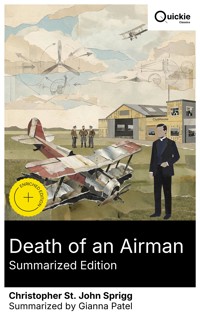
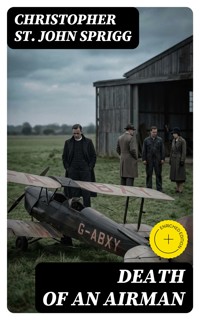
Death of an Airman unfolds at a provincial flying club, where an Australian bishop in training witnesses what seems a routine crash. Sprigg converts that spectacle into a fair puzzle: aerodynamic minutiae, the geometry of stalls and spins, and the hierarchies of club life all become evidence as Scotland Yard is drawn into smuggling and a staged death. The prose marries crisp technical exposition to dry social comedy and Golden-Age misdirection, situating the mystery amid interwar Britain's cult of civil aviation. Christopher St. John Sprigg (1907–1937), later famed as Marxist critic Christopher Caudwell, brought a fascination with flight and a journalist's precision to crime fiction. His later Illusion and Reality and Studies in a Dying Culture, and his death in the Spanish Civil War, reveal a mind attuned to modern systems; here that outlook yields procedure grounded in technology and a sociological portrait of the air‑minded middle class. Recommended to admirers of Sayers and Freeman Wills Crofts as well as aviation enthusiasts, Death of an Airman offers clockwork detection enriched by the texture of early civil flying. Read it for elegant clueing, exact yet unpedantic flight lore, and humane intelligence—proof that the Golden Age could entertain while taking modernity seriously. Quickie Classics summarizes timeless works with precision, preserving the author's voice and keeping the prose clear, fast, and readable—distilled, never diluted. Enriched Edition extras: Introduction · Synopsis · Historical Context · Brief Analysis · 4 Reflection Q&As · Editorial Footnotes.
Das E-Book können Sie in Legimi-Apps oder einer beliebigen App lesen, die das folgende Format unterstützen:
Veröffentlichungsjahr: 2026
Ähnliche


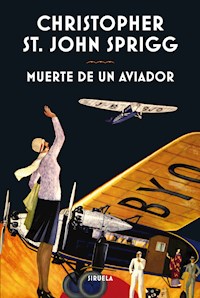
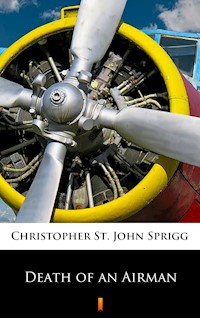













Death of an Airman (Summarized Edition)
Table of Contents
Introduction
Between the exhilarating promise of flight and the sobering calculus of mortality, Death of an Airman examines how a world newly opened by engines and airfields becomes a stage where chance, skill, and design vie for supremacy, and where the seeming innocence of accident can conceal deliberate intent, demanding from readers the same disciplined attention pilots give their instruments as they scan horizon and weather for hidden threats, because only patient scrutiny can separate turbulence from treachery and show how modern speed, precision, and expertise may be turned to purposes that thrive on surfaces, timing, and the thin margins between control and collapse.
Christopher St. John Sprigg’s Death of an Airman is a Golden Age British detective novel set largely at a small English flying club during the interwar years. First published in the mid-1930s, it blends the fascination of early civil aviation with the fair-play puzzle tradition. Revived in the British Library Crime Classics series, it offers both period texture and brisk clarity. The book’s aerodrome setting supplies a fresh arena for detection, surrounding the mystery with the routines of lessons, maintenance, and club life, while the narrative’s cool, exact prose keeps attention on evidence, motive, and method rather than spectacle.
The story begins when a competent pilot dies in what appears to be a routine crash at a provincial aerodrome. Among the witnesses is an Australian bishop who has begun flying lessons to serve a far‑flung diocese, and his calm, practical mind pricks at small inconsistencies others miss. Troubled by what he observed before and after the fall, he voices doubts that draw official interest. From there the novel balances clubhouse banter with meticulous inquiry, its tone understated, mildly ironic, and humane. Sprigg favors clean description, logical progression, and fair signals, giving readers the satisfactions of methodical detection without sacrificing pace.
Much of the novel’s distinctive pleasure lies in its aviation detail. The machines are not mere props but working environments whose quirks, gauges, weather sensitivities, and ground procedures matter to how people think and act. Instruction, maintenance, and the rhythms of the flying club shape conversations and alibis, while the presence of seasoned instructors, eager pupils, and pragmatic mechanics creates a spectrum of expertise that the plot uses with economy. Sprigg develops interplay between amateur observation and professional investigation, and he hides clues in plain processes, trusting readers to weigh them. The result is a puzzle that feels engineered, not contrived.
Underneath the lively surface, Death of an Airman meditates on modernity and risk. Flight promises liberation and reach, yet it demands discipline, trust, and systems; the book probes how those virtues can be mimicked or subverted. The bishop’s presence introduces a dialogue between conscience and calculation, faith and reason, without tipping into allegory. Perception, habit, and expertise become ethical questions: who sees clearly, who interprets accurately, and who benefits from institutional routines. The aerodrome gathers people across class and background, capturing a moment when technology briefly flattened social distance even as it created new hierarchies built on competence and nerve.
For contemporary readers, the book clarifies how each technological threshold reshapes crime, community, and the habits of paying attention. Its careful documentation of a new skill set speaks to any era learning to live with complex tools, while its insistence on observable fact over rumor feels salutary. The investigation also models collaboration among diverse kinds of knowledge, an antidote to siloed expertise. The novel’s multicultural axis, from the visiting Australian cleric to local club life, gestures toward global mobility with unforced ease. Most of all, its fair-play ethic honors readers’ intelligence, rewarding patience over impulse in a world of speed.
To approach Death of an Airman today is to encounter a classic puzzle that feels both rooted and fresh, crisp in construction yet generous in its curiosity about how people work. The pacing is quick without haste; the plot is intricate without baroque ornament; the clues are there if one looks. Sprigg’s aerodrome becomes a laboratory for motive and method, and the atmosphere of the mid-1930s adds texture without requiring specialist knowledge. This is why the novel endures and merits its reissue: it affirms that clear thinking, humane skepticism, and attention to craft can still cut through noise and misdirection.
Synopsis
Death of an Airman, a Golden Age detective novel by Christopher St. John Sprigg, first published in 1934, opens at a provincial English flying club where an Australian bishop has come to learn to fly. During training, he witnesses the dramatic crash of a skilled instructor, a tragedy that appears to be an accident of the sport. The authorities and club officials accept the explanation with regret, emphasizing the risks of fledgling aviation. Yet the bishop’s practical eye and calm temperament register small anomalies in what he saw and heard, raising doubts that will quietly, insistently, set the novel’s investigation in motion.
The bishop’s reservations arise from simple, carefully noted details: how the aircraft descended, the condition of the wreckage, and the customary habits of the pilot he had observed. His account, offered modestly to the aerodrome’s staff and then to local police, frames the death not as spectacle but as a chain of physical events that may not align. Around him, the club’s routines continue—lessons, maintenance, convivial talk in the clubhouse—introducing a small cast of aviators, ground crew, and visitors. Their personalities and relations, from professional rivalries to private worries, form the social field against which the seemingly accidental crash begins to look ambiguous.
Official scrutiny deepens as detectives examine the wreck and the pilot’s condition with methodical care. Technical testimony about engines, controls, and human factors enters the record, and the narrative sets out the practicalities of flying with lucid precision. The dead airman’s experience makes a simple novice’s error improbable, while the layout of the field and timing of lessons complicate a pure chance explanation. The result is a cautious widening of hypotheses: accident, negligence, or design. As suspicions coalesce, the circle of people with opportunity grows to include fellow instructors, students, mechanics, and visitors, each with plausible access to aircraft and information.
Attention turns to the infrastructure that sustains light aviation: maintenance logs, spare parts, refueling, hangar access, and booking records. These mundane traces supply lines of inquiry, from who handled the machine to when key components were last checked. Weather, visibility, and the economics of small clubs also matter, illuminating how pilots balance risk and livelihood. The possibility that aircraft might serve purposes beyond sport or instruction—rapid travel, discreet carriage of goods—enters the detectives’ calculus. Local inquiries begin to intersect with wider concerns about cross-border traffic, drawing in officials who track patterns in flights, cargo, and cash that a single accident might otherwise conceal.
As leads multiply, the investigation broadens from the clubhouse to airfields, ports, and urban addresses linked by timetables and discreet intermediaries. Coordinated work between local police, national detectives, and customs officials emerges, reflecting institutional cooperation in the face of mobile, modern wrongdoing. The Australian bishop, courteous yet persistent, remains a steady witness whose practical questions sometimes open fresh avenues. The detectives test hypotheses against hard timings and technical feasibility, reconstructing flights on paper and in the air. What began as a single catastrophe starts to look like a junction in a larger design, where motive may be distributed among money, ambition, and fear.
The middle and later stages bring a series of tests and feints: inspections that appear routine but are strategically timed, flights that must be shadowed or duplicated, and interviews that revisit earlier testimony under altered assumptions. Sprigg stages tense passages on the ground and in the air, attentive to the practical limits of machines and the endurance of pilots. Small clues from the opening—gestures, timings, scratches and signatures—gain new weight when set against a broader map of activity. The investigators’ response becomes both legal and logistical, culminating in an operation that seeks to confirm a pattern without prematurely exposing which link holds it together.
Without disclosing the final turns, the novel ultimately draws together its lines of evidence to compare human judgment with mechanical fact, and communal trust with the temptations opened by speed and anonymity. Death of an Airman endures for its fertile use of aviation as both setting and method, demonstrating how new technologies alter opportunity for crime while sharpening the tools of detection. Sprigg balances clear procedural thinking, understated humor, and a humane outsider’s perspective, producing a puzzle steeped in its time yet accessible beyond it. Its resonance lies in the ethical scale it builds from small observations to a measured reckoning.
Historical Context
First published in 1935, Death of an Airman unfolds amid Britain’s interwar civil‑aviation boom. The novel’s flying‑club setting mirrors the small aerodromes that ringed London and provincial towns, with Croydon Airport—the country’s principal international terminal since 1920—serving as a widely recognized model for such activity. In this milieu, instructors, engineers, and private pilots converged for training, charter work, and display flying. Sprigg situates his mystery within the routines of take‑offs, circuit practice, and hangar life, foregrounding the aerodrome as a workplace and social hub. The aviation context is not decorative; it frames questions of procedure, safety, and responsibility that drive the plot.
Flying in Britain during the early 1930s was organized through a network of clubs encouraged by the Royal Aero Club and regulated by the Air Ministry, created in 1918. Popular light aircraft—especially the de Havilland DH.60 Moth, introduced in 1925—made private instruction and touring more accessible. Clubs fostered standard operating practices, medical examinations, log‑book discipline, and examinations for pilot licences introduced under post‑war air‑navigation orders. Airfields maintained workshops and stores for maintenance, and weather reports and signals governed daily activity. By embedding his story inside this institutional fabric, Sprigg aligns his mystery with the real procedures, hierarchies, and paperwork that underpinned civil flight.
Interwar Britain cultivated what contemporaries called air‑mindedness: public enthusiasm for flying as a symbol of modern science, speed, and national prestige. Air displays such as the RAF Pageant at Hendon drew crowds, and newspapers covered record attempts and safety debates in detail. The 1930s saw wider use of radio telephony, better meteorological briefings, and incremental improvements in navigation and instrument flying, even as light‑aircraft operations remained weather‑dependent. Against this backdrop, an accident at a club would trigger formal procedures, from ground inspections to reports for authorities. Sprigg exploits this climate of regulated novelty, where both routine and risk were keenly felt.




