


11,99 €
Mehr erfahren.
- Herausgeber: Orenda Books
- Kategorie: Krimi
- Sprache: Englisch
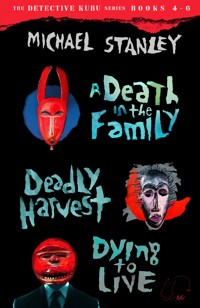
Books 4,5 and 6 of THE DETECTIVE KUBU COLLECTION Assistant Superintendent David 'Kubu' Bengu of the Botswana Criminal Investigation Department returns to solve a series of dark, devastating crimes that run deep into the heart of the community and far, far beyond … Sunshine Noir at its very finest… BOOK ONE – Deadly Harvest Finalist for the Best Paperback Original Novel at the International Thriller Writers Award A young girl goes missing after getting into a car with a mysterious man. Soon after, a second girl disappears, and her devastated father, Witness, sets out to seek revenge. As the trail goes cold, Samantha Khama – new recruit to the Botswana Criminal Investigation Department – suspects the girl was killed for muti, the traditional African medicine usually derived from plants, sometimes animals, and, recently and most chillingly, human parts. When the investigation gets personal, Samantha enlists opera-loving wine connoisseur Assistant Superintendent David 'Kubu' Bengu to help her dig into the past. As they begin to discover a pattern to the disappearances, there is another victim, and Kubu and Samantha are thrust into a harrowing race to stop a serial killer who has only one thing in mind… BOOK TWO – A Death in the Family 'There's no easy way to say this, Kubu. Your father's dead. I'm afraid he's been murdered.' Faced with the violent death of his own father, even Assistant Superintendent David 'Kubu' Bengu, Botswana CID's keenest mind, is baffled. Who would kill such a frail old man? The picture becomes even murkier with the apparent suicide of a government official. Are Chinese mine-owners involved? And what role does the US Embassy have to play? Set amidst the dark beauty of modern Botswana, A Death in the Family is a thrilling insight into a world of riots, corruption and greed, as a complex series of murders present the opera-loving, wine connoisseur detective with his most challenging case yet. When grief-stricken Kubu defies orders and sets out on the killers' trail, startling and chilling links emerge, spanning the globe and setting a sequence of shocking events in motion. Will Kubu catch the killers in time … and find justice for his father? BOOK THREE – Dying To Live When the body of a Bushman is discovered near the Central Kalahari Game Reserve, the death is written off as an accident. But all is not as it seems. An autopsy reveals that, although he's clearly very old, his internal organs are puzzlingly young. What's more, an old bullet is lodged in one of his muscles … but where is the entry wound? When the body is stolen from the morgue and a local witch doctor is reported missing, Detective 'Kubu' Bengu gets involved. Kubu and his brilliant young colleague, Detective Samantha Khama, follow the twisting trail through a confusion of rhino-horn smugglers, foreign gangsters and drugs manufacturers. And the deeper they dig, the wider and more dangerous the case becomes… A fresh, new slice of 'Sunshine Noir', Dying to Live is a classic tale of greed, corruption and ruthless thuggery, set in one of the world's most beautiful landscapes, and featuring one of crime fiction's most endearing and humane heroes. A wonderful, original voice – McCall Smith with a dark edge and even darker underbelly' Peter James 'My favourite writing duo since Ellery Queen' Ragnar Jónasson 'It kept me guessing, and it kept me gasping at its many twists and surprises' R.L. Kline 'Richly atmospheric … a gritty depiction of corruption and deception' Publishers Weekly 'Compelling and deceptively written …' New York Journal of Books
Das E-Book können Sie in Legimi-Apps oder einer beliebigen App lesen, die das folgende Format unterstützen:
Seitenzahl: 1451
Veröffentlichungsjahr: 2019
Ähnliche




















The Detective Kubu Series Books 4-6: Deadly Harvest, A Death in the Family, Dying to Live
Michael Stanley
Contents
PRAISE FOR DEADLY HARVEST
‘Deadly Harvest is number four in this fascinating crime series. Detective David “Kubu” Bengu is a wonderful creation, complex and beguiling. The exotic smells and sounds of Botswana fill the pages as well as the changes and struggles of a country brimming with modern technology yet fiercely clinging to old traditions. Compelling and deceptively written, it’s the perfect summer read’
– New York Journal of Books
‘Tight plotting is seasoned with African culture and the uglier presence of political corruption, AIDS, and black magic. Detective Kubu is joined by Detective Samantha Khama, who helps unravel a mystery involving a witch doctor who is believable and utterly menacing’
– Ellery Queen’s Mystery Magazine
‘These darker, grittier entries featuring the portly and perceptive Detective Kubu blend intricate plotting and a compelling cast … Though the cat-and-mouse chase that ensues propels the novel ever forward, Stanley also peppers the tale with richly detailed descriptions of Botswana and the lively lives of its citizens’
– Booklist
‘This fourth adventure of Detective Kubu is a vibrant mixture of themes that infuses the traditions of old Botswana against the shock of the new. However, the real appeal of the book is the easy-going voice that Michael Stanley deploys, leading the reader into the darkest of places with little warning. This makes Deadly Harvest into one of the finest crime thrillers of 2013 …’
– The Strand Mystery Magazine/SHOTS
‘This book took me to a world I didn’t want to leave. It kept me reading, it kept me guessing, and it kept me gasping at its many twists and surprises. Highly recommended’
– R.L. Kline
‘Richly atmospheric … gritty depiction of corruption and obsession’
– Publishers Weekly
‘… a fascinating police procedural … the most complex book in this series. Besides being an intricate crime puzzle that Kubu and his team must untangle, it also looks at societal issues’
– St Paul Pioneer Press
Deadly Harvest
A Detective Kubu Mystery
Michael Stanley
For Alice Mogwe and Unity Dow, who fight the battles we just write about.
The peoples of Southern Africa have integrated many words of their own languages into colloquial English. For authenticity and colour, we have used these where appropriate. Most of the time, the meanings are clear from the context but, for interest, we have included a glossary at the end of the book.
Cast of Characters
Words in square brackets are approximate phonetic pronunciations. Foreign and unfamiliar words are in a glossary at the back of the book.
Part 1
Something Wicked
‘By the pricking of my thumbs,
Something wicked this way comes.’
Macbeth, Act 4, Scene 1
Chapter 1
As she walked home, Lesego’s head was full of Christmas. She knew her sister would save some of her tips and buy her a small present. Lesego had no money, so she was making Dikeledi a doily from scraps of red material left over from her needlework class. She was trying to embroider ‘Dikeledi’ across it in blue, but she’d made the first letters too big, and the whole word wouldn’t fit neatly. She frowned. She was going to have to start it again.
Lesego was carrying a cloth bag heavy with shopping and another with her schoolbooks and, even though it was a threadbare hand-me-down, her school uniform was hot. She was already tired when she came to the steep hill leading to her aunt’s house in the upper section of Mochudi. She sighed, and her eyes followed the road upwards causing her to miss her footing. She stumbled, nearly dropping her shopping. The two potatoes she’d bought rolled from the top of the bag towards the road, and her shopping list, which had been shoved between them, fluttered into the weeds on the verge. She gave a small cry and scurried after the potatoes; her aunt would be furious if she lost anything. Just as she retrieved the fugitive vegetables, a red Volkswagen pulled over and stopped next to her. The driver leant across and opened the passenger door.
‘Hello, Lesego,’ he said. ‘Jump in. I’ll give you a lift up the hill.’
She gave a grateful smile and wrestled her shopping and school books into the car. ‘Hello, rra. It’s very kind of you. It’s a long hill.’
He smiled back, put the car into gear, and started on the road up. There was a click as he engaged the door locks.
Lesego took no notice. She looked around. ‘This isn’t your usual car.’
‘You’re very observant, Lesego. My car is at the garage. They loaned me this one while they service mine.’
She nodded, wondering about people who were so rich that they could just lend you a new car with no trouble. But she thought it would be rude to say that, so instead she pointed at her supplies.
‘I got everything my aunt wanted except the two sweet potatoes. They were too expensive – and old as well – so I bought two ordinary potatoes instead, which were cheap. Do you think she’ll be cross?’
‘I’m sure she won’t be. It was a sensible decision.’
She nodded, relieved.
When they reached the top of the hill, she turned to the driver. ‘You can drop me here if you like, rra. I can walk home now. Thank you.’
But the car started to move faster now that it was on the level.
‘Let’s go for a short drive first,’ he said.
‘Where’s Lesego?’
Dikeledi looked down at her bowl of gravy with a few kidney beans floating in it. She hoped the question wasn’t meant for her, but her aunt looked directly at her: ‘Dikeledi, I asked you where Lesego was.’
‘I don’t know, Aunt,’ Dikeledi said in a frightened voice. ‘She didn’t come back from school.’
‘She didn’t bring the shopping, either. I gave her money.’ This seemed to offend Constance Koma the most. ‘Where is she?’
Dikeledi glanced around the table desperately, looking for rescue. But the boys were silent, their eyes downcast. Surprisingly, it was Tole who came to her aid. The children were supposed to call him ‘Uncle’, but between themselves they had other names for Constance’s partner, with his bad breath and groping hands.
‘Who cares where she is, Constance,’ Tole said. ‘She probably stayed over with a friend. We’ll give her a good hiding when she gets back. Teach her a lesson.’ He reached across the table, pulled the dish of pap towards him and dug into it with his fingers. ‘Let’s eat.’
‘We haven’t said grace yet!’
Tole hesitated, still holding the lump of pap. ‘For-what-we-are-about-to-receive-may-the-Lord-make-us-truly-thankful-Amen.’ He dipped the ball of pap into his watery gravy and slurped it into his mouth.
The boys started to eat the same way, and Dikeledi joined in, hungry despite her worry for her younger sister. Her aunt scowled at her, but said no more.
Soon the food was all gone.
‘The pap was burnt,’ Tole said. ‘And there wasn’t enough.’
‘If you got off your ass and found work, we’d have more,’ Constance said.
‘Don’t talk to me that way!’
Constance just looked at him. After a few moments he shoved back his chair and stalked out. They all knew where he was going – to the Bootleggers Bar. He would come back drunk, and Dikeledi wished they could lock the door of the room where she and the boys slept. Putting it out of her mind, she jumped up and started to clear up the dishes. The pap had burnt, and the pot would be hard to clean. As she scoured it, she worried about her sister. It was really late now, and a ten-year-old girl shouldn’t be out.
At first Dikeledi couldn’t sleep. When she did eventually drift off, her sleep was fitful, and she muttered and tossed, disturbing the boys lying alongside her on the same thin, foam rubber mattress. Suddenly she sat straight up and screamed. The oldest boy reacted at once, covering her mouth with his hand. If they woke Constance or Tole, they’d all get a beating. Dikeledi struggled free.
‘Oh God,’ she said. ‘It was so awful, so real. I was lying on a table, tied down. It was dark but I saw a knife. A huge knife. It stabbed down, here and here and here.’ She pointed to parts of her body. ‘Oh God!’ She started to sob.
‘It was only a bad dream, Dikeledi. It’s okay. Careful, or you’ll wake them.’
Dikeledi just shook her head and went on crying.
The next morning there was still no sign of Lesego. Dikeledi left early, tense with worry, and walked to the café in town where she had a part-time job, serving customers for tips and a few pula. Slipping out at about eleven, she walked to Lesego’s school, which had its morning break then, and found two of Lesego’s friends. They both told the same story: Lesego left straight after school to go shopping. No one had seen her since. Dikeledi hurried back to work, sick with fear.
She left the café as early as she could, determined to persuade her aunt to go to the police. Perhaps it was not too late.
‘Go away, Dikeledi,’ Constance snapped. ‘Lesego probably skipped school and knows what’ll happen to her when she gets back home.’
Dikeledi tried again and received a slap for her trouble, so for the moment she gave up and started on her chores.
By the next day it was clear that Lesego wasn’t coming back, and Constance gave in to Dikeledi’s pleading. She brought Dikeledi with her to the police, as if to prove her concern to the girl.
The duty constable listened to the full story before he asked any questions.
‘Has she ever done this before? Disappeared for a few days?’
‘Never. Now she’s run off with my money. That’s the thanks you get. I took the girls in when their mother died of AIDS. What could I do? They had no father, either. At least no one who’d claim them.’ Her hand tightened on Dikeledi’s shoulder as if she thought she might also vanish. ‘And this is the thanks I get. She runs away with my money!’
‘How much money did she take?’
‘Twenty pula.’
The constable frowned. ‘She won’t get far on that.’
Constance glared at him. ‘Twenty pula is a lot of money to me!’
The constable nodded. ‘So you believe she ran away from home. Where would she go? Does she have other relatives here?’
Constance shrugged. ‘Everyone has relatives. I don’t know.’
‘Have you asked them if they’ve seen her?’
‘Tole – that’s my man – asked around. He knows everyone. No one’s seen her.’
The constable had run out of questions. ‘I’ll file a missing-persons report.’
Dikeledi burst out, ‘Please, can you look for her? I’m sure something awful has happened. Something really awful. I’m so scared.’ Tears ran down her face.
‘Don’t worry, Dikeledi,’ the constable said. ‘We’ll look very hard. We’ll find her. The police here are very good. We’ll find her for you.’
As he watched them go, the constable wondered if they would find the girl and whether she even wanted to be found. Maybe she had run away from the hard-faced Koma woman. But perhaps the sister was right. It wouldn’t be the first time something awful had happened in Mochudi.
The next day Dikeledi slipped away from work early and went home past the police station. The same constable was on duty, and she asked him whether they had found anything.
‘We asked at the school. They said she was there that day, then she left to buy some things and walk home.’
Dikeledi nodded. She knew this.
‘We found a shopkeeper who remembers her. She wouldn’t buy sweet potatoes even though they were big and fresh. But she bought other stuff. Then she left.’
Dikeledi nodded again, waiting.
‘We haven’t found anyone who saw her after that.’
Dikeledi shook her head. ‘But someone must’ve. She would’ve walked up the hill. To get home.’
The constable hesitated, then said kindly, ‘Dikeledi, perhaps she decided not to go up the hill. Maybe your aunt is right. Maybe she did run away. Would she have a reason to?’
Dikeledi just shook her head, thanked him, and left.
She stopped outside the police station, wondering what to do. Lesego might have run away from Tole and Constance – Dikeledi could understand that – but she’d never do it without saying goodbye to her sister. Never.
Dikeledi wandered around for a while and spoke to a few more people, but she learnt nothing new. Eventually she gave up and headed for home. But when she came to the hill, she stopped. There was no other way for Lesego to get to their aunt’s house. She must have been here. Dikeledi scanned the area. It looked the way it always looked. Houses clustered at the base of the hill, then clung to the road as it climbed. On the edge of the road ahead, a couple of Coke cans, candy wrappers, two cigarette packets, a number of plastic shopping bags and a grubby scrap of paper. She caught her breath. She recognized the handwriting at once, even from a distance, the bottom loops of the g’s bulging out in the telltale script. She grabbed the paper, her heart pounding. It couldn’t be a coincidence. She was meant to find this! She checked it for a message, but it was only Lesego’s shopping list. She felt a surge of disappointment, but at least she knew Lesego had been here. She shouted and ran back towards the police station.
Dikeledi didn’t recognize the man at the front desk, but she blurted out the story to him. He found the constable she’d spoken to earlier. He was eating a sandwich and wasn’t pleased to be disturbed.
‘What is it now, Dikeledi? What do you want?’
‘Look. I found her shopping list! Where the road goes up the hill. That proves she was there and something happened to her.’
The constable carefully examined the piece of paper on both sides. He shrugged. ‘Are you absolutely sure it’s hers? Anyway, she could’ve dropped it on the way down the hill in the morning. And even if she was on her way back, it’s only a few hundred metres from the shops. Maybe she threw it away when she decided she wasn’t going home.’ He shook his head. But when he saw the girl start to cry, he added: ‘I’ll get one of the men to look around there and see if we can find anything else.’ He pushed the list back at Dikeledi.
Dikeledi grabbed the paper and left, hopeless, and ashamed of her tears. She walked home up the hill with the list tucked into her dress. She knew that the list meant something, despite the constable’s dismissal. One day it would be important. Until then, she wouldn’t tell anyone else about it. Certainly not her aunt. Not even the boys. No one.
It was several days before she had the courage to return to the police station. Again there was nothing new, and she forced herself to wait another week before she went back. But the constable had grown tired of her and was short and unhelpful. It was clear to Dikeledi that the police were no longer working on the case.
A week went by and Christmas came. Dikeledi and Lesego had always celebrated together. In the past, they had found happiness in the small, secret gifts they gave each other. But with this lonely Christmas, Dikeledi finally gave up.
She knew she would never see her sister again.
Chapter 2
It was the Tuesday morning after the four-day Easter holiday. Assistant Superintendent David ‘Kubu’ Bengu drove to work with a smile on his face and a song in his heart. Actually the song was in his throat – Rossini’s ‘Largo al factotum’ from The Barber of Seville. He loved the piece with a passion, often startling other drivers with his slightly off-key, booming rendition. In some ways he saw himself as the factotum of the Criminal Investigation Department.
Just after passing the Game City mall, Kubu turned right off the Lobatse road and into the Millenium Park offices of the CID. Every day that he came to work, he was grateful that the detectives had their offices at the foot of Kgale Hill – a wild enclave with the city lapping around its base; a rocky outcrop of natural bush that offered walks with wonderful views and provided homes for baboons, small buck and other wildlife. Not that Kubu had ever been very far along the walks; his bulk and general belief that the best exercise involved lifting something delectable to his mouth rather dampened his enthusiasm for clambering up the hill. Nevertheless, as he squeezed himself out of his old Land Rover in the narrow parking bay, he could enjoy the wildness of the hill above him and hear distant calls from the baboons.
Kubu had spent a quiet weekend with his wife and daughter, and had particularly enjoyed the pleasure three-year-old Tumi had given his parents when they were all together on Easter Sunday. They were besotted by her.
He had barely walked into his office, however, when he realized that the day was not going to be a quiet one. There were already four messages on his desk.
The top one read ‘The director wants to see you – immediately.’ The word immediately was underlined many times. The director’s assistant was not shy about making a point.
The second was from his wife, Joy, reminding him not to forget to pick up Tumi at noon for her doctor’s appointment. He felt a twinge of irritation. Stop nagging, he thought. You told me about it as I was walking out the door.
The third message read ‘Detective Khama would like to speak to you.’ Kubu raised an eyebrow. Samantha Khama was new to the Criminal Investigation Department and the only female detective. Kubu had met her briefly when she joined the CID a few weeks earlier, but he hadn’t worked with her on any cases. Already the rumour mill was active, with people whispering that she disliked men and was possibly a lesbian. This was a dangerous reputation to have in a country where same-sex relationships were illegal. What did she want? he wondered.
The final message was in his own handwriting – he’d left it for himself on Thursday afternoon, before the long weekend. It had but one word on it – ‘Funeral’.
‘Sit down.’ Director Mabaku was not known for his pleasantries.
Kubu carefully lowered his considerable frame into the armchair that faced the desk. Mabaku took a folder from the stack on his desk and opened it.
‘What do you know about Bill Marumo?’
Kubu frowned. Marumo was a charismatic politician who had defected from the ruling Botswana Democratic Party to found the Freedom Party. Disgruntled voters were flocking to him, and pundits were beginning to think that he could become a real threat to the BDP. But Kubu didn’t think much of Marumo, regarding him as an upstart with no respect for tradition. A crowd pleaser with no substance.
‘He’s getting a lot of attention. Swaying a lot of voters. Even Joy’s talking about supporting him.’ He rolled his eyes. ‘And as for Joy’s sister, Pleasant, she and her husband – they’ve actually joined his party.’
‘Who would want him dead?’
‘He’s dead?’ Kubu gasped.
‘I didn’t say that! I asked who would want him dead.’
‘Obviously the BDP would be delighted if he went away. There’s no other real opposition. But they’d never do anything as stupid as that.’ He paused. ‘I don’t know much about him otherwise. He may have some private enemies. Why? What’s happened?’
‘There was a dog’s head at his front door this morning. And a message smeared on the door in blood. Here’s a photo.’
Kubu looked at the print. The words ‘your next’ were scrawled across the door. The writer had obviously dipped his hands in the dog’s blood to write the warning.
‘At least we know whoever wrote the message wasn’t well educated,’ Kubu said with a smile.
Mabaku didn’t appreciate the joke. ‘I want you to dig around and see what you can find. Marumo will see you at his house at noon. The address is on the back of the photo. This had better not be the BDP’s doing!’
‘Has Forensics been there?’
‘Yes. Your friend Zanele Dlamini had her people there right away. She may still be there. The head was only found two hours ago.’
Kubu heaved his large body out of the chair.
‘And, Kubu,’ Mabaku growled, ‘this is very important. I want to know what’s going on. And quickly. Report to me when you get back.’
‘Yes, Director.’
It’s going to be one of those days, Kubu thought as he walked back to his office. How am I going to pick up Tumi, take her to the doctor, and be at Marumo’s house at the same time? I’ll bet Marumo will be an hour late anyway. Maybe I should get Tumi to the doctor half an hour early and hope he can see her right away. I may even be at Marumo’s on time – fifteen minutes late at most.
He shook his head. He knew it was wishful thinking. The doctor liked to talk about criminal behaviour with Kubu and always dragged out Tumi’s appointments when he was there. If Marumo was on time, and he, Kubu, was late, Mabaku would banish him to a distant village like Tshwane or Shakawe, where he’d be far from his family, and the food would be inedible.
No. He’d better reschedule Tumi’s appointment for later in the week. Joy would not be happy.
He sat down behind his desk with its orderly piles and picked up the phone.
‘Joy Bengu, please. It’s her husband speaking.’ He held the phone away from his ear to minimize the noise of shouting children. Joy worked at a day-care centre.
After a few minutes, she came to the phone.
‘Hello, my dear,’ Kubu said in his most loving voice.
‘Don’t tell me you can’t take Tumi to the doctor!’ Joy’s voice was not loving.
‘Something’s come up, and the director’s made an appointment for me at noon. There’s nothing I can do.’
‘Since when has the director made your appointments? You know I can’t take Tumi today.’
‘I feel terrible about it, my darling. I hadn’t forgotten.’ He paused. ‘Confidentially, a threat was made against Bill Marumo this morning. Mabaku’s given it top priority. I’m sure the commissioner is worried that people will accuse the BDP of intimidating the opposition. It could all blow out of control if it’s not well handled. I’m sure that’s why he wants me involved.’
‘Is Marumo all right?’
‘Yes. It was just a threat. I’ll tell you about it later. Promise me you won’t tell Pleasant. It’s really confidential at the moment.’ Joy and her sister Pleasant were inseparable. They shared everything, sometimes to Kubu’s embarrassment.
Kubu sensed the reluctance in her voice as she promised.
‘I’ll phone the doctor and reschedule.’
He heard Joy sigh. ‘I’ll do it,’ she said. ‘And you’d better make sure that nothing happens to Marumo. He’s going to save this country, if anyone can. And don’t forget the funeral. You’d better pick us up at three. And you promised to think about the little girl. Will you do that?’
‘Yes, dear. I will. Thank you, dear.’ Kubu was indeed grateful.
Before Kubu could settle down, there was a knock, and a short, thin woman walked in, her police uniform hiding any hint of femininity.
‘Good morning, Assistant Superintendent,’ she said. ‘I’m Detective Khama.’ She extended her arm to shake hands, touching her right forearm with the fingers of her left hand in the respectful way.
‘Ah, yes. We met the day you arrived.’ He was surprised by the firmness of her grip. ‘Please sit down. How are things going?’
‘Thank you for seeing me. It’s been a hard two weeks – so much to learn. So much bureaucracy. I’m pleased I took all those computer courses. I can see some of the older detectives are really struggling.’
‘I’m one of them!’ Kubu smiled. ‘So how can I help you?’
‘Rra, I’ve been assigned –’
‘Please call me Kubu. Everyone does. I’ve had the nickname since I was about fourteen. A friend of mine told me that I wasn’t a David – my real name – but a Kubu. I was really upset at first at being called a hippopotamus, but soon everyone was using the name, and it actually made me feel a little special. I came to like it. Now I barely know my real name.’
‘That’s a nice story. As I was saying –’
‘You’re older than most of our new detectives. What did you do before coming here?’
‘Ever since I was a teenager, I wanted to be in the police. But my family is poor, so I couldn’t go to university. And I’m small, so they didn’t want to take me as an ordinary constable. So I worked for seven years as a secretary in a law firm so I had enough money to get a degree through the University of South Africa.’
Kubu nodded, impressed. UNISA was a correspondence university, and the degrees were challenging. Samantha must have been very focused.
‘That’s impressive. But how did you get into the CID?’
‘I made an appointment with the commissioner of police and told him I wanted to be a detective. He wasn’t very helpful at first, but when I pointed out there were no women in the CID, and the constitution gave women equal rights, he changed his mind.’ A glimmer of a smile flitted across an otherwise impassive face.
I’m sure the conversation didn’t go quite like that, Kubu thought. Maybe that’s where the rumours started. Taking on the commissioner of police!
‘We always need new blood.’ He hesitated. ‘And new perspectives. I’m sure you’ll be a great asset. Now, how can I help you?’
‘Director Mabaku gave me this case. It’s my first. I’d like as much help as I can get. I want to do well, and everyone says you’re always willing to help. So here I am.’
Kubu nodded. ‘Tell me about it.’
‘About four months ago, a young girl, Lesego Betse, disappeared in Mochudi. I’m told you know the town well.’
‘I was born there, and my parents still live there.’
‘I’m from there, too. Anyway, the local police never found any trace of her. After a while they assumed she was dead and cut back the effort to look for her. Then a bit later they declared the case cold and stopped looking altogether.’
‘Hmm. I wonder why the director gave you a cold case. He should’ve given you something straightforward to cut your teeth on – a grocery-store robbery or a hold-up at a garage.’
‘I asked for it.’
Kubu stared at her for a few moments. ‘A cold case is the hardest to tackle, even for experienced investigators. You could be setting yourself up for failure.’
‘I know it’s a risk. But I’ve sacrificed a lot to become a detective, and I want to make a difference.’
‘And I admire that, Samantha. But sometimes it’s better to take things a little slowly. Take time to learn the ins and outs of the business. I was lucky. I hung around detectives while I was getting my degree. I learnt more from that than I did at university. Experience really does make a difference.’
‘Assistant Superintendent, you’re a man. I don’t think you understand what it’s like to be a woman in a man’s world. All we ever hear is to take it slowly, not to rock the boat. You know what that means? It means men don’t want to change, and anyone who pushes, threatens their cozy lifestyle.’
‘Not all men are like that –’
‘Women who complain are branded as nuisances. I hear what the other detectives are already saying about me. “A troublemaker”, they say. They resent an intrusion into their male club. How do you think it feels? I want to make a difference for women. To give crimes against them the same attention as the police give crimes against men. Is that unreasonable?’
Kubu sat quietly, pondering the truth of what Samantha had said.
‘Kubu,’ she said in a quieter voice. ‘I’m told you have a daughter. Do you want her to be a second-class citizen? What if she wants to be a detective, and then is treated like me? Could you sit back and do nothing?’
‘Samantha, I appreciate what you want to do. But I think you’ll have more chance of success if you get to know the other detectives first and earn their respect. Then they’ll listen to you. Change is always a slow process. Nobody who joins the force and immediately rocks the boat accomplishes what they want. They get people’s backs up.’
Kubu felt the atmosphere chill. ‘And I was told you would be sympathetic, that you weren’t like the others! But you’re the same, aren’t you? In favour of women’s rights in words, but not in action.’
Kubu felt a flush of anger. Nobody talked to him like that, let alone someone new. She didn’t know him; didn’t know what he believed. Look at his relationship with Joy. They were equals. He took a deep breath. ‘I do want to help. I’m going to get a cup of tea for myself. And then we can talk. Can I get one for you?’
‘No, thanks.’
A few minutes later Kubu returned. He opened the bottom drawer of his desk and pulled out a tin of mixed cookies. ‘I’m on a diet, actually. So I only eat these on special occasions. Welcoming a new detective is one of those.’ He picked out his two favorites and offered the tin to Samantha, who refused. ‘In fact, it’s two special occasions, as you’re our first lady detective.’ He extracted two more cookies. He carefully replaced the top and slid the tin back into the drawer.
‘So, let’s get to work. I remember reading about the case you’re talking about. My mother was very upset. She thought it was another Mogomotsi case. You know about that one? Segametsi Mogomotsi was fourteen when she disappeared while trying to sell oranges to raise some money for a church excursion. Her dismembered body was found months later.’
Samantha sat perfectly still for several moments, eyes unfocused. ‘I know about it. It was also in Mochudi.’ She looked into Kubu’s eyes. ‘The government was forced to call in Scotland Yard to take over, but never made their report public. Why do you think that was? Because high-up men in Botswana were involved. That’s exactly what I’m talking about. Justice for some, a blind eye for others. Who cared that a little girl was murdered for body parts, when the reputation of men had to be protected. The same thing may have happened to Lesego Betse, and the trail is fresher.’
What happened to her that makes her so intense? Kubu wondered. He made a mental note to ask his mother whether she knew Samantha’s parents.
‘We need to keep all the possibilities in mind,’ he said. ‘With no word after four months, we have to assume she didn’t just run off. Someone abducted her. That could have been for a variety of reasons. It could have been for sex, or to take her out of the country and sell her as a sex slave. There have been cases of that. The fact that we haven’t found a body suggests that might be the case.’
‘Or it could be a witch doctor who’s taken her. For muti.’
Kubu nodded. ‘In any case, this is how I would proceed.’
For the next hour Kubu gave Samantha insights into how to undertake such an investigation – the people she should speak to, the evidence she could trust, the evidence that may be unreliable, and the hostility she would encounter, both from people she would question and from Betse’s family, who likely thought the police had not taken the investigation seriously. He also suggested that she check on unidentified bodies of children that had turned up since December. If she could find Lesego’s body, that would be her best break.
Eventually Samantha stood up to leave.
‘I hope you’re successful,’ Kubu said. ‘Let me know how it goes. Come and see me anytime. Cases like this need to be solved.’
She thanked him and left.
Kubu sat quietly for several minutes, reflecting on what had just happened. The CID will never be the same, he thought. I just hope that what emerges is a better place.
Chapter 3
Kubu glanced at his watch. He had about an hour and a half before his meeting at Marumo’s house. He turned on his computer and went to get another cup of tea while it booted up. As he walked back into his office, he heard the familiar Windows start-up sound. Ignoring his e-mail, he went straight to the internet. Google is my friend, he thought as he typed in ‘Bill Marumo’. He had more than seventeen thousand hits in a fraction of a second. I’ll start with Wikipedia, he muttered. He picked up his pen and started to take notes.
‘William Mishingo Marumo. Born Maun 11/11/1972.’
‘Only child. Father killed in mine accident in 1984.’ Kubu wondered whether it had happened in Botswana or South Africa.
‘Graduated Maun Secondary School, 1990. BA (Honours) Political Science, University of Botswana, 1995. Member of Student Representative Council, 1993–1995, president 1995.’ That’s where he got started in politics, Kubu mused.
‘Mochudi, January 1995: arrested in protests against alleged police cover-ups in investigation of ritual murder of Segametsi Mogomotsi.’
Kubu put down his pen. Now there’s a coincidence, he thought. Not half an hour ago Detective Khama and I were talking about the murder of Segametsi Mogomotsi, and now I read that Bill Marumo was arrested in the ensuing protests. He scratched his head. It’s impossible that the two are related. Still, he felt a niggle of discomfort. He really didn’t believe in coincidences.
He continued to browse the numerous reports about Marumo – articles in all of the Botswana newspapers, blogs, and even some coverage overseas.
‘Junior reporter at the South African Sunday Times 1996–1998. News reporter Botswana Radio 1998–2000, then Botswana TV 2000–2004.’ Kubu made a note to check what types of programmes Marumo had worked on.
‘Joined the BDP in 2002. Elected to parliament 2004, representing BDP in Gaborone West – North constituency. Left BDP 2008 to found Freedom Party. Charismatic speaker and fund-raiser. Only Freedom Party representative in 2009 elections.’
Kubu read some of the reports about rallies and speeches Marumo had given in his re-election campaign, as well as a number of editorial comments. Even after the election, Marumo had managed to stay in the public eye. He’d worked feverishly to support his candidates in two by-elections, although both had lost badly in the end. In parliament he constantly challenged the government’s ‘same old way’ approach, and he wrote a weekly column in Mmegi newspaper.
There was no doubt that Marumo was getting a lot of attention with his attacks on what he called the BDP’s arrogance and lack of sensitivity to the plight of ordinary people. But even more than his attacks on the government, he was gaining supporters with his message of hope. He called for sharing the prosperity of Botswana, claiming that there was enough money to uplift all, to reduce the incidence of AIDS, to improve education, to create jobs, to protect retirement. His slogan: ‘Believe in yourselves, and we can change the world!’
Sounds like Obama, Kubu thought.
As Kubu drove to Marumo’s house in the upscale suburb of Phologolo, he hoped that the interview wouldn’t last long. He was feeling hunger pains and wanted to put them to rest. He was about to turn into Pela Crescent, where Marumo lived, when he was stopped by a couple of policemen.
‘Assistant Superintendent Bengu, CID,’ he said, opening the window and showing his badge.
‘Okay, rra. Please park on the street. It’s that house up there.’
As though I could miss it, Kubu thought, seeing a crowd of people and two television trucks.
Kubu looked around as he heaved himself out of his old Land Rover. An upper-middle-class suburb. Very little traffic. Nice trees. Secluded. A low probability that anyone would have seen whoever left the dog’s head, he thought. But if someone did see something, there was a decent chance they’d paid attention.
He walked to the house and skirted the crowd, which was in a semicircle around the gate to the driveway. Marumo was standing on a chair, pumping his hand in the air. Camera flashes were reflecting off his sweating face. ‘Whoever did this – they won’t silence me,’ he shouted. ‘The people want change, and nobody is going to stop us.’
Kubu walked up to a man standing behind Marumo and whispered in his ear: ‘Assistant Superintendent Bengu for a noon meeting.’ The man looked at Kubu, but did nothing.
‘Tell him!’ Kubu hissed.
The man pulled a piece of paper from his shirt pocket, scribbled something on it, and handed it to Marumo, who had paused to take a drink from a bottle of water.
‘Ladies and gentlemen, that’s all for now. Thank you,’ he said. Then he added sarcastically, ‘The government has sent its ace detective to solve this great mystery.’ He jumped off the chair and extended his hand to Kubu. ‘Nothing personal,’ he grinned. ‘Couldn’t resist taking a shot at the government.’
‘It sounded more like a shot at me,’ Kubu replied without a smile. ‘Can we go inside?’
‘I’m reasonably familiar with your political career,’ Kubu said after they had settled down in the living room. Kubu liked the feel of the plush leather chair that he’d lowered himself into. ‘Do you think it’s at all possible that the BDP would try to intimidate you by leaving a dog’s head at your front door?’
‘Of course. They’re very nervous of the gains we’re making. They’ll be in real trouble at the next elections if they continue to lose support.’ Marumo took a deep drink from his water bottle. ‘It was a BDP supporter all right but, even if you find who did it, you’ll never be able to tie it to the party. They couldn’t afford any connection to come out. That would be a disaster for them.’
‘Do you think the threat is serious – you know, the“your next”?’
‘No. My party would tie it to the BDP. If it is the BDP behind it, killing me would backfire. Besides, it won’t happen.’ He took another swig of water. ‘I’m well protected.’
‘You have bodyguards?’
‘Oh, no. It’s my destiny to be president. Nobody can stop that.’
What arrogance, Kubu thought.
‘Is there anyone else who may want to kill you? Ex-business partners, ex-girlfriends?’
Bill shook his head.
‘Have you ever had an affair with a married woman?’
Bill didn’t flinch. ‘No, never. That wouldn’t be good.’
‘Do you owe anyone money?’
Again Bill shook his head. ‘It can only be politics related. I’m sure of that.’
Kubu read through his notes and was satisfied he’d written down all the important facts.
‘When did you find the head?’
‘I didn’t. My girlfriend did. I was working out in the back room, and
she leaves for work around seven. When she opened the front door, there it was. When I heard her scream, I came running. It was disgusting.’
‘What’s her name?’
‘Jubjub Oteng.’
‘Did either of you hear anything or see anything?’
‘No. We were up at six, so it must have been left during the night.’
‘I see you’ve got an electric gate across the driveway. Was it open?’
‘No. We always shut it at night. If the government spread the wealth around a little more, there wouldn’t be so much car theft.’
‘So, whoever left it must’ve climbed over the wall.’
‘That’s what the lady detective said this morning. They found footprints as well, next to the tree at the gate. She thought whoever it was scaled the wall to get in and used that tree to get out.’
Kubu frowned. ‘Lady detective?’
‘Very attractive woman. Didn’t ask many questions, but poked around and took a lot of photos –’
‘Oh! You mean Zanele Dlamini. She’s not a detective. She’s from Forensics.’
Bill shrugged.
‘Well, thank you for your time, Rra Marumo. We’ll be in touch if we learn anything.’ Kubu struggled out of the low sofa. It’s like a sports car, he thought. Nice to be in, hard to get out.
‘I think it looks like something that a witch doctor would do – or someone imitating a witch doctor. You know, a spell for bad luck,’ Kubu said. ‘Do you believe in that sort of thing?’
Marumo smiled. ‘No, Superintendent. I do not. We live in the twenty-first century now. That’s stuff of the past. The country would be better off if it paid more attention to accurate information than to the rantings of old men and women who think they’ve got special powers. Have you been to a kgotla? Chiefs and their advisers – all ancient – invoking the spirits to help them mete out justice.’ He shook his head. ‘No, we must move our country into the present. Make it energetic. Make our people energetic, not lazy as they are now. Then the country will prosper. Everyone will improve their lot. Have a roof over their heads, and food on the table.’
He can’t get off his soapbox, Kubu thought. I wonder if he’s still on it when he’s in bed with his girlfriend.
‘Rra Marumo, please phone me if you are suspicious of anyone. Or if you remember something you’ve not told me.’ Kubu shrugged. ‘But on the basis of what you’ve said, I don’t have anything to go on – unless Forensics found something useful, like fingerprints that we can match. But I doubt they will, unfortunately.’
Marumo nodded.
‘And you may want to hire a night watchman. That may be enough to scare off anyone who wants to do this again. Or put barbed wire on the wall and the gate, like your neighbours.’
Kubu handed Marumo a business card and shook his hand. ‘I hope nothing like this happens again.’ He started to leave, then stopped. ‘Please ask your lady friend to phone me as soon as possible. I’m sure I won’t learn anything new – but you never know.’
As he walked back to his car, Kubu thought the chances of finding who’d left the dog’s head were slim. He shook his head. He remembered when politics in Botswana were clean. And that wasn’t long ago. ‘I hope this isn’t a sign of things to come,’ he muttered to himself.
Chapter 4
By the time he’d navigated the crowd of reporters and was heading back to Millenium Park, Kubu was ravenous. Mabaku would just have to wait for his report; Kubu needed lunch. He settled for the Wimpy at Game City and had steak, eggs and chips, but skipped dessert because he was pushed for time. Then he rushed to see Mabaku and was glad to find him free. He had to fetch Joy at three p.m.
Mabaku glanced up from the paperwork that seemed to be swallowing his desk and waved Kubu to a chair. ‘What did you find out?’
‘Not much. I haven’t had a chance to check with Zanele, but there are no obvious clues.’
‘Do you think it was political?’
‘It was political all right, but not necessarily the BDP. The smaller parties fight even more bitterly between themselves.’ Kubu hesitated. ‘Frankly, I wouldn’t be surprised if Marumo set it up himself for the publicity.’
Mabaku’s eyebrows shot up. ‘What? Decapitate a dog and leave it for his girlfriend to find? That’s pretty extreme.’
Kubu shrugged. ‘He’s a born showman. He was performing for the reporters when I arrived. And we only have his word that his girlfriend, Jubjub, found the thing. I want to question her about that. He’s not at all worried, either. Apparently he’s destined to be president of Botswana. No one can stop him. Can you believe the arrogance of the man?’
‘Kubu, I know you dislike him, and I can’t say his politics appeal to me much, either, but he could become president of Botswana. We have to take this seriously.’
Kubu nodded. ‘I’m going to follow up with Zanele once she’s had a chance to look through what they collected. And we’ll go door-to-door around the area to see if anyone saw anything. And the dog’s a mongrel. No hope of tracing it unless someone comes up with the rest of the body.’
‘Well, keep on it.’
Kubu climbed to his feet, but Mabaku had a question on a different topic.
‘Have you spent any time with Detective Khama? I suggested she chat with you to get some guidance.’
‘Yes, actually I spoke to her this morning. She’s on the lost-girl case from Mochudi. A bit much for a novice, I’d say.’
‘Maybe you can keep an eye on her. Mentor her a bit. Give her some tips.’
‘I haven’t really got the time to mentor a new detective, and I’m not sure she’ll listen.’
Mabaku paused. ‘Is that how she came across? It can’t be easy for her settling in here as the only woman detective. She’s very persuasive and talked me into letting her take on that case, but I know some people wouldn’t mind seeing her in trouble with it. Give her a chance, Kubu.’
Kubu said he’d see what he could do. He hesitated and then turned to another matter.
‘Director,’ he said. ‘Is it true that Deputy Commissioner Gobey is retiring?’
Mabaku stared at him for a few moments. ‘Yes. As of the beginning of June, I’m told.’
‘Will you be the new deputy commissioner?’
‘It’s impossible to know what the commissioner will do. There’ll be others in the running, too. I’m not sure I really want the job, in any case.’
‘You’re the best man for the job, Director. I’ll be very disappointed if you don’t get it. You deserve it.’
‘Thank you, Kubu. If I get it, it may open an opportunity for you, too.’
Kubu looked at the sea of paperwork threatening to drown the director’s desk. ‘Thank you, Jacob, but I’m happy with my role as detective.’
Kubu checked his watch and left in a hurry. It was already a quarter to three.
As he drove, Kubu thought about Seloi, the young woman whose funeral he was about to attend. She was the older sister of one of Joy’s charges at the day-care centre and hardly more than a child herself. They were orphans; their parents had already succumbed to the same killer. Kubu fumed. How had this been allowed to happen? Why had Seloi not been on a stable regimen of anti-retroviral drugs? Why had she been allowed to waste away before their eyes? What crack had opened in Botswana society for these unfortunate people to fall through? Now Seloi’s little sister Nono – also HIV positive from birth – had lost the last of her family and was alone in a frightening world.
Joy and Tumi were waiting when Kubu arrived. He kissed Joy, and picked up Tumi to receive a big kiss and a huge hug around his neck. This, Joy would say with amusement, was the only part of Kubu’s anatomy that the three-year-old could reach around. Kubu would just laugh.
Once Tumi was settled in the car seat, they headed to the cemetery. The traditional and religious parts of the funeral had already taken place; only the actual burial remained.
‘What did you do today, Daddy?’
‘I was at work, darling.’ Kubu didn’t think Tumi would want to hear about a severed dog’s head.
There was a moment of silence, and Joy took her opportunity.
‘Did you think about what we discussed, Kubu? About Nono? There’s no one to look after her now her sister’s dead. She’s with a distant relative now, but they don’t want her. They’re very poor, and there’s no room, and they can’t afford another mouth to feed. They say she has to leave.’
‘I didn’t have much time today, darling, with all the fuss about Marumo.’ He hesitated. ‘The social services –’
‘Will just dump her somewhere. She’ll lose her friends and the people at day care – the only people who still care about her. That’s all she has left, Kubu. She’s only four. If we can just look after her for a few weeks, a month at the most, we can find her a proper home. And Tumi loves her.’
‘Please, Daddy. Please can Nono visit us for a while?’
So Joy had enlisted Tumi in this plan, too. Well, he couldn’t deny that the child desperately needed help, and who else could she turn to?
‘I suppose we could do that,’ he said at last. Joy leant over and hugged him, and Tumi yelled with pleasure from the back seat.
When the excitement died down, it was quiet for a few minutes while Kubu negotiated the traffic. Joy checked her watch. ‘I hope we’re not late for the funeral.’
Tumi piped up. ‘What’s a funeral, Daddy?’
‘Where we go to say goodbye to people who’ve left us. Like Seloi.’
‘Where has she gone?’
Joy said nothing. She’d had this all day; it was Kubu’s turn.
‘She’s died, Tumi. Gone to another place.’
‘Mummy says she’s with Jesus.’
‘Yes, I’m sure that’s right.’
‘Can we go too? To Jesus?’
Kubu glanced at Joy imploringly, but she just smiled.
‘One day, darling. Not yet. We’ve a lot of fun to have together first.’
‘Why must we wait?’
Joy took pity on Kubu. ‘We have to wait till we are called, darling. Now let Daddy drive. The traffic’s bad.’
The cemetery was several acres of grassless sand, with mounds in straight lines like soldiers on parade. The graves of the more affluent had an awning supported by a metal frame. A few had elaborate gravestones, but most were inexpensive wooden crosses. The area where the burial was to take place had many small mounds – a sad reminder of the scourge of AIDS.
There was quite a crowd of mourners at the graveside, many of whom had made the traditional walk from the girl’s home. Kubu and Joy greeted the few people they knew and took the opportunity to socialize. Tumi was sombre, clinging shyly to Joy’s dress. She kept staring at the open grave with the large pile of sandy soil next to it.
After about half an hour the undertaker arrived, driving a black pick-up truck with the coffin, covered by a black cloth, strapped down on the back. The undertaker parked as close to the grave as possible – still about a hundred metres away – and climbed out of the cab. His white shirt was sweat-stained, and he mopped his face with a handkerchief. While he straightened his tie and struggled to put on his jacket, he shouted for some strong men to come to help him.
At the sight of the coffin, the women gathered around the grave and started to cry out and ululate. Some wept.
Kubu watched as four fit-looking men headed for the truck. The undertaker untied the coffin, carefully folded the black shroud, and slid the cheap, pinewood box towards the volunteers. The men struggled to lift the coffin to their shoulders and carried it along the sandy path to the graveside. By the time they rested it on the waiting ropes slung across the hole, they were breathing hard. The wailing rose to a crescendo as they braced the ropes and lowered the box into the ground. Kubu glanced at Tumi, but she seemed intrigued, rather than frightened. He could just imagine the questions ahead.
Most of the mourners threw a handful of soil into the grave, and then they all waited while the men filled the grave and topped it with stones. The wailing died down, and people started to talk again. Joy went off with Tumi to comfort Nono.
Kubu found himself standing next to the undertaker, who was watching the final stage of the burial with proprietary interest.
Kubu said, ‘I suppose you have a lot of funerals for young people these days.’
The man nodded. ‘I’m sorry to say we do. It’s the plague. AIDS. The government should do something to stop it.’
Kubu was irritated. Why was it always the government that had to take action? Why couldn’t people help themselves and each other? But he just nodded.
The undertaker introduced himself. ‘I am Kopano Rampa, rra. Professional undertaker and director of Funerals of Distinction.’
Kubu turned to the pompous little man and replied with the same formality, ‘I am Assistant Superintendent David Bengu of the Criminal Investigation Department.’
Rampa took a step backwards. ‘The police? Is there a problem?’
Kubu relented. ‘Not at all. My wife is a friend of the deceased. The funeral went quite well, I thought.’




