


1,99 €
Mehr erfahren.
- Herausgeber: Quickie Classics
- Kategorie: Sachliteratur, Reportagen, Biografien
- Sprache: Englisch
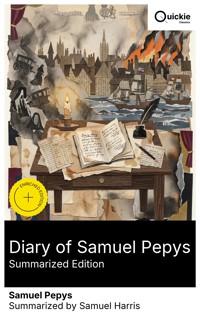
The Diary of Samuel Pepys (1660-1669) offers the most immediate portrait of Restoration London, interlacing Navy Board labors with a city reborn under Charles II. In brisk shorthand entries, Pepys chronicles the Plague, the Fire, the Anglo-Dutch War, the theatre's revival, music, prices, and domestic economies. Its style fuses ledger precision, gossip, and self-scrutiny, positioning the work between chronicle, memorandum, and early modern confession. Pepys (1633-1703), a tailor's son educated at St Paul's and Magdalene College, rose by Edward Montagu's patronage to become Clerk of the Acts and later Secretary to the Admiralty, eventually presiding over the Royal Society. A meticulous organizer and bibliophile, he used the Diary to audit time, money, health, and conscience; failing eyesight in 1669 forced him to cease. Scholars of Restoration culture, urban and maritime history, and life writing will find this work indispensable; general readers will relish its candor and texture. It offers a rare convergence of public policy and private desire, revealing how institutions and selves take shape amid crisis. Read it for immediacy, amplitude, and an unforgettable, flawed narrator. Quickie Classics summarizes timeless works with precision, preserving the author's voice and keeping the prose clear, fast, and readable—distilled, never diluted. Enriched Edition extras: Introduction · Synopsis · Historical Context · Author Biography · Brief Analysis · 4 Reflection Q&As · Editorial Footnotes.
Das E-Book können Sie in Legimi-Apps oder einer beliebigen App lesen, die das folgende Format unterstützen:
Veröffentlichungsjahr: 2026
Ähnliche

















Diary of Samuel Pepys (Summarized Edition)
Table of Contents
Introduction
Between the intimacy of a private life and the machinery of a nation at sea, The Diary of Samuel Pepys records how public history presses upon a single, ordinary day. Composed by a rising civil servant in Restoration London, the diary stands at the confluence of household routine, city streets, and state offices. Pepys observes his world with an exactness born of account books and memoranda, yet his pages continually widen to the bustle of theaters, markets, and river traffic. The result is neither memoir nor official chronicle but a daily ledger of experience, where errands and epiphanies coexist.
Written between 1660 and 1669, the diary is a primary document of the English Restoration, centered in London and in the administrative sphere of the Navy. Pepys set down his entries in a form of shorthand, a private system that kept the text from general readers until long after his death. The manuscript was preserved with his library at Magdalene College, Cambridge. In the nineteenth century it was transcribed and first published, with fuller and more accurate editions following in the twentieth century. Modern readers typically encounter either abridgements or comprehensive scholarly versions that standardize spelling and expand abbreviations.
The premise is disarmingly simple: on most days Pepys notes what he did, what he saw, what he spent, and what he felt. The voice is brisk, candid, and practical, switching without ceremony from office disputes to domestic logistics to diversions on the river or at the playhouse. The style favors concrete particulars—appointments, purchases, meals, and routes—yet gathers an unsentimental lyricism from accumulation. Tone shifts with circumstance: amused, exacting, sometimes anxious, but rarely grand. The effect for a contemporary reader is immersive and serial, a life glimpsed in cross‑section, where pattern arises from repetition rather than from plot.
Running through the diary is the negotiation between ambition and conscience, between the demands of public service and the pull of private comfort. Pepys measures time and money with a clerk’s precision, treating both as moral resources that must be stewarded, justified, and occasionally indulged. He watches how information moves—gossip, dispatches, petitions—and how reputations are made within institutions. He maps the city as a working organism of river, office, shop, and stage, and he studies ships and supply with a craftsman’s curiosity. At every turn, the record asks what success should look like and what it costs.
The years he chronicles include dramatic turns in national affairs and wrenching urban crises, among them epidemic disease and a catastrophic fire that reshaped London. Pepys does not write as a historian after the fact; he writes amid uncertainty, tracing rumor to report to policy, and returning, always, to the shape of the day. Because the entries are immediate, even great events appear alongside errands and meals, which lends them a human scale without diminishing their gravity. Readers encounter not set pieces but the lived texture of response—work hastened, routes altered, lodgings reconsidered—as a city tests its own resilience.
Reading the diary today involves attention to mediation. Editors modernize spelling, expand contractions, and annotate people, places, and technical terms; abridged versions condense repetitive matter, while complete editions show the rhythms that repetition creates. Archaic words and institutions will surface, but the prose remains strikingly clear when contextualized by notes. The book rewards a steady pace rather than a rush, since its satisfactions often lie in the slow formation of habits, ambitions, and relationships. It also invites ethical reflection about privacy, because Pepys wrote for himself; the candor that results is historically invaluable and, at times, discomfiting.
For contemporary readers, the diary matters as both evidence and example. As evidence, it offers a ground‑level account of governance, urban life, and culture in a decade of reconfiguration, a counterweight to official proclamations and later narratives. As example, it models an art of noticing—of tracking expenditure, time, mood, and movement—that resonates with modern habits of journaling and data. It suggests how personal record‑keeping can sharpen responsibility, expose self‑deception, and cultivate gratitude. Above all, it restores history to the calendar: the sense that the largest forces arrive one day at a time, and must be met there.
Synopsis
The Diary of Samuel Pepys, written between 1660 and 1669 and published posthumously in the nineteenth century after his shorthand was deciphered, offers a sustained, first-person account of Restoration England. The work combines public chronicle and private memorandum, following Pepys’s days as a rising naval administrator in London. Its sequence is largely chronological, tracing how national upheavals and domestic routines intersect. Pepys writes as events unfold, noting what he sees, hears, and does, rather than arguing a thesis. The diary’s value lies in its immediacy: it captures the texture of everyday life while registering major political, social, and institutional developments of the decade.
The narrative opens as monarchical government returns under Charles II, and Pepys consolidates his position through office and patronage. Living with his wife Elizabeth and managing a household, he navigates London’s streets, shops, and gatherings while learning the demands of public service. Early entries chart his appointment as Clerk of the Acts to the Navy Board, bringing proximity to decision-making and exposure to bureaucratic routines. The diary records the renewal of civic rituals and the reorganization of authority after years of conflict, with Pepys attentive to rank, ceremony, and access, all of which shape his prospects and responsibilities.
Cultural life resumes with vigor, and Pepys chronicles theaters reopening, music, printed books, and scientific talk, while observing fashions and manners at court and in the city. He records his expenditures, tastes, and amusements with the same fidelity he applies to office matters, creating a ledger of personal aspiration and self-scrutiny. Religion, friendship, and family ties receive regular notice, as do the pressures of reputation. This balance between curiosity and calculation reveals a character negotiating the pleasures of Restoration sociability alongside the demands of propriety, offering an intimate view of how status and entertainment converge in metropolitan life.
Pepys’s professional world dominates: shipbuilding, victualling, contracts, and the relentless work of supplying fleets. He depicts procedures, paperwork, and negotiation, capturing the tensions between ideal administration and the realities of limited resources. The diary charts his growth in competence and confidence, his encounters with superiors and colleagues, and his persistent efforts to enforce accountability. Through meetings at the Navy Office and at court, he witnesses policy in the making and the steady friction of patronage and reform. His entries convey the fragile equilibrium of a maritime power whose institutions must stretch to meet strategic and fiscal demands.
Crisis intrudes with the Great Plague of 1665, which Pepys observes as a civic and personal ordeal. He notes closures, movements of people, and the adjustments households make to limit risk, while continuing to report for duty when required. The diary registers changing patterns in commerce and worship, the anxieties of daily contact, and the moral questions posed by flight and service. Pepys’s entries combine practical measures—arranging work, safeguarding possessions—with a steady reckoning of mortality and fear, creating a layered portrait of a city attempting to endure and function amid public health catastrophe.
The Great Fire of London in 1666 becomes another turning point, recorded with urgency and breadth of perspective. Pepys witnesses the advance of the flames, the destruction of landmarks, and the improvisations of authorities and citizens. He documents efforts to protect records and goods, the use of river transport, and the evolving strategies to halt the fire. His proximity to court allows him to report how information moves upward and how decisions cascade. In the aftermath, he follows the city’s early steps toward recovery, noting temporary accommodations, administrative responses, and the resilience that rebuilding would require.
War with the Dutch frames the middle years of the diary, bringing naval campaigns and financial strain. Pepys chronicles the logistical undertakings that fleets demand and the frustrations of shortage and delay. He records public expectation, rumor, and blame as victories and losses ripple through London. The 1667 crisis, including the Dutch incursion into the Medway, intensifies scrutiny of naval management. Pepys depicts inquiries, renewed calls for economy and reform, and his own role in presenting information and defending procedures, yielding a rare, ground-level view of how a major department weathers political pressure and operational stress.
As the decade wanes, Pepys’s attention settles on personal discipline, household order, and the refinement of his professional methods. He assesses colleagues, trains clerks, and systematizes records, while pursuing studies and diversions in music and reading. Domestic life remains a barometer of fortune and strain, with household changes, finances, and health under review. Increasing trouble with his eyesight becomes a persistent concern, complicating his meticulous habits of reading and writing. The diary closes in 1669 with Pepys’s intention to suspend the practice for the sake of his vision, leaving his account precisely where duty and prudence meet.
The Diary endures as a foundational document of Restoration society, notable for its plain immediacy and breadth of observation. It preserves the feel of governance, commerce, and city life while offering a candid interior record of ambition, fear, and pleasure. Beyond its eyewitness value to events such as plague, fire, and war, the work illuminates how institutions function and how individuals navigate them. Pepys’s daily attentiveness—neither wholly public nor entirely private—renders a durable portrait of a world remaking itself, suggesting that history is best understood in the interdependence of grand changes and ordinary decisions.
Historical Context
The Diary of Samuel Pepys records daily life in London from January 1660 to May 1669, a decade defined by the Restoration and by war, plague, and fire. Pepys, a Cambridge-educated administrator serving as Clerk of the Acts to the Navy Board at Seething Lane, wrote in Thomas Shelton’s shorthand to preserve candor. His pages move among Parliament at Westminster, the royal court of Charles II, the City’s guild halls and markets, and the river-borne offices and dockyards that sustained the fleet. The Thames, coffeehouses, parish churches, and playhouses map his world, grounding the narrative in the institutions of metropolitan governance and sociability.
Pepys begins as England shifts from the Cromwellian Interregnum to the Restoration of Charles II in 1660, after General Monck’s intervention and Parliament’s recall of the exiled king. The Indemnity and Oblivion Act sought to stabilize politics while excluding regicides; the Cavalier Parliament (from 1661) consolidated royal and Anglican authority. The Church of England was re-established, culminating in the Act of Uniformity (1662), while the Clarendon Code constrained Protestant nonconformity. Playhouses reopened and court ritual revived, signaling a change in public culture. From his desk and journeys by barge, Pepys tracks how national settlement translated into practical procedures, patronage, and daily office work.
England’s commercial rivalry with the Dutch shaped policy and Pepys’s workload. The Second Anglo-Dutch War (1665–1667) mobilized fleets, shipyards, and victualling on an unprecedented scale. As a principal Navy Office clerk, Pepys audited contracts, musters, pay, and supplies, dependent on parliamentary taxation and City credit. He records preparations before major actions, the strain on seamen and dockworkers, and the consequences of the Dutch raid up the Medway in 1667. Parliamentary inquiries into mismanagement followed, testing officials and systems. The diary’s administrative detail documents how warfare pressed a still-developing fiscal-military state, revealing both capable organization and chronic vulnerability to shortages, arrears, and patronage.
In 1665 London faced the Great Plague, part of a wider European cycle of bubonic outbreaks. Bills of Mortality reported rising deaths; quarantines, pesthouses, and restrictions on trade and assemblies were imposed. The royal court and many officials relocated to Oxford for safety, while the London economy contracted. Pepys remained largely in the capital because naval business continued, observing deserted streets, closed shops, and the persistence of river traffic. His entries trace civic responses—from parish relief to orders of the lord mayor—and the uneven enforcement of measures. The diary preserves an administrator’s view of continuity amid hazard, and of the city’s gradual recovery.
In September 1666 the Great Fire destroyed much of the City of London, including St Paul’s Cathedral and thousands of houses and shops. Firefighting relied on hooks, buckets, and firebreaks; high winds and timber buildings accelerated the conflagration. Pepys, based near the Tower, reported official measures such as demolition to halt the flames and the use of the river for evacuation. Subsequent legislation mandated brick rebuilding, wider streets, and new urban lines; the Fire Court expedited property disputes. Designs by Christopher Wren and others reshaped churches and public buildings. The diary records immediate disruption and the logistics of recovery, from materials to money.
Restoration London fostered experimental science and print culture. The Royal Society, meeting from 1660 and chartered in 1662, promoted natural philosophy through observation and experiment; figures like Robert Boyle and Robert Hooke exemplified its ethos. Pepys was elected a Fellow in 1665, reflecting his curiosity and connections among educated officials. Coffeehouses hosted discussion, news circulated through licensed presses and the London Gazette (founded 1665), and the 1662 Licensing Act regulated publication. The diary situates administrative labor within these networks of inquiry and information, illustrating how bureaucrats consumed and reported knowledge as part of wider attempts to measure, improve, and rationalize public affairs.
Restoration culture transformed public entertainments and manners. Theaters reopened in 1660 under royal patents, with the novelty of professional actresses on the English stage; comedies and heroic drama flourished. Courtly display, patronage, and fashion influenced urban consumption, while the City’s livery companies and markets structured trade. Household management, apprenticeships, and service defined social mobility. Pepys, advancing through merit and connections under the patronage of Edward Montagu (later Earl of Sandwich), exemplifies the upwardly mobile official. His diary registers the costs and rewards of office, the etiquette of gifts and fees, and the interplay of private domestic life with public duty in a bustling capital.
By the later 1660s, war exhaustion and financial crisis prompted scrutiny of administration. After the Medway disaster, Parliament created commissions to examine naval accounts; ministers fell, and the Treaty of Breda (1667) ended hostilities on pragmatic terms. The Triple Alliance with the Dutch and Sweden followed in 1668, reflecting shifting European balances under Louis XIV. Pepys’s evidence before investigators and his reforms in naval procedures show an ethic of practical improvement within a patronage system. The diary’s candid record thus reflects and critiques its era—celebrating efficiency, recording waste and risk, and portraying how Restoration governance balanced spectacle and service against recurrent emergency.
Author Biography
Samuel Pepys (1633–1703) was an English diarist and naval administrator whose writings provide an unparalleled window onto Restoration England. Born in London and active during the tumultuous decades after the Civil War, he recorded the revival of court and city life, the rebuilding of institutions, and the rise of Britain’s maritime power. Pepys’s reputation rests chiefly on the diary he kept through the 1660s, a text remarkable for its candor, observational acuity, and range. As an efficient public servant with a keen eye for detail, he left historians and general readers alike a vivid record of daily life amid plague, fire, war, and administrative reform.
Pepys received a humanist schooling at St Paul’s School and then studied at Magdalene College, Cambridge, where he cultivated habits of close reading and systematic note‑taking. His education grounded him in classical authors and sharpened the practical literacy that would later serve his administrative work. In London he embraced the revived theater and contemporary literature, interests that permeate his diary and correspondence. He was also a devoted amateur musician and collector, engaging with the wider culture of performance and print. For private writing he used a popular seventeenth‑century shorthand, a choice that helped preserve his candor while enabling extraordinary compression and precision.
Pepys’s early career developed through clerical and administrative posts that brought him into naval service at the Restoration. He participated in the 1660 voyage that returned Charles II to England, an experience that placed him at the center of political transformation. Soon afterward he became Clerk of the Acts to the Navy Board, a position from which he learned the intricacies of procurement, dockyard management, and naval finance. A serious medical ordeal—the removal of a bladder stone in the late 1650s—shaped his later attention to health and personal regimen. In office, Pepys combined diligence with a reforming temperament, building a reputation for methodical oversight and plain speaking.
The diary, kept from 1660 to 1669, follows Pepys through work, city streets, playhouses, churches, and private rooms. It chronicles the rhythms of London life and major public crises, including the Great Plague of 1665, the Great Fire of 1666, and the Dutch attack on the Medway. Pepys records naval administration from the inside, noting bottlenecks, improvisations, and improvements. He writes about books he read, music he made, and performances he saw, giving scholars a richly textured cultural landscape. Concern over deteriorating eyesight led him to stop the diary in 1669, but its nine years remain among the most sustained eyewitness accounts of the century.
Beyond the diary, Pepys became a leading architect of naval professionalization. As Clerk of the Acts and later as Secretary to the Admiralty in the 1670s and again in the 1680s, he pressed for standardized procedures, audited accounts, dockyard discipline, and improved victualling. His administrative memoranda and correspondence argued for trained officers, rigorous examinations, and clearer chains of command. After years of experience, he published Memoires of the Royal Navy (1690), a reflective survey that distilled lessons from recent wars and recommended durable reforms. Colleagues and critics alike recognized his competence, even when his frankness and insistence on order provoked resistance.
Pepys also played a notable role in the scientific culture of his day. He served as President of the Royal Society in the mid‑1680s, during which time he granted the official imprimatur for the publication of Isaac Newton’s Principia Mathematica—an administrative act emblematic of his commitment to organized knowledge. His career was not without peril: during the political convulsions surrounding the Popish Plot and later regime changes, he faced accusations, brief imprisonment, and investigations from which he ultimately emerged without lasting conviction. Throughout, he maintained a substantial personal library, catalogued with unusual care and breadth, encompassing books, manuscripts, prints, maps, and ephemera.
In later years Pepys withdrew from office but continued scholarly and collecting activities. He organized and safeguarded his books and papers, which were preserved after his death and remain housed as the Pepysian Library at Magdalene College, Cambridge. His diary, written in shorthand, was deciphered in the early nineteenth century and first published in 1825 in an abridged form, with authoritative, fuller editions appearing in the later nineteenth and twentieth centuries. Pepys’s legacy endures as both a touchstone for the practice of life‑writing and a primary source for Restoration politics, culture, and maritime administration, continuing to inform scholarship and inspire readers worldwide.
Diary of Samuel Pepys (Summarized Edition)
PREFACE
The Diary of Samuel Pepys, available for seventy years, first appeared in 1825 with barely half its text. Later editions enlarged it, yet Lord Braybrooke said, “there appeared indeed no necessity to amplify.” Eighteen years ago excitement rose when the Rev. Mynors Bright promised an edition with a further third, yet his preface admitted, “It would have been tedious … to copy his daily office work,” and he left roughly a fifth unpublished, depositing a full transcript at Magdalene College. The present plan prints everything except some unprintable lines, each gap marked, trusting the public’s patience. Pepys’s shorthand, once thought Rich’s, is now certified Shelton’s, 1620.
Braybrooke, helped by John Holmes and James Yeowell, supplied notes; those left intact bear ‘B.’, others are enlarged, yet figures stay obscure, so aid is sought. Material comes from books, J. E. Doyle’s Baronage clarifying double dates like 5 Jan 1661-62, and Thomas Rugge’s ‘MERCURIUS POLITICUS REDIVIVUS… Est natura hominum novitatis avida,’ once Earl Stamford’s, sold 1819, then via Thorpe and Heber to the British Museum in 1836 for £8 8s. Rugge, a Norfolk man, lived fourteen years in Covent Garden and died about 1672 after illness. Thanks go to Fennell, Fry, Hodgkin, Jackson, Laughton, Marshall, Martin, Matthew, Norman, Prosser, Callendar, and librarian Arthur G. Peskett. H. B. W., Brampton, London, Feb 1893.
JANUARY 1659–1660
Until the change of style, the year in England lasted March 25 to March 24, yet Pepys treats January 1 as New Year’s Day. He thanks God for good health, feeling pain only after colds. He dwells in Axe Yard with his wife and servant Jane, briefly hoping she is with child before the hope fades. Nationally the Rump[1] resumes sitting after Lambert’s disturbance; army officers have yielded; Lawson lies in the river, Monk remains in Scotland, Lambert stays away. The new City Council demands a free, full Parliament, and twenty-two excluded members seek readmission. Pepys appears rich but feels poor, his office insecure under Mr Downing.
On Sunday January 1, settled in the garret, he rises and puts on a broad-skirted suit unused for weeks. He walks to Dr Gunning’s chapel at Exeter House; the sermon on “When the fulness of time had come, God sent His Son, made of a woman,” declares “made under the law” means the circumcision honored this day. He dines at home on leftover turkey, during whose cooking his wife scorches her hand. After spending the afternoon on accounts, they stroll to his father’s, noting posts newly raised at the Fleet-street Conduit, sup with Mrs The Turner and Madam Morrice, see the ladies home, then return to their lodgings.
Monday the 2nd begins with old East delivering a dozen bottles of sack; Pepys tips him a shilling. Shepley, drawing sack in the cellar as a gift from my Lord, confirms the bottles are also from his Lordship. Pepys hurries to the Temple to see Mr Calthropp about sixty pounds owed to his patron but finds him out, then visits Mr Crew’s, borrowing ten pounds from Mr Andrewes for himself. At the office nothing requires attention, so he wanders long through Westminster Hall, where talk runs that Lambert is marching toward London and that Lord Fairfax is likewise on the move.
Thomas, Lord Fairfax, generalissimo of the Parliament host, withdraws to his estate after the Restoration and, on every 30 January, broods over the king’s blood. In his hand he sets down: "O let that day from time be bloted quitt, And beleef of ’t in next age be waved, In depest silence that act concealed might, That so the creadet of our nation might be saved; But if the powre devine hath ordered this, His will’s the law, and our must aquiess." The verses, a loose rendering of Statius’s "Excidat illa dies aevo…" earlier cited by De Thou and later by Pitt, echo Fairfax’s shudder.
Lambert rides at the head of the Irish brigade yet keeps his aim hidden; the Commons finish the Council-of-State bill and advance an indemnity, while towns demand a free Parliament and talk of recalling former members. After errands Pepys misses Crew’s dinner, shares ale and cheese in the new market, fails to find Calthrop, escorts Mrs. Jemimah home, learns cribbage, sings at Will’s, then eats Lady Montagu’s brawn. Next dawn brings hard frost: he pays soldiers, dines on beef, cabbage, and brawn with Jem, Sheply, Hawly, and Moore, plays cards, hears Parliament’s indemnity passed, and ends the night gaming with the Hunts.
Vanly collects rent; Pepys pays at the office, tastes Hawly’s cheese at Will’s, buys ale for his lord’s troopers, notes Jenkins’s bills of exchange, tramps through snow with sore nose, and hears Lambert may yield or fight if zealots rally. Night letters show men gone and Fairfax satisfied; Pepys plays viols, then cards till ten. On the fifth Excise money arrives, troops are paid, and he writes Montagu that the purged members stay out, writs will issue, and Monk is called to Whitehall. Sack-posset postponed, Fage soothes the nose, the City mutters against levies, and on the sixth he breakfasts with Sheply and brother John.
He paid soldiers, dined at cousin Thomas’s where a ‘venison’ pasty proved beef, fiddled at Mr Vines’s, then supped with the family at cousin Stradwick’s; Pall drew Queen, Mr Stradwick King from the Twelfth-cake before they walked home in hard frost. Next day, collecting probate fees, he entertained Mrs Turner, Theoph., Madame Morrice, Joyce, and Mr Hawly with steaks, rabbit, and cards until Downing’s messenger hauled him away to await the French ambassador and discuss Gallic versus Spanish zeal. He rejoined the card-players, heard May, Harding, and Mallard sing at Dr Whores, drank sack-posset at Mrs Jem’s, sampled his lord’s turkey-pie, read Quarles, and slept.
Sunday he heard Mr Gunning assert Christ worked as a carpenter, ate at his father’s, attended a sermon at Mr Mossum’s, supped with Mr Sheply, and heard Mr Palmer’s burial set for tomorrow. At dawn he polished brother John’s oration and sat at Harper’s with Simons, Muddiman, and Price till two. Muddiman bragged he sold news; Simons quoted Scobell’s disputed line, “This day his Excellence the Lord General Cromwell dissolved this House.” After paying eighteen-pence, he joined the Coffee-Club, learned Monk was coming, checked on Mrs Jem, heard Sir Harry Vane and nine officers sent away, entertained the Quarter-Master and Jenings with wine and brawn, and dreaded the morning payment.
On the tenth he admired Greatorex’s sphere, borrowed ten pounds from Mr Crew, lunched with the Quarter-Master, Jenings and Rider, filed returns in muddy London, and talked with Harrington, Dr Petty and others in a coffee-house; Mother Lams whispered that Scott was named Intelligencer. The eleventh brought Captain Barker’s 300-pound payment, shuttlecock for dinner, ale with his father, silver snuffers and shears, and a bedside visit to small-poxed Mrs Jem. On the twelfth he drank with Sheply, sent Hinchinbroke letters, met Captain Holland, feasted at the Half-Moon with Billingsly, Newman and a Welsh harper, re-sealed delayed letters, and planned a Joyce feast with brother Tom before sleeping.
13 Jan: Pepys meets Mr Fage at the Swan. Fage relates Haselrig and Morly’s shout that London has lost its charter, the Chamberlain’s sharp rebuke, and warns Monck’s letter is “a sly piece,” so the city will neither petition nor pay until the secluded Members return or a free Parliament is chosen. Pepys finds no office work, is invited to Pinkney’s Hall feast, dines with his wife at Wade’s, visits Catan, endures a jealous chase round Whitehall, leaves his angry wife, confirms Mrs Jem has swine-pox, plays cards, and ends the night making music with Mr Vines.
14 Jan: the office lies idle, so Pepys drifts through Westminster Hall with Mr Moore, speaks to Sir Anthony Ashley Cooper on lodgings, then meets Captain Holland, who has already installed his wife at Pepys’s house. He races home, sets out a meal, entertains them afternoon, escorts his wife to market, and slips to the coffee-house, where disputants demolish Mr Harrington’s claim that property underpins government. Letters go off to Hinchinbroke before bed. 15 Jan: a neighbour’s dog ruins his sleep; he takes physic and stays indoors. Brother John arrives; they polish John’s Greek oration and examine the Roman rite of blessing bells; cold snow slows the medicine.
16 Jan: Mr Crew orders Pepys to escort Edward to Twickenham, insisting the secluded Members ‘must sit again.’ A coach is hired; Mr Downing hints at sending him to Holland. After a dinner of songs and flageolet, Pepys walks home as the bellman calls, “Past one o’clock, a cold, windy morning!” 17 Jan: on the road they hear Lord Chesterfield has killed Woolly and fled. Fuller absent, they dine, Pepys tips the ushers, leaves his wife at Brentford market, plays cards with Mrs Jem, hears the Coffee Club pronounce Rome steady, learns Sydenham expelled and Salloway jailed, posts letters, drinks with Jack Price on the Protector, then beds.
As we talked last night the shaken man cried, "Who should a man trust, if he may not trust a brother and an uncle?" and, "They have much to answer before God Almighty for playing the knave with me." He spoke of £100,000 offered for his return and swore the Protector would yet show valour. I slipped home. On the 18th I worked, took letters from Sheply, dined at Wilkinson’s with Talbot and Adams, pulled Butler in for wine at my Lord’s, unlocked the study for Mistress Ann, solved my Lord’s cipher, walked her back, consulted Mr Crew, and heard wonder whether Monk would choose.
On the 19th Downing, still in bed, said he had "a kindness" and had made me Clerk of the Council; I thanked him coolly. Ale with Pierce, leave from Sir Anthony Cooper to keep our rooms, and an hour reading the Dutch ambassador’s reply filled the morning. After dining with Mrs Jem I carried invitations to Downing’s feast and heard most clerks feared dismissal. On the 20th I reported back, sought my Lord’s money, shared jole of ling, nearly shot a scholar above the privy, watched the Coffee Club set rules, and heard the city chant, "Monk under a hood… the Parliament sit upon thorns.
Up early on the 21st finishing accounts and writing my Lord, I paid Sheply, took the keys, then endured Downing’s rebuke for missing guests. Hawly and I dined at Crew’s, collected £25, drank at the Mitre, gave Mrs Jem £5, and calmed Clerk Cook when he accused me of stealing his post. I closed a letter reporting Lenthall back in the chair and a declaration planned. On the 22nd after sermon at Messum’s my wife joined me; we dined with father, who showed a letter about brother from Mr Widdrington. An afternoon sermon, supper with the Turners, and buckles on my shoes ended the week.
Before dawn on the 23rd I carried £20 to Mr. Downing, fetched Mr. Pierce to the Axe for a draft, then idled with accounts. Home, wife prettied the maid by dressing her head. I paid Wilkinson, bought beef, settled with Waters the vintner, and at Mrs. Jem’s with Lady Wright saw Scott too drunk to be seen. After cards I paid Mrs. Michell, slipped into a ditch in darkness, yet reached Mount’s chamber for venison, ale and song till midnight. Parliament, sitting late, ordered a declaration promising ‘a great many good things.’ Next day opened with a draught at Will’s and counting excise money.
24th: My wife hobbled on pattens to Pierce’s. Inside Mrs. Carrick and Mr. Lucy cried “husband, wife!” while ribbons flew and cups clattered. Southerne and Lt. Lambert waved Parliament’s pledge of “law, gospel and tythes,” which no one trusted. I drank with Father, heard Crumlum promise aid for my brother, warned sister Pall, and learned Parliament had summoned the Committee of Safety. 25th: Downing set me a cipher and £500 order; after office I ate ling with my uncle, saw Huson’s effigy on a Cheapside gibbet, bought Hebrew grammar, heard Evans’s lute, helped wife cook at my Lord’s, fetched ship papers, and crept home spent.
26th: I took £20 to Downing, watched Frost hand him £500, and carried warrants for £1,800 a year and customs freedom. My wife spread mutton, veal, pullets and larks, tart, tongue, anchovies, prawns and cheese at my Lord’s lodgings. Father, Uncle Fenner, cousins, the Pierces, Will Joyce and brother Tom dined; Joyce drank and needled his parents, while Mrs. Pierce’s finery daunted the girls. After a bottle the party broke up. I drafted two ciphers for Downing; he revised them. Beside a log my wife and I ate, doubted word of Monk siding with Parliament, and read Uncle Robert’s prayer to keep my money four months.
On the 27th I met Tom Newton, bought him a morning draught at the Crown, and heard him boast, "I'll get any post I please—even Clerk of the Council." We talked till the offices shut. Mrs. Michell then told me Mr. G. Montagu had inquired; at his house he forced me to dine on a meal and showed uncommon civility. Home, then cards with Mrs. Jem. My wife reported Mr. Hawly's anger at my absence and fear that Mr. Downing meant to find holes in my coat. I rushed round on Downing's errands, wrote character notes until midnight, Hawly calling at nine; at dawn I penned another while my wife read.
Next day I carried three character letters to Mr. Downing, wrote a fourth as Frost counted cash, and delivered it. Downing said he would sail for Holland before noon. With Hawly I fetched Mr. Squib to his lodging, waited while trunks left, then heard his courteous farewell: "I shall serve you whenever I can," easing my fear of removal. I failed to present my best fur cap. Mrs. Michell admired it in Westminster Hall, yet the coach was gone. I dined with Luellin at Heaven, spoke of fortune, paid Walton £500, settled notes with Andrews, gave Lady Wright Lord's letter, sought news at Will's, posted mail, and slept.
On the 29th I heard Mr. Gunning preach on Galatians 2, proving that St. Paul owed no supremacy to St. Peter, each holding separate charges. After the service I walked with Mr. Moore and lunched at Mr. Crew's, where Mr. Spurrier joined us. The afternoon I spent balancing my accounts and, to my surprise, found myself worth above £40, though I feared something missing. Supper at my father's followed. Brother Tom related how W. Joyce dragged Mr. Pierce and his wife to a tavern and still made Tom pay. Father reported Uncle Fenner and Aunt admired our recent entertainment. I returned home without calling on Mrs. Turner.
On the 30th, ten years after the King's death, I woke singing "Great, good and just." Scull the waterman delivered Hawly's note from the Hope about money. At the office I took excise cash from Ruddyer, then idled at Will's until three. After drawing £12 10s salary I rowed to London, met Ashwell, Spicer and Ruddyer at Torriano's lodging, and paid Captain Matthews £12 17s 6d. Returning, I played the flageolet. Wife absent, I played cards with Mrs. Jem, her maid struck with ague, relieved myself at the Harp and Ball, wrote late, observed talk stilled now Monk sides with Parliament, and fixed nails for cloaks.
31st: I played lute until nine, paid Frost £1,200 at the office, and thanked an excise clerk who recovered a lost £7. Hawly arrived with Downing's instructions for his suit against Squib. We clerks gathered for the Committee on Colonel Jones's accounts; it never sat. I bought a printed reply to General Monk, called on Mrs. Jem—maid in ague, mistress merry—then shared a pot with Pulford, who reported Fleetwood's plea to Parliament and promise to repay Exchequer money. Home, I posted letters, found my wife reading Polixandre, saw no threat in Downing's note, and judged the Council clerkship still unsafe.
FEBRUARY 1659–1660
Morning at the office, letters delivered; at noon porridge with my wife. To Westminster Hall with Mr. Swan; his counsellor warned, "Squib will win." At Lincoln’s Inn the attorney fixed the trial day. I got Sir Harry Wright’s hand for the £60 due tomorrow, visited Mrs. Jem, then carried Gammer East and James the soldier to my Lord’s lodgings. Their regiment, shut out by Colonel Fitch, roared, "We march only when we’re paid; else we’ll fetch it from the City!" Parliament hunted silver. I sent bedding to feverish Mrs. Ann, played cards till nine, sat with Mr. Hunt and his wife, then slept.
Early ale with Doling, then officers thronged my office demanding pay. After dinner we went by boat to grocer Calthrop at London Bridge and drew £60 for my Lord. At the Bridge Tavern we shared wine. Shots cracked by Somerset House; soldiers packed the Strand. I stowed the money with Mrs. Johnson and watched the foot drive back horse shouting, "Free Parliament and money!" A drum brought more men of the same mind, cheers rising. Purse regained, I donned a white silver-laced suit, heard porter James swear they meant to enter the City next day, lingered at a mock horse-sale till near midnight, and home.
3rd: Promised pay calmed troops. I walked St James’s Park with my flageolet, then at Whitehall saw thirty captured apprentices. Paid Miller’s men, slipped Mrs. Turner and Joyce into Commons, ordered mutton with cousin Roger, watched Monk[2]’s regiments march in. The joint arrived raw, so we drafted a posy for her ring. Cards with Mrs. Ann while soldiers still muttered. 4th: Lute practice; Squib never came. Met Swan and Captain Stone on Downing’s suit, lingered at Will’s, visited Lady Swan, ferried him to counsellor Stephens, missed Ellis, heard of the eater Marriot, skimmed a silly ballad, sought a maid for Mrs. Jem, home by link-light.
At Scott's Mrs Ann blazes; I ignore her, tell Mrs Jem my errand, dash home, send letters, touch the lute, sup, and sleep. Parliament grows to four hundred, and my wife kills the Zealand turkeys Mr Sheply sent, Jane refusing. On the Lord’s day Mr Hawly, wan and anxious, murmurs, “I have lost four-and-twenty pounds,” and I can only sigh. We hear an aged stranger cry, “What manner of love is this, that we should be called the sons of God.” After service I hunt the gate in vain, then find my wife dining at my father’s and sit with them.
Afternoon we return to church where my wife pockets a black hood left in Mrs Turner’s pew. A stranger drones a poor sermon, then reads the story of Tobit. Home with Mrs Turner, I jot notes for brother John, sup at my father’s, and, while writing the day, hear a drum give odd single beats; Dick Cumberland had appeared at service. Next morning I hand Mr Andrews sixty pounds, watch soldiers line Palace Yard, and see Monk bow to the judges. Father tastes my Denmark turkey; after wine at the Bull Head I chide Mrs Ann, lose half a crown at Will’s, and sleep.
7th: I leave the office to Spicer and attend Paul’s School; a volume said the founder’s is shown and brother John speaks well. Soldiers in the Palace yard strike Billing and the Quakers. With Captain Stone I postpone business with Squib, decipher my Lord’s cipher about coming to town, consult Crew, and hear of a print of buttocks fouling Lawson as boys cry, “Kiss my Parliament.” 8th: I play the flageolet, watch pigeons breed, meet friends, forward bottles, calm my father after Uncle Robert’s bitter letter on John, am jostled in Fleet Street, and reach bed aching with a boil under my chin.
Letters written before I rose, soldiers busy at Hilton’s. At Westminster Hall I paced with Swan over Downing; in Phelps’s, Rogers sneered, “I’d not for a thousand pounds touch Swan’s cause,” nettling him. Word came that Monk had entered the City to seize councillors who refused taxes till Parliament be full. I wrote my Lord, saw Sir Robert Pye denied release, missed Mrs. Jem, drank sack with her aunt, dined at Pierce’s, hired counsel at the Temple, heard Lord Dorset gain a £330 suit, played flageolet, learnt Monk had jailed aldermen and would tear down gates and chains, then home to doctor mouth and boil.
With Swan at the Court of Wards, three Lords sat; Lord Fountaine rebuked Scobell. At the Exchequer I swore Downing was ordered to Holland and handed the paper to Stevens. I got money from Hawly, treated Lenard to a draught, dined, then heard the Barons; Squib showed his patent, the jury ruled against us, ten pounds dropping to one shilling amid shame. Vexed, I visited Fage; he medicined my cancer and reported Monk had smashed gates and chains, returned to Whitehall, and stopped the Common-council until new men be chosen. I met Moore at the Sugar Loaf, spoke with Hunt at home, and to bed.
Lying long abed, I spent the morning over my Spanish history of Rome, then walked to Westminster Hall. News flew of Monk’s letter; faces brightened within minutes. In the lobby I heard the Speaker read it, saw Sir Arthur Haselrig storm out, and Billing seize his arm with, “Thou man, will thy beast carry thee no longer? thou must fall!” The House adjourned to three. Hungry, Chetwind and I hunted food, found a roasted pullet inside Temple Bar, then to Chancery Lane where I sang in his study. By coach to Guildhall we joined the jubilant throng awaiting Monk.
Monk emerged; the shout, “God bless your Excellence!” rang louder than any I have heard. Lock joined us later and repeated the letter’s drift: Monk and his officers dislike being set against the City; tyrants of the late Committee sit again; Lambert and Vane lurk in town; new oaths are threatened; therefore writs must issue by Friday and he will retire within the walls, leaving only guards. He would not admit Scott or Robinson. Citizens offered him their houses; streets showered soldiers with drink and coin. At night bells pealed, bonfires roared, rumps were roasted on spits, knives clanged, lanes glowed like furnaces.
Lord’s Day: Pierce and I shared a draught, paced Whitehall, heard Haselrig had gone to Monk and the general’s wife departed. I dined with cousin Thomas, walked the park, saw Monk cheered at St. Paul’s. That night boys smashed Barebone’s windows. On the 13th my sore mouth made me buy a song-book and a remedy; Monk declined the Lords’ dinner while his troops drank City money. Valentine’s Day brought petitions to Monk; Parliament turned the oath into a promise, barred all who had borne arms and their sons, and banished Sir Harry Vane. I lost sixpence at cards and posted a letter to my Lord.
Captain Holland and Cuttance woke me; at Harper’s, the office, then Will’s I handed Mr. Hill a letter for Nan Pepys and Rump pamphlets. Crew’s table was full, so Walgrave and I ate buttered salmon below. I arranged Worcester money with Hering, slipped my Lord’s note to Lady Wright, and heard Mrs. Jem whisper that ‘forty secluded gentlemen’ had appeared. Home, letters, quiet. Next dawn I practiced lute, gave Shaw and Hawly ale, and sent my Lord oranges, scallops, and dispatches. At the Sun two trenchers came. ‘Lamb,’ I judged; Shaw cried ‘veal’; the wager won me sack. With threepence I spent little, then slept.
Tom the footboy reclaimed ten shillings; Hills the instrument maker advised on my strings; my reckoning showed forty pounds in hand. After dining with Hawly I wrote Downing, joined Gunning’s fast, then piped through the Park with Monsieur L’Impertinent and over ale heard that members were courting Monk, his baggage moving City-ward. At Harper’s we toasted, “To the King and fair Frances!” I skipped Uncle Fenner’s wedding. Next day I mastered “Fly boy,” heard gardener Looker’s odd story, carried my books home, drank with friends while Wotton recalled ancient comedies, wrote my Lord from Whitehall, saw two soldiers hanged for mutiny, and went to bed.
Books shelved, I drank purle with L’Impertinent; rain shifted us to Gunning, who praised widowhood. Over dinner Moore said the secluded seek writs for a free Parliament, Haselrigge hides, and Crew with my Lord may flourish; several dropped in that Lord’s day. I set my wife at Mossum’s sermon, talked of John’s Cambridge journey, and walked home beneath borrowed mantle. Next morning, after lute and balancing accounts, I dined with partner and John, armed him with books, then at Marsh’s read a pamphlet for monarchy, learned Speaker Lenthall refused writs, saw the club break on a debate, ended with ale at Will’s, and slept.
At dawn troops marched on Westminster; I followed. Twenty secluded members, fresh from Whitehall where Monk urged a Commonwealth, slipped into the House while guards meant to admit them were mistaken for blockers. Mr. Prin, bearing a basket-hilt sword, drew cheers. At noon Crew said, "Monk commands all forces; Lawson the fleet. Call my Lord—work awaits him." We dined, then heard Lock and Purcell by the river, including the eight-voice "Domine salvum fac Regem." Taylor added, "The City gates will be rebuilt, prisoners freed, Booth heard tomorrow." Bonfires ringed London; home, I wrote my Lord and heard Fuller say Widdrington’s feuds may harm my brother.
Rain kept me from Crew, so I checked my Lord’s rooms and worked. Pierce agreed to ride with me to Cambridge. In Westminster Hall I watched Brown reclaim his seat. Lunch at my father’s was beef amid John’s packing. I borrowed five pounds from Andrews, paid Jemimah’s maid, and heard Parliament order the City gates rebuilt and Brown cleared. On my twenty-seventh birthday I leave, drank with Fuller and Uncle Thomas, chose Garthwayt’s horse, set tomorrow’s rendezvous with Pierce, and exulted when Crew said, "Your Lord sits on the Council by seventy-three votes." I mailed the news and won ale betting Prin was left out.
At dawn Pierce and I rode from Scotland Yard. Mud slowed us; fried mutton at Puckeridge was our halt before the Chequer, six miles short of Cambridge. After cards and roast veal we slept. Pierce turned toward Hinchingbroke at light; I entered Cambridge by eight and met my father and John at the Falcon. Widdrington admitted my brother to Christ’s with courtesy. I visited Hill at Magdalene, bought Elenchus Motuum, and with Fairbrother, Angier, and Zanchy toasted the King at the Three Tuns. Supper in Hill’s rooms was good; Zanchy said Saturday strictness is gone. Content, I lay with John, his luggage on the road.
Sunday the 26th, my brother attends College Chapel while Father and I stroll the fields behind King’s and through the Chapel yard. We meet Mr. Fairbrother, follow him to St. Botolph’s, and hear Mr. Nicholas of Queen’s declaim, to loud applause, on the text, "For thy commandments are broad." After service Father and I dine in Mr. Widdrington’s chamber with two Fellow-Commoners and Mr. Pepper. Mid-conversation a servant arrives: Mr. Pierce is in town. We hasten to our inn; Pierce laments, "I have lost my journey, my Lord left Hinchingbroke for London on Thursday," leaving me momentarily confounded.
After a drink I fetch from Magdalene the certificate to save my brother’s year. Burton takes me to Pechell’s room with Zanchy. Pechell leaves for church; Zanchy and I duck into the Rose Tavern until the sermon ends, then Pechell rejoins us and we pledge the King till dusk. I then bring Father, Pierce, and Blayton back to the same house for more wine, masking my earlier bout. At Cousin Angier’s supper two bottles I had sent arrive yet win no thanks. Fairbrother slips me poor verses 'upon Mr. Prinn,' begging I deliver them. Night ends with teasing the inn maid before bed.
27th, I rise at four, leave Father asleep, give John ten shillings, and ride with Blayton to Saffron Walden. The White Hart landlord guides us into Audley End, its high ceilings and royal portraits. In the cellar we toast the King, my flageolet chasing echoes; I tip two shillings. We pause at an old almshouse, drop sixpence under the brass, "Orate pre anima Thomae Bird," drain ale from a silver-rimmed bowl, kiss the landlord’s daughter, and splash through rain to Epping for cards, supper, talk, bed. 28th dawn brings red herrings, a botched boot repair, and a damp forest ride toward London.
On the 28th we ride into London, shops shut, militia massed for a thanksgiving; Osborne says Parliament has returned. At St. Paul’s Dr. Reynolds preaches before General Monk. I change, dine with my Lord at Sir Harry Wright’s, run errands with Howe, visit kin, and close the night playing music with Spong while a drunken Sheply breaks my study lock. Next day ale at Will’s brings news my Lord is chosen General at Sea, perhaps with Monk. I boat with my wife to the city, arrange fifty pounds from Herring, taste my first metheglin at Mrs. Turner’s, sup at Mother’s on Uncle’s invitation, and home.
MARCH 1659–1660
Morning of March 1, I climbed to my lord’s rooms, pocketed a handful of his pamphlets, and idled at the office until Sheply found me. At dinner at Mr. Crew’s we lingered, old Mr. Crew and my lord absent, and heard how poor John the coachman, killed by his own horse, would be buried that afternoon. Sheply and I visited Laxton the apothecary, then shared wine at the Sun where he repeated my uncle’s kind praise. Home early. That night Parliament resolved not to sit after the fifteenth. At dawn on the 2nd I set out to find my lord again.
March 2, Mr. Crew’s lodging swarmed: Secretary Thurlow and Monk’s trumpeters saluted my lord. I sent a note to Mr. Downing, then feasted with Eglin, Chetwind, and Thomas on carp before more wine at the Swan. Moore joined me at Mrs. Jem’s, Howe and Sheply as well. In Westminster Hall I saw Sir George Booth free. Rumor said the City militia stood firm, Lambert was summoned, Haselrig stayed away, and men debated a single person. Mr. Prin rose and cried, "In King Charles's." Home to study and my wife. On the 3rd Parliament named my lord and Monk Generals at Sea.
On the 3rd my lord, over sheep’s head, warned that Monk might "get into the saddle," urging haste with his sea commission. Gifford doubted; Harper plied me with liquor, boasting the Protector’s return. March 4 I played, heard sermon, dined with mother. On the 5th Hill restrung my theorbo; we feasted at Billingsgate, Pinkney showing arms for the King, and Hunt said Parliament ordered the Covenant rehung. March 6 in Whitehall garden my lord asked, "Will you sail as my secretary? I'll use friends; the King will come." I promised to consider, pledged a purser’s place, and drank with uncle Tom chasing a Windsor post.
Mr. Day rushed in: “Shrove Tuesday—join the club!” We feasted at the Bell on wine and I matched Tanner’s fiddle on the viol. Later I trailed Mrs. Jem, who slipped from hiding into a dance; ashamed, I left. At the Lion I drank with Sheply, then wrote for J. Goods, my Lord planning to move to Swiftsure. He warned, “They push to restore the Protector; he would not endure, nor the King unless he stays sober.” Lords crowd Westminster, Overton holds Hull, Lawson sails north; all toast “The King!” while Monk is banqueted. My Lord’s kindness let my wife and me lie awake content.
Ash Wednesday, Washington said, “G. Montagu becomes Custos Rotulorum[3] today; with backing he might name you Clerk of the Peace.” I hurried to my Lord, who feared the place already promised. Surgeon Pierce advised me to sail, and my Lord, riding with me through the Park, said, “Stay or go, I’ll serve you.” At Westminster I sought Le Squire’s post, then ate oysters, drew £50 on Frank’s bill, bought a catcall, and drank with uncle Wight. Father arrived, reporting Uncle’s bad leg and intent to make me heir, portions for the rest. Sir Arthur appeared, Rump returned, Lambert chose the Tower; hopeful, I slept cheerfully.
On the eighth I sought firing at Whitehall, asked Blackburne to place Batters as Wexford’s gunner, and saw Westminster Hall uneasy over an army remonstrance against Charles until the General forbade it at noon. Jasper summoned me; my Lord said, “Fetch Admiralty money— I’ll spend none myself.” I then secured the order on Treasurer Hutchinson and, over ale, Captain Holland advised, “List six servants, draw their wages, and take the secretaryship.” Sterry and Wade arrived from Denmark reporting the Swedish king dead; Sterry accused Wade of £500 fraud, denied. At dawn on the ninth I rode with my Lord and Dudley to the Painted Chamber.
On a long walk I told my Lord I was ready to sail; he agreed and had me write Downing offering Moore to keep my place on the same bond. At Mr Crew’s dinner I showed Hawly, then Moore, the letter and promise of “£20 a year.” Butler and I visited the Navy Office for my Lord’s £500; at Whitehall the acquittance was signed and my Lord said Blackburne would drop Creed and guide me. We drank at Harper’s till ten, the hostess praising her son. Home I sweated, vowed a week dry, and heard writs and a treaty were coming while Monk scolded troops.
Next morning in Father’s cutting room I declared I would sail and we settled that my wife board with Mr Bowyer. I drew the £500, left £200 with Rawlinson, breakfasted at the Sun with Hill, Stevens and Hater, then broke the news to my weeping wife, who agreed to stay at Bowyer’s. I paid Mrs Jem’s maid seven pounds, heard from Blackburne that Creed wanted two secretaries, saw my Lord refuse, took Howe’s list of sea necessities, and endured Madge’s violin before arranging papers. Sunday I packed books, supped at Father’s with Norton and Glascocke, and went home coughing while the wench prepared Monday’s wash.
Early Monday wife and I shopped; I settled a book debt, ate quickly, rode to Bowyer’s, fixed her lodging, and eased my cold with honey nutmeg. Rainy Tuesday confirmed me secretary and Creed deputy treasurer; after errands and a brief drink I heard Parliament annul the Rump. Wednesday I arranged my Lord’s papers, gained half-a-piece for naming a preacher, asked Clerk to shift troops, saw Monk, hired a boy, received the fleet seal, and packed. Thursday I sent baggage, shared salmon with wife, promised her everything but my books, ate Hawly’s turkey, watched Parliament sit without dissolving, heard mutiny rumours stifled, and crawled to bed.
16 March. At dawn clients crowd me. I dispatch Vanly's man with the rent receipt, then share a morning draft and neat's tongue with Shepley and tailor Pim at the Rhenish Tavern. My wife and I dine at my father's; she says goodbye before tomorrow's ride to Huntsmore. I order paper for the voyage, review business, visit the Admiralty, and hear Will Bowyer will guard her coach. In Westminster Hall dissolved Parliament walks out without the mace, cheers lifting for the King. Word spreads of the rebel motto wiped from Charles's statue, bonfire roaring, cries, "God bless King Charles the Second!" I return heavy-hearted.
17 March. I hand my wife money, papers, farewell, then meet Lord Sandwich, who piles on orders. At the Chequer she departs; a friend begs a berth. After dining at Crew's I lock rooms, leave her the keys, and sign a will granting her all but my books. Evening: I secure Williamson's captaincy of the Harp, earn a gratuity, and Lord pledges a place for Laud Crisp while the harpsichon plays. 18 March. Barber Jervas trims me and ships with us; Williamson collects his papers; Mossum urges, "Pray for the life of the King and the King's son." Toasted cakes and advice end the day.
19 March. Work with Lord Sandwich strains me. At the Admiralty Blackburne dreads the King's return. Monk's lifeguard issues proclamations banishing Cavaliers and dismissed officers; Creed laughs that "all God's people" must go. In the Swan I take 25 pounds, and talk everywhere foresees the King. Captain Stokes promises a berth for Laud Crisp; cards at the Crisps finish the night. 20 March. I ready the house for tomorrow's sailing, sort fresh papers for my Lord, dine at Whitehall, give friends a parting foy, pick a montero, exchange a hasty farewell with my ailing mother and father, then see boats rowing down flooded King Street.
Late on the 20th Sheply waits with me at my Lord’s. Howe joins; swords drawn, we lead his Lordship from Sir Harry Wright’s, hearing him murmur that he will sail if the wind slackens. Sheply and I part; I slip to Mrs. Crisp’s, finish her cold supper, laugh till midnight, then to bed with Laud. On the 21st the storm persists. I deliver my Lord’s request for Cinque-Port writs to courteous Lord Widdrington, share wine, collect his long reply, drink more with Fowler and Burr, report to Crew, bless my parents, and carouse again at Crisp’s, rewarded with a handkerchief sewn with strawberry buttons.
22nd: I shut my house, bid the Crisps and Hunt farewell, hand Hawly the key, part from Crew. My Lord, still wind-bound, seals his will with William Mountagu. I buy riding gear, dine at the Pope’s Head where friends treat me and promise gifts. After farewells to Kate Sterpin and George Montagu I gain my commission as secretary to the two Generals, send my boy aboard and sleep there. 23rd dawn: I carry the will to William Montagu, receive a rapier, sugar-loaf and glass, ride with my Lord to the Tower, take barge to the Swiftsure; guns salute, Lawson bows, Burr and I draft orders.
24th: I write all day; Creed dines with my Lord but finds no bed; Lucy shares wine; Eliezer drenches my papers and is cuffed. 25th, Sunday: letters bring Cinque Port writs and one addressed “S. P. Esq.”; I deliver them, hear Ibbott preach, eat oysters, dine with officers and labour late on orders. 26th is the second anniversary of my stone surgery; I thank God, draft the fleet establishment with the commanders and end with wine. 27th: the wind shifts, we drift into the Hope under salutes that smash my cabin windows; I dine with my Lord, receive Sir Harry Wright, write past midnight and sleep.
28th: Banes, a passenger, is seized for shouting, “Where is your King? we have done our business, Vive le Roi!” Drunk yet openly Cavalier, he is treated civilly; my lord drafts then cancels detention orders. After Latin-French talk and wine with me, he leaves at eleven. Huntingdon elects Bernard and Pedly, angering my lord. 29th: off Gravesend, Sheply brings election lists; rumoured mutiny among Vice-Admiral’s captains is denied. 30th: two letters carry gold; the Nazeby anchors and my lord delights in a new chimney aboard. 31st: I secure Jowles’s command of the Wexford and his £4; Hill drinks my wine, orders issued, we sup late.




