8,99 €
Mehr erfahren.
- Herausgeber: epubli
- Kategorie: Geisteswissenschaft
- Sprache: Englisch
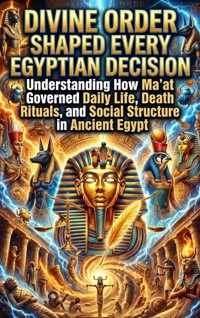
Ancient Egyptian culture appears exotic to modern eyes—animal-headed gods, elaborate mummification, towering temples—but beneath these striking visuals lay a coherent worldview that governed everything from farming schedules to legal disputes. This book explores how the concept of ma'at (cosmic order, truth, justice) functioned as the organizing principle of Egyptian civilization for three millennia. Through temple records, household artifacts, tomb inscriptions, and legal papyri, the narrative reveals how Egyptians understood their relationship with the divine not as distant worship but as daily maintenance of universal balance. Priests calculated festival dates to align earthly rhythms with celestial movements. Farmers timed planting to the Nile's flood cycle, seen as the gods' gift requiring human reciprocity. Even criminal punishment aimed to restore ma'at rather than simply punish wrongdoing. The book examines religious practice across social classes—from royal mortuary cults requiring hundreds of priests to village shrines where families left offerings for local deities. It traces how beliefs about the afterlife shaped architecture, art, literature, and social obligations, making "religion" inseparable from what we might call economics, politics, or ethics. Death preparation wasn't morbid obsession but logical extension of a worldview where existence continued if proper order was maintained.
Das E-Book können Sie in Legimi-Apps oder einer beliebigen App lesen, die das folgende Format unterstützen:
Veröffentlichungsjahr: 2026