


Erhalten Sie Zugang zu diesem und mehr als 300000 Büchern ab EUR 5,99 monatlich.
- Herausgeber: epubli
- Kategorie: Geisteswissenschaft
- Sprache: Englisch
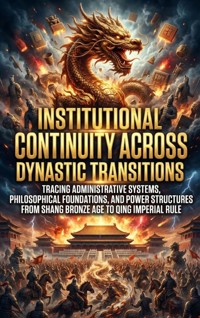
Chinese dynastic history was not a series of isolated reigns but a continuous evolution of institutional frameworks that shaped governance for three millennia. This book examines how administrative systems, philosophical legitimacy, and bureaucratic structures persisted across dynastic changes—from Shang oracle bones to Qing examination systems. Drawing on archaeological discoveries, imperial records, and material culture, the narrative traces recurring patterns: the Mandate of Heaven as political justification, civil service examinations as meritocratic gatekeeping, and Confucian ethics as administrative philosophy. Each dynasty inherited, adapted, and refined centralized governance models that proved remarkably durable. The book explores how dynasties managed territorial expansion, ethnic diversity, and economic integration through evolving bureaucratic tools. Through analysis of legal codes, palace inscriptions, and provincial archives, it reveals the institutional logic connecting bronze-age kingdoms to late-imperial administration. Understanding these continuities illuminates how Chinese political culture developed its distinctive characteristics and why certain governance patterns endured through repeated regime changes.
Sie lesen das E-Book in den Legimi-Apps auf:
Seitenzahl: 248
Veröffentlichungsjahr: 2026
Das E-Book (TTS) können Sie hören im Abo „Legimi Premium” in Legimi-Apps auf:
Ähnliche

















Table of Contents
Chapter 1: Introduction to Chinese Dynastic Continuity
Understanding Dynastic Continuity
The Role of the Mandate of Heaven
Civil Service Examinations as a Continuity
Philosophical Foundations of Governance
Governance during Territorial Expansion
Legal Codes and Administrative Practices
Chapter 2: The Shang Dynasty: Foundations of Governance
The Role of Oracle Bones in Shang Governance
Early Bureaucratic Structures in the Shang Dynasty
Political Philosophy and the Mandate of Heaven
Social Stratification and Its Administrative Implications
Chapter 3: The Zhou Dynasty: Philosophical Shifts and Bureaucratic Expansion
The Zhou Dynasty's Philosophical Underpinnings
The Establishment of Feudalism
Bureaucratic Expansion in the Zhou Period
Territorial Management and Ethnic Diversity
Chapter 4: The Qin Dynasty: Centralization and Legalist Reforms
Historical Context of the Qin Dynasty
Centralization of Power
Legal Reforms and the Code of Laws
The Civil Service Examination System
Legacy and Influence on Successor Dynasties
Chapter 5: The Han Dynasty: Continuity and Adaptation
The Legacy of the Qin: A Foundation for the Han
Confucianism: A Philosophical Shift
Civil Service Examinations: Merit over Birthright
Managing Ethnic Diversity and Territorial Expansion
Legal Codes and Governance: A Structured Approach
The Han Cultural Renaissance and Its Impact
Chapter 6: The Sui and Tang Dynasties: Reunification and Cultural Flourishing
Historical Context of the Sui and Tang Dynasties
The Mandate of Heaven and Political Legitimacy
Administrative Innovations: The Civil Service Examination System
Decentralization and Regional Governance
Chapter 7: The Song Dynasty: Economic Prosperity and Administrative Innovation
Overview of the Song Dynasty
The Role of the Civil Service Examination
Centralization of Power
Economic Advancements and Commerce
Military Challenges and Responses
Cultural and Philosophical Legacy
Chapter 8: The Yuan Dynasty: Cultural Integration and Bureaucratic Challenges
Context of the Yuan Dynasty
Administrative Structure and Bureaucratic Adaptation
Cultural Integration: Challenges and Strategies
The Evolution of Legal Codes
Chapter 9: The Ming Dynasty: Restoration of Han Ideals
Historical Context of the Ming Dynasty
Confucianism and Governance
Strengthening Bureaucratic Structures
Economic Challenges and Responses
Military Reorganization and Defense
Cultural Flourishing Under the Ming
Chapter 10: The Qing Dynasty: Expansion and Institutionalization
The Context of Qing Expansion
Administrative Continuities from Previous Dynasties
The Civil Service Examination System
Institutional Mechanisms for Governance
The Role of Confucian Philosophy
Legacies of the Qing Administrative System
Chapter 11: The Mandate of Heaven: Justification Across Dynasties
Understanding the Mandate of Heaven
The Mandate of Heaven in the Shang and Zhou Dynasties
The Mandate of Heaven During the Han and Tang Dynasties
The Mandate of Heaven in the Ming and Qing Dynasties
The Lasting Impact of the Mandate of Heaven
Chapter 12: Civil Service Examinations: Gatekeeping Merit and Bureaucracy
Historical Context of Civil Service Examinations
Structure and Content of Examinations
Impact on Society and Governance
Challenges and Criticisms of Examination Systems
The Legacy of Civil Service Examinations
Chapter 13: Confucian Ethics in Governance: A Philosophical Backbone
The Foundations of Confucian Ethics
Confucianism through Dynastic Changes
Confucian Ethics and Bureaucratic Recruitment
The Influence of Confucian Ethics on Governance Practices
Confucian Legacy in Modern Governance
Chapter 14: Territorial Administration and Ethnic Diversity
The Evolution of Territorial Administration
Managing Ethnic Diversity
Bureaucratic Tools for Territorial Control
Cultural Policies and Identity Formation
Chapter 15: Legal Codes and Institutional Logic
Foundations of Legal Codes in Shang Dynasty
Transition to Zhou and the Codification of Law
The Influence of Confucianism and Legalism
Legal Codes in the Tang and Song Dynasties
Ming and Qing Legal Practices: Centralization and Control
Legacy of Legal Codes in Modern China
Chapter 16: Conclusion: The Legacy of Administrative Continuity
The Enduring Influence of Historical Governance
Centralized Authority Across Dynasties
Philosophical Underpinnings of Governance
The Significance of Bureaucratic Evolution
Reflections on Historical Learning
The Legacy of Administrative Systems
Reflecting on the Legacy of Continuity
Chapter 1: Introduction to Chinese Dynastic Continuity
This chapter sets the stage for understanding the long and complex history of Chinese administrative systems. It provides an overview of how the dynastic transitions were not abrupt changes but rather a continuity of ideas, practices, and government structures. By examining the Shang Bronze Age through to the Qing Imperial Rule, this book reveals how each dynasty built upon its predecessors, shaping Chinese governance over three millennia.
Understanding Dynastic Continuity
This section introduces the concept of continuity across Chinese dynasties, emphasizing that changes in leadership did not equate to a complete overhaul of administrative practices. Instead, there existed a rich tapestry of inherited philosophies and institutional frameworks that sustained governance over long periods.
Historical Context
Chinese dynasties were characterized by transitions that were deeply influenced by historical precedents rather than radical shifts. Each new dynasty emerged from the ashes of its predecessor, often drawing from existing governance structures and cultural practices. For instance, the transition from the Shang to the Zhou dynasty did not entail a complete discarding of previous administrative frameworks. Instead, the Zhou adapted many Shang practices while introducing innovations, such as feudalism, which allowed for efficient territorial control.
This pattern of continuity can be seen as a response to the complexities of Chinese society, which included a diverse populace and expansive territories. As dynasties fell and new ones arose, the underlying administrative philosophies remained remarkably resilient, leading to a general evolution rather than revolution in governance. This dynamic interplay of continuity and change is crucial for understanding the long history of Chinese dynastic rule and its institutional legacy.
Continuity of Ideas
Key ideas, such as the Mandate of Heaven, provided not only a philosophical foundation for legitimizing rule but also reinforced the values that underpinned governance throughout various dynasties. This concept, originating in the Zhou dynasty, posited that emperors ruled by divine right, which necessitated good governance to maintain the favor of Heaven. As a result, rulers were acutely aware that their legitimacy depended upon their ability to govern well and uphold ethical conduct.
Moreover, Confucianism emerged as a dominant ideological force during subsequent dynasties, emphasizing principles such as filial piety, loyalty, and social harmony. These ethical values permeated administrative practices, informing the choices of both emperors and bureaucrats. The sustained reverence for these ideas illustrates how deeply embedded philosophical concepts shaped the continuity of governance across centuries, ensuring a stable yet adaptable political culture.
Institutional Inheritance
Administrative systems in China were often inherited, adapted, and fine-tuned by successive dynasties, which contributed to the persistence of governance structures over millennia. For example, the civil service examination system established during the Sui dynasty was refined in subsequent dynasties, notably the Tang and Song. This merit-based approach to bureaucratic recruitment not only reinforced a sense of meritocracy but also ensured that talented individuals could rise to power regardless of their social backgrounds.
As dynasties changed, the core institutional frameworks often remained intact while incorporating elements of the new ruling philosophy or structure. Such institutional inheritance meant that each generation of rulers could leverage established systems to maintain stability and control over their vast empires, all while adapting to contemporary challenges and regional diversities.
Archaeological Findings
Artifacts recovered from archaeological sites spanning the Shang Bronze Age to the Qing era reveal a complex tapestry of administrative practices that evolved yet maintained core principles. Evidence from oracle bones, inscriptions, and administrative documents illustrates how rulers utilized similar strategies to govern diverse populations while addressing local needs.
For instance, archaeological discoveries highlight the continuity of record-keeping methods, governance rituals, and even taxation practices throughout various dynasties. These remnants indicate that, although individual dynasties might implement varying policies based on their ruling ideologies, there exists a robust continuity that anchored administrative practices in familiar frameworks. Such findings underscore the durability of Chinese governance across centuries and how past civilizations influenced later developments in statecraft.
The Role of the Mandate of Heaven
The Mandate of Heaven has been a critical element in understanding Chinese political legitimacy throughout the dynasties. This section discusses how this concept not only justified a dynasty's right to rule but also linked moral governance to political power.
Concept Origin
The Mandate of Heaven, or Tianming, first emerged during the Zhou Dynasty as a fundamental principle underlying political legitimacy in ancient China. This concept established a divine justification for governance, suggesting that Heaven bestowed its favor upon rulers who governed justly and effectively. The Zhou claimed they had received this mandate after overthrowing the Shang Dynasty, illustrating how the concept served as both a legitimating force and a tool for dynastic change.
As subsequent dynasties arose, they echoed this sentiment, shaping their identities around the notion of celestial endorsement. Rulers were seen as intermediaries between Heaven and the people, tasked with maintaining harmony through moral governance. This notion transformed governance into a moral enterprise, where the ruler's legitimacy was intrinsically linked to their ability to reflect the virtues of Heaven.
Moral Governance
Central to the Mandate of Heaven was the expectation that rulers would practice moral governance. This idea posited that a ruler's legitimacy was contingent upon their ethical conduct and the welfare of their subjects. If a dynasty became corrupt, oppressive, or otherwise failed its people, it risked losing the mandate. Such failure could precipitate rebellion or a shift in power, as people would seek a new ruler who better embodied virtue and moral integrity.
This continual assessment of rulers' moral obligations created a dynamic political landscape. The populace viewed uprisings not merely as acts of rebellion but as necessary responses to the loss of Heaven's favor, arguing for a moral right to revolt. Thus, moral governance served dual functions: it held rulers accountable and shaped a social contract between the monarchy and the governed.
Political Tool
The concept of the Mandate of Heaven became an essential political tool employed by emerging dynasties to legitimize their authority. New rulers would often assert that the previous dynasty had fallen out of favor with Heaven due to its immoral governance, thereby justifying the need for their rise. This narrative not only facilitated the transition of power but also allowed new leaders to consolidate their rule by presenting themselves as virtuous and chosen by divine will.
This strategic usage of the Mandate of Heaven created a cyclical pattern in Chinese history, where each dynasty attempted to distinguish itself through claims of moral superiority over its predecessors. By framing their rule as a restoration of heavenly order, they aimed to solidify their legitimacy and reinforce the belief in a just cosmic order, further entrenching the doctrine throughout successive regimes.
Long-lasting Impact
The Mandate of Heaven profoundly influenced China’s political culture, remaining a central tenet throughout centuries of dynastic rule. It not only shaped the legitimacy of individual rulers but also informed the concept of governance across various dynasties. Their success and stability hinged upon perceptions of moral integrity and the fulfillment of state obligations to the populace.
This enduring philosophy contributed to the continuity and evolution of Chinese governance, where each dynasty inherited the principle while adapting it to their unique circumstances. By embedding the notion of divine authority into the socio-political framework, the Mandate of Heaven ensured that issues of legitimacy, accountability, and moral duty continued to resonate throughout Chinese history, influencing political discourse up to the modern era.
Civil Service Examinations as a Continuity
This section explores how civil service examinations became a mechanism for bureaucratic continuity across dynasties, promoting meritocracy and providing a structured path for governance based on knowledge rather than aristocracy.
Introduction of Examinations
The establishment of civil service examinations during the Sui (581–618) and Tang (618–907) dynasties marked a pivotal moment in the evolution of Chinese governance. This formalization expanded the accessibility of the bureaucracy beyond the traditional aristocracy, allowing individuals from diverse social backgrounds to participate in governance. Initially, examinations were modest, focusing on basic knowledge and administrative skills, but they grew in complexity and significance over time.
As these examinations developed, they became more structured, formally emphasizing mastery of Confucian texts and principles, which were considered essential for effective governance. The Sui and Tang periods laid the groundwork for a system that would adapt and persist throughout the subsequent dynasties, establishing a cultural norm where knowledge and intellectual merit were valued over noble birth and privilege.
Meritocratic Principles
The civil service examinations became a cornerstone of meritocracy in Chinese governance, emphasizing not just administrative competence but also moral and ethical conduct as defined by Confucianism. Candidates were rigorously tested on their knowledge of classic texts, including the 'Analects' and the 'Dao De Jing', which underscored the integration of Confucian philosophy into state affairs. This focus on education and moral character helped ensure that officials were not only skilled but also aligned with the moral imperatives of Confucian thought.
Moreover, the meritocratic ethos fostered by these examinations facilitated social mobility, allowing talented individuals from less privileged backgrounds to rise through the ranks of government. This principle became a crucial aspect of Chinese political culture, reinforcing the idea that the state should be governed by the wise and virtuous rather than the born elite.
Administrative Efficiency
The continuous recruitment of educated officials through civil service examinations significantly enhanced the administrative efficiency of the Chinese state. By systematically choosing candidates based on their examination performance, dynasties could ensure that governance was in the hands of capable administrators who understood the complexities of statecraft and the needs of diverse populations.
This efficient bureaucratic model was particularly crucial for managing vast territories that had diverse ethnic groups and varied local customs. The examinations enabled the central government to maintain stability and coherence, as educated officials were able to effectively implement policies and uphold legal statutes across different regions, thus knitting the empire together under a shared administrative framework.
Continued Relevance
The civil service examination system's relevance persisted well into the late Qing Dynasty, showcasing its integral role in shaping imperial governance throughout Chinese history. Even under changing political landscapes and evolving philosophies, the examination system remained a consistent feature of statecraft, demonstrating its adaptability and foundational importance.
By the late 19th century, however, the system faced criticism and calls for reform, especially as Western powers began to exert influence in China. Nonetheless, the legacy of the examination system endures, illustrating how administrative practices can profoundly influence political culture. Its long-term success speaks to the historical commitment to meritocracy and governance rooted in knowledge, principles that continue to resonate in contemporary discussions about civil service and public administration.
Philosophical Foundations of Governance
This section discusses the philosophical underpinnings that shaped Chinese governance across various dynasties, particularly focusing on Confucianism and its emphasis on ethics, social harmony, and moral leadership.
Confucian Ideals
Confucianism has profoundly shaped Chinese governance through its emphasis on moral leadership, ethical conduct, and the importance of virtuous rulers. At its core, Confucian thought promotes the idea that a ruler must embody the highest moral standards to govern justly. This belief created a cultural expectation that leaders would prioritize the welfare of their people, engaging in self-cultivation and demonstrating integrity.
The principles outlined by Confucius—such as ren (benevolence), li (ritual propriety), and xiao (filial piety)—not only defined personal conduct but also shaped governance practices that emphasized compassion and respect within societal hierarchies. As dynasties adopted Confucian doctrines, such ideals increasingly became the benchmark by which both rulers and bureaucrats were judged. This philosophical foundation established an enduring narrative that linked ethical leadership with effective governance, a theme that resonated throughout Chinese history.
Impact on Bureaucracy
The integration of Confucian values into the bureaucratic framework was transformative, infusing governmental roles with guidelines that emphasized moral integrity and administrative responsibility. Confucianism dictated that officials should not merely execute laws but also embody virtues that reflect the moral fabric of society. This perspective reinforced the idea that competence in governance was inseparable from ethical conduct.
Moreover, the implementation of civil service examinations during various dynasties, heavily influenced by Confucian thought, ensured that government positions were filled by individuals deemed capable and morally upright. Candidates were assessed not only on their knowledge of Confucian texts but also on their ability to apply these teachings to social governance. Thus, the Confucian ideology helped create a meritocratic bureaucratic system that persisted for centuries, impacting governance practices across numerous dynasties.
Social Harmony
Confucian philosophy places great importance on the concept of social harmony, which was considered vital for the stability of the state. The idea was that a well-ordered society, where roles and relationships were respected, would naturally lead to peace and prosperity. This belief essentially guided governance styles, as dynasties sought to foster cooperation among differing social classes and groups.
Through philosophical principles advocating harmony, rulers cultivated policies aimed at mitigating social conflicts, emphasizing moral education and virtuous living as pathways to collective well-being. Furthermore, practices such as ritual ceremonies played a prominent role in reinforcing social cohesion, transforming these acts into mechanisms for political propaganda and social control. Thus, the pursuit of social harmony became both a governing objective and a moral directive that shaped policy-making throughout the ages.
Adaptation Over Time
While Confucianism remained a cornerstone of Chinese political thought, its interpretations evolved significantly in response to varying political landscapes and dynastic needs. The adaptability of Confucian principles allowed them to be applied in diverse contexts, reflecting the realities of governance during different eras. For instance, the Confucian revival during the Song dynasty was a reaction to societal upheaval, aiming to restore order through re-emphasizing traditional norms.
Different dynasties tailored Confucian doctrines to address their unique challenges, demonstrating the philosophy's flexibility. Whether it was incorporating Buddhist ideas for spiritual legitimacy or emphasizing meritocracy in the face of corruption, these adaptations highlighted the pragmatic approach rulers took towards governance. Ultimately, the endurance and transformation of Confucianism reveal its critical role in maintaining administrative continuity amidst dynastic changes.
Governance during Territorial Expansion
This section examines how Chinese dynasties managed governance during territorial expansions. As empires grew, new bureaucratic tools were developed to integrate diverse regions and peoples under a unified administrative system.
Bureaucratic Expansion
As the Chinese empires expanded, the complexities of governance necessitated the establishment of a more intricate bureaucratic framework. New provinces often presented unique challenges, requiring local offices and bureaucratic representatives. These officials were crucial in maintaining order and addressing the specific needs of the regions they governed.
The introduction of local magistrates allowed for direct supervision of local affairs, enabling the central authority to enforce laws and collect taxes efficiently. This system also created a channel for communication between localities and the imperial court, ensuring that the voice of distant provinces was heard. The gradual growth of bureaucratic layers helped in managing this expansion effectively, contributing to the relative stability of these empires, even as they faced diverse challenges.
Ethnic Diversity Management
With territorial expansion, Chinese dynasties encountered various ethnic groups, each with distinct customs and governance needs. To maintain stability, policies were adapted to address the unique cultural and social characteristics of these minorities. This approach often involved recognizing local customs and integrating them into the broader administrative framework.
For instance, the imperial court might grant certain degrees of autonomy to local leaders, allowing them to govern their communities under the larger umbrella of imperial authority. This not only enhanced compliance but also fostered loyalty among diverse populations, minimizing resistance. Consequently, effective ethnic diversity management became a cornerstone of governance during periods of expansion, ensuring that the empire could grow while remaining cohesive.
Infrastructure Development
To govern vast territories effectively, Chinese dynasties focused heavily on infrastructure development. Building roads, communication networks, and administrative buildings facilitated not only trade but also governmental oversight. This infrastructure was essential for maintaining control over newly acquired regions, enabling rapid movement of officials and resources.
Moreover, infrastructure projects often stimulated local economies and improved the lives of ordinary citizens. By connecting remote areas to the central administration, the central authorities ensured better resource distribution and reinforced their presence. Such developments were crucial for the integration of newly acquired lands, as they allowed for effective governance and strengthened the empire's logistical capabilities.
Integration through Culture
Promoting cultural assimilation played a significant role in integrating various regions into the empire. Educational initiatives, centered around Confucian principles, were fundamental in unifying diverse peoples under a shared administrative ethos. Schools and institutions taught the values and practices of the central authority, creating a common cultural framework.
Through the dissemination of literature and administrative practices, local populations were encouraged to adopt the norms of governance that characterized Chinese political culture. This cultural integration was vital for fostering loyalty to the empire and minimizing resistance. When people felt connected through shared values and administrative systems, the foundation for a lasting and stable empire was solidified.
Legal Codes and Administrative Practices
This section analyzes the evolution of legal codes and how legislation served as a tool for maintaining governance continuity across different dynasties, laying the groundwork for modern Chinese legal frameworks.
Historical Legal Frameworks
The establishment of legal codes in one dynasty frequently served as a pivotal reference point for subsequent dynasties. For instance, the legal reforms initiated during the Qin dynasty laid a foundational groundwork that influenced the Han legal system, fostering a sense of continuity in governance. As new dynasties emerged, they often inherited and modified existing legal frameworks rather than starting anew. This practice not only preserved essential elements of law but also facilitated a stable governmental structure.
Over the centuries, these legal codes evolved, integrating ideas from various philosophical traditions, such as Confucianism and Legalism, which further nuanced their application. The adaptation of previous codes reflected the ongoing dialogue within Chinese administrative thought, demonstrating how past governance philosophies could shape future legal practices. Therefore, the relationship between historical legal frameworks and their modifications underscores an enduring legacy that characterizes Chinese administrative continuity.
Impact on Governance
Clear and coherent legal structures have played a crucial role in defining the roles and responsibilities within the Chinese bureaucracy. The delineation of legal authority enhanced the effectiveness of governance, facilitating the implementation of policies and regulations across vast territories. Each dynasty sought to refine these structures, thus contributing to a more organized and efficient bureaucratic system.
For example, the Tang dynasty's Code was renowned for its clarity, which not only provided legal standards but also empowered officials to enforce laws judiciously. Enhanced clarity in legal texts allowed for a greater understanding among officials and citizens alike, fostering trust in the system. This systematic approach enabled dynasties to maintain order, manage conflicts, and enforce regulations effectively, creating a robust linkage between law and governance throughout Chinese history.
Regional Adaptations
The enforcement of legal codes across different regions in China often required careful adaptations to accommodate local customs and practices. This flexibility illustrates how dynasties recognized the importance of cultural diversity within their realms. Instead of imposing uniform laws, rulers adapted regulations, allowing for local interpretations and practices to coexist alongside central legal standards.
For instance, during the Ming dynasty, local governments were empowered to adjust legal codes to better reflect the social realities and traditions of their communities. This strategy not only enhanced compliance but also reduced resistance to governance. By incorporating regional insights into legal frameworks, dynastic authorities were able to bridge the gap between centralized governance and localized practices, thus fortifying the overall administrative fabric of imperial China.
Transition to Modernity
The evolution of legal codes throughout Chinese history has significantly influenced the development of contemporary Chinese law and governance practices. As dynasties transitioned, the progressive refinement of legal codes laid important groundwork for modern legal institutions. The historical understanding of law as a tool of governance continues to resonate within today's legal practices.
In the 20th century, the remnants of imperial legal traditions were evident in the establishment of the Republic of China and later the People’s Republic of China. Modern legal reforms can be traced back to these ancient frameworks, showcasing an enduring legacy that persists through time. Furthermore, the principles gleaned from historical codes, including concepts of justice and administrative accountability, still underpin many aspects of current legal systems, illustrating how deeply ingrained Chinese legal traditions have shaped modern governance.
Chapter 2: The Shang Dynasty: Foundations of Governance
This chapter reviews the Shang Dynasty's contributions to administrative practices, including oracle bones and rudimentary bureaucracies. It highlights the beginnings of political philosophy that would evolve through later dynasties. Furthermore, we explore how early governance laid the groundwork for future assertions of power through the Mandate of Heaven.
The Role of Oracle Bones in Shang Governance
Oracle bones were crucial in the administrative practices of the Shang Dynasty, serving as tools for divination and governance. They provided insights into the political and religious life of the Shang, establishing a connection between the ruling powers and the divine. This section explores the significance of oracle bones in shaping the early Chinese bureaucratic system.
Oracle bones as communication tools
Oracle bones served as critical communication tools within Shang Dynasty governance, facilitating dialogue between the ruling elite and the spiritual realm. These artifacts, typically made from shoulder bones of cattle or turtle shells, were inscribed with intricate characters. The inscriptions detailed questions posed by the Shang kings to ancestral spirits or deities, seeking guidance on matters ranging from agriculture to military strategy.
This divinatory practice was not merely religious; it provided a systematic way of documenting royal inquiries and decisions. By recording these interactions, the Shang elite could present their actions as divinely sanctioned, reinforcing their authority over subjects. This inscriptive tradition contributed to an early form of bureaucracy, as these records were used to communicate and disseminate important information throughout the realm.
Link between divination and authority
The connection between divination and authority in the Shang Dynasty was profound. The practice of consulting oracle bones was instrumental in legitimizing the rulership of the king. By interpreting the answers from divine sources, kings could validate their political decisions, claiming a divine backing for their governance. This notion of divine endorsement laid the foundational beliefs that characterized future dynasties, particularly the concept of the Mandate of Heaven.
Moreover, the outcomes of rituals and divinations were displayed publicly, thereby reinforcing the king's status among the nobility and the common people alike. This relationship allowed rulers to maintain control over their subjects and justified their rule through a perceived connection to the supernatural order, effectively intertwining religious legitimacy with political power.
Documentation of royal decrees
Oracle bones played a significant role in documenting royal decrees, essential for the management of the Shang state. The king would often inscribe his proclamations on these bones following a divination session. This practice ensured that decrees were not only verbally communicated but also preserved for posterity, indicating a developing bureaucratic structure within the Shang administration.
By formalizing such decisions in written form, the Shang were able to create a more structured governance system, allowing laws, policies, and royal commands to be recorded and referenced later. This establishment of written documentation marked a significant shift towards a more organized political administration and set a precedent for future dynasties that continued to rely heavily on written records for governance.
Insights into social hierarchy and governance
The inscriptions on oracle bones provide valuable insights into the social hierarchy and governance practices of the Shang Dynasty. Analysis of these texts reveals not only the concerns of the ruling class but also the roles of various societal groups within the administrative framework. For instance, entries often indicate the presence of nobles, craftsmen, and farmers, reflecting the complex interactions between different social classes.
Moreover, the oracle bones reveal how societal structure and governance were intertwined. The king’s decisions regarding land distribution, tolls on trade, and military campaigns highlight the administrative responsibilities that were crucial for maintaining control over the territories. This intricately connected social and governance framework laid the groundwork for the sophisticated bureaucracies that would evolve in subsequent dynasties, shaping Chinese political culture for centuries to come.
Early Bureaucratic Structures in the Shang Dynasty
The Shang Dynasty initiated the formation of basic bureaucratic systems that influenced future administrations. Understanding these early structures helps illustrate how the Shang fostered governance and maintained order. This section discusses the elements of Shang bureaucracy and their lasting impact.
Establishment of administrative roles
The Shang Dynasty stands as a pivotal period in establishing administrative roles that would form the backbone of governance in subsequent dynasties. Central to this administrative framework were officials tasked with various responsibilities, such as taxation, land management, and societal order. These roles were not merely symbolic; they were integral in executing the king's decrees and maintaining order within the kingdom.
One of the critical features of the Shang bureaucracy was the emergence of specialized roles that allowed for a more organized approach to governance. Elite officials, often tasked with grave responsibilities, emerged and were expected to demonstrate loyalty to the king. This special status helped to create a hierarchy that dictated interactions between different classes within society, thus mirroring familial and clan structures.
Decentralized governance and local leadership
Decentralization was a fundamental aspect of Shang governance, enabling local leaders to exert considerable influence over their respective territories. While the king maintained ultimate authority, local leaders played crucial roles in managing regional affairs, including resource allocation and dispute resolution. This model encouraged a degree of autonomy in provinces and allowed for flexibility in governance, responding to local needs.
This decentralized approach also created a network of loyalty among local leaders, as their power was closely tied to the king's legitimacy. As such, these local figures not only assisted in administration but also ensured that the king's influence permeated the far reaches of his realm. The reliance on local governance foreshadowed future dynasties' administrative structures, as they too sought to balance centralized authority with local agency.
Documentation practices and record-keeping
Documentation emerged as a vital practice in Shang governance, reflecting the dynasty's complex administrative needs. The invention of oracle bones marked a significant advancement in record-keeping, allowing for the preservation of important events, decisions, and rituals. These inscriptions served not only to communicate royal edicts but also played a critical role in crafting a historical narrative endorsed by the ruling class.




