


Erhalten Sie Zugang zu diesem und mehr als 300000 Büchern ab EUR 5,99 monatlich.
- Herausgeber: Tacet Books
- Kategorie: Geisteswissenschaft
- Serie: Essays
- Sprache: Englisch
Welcome to the Essays collection. A special selection of the nonfiction prose from influential and noteworthy authors. This book brings 15 of best essays of Edgar Allan Poe, across a wide range of subjects, including writing, literature, poetry and many more topics. Edgar Allan Poe was an American writer, editor, and literary critic. Poe is best known for his poetry and short stories, particularly his tales of mystery and the macabre. Many of his most relevant works were published by Tacet Books. The book contains the following texts: - Introduction by Edmund Gosse- Maelzel's Chess-Player- The Philosophy of Furniture- A Few Words on Secret Writing- The Philosophy of Composition- Morning on the Wissahiccon- Marginalia- The Rationale of Verse
Sie lesen das E-Book in den Legimi-Apps auf:
Seitenzahl: 238
Veröffentlichungsjahr: 2021
Das E-Book (TTS) können Sie hören im Abo „Legimi Premium” in Legimi-Apps auf:
Sammlungen
Ähnliche







Introduction
by Edmund Gosse1
As a form of literature, the essay is a composition of moderate length, usually in prose, which deals in an easy, cursory way with the external conditions of a subject, and, in strictness, with that subject, only as it affects the writer. Dr Johnson, himself an eminent essayist, defines an essay as “an irregular, undigested piece”; the irregularity may perhaps be admitted, but want of thought, that is to say lack of proper mental digestion, is certainly not characteristic of a fine example. It should, on the contrary, always be the brief and light result of experience and profound meditation, while “undigested” is the last epithet to be applied to the essays of Montaigne, Addison or Lamb. Bacon said that the Epistles of Seneca were “essays,” but this can hardly be allowed. Bacon himself goes on to admit that “the word is late, though the thing is ancient.” The word, in fact, was invented for this species of writing by Montaigne, who merely meant that these were experiments in a new kind of literature. This original meaning, namely that these pieces were attempts or endeavours, feeling their way towards the expression of what would need a far wider space to exhaust, was lost in England in the course of the eighteenth century. This is seen by the various attempts made in the nineteenth century to coin a word which should express a still smaller work, as distinctive in comparison with the essay as the essay is by the side of the monograph; none of these linguistic experiments, such as essayette, essaykin (Thackeray) and essaylet (Helps) have taken hold of the language. As a matter of fact, the journalistic word article covers the lesser form of essay, although not exhaustively, since the essays in the monthly and quarterly reviews, which are fully as extended as an essay should ever be, are frequently termed “articles,” while many “articles” in newspapers, dictionaries and encyclopaedias are in no sense essays. It may be said that the idea of a detached work is combined with the word “essay,” which should be neither a section of a disquisition nor a chapter in a book which aims at the systematic development of a story. Locke’s Essay on the Human Understanding is not an essay at all, or cluster of essays, in this technical sense, but refers to the experimental and tentative nature of the inquiry which the philosopher was undertaking. Of the curious use of the word so repeatedly made by Pope mention will be made below.
The essay, as a species of literature, was invented by Montaigne, who had probably little suspicion of the far-reaching importance of what he had created. In his dejected moments, he turned to rail at what he had written, and to call his essays “inepties” and “sottises.” But in his own heart he must have been well satisfied with the new and beautiful form which he had added to literary tradition. He was perfectly aware that he had devised a new thing; that he had invented a way of communicating himself to the world as a type of human nature. He designed it to carry out his peculiar object, which was to produce an accurate portrait of his own soul, not as it was yesterday or will be to-morrow, but as it is to-day. It is not often that we can date with any approach to accuracy the arrival of a new class of literature into the world, but it was in the month of March 1571 that the essay was invented. It was started in the second story of the old tower of the castle of Montaigne, in a study to which the philosopher withdrew for that purpose, surrounded by his books, close to his chapel, sheltered from the excesses of a fatiguing world. He wrote slowly, not systematically; it took nine years to finish the two first books of the essays. In 1574 the manuscript of the work, so far as it was then completed, was nearly lost, for it was confiscated by the pontifical police in Rome, where Montaigne was residing, and was not returned to the author for four months. The earliest imprint saw the light in 1580, at Bordeaux, and the Paris edition of 1588, which is the fifth, contains the final text of the great author. These dates are not negligible in the briefest history of the essay, for they are those of its revelation to the world of readers. It was in the delightful chapters of his new, strange book that Montaigne introduced the fashion of writing briefly, irregularly, with constant digressions and interruptions, about the world as it appears to the individual who writes. The Essais were instantly welcomed, and few writers of the Renaissance had so instant and so vast a popularity as Montaigne. But while the philosophy, and above all the graceful stoicism, of the great master were admired and copied in France, the exact shape in which he had put down his thoughts, in the exquisite negligence of a series of essays, was too delicate to tempt an imitator. It is to be noted that neither Charron, nor Mlle de Gournay, his most immediate disciples, tried to write essays. But Montaigne, who liked to fancy that the Eyquem family was of English extraction, had spoken affably of the English people as his “cousins,” and it has always been admitted that his genius has an affinity with the English. He was early read in England, and certainly by Bacon, whose is the second great name connected with this form of literature. It was in 1597, only five years after the death of Montaigne, that Bacon published in a small octavo the first ten of his essays. These he increased to 38 in 1612 and to 58 in 1625. In their first form, the essays of Bacon had nothing of the fulness or grace of Montaigne’s; they are meagre notes, scarcely more than the headings for discourses. It is possible that when he wrote them he was not yet familiar with the style of his predecessor, which was first made popular in England, in 1603, when Florio published that translation of the Essais which Shakespeare unquestionably read. In the later editions Bacon greatly expanded his theme, but he never reached, or but seldom, the freedom and ease, the seeming formlessness held in by an invisible chain, which are the glory of Montaigne, and distinguish the typical essayist. It would seem that at first, in England, as in France, no lesser writer was willing to adopt a title which belonged to so great a presence as that of Bacon or Montaigne. The one exception was Sir William Cornwallis (d. 1631), who published essays in 1600 and 1617, of slight merit, but popular in their day. No other English essayist of any importance appeared until the Restoration, when Abraham Cowley wrote eleven “Several Discourses by way of Essays,” which did not see the light until 1668. He interspersed with his prose, translations and original pieces in verse, but in other respects Cowley keeps much nearer than Bacon to the form of Montaigne. Cowley’s essay “Of Myself” is a model of what these little compositions should be. The name of Bacon inspires awe, but it is really not he, but Cowley, who is the father of the English essay; and it is remarkable that he has had no warmer panegyrists than his great successors, Charles Lamb and Macaulay. Towards the end of the century, Sir George Mackenzie (1636–1691) wrote witty moral discourses, which were, however, essays rather in name than form. Whenever, however, we reach the eighteenth century, we find the essay suddenly became a dominant force in English literature. It made its appearance almost as a new thing, and in combination with the earliest developments of journalism. On the 12th of April 1709 appeared the first number of a penny newspaper, entitled the Tatler, a main feature of which was to amuse and instruct fashionable readers by a series of short papers dealing with the manifold occurrences of life, quicquid agunt homines. But it was not until Steele, the founder of the Tatler, was joined by Addison that the eighteenth-century essay really started upon its course. It displayed at first, and indeed it long retained, a mixture of the manner of Montaigne with that of La Bruyère, combining the form of the pure essay with that of the character-study, as modelled on Theophrastus, which had been so popular in England throughout the seventeenth century. Addison’s early Tatler portraits, in particular such as those of “Tom Folio” and “Ned Softly,” are hardly essays. But Steele’s “Recollections of Childhood” is, and here we may observe the type on which Goldsmith, Lamb and R. L. Stevenson afterwards worked. In January 1711 the Tatler came to an end, and was almost immediately followed by the Spectator, and in 1713 by the Guardian. These three newspapers are storehouses of admirable and typical essays, the majority of them written by Steele and Addison, who are the most celebrated eighteenth-century essayists in England. Later in the century, after the publication of other less successful experiments, appeared Fielding’s essays in the Covent Garden Journal (1752) and Johnson’s in the Rambler (1750), the Adventurer (1752) and the Idler (1759). There followed a great number of polite journals, in which the essay was treated as “the bow of Ulysses in which it was the fashion for men of rank and genius to try their strength.” Goldsmith reached a higher level than the Chesterfields and Bonnel Thorntons had dreamed of, in the delicious sections of his Citizen of the World (1760). After Goldsmith, the eighteenth-century essay declined into tamer hands, and passed into final feebleness with the pedantic Richard Cumberland and the sentimental Henry Mackenzie. The corpus of eighteenth-century essayists is extremely voluminous, and their reprinted works fill some fifty volumes. There is, however, a great sameness about all but the very best of them, and in no case do they surpass Addison in freshness, or have they ventured to modify the form he adopted for his lucubrations. What has survived of them all is the lightest portion, but it should not be forgotten that a very large section of the essays of that age were deliberately didactic and “moral.” A great revival of the essay took place during the first quarter of the nineteenth century, and foremost in the history of this movement must always be placed the name of Charles Lamb. He perceived that the real business of the essay, as Montaigne had conceived it, was to be largely personal. The famous Essays of Elia began to appear in the London Magazine for August 1820, and proceeded at fairly regular intervals until December 1822; early in 1823 the first series of them were collected in a volume. The peculiarity of Lamb’s style as an essayist was that he threw off the Addisonian and still more the Johnsonian tradition, which had become a burden that crushed the life out of each conventional essay, and that he boldly went back to the rich verbiage and brilliant imagery of the seventeenth century for his inspiration. It is true that Lamb had great ductility of style, and that, when he pleases, he can write so like Steele that Steele himself might scarcely know the difference, yet in his freer flights we are conscious of more exalted masters, of Milton, Thomas Browne and Jeremy Taylor. He succeeded, moreover, in reaching a poignant note of personal feeling, such as none of his predecessors had ever aimed at; the essays called “Dream Children” and “Blakesmoor” are examples of this, and they display a degree of harmony and perfection in the writing of the pure essay such as had never been attempted before, and has never since been reached. Leigh Hunt, clearing away all the didactic and pompous elements which had overgrown the essay, restored it to its old Spectator grace, and was the most easy nondescript writer of his generation in periodicals such as the Indicator (1819) and the Companion (1828). The sermons, letters and pamphlets of Sydney Smith were really essays of an extended order. In Hazlitt and Francis Jeffrey we see the form and method of the essay beginning to be applied to literary criticism. The writings of De Quincey are almost exclusively essays, although many of the most notable of them, under his vehement pen, have far outgrown the limits of the length laid down by the most indulgent formalist. His biographical and critical essays are interesting, but they are far from being trustworthy models in form or substance. In a sketch, however rapid, of the essay in the nineteenth century, prominence must be given to the name of Macaulay. His earliest essay, that on Milton, appeared in the Edinburgh Review in 1825, very shortly after the revelation of Lamb’s genius in “Elia.” No two products cast in the same mould could, however, be more unlike in substance. In the hands of Macaulay the essay ceases to be a confession or an autobiography; it is strictly impersonal, it is literary, historical or controversial, vigorous, trenchant and full of party prejudice. The periodical publication of Macaulay’s Essays in the Edinburgh Review went on until 1844; when we cast our eyes over this mass of brilliant writing we observe with surprise that it is almost wholly contentious. Nothing can be more remarkable than the difference in this respect between Lamb and Macaulay, the former for ever demanding, even cajoling, the sympathy of the reader, the latter scanning the horizon for an enemy to controvert. In later times the essay in England has been cultivated in each of these ways, by a thousand journalists and authors. The “leaders” of a daily newspaper are examples of the popularization of the essay, and they point to the danger which now attacks it, that of producing a purely ephemeral or even momentary species of effect. The essay, in its best days, was intended to be as lasting as a poem or a historical monograph; it aimed at being one of the most durable and precious departments of literature. We still occasionally see the production of essays which have this more ambitious aim; within the last quarter of the nineteenth century the essays of R. L. Stevenson achieved it. His Familiar Studies are of the same class as those of Montaigne and Lamb, and he approached far more closely than any other contemporary to their high level of excellence. We have seen that the tone of the essay should be personal and confidential; in Stevenson’s case it was characteristically so. But the voices which please the public in a strain of pure self-study are few at all times, and with the cultivation of the analytic habit they tend to become less original and attractive. It is possible that the essay may die of exhaustion of interest, or may survive only in the modified form of accidental journalism.
The essay, although invented by a great French writer, was very late in making itself at home in France. The so-called Essais of Leibnitz, Nicole, Yves Marie André and so many others were really treatises. Voltaire’s famous Essai sur les mœurs des nations is an elaborate historical disquisition in nearly two hundred chapters. Later, the voluminous essays of Joseph de Maistre and of Lamennais were not essays at all in the literary sense. On the other hand, the admirable Causeries du lundi of Sainte-Beuve (1804–1869) are literary essays in the fulness of the term, and have been the forerunners of a great army of brilliant essay-writing in France. Among those who have specially distinguished themselves as French essayists may be mentioned Théophile Gautier, Paul de Saint-Victor, Anatole France, Jules Lemaître, Ferdinand Brunetière and Émile Faguet. All these are literary critics, and it is in the form of the analysis of manifestations of intellectual energy that the essay has been most successfully illustrated in France. All the countries of Europe, since the middle of the 19th century, have adopted this form of writing; such monographs or reviews, however, are not perfectly identical with the essay as it was conceived by Addison and Lamb. This last, it may be supposed, is a definitely English thing, and this view is confirmed by the fact that in several European languages the word “essayist” has been adopted without modification.
In the above remarks it has been taken for granted that the essay is always in prose. Pope, however, conceived an essay in heroic verse. Of this his Essay on Criticism (1711) and his Essay on Man (1732–1734) are not good examples, for they are really treatises. The so-called Moral Essays (1720–1735), on the contrary, might have been contributed, if in prose, either to the Spectator or the Guardian. The idea of pure essays, in verse, however, did not take any root in English literature.
The Author
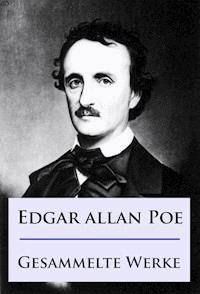
Edgar Allan Poe (born Edgar Poe; January 19, 1809 – October 7, 1849) was an American writer, editor, and literary critic. Poe is best known for his poetry and short stories, particularly his tales of mystery and the macabre. He is widely regarded as a central figure of Romanticism in the United States and American literature as a whole, and he was one of the country's earliest practitioners of the short story. Poe is generally considered the inventor of the detective fiction genre and is further credited with contributing to the emerging genre of science fiction. He was the first well-known American writer to try to earn a living through writing alone, resulting in a financially difficult life and career.
Poe was born in Boston, the second child of two actors. His father abandoned the family in 1810, and his mother died the following year. Thus orphaned, the child was taken in by John and Frances Allan of Richmond, Virginia. They never formally adopted him, but Poe was with them well into young adulthood. Tension developed later as John Allan and Edgar repeatedly clashed over debts, including those incurred by gambling, and the cost of secondary education for the young man. Poe attended the University of Virginia but left after a year due to lack of money. Poe quarreled with Allan over the funds for his education and enlisted in the Army in 1827 under an assumed name. It was at this time that his publishing career began, albeit humbly, with the anonymous collection Tamerlane and Other Poems (1827), credited only to "a Bostonian". With the death of Frances Allan in 1829, Poe and Allan reached a temporary rapprochement. However, Poe later failed as an officer cadet at West Point, declaring a firm wish to be a poet and writer, and he ultimately parted ways with John Allan.
Poe switched his focus to prose and spent the next several years working for literary journals and periodicals, becoming known for his own style of literary criticism. His work forced him to move among several cities, including Baltimore, Philadelphia, and New York City. In Richmond in 1836, he married Virginia Clemm, his 13-year-old cousin. In January 1845, Poe published his poem "The Raven" to instant success. His wife died of tuberculosis two years after its publication. For years, he had been planning to produce his own journal The Penn (later renamed The Stylus), though he died before it could be produced. Poe died in Baltimore on October 7, 1849, at age 40; the cause of his death is unknown and has been variously attributed to alcohol, brain congestion, cholera, drugs, heart disease, rabies, suicide, tuberculosis, and other agents.
Poe and his works influenced literature in the United States and around the world, as well as in specialized fields such as cosmology and cryptography. Poe and his work appear throughout popular culture in literature, music, films, and television. A number of his homes are dedicated museums today. The Mystery Writers of America present an annual award known as the Edgar Award for distinguished work in the mystery genre.
Maelzel's Chess-Player
Perhaps no exhibition of the kind has ever elicited so general attention as the Chess-Player of Maelzel. Wherever seen it has been an object of intense curiosity, to all persons who think. Yet the question of its modus operandi is still undetermined. Nothing has been written on this topic which can be considered as decisive--and accordingly we find every where men of mechanical genius, of great general acuteness, and discriminative understanding, who make no scruple in pronouncing the Automaton a pure machine, unconnected with human agency in its movements, and consequently, beyond all comparison, the most astonishing of the inventions of mankind. And such it would undoubtedly be, were they right in their supposition. Assuming this hypothesis, it would be grossly absurd to compare with the Chess-Player, any similar thing of either modern or ancient days. Yet there have been many and wonderful automata. In Brewster's Letters on Natural Magic, we have an account of the most remarkable. Among these may be mentioned, as having beyond doubt existed, firstly, the coach invented by M. Camus for the amusement of Louis XIV when a child. A table, about four feet square, was introduced, into the room appropriated for the exhibition. Upon this table was placed a carriage, six inches in length, made of wood, and drawn by two horses of the same material. One window being down, a lady was seen on the back seat. A coachman held the reins on the box, and a footman and page were in their places behind. M. Camus now touched a spring; whereupon the coachman smacked his whip, and the horses proceeded in a natural manner, along the edge of the table, drawing after them the carriage. Having gone as far as possible in this direction, a sudden turn was made to the left, and the vehicle was driven at right angles to its former course, and still closely along the edge of the table. In this way the coach proceeded until it arrived opposite the chair of the young prince. It then stopped, the page descended and opened the door, the lady alighted, and presented a petition to her sovereign. She then re-entered. The page put up the steps, closed the door, and resumed his station. The coachman whipped his horses, and the carriage was driven back to its original position.
The magician of M. Maillardet is also worthy of notice. We copy the following account of it from the Letters before mentioned of Dr. B., who derived his information principally from the Edinburgh Encyclopaedia.
"One of the most popular pieces of mechanism which we have seen, Is the Magician constructed by M. Maillardet, for the purpose of answering certain given questions. A figure, dressed like a magician, appears seated at the bottom of a wall, holding a wand in one hand, and a book in the other A number of questions, ready prepared, are inscribed on oval medallions, and the spectator takes any of these he chooses and to which he wishes an answer, and having placed it in a drawer ready to receive it, the drawer shuts with a spring till the answer is returned. The magician then arises from his seat, bows his head, describes circles with his wand, and consulting the book as If in deep thought, he lifts it towards his face. Having thus appeared to ponder over the proposed question he raises his wand, and striking with it the wall above his head, two folding doors fly open, and display an appropriate answer to the question. The doors again close, the magician resumes his original position, and the drawer opens to return the medallion. There are twenty of these medallions, all containing different questions, to which the magician returns the most suitable and striking answers. The medallions are thin plates of brass, of an elliptical form, exactly resembling each other. Some of the medallions have a question inscribed on each side, both of which the magician answered in succession. If the drawer is shut without a medallion being put into it, the magician rises, consults his book, shakes his head, and resumes his seat. The folding doors remain shut, and the drawer is returned empty. If two medallions are put into the drawer together, an answer is returned only to the lower one. When the machinery is wound up, the movements continue about an hour, during which time about fifty questions may be answered. The inventor stated that the means by which the different medallions acted upon the machinery, so as to produce the proper answers to the questions which they contained, were extremely simple."
The duck of Vaucanson was still more remarkable. It was of the size of life, and so perfect an imitation of the living animal that all the spectators were deceived. It executed, says Brewster, all the natural movements and gestures, it ate and drank with avidity, performed all the quick motions of the head and throat which are peculiar to the duck, and like it muddled the water which it drank with its bill. It produced also the sound of quacking in the most natural manner. In the anatomical structure the artist exhibited the highest skill. Every bone in the real duck had its representative in the automaton, and its wings were anatomically exact. Every cavity, apophysis, and curvature was imitated, and each bone executed its proper movements. When corn was thrown down before it, the duck stretched out its neck to pick it up, swallowed, and digested it.*
Under the head
Androides
in the Edinburgh Encyclopedia may be found a full account of the principal automata of ancient and modern times.
But if these machines were ingenious, what shall we think of the calculating machine of Mr. Babbage? What shall we think of an engine of wood and metal which can not only compute astronomical and navigation tables to any given extent, but render the exactitude of its operations mathematically certain through its power of correcting its possible errors? What shall we think of a machine which can not only accomplish all this, but actually print off its elaborate results, when obtained, without the slightest intervention of the intellect of man? It will, perhaps, be said, in reply, that a machine such as we have described is altogether above comparison with the Chess-Player of Maelzel. By no means--it is altogether beneath it--that is to say provided we assume(what should never for a moment be assumed) that the Chess-Player is a pure machine, and performs its operations without any immediate human agency. Arithmetical or algebraical calculations are, from their very nature, fixed and determinate. Certain data being given, certain results necessarily and inevitably follow. These results have dependence upon nothing, and are influenced by nothing but the data originally given. And the question to be solved proceeds, or should proceed, to its final determination, by a succession of unerring steps liable to no change, and subject to no modification. This being the case, we can without difficulty conceive the possibility of so arranging a piece of mechanism, that upon starting In accordance with the data of the question to be solved, it should continue its movements regularly, progressively, and undeviatingly towards the required solution, since these movements, however complex, are never imagined to be otherwise than finite and determinate. But the case is widely different with the Chess-Player. With him there is no determinate progression. No one move in chess necessarily follows upon any one other. From no particular disposition of the men at one period of a game can we predicate their disposition at a different period. Let us place the first move in a game of chess, in juxta-position with the data of an algebraical question, and their great difference will be immediately perceived. From the latter--from the data--the second step of the question, dependent thereupon, inevitably follows. It is modelled by the data. It must be thus and not otherwise. But from the first move in the game of chess no especial second move follows of necessity. In the algebraical question, as it proceeds towards solution, the certainty of its operations remains altogether unimpaired. The second step having been a consequence of the data, the third step is equally a consequence of the second, the fourth of the third, the fifth of the fourth, and so on, and not possibly otherwise, to the end. But in proportion to the progress made in a game of chess, is the uncertainty of each ensuing move. A few moves having been made, no




