


0,49 €
Niedrigster Preis in 30 Tagen: 1,99 €
Niedrigster Preis in 30 Tagen: 1,99 €
Mehr erfahren.
- Herausgeber: Booksell-Verlag
- Kategorie: Gesellschafts- und Liebesromane
- Sprache: Englisch
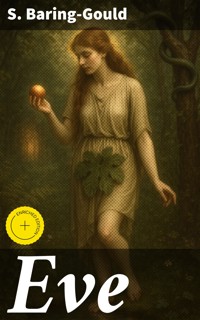
In "Eve," S. Baring-Gould presents a compelling exploration of the figure of Eve, weaving together rich theological discourse with a nuanced literary style that bridges the sacred and the secular. The narrative unfolds through a series of vignettes that reflect on Eve's role and significance in the biblical narrative, interspersed with philosophical musings that challenge traditional interpretations. Baring-Gould's prose is marked by lyrical eloquence and meticulous detail, inviting readers to reconsider the complexities behind this archetypal figure within the context of Victorian literature, where questions of gender and morality were fervently debated. S. Baring-Gould was not only a prolific author but also a clergyman and folklorist, deeply immersed in the cultural and spiritual issues of his time. His diverse background, which included extensive travel and a keen interest in religion and folklore, informed his portrayal of Eve as both a historical and symbolic character. Drawing from a well of personal conviction and scholarly research, Baring-Gould crafts a narrative that reverberates with the tensions between faith, doubt, and the role of women in sacred texts, reflecting the broader dialogues of the late 19th century. This book is not only for those fascinated by biblical narratives but also for readers drawn to themes of identity and gender in literature. Baring-Gould's insightful analysis and poetic flair offer a profound journey into understanding Eve's complexity, making "Eve" an indispensable read for anyone interested in the intersections of literature, theology, and cultural criticism. In this enriched edition, we have carefully created added value for your reading experience: - A succinct Introduction situates the work's timeless appeal and themes. - The Synopsis outlines the central plot, highlighting key developments without spoiling critical twists. - A detailed Historical Context immerses you in the era's events and influences that shaped the writing. - A thorough Analysis dissects symbols, motifs, and character arcs to unearth underlying meanings. - Reflection questions prompt you to engage personally with the work's messages, connecting them to modern life. - Hand‐picked Memorable Quotes shine a spotlight on moments of literary brilliance. - Interactive footnotes clarify unusual references, historical allusions, and archaic phrases for an effortless, more informed read.
Das E-Book können Sie in Legimi-Apps oder einer beliebigen App lesen, die das folgende Format unterstützen:
Veröffentlichungsjahr: 2019
Ähnliche

Eve
Table of Contents
Introduction
At its heart, this novel examines how a single life can be pulled between love, conscience, and the stern expectations of a close-knit community, asking what must be yielded—and what cannot—when the claims of feeling collide with the demands of duty, the whisper of reputation, and the social and economic pressures that define everyday existence, tracing the fragile boundary between self-possession and surrender as choices ripple outward through families and neighbors until the most private resolve becomes a public reckoning in which character, not circumstance, determines whether compromise is a virtue, a defeat, or the beginning of a new freedom.
Eve is a novel by S. Baring-Gould, a work of Victorian fiction that participates in the nineteenth-century English tradition of romantic and social narrative. Its publication context belongs to the Victorian era, when novels often explored provincial life, moral testing, and the complex bonds that tie individuals to their communities. Readers should expect a historically grounded milieu consistent with the period’s norms, institutions, and anxieties. The book aligns with domestic and regional fiction, emphasizing how place, work, and local ties shape destiny. Within this framework, romance serves not merely as courtship, but as a lens for ethical and social inquiry.
Without venturing into spoilers, the premise turns on how intertwined relationships face strain when ordinary decisions gather unforeseen consequence. The story draws the reader into a community where livelihoods, customs, and reputations intersect, and a catalytic event compels characters to balance generosity with prudence, loyalty with self-preservation. Rather than rely on easy villains or unblemished heroes, the narrative gives each figure motive and pressure, inviting sympathy without demanding agreement. The experience is immersive and cumulative: tensions develop through everyday encounters and remembered slights, allowing consequence, not coincidence, to steer the action while the emotional stakes sharpen with each measured turn.
The voice is the measured, observant third person characteristic of the period, attentive to social nuance and the meanings of gesture, tone, and setting. Descriptive passages illuminate landscape and labor as moral backdrops; dialogue advances the negotiations that define friendship, rivalry, and kinship. The mood moves from warmth to unease as choices narrow and outcomes weigh more heavily. The pacing reflects Victorian conventions, favoring sectional rhythms that encourage continued reading without rushing revelation. Melodramatic touches serve clarity rather than excess, and texture comes from the interplay of scene and reflection, giving readers both sensory immediacy and thoughtful commentary.
Themes revolve around the tension between individual agency and communal obligation, the power of reputation, and the constraints and resources supplied by class and work. The novel treats money as moral pressure—wages, debts, and inheritances influence conduct as strongly as affection or resentment—while examining how pride, sympathy, jealousy, and courage are formed in ordinary circumstances. Nature functions as a scale and counterpoint to human motives, not as an otherworldly force but as a measure of endurance and limit. Above all, the narrative asks what honor demands when any choice risks wounding someone else, and how integrity is proved over time.
For contemporary readers, the questions raised feel strikingly current. The book probes how communities enforce norms while relying on mutual aid, how power is negotiated within asymmetrical social arrangements, and how stories—rumor, memory, self-justification—shape identity. Its attention to work, scarcity, and social mobility resonates with present concerns about precarity, fairness, and belonging. Readers who appreciate morally intricate dilemmas, lived-in settings, and character-driven momentum will find the experience rewarding. It is engaging not because it furnishes easy vindications, but because it maps the costs of competing goods and shows how small, steadfast acts can alter a life’s direction.
Approach Eve with patience and curiosity and its design reveals itself: motifs recur, small courtesies and slights gather weight, and the moral center refines rather than dictates. This is a novel to read attentively, trusting that local habits, turns of speech, and daily routines enrich the central drama by showing what is at stake beyond any single decision. Without straying into outcomes, it is enough to note that resolution arises from temperament and choice rather than trickery. As an introduction to S. Baring-Gould’s fiction, it exemplifies the Victorian novel’s union of entertainment and ethical inquiry, rewarding readers who value nuance and atmosphere.
Synopsis
Eve introduces a young woman growing up in a modest household within a nineteenth-century English parish, where fields, lanes, and nearby waters shape everyday life. The community’s habits, churchgoing, and seasonal work provide the setting for a plot that moves between domestic quiet and sudden disturbance. Eve’s character is defined early by self-reliance, quick feeling, and a sense of duty to kin. Her world is close-knit, governed by custom and reputation, yet open to change through trade, mining, and the occasional outsider. This balance between tradition and transition frames the story’s conflicts, as opportunities and pressures slowly gather around the heroine.
The early chapters sketch Eve’s routine and the small economies that keep her household together. Into this familiar pattern come figures who will influence her fate: one rooted in the parish’s steady rhythms, the other an energetic newcomer whose ambitions run beyond local boundaries. Their contrasting tempers reveal different futures for Eve—one promising stability and earned respect, the other offering breadth, risk, and uncertain brilliance. The narrative presents them without judgment, showing how each speaks to a part of Eve’s hopes and fears. Initial meetings are civil and tentative, marked by courtesy, curiosity, and the inescapable gaze of neighbors.
An inciting development brings practical and moral choices to the fore. Talk grows of ventures that might raise fortunes or ruin them, and of changes that could unsettle long-standing arrangements in the parish. Eve is drawn into these currents by kinship ties and the expectations placed upon a capable young woman. The two men’s interests begin to intersect with family needs and community prospects, turning casual acquaintance into a quieter rivalry. Without declaring a side, Eve becomes a touchstone for opposing aims—prudence versus daring, patience versus speed. The story keeps its course measured, revealing motives gradually and keeping decisive outcomes in reserve.
A festal gathering and subsequent minor quarrel form the first clear turning point. What begins as a public celebration exposes private tensions, as pride, slighted feelings, and small provocations echo larger differences of character. Eve observes more than she speaks, taking in a hint about her origins and a whisper about future prospects. The new knowledge complicates rather than resolves her situation. She grants provisional trust where behavior and conscience seem to align, yet holds back from any binding promise. The narrative emphasizes how small choices in a watchful village can carry further than intended, shaping alliances and hesitation alike.
Midway, fortunes shift with work and weather. A venture that once seemed surefooted shows strain; debts and obligations thicken; and the parish’s informal hierarchies reveal their limits. Eve’s household is touched directly, calling forth her practical intelligence and endurance. Journeys to market towns, letters, and interviews enlarge her perspective without severing her from home. The reliable suitor’s patient constancy stands out, while the bolder figure’s methods, though effective at times, disclose a harder edge. Friendship and duty overlap, and the question of what constitutes honorable conduct grows sharper, measured not only by words but by who bears loss when plans go awry.
A public emergency drives the second turning point. Whether through storm, accident, or workplace mishap, danger compels swift action and tests the parish’s solidarity. Deeds rather than declarations distinguish character, with calm resolve on one side and improvising audacity on the other. Eve finds herself in a position that demands decision and sacrifice, her presence altering outcomes in quiet but decisive ways. The aftermath rearranges allegiances, pulls private matters into broader view, and intensifies village talk. Guardians and officials take a closer interest in her welfare, raising questions of authority and independence that the heroine must answer with both prudence and courage.
Consequences gather in formal settings: inquiries, settlements, and reckonings of who owes what to whom. Property and guardianship matters reach Eve’s doorstep, tightening the web of duty and expectation. Offers are made, some openly, some by implication, each carrying a different vision of her future. The narrative shows her weighing practical security against feeling, without endorsing a single measure of happiness. Counsel from older voices emphasizes patience, right dealing, and the long view. Eve’s choice, still not final, privileges integrity and self-respect, signaling the kind of life she prefers while leaving room for the story’s ultimate decision to unfold in its own time.
In the approach to the climax, pressures mount from those whose interests run counter to Eve’s emerging path. A further peril—moral as much as material—compels clarity about past arrangements and hidden claims. Facts concerning her standing are set in order, simplifying some difficulties while sharpening others. A settlement of means is achieved that neither flatters luck nor denies hard effort. Emotions find a proper channel, yet the narrative preserves a restraint consistent with the community’s tone. Closing scenes return to work, worship, and neighborly exchange, suggesting that private resolutions have value only as they hold within the life that surrounds them.
Eve’s story conveys a central message: character formed in small obligations outlasts the glitter of quick advancement. The book balances romance with social observation, showing how affection, livelihood, and reputation meet within a framework of custom and conscience. Without disclosing final particulars, it affirms that steadiness, truthfulness, and earned regard offer a more durable foundation than schemes or windfalls. The landscape, speech, and rituals of a provincial parish are not mere backdrop but a living order that shapes choices and gives them meaning. In this way, the novel remains both a portrait of place and a study of tested hearts.
Historical Context
Eve unfolds in the English West Country during the middle decades of the nineteenth century, a landscape of moorland parishes, river valleys, and coastal inlets stretching across Devon and Cornwall. Market towns such as Tavistock and Launceston anchored dispersed hamlets of tenant farmers, quarrymen, and miners, while Plymouth drew trade and naval influence from the Channel. The period—roughly the 1840s to 1860s—saw old customary ties and parish governance rubbing against industrial change, speculative capital, and new transport. Baring-Gould, a Devon clergyman intimately familiar with Dartmoor and the Tamar, situates the novel among mining villages, manor houses, and chapels, using the time and place to stage conflicts over work, faith, and status.
The metalliferous mining economy dominated western Devon and Cornwall in this era. The Devon Great Consols mine near Tavistock, discovered in 1844, rapidly became one of Europe’s largest copper producers, feeding ore down the Tavistock Canal (1817) to Morwellham Quay on the Tamar for export. After copper prices fell, the complex pivoted to arsenic, becoming world-leading by the late 1860s. Across the Tamar, Dolcoath at Camborne deepened into the “Queen of Cornish Mines,” while disasters like the East Wheal Rose flood of 9 July 1846, which killed 39, etched danger into local memory. Eve mirrors this boom-and-bust world through its focus on precarious livelihoods, speculative fortunes, and the social reach of mine adventurers and agents.
When copper and tin prices slumped, tens of thousands of skilled workers left Cornwall and west Devon, forging the Cornish diaspora. The Michigan copper rush (from 1843) drew miners to the Keweenaw Peninsula; Mexico’s Real del Monte mines recruited Cornishmen from the 1820s; and South Australia’s Moonta and Wallaroo copperfields boomed after 1861, becoming “Little Cornwall.” Emigration societies and assisted passages turned chapel networks into migration channels. In Eve, pressures to leave home, promises of foreign wages, and the fear of community dissolution are dramatized in characters weighing duty to family and parish against the lures of distant mining districts, capturing a regional crisis of belonging and survival.
Transport revolutions reshaped the West Country’s isolation. The Great Western Railway reached Exeter in 1844; the South Devon Railway arrived at Plymouth in 1849; and Brunel’s Royal Albert Bridge opened in 1859, carrying the Cornwall Railway over the Tamar and binding Cornwall to England’s main rail grid. Earlier, the Tavistock Canal (engineered by John Taylor, 1817) and improved quays at Morwellham had already integrated upland mines with maritime trade. Railways shortened journeys, moved ore and consumer goods cheaply, and brought outsiders—investors, tourists, and officials—into once-remote parishes. Eve channels this intrusion and acceleration, portraying tensions between customary rhythms and the timetables, markets, and ambitions of a rail-linked age.
Religious currents coursed strongly through Devon and Cornwall. Wesleyan and Primitive Methodism, rooted since the late eighteenth century, remained ascendant; the 1851 Religious Census revealed that Nonconformist attendances in Cornwall exceeded those of the Church of England. The Oxford Movement (from 1833) simultaneously revived High Church ritual and discipline; Baring-Gould himself identified with this Anglican renewal. Chapels shaped temperance, mutual aid, and lay preaching, while parish churches reasserted order and hierarchy. Eve reflects these currents in its portrayals of chapel communities policing conduct, parish elites invoking authority, and individual consciences negotiating grace and duty—mapping religious allegiance onto class, gender expectations, and access to charity and education.
The Poor Law Amendment Act of 1834 reorganized relief into unions and workhouses, transforming local welfare. New buildings rose in the later 1830s at Tavistock and Launceston, symbolizing a harsher ethos of “less eligibility.” Mining families faced cyclical unemployment; widows and orphans depended on parish overseers and relief committees. Women’s labor, crucial to household survival, included surface work as Cornish “bal maidens,” dressing ore at mine floors. The Mines and Collieries Act 1842 barred women and young boys from underground in coal, while the Metalliferous Mines Regulation Act 1872 tightened safety and age limits in metal mines. Eve echoes these realities through characters entangled with parish relief, moral scrutiny, and the fraught economies of women’s work.
Local politics were dominated by landowners and improving estates. Around Tavistock, the Russell family, Dukes of Bedford, developed housing, schools, and model farms, while Lord John Russell—long linked to the borough before becoming Prime Minister (1846–1852, 1865–1866)—symbolized both reform and patrician power. The Reform Act 1832 curtailed borough patronage and redistributed seats; the Second Reform Act 1867 expanded the urban franchise. Yet county governance and poor-law boards remained squire- and clergy-led. On the moors, enclosure, mineral rights, and tithe disputes sharpened class lines. Eve scrutinizes this paternal order, showing how estate benevolence coexisted with dependence, and how local justice, overseers, and guardians mediated—often unevenly—access to land, wages, and relief.
As social and political critique, Eve exposes the strain that speculative mining, infrastructural upheaval, and religious contention placed on fragile communities. It indicts paternalism that confuses charity with control, shows how parish and estate governance could stigmatize the poor, and reveals gendered labor as indispensable yet undervalued. By tracing choices forced by market slumps and emigration, the book questions the moral economy of profit and respectability. Its West Country lens illuminates national issues—class stratification after the Reform Acts, the reach of the Poor Law, and the disciplining power of church and chapel—arguing for compassion and civic responsibility amid the dislocations of mid-Victorian capitalism.
Eve
CHAPTER I.
MORWELL.
The river Tamar can be ascended by steamers as far as Morwell, one of the most picturesque points on that most beautiful river. There also, at a place called ‘New Quay,’ barges discharge their burdens of coal, bricks, &c., which thence are conveyed by carts throughout the neighbourhood. A new road, admirable as one of those of Napoleon’s construction in France, gives access to this quay—a road constructed at the outlay of a Duke of Bedford[1], to whom belongs all the land that was once owned by the Abbey of Tavistock. This skilfully engineered road descends by zigzags from the elevated moorland on the Devon side of the Tamar, through dense woods of oak and fir, under crags of weathered rock wreathed with heather. From the summit of the moor this road runs due north, past mine shafts and ‘ramps,’ or rubble heaps thrown out of the mines, and meets other roads uniting from various points under the volcanic peak of Brent Tor, that rises in solitary dignity out of the vast moor to the height of twelve hundred feet, and is crowned by perhaps the tiniest church in England.
Seventy or eighty years ago no such roads existed. The vast upland was all heather and gorse, with tracks across it. An old quay had existed on the river, and the ruins remained of the buildings about it erected by the abbots of Tavistock; but quay and warehouses had fallen into decay, and no barges came so far up the river.
The crags on the Devon side of the Tamar rise many hundred feet in sheer precipices, broken by gulfs filled with oak coppice, heather, and dogwood.
In a hollow of the down, half a mile from the oak woods and crags, with an ancient yew and Spanish chestnut before it, stood, and stands still, Morwell House, the hunting-lodge of the abbots of Tavistock, built where a moor-well—a spring of clear water—gushed from amidst the golden gorse brakes, and after a short course ran down the steep side of the hill, and danced into the Tamar.
Seventy or eighty years ago this house was in a better and worse condition than at present: worse, in that it was sorely dilapidated; better, in that it had not suffered tasteless modern handling to convert it into a farm with labourers’ cottages. Even forty years ago the old banquetting hall and the abbot’s parlour were intact. Now all has been restored out of recognition, except the gatehouse that opens into the quadrangle. In the interior of this old hall, on the twenty-fourth of June, just eighty years ago, sat the tenant: a tall, gaunt man with dark hair. He was engaged cleaning his gun, and the atmosphere was foul with the odour exhaled by the piece that had been recently discharged, and was now being purified. The man was intent on his work, but neither the exertion he used, nor the warmth of a June afternoon, accounted for the drops that beaded his brow and dripped from his face.
Once—suddenly—he placed the muzzle of his gun against his right side under the rib, and with his foot touched the lock. A quiver ran over his face, and his dim eyes were raised to the ceiling. Then there came from near his feet a feeble sound of a babe giving token with its lips that it was dreaming of food. The man sighed, and looked down at a cradle that was before him. He placed the gun between his knees, and remained for a moment gazing at the child’s crib, lost in a dream, with the evening sun shining through the large window and illumining his face. It was a long face with light blue eyes, in which lurked anguish mixed with cat-like treachery. The mouth was tremulous, and betrayed weakness.
Presently, recovering himself from his abstraction, he laid the gun across the cradle, from right to left, and it rested there as a bar sinister on a shield, black and ominous. His head sank in his thin shaking hands, and he bowed over the cradle. His tears or sweat, or tears and sweat combined, dropped as a salt rain upon the sleeping child, that gave so slight token of its presence.
All at once the door opened, and a man stood in the yellow light, like a mediæval saint against a golden ground. He stood there a minute looking in, his eyes too dazzled to distinguish what was within, but he called in a hard, sharp tone, ‘Eve! where is Eve?’
The man at the cradle started up, showing at the time how tall he was. He stood up as one bewildered, with his hands outspread, and looked blankly at the new comer.
The latter, whose eyes were becoming accustomed to the obscurity, after a moment’s pause repeated his question, ‘Eve! where is Eve?’
The tall man opened his mouth to speak, but no words came.
‘Are you Ignatius Jordan?’
‘I am,’ he answered with an effort.
‘And I am Ezekiel Babb. I am come for my daughter.’
Ignatius Jordan staggered back against the wall, and leaned against it with arms extended and with open palms. The window through which the sun streamed was ancient; it consisted of two lights with a transom, and the sun sent the shadow of mullion and transom as a black cross against the further wall. Ignatius stood unconsciously spreading his arms against this shadow like a ghastly Christ on his cross. The stranger noticed the likeness, and said in his harsh tones, ‘Ignatius Jordan, thou hast crucified thyself.[1q]’ Then again, as he took a seat unasked, ‘Eve! where is Eve?’
The gentleman addressed answered with an effort, ‘She is no longer here. She is gone.’
‘What!’ exclaimed Babb; ‘no longer here? She was here last week. Where is she now?’
‘She is gone,’ said Jordan in a low tone.
‘Gone!—her child is here. When will she return?’
‘Return!’—with a sigh—’never.’
‘Cursed be the blood that flows in her veins!’ shouted the new comer. ‘Restless, effervescing, fevered, fantastic! It is none of it mine, it is all her mother’s.’ He sprang to his feet and paced the room furiously, with knitted brows and clenched fists. Jordan followed him with his eye. The man was some way past the middle of life. He was strongly and compactly built. He wore a long dark coat and waistcoat, breeches, and blue worsted stockings. His hair was grey; his protruding eyebrows met over the nose. They were black, and gave a sinister expression to his face. His profile was strongly accentuated, hawklike, greedy, cruel.
‘I see it all,’ he said, partly to himself; ‘that cursed foreign blood would not suffer her to find rest even here, where there is prosperity. What is prosperity to her? What is comfort? Bah! all her lust is after tinsel and tawdry.’ He raised his arm and clenched fist. ‘A life accursed of God! Of old our forefathers, under the righteous Cromwell[2], rose up and swept all profanity out of the land, the jesters, and the carol singers, and theatrical performers, and pipers and tumblers. But they returned again to torment the elect. What saith the Scripture? Make no marriage with the heathen, else shall ye be unclean, ye and your children.’
He reseated himself. ‘Ignatius Jordan,’ he said, ‘I was mad and wicked when I took her mother to wife; and a mad and wicked thing you did when you took the daughter. As I saw you just now—as I see you at present—standing with spread arms against the black shadow cross from the window, I thought it was a figure of what you chose for your lot when you took my Eve. I crucified myself when I married her mother, and now the iron enters your side.’ He paused; he was pointing at Ignatius with out-thrust finger, and the shadow seemed to enter Ignatius against the wall. ‘The blood that begins to flow will not cease to run till it has all run out.’
Again he paused. The arms of Jordan fell.
‘So she has left you,’ muttered the stranger, ‘she has gone back to the world, to its pomps and vanities, its lusts, its lies, its laughter. Gone back to the players and dancers.’
Jordan nodded; he could not speak.
‘Dead to every call of duty,’ Babb continued with a scowl on his brow, ‘dead to everything but the cravings of a cankered heart; dead to the love of lawful gain; alive to wantonness, and music, and glitter. Sit down, and I will tell you the story of my folly, and you shall tell me the tale of yours.’ He looked imperiously at Jordan, who sank into his chair beside the cradle.
‘I will light my pipe.’ Ezekiel Babb struck a light with flint and steel. ‘We have made a like experience, I with the mother, you with the daughter. Why are you downcast? Rejoice if she has set you free. The mother never did that for me. Did you marry her?’
The pale man opened his mouth, and spread out, then clasped, his hands nervously, but said nothing.
‘I am not deaf that I should be addressed in signs,’ said Babb. ‘Did you marry my daughter?’
‘No.’
‘The face of heaven was turned on you,’ said Babb discontentedly, ‘and not on me. I committed myself, and could not break off the yoke. I married.’
The child in the cradle began to stir. Jordan rocked it with his foot.
‘I will tell you all,’ the visitor continued. ‘I was a young man when I first saw Eve—not your Eve, but her mother. I had gone into Totnes, and I stood by the cloth market at the gate to the church. It was the great fair-day. There were performers in the open space before the market. I had seen nothing like it before. What was performed I do not recall. I saw only her. I thought her richly, beautifully dressed. Her beauty shone forth above all. She had hair like chestnut, and brown eyes, a clear, thin skin, and was formed delicately as no girl of this country and stock. I knew she was of foreign blood. A carpet was laid in the market-place, and she danced on it to music. It was like a flame flickering, not a girl dancing. She looked at me out of her large eyes, and I loved her. It was witchcraft, the work of the devil. The fire went out of her eyes and burnt to my marrow; it ran in my veins. That was witchcraft, but I did not think it then. There should have been a heap of wood raised and fired, and she cast into the flames. But our lot is fallen in evil days. The word of the Lord is no longer precious, and the Lord has said, “Thou shalt not suffer a witch to live.” That was witchcraft. How else was it that I gave no thought to Tamsine Bovey, of Buncombe, till it was too late, though Buncombe joins my land, and so Buncombe was lost to me for ever? Quiet that child if you want to hear more. Hah! Your Eve has deserted you and her babe, but mine had not the good heart to leave me.’
The child in the cradle whimpered. The pale man lifted it out, got milk and fed it, with trembling hand, but tenderly, and it dozed off in his arms.
‘A girl?’ asked Babb. Jordan nodded.
‘Another Eve—a third Eve?’ Jordan nodded again. ‘Another generation of furious, fiery blood to work confusion, to breed desolation. When will the earth open her mouth and swallow it up, that it defile no more the habitations of Israel?’
Jordan drew the child to his heart, and pressed it so passionately that it woke and cried.
‘Still the child or I will leave the house,’ said Ezekiel Babb. ‘You would do well to throw a wet cloth over its mouth, and let it smother itself before it work woe on you and others. When it is quiet, I will proceed.’ He paused. When the cries ceased he went on: ‘I watched Eve as she danced. I could not leave the spot. Then a rope was fastened and stretched on high, and she was to walk that. A false step would have dashed her to the ground. I could not bear it. When her foot was on the ladder, I uttered a great cry and ran forward; I caught her, I would not let her go. I was young then.’ He remained silent, smoking, and looking frowningly before him. ‘I was not a converted man then. Afterwards, when the word of God was precious to me, and I saw that I might have had Tamsine Bovey, and Buncombe, then I was sorry and ashamed. But it was too late. The eyes of the unrighteous are sealed. I was a fool. I married that dancing girl.’
He was silent again, and looked moodily at his pipe.
‘I have let the fire die out,’ he said, and rekindled as before. ‘I cannot deny that she was a good wife. But what availed it me to have a woman in the house who could dance like a feather, and could not make scald cream? What use to me a woman who brought the voice of a nightingale with her into the house, but no money? She knew nothing of the work of a household. She had bones like those of a pigeon, there was no strength in them. I had to hire women to do her work, and she was thriftless and thoughtless, so the money went out when it should have come in. Then she bore me a daughter, and the witchery was not off me, so I called her Eve—that is your Eve, and after that she gave me sons, and then’—angrily—’then, when loo late, she died. Why did she not die half a year before Tamsine Bovey married Joseph Warmington? If she had, I might still have got Buncombe—now it is gone, gone for ever.’
He knocked the ashes out of his pipe, and put it into his pocket.
‘Eve was her mother’s darling; she was brought up like a heathen to love play and pleasure, not work and duty. The child sucked in her mother’s nature with her mother’s milk. When the mother died, Eve—your Eve—was a grown girl, and I suppose home became unendurable to her. One day some play actors passed through the place on their way from Exeter, and gave a performance in our village. I found that my daughter, against my command, went to see it. When she came home, I took her into the room where is my great Bible, and I beat her. Then she ran away, and I saw no more of her; whether she went after the play actors or not I never inquired.’
‘Did you not go in pursuit?’
‘Why should I? She would have run away again. Time passed, and the other day I chanced to come across a large party of strollers, when I was in Plymouth on business. Then I learned from the manager about my child, and so, for the first time, heard where she was. Now tell me how she came here.’
Ignatius Jordan raised himself in his chair, and swept back the hair that had fallen over his bowed face and hands.
‘It is passed and over,’ he said.
‘Let me hear all. I must know all,’ said Babb. ‘She is my daughter. Thanks be, that we are not called to task for the guilt of our children. The soul that sinneth it shall surely die. She had light and truth set before her on one side as surely as she had darkness and lies on the other, Ebal and Gerizim, and she went after Ebal. It was in her blood. She drew it of her mother. One vessel is for honour—such am I; another for dishonour—such are all the Eves from the first to the last, that in your arms. Vessels of wrath, ordained to be broken. Ah! you may cherish that little creature in your arms. You may strain it to your heart, you may wrap it round with love, but it is in vain that you seek to save it, to shelter it. It is wayward, wanton, wicked clay; ordained from eternity to be broken. I stood between the first Eve and the shattering that should have come to her. That is the cause of all my woes. Where is the second Eve? Broken in soul, broken maybe in body. There lies the third, ordained to be broken.’ He folded his arms, was silent a while, and then said: ‘Tell me your tale. How came my daughter to your house?’
CHAPTER II.
THE LITTLE MOTHER.
‘Last Christmas twelvemonth,’ said Ignatius Jordan slowly, ‘I was on the moor—Morwell Down[3] it is called. Night was falling. The place—where the road comes along over the down, from Beer Alston and Beer Ferris. I dare say you came along it, you took boat from Plymouth to Beer Ferris, and thence the way runs—the packmen travel it—to the north to Launceston. It was stormy weather, and the snow drove hard; the wind was so high that a man might hardly face it. I heard cries for help. I found a party of players who were on their way to Launceston, and were caught by the storm and darkness on the moor. They had a sick girl with them——’ His voice broke down.
‘Eve?’ asked Ezekiel Babb.
Jordan nodded. After a pause he recovered himself and went on. ‘She could walk no further, and the party was distressed, not knowing whither to go or what to do. I invited them to come here. The house is large enough to hold a score of people. Next day I set them on their way forward, as they were pressed to be at Launceston for the Christmas holidays. But the girl was too ill to proceed, and I offered to let her remain here till she recovered. After a week had passed the actors sent here from Lannceston to learn how she was, and whether she could rejoin them, as they were going forward to Bodmin, but she was not sufficiently recovered. Then a month later, they sent again, but though she was better I would not let her go. After that we heard no more of the players. So she remained at Morwell, and I loved her, and she became my wife.’
‘You said that you did not marry her.’
‘No, not exactly. This is a place quite out of the world, a lost, unseen spot. I am a Catholic, and no priest comes this way. There is the ancient chapel here where the Abbot of Tavistock had mass in the old time. It is bare, but the altar remains, and though no priest ever comes here, the altar is a Catholic altar. Eve and I went into the old chapel and took hands before the altar, and I gave her a ring, and we swore to be true to each other’—his voice shook, and then a sob broke from his breast. ‘We had no priest’s blessing on us, that is true. But Eve would never tell me what her name was, or whence she came.[2q] If we had gone to Tavistock or Brent Tor to be married by a Protestant minister, she would have been forced to tell her name and parentage, and that, she said, nothing would induce her to do. It mattered not, we thought. We lived here out of the world, and to me the vow was as sacred when made here as if confirmed before a minister of the established religion. We swore to be all in all to each other.’
He clasped his hands on his knees, and went on with bent head: ‘But the play-actors returned and were in Tavistock last week, and one of them came up here to see her, not openly, but in secret. She told me nothing, and he did not allow me to see him. She met him alone several times. This place is solitary and sad, and Eve of a lively nature. She tired of being here. She wearied of me.’
Babb laughed bitterly. ‘And now she is flown away with a play-actor. As she deserted her father, she deserts her husband and child, and the house that housed her. See you,’ he put out his hand and grasped the cradle: ‘Here lies vanity of vanities, the pomps of the flesh, the lust of the eye, and the pride of life, nestled in that crib, that self-same strain of leaping, headlong, wayward blood, that never will rest till poured out of the veins and rolled down into the ocean, and lost—lost—lost!’
Jordan sprang from his seat with a gasp and a stifled cry, and fell back against the wall.
Babb stooped over the cradle and plucked out the child. He held it in the sunlight streaming through the window, and looked hard at it. Then he danced it up and down with a scoffing laugh.
‘See, see!’ he cried; ‘see how the creature rejoices and throws forth its arms. Look at the shadow on the wall, as of a Salamander swaying in a flood of fire. Ha! Eve—blood! wanton blood! I will crucify thee too!’ He raised the babe aloft against the black cross made by the shadow of the mullion and transom, as the child had thrown up its tiny arms.
‘See,’ he exclaimed, ‘the child hangs also!’
Ignatius Jordan seized the babe, snatched it away from the rude grasp of Babb, clasped it passionately to his breast, and covered it with kisses. Then he gently replaced it, crowing and smiling, in its cradle, and rocked it with his foot.
‘You fool!’ said Babb; ‘you love the strange blood in spite of its fickleness and falseness. I will tell you something further. When I heard from the players that Eve was here, at Morwell, I did not come on at once, because I had business that called me home. But a fortnight after I came over Dartmoor to Tavistock. I did not come, as you supposed, up the river to Beer Ferris and along the road over your down; no, I live at Buckfastleigh by Ashburton, right away to the east across Dartmoor. I came thence as far as Tavistock, and there I found the players once more, who had come up from Plymouth to make sport for the foolish and ungodly in Tavistock. They told me that they had heard you lived with my Eve, and had not married her, so I did not visit you, but waited about till I could speak with her alone, and I sent a message to her by one of the players that I was wanting a word with her. She came to me at the place I had appointed once—ay! and twice—and she feigned to grieve that she had left me, and acted her part well as if she loved me—her father. I urged her to leave you and come back to her duty and her God and to me, but she would promise nothing. Then I gave her a last chance. I told her I would meet her finally on that rocky platform that rises as a precipice above the river, last night, and there she should give me her answer.’
Ignatius Jordan’s agitation became greater, his lips turned livid, his eyes were wide and staring as though with horror, and he put up his hands as if warding off a threatened blow.
‘You—you met her on the Raven Rock?’
‘I met her there twice, and I was to have met her there again last night, when she was to have given me her final answer, what she would do—stay here, and be lost eternally, or come back with me to Salvation. But I was detained, and I could not keep the engagement, so I sent one of the player-men to inform her that I would come to-day instead. So I came on to-day, as appointed, and she was not there, not on the Raven Rock, as you call it, and I have arrived here,—but I am too late.’
Jordan clasped his hands over his eyes and moaned. The babe began to wail.
‘Still the yowl of that child!’ exclaimed Babb. ‘I tell you this as a last instance of her perfidy.’ He raised his voice above the cry of the child. ‘What think you was the reason she alleged why she would not return with me at once—why did she ask time to make up her mind? She told me that you were a Catholic, she told me of the empty, worthless vow before an old popish altar in a deserted chapel, and I knew her soul would be lost if she remained with you; you would drag her into idolatry. And I urged her, as she hoped to escape hell fire, to flee Morwell and not cast a look behind, desert you and the babe and all for the Zoar of Buckfastleigh. But she was a dissembler. She loved neither me nor you nor her child. She loved only idleness and levity, and the butterfly career of a player, and some old sweetheart among the play company. She has gone off with him. Now I wipe my hands of her altogether.’
Jordan swayed himself, sitting as one stunned, with an elbow on each knee and his head in the hollow of his hands.
‘Can you not still the brat?’ cried Ezekiel Babb, ‘now that the mother is gone, who will be the mother to it?’
‘I—I—I!’ the cry of an eager voice. Babb looked round, and saw a little girl of six, with grey eyes and dark hair, a quaint, premature woman, in an old, long, stiff frock. Her little arms were extended; ‘Baby-sister!’ she called, ‘don’t cry!’ She ran forward, and, kneeling by the cradle, began to caress and play with the infant.
‘Who is this?’ asked Ezekiel.
‘My Barbara,’ answered Ignatius in a low tone; ‘I was married before, and my wife died, leaving me this little one.’
The child, stooping over the cradle, lifted the babe carefully out. The infant crowed and made no resistance, for the arms that held it, though young, were strong. Then Barbara seated herself on a stool, and laid the infant on her lap, and chirped and snapped her fingers and laughed to it, and snuggled her face into the neck of the babe. The latter quivered with excitement, the tiny arms were held up, the little hands clutched in the child’s long hair and tore at it, and the feet kicked with delight. ‘Father! father!’ cried Barbara, ‘see little Eve; she is dancing and singing.’
‘Dancing and singing!’ echoed Ezekiel Babb, ‘that is all she ever will do. She comes dancing and singing into the world, and she will go dancing and singing out of it—and then—then,’ he brushed his hand through the air, as though drawing back a veil. The girl-nurse looked at the threatening old man with alarm.
‘Keep the creature quiet,’ he said impatiently; ‘I cannot sit here and see the ugly, evil sight. Dancing and singing! she begins like her mother, and her mother’s mother. Take her away, the sight of her stirs my bile.’
At a sign from the father Barbara rose, and carried the child out of the room, talking to it fondly, and a joyous chirp from the little one was the last sound that reached Babb’s ears as the door shut behind them.
‘Naught but evil has the foreign blood, the tossing fever-blood, brought me. First it came without a dower, and that was like original sin. Then it prevented me from marrying Tamsine Bovey and getting Buncombe. That was like sin of malice. Now Tamsine is dead and her husband, Joseph Warmington, wants to sell. I did not want Tamsine, but I wanted Buncombe; at one time I could not see how Buncombe was to be had without Tamsine. Now the property is to be sold, and it joins on to mine as if it belonged to it. What Heaven has joined together let not man put asunder. It was wicked witchcraft stood in the way of my getting my rightful own.’
‘How could it be your rightful own?’ asked Ignatius; ‘was Tamsine Bovey your kinswoman?’
‘No, she was not, but she ought to have been my wife, and so Buncombe have come to me. I seem as if I could see into the book of the Lord’s ordinance that so it was written. There’s some wonderful good soil in Buncombe. But the Devil allured me with his Eve, and I was bewitched by her beautiful eyes and little hands and feet. Cursed be the day that shut me out of Buncombe. Cursed be the strange blood that ran as a dividing river between Owlacombe and Buncombe, and cut asunder what Providence ordained to be one. I tell you,’ he went on fiercely, ‘that so long as all that land remains another’s and not mine, so long shall I feel only gall, and no pity nor love, for Eve, and all who have issued from her—for all who inherit her name and blood. I curse——’ his voice rose to a roar, and his grey hair bristled like the fell of a wolf, ‘I curse them all with——’
The pale man, Jordan, rushed at him and thrust his hand over his mouth.
‘Curse not,’ he said vehemently; then in a subdued tone, ‘Listen to reason, and you will feel pity and love for my little one who inherits the name and blood of your Eve. I have laid by money: I am in no want. It shall be the portion of my little Eve, and I will lend it you for seventeen years. This day, the 24th of June, seventeen years hence, you shall repay me the whole sum without interest. I am not a Jew to lend on usury. I shall want the money then for my Eve, as her dower. She’—he held up his head for a moment—‘she shall not be portionless. In the meantime take and use the money, and when you walk over the fields you have purchased with it,—bless the name.’
A flush came in the sallow face of Ezekiel Babb. He rose to his feet and held out his hand.
‘You will lend me the money, two thousand pounds?’
‘I will lend you fifteen hundred.’
‘I will swear to repay the sum in seventeen years. You shall have a mortgage.’
‘On this day.’
‘This 24th day of June, so help me God.’
A ray of orange light, smiting through the window, was falling high up the wall. The hands of the men met in the beam, and the reflection was cast on their faces,—on the dark hard face of Ezekiel, on the white quivering face of Ignatius.
‘And you bless,’ said the latter, ‘you bless the name of Eve, and the blood that follows it.’
‘I bless. Peace be to the restless blood.’
CHAPTER III.
THE WHISH-HUNT.
On a wild and blustering evening, seventeen years after the events related in the two preceding chapters, two girls were out, in spite of the fierce wind and gathering darkness, in a little gig that accommodated only two, the body perched on very large and elastic springs. At every jolt of the wheels the body bounced and swayed in a manner likely to trouble a bad sailor. But the girls were used to the motion of the vehicle, and to the badness of the road. They drove a very sober cob, who went at his leisure, picking his way, seeing ruts in spite of the darkness.
The moor stretched in unbroken desolation far away on all sides but one, where it dropped to the gorge of the Tamar, but the presence of this dividing valley could only be guessed, not perceived by the crescent moon. The distant Cornish moorland range of Hingston and the dome of Kit Hill seemed to belong to the tract over which the girls were driving. These girls were Barbara and Eve Jordan. They had been out on a visit to some neighbours, if those can be called neighbours who lived at a distance of five miles, and were divided from Morwell by a range of desolate moor. They had spent the day with their friends, and were returning home later than they had intended.
‘I do not know what father would say to our being abroad so late, and in the dark, unattended,’ said Eve, ‘were he at home. It is well he is away.’
‘He would rebuke me, not you,’ said Barbara.
‘Of course he would; you are the elder, and responsible.’
‘But I yielded to your persuasion.’
‘Yes, I like to enjoy myself when I may. It is vastly dull at Morwell, Tell me, Bab, did I look well in my figured dress?’
‘Charming, darling; you always are that.’
‘You are a sweet sister,’ said Eve, and she put her arm round Barbara, who was driving.
Mr. Jordan, their father, was tenant of the Duke of Bedford. The Jordans were the oldest tenants on the estate which had come to the Russells on the sequestration of the abbey. The Jordans had been tenants under the abbot, and they remained on after the change of religion and owners, without abandoning their religion or losing their position. The Jordans were not accounted squires, but were reckoned as gentry. They held Morwell on long leases of ninety-nine years, regularly renewed when the leases lapsed. They regarded Morwell House almost as their freehold; it was bound up with all their family traditions and associations.
As a vast tract of country round belonged to the duke, it was void of landed gentry residing on their estates, and the only families of education and birth in the district were those of the parsons, but the difference in religion formed a barrier against intimacy with these. Mr. Jordan, moreover, was living under a cloud. It was well-known throughout the country that he had not been married to Eve’s mother, and this had caused a cessation of visits to Morwell. Moreover, since the disappearance of Eve’s mother, Mr. Jordan had become morose, reserved, and so peculiar in his manner, that it was doubted whether he were in his right mind.
Like many a small country squire, he farmed the estate himself. At one time he had been accounted an active farmer, and was credited with having made a great deal of money, but for the last seventeen years he had neglected agriculture a good deal, to devote himself to mineralogical researches. He was convinced that the rocks were full of veins of metal—silver, lead, and copper, and he occupied himself in searching for the metals in the wood, and on the moor, sinking pits, breaking stones, washing and melting what he found. He believed that he would come on some vein of almost pure silver or copper, which would make his fortune. Bitten with this craze, he neglected his farm, which would have gone to ruin had not his eldest daughter, Barbara, taken the management into her own hands.
Mr. Jordan was quite right in believing that he lived on rocks rich with metal: the whole land is now honeycombed with shafts and adits: but he made the mistake in thinking that he could gather a fortune out of the rocks unassisted, armed only with his own hammer, drawing only out of his own purse. His knowledge of chemistry and mineralogy was not merely elementary, but incorrect; he read old books of science mixed up with the fantastic alchemical notions of the middle ages, believed in the sympathies of the planets with metals, and in the virtues of the divining rod.
‘Does a blue or a rose ribbon suit my hair best, Bab?’ asked Eve. ‘You see my hair is chestnut, and I doubt me if pink suits the colour so well as forget-me-not.’
‘Every ribbon of every hue agrees with Eve,’ said Barbara.
‘You are a darling.’ The younger girl made an attempt to kiss her sister, in return for the compliment.
‘Be careful,’ said Barbara, ‘you will upset the gig.’
‘But I love you so much when you are kind.’
‘Am not I always kind to you, dear?’
‘O yes, but sometimes much kinder than at others.’
‘That is, when I flatter you.’
‘O if you call it flattery——’ said Eve, pouting.
‘No—it is plain truth, my dearest.’
‘Bab,’ broke forth the younger suddenly, ‘do you not think Bradstone a charming house? It is not so dull as ours.’
‘And the Cloberrys—you like them?’
‘Yes, dear, very much.’
‘Do you believe that story about Oliver Cloberry, the page?’
‘What story?’
‘That which Grace Cloberry told me.’
‘I was not with you in the lanes when you were talking together. I do not know it.’
‘Then I will tell you. Listen, Bab, and shiver.’
‘I am shivering in the cold wind already.’
‘Shiver more shiveringly still. I am going to curdle your blood.’
‘Go on with the story, but do not squeeze up against me so close, or I shall be pushed out of the gig.’
‘But, Bab, I am frightened to tell the tale.’
‘Then do not tell it.’
‘I want to frighten you.’
‘You are very considerate.’
‘We share all things, Bab, even our terrors. I am a loving sister. Once I gave you the measles. I was too selfish to keep it all to myself. Are you ready? Grace told me that Oliver Cloberry, the eldest son, was page boy to John Copplestone, of Warleigh, in Queen Elizabeth’s reign, you know—wicked Queen Bess, who put so many Catholics to death. Squire Copplestone was his godfather, but he did not like the boy, though he was his godchild and page. The reason was this: he was much attached to Joan Hill, who refused him and married Squire Cloberry, of Bradstone, instead. The lady tried to keep friendly with her old admirer, and asked him to stand godfather to her first boy, and then take him as his page; but Copplestone was a man who long bore a grudge, and the boy grew up the image of his father, and so—Copplestone hated him. One day, when Copplestone was going out hunting, he called for his stirrup cup, and young Cloberry ran and brought it to him. But as the squire raised the wine to his lips he saw a spider in it; and in a rage he dashed the cup and the contents in the face of the boy. He hit Oliver Cloberry on the brow, and when the boy staggered to his feet, he muttered something. Copplestone heard him, and called to him to speak out, if he were not a coward. Then the lad exclaimed, “Mother did well to throw you over for my father.” Some who stood by laughed, and Copplestone flared up; the boy, afraid at what he had said, turned to go, then Copplestone threw his hunting dagger at him, and it struck him in the back, entered his heart, and he fell dead. Do you believe this story, Bab?’
‘There is some truth in it, I know. Prince, in his “Worthies,” says that Copplestone only escaped losing his head for the murder by the surrender of thirteen manors.’
‘That is not all,’ Eve continued; ‘now comes the creepy part of the story. Grace Cloberry told me that every stormy night the Whish Hounds[4] run over the downs, breathing fire, pursuing Copplestone, from Warleigh to Bradstone, and that the murdered boy is mounted behind Copplestone, and stabs him in the back all along the way. Do you believe this?’
‘Most assuredly not.’
‘Why should you not, Bab? Don’t you think that a man like Copplestone would be unable to rest in his grave? Would not that be a terrible purgatory for him to be hunted night after night? Grace told me that old Squire Cloberry rides and blows his horn to egg-on the Whish Hounds, and Copplestone has a black horse, and he strikes spurs into its sides when the boy stabs him in the back, and screams with pain. When the Judgment Day comes, then only will his rides be over. I am sure I believe it all, Bab. It is so horrible.’
‘It is altogether false, a foolish superstition.’
‘Look there, do you see, Bab, we are at the white stone with the cross cut in it that my father put up where he first saw my mother. Is it not strange that no one knows whence my mother came? You remember her just a little. Whither did my mother go?’
‘I do not know, Eve.’
‘There, again, Bab. You who sneer and toss your chin when I speak of anything out of the ordinary, must admit this to be passing wonderful. My mother came, no one knows whence; she went, no one knows whither. After that, is it hard to believe in the Whish Hounds, and Black Copplestone?’
‘The things are not to be compared.’
‘Your mother was buried at Buckland, and I have seen her grave. You know that her body is there, and that her soul is in heaven. But as for mine, I do not even know whether she had a human soul.’
‘Eve! What do you mean?’
‘I have read and heard tell of such things. She may have been a wood-spirit, an elf-maid. Whoever she was, whatever she was, my father loved her. He loves her still. I can see that. He seems to me to have her ever in his thoughts.’
‘Yes,’ said Barbara sadly, ‘he never visits my mother’s grave; I alone care for the flowers there.’
‘I can look into his heart,’ said Eve. ‘He loves me so dearly because he loved my mother dearer still.’
Barbara made no remark to this.
Then Eve, in her changeful mood, went back to the former topic of conversation.
‘Think, think, Bab! of Black Copplestone riding nightly over these wastes on his black mare, with her tail streaming behind, and the little page standing on the crupper, stabbing, stabbing, stabbing; and the Whish Hounds behind, giving tongue, and Squire Cloberry in the rear urging them on with his horn. O Bab! I am sure father believes in this, I should die of fear were Copplestone hunted by dogs to pass this way. Hold! Hark!’ she almost screamed.
The wind was behind them; they heard a call, then the tramp of horses’ feet.
Barbara even was for the moment startled, and drew the gig aside, off the road upon the common. A black cloud had rolled over the sickle of the moon, and obscured its feeble light. Eve could neither move nor speak. She quaked at Barbara’s side like an aspen.
In another moment dark figures of men and horses were visible, advancing at full gallop along the road. The dull cob the sisters were driving plunged, backed, and was filled with panic. Then the moon shone out, and a faint, ghastly light fell on the road, and they could see the black figures sweeping along. There were two horses, one some way ahead of the other, and two riders, the first with slouched hat. But what was that crouched on the crupper, clinging to the first rider?
As he swept past, Eve distinguished the imp-like form of a boy. That wholly unnerved her. She uttered a piercing shriek, and clasped her hands over her eyes.
The first horse had passed, the second was abreast of the girls when that cry rang out. The horse plunged, and in a moment horse and rider crashed down, and appeared to dissolve into the ground.




