


Erhalten Sie Zugang zu diesem und mehr als 300000 Büchern ab EUR 5,99 monatlich.
- Herausgeber: Nosy Crow
- Kategorie: Für Kinder und Jugendliche
- Sprache: Englisch
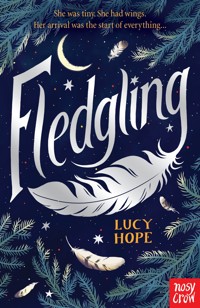
A dark, gothic adventure set deep in a Bavarian forest, with angels and owls and magic and a boy who isn't all that he seems to be... A cherub is blown into Cassie Engel's bedroom during a thunderstorm, triggering a series of terrifying events. Cassie must discover if its arrival was an accident or part of something more sinister. With a self-obsessed opera singer for a mother, a strange taxidermist father, and a best friend who isn't quite what he seems, Cassie is forced to unearth the secrets of her family's past. As the dark forces gather around them, can Cassie protect all that she holds dear? The fantastic debut novel from Lucy Hope, with cover illustration by Anna Shepeta.
Sie lesen das E-Book in den Legimi-Apps auf:
Seitenzahl: 273
Veröffentlichungsjahr: 2021
Das E-Book (TTS) können Sie hören im Abo „Legimi Premium” in Legimi-Apps auf:
Sammlungen
Ähnliche







![Tintenherz [Tintenwelt-Reihe, Band 1 (Ungekürzt)] - Cornelia Funke - Hörbuch](https://legimifiles.blob.core.windows.net/images/2830629ec0fd3fd8c1f122134ba4a884/w200_u90.jpg)


i
ii
For Kev My rock
Chapter One
Edenburg, Bavaria. 1900
Our house perches on top of a tall rock. My great-great-grandfather, Walter Engel, built it years ago, hauling the foundation stones up by rope and pulley. It was a simple place at the beginning – just a hotchpotch of rooms looking down on the Bratvian Forest and the small town of Edenburg. With a growing collection of stuffed owls, Walter built another storey dedicated to their display, and an annex to the side for his book 2collection. In his middle years he built two more floors for his frequent house guests. When Mother inherited the house, she added a music room at the top. Today our house stretches precariously to the sky, a monument to the dreams of five generations of the Engel family.
Living on a rock presented various challenges over the years, particularly the problem of how to reach the house without crampons and climbing boots. My great-grandfather designed a mechanical winch system that bounced white-knuckled visitors up and down the rock at great speed. My grandfather’s somewhat safer solution was to use explosives to blast out a road that encircled the rock like a helter-skelter. And to this day that is how we come and go from our eyrie, either on foot or by carriage.
So that is where we live. Mother, Papa, Grandma and me. At night I can see München, miles away, where Mother performs at the opera house. When not on stage, she spends her days in the music room rehearsing for her next performance.
Grandma moved back in with us when the illness took hold last year. It’s spreading through her body now, gnawing at her bones. She used to look after me when Mother was performing and I was too young to leave alone. We’d play games like I spy or hide-and-seek 3among the owls. When I was six she taught me the Bavarian dances of her childhood: the Zweifacher and the Schuhplattler.
I sit with her now, holding her hand, squeezing cool water on to her parched lips with a small sponge. She’s a remnant of her former self. A heap of hollow bones, sunken cheeks and white hair.
Remembering the nurses are coming later to see her, I check the dials on the brass morphine pump. It was designed by Grandpa years ago to relieve my uncle Killian’s pain after he returned from the war with a shattered leg. The bellows hiss and heave noisily and I wonder how she sleeps through the racket. I adjust the settings, allowing a little more of the powerful medicine to flow into her veins.
I gently kiss her hand and head back to my room.
A storm is brewing. Living high like this, we see the weather coming before anyone else.
Storm’s coming, I tap into my little Morse code machine, warning Raphael, my one and only friend in Edenburg. People tend to stay away from us these days, what with the house, and the owls … and Mother.
Thanks, he taps back.
I glance down at his house at the edge of town and 4see him lean out of his room to pull his window closed.
Mother is in her music room, as always. I know she’ll keep her windows open, despite the storm. People whisper when they see her, standing at a window, as if performing to the heavens. She’s singing “Agnus Dei” – Lamb of God. The wind catches her voice and it weaves round our rock and up into the eye of the approaching storm.
The world becomes dark. Rain pelts at my window. Mother sings. Grandma’s pump sighs.
I hear a tap at my window and press my face against the rain-soaked glass but see nothing. I throw myself back on to my bed and return to my book. I hear the tapping again. I try to ignore it, but it comes again. Curiosity finally overwhelms me, and I pad back to the window, planning to open it just an inch. The wind catches it, throwing it open and the storm fills my room. Something whistles past my ear and lands with a gentle thud on the bed. I slam my window closed, my hands shaking. Turning back to my bed I see what looks like a bird of prey lying in a sodden, trembling heap on my eiderdown.
I pick it up carefully, wrap it in a shawl and hold it on my lap like a baby. Having grown up with the collection of stuffed owls, I should be able to identify it. 5
Eventually the creature’s trembling subsides, and I unwrap my little package to see what’s inside, certain it’s just a barn owl.
I examine it, gently lifting its wings, turning it over. My heart stops. It can’t be. I tap a message to Raphael again.
Please come. I need you.
Now?
Yes, I reply. Now.
The creature seems to be in a deep sleep. I barely dare touch it, terrified it might wake. I have never seen anything like it, but I’m certain I know what it is. Four tiny wings protrude from its shoulder blades. Its body is covered in scruffy feathers. The skin on its hands and feet has the feel of parchment. I touch the sparse soft hair on its head. It is dark, like mine, but finer. Still wet from the storm, it begins to shiver. I wrap the shawl round it again. Its pale face with tightly shut eyes is that of a sleeping infant.
Raphael comes before the storm has passed. He’s drenched.
“I have something to show you,” I say.
He bends down to kiss my cheek. “Hello, Cassie, how are you? How lovely to see you!” 6
“Oh, sorry. Hello, Raphael. But something strange has happened and I don’t know what to do.”
He looks down at me, and then at the bundle in my arms.
“I think you need to sit down,” I say, touching the bed next to me.
I cannot think of anyone else in the world I can trust with this. Gentle Raphael is the obvious and only choice. He sits and I place the creature on his knee. He unwraps the shawl a little.
He looks at me. “Is this what I think it is?”
I nod. He wraps it up again, his eyes wide. “Where on earth did you find her?”
“She was blown into my room in the storm. I heard a tapping at the window. I opened it and she landed on my bed, just here.” I point to the patch on the bed, which is still wet. “I thought you only found them in the Bible,” I add. “I didn’t think they actually existed. And I thought they were supposed to be boys.”
“Those stories are from a different time,” he says quietly.
“Do you think she’s some kind of angel?”
“I think she might be a cherub, actually,” he says. “They’re quite different to angels.”
I remember the exhibition of religious paintings 7Grandma took me to see in the Glaspalast nearly two years ago. The main hall was filled with oil paintings and statues of cherubs – but they were pink, well-fed infants with little wings that couldn’t possibly have lifted them into the air. They were nothing like this strange creature.
“What do you think I should do with her?” I whisper.
“I don’t know,” he says, handing her back to me. “It’s not something I know much about.” He turns away as if to avoid my gaze.
“We could look in the library. See if there’s anything there on cherubs…” I say, visualising the shelves in the old library downstairs. “There’s a section on feathered creatures, and definitely some religious books.”
He nods. “But we need to be careful. It’s possible someone, or something, will be out looking for her.”
My heart misses a beat. “What sort of something?”
“I’m not sure.” He walks to the window and looks up at the sky, frowning.
The storm is subsiding but dark clouds still swirl around the house, accentuating the gloom in my room.
“Do you think we should feed her?” I say, shivering.
“I don’t think so,” he says. “I suspect she needs something other than food to stay alive.”
“Such as?”
He shakes his head. “I just think her needs will be 8quite different to those of a human baby.” He hesitates. “And I don’t think you should tell your parents about her for now.”
I nod. “Where could she have come from?”
He looks at me, as if considering something. “Perhaps she lost the others in this storm. Like a bird separated from its flock.”
I look at him. “The other whats?” I say, the hairs on the back of my neck pricking. “You think there are more out there like her?” I glance out of the window nervously.
“Probably not many like her. Most likely angels.” He turns from the window to face me. “Was your—” He stops himself.
“Was my what?”
“Oh, nothing.”
“What is it, Raphael?”
“Your mother was singing earlier, wasn’t she?” he says, after a pause.
“Yes, of course she was. She’s always singing. What are you saying?”
“Well, I know it sounds peculiar, but I think angels might communicate by song. Like whales. I’m wondering if she was drawn to your mother’s voice. Maybe she thought her singing was the host calling to her.”
“By host, you mean other angels?” I say, even though 9I know the answer.
He nods.
“And you think they’ll come looking for their baby?”
“Possibly. I don’t know, Cassie. I don’t know much more than you! But I do know she isn’t a baby. She’s probably thousands of years old.”
I glance down at the creature in my arms, at her strange paper-like skin and delicate feathers. I cannot believe she is so ancient.
Chapter Two
We climb the narrow staircase to the owlery, the room that leads through to the library. I hug the cherub close. Her heart seems to beat in time with mine.
The owlery hasn’t changed since my great-great-grandfather established his collection of stuffed owls here nearly a hundred years ago. Wide-eyed creatures stare at us from ebony-framed display cases as we pass. My favourite, Otto, a pygmy owl, sits caged for eternity 11with his friend Fritz, the tawny owl. Eric, the giant eagle owl, stands majestically in the middle of the room in a vast dome-shaped glass case, his wings outstretched, his eyes wild. Tiny handwritten labels hang from the owls’ claws, identifying each of the thirty-eight creatures by their Latin names.
The owls are my responsibility, and I have established a daily routine of dusting feathers, replacing rusting pins, and polishing cases until they gleam. Grandma named me as official curator when it became clear to everyone that Mother would not keep the owls safe. This responsibility has been mine since my tenth birthday.
The ancient heating system clatters and crashes as we tread on creaking floorboards. I kick the cast-iron pipe that runs along the side of the room and the noise subsides. I’m pleased to be wearing my sturdy boots.
We pass through the door at the far end and step into the library. It is even darker here than in the owlery as the room was designed with just one small window to protect the books from the effects of sunlight. Raphael reaches across the battered leather desk in the centre of the room and flicks the switch on the desk lamp. I breathe in the familiar smell of ancient tobacco mingled with old books and leather, a sensory legacy from a great-great-grandfather I never knew. 12
The walls are lined from floor to ceiling with books of all shapes and sizes, with subjects ranging from philosophy to anatomy and dancing cats. Of course there is a whole section on birds, identified by a handmade All Things Featathered sign. I hope to find something useful here, but then I wonder if texts on cherubs would be hidden somewhere else. Might they be within the section on All Things Supernatatural, or even in World Religions?
“Where should we start looking?” asks Raphael, glancing about the room.
“I guess somewhere around here,” I say, running my fingers along the spine of a tall leather-bound book entitled Owl Taxidermy for Novices within the “feathered” section. Walter Engel organised his library in such a way that makes it almost impossible to find what you are looking for, but I have a distinct feeling he might have placed books on angels close to the reference books on owls.
I hear Mother calling and my heart sinks. She doesn’t call me in the usual way a mother might. Instead she sings my name in the character of her latest role. This month she has been rehearsing to play Malwina in the opera Der Vampyr.
“Cassie! Cassie! Cassie! Cassie!” she sings, in a rising arpeggio, increasing in volume with each note. “Cassie! 13Cassie! Cassie! Cassie!”
I put my head down, hoping she might forget about me. But she doesn’t stop, and her voice rises steadily until I can no longer bear it.
“Would you like me to come with you?” asks Raphael.
I want more than anything for Raphael to come with me, but it’s best if I’m on my own. It’s the unpredictability that’s the problem; I never know how she might be from one moment to the next these days.
“I think you should stay here,” I say, holding the creature tightly in my arms. I don’t want to let her go; with her heart pounding next to mine, she is beginning to feel like part of me. “And you need to look after the cherub while I’m gone.” I hand her to him. “I’m worried about what Bram will do if he sees her.” He’s as gentle as a kitten with me, but brutal with anything feathered. “He brought down a sparrowhawk on the rock just yesterday.”
Raphael smiles. “If you’re sure, but call if you need me.”
I leave Raphael in the library and head towards the spiral staircase that leads up to Mother’s music room.
Chapter Three
I knock before I open the door and step inside. Mother is standing with her back to me, surveying the storm through one of the small leaded windows. The room seems darker than usual. She is dressed as if about to walk on stage, in a long silver gown that falls to her ankles and a voluminous cape. Hearing me enter, she turns to face me. In the lamplight she is as white as snow. Her lips are red as blood. 15
“Ah, Cassie darling,” she says. “Where have you been? I am quite hoarse from calling you.”
“I was busy,” I reply, probably too stiffly.
“Oh, you’re always busy with something, Cassie.”
I say nothing and stare at my feet. She is right, of course. I am always busy: with the owls, the plumbing, ensuring Emaline the maid knows what Mother has requested for dinner, checking Papa is safe.
“Is the boy here?” she asks, her eyes searching me. In this light they are the green of the verdigris roof over the music room.
“Which boy?” I say, even though I know exactly who she’s talking about.
“Oh, you know, the boy from the town.”
I look up at her. Should I deny he’s here?
“Oh, don’t play the innocent with me, Cassie. I’ve heard the two of you crashing about downstairs.”
“His name is Raphael, Mother. And he’s my friend.”
The remains of a crystal glass lie in smithereens at the base of the music stand. I pick up a page of sheet music from the chiffonier, kneel down and scoop up as many fragments as I can without cutting my fingers.
“Leave that, Cassie. Emaline will deal with it later.”
Emaline is old, and I hate seeing her bending to clear up after one of Mother’s rages. She used to haul herself 16up our rock every morning in the rusting winch system. Now, with the arthritis gnawing at her knuckles and toes, she shuffles up our helter-skelter road every day before it gets light – like an old snail – to look after us. I think she has enough to do without clearing up broken glass. I sweep up the tiny shards as well as I can, worried that Papa might tread on them when he returns from München. He’s recently taken to walking about the house in bare feet, oblivious to the freezing floorboards. I wonder for a moment if the glass had been flung at him.
Mother sinks into the chaise longue and sweeps a pale hand across her forehead, sighing. She’s still beautiful, of course. Her ink-black hair, now streaked with grey, rises up from her head in a mass of shining spirals. Grandpa used to laugh, when I was little, about how “his girls” had hair like our helter-skelter road. People comment that I look just like Mother. But my hair seems to have even more energy than hers. Every morning I tug at it, rubbing in Papa’s Macassar oil in an effort to bring it under control.
“Get me a drink, darling,” Mother says, “my vocal cords are fatigued.” She lifts her chin, closes her eyes and “ahhhs”. “Snap-snap, Cassie,” she says, her eyes still closed, clicking her fingers. 17
I pick up a bottle of schnapps and sniff its contents, furious with myself for not telling her to pour her own drink. She’s always summoning me from some distant room in the house to pour a drink or run an errand. But I don’t want to argue with her today. I have more important things to do.
I choose a glass that looks cleaner than the others, pour some of the clear liquid into it and pass it to her.
“Are you likely to change your dress some time this month, darling?” she asks brightly, looking me up and down.
I smooth my dress with my hands. It’s plain black – and practical – and much easier to hoist out of the way when climbing the rock or carrying out maintenance around the house than a full-length dress. She’s staring at my legs now, and I tuck one foot behind the other, trying to somehow make myself less visible. I have a hole in my stocking. I hope she hasn’t noticed.
“So – the boy,” she says.
I do not want to discuss Raphael with her.
“What is it his father does for a living? Remind me, darling. I can’t quite remember.”
“You know what his father does, Mother. He’s a cobbler. He repairs your shoes.”
“Ah, yes,” she tinkles. “I had completely forgotten. 18How sweet. Rather like someone out of a fairy tale!”
She sips her schnapps without leaving a trace of lipstick on the glass.
“You’re looking so pale, darling. Let me apply a little rouge.”
I step backwards. “No thank you, Mother, I have things to do. Can I go now?”
“Oh, well, of course, if you’d rather spend time with the cobbler’s son, than with your own mother—” She takes another slug of the schnapps.
I head towards the door, hoping our meeting is over. I’m desperate to get back to the cherub. And to Raphael.
“Oh, and one other thing—”
My heart sinks. What now?
“I want you to get rid of the owls.”
My hand is on the doorknob. I grip it hard and take a deep breath before turning to face her.
“I am not getting rid of the owls,” I say, my heart suddenly thudding. What would she expect me to do with them? Sell them? Throw them down the rock? She knows how important they are to me. The owls are better listeners than Mother will ever be, and they don’t criticise the state of my stockings. And then there was Grandpa’s dying instruction that they should be preserved at all costs. He was quite insistent. “Whatever happens to the 19family,” he’d said, “anything can be sold off – but not the owls. Promise me that, Cassie.” Of course I promised. I didn’t ask him why this was so important to him because he died shortly afterwards. But I kept my promise, and now they’re a part of me – a part of my daily life. I don’t think I could ever “get rid” of them.
“If you don’t, darling, then I will. And they’ll end up somewhere much nicer if you deal with them.” The schnapps is already taking effect, making her voice drawl slightly.
“You know I can’t,” I hiss, trying to control the panic in my voice.
“I’m afraid you’re going to have to, Cassie,” she says, rising from the chaise longue. She’s almost a head taller than me. “Your father is taking up too much space in here.” She gestures towards a small pile of boxes under one of the windows. “I can’t bear it any longer. The owlery will be his room, where he can spread his things about willy-nilly for all I care. It’s my house remember, Cassie.”
“I can’t do it,” I say. “And Grandma won’t allow it either. You know that.” I stand, feeling not tall enough, and face her.
“Well, Grandma’s hardly going to argue, is she, what with that ghastly contraption huffing and puffing day 20and night. I suspect the owls are at the bottom of her list of priorities just now.”
“I won’t do it!” I mutter as I stomp out of the room, forgetting Mother has the hearing of a bat.
“Oh yes you will, Cassie!” she shouts after me.
Chapter Four
I’m still shaking when I find Raphael in the library. He’s bathed in the light of the old desk lamp, absorbed in an enormous book, the cherub nestled, still asleep, in his arms.
As I creep in behind him, the old floorboards shift noisily under my boots. It’s impossible to walk quietly anywhere in this house.
He turns to face me and smiles. “How did it go?” 22
“She wants me to dispose of the owls,” I say. I don’t mention what she said about him.
“Your grandma would never allow it. Your mother knows that.”
The creak of Grandma’s pump weaves its way from the floor above. I know she can no longer help me.
“She wants Papa out of the music room. Apparently he’s taking up too much space.” I almost laugh at the thought, as Papa doesn’t take up much space at all. Big-hearted, but damaged, like his friend, my uncle Killian, who died years ago, he shuffles about the house most days humming into his giant pipe-stained beard or squirrelled away in his workshop. Grandpa once explained that “his soul was shattered, after what happened in the war”. He told me there was no contraption that could repair that.
“She’ll probably change her mind,” says Raphael. “Why don’t you wait and see what happens? It might just be one of her whims.”
I nod and pull up a chair next to him.
“Has she been like this all the time I’ve been away?” I ask, looking down at the cherub, wishing more than anything to take her back.
“Yes, she hasn’t moved. I’m wondering if she might be traumatised, and this deep sleep is some sort of protective mechanism.” 23
As if he’s read my mind, he gently passes her back to me. I hold her tightly and feel a comforting warmth spread through my body again. Within seconds our hearts are beating in the same rhythm, like earlier. I didn’t think I’d imagined it.
The book Raphael has open on the desk looks ancient. “It’s a codex,” he whispers, “an illuminated manuscript, handwritten on vellum. I think it’s very old.”
I touch the hand-cut edges of the book, being careful not to get my fingers near the illustrations. Noticing my nails are black I pull my hands away and tuck them round the sleeping cherub instead. The drawings are the brightest gold, despite their age, and the elaborate borders are laced with interlinked miniature cherubs. I’m worried for a moment it might be written in Latin and am relieved to see it is in the Old Bavarian language.
“Where did you find it?” I say. I am certain I have never seen it before. Whenever I went to visit Grandpa in the library as a child, he’d pull out old books for us to look through together. He’d explain how vellum was made from calfskin and that it lasted for hundreds or even thousands of years. I loved listening to his stories of how early craftsmen stretched and scraped the material and whitened it with chalk until it was ready to be written on by scribes with goose-feather quills. Sometimes we 24even made our own quills when one of the owls dropped a feather or we found an eagle feather in the forest. We mixed up solutions of oak apples, lampblack and black iron salts for ink, and wrote stories together. I remember laughing when he told me how people used stale urine or earwax to improve the texture of the gold paint for the illuminated texts.
“It was with the religious books,” says Raphael, nodding towards one of the bookshelves. “It looks like it hasn’t been opened for a long time. There’s no title on the spine, or anywhere on the cover, which is why it wasn’t obvious.”
I lean in closer still, and my arm brushes against his. He’s generating as much heat as the cherub. He turns to me and smiles briefly before returning to the text.
The book is thick, probably a hundred or more pages, and huge, taking up most of the desk. The leather cover is a faded red. It is coated in dust, and as I run my fingers over the pages, tiny particles jump about us. I wonder briefly if it is the dust of my ancestors – skin fragments from another age.
We sit side by side and read together. I listen to the sounds of the house, worrying Mother might pounce on us unexpectedly – but I’ve never seen her in the library, and with the door closed I feel safe. 25
I can read Old Bavarian, but I’m slow to make sense of the elaborate lettering. As I pick my way through the heavy script, reading out loud, I catch my breath.
“Cherubs are the highest in the hierarchy of angels, sent to Earth for only the most crucial missions.”
I gasp. “Do you think she’s here on a mission? What could she possibly be here for?”
Raphael shakes his head, but says nothing.
“Any person who causes harm to a cherub will face the fury of the host.”
Fury of the host? What does that mean? I glance at Raphael, but his face is unreadable.
Further down the page we find detailed physical descriptions of cherubs, and even a little sketch with annotations. According to what is written here, cherubs vary significantly in appearance, and are often nothing like those in the traditional religious drawings seen in churches and bibles. The cherubs drawn and described here are baby-like, but their bodies are feathered and four small wings protrude from their shoulder blades. Some are so pale they are almost transparent, yet others have dark skin and black feathers. The cherub in my arms has skin the colour of alabaster and feathers in shades of beige and umber.
Raphael and I look at each other and then down at 26the cherub.
“A cherub on Earth draws sustenance from the chosen host, for love is the food that nurtures them.”
“What do you think that means?” I say. “Does it mean the host of angels? How can they draw sustenance from them if they are elsewhere?”
Raphael shakes his head. “Perhaps it’s a different type of host they’re talking about.”
In the margin, overlapping the illustrations, is a mess of faded scribbled notes, a later addition to the more formal writing elsewhere on the page. The word predator appears several times. Towards the top of the page the same word has been underlined many times in the firm, scratchy sweep of someone’s quill. Whoever wrote this did so in a hurry. There are mistakes and crossings out, and the ink has smudged as if the author slammed the book shut before the ink had been given time to dry.
There is a sketch of a giant birdlike creature in the top right corner of the page. In another sketch in the wide bottom margin is what looks like a thunder cloud. It is anvil-shaped – and strangely menacing-looking. Within this cloud is the silhouette of a black creature travelling at what looks like great speed towards the forest. Underneath the image is a word scratched so deeply it has almost created a hole in the page. The word 27is Sturmfalken. Does that mean “storm hawk”?
“Have you heard of the Sturmfalken?” I whisper, looking up at Raphael.
His head is hanging low, making it difficult to see his eyes. His hands are gripping the side of the desk.
“I think you have,” I say quietly. “What do you know about this?”
“I don’t know, Cassie, but there is something familiar about them.” He examines the page. “But I can’t think where I’ve seen them before. I’ve heard old folk tell tales of giant birdlike creatures swooping over the forest, but I’m sure it’s just superstition.”
The cherub starts to stir in my arms.
She lets out a piercing shriek and instinctively I put my hand over her mouth to hush her.
“Shush!” I whisper, my heart suddenly pounding. “We’re trying to protect you.”
She looks at me through eyes that are not human – a colour I have never seen before. In her eyes are all the jewels of the world: aquamarine and sapphire and emerald, somehow combined to create one unearthly hue. They are strangely beautiful, and round, like an owl’s, and framed as if with kohl. There’s something about them that both unsettles and reassures me at the same time. In her eyes I see great strength, wisdom, and 28perhaps a little fear too.
She begins to tremble in my arms and my fear disappears. I touch her head to reassure her. “Can you speak?” I ask, even though I know the answer. She doesn’t say anything, but instead makes a soft cawing sound. “Please don’t worry,” I say. “I won’t hurt you.” She crawls closer to me, as if to become a part of me. She looks around the room, taking everything in. When her eyes fall back on me I smile at her, trying not to look worried. “I’ll look after you,” I say.
I want to learn more about the Sturmfalken and question Raphael further, but now with the cherub awake it doesn’t feel right somehow. I shift her position on my knee. “I think we should put the book away for now,” I say. “We don’t want anyone else finding this, least of all Papa. He’d only worry.”
Raphael slides the book back into its place on the shelf before returning to his chair.
We sit for some time, transfixed with the cherub, but like frightened new parents, not knowing quite what to do next.
Raphael cranes his neck to see what the storm is doing. “I’m going to have to go,” he says. “I promised Father I wouldn’t be long. Will you be all right until tomorrow?”
“Please don’t go,” I say, feeling a rising panic at the 29thought of being left alone with the cherub.
“I have to. I’m sorry. If I don’t, he’ll come looking for me, and you know what happened last time.”
How could I forget? Of course Raphael needs to go. I cringe as I remember how Mother treated his father the last time he came to the house.
“But please be careful if you have to go out,” he says. “And keep her close by.” He puts a hand on the cherub’s head, and she makes a gentle mewing sound. “And don’t leave her where Bram can get at her,” he adds, smiling.
He gets up and rolls his shoulders as if they are troubling him. As he reaches the door, he stops and turns to me. I’m certain he wants to say something else, but he leaves without another word.
I tiptoe to my room, the cherub still in my arms, and look out of the window. As Raphael walks back to his cottage a shaft of winter sunlight settles on his retreating back, illuminating him slightly. He turns to wave before disappearing through his front door. The clouds, still swirling about our rock, are heavy and dark, but the storm has passed.




