


0,49 €
Niedrigster Preis in 30 Tagen: 0,00 €
Niedrigster Preis in 30 Tagen: 0,00 €
Mehr erfahren.
- Herausgeber: Musaicum Books
- Kategorie: Gesellschafts- und Liebesromane
- Sprache: Englisch
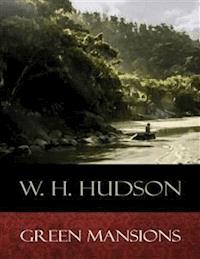
In Green Mansions by W. H. Hudson, readers are transported to the lush forests of South America, immersing themselves in a tale of love, nature, and the clash between civilization and the wild. Hudson's vivid descriptions and lyrical style create a dream-like atmosphere, blending realism with romanticism. The novel serves as a prime example of early 20th-century British literature, reflecting the era's fascination with exotic lands and cultures. The narrative follows the protagonist, Abel, as he navigates the mysteries of the forest and encounters the enigmatic Rima, a symbol of the untamed beauty of nature. W. H. Hudson, a British author and naturalist, drew inspiration from his own experiences in South America to craft Green Mansions. His deep connection to the natural world and his observations of indigenous peoples informed the novel's rich depiction of the landscape and its inhabitants. Hudson's passion for conservation and his interest in exploring the complexities of human-nature relationships shine through his writing. Green Mansions is a must-read for lovers of nature writing, romantic literature, and exploration of the human psyche. Hudson's poetic prose and evocative storytelling make this novel a timeless classic that continues to captivate readers with its enchanting portrayal of the natural world. In this enriched edition, we have carefully created added value for your reading experience: - A succinct Introduction situates the work's timeless appeal and themes. - The Synopsis outlines the central plot, highlighting key developments without spoiling critical twists. - A detailed Historical Context immerses you in the era's events and influences that shaped the writing. - A thorough Analysis dissects symbols, motifs, and character arcs to unearth underlying meanings. - Reflection questions prompt you to engage personally with the work's messages, connecting them to modern life. - Hand‐picked Memorable Quotes shine a spotlight on moments of literary brilliance. - Interactive footnotes clarify unusual references, historical allusions, and archaic phrases for an effortless, more informed read.
Das E-Book können Sie in Legimi-Apps oder einer beliebigen App lesen, die das folgende Format unterstützen:
Veröffentlichungsjahr: 2019
Ähnliche










Green Mansions
Published by
Books
Table of Contents
Introduction
Between the call of the wild forest and the claims of human society, Green Mansions traces a fragile border where desire, wonder, and misapprehension meet, asking what kind of love or knowledge can flourish when language falters, distances multiply, and the living world presses back with its own rhythms and rights; set in the tropical forests of South America and told by a displaced wanderer, the novel holds the reader at the crossing of romance and survival, of attentive natural history and fevered longing, of civilization’s promises and the forest’s autonomy, where every step forward risks misunderstanding and every pause invites listening to voices at the edge of human hearing.
First published in 1904, W. H. Hudson’s Green Mansions is a romantic adventure with hints of pastoral fantasy, grounded in the author’s lifelong attention to the natural world. Set largely within the humid, densely vegetated forests of South America, it follows a post–nineteenth-century sensibility into the early twentieth century, when travel narratives, ethnographic curiosity, and conservationist awareness were intersecting in English-language literature. The book occupies a hybrid space: part frontier tale, part elegy, part study of perception. Its setting is not a blank wilderness but a lived environment whose weather, birds, and canopy shape the action as decisively as any human intention.
At the outset, a young political fugitive, having fled upheaval in a South American city, drifts through the grasslands and into the deep forest, where survival depends on tact, observation, and luck. There he encounters a solitary girl whose presence seems inseparable from birdsong and leaf-light, and an older guardian whose past remains obscure. Drawn first by curiosity and then by attachment, the narrator negotiates fragile truces with the land and its inhabitants, learning enough to meet, not enough to command. The promise of companionship becomes a test: how to approach another being without turning mystery into conquest.
Hudson builds this encounter through a first-person voice that blends travelogue, confession, and field notebook, so that observation and emotion move in tandem. The prose lingers on textures—humidity, plumage, bark, the hush before rain—yet it also quickens with pursuit, misdirection, and the vertigo of infatuation. Tonally the book oscillates between wonder and foreboding, a balance that dignifies the unknown without dissolving it into fantasy. Because the narrator is both participant and recorder, the reading experience is intimate without being omniscient; we are close to his senses and limits, sharing a gaze that must continuously correct itself in the forest.
Themes emerge with layered clarity. The novel asks what civilization produces and destroys when it meets a biotic community not arranged for its purposes, and how far tenderness can travel without stewardship. Language is central: Hudson treats speech, song, and silence as instruments with different ranges, suggesting that understanding may require forms of listening not sanctioned by society. The text also considers exile and belonging, the ethics of curiosity, and the trouble with idealizing innocence. Love appears as attention sharpened by risk, a posture that can open doors to reciprocity yet can slide, disastrously, into projection or possession.
For contemporary readers, Green Mansions offers both a sensuous immersion in nonhuman life and a framework for examining how we narrate encounters across cultural and ecological difference. Its scenes of careful watching anticipate modern ecological thinking, while its moments of naiveté and exoticization invite critique that is historically alert rather than dismissive. In an era of biodiversity loss and displacement, the book’s attention to refuge, vulnerability, and fragile alliances resonates beyond its period setting. Reading it now can sharpen questions about care and consent—toward people and places—and about the costs of translating the unknown into familiar, manageable stories.
Approached with patience for its descriptive cadence and an awareness of its era, the novel rewards readers who let the forest’s time recalibrate expectation. It can be read as a love story, a travel narrative, an ecological meditation, or all three at once; in each mode it asks us to test the reliability of a single witness and to hear what he cannot. Without disclosing later turns, it is enough to say that the book treats connection as both gift and limit. That tension—ardor meeting alterity—helps explain why Green Mansions continues to invite debate, wonder, and careful rereading.
Synopsis
Green Mansions (1904) by W. H. Hudson is a lyrical romance set in the tropical forests of South America, narrated as a recollection of a man's youth on the Venezuelan frontier. Retreating from human affairs, he enters a landscape where luxuriant nature seems animated by spirit and song. The narrative follows his gradual passage from political disillusion to a more intimate, questioning engagement with wilderness, language, and desire. Hudson blends travel narrative, natural history, and romantic fable, inviting the reader to consider how civilization confronts a world it cannot readily classify. From the outset, the forest itself emerges as a shaping presence and moral horizon.
Driven by the failure of a youthful political venture, the narrator abandons the capital and wanders south across the llanos into sparsely settled country. Among frontier people and indigenous communities, he learns habits of survival while maintaining an outsider's gaze. His aimless journey brings both refuge and restlessness: he seeks obscurity, yet the immensity of the interior awakens new curiosity. Stripped of companions and status, he tests himself against hunger, weather, and unfamiliar customs. Hudson uses this passage to shift from civic tumult to the intimate tempo of the bush, preparing for encounters in which perception—hearing, tracking, interpreting signs—becomes the principal mode of knowledge.
At a remote settlement bordering deep forest, he hears rumors of a strange being whose voice carries like birdsong, unsettling hunters and woodcutters. Exploring alone, he glimpses fugitive traces—light footsteps, a flit of motion in green shade, an aerial melody that seems both human and not. The villagers regard the singer with fear and taboo, attributing misfortune to her appearances. The narrator's skepticism soon yields to fascination as the forest's acoustics and silences arrange themselves around the phenomenon. An attempted pursuit fails, but the encounter alters his sense of scale and direction, drawing him from clearings and paths into the living, echoing maze.
Persevering, he discovers Rima, a forest-dwelling girl whose quick movements and liquid, birdlike speech suggest a life wholly attuned to the woods. She lives with an elderly guardian, Nuflo, whose rough secrecy contrasts with her innocence and grace. Awed, the narrator seeks closeness while struggling to understand her language, ethics, and wary boundaries. She guides him through groves and streams as if the forest were a house, and animals respond to her presence without fear. Meanwhile, local men project superstition and hostility onto what they cannot name. The triangle of curiosity, protection, and suspicion shapes daily exchanges and foreshadows more perilous misunderstandings.
Rima's difference raises questions of kinship and origin that Nuflo addresses in fragments, yielding a tale of wandering, loss, and a hidden people beyond the known trails. Hints of a remote mountain refuge persuade them to undertake a difficult journey upriver and over ridges in search of answers. The trek broadens the book's canvas—waterfalls, high ridges, and misty woods—while sharpening contrasts between the narrator's ardor and Rima's untamed freedom. Partial histories emerge regarding her mother and a secluded community with unusual speech and habits. These revelations deepen the mystery rather than dispel it, reframing Rima not as apparition but as remnant and possibility.
On returning from the highlands, tensions with neighboring settlers and tribes intensify. Stories spread, sightings multiply, and fear hardens into the impulse to control or expel what the community deems dangerous. The narrator's possessiveness and Nuflo's secrecy complicate attempts at mediation, and the forest, once sanctuary, becomes a contested borderland. Misread signals—a cry, a flame, a chase—cascade into a crisis that tests loyalty and courage. Hudson narrates these events with restraint, emphasizing the sway of rumor and the fragile terms on which people and place coexist. The outcome reshapes the narrator's understanding of love, belonging, and the cost of intrusion.
In its closing movements, the novel turns reflective, measuring human longing against the endurance of the green world. The narrator carries forward a memory that is at once personal and emblematic: an encounter with otherness that exposed both the poverty of mere conquest and the discipline required for reverence. Green Mansions endures for its lyrical nature writing, its portrayal of intercultural contact, and its inquiry into speech—human, avian, and vegetal—as a medium of relation. Without resolving every enigma, it leaves a double impression: the forest as teacher and the heart as an often unreliable guide, a tension readers continue to find resonant.
Historical Context
Green Mansions, first published in London and New York in 1904, was written by W. H. Hudson (1841–1922), an Argentine-born naturalist who settled in England in 1874. The romance is set in the tropical forests of Venezuela’s Guayana region, in the wider Orinoco basin of the Guiana Shield. Its narrative time evokes nineteenth‑century South America, when frontier settlements, riverine trade, and mission outposts bordered vast, sparsely administered forests. Hudson drew on decades of observation as a field naturalist and on memories of his South American upbringing, crafting a work that mediates between metropolitan readers and a biodiverse, little‑known landscape still marginal to state power.
The novel’s backstory intersects with Venezuela’s long nineteenth century of political volatility. After independence from Spain (formally recognized in 1821–1830 within Gran Colombia’s dissolution), Venezuela endured cycles of caudillo rule, regional revolts, and civil wars. The Federal War (1859–1863) and numerous uprisings before and after created patterns of exile, shifting allegiances, and precarious urban authority centered in Caracas. Such conditions pushed fugitives and wanderers into remote interiors beyond reliable law or infrastructure. This unstable political landscape, widely reported in contemporary histories and travel accounts, frames the plausibility of a protagonist retreating from capital intrigues toward the forested margins where state institutions and markets thinned out.
The Guiana Shield’s ecology—evergreen forests, tepui highlands, and labyrinthine rivers feeding the Orinoco—hosts exceptional biodiversity. In the nineteenth century, Indigenous peoples such as the Warao, Pemón, Makushi, and Arawak- and Carib-speaking groups inhabited river deltas, savannas, and uplands, maintaining trade and ritual networks while facing intermittent encroachment. Catholic missions, revived under Capuchin leadership after earlier Jesuit expulsions, operated sporadically along accessible waterways, alongside trading posts exchanging tools, salt, and cloth. European and creole travelers described long reaches of forest where multilingual intermediaries guided passage. This ethnographic and environmental mosaic informs the novel’s encounters, distances, and silences between settlements and scarcely mapped forest territories.
Across the nineteenth century, the Guiana region stood at the intersection of rival colonial spheres—British Guiana, Dutch Suriname, and French Guiana—bordering Venezuela’s Guayana state. The Venezuela–British Guiana boundary dispute, inflamed by the 1895 crisis and resolved by international arbitration in 1899, brought sustained Anglo‑American attention to the Orinoco’s hinterlands. Scientific and journalistic expeditions multiplied maps and reports about timber, minerals, and river routes. By 1904, British and U.S. readers associated Guiana with verdant abundance and geopolitical contention. Hudson’s choice of locale thus met an informed curiosity about a forested frontier recently foregrounded in diplomacy, cartography, and press debates over sovereignty and resource access.
European science had long mythologized tropical America. Alexander von Humboldt’s Personal Narrative (published 1814–1825) made the Orinoco a touchstone of the sublime and of interconnected climate and biota. Later Victorian naturalists—Henry Walter Bates, Alfred Russel Wallace, and Richard Spruce—reported from the Amazon and Guianas, blending rigorous collection with vivid description. After 1859, Darwinian debates reframed species, adaptation, and human origins, while ethnology cataloged Indigenous languages and lifeways. In Britain, such works circulated widely through societies and periodicals, shaping expectations of the rainforest as both scientific laboratory and imaginative refuge. Hudson, a practicing naturalist, wrote into this rich, contested discourse on nature and culture.
At the turn of the twentieth century, British and American book markets favored travel romances and colonial adventures alongside realist fiction. H. Rider Haggard’s bestsellers and Robert Louis Stevenson’s tales had accustomed readers to remote settings where plot tested European sensibilities against unfamiliar terrains. Green Mansions enters this milieu yet diverges by subordinating treasure, conquest, and imperial bureaucracy to sensory immersion and moral inquiry. Its pacing, reliance on reminiscence, and precision of natural observation reflect Hudson’s hybrid identity as novelist‑naturalist. The work adapts the exotic romance to foreground atmosphere, birdsong, and plant life, offering readers enchantment without the conventional apparatus of exploration, extraction, or conquest.
Hudson’s writing resonated with emergent conservation. In Britain, campaigns against the plumage trade—organized by the Society for the Protection of Birds (founded 1889, later granted royal charter)—mobilized readers, scientists, and clergy. Hudson’s Birds in London (1898) and essays pleaded for habitats and species under pressure from fashion and urban expansion. By 1904, parliamentary debates and public lectures had made bird protection a mainstream cause, though comprehensive legislation would arrive later. Green Mansions’ luxuriant attention to avifauna, forest acoustics, and fragile ecologies aligns with this movement, inviting ethical response to nonhuman life rather than treating the tropics merely as backdrop for human adventure.
Composed in Edwardian London by a South American–reared naturalist, the novel refracts its era’s tensions: metropolitan appetite for exotic narrative, skepticism toward industrial modernity, and evolving respect for ecological limits. It borrows the travelogue’s authority yet questions the value of progress measured by conquest or commerce. Encounters between outsiders and forest communities underscore cultural misunderstandings common in colonial frontiers, while the persistent presence of rivers, birds, and trees gives nature agency beyond scenery. In balancing romance with natural history, Green Mansions offers a critique of restless modern ambitions and an elegy for environments already being inscribed by geopolitics, markets, and missionary expansion.
Green Mansions
PROLOGUE
It is a cause of very great regret to me that this task has taken so much longer a time than I had expected for its completion. It is now many months—over a year, in fact—since I wrote to Georgetown announcing my intention of publishing, in a very few months, the whole truth about Mr. Abel. Hardly less could have been looked for from his nearest friend, and I had hoped that the discussion in the newspapers would have ceased, at all events, until the appearance of the promised book. It has not been so; and at this distance from Guiana I was not aware of how much conjectural matter was being printed week by week in the local press, some of which must have been painful reading to Mr. Abel's friends. A darkened chamber, the existence of which had never been suspected in that familiar house in Main Street, furnished only with an ebony stand on which stood a cinerary urn[1], its surface ornamented with flower and leaf and thorn, and winding through it all the figure of a serpent; an inscription, too, of seven short words which no one could understand or rightly interpret; and finally, the disposal of the mysterious ashes—that was all there was relating to an untold chapter in a man's life for imagination to work on. Let us hope that now, at last, the romance-weaving will come to an end. It was, however, but natural that the keenest curiosity should have been excited; not only because of that peculiar and indescribable charm of the man, which all recognised and which won all hearts, but also because of that hidden chapter—that sojourn in the desert, about which he preserved silence. It was felt in a vague way by his intimates that he had met with unusual experiences which had profoundly affected him and changed the course of his life. To me alone was the truth known, and I must now tell, briefly as possible, how my great friendship and close intimacy with him came about.
When, in 1887, I arrived in Georgetown to take up an appointment in a public office, I found Mr. Abel an old resident there, a man of means and a favourite in society. Yet he was an alien, a Venezuelan, one of that turbulent people on our border whom the colonists have always looked on as their natural enemies. The story told to me was that about twelve years before that time he had arrived at Georgetown from some remote district in the interior; that he had journeyed alone on foot across half the continent to the coast, and had first appeared among them, a young stranger, penniless, in rags, wasted almost to a skeleton by fever and misery of all kinds, his face blackened by long exposure to sun and wind. Friendless, with but little English, it was a hard struggle for him to live; but he managed somehow, and eventually letters from Caracas informed him that a considerable property of which he had been deprived was once more his own, and he was also invited to return to his country to take his part in the government of the republic. But Mr. Abel, though young, had already outlived political passions and aspirations, and, apparently, even the love of his country; at all events, he elected to stay where he was—his enemies, he would say smilingly, were his best friends—and one of the first uses he made of his fortune was to buy that house in Main Street which was afterwards like a home to me.
I must state here that my friend's full name was Abel Guevez de Argensola, but in his early days in Georgetown he was called by his christian name only, and later he wished to be known simply as "Mr. Abel."
I had no sooner made his acquaintance than I ceased to wonder at the esteem and even affection with which he, a Venezuelan, was regarded in this British colony. All knew and liked him, and the reason of it was the personal charm of the man, his kindly disposition, his manner with women, which pleased them and excited no man's jealousy—not even the old hot-tempered planter's, with a very young and pretty and light-headed wife—his love of little children, of all wild creatures, of nature, and of whatsoever was furthest removed from the common material interests and concerns of a purely commercial community. The things which excited other men—politics, sport, and the price of crystals—were outside of his thoughts; and when men had done with them for a season, when like the tempest they had "blown their fill" in office and club-room and house and wanted a change, it was a relief to turn to Mr. Abel and get him to discourse of his world—the world of nature and of the spirit.
It was, all felt, a good thing to have a Mr. Abel in Georgetown. That it was indeed good for me I quickly discovered. I had certainly not expected to meet in such a place with any person to share my tastes—that love of poetry which has been the chief passion and delight of my life; but such an one I had found in Mr. Abel. It surprised me that he, suckled on the literature of Spain, and a reader of only ten or twelve years of English literature, possessed a knowledge of our modern poetry as intimate as my own, and a love of it equally great. This feeling brought us together, and made us two—the nervous olive-skinned Hispano-American of the tropics and the phlegmatic blue-eyed Saxon of the cold north—one in spirit and more than brothers. Many were the daylight hours we spent together and "tired the sun with talking"; many, past counting, the precious evenings in that restful house of his where I was an almost daily guest. I had not looked for such happiness; nor, he often said, had he. A result of this intimacy was that the vague idea concerning his hidden past, that some unusual experience had profoundly affected him and perhaps changed the whole course of his life, did not diminish, but, on the contrary, became accentuated, and was often in my mind. The change in him was almost painful to witness whenever our wandering talk touched on the subject of the aborigines, and of the knowledge he had acquired of their character and languages when living or travelling among them; all that made his conversation most engaging—the lively, curious mind, the wit, the gaiety of spirit tinged with a tender melancholy—appeared to fade out of it; even the expression of his face would change, becoming hard and set, and he would deal you out facts in a dry mechanical way as if reading them in a book. It grieved me to note this, but I dropped no hint of such a feeling, and would never have spoken about it but for a quarrel which came at last to make the one brief solitary break in that close friendship of years. I got into a bad state of health, and Abel was not only much concerned about it, but annoyed, as if I had not treated him well by being ill, and he would even say that I could get well if I wished to. I did not take this seriously, but one morning, when calling to see me at the office, he attacked me in a way that made me downright angry with him. He told me that indolence and the use of stimulants was the cause of my bad health. He spoke in a mocking way, with a pretence of not quite meaning it, but the feeling could not be wholly disguised. Stung by his reproaches, I blurted out that he had no right to talk to me, even in fun, in such a way. Yes, he said, getting serious, he had the best right—that of our friendship. He would be no true friend if he kept his peace about such a matter. Then, in my haste, I retorted that to me the friendship between us did not seem so perfect and complete as it did to him. One condition of friendship is that the partners in it should be known to each other. He had had my whole life and mind open to him, to read it as in a book. His life was a closed and clasped volume to me.
His face darkened, and after a few moments' silent reflection he got up and left me with a cold good-bye, and without that hand-grasp which had been customary between us.
After his departure I had the feeling that a great loss, a great calamity, had befallen me, but I was still smarting at his too candid criticism, all the more because in my heart I acknowledged its truth. And that night, lying awake, I repented of the cruel retort I had made, and resolved to ask his forgiveness and leave it to him to determine the question of our future relations. But he was beforehand with me, and with the morning came a letter begging my forgiveness and asking me to go that evening to dine with him.
We were alone, and during dinner and afterwards, when we sat smoking and sipping black coffee in the verandah, we were unusually quiet, even to gravity, which caused the two white-clad servants that waited on us—the brown-faced subtle-eyed old Hindoo butler and an almost blue-black young Guiana negro—to direct many furtive glances at their master's face. They were accustomed to see him in a more genial mood when he had a friend to dine. To me the change in his manner was not surprising: from the moment of seeing him I had divined that he had determined to open the shut and clasped volume of which I had spoken—that the time had now come for him to speak.
CHAPTER I
Now that we are cool, he said, and regret that we hurt each other, I am not sorry that it happened. I deserved your reproach: a hundred times I have wished to tell you the whole story of my travels and adventures among the savages, and one of the reasons which prevented me was the fear that it would have an unfortunate effect on our friendship. That was precious, and I desired above everything to keep it. But I must think no more about that now. I must think only of how I am to tell you my story[1q]. I will begin at a time when I was twenty-three. It was early in life to be in the thick of politics, and in trouble to the extent of having to fly my country to save my liberty, perhaps my life.
Every nation, someone remarks, has the government it deserves, and Venezuela certainly has the one it deserves and that suits it best. We call it a republic, not only because it is not one, but also because a thing must have a name; and to have a good name, or a fine name, is very convenient—especially when you want to borrow money. If the Venezuelans, thinly distributed over an area of half a million square miles, mostly illiterate peasants, half-breeds, and indigenes, were educated, intelligent men, zealous only for the public weal, it would be possible for them to have a real republic. They have instead a government by cliques, tempered by revolution; and a very good government it is, in harmony with the physical conditions of the country and the national temperament. Now it happens that the educated men, representing your higher classes, are so few that there are not many persons unconnected by ties of blood or marriage with prominent members of the political groups to which they belong. By this you will see how easy and almost inevitable it is that we should become accustomed to look on conspiracy and revolt against the regnant party—the men of another clique—as only in the natural order of things. In the event of failure such outbreaks are punished, but they are not regarded as immoral. On the contrary, men of the highest intelligence and virtue among us are seen taking a leading part in these adventures. Whether such a condition of things is intrinsically wrong or not, or would be wrong in some circumstances and is not wrong, because inevitable, in others, I cannot pretend to decide; and all this tiresome prolusion is only to enable you to understand how I—a young man of unblemished character, not a soldier by profession, not ambitious of political distinction, wealthy for that country, popular in society, a lover of social pleasures, of books, of nature—actuated, as I believed, by the highest motives, allowed myself to be drawn very readily by friends and relations into a conspiracy to overthrow the government of the moment, with the object of replacing it by more worthy men—ourselves, to wit.
Our adventure failed because the authorities got wind of the affair and matters were precipitated. Our leaders at the moment happened to be scattered over the country—some were abroad; and a few hot-headed men of the party, who were in Caracas just then, and probably feared arrest, struck a rash blow: the President was attacked in the street and wounded. But the attackers were seized, and some of them shot on the following day. When the news reached me I was at a distance from the capital, staying with a friend on an estate he owned on the River Quebrada Honda, in the State of Guarico, some fifteen to twenty miles from the town of Zaraza. My friend, an officer in the army, was a leader in the conspiracy; and as I was the only son of a man who had been greatly hated by the Minister of War, it became necessary for us both to fly for our lives. In the circumstances we could not look to be pardoned, even on the score of youth.
Our first decision was to escape to the sea-coast; but as the risk of a journey to La Guayra[2], or any other port of embarkation on the north side of the country, seemed too great, we made our way in a contrary direction to the Orinoco, and downstream to Angostura[3]. Now, when we had reached this comparatively safe breathing-place—safe, at all events, for the moment—I changed my mind about leaving or attempting to leave the country. Since boyhood I had taken a very peculiar interest in that vast and almost unexplored territory we possess south of the Orinoco, with its countless unmapped rivers and trackless forests; and in its savage inhabitants, with their ancient customs and character, unadulterated by contact with Europeans. To visit this primitive wilderness had been a cherished dream; and I had to some extent even prepared myself for such an adventure by mastering more than one of the Indian dialects of the northern states of Venezuela. And now, finding myself on the south side of our great river, with unlimited time at my disposal, I determined to gratify this wish. My companion took his departure towards the coast, while I set about making preparations and hunting up information from those who had travelled in the interior to trade with the savages. I decided eventually to go back upstream, and penetrate to the interior in the western part of Guayana, and the Amazonian territory bordering on Colombia and Brazil, and to return to Angostura in about six months' time. I had no fear of being arrested in the semi-independent, and in most part savage region, as the Guayana authorities concerned themselves little enough about the political upheavals at Caracas.
The first five or six months I spent in Guayana, after leaving the city of refuge, were eventful enough to satisfy a moderately adventurous spirit. A complaisant Government employé at Angostura had provided me with a passport, in which it was set down (for few to read) that my object in visiting the interior was to collect information concerning the native tribes, the vegetable products of the country, and other knowledge which would be of advantage to the Republic; and the authorities were requested to afford me protection and assist me in my pursuits.
I ascended the Orinoco, making occasional expeditions to the small Christian settlements in the neighbourhood of the right bank, also to the Indian villages; and travelling in this way, seeing and learning much, in about three months I reached the River Meta. During this period I amused myself by keeping a journal, a record of personal adventures, impressions of the country and people, both semi-civilised and savage; and as my journal grew, I began to think that on my return at some future time to Caracas, it might prove useful and interesting to the public, and also procure me fame; which thought proved pleasurable and a great incentive, so that I began to observe things more narrowly and to study expression. But the book was not to be.
From the mouth of the Meta I journeyed on, intending to visit the settlement of Atahapo, where the great River Guaviare, with other rivers, empty themselves into the Orinoco. But I was not destined to reach it, for at the small settlement of Manapuri I fell ill of a low fever; and here ended the first half-year of my wanderings, about which no more need be told.
A more miserable place than Manapuri for a man to be ill of a low fever in could not well be imagined. The settlement, composed of mean hovels, with a few large structures of mud, or plastered wattle, thatched with palm leaves, was surrounded by water, marsh, and forest, the breeding-place of myriads of croaking frogs and of clouds of mosquitoes; even to one in perfect health existence in such a place would have been a burden. The inhabitants mustered about eighty or ninety, mostly Indians of that degenerate class frequently to be met with in small trading outposts. The savages of Guayana are great drinkers, but not drunkards in our sense, since their fermented liquors contain so little alcohol that inordinate quantities must be swallowed to produce intoxication; in the settlements they prefer the white man's more potent poisons, with the result that in a small place like Manapuri one can see enacted, as on a stage, the last act in the great American tragedy. To be succeeded, doubtless, by other and possibly greater tragedies. My thoughts at that period of suffering were pessimistic in the extreme. Sometimes, when the almost continuous rain held up for half a day, I would manage to creep out a short distance; but I was almost past making any exertion, scarcely caring to live, and taking absolutely no interest in the news from Caracas, which reached me at long intervals. At the end of two months, feeling a slight improvement in my health, and with it a returning interest in life and its affairs, it occurred to me to get out my diary and write a brief account of my sojourn at Manapuri. I had placed it for safety in a small deal box, lent to me for the purpose by a Venezuelan trader, an old resident at the settlement, by name Pantaleon—called by all Don Panta—one who openly kept half a dozen Indian wives in his house, and was noted for his dishonesty and greed, but who had proved himself a good friend to me. The box was in a corner of the wretched palm-thatched hovel I inhabited; but on taking it out I discovered that for several weeks the rain had been dripping on it, and that the manuscript was reduced to a sodden pulp. I flung it upon the floor with a curse, and threw myself back on my bed with a groan.
In that desponding state I was found by my friend Panta, who was constant in his visits at all hours; and, when in answer to his anxious inquiries I pointed to the pulpy mass on the mud floor, he turned it over with his foot, and then, bursting into a loud laugh, kicked it out, remarking that he had mistaken the object for some unknown reptile that had crawled in out of the rain. He affected to be astonished that I should regret its loss. It was all a true narrative, he exclaimed; if I wished to write a book for the stay-at-homes to read, I could easily invent a thousand lies far more entertaining than any real experiences. He had come to me, he said, to propose something. He had lived twenty years at that place, and had got accustomed to the climate, but it would not do for me to remain any longer if I wished to live. I must go away at once to a different country—to the mountains, where it was open and dry. "And if you want quinine when you are there," he concluded, "smell the wind when it blows from the south-west, and you will inhale it into your system, fresh from the forest." When I remarked despondingly that in my condition it would be impossible to quit Manapuri, he went on to say that a small party of Indians was now in the settlement; that they had come, not only to trade, but to visit one of their own tribe, who was his wife, purchased some years ago from her father. "And the money she cost me I have never regretted to this day," said he, "for she is a good wife—not jealous," he added, with a curse on all the others. These Indians came all the way from the Queneveta mountains, and were of the Maquiritari tribe. He, Panta, and, better still, his good wife, would interest them on my behalf, and for a suitable reward they would take me by slow, easy stages to their own country, where I would be treated well and recover my health.
This proposal, after I had considered it well, produced so good an effect on me, that I not only gave a glad consent, but, on the following day, I was able to get about and begin the preparations for my journey with some spirit.
In about eight days I bade good-bye to my generous friend Panta, whom I regarded, after having seen much of him, as a kind of savage beast that had sprung on me, not to rend, but to rescue from death; for we know that even cruel savage brutes and evil men have at times sweet, beneficent impulses, during which they act in a way contrary to their natures, like passive agents of some higher power. It was a continual pain to travel in my weak condition, and the patience of my Indians was severely taxed; but they did not forsake me; and, at last, the entire distance, which I conjectured to be about sixty-five leagues, was accomplished; and at the end I was actually stronger and better in every way than at the start. From this time my progress towards complete recovery was rapid. The air, with or without any medicinal virtue blown from the cinchona trees[4] in the far-off Andean forest, was tonic; and when I took my walks on the hillside above the Indian village, or later, when able to climb to the summits, the world as seen from those wild Queneveta mountains had a largeness and varied glory of scenery peculiarly refreshing and delightful to the soul.
With the Maquiritari tribe I passed some weeks, and the sweet sensations of returning health made me happy for a time; but such sensations seldom outlast convalescence. I was no sooner well again than I began to feel a restless spirit stirring in me. The monotony of savage life in this place became intolerable. After my long listless period the reaction had come, and I wished only for action, adventure—no matter how dangerous; and for new scenes, new faces, new dialects. In the end I conceived the idea of going on to the Casiquiare river, where I would find a few small settlements, and perhaps obtain help from the authorities there which would enable me to reach the Rio Negro. For it was now in my mind to follow that river to the Amazons, and so down to Para and the Atlantic coast.
Leaving the Queneveta range, I started with two of the Indians as guides and travelling companions; but their journey ended only half-way to the river I wished to reach; and they left me with some friendly savages living on the Chunapay, a tributary of the Cunucumana, which flows to the Orinoco. Here I had no choice but to wait until an opportunity of attaching myself to some party of travelling Indians, going south-west, should arrive; for by this time I had expended the whole of my small capital in ornaments and calico brought from Manapuri, so that I could no longer purchase any man's service. And perhaps it will be as well to state at this point just what I possessed. For some time I had worn nothing but sandals to protect my feet; my garments consisted of a single suit, and one flannel shirt, which I washed frequently, going shirtless while it was drying. Fortunately I had an excellent blue cloth cloak, durable and handsome, given to me by a friend at Angostura, whose prophecy on presenting it, that it would outlast me, very nearly came true. It served as a covering by night, and to keep a man warm and comfortable when travelling in cold and wet weather no better garment was ever made. I had a revolver and metal cartridge box in my broad leather belt, also a good hunting-knife with strong buckhorn handle and a heavy blade about nine inches long. In the pocket of my cloak I had a pretty silver tinder-box, and a match-box—to be mentioned again in this narrative—and one or two other trifling objects: these I was determined to keep until they could be kept no longer.
During the tedious interval of waiting on the Chunapay I was told a flattering tale by the village Indians, which eventually caused me to abandon the proposed journey to the Rio Negro. These Indians wore necklets, like nearly all the Guayana savages; but one, I observed, possessed a necklet unlike that of the others, which greatly aroused my curiosity. It was made of thirteen gold plates, irregular in form, about as broad as a man's thumb-nail, and linked together with fibres. I was allowed to examine it, and had no doubt that the pieces were of pure gold, beaten flat by the savages. When questioned about it they said that it was originally obtained from the Indians of Parahuari, and Parahuari, they further said, was a mountainous country west of the Orinoco. Every man and woman in that place, they assured me, had such a necklet. This report inflamed my mind to such a degree that I could not rest by night or day for dreaming golden dreams, and considering how to get to that rich district, unknown to civilised men. The Indians gravely shook their heads when I tried to persuade them to take me. They were far enough from the Orinoco, and Parahuari was ten, perhaps fifteen, days' journey further on—a country unknown to them, where they had no relations.




