


5,99 €
Mehr erfahren.
- Herausgeber: Firefly Press Ltd
- Kategorie: Für Kinder und Jugendliche
- Sprache: Englisch
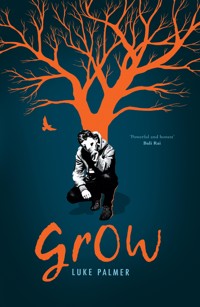
Shortlisted for the 2022 Branford Boase Award Longlisted for the 2022 Yoto Carnegie medal Featured on the Sunday Times 2021 Books of the year list A white supremacist group and its violent leader target fifteen-year-old Josh, who is struggling to cope with his father's recent death at the hands of terrorists. Will he find the strength to resist? Will unlikely accomplice Dana help him plant something good in the space grief has left inside him?
Das E-Book können Sie in Legimi-Apps oder einer beliebigen App lesen, die das folgende Format unterstützen:
Seitenzahl: 417
Veröffentlichungsjahr: 2021
Ähnliche












![Tintenherz [Tintenwelt-Reihe, Band 1 (Ungekürzt)] - Cornelia Funke - Hörbuch](https://legimifiles.blob.core.windows.net/images/2830629ec0fd3fd8c1f122134ba4a884/w200_u90.jpg)




Contents
Praise
About the Author
Title Page
Intoroduction
ONE
TWO
THREE
FOUR
FIVE
SIX
SEVEN
EITHT
NINE
TEN
ELEVEN
TWELVE
THIRTEEN
FOURTEEN
FIFTEEN
SIXTEEN
SEVENTEEN
EIGHTEEN
NINETEEN
TWENTY
TWENTY-ONE
TWENTY-TWO
TWENTY-THREE
TWENTY-FOUR
TWENTY-FIVE
TWENTY-SIX
TWENTY-SEVEN
TWENTY-EIGHT
TWENTY-NINE
THIRTY
THIRTY-ONE
THIRTY-TWO
THIRTY-THREE
THIRTY-FOUR
THIRTY-FIVE
THIRTY-SIX
THIRTY-SEVEN
THIRTY-EIGHT
THIRTY-NINE
FORTY
FORTY-ONE
FORTY-TWO
FORTY-THREE
FORTY-FOUR
FORTY-FIVE
FORTY-SIX
FORTY-SEVEN
FORTY-EIGHT
FORTY-NINE
FIFTY
FIFTY-ONE
FIFTY-TWO
FIFTY-THREE
FIFTY-FOUR
FIFTY-FIVE
FIFTY-SIX
FIFTY-SEVEN
FIFTY-EIGHT
FIFTY-NINE
SIXTY
SIXTY-ONE
SIXTY-TWO
SIXTY-THREE
SIXTY-FOUR
SIXTY-FIVE
SIXTY-SIX
SIXTY-SEVEN
ACKNOWLEDGEMENTS
CLIMATE EMERGENCY
Copyright
This book broke my heart and challenged me in so many ways … the rawest representation of how easy it is for a teenager to become stuck in a spiral and slip through the threads of society without anyone realising before it’s too late.
Ashling Brown, Netgalley
‘When an author is able to make you stop reading because it is uncomfortable, you know they have done something right … Needs to be read by many people far and wide, of any age, because anger and hate can grow from a feeling of not being seen. I applaud the author.
Robyn Spacey, The Book Club Blog
A really compelling but difficult read … the phrase emotional rollercoaster never felt so apt. With themes of grief, loss, mental health, racism and pressure as well as thought-provoking social commentary, it’s one that should have a place in every secondary school library.
Rachel Bellis, Netgalley
‘This book left me emotionally raw … ultimately I think it is a must read about racism and extremism told from an unexpected perspective.’
Vicky Bishop
Luke Palmer is a poet, author and secondary school teacher. He lives in Wiltshire with his young family. Grow is his first novel.
For H
like sparks & shining dragons
There won’t be any explosions in this book.
Sorry if that’s going to be a problem. And, while we’re at it, there won’t be any chasing around at night, or encounters with the undead, or werewolves, or vampires or anything of that kind either.
Sorry.
A few years ago, I loved those kinds of books. I’d imagine myself in a world where all the adults were dead, or gone, or both. I think I’d have been OK. Maybe not the leader of one of the rebel gangs that stalked through the abandoned streets, shouting orders that various underlings followed with glee. It wouldn’t have been me that was surrounded by hard-faced kids in ragged clothes. But I’d definitely be surviving, a sharpened stick in one hand, straddling a bike kitted out like a tank, ready to dash back to my stash of pilfered tins in the belly of an old barge down on the canal. I used to love imagining myself in those situations.
But I grew out of them.
I don’t know why I liked them, really. It’s pretty grim stuff, imagining your parents are dead. And enjoying it. This book won’t be like those books.
It will be real.
It won’t be about the future, or the past, or a world where the superpowers have gone crazy and bombed everyone back to the stone age.
You don’t need all that to create terror.
ONE
Mum burns the toast, again. The blare of the fire alarm cuts through my dream and has me on my feet in seconds, waving a pillow at the flashing plastic disc on the landing outside my room. It takes a few more painful moments to clear the sensor.
‘Sorry, love. Would you like some?’ Mum’s head appears around the banister. There are big red circles under her eyes. The fire alarm’s light carries on flashing for a while after the sound stops and it feels like there’s a place in my ears where it’s still echoing.
‘Please,’ I croak, suddenly aware of myself standing in a pair of grotty boxer shorts. I’ve passed the age when it’s OK for your mum to see you in your pants.
I have a quick shower and put my uniform on, lug my backpack downstairs and sit at the table. Mum smiles and pushes a plate towards me, and a mug of tea. Despite having burned the last round – hers – the toast is cold. The tea’s not much warmer. I wonder how long she’s been up, waiting for me.
She leans back against the counter, her dressing gown coming apart a bit at her neck. I stare at my plate, pick up crumbs that have spilled over the edge with the end of my finger. Neither of us speak. A few times she looks like she might be about to say something, ask me about what I’ll be doing today, how my friends are getting on, whether I’ve done all my homework. But she doesn’t.
It didn’t used to be like this. Mornings used to be full of noise and energy and lost keys and the cats needing feeding and making sure I had my lunch and have I got my bus card and where did I leave that folder and when’ll you be home this evening.
But not anymore.
After a few minutes Mum turns away, starts opening and closing cupboards and making scribbled notes on a pad we keep stuck to the front of the fridge. It’s Thursday, the day of the big shop, which means she’ll be late home.
I finish eating and go back upstairs to clean my teeth. The fire alarm still blinks at me on the landing. I keep the tap running, rinsing my mouth a few times to get the gritty, burnt crumbs out. They get stuck and turn into doughy sludge.
On my way out of the house, Mum stops me in the hallway and puts her hand on my cheek – just holds it there and looks at me. She’s been doing this a lot recently. I think it’s because my eyes are the same level as hers now. I smile. She does too. And then I walk through the door.
It is one of those frosty, late-autumn mornings where it hurts a bit to breathe. I push my hands deep into the pockets of my coat and pull the collar right up over my chin, the zip between my teeth. The zip has a sharp, metallic taste. Like blood. You can tell it will be a sunny day later; the cloud, or mist, or whatever it is, seems to stop not far overhead, and there are definitely some blue bits on the other side of it.
It was on a day like this, a Monday morning in October just over two years ago, that I heard Mum shout my name as I walked down the street. I had run back to her as fast as I could, shrugging my bag off my shoulders as I went. There was something in her voice that sounded like I had to, as if Mum were hidden inside her own body and was shouting at me to get her out. When I got to her, she looked at me as if she wasn’t looking at me. She had the phone clenched to her chest.
After a while, she was able to tell me.
There had been an explosion. In London.
Dad was dead.
TWO
So I lied about the explosions.
Sorry.
The Sunday evening before that phone call – before our lives were taken away from us, skinned alive, cut in half, tossed into the corner and stamped on – we’d all been sitting at the kitchen table. Dad was about to leave to catch the train into London. He worked in our town, on a leafy, high-tech business park doing something I never asked about. I regret that now – among other things. But he went into the capital regularly to meet clients or try to pick up new ones for whatever it was he did. This particular Sunday had been bright and unseasonably warm, and Dad kept finding reasons not to leave. He’d spent most of the day in the garden.
‘Sunny again tomorrow, Josh. What do you say we both ditch work? We’ve got gutters that need clearing, leaves to sweep, and the last of those plants could do with a—’
Mum interrupted our fantasy while still tapping away on her laptop, reminded me that I had a science test the next day, reminded Dad he’d been preparing for this meeting all last week.
‘But you don’t mind skipping that, Josh?’
‘Not at all, Dad. The house is a much more urgent priority, wouldn’t you say?’
‘That’s exactly what I say, Josh. But yourmother…’
Mum gave us both one of her looks.
‘Ergh. London!’ Dad’s head clunked as it hit the table. One of the cats pawed at his leg.
I smiled, thumbed my phone, copied the address of a website, hit send. Dad looked down as his pocket buzzed, grinned at the screen, gave me a covert thumbs up.
Then he’d grabbed his panier bag, put his bike helmet on, and left.
Later that night, I’d received a picture message of his finger poised above a ‘book now’ button on his laptop screen – the website of a holiday company that I’d sent him the link to earlier.
I don’t know if he’dreally booked that holiday or not. One of the things that got lost in the time afterwards. What I do know is, on that last Sunday evening, I’d gone to sleep in a state of happiness I didn’t realise I’d had.
Until afterwards. Until it was gone.
Dad had been on his way to that meeting when his train exploded.
Or rather, it hadbeen exploded.
A young guy with a backpack had got on at Dad’s station, stood in the middle of the carriage, swaying with the other commuters for a few minutes. Then his backpack blew up.
They said that Dad was near the centre of the blast and would have been killed instantly.
We were supposed to see this as a kind of bonus, I think.
Some weren’t killed so instantly. One woman took a week to die.
THREE
There was a service at Westminster Abbey for all the victims’ families. Some important people talked aboutsacrificesand how theywon’t be forgotten. We sat right at the front, just behind the important people who kept getting up to make speeches.
All the way through I couldn’t stop thinking about Greek theatre. Mrs Dinet, our drama teacher, had told us that if one of the characters in ancient Greek theatre died, they wouldn’t perform it on stage. The death would take place off stage and someone would describe it to the audience. Then, to prove that it was true, they’d part some curtains at the back of the stage, or bring in some kind of trolley on wheels, and reveal the body. Sometimes they’d use animal blood or intestines to make the death look realistic. Especially if it was a violent one.
All the way through that service I wondered whether they were going to open a curtain or roll out a trolley. I couldn’t decide whether I wanted them to or not.
How do you show someone who’s had a bomb rip through them?
The papers were all saying how it could have been worse. There was only one bomb, but they’d planned another one. The other bomber was left paralysed after his bomb didn’t go off properly and the detonation blast took a chunk out of his spine. His trial was very public. And quick. This was supposed to show our efficient justice system and our intolerance of acts of terror against our way of life.
A few weeks later, the train line re-opened. This was supposed to be an act of defiance against the people who killed my dad.
There were a lot of things that weresupposed to be.
If you ask me, Dad being killed wasn’t one of them.
There were thirty-nine families in that service. Thirty-nine things that weren’t supposed to be.
Thirty-nine trolleys.
All this was just over two years ago. About the time when I stopped reading books about the end of the world, and all the adults dying.
FOUR
I get to school just as the first bell goes. I am neither the first nor the last into my lesson. Things are easier that way, I’ve noticed. You can flow in with the others and don’t have to say anything when the teacher says ‘Good Morning’. They all do this nowadays, stand in the doorway and say ‘good morning’, or ‘how are you?’ or ‘ready to get going?’ one foot inside the door, one inside the classroom. Mostly, after they’ve done this, they go back to the front of the room and talk to us like they always have done; like we’re all the same. This is fine with me. When they do their politeness thing, trying to treat us like people, there are only a few of them that I actually believe. Most of them sound totally fake.
I’m not sure about Mr Walters, whose Biology class is the first lesson today.
After a whole morning, nearly two hours of cellular differences between plants and animals, he calls me over as I’m about to leave.
‘Josh, a quick word, please?’It sounds like a question, but it isn’t. That’s another thing they all do.
A few other pupils look at me as they walk past. I stand by his desk, watching the side of his face as he scrolls through something on his computer. His rimless glasses reflect a blue-green light from the screen.
‘Ah, here it is. Last week’s test. Josh, I was very impressed with your result.’
He waits for a reaction. I nod.
‘Almost full marks. Almost.’ He winks a bit at this. ‘Now some of that paper I took from the A-Level syllabus. Not much, but enough to push a few of you. Sort the wheat from the chaff as it were. And you, Josh, are definitely wheat.’
I smile a bit.
‘I just wanted to say how well you’re doing, Josh. Are we challenging you enough in these lessons? I know it can seem a bit slow sometimes. I’ve got to make sure everyone’s on board.’
I shake my head. ‘It’s fine.’
‘You’re sure? Good. You will let me know if we’re not pushing you enough though?’
I’m never sure what teachers expect when they ask this. I smile again.
‘Good. It sounds to me like you’re doing brilliantly everywhere, Josh. Hard to imagine it’s been…’ He slows down, looks at me closely.
I feel myself getting hot, a high-pitched ringing starts in my ears.
‘Never mind. Sorry, Josh.’ He pauses for a few seconds, then says it. ‘He’d have been proud of you, you know.’
And I leave, quickly, my ears ringing.
Mr Walters is the only one who ever mentions Dad. The first time he did it was a few months after it happened. I was in a revision class after school, catching up on the work I’d missed. Mr Walters was reading a news website. He didn’t realise the projector was still on, beaming everything he was reading up onto the whiteboard. He was looking at pictures of the bombing, and people in orange jump suits, and people sitting in front of black flags. He kept tutting and sighing, rearranging himself in his chair. It must have been during the trial. Mum and I had been trying hard to avoid the coverage as much as we could, but the news had been pretty full of those kinds of pictures for ages. Even before the London attack, there were bombs in other countries and reports of‘constant threat’.
Dad used to say it was ridiculous fearmongering.
Mr Walters had looked over and seen my eyes on the screen, then realised. ‘I’m sorry, Josh. I forgot you were here,’ he’d said, picking up his remote control.
Click. And it was gone. Just like that.
FIVE
The house is empty when I get home. I drop my keys on the shelf by the door and kick off my school shoes.
Sometimes I still expect the cats to greet me, but they were shipped off to live with someone else a couple of months after the explosion. Someone from the Cat’s Protection League came round while I was at school. Mum told me when I got home. To be fair, they were getting pretty mangy, and one or both of us kept forgetting to feed them or let them out. The empty spaces on the kitchen floor where the bowls used to be still trigger an ache somewhere deep in my gut – a kind of guilt that we didn’t do right by them. Mum says that she could smell the difference after the first few days.
I turn the radio on in the kitchen so the house doesn’t sound so empty, then go and get changed upstairs. Mum has a thing about being in school uniform in the evenings. She says it’s good to come home and ‘peel off the day’. She still holds me to some standards at least. This done, and with my homework spread out on the kitchen table, I fall into the rhythm of quadratic equations, and lose track of time.
The cats were all Dad’s idea. He and Mum got a pair of kittens a few years after they got married. They called them Salt and Pepper, which is about as generic as you can get. Dad always used to joke this was on purpose, that it was part of ‘what you’re supposed to do’.
It’s not as if the cats ever got called by their real names anyway. Dad always called them Bowie and Robert Smith after a couple of musicians that he’d liked back in the 1980s. He’d play me their music sometimes – old records, big black discs that shimmered in the light like oil – insisting that I listened for the moment before the needle touched the vinyl. He said you could hear something in that moment, something like suspense. A magic moment, where waiting and what you were waiting for happened at the same time.
Mum called them Ratchet and Mother, because – she said – they made her feel trapped and tied to the house ‘like a skeleton in the basement’. I don’t know what she meant.
The cats didn’t seem to care what you called them. They never responded to any names.
*
The radio DJs’ change-over at 7 o’clock wakes me up. They howl with laughter at something that one of them has said and I come to with a jolt. I’m sat in the only pool of light in the house, having fallen asleep mid-question, my hand scrawling a smooth arc across the page. I scrabble the books together, stuffing them back in my backpack. In my bleary rush I knock over my mug, the last dregs of tea spilling onto a couple of letters from this morning. Almost instantaneously, I hear Mum’s keys in the lock, the rustle of shopping bags coming through the door. I grab some kitchen towel and mop up.
Mum enters with a loud sigh of accomplishment. She’s always more cheerful after she’s done the shopping, wearing the achievement like a badge as she unpacks food into cupboards and drawers, arranges the fridge with the older stuff at the front.
‘Hello, love,’ she says, beaming at me and the shopping all at once. ‘Good day?’
I wonder (but don’t ask) why she still goes shopping every week. We must throw away most of the stuff she buys. We’ve got at least six tins of kidney beans in the cupboard, probably a dozen of chopped tomatoes. I found a bag of peppers at the bottom of the fridge a few weeks ago, unopened. The contents were almost completely liquid – you could only tell what they used to be from the picture on the packaging. And there are potatoes in the vegetable cupboard that have sprouted long, white tendrils, reaching towards the light like tiny hands and arms.
‘Fine,’ I reply, taking my bag into the hallway. ‘Nothing to report.’
She ruffles my hair as I pass her, and maybe thinks about doing the thing with her hand on my cheek again, then doesn’t.‘There’s another two bags in the boot,’ comes her voice from the kitchen, warm, homely, comforting. But I know this, and I’m already halfway down the driveway. Every week it’s the same number of bags, the same things in each one. And, when Mum’s having a good week, the same schedule of meals each night.
Just the same as when Dad was alive.
But hey, it is what it is.
SIX
It is what it is.
It was a line in a TV series that Mum and I watched together a while back. We’d started watching it after the accident, during the time when I didn’t go to school, Mum didn’t go to work and we would shut the curtains and not move all day. I call it the The Drowned Time.
We’d kept watching that show, episode by episode, through the time when the phone calls and the visits from journalists had become almost unbearable; through the time when the phone calls and visits were from people checking that I was being looked after properly. It was a long-running show, loads of series, and we were thankful for it.
Whenever the characters in this TV series were talking about the situation being really bad – which it often was – they’d look at each other and say, ‘It is what it is’. It became our mantra for a while. We’d kept watching after we re-surfaced from The Drowned Time. And we still watch it now, when we need it. We’ve started again from the beginning, episode after episode. The mantra still makes us smile.
‘It is what it is’ sums things up nicely. It’s definitely not good, but it’s not bad enough to make you stop and want to lie down and never get up again. At least not anymore it isn’t. It’s a situation that you have to deal with, even though you’d rather not, and everyone accepts that it’s crap and does the best they can.
It is what it is.
*
This evening, after chips and chicken Kiev – ‘brown dinner’, Mum calls it (we always have brown dinner on big-shop day) we’re watching one of Mum’s property shows on catch-up.
‘I don’t get this, Mum. So, there’s a couple looking to move house who need to look at houses, and they get shown some houses by some people who are really good at looking at houses. Why can’t they do it for themselves?’
‘I don’t know, smartarse. It is what it is!’ Her mood hasn’t gone down again since we unpacked the shopping. ‘It’s my escapism.’
‘You should just go and have a nose around next door every now and again. Wait until they’re out. I’ll call you if they come home.’
She hits me with a cushion. We’re both smiling. One of the professional house-lookers is talking to the couple about ‘outdoor space’. ‘Isn’t that all there is outdoors? Space?’ Mum says.
The couple are standing in a green square at the back of the house they’re looking at. It’s astroturf, like I used to train on every Wednesday evening with the football team up at the school. Mum scoffs, ‘I don’t understand why people are doing this nowadays. What’s wrong with grass? Why are people too busy to mow lawns or deal with mud or give worms somewhere to live?’
‘It is what it is,’ I say.
She smiles.
Evenings like this are rare now. I’ve got homework to finish – English Lit revision as well as the Maths from earlier. But these are tests I’m willing to fail.
As if reading my mind, Mum asks, ‘Homework?’
‘No, finished it all.’
‘Liar. Off with you.’ She digs her feet in sideways, under my leg, and pushes. I make to complain. ‘Hey, it is what it is,’ she says.
I throw a cushion at her on my way out.
Later, she puts her head around my door to say goodnight. ‘Thanks for your help this evening, Josh. With the shopping. We’ll watch something you want to watch tomorrow night, OK?’
I nod, knowing that tomorrow night Mum probably won’t be like this, if she’s here at all. And even if she was here and we did find something to watch that she agrees to, she’d probably fall asleep before it’s halfway through.
So I’ll go and watch things upstairs, on my own, on my laptop, the house around me so quiet I’ll think it has eaten itself.
But hey, it is what it is.
SEVEN
Breaktime. Younger kids slip past me, their too-big backpacks beating against their shoulders as they run. A group of girls is forming outside the toilets, waiting for the next group member to emerge. They’re blocking the corridor and a young teacher whose name I don’t know moves them on towards the playground doors. As soon as the teacher goes into her classroom, the girls come back, disappear into the toilet, then come out one by one and wait for each other. They do this every Friday. Every day, probably. But I’m only here to watch on a Friday.
I’m sat on a set of lockers. There’s a kind of alcove at the end of the corridor with lockers set into a bench. I’m sat on these, looking back up the corridor. I can see its whole length, which must be a hundred metres at least. It’s one of the places I go that’s surrounded by noise, but is quiet and removed. That way, people don’t notice you sitting on your own. They don’t ask questions.
I’ve got a few routes that I walk as well. It’s important, when you’re walking around school on your own, to walk like you have a purpose, and to not seem too morose. You don’t want anyone commenting or looking at you for too long. Don’t smile at everyone you see, but don’t keep your head down either. It’s a fine art. Don’t walk the same route every day; you have to mix things up so people don’t spot a pattern. And don’t go places where there’s too many teachers. There are a few places around school that I try to avoid. Mostly it’s the toilets that block up when it’s rained too much, but the staff room and the year group offices are high on the list too; that’s where people ask questions.
It’s easier that way.
When I first went back to school, there was the ‘little chat’ with Mrs Clarke, our head of year, and the counsellor, Miss Amber, who handles all the emotional issues. Normally Miss Amber deals with girls pulling each other’s hair out over the weekend or sending naked pictures of themselves to boys who then put them online. She’d looked at me as if I was a strange sea creature she’d read about but was never expecting to find.
I’d told Miss Amber and Mrs Clarke in that first meeting that I didn’t want any of the teachers to talk to me about it. About Dad. And to be fair, they didn’t. But instead they just looked at me withthe look – somewhere between pity and panic. It’s still there. Even from the new teachers who’ve joined since. If any of them see me in the corridor, I get a look and a smile. Or, even worse, a cheery ‘Hi Josh!’. Even from teachers who’ve never taught me and new teachers who shouldn’t know my name.
All the students do it too –the look. Even the new Year Sevens. Word soon gets around I guess.
But no one has ever actually mentioned Dad yet.
Except Mr Walters.
A few weeks after that first time, when I’d caught up with the rest of the class again and didn’t need any extra sessions after school, Mr Walters had asked me if ‘He’ was good at science at school. Somehow, I’d heard him pronounce that capital ‘H’. I’d stared back, blankly. Mr Walter’s carried on – did I get my abilities from my mother’s side of the family as well as His? I’d shrugged and said I didn’t know. Then went straight home in the middle of the day and cried.
I told Mum about it.
The next day, I’d got a note telling me to go to Miss Amber’s office at the end of school. Mum was there with Mrs Clarke, Miss Amber and Mr Walters. I froze when I saw them through the little, grilled window in the door, wanting to melt into a puddle and be mopped up before they saw me. I was too late.
But when Mrs Clarke opened the door to me, she seemed to be laughing. So did Miss Amber, and Mr Walters. And Mum.
‘Hi, love.’ Mum’s voice sounded puffed up, full of air, the way it did just before she started to cry.
Mrs Clarke showed me to a comfy seat between her and Mum. Mr Walters sat opposite, on Miss Amber’s office chair. Miss Amber stood leaning on the windowsill. It wasn’t a very big office. Mum took something out of her bag and held it on her lap.
‘Josh, I’d like to apologise,’ began Mr Walters. ‘I’m sorry that I keep mentioning your father. I know that you don’t like it, that it makes you uncomfortable. And I wanted to let you know that I didn’t want to upset you in any way, or bring up any bad memories.’ He sat leaning forward with his clasped hands between his knees, looking concerned.
‘Mr Walters was at school with your dad,’ Mum said next, definitely on the verge of tears now. She passed me what she was holding – a rolled-up piece of paper. I unrolled it. It was an old picture of Dad’s class at school. I remember him showing it to me once, years ago. We had laughed at the haircuts.
Mr Walters leaned over, pointing to a boy in the top row with short, dark hair and big-rimmed glasses. ‘That’s me,’ he said. ‘I was in your dad’s year, but we weren’t in the same classes. We weren’t close, and we didn’t keep in touch after school. When I heard about … what happened…’ He trailed off.
‘I think Mr Walters is also upset about your father, Josh.’ Mrs Clarke took over. ‘If you would like to change Biology class, then Mr Walters will not be at all put out, and nor will we. But he wanted to tell you himself that he has his reasons for thinking about your dad.’
‘You look just like him,’ said Mr Walters, weakly. This was true. In the last few months, I’d often looked at our photographs side by side on Mum’s bedside table as I’d tried to wake her with a cup of tea before leaving for school.
‘It’s fine.’ I managed a hoarse whisper. ‘It’s OK.’
Mum had actually started crying now, quietly, smiling at Mr Walters.
Mrs Clarke clapped her hands once. ‘Good, that’s settled then. Josh, Mrs Milton, thank you both for popping in. And at such short notice. I can’t imagine what a difficult…’ and it went on like this for a few minutes. I sat hunched in my coat, trying to smile, following the conversation that moved very slowly around the room like a car about to run out of petrol. Mr Walters was asking where we were living now, he said that he’d regretted not meeting up with Dad for a pint and a catch-up. It was so silly, he said, the two of them still living in the town they grew up in, and not in touch with each other.
‘And now…’ he’d faltered. ‘And now…’
All I could think about was how many pupils would be outside to watch me leaving the school with my mum, whose face was blotched and red, and who wouldn’t let go of my hand.
As we were standing to leave, Mr Walters had placed a hand gently on Mum’s elbow, then turned to me. ‘I’m truly sorry, Josh. I promise you that it won’t happen again.’
But it does.
EIGHT
I might not speak much, but I listen well. And I pick things up. All day there’s been a buzz around school about a party at Jamie’s house this evening.
Jamie and I used to be good friends, from the football team and before, but I haven’t spoken to him for a while. The excuse I used to Mum about dropping out of football was the same one I told Jamie: I wanted to ‘focus on my school work’. It worked better with Mum than with him.
I was never the best or most important player in the team, nor was I the worst, so I don’t think the team have hugely missed me. I used to enjoy playing though. I was what you’d call ‘solid’. A dependable, mid-field player who would scrap for the ball and then, normally, do something half decent with it. Not going on a run, beating three players and slotting the ball into the other team’s net, but giving it to someone who could, or sending the ball out wide, into a space I’d noticed was empty but was sure our wingback could get to. Dad used to say that there weren’t many players that could spot those passes, and that I made them more often than the rest of the team put together. I wasn’t sure about this. Dad said I should get used to being under-appreciated.
For a while I’d tried to keep playing. Mum still came along, but she didn’t shout anything anymore. I got the impression she wasn’t really watching. I realised then how much football had been a part of her life too. Watching her standing on the touchline there in the rain, staring out into the middle distance, it felt like I was drowning. The worst bit was knowing she was just trying to keep something alive for me, and that every second was killing her. When I said I was going to stop, she tried her best not to look relieved.
Jamie and I didn’t fall out, just stopped talking, and we still nod at each other in the corridors. Jamie knew that people had started treating me differently, even though he never did. We’re still in a lot of classes together, and the teachers’ habits of keeping us apart lower down the school (when we used to talk a lot) have been carried over to this year as well. Even though I don’t really speak to anyone, not anymore.
I’m sitting just behind Jamie in our English class, the test I’d revised for last night about to start, when he turns around.
‘You coming?’
‘What?’
‘Friday. Are you going to come? You’re invited.’
‘To your house?’
‘You remember where it is, right?’ Jamie smiles.
I smile back. ‘Maybe.’
And that’s it. Moment over. He goes back to his work, chatting to Louisa sitting next to him. He says something that sounds like ‘I tried’. She looks concerned.
I think about it. Mum won’t be home this evening; Fridays are when she goes to see her parents. She’s stopped insisting that I come with her ever since we’ve started GCSEs, so I’ll be on my own. And will be until Sunday morning, probably. So Mum wouldn’t have to know about this. Not that she’d have a problem at all, I just know she’d make a big fuss and say things like ‘it’s good that you’re getting out again’ or ‘will there be girls there’ or, even worse, ‘fine, I’ll just sit in on my own’.
I throw my pencil at Jamie’s shoulder. It glances off, clatters across the desk in front of him. He turns around.
‘What time?’
‘Er … after half eight?’
‘Josh. Stop talking,’ hisses Mrs Burgoyne from the front, and I’m not sure if she or Jamie is more surprised.
NINE
Since Mum hasn’t changed the shopping list for a while, we’ve got a good supply of beer in the garage, all stacked up. Dad was the only one who drank it. There are bottles at the back that are probably off by now. I grab two four-packs from the top and replace them with a few packs of cokes a little further down so that the tower of beer stays the same height. I doubt Mum would mind if she knew I was taking them, but it saves time this way, and I don’t want to phone her at my grandparents’ house. It’s never a short conversation.
Nanna and Grandad have been really good for Mum, and are happy that I’m mostly ‘keeping out of it’ as they say. After it happened, they were coming over a lot, so much that I started calling the spare room their room. But they have lives like the rest of us, so before too long their visits got less frequent. Now Mum goes there instead whenever she feels like she needs a rest. Which is every weekend. And sometimes during the week.
She’s never mentioned moving house, but I’ve seen her browser history and I know she’d like it if we went to live near them. I think she’s just waiting until I finish school. Or this part of it, at least.
I sling a pizza in the oven while I go upstairs for a shower, stuffing it down before I leave the house, the beers clinking in a carrier bag.
For some reason, as I walk the short and familiar route to Jamie’s, I’m nervous. There’s a knot in my stomach like I used to get before kick-offs. It’s half excitement and half dead-weight, and it pulls me down and makes me want to turn around, go home and just curl up on the sofa all evening watching chat shows and online videos.
I make a list in my head of people who are likely to be there, and it’s mostly people I know – or knew – quite well. There’s not been much change in the social groups at school for years now, and everyone pretty much still hangs around with the people they’ve always hung around with. Even so, having to have the same ‘how are you’ conversation a dozen times this evening isn’t filling me with much joy. Maybe they’ll just leave me alone like they always do.
That’s another thing that’s changed. I used to be pretty popular: lots of friends, active social media, all that. Then I stopped watching and it all just fell away: the online stuff first, then the real-life friends not long after.
I guess it’s like this: when I came back to school after the first month, it was like there was a cloud of silence around me. At first it was pretty big. You could hear it spread out from me, like a wave. I’d walk into a room and people everywhere – even on the other side of the lunch hall – would notice me and go quieter. Then the cloud got smaller, until it was just a thin, wispy covering that only covered me, not anyone else. It was like a barrier that seemed to stop people looking my way. In fact, when I walk into a room now, people’s voices get louder. If anything, their backs turn further away. They get even more closed.
Maybe it won’t be too busy. Maybe it’ll be just me and my clinking bottles.
But the noise from Jamie’s house breaks on me like a tide as soon as I turn the corner into his road. I can see, even at this distance, people standing in his front garden, a few sitting on the wall that his dad always used to get angry at us for sitting on. It’s a huge party – much bigger than I thought it would be. The weight in my stomach gets heavier, but I push against it. People look up as I get closer, the bottles noisy against my leg, and a few raise their chins by way of saying hello. I nod back and slip in through the open front door, trying to find Jamie as soon as possible.
He’s in the kitchen with Louisa and a few others. He looks up as I come in.
‘Josh! Wow!’ He almost spills his drink as he jumps down from the counter he’s sitting on – it was Jamie’s mum who used to tell us not to sit up there. Quite a lot of childhood is learning where you can’t sit. To my surprise, Jamie throws his arms around me in an awkward hug that I’m too slow to return properly, knocking him on the knee with my carrier bag. The people Jamie was talking to – Louisa, Harry and Kyle – all look as surprised as I do.
Jamie takes the bag, lifts out a bottle and gives me a knowing smile. Of course it’s the same, dodgy euro-brand beer we used to steal from Dad years ago.
‘Did you leave the coke in the stack?’
‘Of course.’ And I laugh, the weight lessening slightly.
Jamie puts his soft drink down, cracks the top of one of my bottles and passes it to me, then opens another for himself. We tap bottles. I look around and notice there isn’t much alcohol here except what I’ve brought. I begin to think that maybe I’ve made a mistake, misjudged the party. The weight comes back again.
I don’t remember the first time I had beer. Probably when I was really young, like eight or nine. But the first time I got drunk started out a bit like this. It was Jamie and me in my kitchen. My parents had gone out for the day and left us to our own devices. We were in the garage looking for the coke, or something more drinkable than water, and when we saw the stack of beer we had the same thought at the same time. We did the coke-switch trick, thinking ourselves criminal masterminds, and must have only had two bottles each. It was enough though, and when Mum and Dad came home, I’d fallen asleep in the lounge under a pile of DVDs, and Jamie was passed out in the toilet, his head underneath the bowl. I’d expected Dad to find it more amusing, but Mum drove Jamie home while I cleaned up the mess Jamie had left – he’d missed the toilet. Dad watched sternly from the doorway and made sure I didn’t miss anything. I could smell the antiseptic for days and it made my head spin.
‘It’s good to see you,’ says Jamie. He seems to have forgotten the group behind him as we wander outside, where it’s a bit quieter.
I smile, and the first beer goes down easily as we talk. About school, football, how his dad used to coach us until he left Jamie’s mum and moved away, about holidays, about everything. Before I know it, we’ve been talking for nearly an hour. Which meansI’ve been talking for nearly half an hour.
I go inside for more beers and spend ages looking for a bottle opener so by the time I’m outside again he’s gone. I walk back in, sipping at one of my two bottles, and sidle through to the sitting room, trying not to look out of place amongst the crowd, music and smiling. The party has now moved inside, the walls heaving with a condensed mass of people.
Molly, a girl in our year, is kneeling down and fiddling with her iPhone. ‘Josh! Shit, how are you? What do you want to listen to, stranger? I’m on Jamie’s mum’s speakers. They’re awesome.’
I tell her the name of an old-ish song. It’s the first one that pops into my head, and I cringe as I say it. Music hasn’t been a big priority this last few years.
‘Classic!’ Molly shouts over the racket. There’s a second’s silence, then the song comes on. She jumps up and gives me a hug, then dances off to the middle of the room. I look around. I nod to a few familiar faces, then realise that Molly’s shouting at me.
She wants me to dance.
I smile and turn around, the weight building back up in my stomach. I try to get back to the kitchen but barrelling through the door at that moment are Will, Mike and Ben – all from the football team. The song was played a lot on a tour we went on together about four years ago, when we’d all just met at the start of secondary school. Ben grabs me around the waist, and I just about manage to keep my mouthful of beer inside my lips as I’m lifted up and planted firmly in the middle of the lounge. Will and Mike are on either side of me, jumping up and down to the music, singing along. Ben puts an arm across my shoulders, and soon we’re a big circle, singing and laughing and jumping up and down to the music.
There are scenes like this in a few of the naff movies I watch with my mum. Normally it’s the end of the film, or nearly, and all the characters are back together and at some kind of wedding or celebration or birthday that – at some point – they didn’t think they were going to get to. They all look at each other, raise their glasses and don’t speak. I didn’t think these things happened in real life. l thought that the glow you got in your stomach from just watching was as good as it got.
But tonight, I’m singing and laughing and jumping too.
TEN
I don’t know where a lot of the night has gone. It’s almost eleven o’clock and I’m sitting on Jamie’s sofa talking to someone. The music is still on but it’s quieter, or it seems quieter, and I’m shouting. Maybe that’s why the music seems quieter.
I’m shouting at someone and they’re laughing at me. Or with me. And it’s Dana.
It’s Dana Leigh from school, the one from school who looks at me and I usually don’t look at because she scares me a bit and is always being called to Mrs Clarke’s office. Dana who stopped wearing her school jumper a year ago and who now wears a jacket instead, and ankle boots. Dana who’s wearing an expensive bracelet on her wrist that I keep grabbing and saying ‘wow’. Dana who’s rumoured to have a boyfriend who’s left school already and picks her up some lunchtimes in his car. She’s got a full face of make-up on, even more than Mum used to wear when she wore make-up to work. Her eyelashes are huge. And I’m shouting at her and she’s laughing. And I’m shouting and doing an impression of Mr White, the Maths teacher, and she’s laughing. And I’m laughing, and we’ve both got beers – not the ones I brought, there must have been more after all – and we’re laughing and she puts her hand on my arm because she says she might fall over because she’s laughing, even though we’re sitting down she says she might fall over. And I laugh. And then all I can hear is me laughing because the music’s stopped.
And when I realise the music has stopped, I stop laughing.
In the doorway there’s a man. And I mean a man – not a teenager or even someone a bit older but a man. There’s a layer of short stubble all around his head – his buzz-cut skull the same as his unshaven chin. He’s wearing a white shirt, buttoned to the neck, black jeans, military boots. He’s standing there with his hand on the top of the doorframe, leaning in. He’s standing there and he’s looking at me. And he’s not happy.
‘Comfortable?’ he says. I feel Dana’s grip on my arm tighten as the man walks into the room. Everything around him seems to shrink back as he passes.
‘Carl, I…’
‘Shut up. Go and get in the car.’
‘Carl, leave him. It’s OK. We were just talking.’ She lets go of my arm.
‘I said shut up, you little slut. Think I don’t know where you went? Easy enough to find a kids’ party.’
I stand up, a little unsteady. ‘Hey, I don’t think you should—’
And then I sit down again, quickly and without meaning to, my ears ringing, my face warm and getting warmer, a ball of fire centred on my left cheek where the man has punched me.
‘Carl, he’s just a kid from school. Don’t. He…’
The man stares her down. ‘Go and get in the car,’ he hisses.
Dana goes. I try to stand up again, suddenly more sober, but another fist lashes at me. It catches me on the other side of my head and I’m back on the sofa, head pressed against the cool, soft surface of a cushion. I think I’m groaning.
‘Don’t let me catch you talkin’ to her again. Right?’
And then he goes.
ELEVEN




