


Erhalten Sie Zugang zu diesem und mehr als 300000 Büchern ab EUR 5,99 monatlich.
- Herausgeber: Eric Reese
- Kategorie: Für Kinder und Jugendliche
- Sprache: Englisch
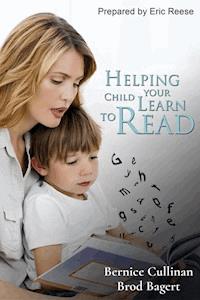
Regular practice is the best way to reinforce concepts and allow students to gain confidence and mastery of skills. With Helping your Child Learn to Read you get reading and critical thinking exercises for students for every day of the school year. Presented in a consistent format from week to week, the activities in Helping your Child Learn to Read allow students to progress in reading comprehension and word study skills, and makes diagnostics and assessment easy for parents and educators. Through both fiction and nonfiction reading exercises, students get purposeful practice in engaging with diverse texts appropriate for their grade level. Ideal for after school study, intervention, or homework, Helping your Child Learn to Read is correlated to College and Career Readiness and other state standards. In addition to reading passages, data-driven assessment tips as well as digital versions of the assessment analysis tools are provided. With text passages that advance in complexity throughout the year, student learning is enriched by developing and honing skills of reading comprehension, interpretation of symbols, making logical inference, summarizing and responding to literature, and more. Boost your child's reading skills in a hurry with the easy-to-use activities in Helping your Child Learn to Read.
Sie lesen das E-Book in den Legimi-Apps auf:
Seitenzahl: 48
Veröffentlichungsjahr: 2017
Das E-Book (TTS) können Sie hören im Abo „Legimi Premium” in Legimi-Apps auf:
Ähnliche









![Tintenherz [Tintenwelt-Reihe, Band 1 (Ungekürzt)] - Cornelia Funke - Hörbuch](https://legimifiles.blob.core.windows.net/images/2830629ec0fd3fd8c1f122134ba4a884/w200_u90.jpg)




Helping Your Child Learn To Read
(With activities for children from infancy through age 10)
By: Bernice Cullinan and Brod Bagert
Foreword
"Why?"
THIS IS THE QUESTION we parents are always trying to answer. It's good that children ask questions: that's the best way to learn. All children have two wonderful resources for learning—imagination and curiosity. As a parent, you can awaken your children to the joy of learning by encouraging their imagination and curiosity.
Helping Your Child Learn to Read is one in a series of books on different education topics intended to help you make the most of your child's natural curiosity. Teaching and learning are not mysteries that can only happen in school. They also happen when parents and children do simple things together.
For instance, you and your child can: sort the socks on laundry day-sorting is a major function in math and science; cook a meal together-cooking involves not only math and science but good health as well; tell and read each other stories—storytelling is the basis for reading and writing (and a story about the past is also history); or play a game of hopscotch together playing physical games will help your child learn to count and start on a road to lifelong fitness. By doing things together, you will show that learning is fun and important. You will be encouraging your child to study, learn, and stay in school.
All of the books in this series tie in with the National Education Goals set by the President and the Governors, The goals state that, by the year 2000: every child will start school ready to learn; at least 90 percent of all students will graduate from high school; each American student will leave the 4th, 8th, and 12th grades demonstrating competence in core subjects; U.S. students will be first in the world in math and science achievement; every American adult will be literate, will have the skills necessary to compete in a global economy, and will be able to exercise the rights and responsibilities of citizenship; and American schools will be liberated from drugs and violence so they can focus on learning.
This book is a way for you to help meet these goals. It will give you a short rundown on facts, but the biggest part of the book is made up of simple, fun activities for you and your child to do together. Your child may even beg you to do them. At the end of the book is a list of resources, so you can continue the fun.
Let's get started. We invite you to find an activity in this book and try it.
Table of Contents
Foreword
Introduction
The Basics
Start Young and Stay with It
Advertise the Joy of Reading!
Remember When You Were Very Young
Home Is Where the Heart Is
Important Things To Know
It's Part of Life
One More Time
Talking about Stories
The More the Merrier
How Do I Use This Book?
Read Along
Look for Books
Books and Babies
R and R: Repetition and Rhyme
Poetry in Motion
Read to Me
Family Reading Time
Story Talk
Write and Talk, Too
Tot Talk
What's in a Name?
World of Words
Book Notes
Family Stories
Now Hear This
P.S. I Love You
Easy as Pie
Write On
TV
Make a Book
Make Your Own Dictionary
Parents and the Schools
A Postscript about Older Children
Resources For Children
Acknowledgments
What We Can Do To Help Our Children Learn
Introduction
WHEN PARENTS HELP THEIR children learn to read, they help open the door to a new world. As a parent, you can begin an endless learning chain: You read to your children, they develop a love of stories and poems, they want to read on their own, they practice reading, and finally they read for their own information or pleasure. They become readers, and their world is forever expanded and enriched.
This book focuses primarily on what you can do to help children up to 10 years of age. During these years you can lay the foundation for your child to become a lifelong reader. In the first section, you will find some basic information about reading to your child. This is followed by suggestions that guide you to
*read with your child and make this all-important time together enjoyable;
*stimulate your child's interest in reading and language; and
*learn about your child's school reading programs and find ways to help.
While most of the book is for parents of children up to 10 years of age, there is a brief section for parents of older children on how to help them continue to grow as readers.
Finally, there is a resource section. As you make reading with your child a routine part of your lives, this section will help you to find new ideas and a variety of books you both might like. You don't need to be an especially skillful reader yourself to help your child. In fact, some public libraries offer adult literacy programs that involve reading to children as a way to improve literacy skills for the whole family. Nor do you have to devote great amounts of time to reading with your child. It's the quality of time that counts. Just be consistent—give as much time as you can each day to help your child. The activities suggested are designed to fit into busy schedules.
Helping your child become a reader is an adventure you will not want to miss. The benefits to your child are immeasurable, and in the process you will find your world becoming richer as well.
The Basics
T




