


Erhalten Sie Zugang zu diesem und mehr als 300000 Büchern ab EUR 5,99 monatlich.
- Herausgeber: Papillote Press
- Kategorie: Für Kinder und Jugendliche
- Sprache: Englisch
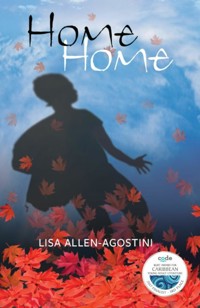
A coming-of-age tale with a twist: a 14-year-old clinically depressed Trinidadian girl, who has attempted suicide, is banished by her mother to Canada to live with her aunt. She feels lonely in exile. Adding to this estrangement is the fact that her aunt is a lesbian - which is deemed shameful in Trinidad. But with the help of a boy and her Skyping best friend "back home" in Trinidad, she begins to accept her new family and her illness. Then her mother arrives and threatens to take her back to Trinidad. Where then is home?
Sie lesen das E-Book in den Legimi-Apps auf:
Seitenzahl: 135
Veröffentlichungsjahr: 2018
Das E-Book (TTS) können Sie hören im Abo „Legimi Premium” in Legimi-Apps auf:
Ähnliche













![Tintenherz [Tintenwelt-Reihe, Band 1 (Ungekürzt)] - Cornelia Funke - Hörbuch](https://legimifiles.blob.core.windows.net/images/2830629ec0fd3fd8c1f122134ba4a884/w200_u90.jpg)






First published in Great Britain by Papillote Press in 2018
© Lisa Allen-Agostini 2018
The moral right of Lisa Allen-Agostini to be identified as the author of this work has been asserted by her in accordance with the Copyright, Designs and Patents Act, 1988
All rights reserved
No part of this publication may be reproduced, stored in a retrieval system or transmitted in any form or by any means, electronic or mechanical, including photocopying, recording or any information storage or retrieval system without the prior permission of the copyright owner.
All the characters in this book are fictitious and any resemblance to actual persons, living or dead, is purely coincidental
A CIP catalogue record for this book is available from the British Library
Typeset in Minion
Printed by CPI Group (UK) Ltd, Croydon CR0 4YY
Book cover and design by Andy Dark
ISBN: 978-1-9997768-3-1
Papillote Press
23 Rozel Road
London SW4 0EY
United Kingdom,
and Trafalgar, Dominica
www.papillotepress.co.uk
@papillotepress
To the memory of my parents, Rito and Dolsie
Chapter
That sound; that burbling, bubbling sound. That ringtone was possibly the most annoying sound in the whole world. But it was my lifeline to home.
I hit the big green button. Akilah’s face popped up on my screen. She whispered, “Hey, you. What’s going on?” Akilah was in church clothes, dolled up with a prim little cardigan over a modest dress. I could just see the collar and buttons below said face. Said face was rushing out of the church as we spoke. Her mom would eat that up. Yet another reason to hate the reviled best friend: I made Akilah leave church while the service was going on.
All these thoughts rushed through me in between the spasms of terror I felt. Those clutching, needle-sharp pains in my stomach had started and before I dissolved into a puddle of tears and snot I’d had the good sense to send Akilah a Skype message: “Not doing so great. Be nice to talk.”
What can I say? I have a rare gift for understatement.
Lucky for me she had her phone on—a no-no as far as her mom was concerned. “Phones off in church” was a strict rule. Lucky for me Akilah knew I was having a hard time and had defied her mother to be there for me. Lucky for me, she was a great friend.
She was my best friend—and she was my only friend.
“God,” I groaned. “Ki-ki, I’m dying.”
“No, girl, you’re not dying,” she responded. She was whispering and walking at the same time; and I could see that where she was the sunlight was blinding. “Now, what’s the matter?”
“Nothing,” I said. “Everything.”
“That’s not an answer,” she told me. “What is causing you to feel like this right now?” She was familiar with my panic attacks: I’d get sweaty, my heart would race, I’d feel breathless and terrified and end up sobbing for hours. It wasn’t a good look. What amazed me was that she was always ready to give me a shoulder to cry on. Before I’d got to Canada, hers was the only one I had.
I explained my situation: I was walking to the bus stop, trying to get home.
I took another step on the long white highway, Akilah’s quiet, sure voice talking to me, telling me, You will get there, you will not get lost, you will find the bus station, you will catch a bus, you will get home.
It was about seventeen degrees, warm for Canadians but cold for me; I haven’t got used to the weather yet. For them it’s a nice day, and they put on shorts and tank tops and walk around like I would at the beach or in the park but for me, it’s just another wrap-up-tight day, wear-my-coat day, feel-too-cold day. Home was never this cold, even on the chilliest nights, even up in the high hills where mist covers the road in the early morning.
I felt the wind blowing through my short, black hair, trying to ruffle it and failing. Canadian wind, oh you don’t know anything about hair like mine. You haven’t seen enough of it in this quiet backwoods on the prairie. You think my hair is gonna just submit to you, flip and dance in you, fly and move in you? Not my hair. It’s worked too hard for too long to just give in to you. It’s tough hair, wiry hair, strong hair, hair that won’t be cowed by some damn prairie wind. No siree, not this hair.
“Sweetie, are you there?” Akilah asked sharply.
When I’m having a panic attack I can find it hard to carry a conversation. My thoughts become confused and all the words become tangled in my mind, a ball of stifled self-expression. So I tried to focus on the road I was walking on.
A long concrete road, it was four lanes wide and full of zooming, beeping, clanking, whooshing cars, buses and trucks. Trucks especially.
The trucks were big, lumbering, trundling things that passed too close to me as I walked. The pavement and road were the same colour, the same texture. Roads back home were black, the way roads should be. This bone white, cold concrete scared me in some primal way. This wasn’t a road into anything good; it couldn’t be. And the trucks were like huge devils with horns blaring and fangs in their grills, evil grins, bad intentions, bearing down on me from behind, leering at me from the other side of the road as they powered past, warning me they’d be back for me—not now but at some unspecified, very real date in the future. The wind they raised was bitter and hot, not like the normal wind in the city of Edmonton that blows cold, odourless and sterile. The wind from the sides of the trucks was dusty, like ashes in my mouth.
Houses ran alongside the road. Stretching over the four lanes every now and then was a big blue road sign that told me where I was. I was also keeping track by counting the street signs at each corner. Twenty-first Street. Twentieth Street. Nineteenth Street. The streets seemed inordinately far apart. I had four more blocks to walk before I turned into the bus station.
“What’s going on, though?” Akilah was now insistent. “Why are you walking in the middle of nowhere?”
“I should take a bus to the station, then from the station to home,” I confessed to her. “But I never remember quickly enough which bus to take to get to the station. I feel like an idiot standing there staring at the transit map. I keep some schedules in my pocket, but...”
It sounds stupid, but I was always, always easily confused. Rice or pasta? Lettuce or cabbage? The Seventeen or the Eighteen? And please don’t get me started on multiple-choice tests. Exams were always hell. I never knew how to decide things. So instead of trying to decide which bus to take, I walked to the little bus station, with its heavy, warm air panting out of buses that crouched in a waiting lane, engines still running. Meanwhile the drivers used the bathroom or made phone calls to their families, or just shot the breeze with other workers in the small office behind the bulletproof glass of the customer service counter.
The bus schedules in my pocket, clutched too tight too many times, had become grimy and old through the weeks I’d used them. No matter how many times I took the bus, I always forgot which one I needed.
Having a panic disorder really sucks.
If I sat and took really deep breaths, I could remember that mornings my bus was the Fourteen, going north into the city; and evenings my bus was the Eighteen, going south into the suburbs. But when I was in the grip of a panic attack there was no way I could remember that, as ridiculous as it might sound. I had to pull out both schedules every time I walked to catch a bus. I had to smooth out the wrinkles, squint down at them and look to see which bus went where. And as soon as I put them back into my pocket I forgot again. Which bus goes where? What time is it running? Am I in the right place?
“You’re not an idiot,” Akilah consoled me. “In fact, you’re one of the smartest people I know. Everybody says so.”
“Meh,” I said dismissively. “So smart I can’t remember which bus to take to get home. Every. Single. Day.”
She laughed.
“Could you just talk to me?” I begged. “Tell me what’s going on with school and church and everything. How did you do in end of term test?”
As Akilah, recognising my strategy as one of distraction, started talking, I noticed the breeze even more. This afternoon wind seemed determined to get to me, to find something it could ruffle. It crept under my jeans and under my high collar, trying to penetrate the layers of fabric to reach my skin. I could feel it swirling under my clothes. But I was prepared, too wily for the wind. I had on long underwear.
I was a bit closer to the bus station. Listening to Akilah’s voice was calming me down. I could pay attention to small things again, like the flowers in front of people’s houses, or the faint warmth of the sunshine on my face.
Summer in Edmonton is not hot, but it’s not cold. Unless, that is, you’re used to living in a furnace. I was.
I am from the Caribbean, where an average day might easily be twice as hot as an average Edmonton summer day. What is sixteen degrees when you’re really built for thirty-two? So I was always cold, bundling myself up in layers and obscenely more layers, wearing all the clothes in my wardrobe at once.
Aunt Jillian and Julie laughed at me all the time. They couldn’t understand why I was always kitted out like a bag lady in sweater, shirt, long underwear, jeans and sneakers. On really bad days I wore my coat, a long velveteen number I bought at a thrift store because I wasn’t going to be in this city much longer and I was too ashamed to ask for a more expensive one. I figured nobody wanted to spend real money on my “penance” clothes. My velveteen coat is a rich, electric blue, the colour of the sky at home when it is just about sunset—not on the side with the lightshow of the sun going down in an orange blaze of glory but the other one, the side where night is creeping up and day is already a memory. The sky could be such an elegant, intense, impenetrable and unutterably lovely blue. When I saw the coat on the hanger, it seemed it was waiting for me. Everybody laughed at me, especially Julie, who called it my Princess Di coat. In truth it was too formal for everyday use but I didn’t care. It fitted me and I loved the colour and the smooth, short nap of the velveteen. The lining was real silk, which was heavenly against my skin.
Plus when you’re wearing a big, thick coat it feels like it’s easy to disappear.
I kept walking, making a fist with my free hand and sticking it into the silk-lined pocket. My short nails pressed pink crescents into my palm, the pain keeping me from screaming out when the scary trucks passed with their boooohhhhhppp! Horns blaring. Devil trucks.
“Nobody ever stops me or says hello or anything,” I suddenly said to Akilah. “I’m walking here and nobody says a word. Canadians are so into their own space that they try not to interfere with anybody else’s.”
Akilah, used to my disjointed thoughts during my panic attacks, picked up the ball and ran with it. “Not like the macos we have here in Trinidad,” she teased. “Always macoing your business. Aunty Cynthia would have got about three phone calls by now if you were home and walking down the highway.”
It was true, sort of. At home, people stop and talk to perfect strangers. At least you’d smile at them and see in their faces some human emotion. Here, a strange and hostile silence fell when the occasional person came towards me. Not that I saw too many people on this walk.
“Nobody walks here,” I told her. “I’m a freak,” I moaned. “Aunty Jillian and her girlfriend would have picked me up from the city if I had asked them to, but that would have meant them driving out of their way.” I bit my lip. “I don’t want to be too much trouble.”
“Oh, sweetie,” Akilah sighed.
“Well, they don’t work in the city! They work from home, so they would have to leave home, pick me up and drive all the way back. I don’t want to be a nuisance.”
I was being dishonest. Yes, they did work from home. They had a computer-based business that they ran from the cool, dry basement of their little house in the suburbs. But I knew they would have been happy to pick me up from the city. I told myself maybe things would change once I got more used to being in Edmonton, that maybe I wouldn’t feel like such a burden, crashing in and ruining their perfect lives while I served out my penance here. Maybe.
It was nearly summer. School was out. Trying to make myself invisible I spent my days at the library, reading; I liked books, probably because I spent so much time alone with them when I was little. Sometimes I went to the gym. Sometimes I went swimming. Sometimes I went to the museum. Sometimes I just walked around the city and listened to it breathe.
I was officially in Edmonton on holiday, recovering from my recent troubles. My mom had shunted me off here. I was half-a-world away from home to hide for the rest of the school term that I had started by trying to kill myself.
It was now June and I was tired of my penance.
Why did I call it penance? Because my mother was so ashamed of my suicide attempt and my mental illness, when she sent me away to recover it felt like she was punishing me: so penance.
Penance was hard. I missed the sunshine, I missed my room, I missed my house, I missed Akilah. I did not miss school. And I didn’t miss my mother as much as I should but then every time I thought of her I remembered the sour and hurt expression on her face, the first thing I saw when I came to at the hospital. She couldn’t believe that I was so unhappy that I wanted to die. She felt it was a personal indictment of her and my upbringing. It was clinical depression, I tried to tell her, the doctors tried to tell her, Aunt Jillian tried to tell her. Depression is an illness. It had nothing to do with her. It was inside of me, like some kind of glitch in my basic programming. My operating software told my body I was unhappy and that I wanted to die. It didn’t matter if she was a good mother or not. I would have taken the bottle of pills anyway.
I was still walking. Akilah was still on Skype, but she warned me she would have to go soon. “Mummy will kill me if I don’t go back inside.” Sure enough, I heard Aunty Patsy’s sharp high heels clicking on the church steps and her stern voice telling Akilah to get back to the service. We ended the call.
I could breathe again. The road wasn’t so terrifying anymore.
The summer flowers outside each house on this road were brighter than I would have imagined when I was living in the Caribbean. I had always imagined Canada—or any temperate place, actually—as dull and somehow less colourful than home. I had been surprised to see that the flowers could be as red, as yellow and as blue as the flowers in my own garden. Not knowing the names of anything, I called them by their sizes, shapes, and colours: the big pink flower, the small blue flower, the orange flower with the dizzy, swirling petals. The wind had more success with them than with my wiry, tight curls. Those flowers danced in it, their little heads nodding and twisting in the strong breeze.
Once, before I got the courage to take the bus at all, I tried walking straight home from the city. Twenty-four blocks didn’t seem like much—and it only took about fifteen minutes by car to get from the heart of town to my aunt’s house, so I figured I could get away with walking it. Uh uh. It was long. In fact, in my mind I called it The Day of the Longest Walk




