


0,49 €
Niedrigster Preis in 30 Tagen: 1,99 €
Niedrigster Preis in 30 Tagen: 1,99 €
Mehr erfahren.
- Herausgeber: DigiCat
- Kategorie: Sachliteratur, Reportagen, Biografien
- Sprache: Englisch
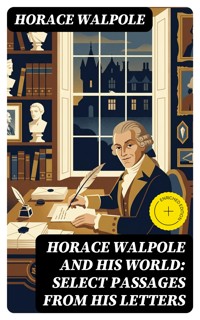
In "Horace Walpole and His World: Select Passages from His Letters," readers are invited into the intricate tapestry of 18th-century British society through Walpole's keen observations and witticisms. This collection showcases the epistolary style for which Walpole is renowned, blending conversational rhetoric with erudition and a flair for the anecdotal. The letters, rich in their historical, political, and social commentary, reflect the preoccupations of Walpole's time, offering insights into the Gothic imagination that he famously popularized, as well as the cultural milieu that nurtured both his literary and artistic endeavors. Horace Walpole, the son of the first Prime Minister of Great Britain, was not only a politician but also an influential writer, collector, and art enthusiast. His intimate correspondence reveals the mind of a multifaceted thinker, shaped by his aristocratic upbringing and a deep curiosity for the arts and their capacity to reflect society. His experiences in the tumult of the Enlightenment and his founding of the Strawberry Hill Gothic revival can be traced in the layered narratives contained within these letters. This book is highly recommended for anyone seeking a nuanced understanding of Walpole's life and the cultural currents of his era. Scholars, historians, and avid readers will find delight in his sharp wit and vivid storytelling, making this collection a valuable addition to the library of those captivated by the intersections of literature, art, and society. In this enriched edition, we have carefully created added value for your reading experience: - A comprehensive Introduction outlines these selected works' unifying features, themes, or stylistic evolutions. - The Author Biography highlights personal milestones and literary influences that shape the entire body of writing. - A Historical Context section situates the works in their broader era—social currents, cultural trends, and key events that underpin their creation. - A concise Synopsis (Selection) offers an accessible overview of the included texts, helping readers navigate plotlines and main ideas without revealing critical twists. - A unified Analysis examines recurring motifs and stylistic hallmarks across the collection, tying the stories together while spotlighting the different work's strengths. - Reflection questions inspire deeper contemplation of the author's overarching message, inviting readers to draw connections among different texts and relate them to modern contexts. - Lastly, our hand‐picked Memorable Quotes distill pivotal lines and turning points, serving as touchstones for the collection's central themes.
Das E-Book können Sie in Legimi-Apps oder einer beliebigen App lesen, die das folgende Format unterstützen:
Veröffentlichungsjahr: 2022
Ähnliche



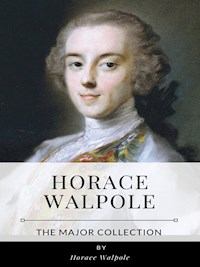








Horace Walpole and His World: Select Passages from His Letters
Table of Contents
Introduction
Horace Walpole and His World: Select Passages from His Letters brings together a carefully chosen sequence of extracts that illuminate the breadth of Walpole’s interests and the texture of his age. Rather than presenting a complete correspondence or a single chronological run, this collection gathers representative moments to show how a singular voice registered politics, art, sociability, and taste. The purpose is twofold: to restore the immediacy of his epistolary craft and to provide readers with an accessible pathway into a vast corpus. Across ten chapters, Walpole’s world comes into focus through the everyday particulars and the considered reflections of a life spent observing.
Horace Walpole (1717–1797) was a writer, collector, and observer whose name is associated with the emergence of Gothic fiction, with the villa at Strawberry Hill in Twickenham, and with an unrivalled correspondence. The son of Sir Robert Walpole, Britain’s first de facto prime minister, he moved with ease among political and artistic circles while cultivating a distinctive literary identity. He established a private press at Strawberry Hill and authored works in several modes. Yet it is his letters—intimate, topical, and artfully composed—that most fully register his sensibility and have long been valued as records of eighteenth-century life.
This volume presents letters as the primary text type and does not attempt to gather Walpole’s complete output in other genres. Readers will nevertheless recognize how the letters converse with his broader oeuvre, which includes a pioneering Gothic novel, a tragedy, historical memoirs, and works of art history and literary biography. His correspondence to friends, relatives, diplomats, and fellow writers—among them long-standing correspondents abroad and companions at home—captures the interplay between private friendship and public event. The selections foreground the epistolary form’s range: sudden anecdote, extended description, incisive judgment, and playful aside.
Walpole’s letters chart recurring themes that unify his work: the theatre of politics, the performance of taste, the pleasures and perils of sociability, the scrutiny of fashion, and the lure of the past. He is at once participant and spectator, attentive to Parliament and court, to galleries and libraries, to gardens and drawing rooms. His fascination with architecture and antiquities complements a sense of history that is personal and national. Throughout, the letters reveal how news circulates, how reputations are made, and how a mind steeped in reading translates public scenes into finely observed narratives.
Stylistically, Walpole’s epistles are marked by wit, clarity, and a painterly attention to detail. He delights in characterization, balancing gentle irony with moments of sober appraisal. The sentences move quickly yet carry pointed nuance, and the tone can shift from light gossip to grave reflection with deft control. The writer knows his audience and shapes voice accordingly, but even the most occasional note bears the imprint of deliberate craft. The cumulative effect is a prose that feels spontaneous without relinquishing discrimination, turning letters into scenes in which perception and judgment are kept in productive tension.
Although this collection centers on letters, it also gestures toward the continuum of Walpole’s writing life. The novel commonly associated with the birth of the Gothic mode, his tragedy for the stage, his accounts of artists and collectors, and his historical memoirs all share with the correspondence an eye for atmosphere and precedent. The letters often supply the immediate context for these projects: they test ideas, report discoveries, and register responses from peers. In them, the same curiosity that animated Strawberry Hill—as a house, a press, and a cabinet of wonders—finds daily, flexible expression.
The ten chapters do not attempt to replicate the editorial design of any single historical edition. Rather, they provide a series of vantage points from which to consider Walpole’s concerns. Taken together, the passages trace how topics recur with variation across years and correspondents, allowing readers to notice shifts of emphasis without losing sight of continuities. The aim is representative breadth, not exhaustive coverage. By sampling different tones, addressees, and occasions, the collection seeks to honor the diversity of the correspondence while remaining compact enough to be read as a coherent whole.
As historical evidence, the letters are invaluable and partial at once. They transmit first-hand impressions of events and personalities, but they also reflect the writer’s position, affinities, and prejudices. Walpole writes from privilege and within intricate networks of patronage and friendship. He is sensitive to reputation—his own and others’—and he can be satirical as well as generous. Readers are encouraged to treat the letters as informed testimony shaped by literary art. Their reliability lies not in neutrality but in the precision with which they register how information is perceived, circulated, and judged within a particular milieu.
The world these pages evoke is that of Georgian Britain and its European connections: London’s streets, clubs, and theatres; Twickenham’s retreat; courts and embassies; collections and sale rooms; the press and the post. We witness how travel, diplomacy, and correspondence knit together a transnational conversation about art, politics, and manners. Walpole’s attention to buildings, portraits, and curiosities helps map a culture of collecting and display, while his political awareness—shaped by proximity to power and years in Parliament—records the rhythms of debate, crisis, and compromise without reducing them to mere abstraction.
Epistolary writing is a social art, and Walpole is a master of audience. He calibrates detail to the recipient, varying pace, diction, and emphasis, and he is alert to the performative nature of the letter itself. The result is a hybrid form that accommodates narrative, miniature essay, character sketch, and inventory. Within a single missive, he can juxtapose a scene at the theatre with a query about a manuscript, or a note on architecture with a judgment on a statesman, all while maintaining a coherent voice that welcomes and instructs in equal measure.
The lasting significance of Walpole’s letters rests on this blend of immediacy and reflection. They are widely used by historians of eighteenth-century Britain, by scholars of art, architecture, and book history, and by readers drawn to the pleasures of style. They document the early Gothic imagination as it emerges alongside antiquarian inquiry and sociable wit. They suggest how private writing can shape public taste and how a carefully sustained correspondence can become an informal chronicle of an era. For these reasons, selections such as those gathered here remain perennially instructive and engaging.
This introduction invites readers to approach the following chapters as both literature and evidence. The passages are not exhaustive and do not claim to speak for all of Walpole’s correspondents or contexts; they are chosen for variety, clarity, and resonance. Read consecutively, they sketch a life attentive to objects and events; consulted piecemeal, they offer pointed observations on particular topics. In each case, the promise is the same: to enter Horace Walpole’s world through the form he practiced most steadily, and to discover how an age can be seen anew in the play of a single, unmistakable voice.
Author Biography
Horace Walpole (born in the 1710s, died in the 1790s) was an English writer, collector, and parliamentarian whose name is inseparable from the rise of both Gothic fiction and the Gothic Revival in the arts. A man of letters in the broad eighteenth-century sense, he cultivated conversation, correspondence, and criticism while assembling a celebrated house and collection at Strawberry Hill. His novel The Castle of Otranto helped define a new literary mode, and his meticulous curiosity about art and history yielded influential studies. Through his thousands of letters and carefully printed books, he became an indispensable observer of his age, blending urbane wit with antiquarian engagement.
Educated at Eton College and at Cambridge, Walpole absorbed classical learning and the sociable habits of Britain’s elite schools. As a young man he traveled on the continental Grand Tour, an experience that sharpened his taste for art, architecture, and collecting. His long friendship and exchange with the poet Thomas Gray fostered a refined sensibility attuned to the picturesque and the sublime. At home, he moved within London’s antiquarian circles, consulting prints, manuscripts, and catalogues that informed his later histories of art. Though living in the Enlightenment, he cultivated a self-aware fascination with medieval forms, treating the “Gothic” as a playful, imaginative resource rather than simple imitation.
Walpole sat in Parliament for several terms, aligned with Whig interests, yet he made few speeches and left little legislative imprint. His lasting projects were literary and artistic. From the mid-eighteenth century he transformed a modest villa at Twickenham into Strawberry Hill, an eccentric, influential experiment in revived Gothic architecture and interior design. He also established the Strawberry Hill Press, a private press known for elegant, small-edition books that circulated among connoisseurs. The press and the house together embodied his program: to rescue curious fragments of the past, arrange them with modern taste, and argue—by example—that pleasure, learning, and design could reinforce one another.
His best-known book, The Castle of Otranto, appeared in the 1760s. First presented as a translation of an old Italian tale and then openly acknowledged by its author, it announced itself as “A Gothic Story,” mixing chivalric settings with marvels, danger, and moral inquiry. The work startled some readers and delighted others, and it quickly became a touchstone for writers who explored terror, fantasy, and the supernatural. Walpole’s prefaces and framing devices signaled his awareness of literary experiment. By reaching back to imagined medieval sources while speaking to modern anxieties, the novel effectively launched a tradition that would flourish across the next generations.
Walpole’s scholarship and curiosity produced a shelf of works beyond fiction. A Catalogue of the Royal and Noble Authors of England surveyed literary production among the titled; Anecdotes of Painting in England drew on antiquarian research to outline the history of British art; and Historic Doubts on the Life and Reign of King Richard the Third questioned received narratives about a controversial monarch. He also composed The Mysterious Mother, a tragic drama intended for private reading rather than the stage. Together with numerous prefaces and minor pieces, these publications show a method: sift evidence, argue with verve, and frame history as a conversation with the present.
Walpole’s letters, addressed to friends, diplomats, and fellow enthusiasts, constitute one of the great archives of eighteenth-century social observation. They record theater and book news, political turns, art auctions, architectural experiments, and everyday London gossip in a style at once ironic and humane. They also reveal a temperament suspicious of dogma, protective of civil moderation, and devoted to the pleasures of taste. In correspondence he coined the word “serendipity” to describe discoveries made by sagacity and accident, a term that has endured. The letters complete the picture of a writer who valued curiosity as both a personal ethic and a public good.
In later years Walpole continued to edit, collect, and revise, welcoming visitors to Strawberry Hill and tending his press. He inherited an earldom in the early 1790s and died in the decade’s closing years. His legacy is unusually multifaceted: a house that helped launch the Gothic Revival; a novel that set a durable pattern for Gothic fiction; studies that shaped British art history; and a correspondence that scholars still mine for vivid testimony about his century. Read today, his works illuminate how the past can be curated for modern use—by arranging objects, crafting stories, and printing books that invite others to look afresh.
Historical Context
Horace Walpole’s letters unfold across the Georgian era, a span that included the later years of George II and most of the reign of George III. Written between the 1730s and 1790s, they witness Britain’s military contests for empire, its party struggles, and its expanding urban and print cultures. The collection’s passages trace how a politically connected observer—son of a dominant minister, a long-serving but reticent MP, and a famed man of letters—translated public events into private commentary. Walpole’s epistolary voice, alert to nuance and gossip alike, offers contemporaneous reflections on constitutional ideals, court intrigues, and cultural fashions that defined mid- to late-eighteenth-century Britain.
Walpole’s outlook was shaped by the Whig ascendancy associated with his father, Sir Robert Walpole, whose long ministry (1721–1742) entrenched cabinet government and patronage. The father’s fall in 1742, amid criticism of corruption and war mismanagement, taught the son to distrust both court favoritism and popular fury. Serving in the House of Commons from 1741 to 1768, Horace Walpole seldom spoke, yet his letters dissect ministries and factions with insider clarity. They map the shifting alignments from the Pelhams to Newcastle, Pitt, and Bute, illuminating a political culture governed by borough influence, aristocratic networks, and print-driven scrutiny that increasingly constrained the Crown.
The letters’ most sustained thread is Walpole’s transnational correspondence with Sir Horace Mann, the British envoy at Florence. Through Mann, Walpole turned epistolary news into a quasi-periodical record of London politics, continental diplomacy, and court society. The reliability of postal routes, packets, and foreign couriers made such long-distance exchange routine among elites, while expanding newspapers and coffeehouses amplified their reach at home. Walpole’s brisk notices of debates, battles, or scandals helped fix public reputations abroad. His linguistic playfulness—famously including the coinage of “serendipity” in a mid-1750s letter—reveals how private correspondence also incubated terms and tastes that later migrated into print.
Early letters are framed by the War of the Austrian Succession (1740–1748) and the Jacobite rising of 1745. Walpole recounts metropolitan alarm at the Pretender’s advance into England and relief after defeat at Culloden in 1746. His observations on trials and executions of rebel leaders register the era’s tense balance between clemency and deterrence. The correspondence captures the anxieties of mercantile London during wartime, the pressure on ministries to finance campaigns, and the rhetoric of loyalty that bound Hanoverian monarchy to Protestant security. These passages mark the sustained intersection of domestic politics and continental conflict that would continue throughout Walpole’s life.
Walpole’s cultural interventions are inseparable from the Gothic Revival. At Strawberry Hill, his villa at Twickenham, he and friends such as John Chute and Richard Bentley—self-mockingly styled a “Committee of Taste”—experimented with medieval forms beginning in 1749. The house became a showplace for antiquarian display and whimsical neo-Gothic design, emblematic of a broader elite enthusiasm for the picturesque and the past. Passages in the letters document sourcing curiosities, commissioning ornament, and receiving visitors, situating Strawberry Hill within changing attitudes toward heritage, tourism, and the performance of taste. This architectural project positioned Walpole at the crossroads of collecting, connoisseurship, and literary imagination.
Antiquarian scholarship and the art market form a second cultural axis. Drawing on the notebooks of engraver-historian George Vertue, Walpole issued his Anecdotes of Painting in England (1762–1771), among the earliest attempts at a national art history. The letters register auctions, attributions, and disputes that fueled London’s collecting scene and Grand Tour traffic. They chart the rise of public exhibitions and the circulation of reproductive prints, which broadened access to images beyond court or aristocratic houses. Walpole’s steady commentary on artists and dealers offers granular evidence of how connoisseurship, reputation-making, and commercial speculation converged in Britain’s burgeoning cultural economy.
The Seven Years’ War (1756–1763) marks a decisive imperial pivot. Walpole’s reactions span the shock of Admiral Byng’s execution in 1757—an episode he memorialized with caustic wit—to jubilation at victories in 1759 that delivered Canada and strengthened British India. His letters trace the domestic politics of wartime credit, ministerial turnover, and popular celebration, while not overlooking the human costs. They anticipate the postwar dilemmas of taxation and governance that followed from expansion. By combining parliamentary rumor with street-level observation, Walpole records how military success fed national pride yet sowed fiscal and colonial tensions that the next decade would expose.
With George III’s accession in 1760, court politics recalibrated around royal influence and the brief ascendancy of Lord Bute. Walpole’s letters critique the optics of favoritism and explore how public opinion, mobilized through newspapers and pamphlets, constrained government. The Wilkes affair (from 1763), involving general warrants, press freedom, and electoral rights, becomes a touchstone for Walpole’s Whig constitutionalism: skeptical of demagogues yet alert to abuses of power. His dispatches contextualize a reordering of party identities, as older Whig-Tory labels gave way to groupings aligned with leading figures, while the monarchy asserted a more personal direction in national affairs.
Walpole’s literary experiments echo these cultural currents. The Castle of Otranto (1764), often cited as the first Gothic novel, channeled his medievalist taste into fiction that balanced wonder with moral reflection. He privately printed and circulated some works, including the controversial tragedy The Mysterious Mother (1768), using his Strawberry Hill press established in the late 1750s. The letters clarify the social logistics of private printing, patronage, and reception, and situate Gothic imagination within a soberly Enlightened milieu that prized evidence and decorum. Rather than rejecting reason, Walpole staged an aesthetic dialogue between historical fantasy and contemporary standards of credibility.
Urban sociability animates many passages. Walpole writes of playhouses, gardens, clubs, and assemblies that made London a capital of spectacle and conversation. He follows David Garrick’s theatrical innovations and notes the commercialization of entertainment. The founding of the Royal Academy in 1768 marked institutional consolidation of the arts; Walpole comments on exhibitions and the authority of figures like Joshua Reynolds. These letters measure the growth of a public sphere in which reputations were made before mixed audiences, and they trace the emergence of professional artists and critics. He observes how fashion and opinion intertwined, dictating taste as readily as merit did.
The imperial crisis in North America furnished a prolonged test of British governance. Walpole records reactions to the Stamp Act (1765), its repeal, and later Townshend duties, noting parliamentary calculations and public demonstrations. Skeptical of coercion, he forecast the perils of trying to tax and discipline distant colonies without deep consent. His correspondence registers the Boston Tea Party’s shock, shifting ministries, and the entry of France in 1778, which globalized the conflict. Reports of military setbacks culminate in the surrender at Yorktown (1781) and the 1783 peace, which Walpole frames as both an imperial retrenchment and a cautionary tale about overreaching power.
The Gordon Riots of 1780 exposed the fragility of order in wartime London. Sparked by agitation against Catholic relief, protests escalated into days of arson and looting that overwhelmed civil authorities until troops intervened. Walpole’s letters convey the immediacy of urban violence, the vulnerability of prisons and public buildings, and the shock among elites who had presumed stability. He situates the riots within longer debates over toleration and the state’s monopoly on force, noting how anti-popery rhetoric could unite disparate grievances. The episode sharpened concerns about policing, crowd politics, and the communication between Parliament and the street.
Revolution in France reoriented late-century debate. Walpole initially tracked the 1789 events with curiosity tempered by caution, but his letters from the early 1790s record dismay at escalating violence, including the September Massacres and the execution of Louis XVI. He contrasts émigré testimony in London drawing rooms with British arguments sparked by Edmund Burke’s Reflections (1790) and Thomas Paine’s Rights of Man (1791–1792). While not a systematic theorist, Walpole’s responses illuminate how a seasoned Whig measured continental upheaval against English constitutional precedent, fearing that imported radicalism might corrode the delicate balance between liberty, property, and law.
Women’s intellectual networks and sociability figure prominently in Walpole’s later correspondence. Exchanges with figures such as the Countess of Ossory and, from the late 1780s, Mary and Agnes Berry reveal the vitality of Bluestocking-era salons and the serious literary interests they nurtured. Walpole’s friendship with the sculptor Anne Seymour Damer—later the inheritor of Strawberry Hill—shows how elite women could secure artistic careers within supportive circles. These letters document debates about women’s education, authorship, and reputation, all within the codes of politeness that governed mixed company. They also underscore how domestic interiors, conversation, and manuscript circulation shaped literary culture.
Technological and infrastructural change underwrites the correspondence itself. Improvements to roads and turnpikes, the growth of stagecoach travel, and the proliferation of provincial newspapers quickened news cycles. Canal building—symbolized by the Bridgewater Canal (opened 1761)—and early industrialization expanded markets and moved people and goods with new efficiency. Late in Walpole’s life, the reorganization of the Royal Mail with mail-coach services (from 1784) accelerated long-distance communication. The letters thus sit at the junction of older elite epistolary habits and a more democratized information economy, in which speed, periodicity, and wide circulation reconfigured how politics and culture were discussed.
Religious politics thread through many episodes. Walpole writes as a latitudinarian Anglican wary of persecution and of sectarian enthusiasm. His comments on dissenters, bishops’ appointments, and Catholic relief situate the Gordon Riots and related measures within a longer eighteenth-century negotiation over toleration. The Test and Corporation Acts still constrained nonconformists, while Methodist expansion altered the landscape of popular devotion. Walpole’s correspondence captures how confessional identity intersected with party politics, geopolitical rivalry, and social order, as well as how appeals to conscience could be mobilized for or against legislative reform in a period of accelerating public debate.
In the 1790s, Walpole’s letters look back across a half-century of upheaval. Inheriting the earldom of Orford in 1791 reconnected him to a family past shadowed by political triumph and controversy. He wrote amid war between Britain and revolutionary France, ministerial consolidation under William Pitt the Younger, and intensifying state measures against sedition. Age and illness narrowed his movements but sharpened his historical sense. The correspondence from these years balances affectionate domestic detail with sardonic assessments of the news, preserving a record of elite sociability under stress and a valedictory meditation on reputation, taste, and the fragility of constitutional settlement in dangerous times. The collection’s recurring attention to rumor, collecting, and display places Walpole within a wider consumer revolution. His accounts of auctions, luxury goods, and the choreography of visits—at Strawberry Hill and in London—illuminate how taste became a currency of status. Simultaneously, he tracks philanthropic initiatives, literary subscription lists, and cultural institutions that signaled civic ambition. The letters register ambivalence about commercial modernity: admiration for ingenuity and sociability sits beside anxiety about venality and fashion’s tyranny. This dual perspective, historically grounded in Britain’s expanding market economy and empire, helps explain the enduring interest of Walpole’s judgments on art, manners, and moral character. Published long after the events they describe, Walpole’s letters have become primary sources for historians of eighteenth-century Britain. Nineteenth-century editions, amplified by later scholarly apparatus, fixed his reputation as a preeminent English letter-writer and as a mordant chronicler of courts, parliaments, and parlors. Select Passages curates this vast archive to foreground connections between politics and culture across five decades. Modern readers find in them a commentary that is at once partisan and self-aware, revealing how elites managed information and influence. The collection’s cross-cutting narratives allow later generations to reinterpret Georgian Britain through a voice both embedded in and critical of its world.
Synopsis (Selection)
Chapters I–III: Society, Wit, and the Texture of Daily Life
These opening chapters gather letters that sketch fashionable circles, household rhythms, and the shifting reputations of prominent figures. Walpole’s urbane wit converts small encounters into pointed social observation, revealing how conversation, taste, and appearance govern belonging. The tone is playful yet exacting, establishing a recurring interest in performance, manners, and the subtle politics of everyday life.
Chapters IV–V: Politics, Power, and Public Spectacle
The correspondence turns toward public affairs, tracing the theater of power with attention to sudden reversals and fragile alliances. Walpole balances gossip with analysis, showing how official decisions and informal influence intertwine. A note of irony undercuts grand claims, emphasizing volatility and the distance between public rhetoric and private motive.
Chapters VI–VII: Taste, Letters on Art, and Theatrical Culture
These chapters dwell on matters of taste—how style, collecting, and performance shape judgment and identity. Walpole’s voice mixes enthusiasm with skepticism, treating art and the stage as mirrors of social ambition and moral stance. The letters refine a signature vocabulary of elegance and critique, foregrounding the pleasures and pretenses of cultural life.
Chapter VIII: Travel, Places, and the Curiosity of Things
Shifting locales provide fresh vantage points as Walpole catalogs places, objects, and scenes that invite comparison and classification. The tone is alert and descriptive, revealing a collector’s eye for detail and the way movement sharpens social and aesthetic judgment.
Chapters IX–X: Friendship, Age, and Retrospect
The late letters draw inward, weighing companionship, memory, and the limits of influence against the passing of time. Wit remains, but it is tempered by elegy and self-scrutiny, as Walpole arranges anecdotes into a retrospective ledger. The result is a poised, humane register that ties earlier themes of appearance and power to questions of loyalty, legacy, and self-understanding.




