


1,99 €
Niedrigster Preis in 30 Tagen: 1,99 €
Niedrigster Preis in 30 Tagen: 1,99 €
Mehr erfahren.
- Herausgeber: DigiCat
- Kategorie: Geisteswissenschaft
- Sprache: Englisch
In "Hospital Transports," Frederick Law Olmsted meticulously examines the logistical and emotional complexities of transporting wounded soldiers amidst the chaos of the Civil War. Written in a clear yet poignant prose style, Olmsted's work reflects a profound understanding of both humanitarian concerns and logistical challenges. Through detailed accounts and observations, he critiques contemporary medical practices while advocating for a more compassionate and systematic approach to wartime medical care. The book serves as a crucial document that not only captures the horrors of war but also highlights the burgeoning field of medical transportation, situated in a stark historical moment where the evolution of public health began to take precedence. Frederick Law Olmsted, renowned as a landscape architect and social critic, was deeply influenced by his experiences observing the effects of war on both the body and psyche of individuals. His background in agriculture and his commitment to social reform motivated him to delve into the intricacies of medical care during a tumultuous period in American history. Olmsted's unique perspective, drawn from his own encounters with societal needs and the built environment, enriches the narrative and underscores the imperative for humane treatment in the face of adversity. "Hospital Transports" is essential reading for those interested in Civil War history, medical ethics, and the evolution of healthcare practices. Olmsted's thorough analysis and perceptive insights will resonate with readers, offering a compelling call to action for compassion in medical transportation and broader societal implications. This work not only stands as a historical artifact but also as a timeless reminder of the responsibility we bear for our vulnerable populations. In this enriched edition, we have carefully created added value for your reading experience: - A succinct Introduction situates the work's timeless appeal and themes. - The Synopsis outlines the central plot, highlighting key developments without spoiling critical twists. - A detailed Historical Context immerses you in the era's events and influences that shaped the writing. - An Author Biography reveals milestones in the author's life, illuminating the personal insights behind the text. - A thorough Analysis dissects symbols, motifs, and character arcs to unearth underlying meanings. - Reflection questions prompt you to engage personally with the work's messages, connecting them to modern life. - Hand‐picked Memorable Quotes shine a spotlight on moments of literary brilliance. - Interactive footnotes clarify unusual references, historical allusions, and archaic phrases for an effortless, more informed read.
Das E-Book können Sie in Legimi-Apps oder einer beliebigen App lesen, die das folgende Format unterstützen:
Veröffentlichungsjahr: 2022
Ähnliche


















Hospital Transports
Table of Contents
Introduction
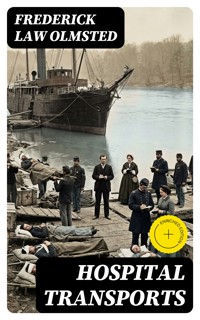
Between battlefield and home stretched a precarious, swiftly improvised bridge of mercy, afloat on rivers and held together by resolve. Hospital Transports turns that bridge into a living scene, tracing the urgent movement of wounded and sick soldiers from the Virginia Peninsula toward safety during the American Civil War. The book centers on the delicate conjunction of compassion and logistics, where human need meets organizational ingenuity under intolerable pressure. Its pages follow the rhythms of embarkation and passage—barges, steamers, nurses, surgeons, clerks—each part essential, each action measured against the clock. In this crucible, Frederick Law Olmsted records a transformative chapter in American civic life.
Hospital Transports by Frederick Law Olmsted presents a detailed account of medical evacuation by water in the summer of 1862, when Union forces withdrew from the Virginia Peninsula. Subtitled A Memoir of the Embarkation of the Sick and Wounded from the Peninsula of Virginia in the Summer of 1862, the work documents how a flotilla of vessels became hospitals and lifelines. Without dramatizing battle, it observes the next, necessary act: caring for those battle leaves behind. The narrative illuminates how river routes, improvised wards, and coordinated volunteers formed a system that saved lives, and how that system emerged under wartime strain.
Olmsted—renowned landscape architect and social reformer—served as executive secretary of the United States Sanitary Commission during the early years of the conflict. His administrative vantage point informs the book’s measured clarity, shaping a record attentive to both human suffering and the structures built to relieve it. Trained to think in terms of public space and public good, he brings the same civic imagination to the movement of patients as he later applied to parks. The result is not a memoir of personal heroics but a study in collective labor, written by a figure uniquely positioned to see the whole system at work.
The book was composed in the midst of war, while memories, logs, and reports were fresh and the practical lessons urgent. It draws on contemporaneous observations and organizational experience gathered during the Peninsula Campaign evacuations. Published while the nation was still reckoning with the scale of industrial warfare, the text retains the immediacy of field notes filtered through disciplined prose. Its contemporaneity matters: the narrative bears the stamp of crisis-time decisions, provisional solutions, and evolving standards, capturing not a retrospective ideal but a living process that had to function despite scarcity, confusion, and unrelenting demand.
Part of the book’s enduring power lies in its literary method. Olmsted practices a documentary art that favors exact description, moral restraint, and cumulative revelation. Scenes unfold through logistics: manifests, bedding, rations, ventilation, the choreography of stretchers and gangways. Yet the details never become mere data; they humanize scale by showing how systems hold—or fail—when every minute counts. Calm sentences carry tumultuous realities, and the prose trusts readers to feel the weight of what is implied. This disciplined clarity anticipated later traditions of American nonfiction that unite public concerns with close observational writing.
Hospital Transports holds classic status because it captures a decisive innovation in American life—the organized, civilian-led care of mass casualties—while speaking in a voice that has not dated. It bridges military history, medical history, and civic history without surrendering the unity of narrative experience. For students of the Civil War, it illuminates the often overlooked world beyond the firing line; for general readers, it offers an exemplary case of public-minded storytelling. Its themes—coordination, responsibility, endurance, humane attention—resonate far beyond its occasion, granting the book a lasting place in the literature of crisis and care.
The book’s influence can be traced in the way later writers approach wartime relief and institutional memoir. Scholars and authors have repeatedly returned to its pages to reconstruct the infrastructure of Civil War medicine and to understand the origins of organized American humanitarian work. Its blend of operational candor and ethical focus provides a benchmark for narratives that aim to depict systems without losing sight of individuals. The example it sets—precise, humane, unsentimental—echoes in subsequent reportage and historical writing about medical evacuation, disaster response, and the uneasy partnership between voluntary associations and state authority.
At the center of the narrative stand enduring themes: the tension between improvisation and standardization; the moral imperative to alleviate suffering; the friction between bureaucracy and care; the dignity of patients whose lives are more than their wounds. Olmsted traces how order is assembled from scarcity, how small improvements produce measurable mercy, and how volunteers, surgeons, and sailors negotiate common purpose. The book insists that empathy must be operationalized—turned into schedules, capacities, and routes—if it is to matter. In doing so, it honors both the impulse to help and the administrative intelligence required to make help effective.
Place, too, is a protagonist. The Virginia Peninsula’s rivers become corridors of hope, their tides and distances dictating what is possible on any given day. Ships transform into wards, with decks, holds, and hatchways repurposed to serve as triage, recovery, and respite. Geography shapes experience: the journey from mud and pine to open water mirrors a passage from immediate peril to provisional safety. By tracing these watery pathways, the book reveals how terrain and technology together define the moral reach of a nation’s commitment to its wounded.
The narrative also probes questions of accountability. What do citizens owe soldiers beyond gratitude? How do institutions build transparency when decisions must be made quickly and recorded carefully? Olmsted’s attention to procedures—sanitation, ventilation, provisioning, recordkeeping—argues that compassion is inseparable from standards. Numbers matter because lives hinge on them; names matter because numbers can erase identity. The book’s insistence on accuracy is ethical as well as practical, modeling a public language capable of carrying both facts and care without reducing one to the other.
Readers will find the book neither a battlefield chronicle nor a simple administrative report. It is a multi-voiced, scene-by-scene account of a system under stress, moving with the tempo of embarkation and transit. The structure mirrors the work it describes: repetitive tasks refine into competence; crises test assumptions; small victories accumulate into relief. Its momentum derives from concrete sequences rather than suspense about outcomes. That formal choice allows the book to remain instructive: it builds literacy in how complex operations function, while inviting readers to see the human meaning embedded in process.
Hospital Transports remains urgently relevant. Today’s challenges—medical evacuation, disaster logistics, public-health coordination, volunteer mobilization—resemble the problems this book faced in embryonic form. Its pages teach that effective mercy is planned mercy, that institutions serve best when animated by conscience, and that clear reporting can sustain public trust. In an age of mass emergencies and strained systems, Olmsted’s record offers both caution and guidance. By preserving the lived knowledge of 1862, it speaks to the ethics and practicalities of care now, securing its lasting appeal as a classic of American civic literature.
Synopsis
Hospital Transports by Frederick Law Olmsted presents a factual memoir of large-scale medical evacuation during the American Civil War. Drawing on his role within the United States Sanitary Commission, Olmsted narrates how civilian initiative collaborated with military authorities to move sick and wounded soldiers from Virginia battlefields to safer hospitals downriver and in the North. The book frames its subject as both an emergency response and an experiment in organized relief. It establishes the core questions that guide the account: how to rapidly convert vessels for humane care, how to manage unprecedented numbers of patients, and how to align voluntary effort with military command.
The opening sections describe the sudden medical crisis that followed intense campaigning in Virginia, when thousands required swift removal from exposed positions. Army medical infrastructure near the front proved inadequate for the volume and acuity of cases. Waterborne evacuation emerged as the only viable route, but the available steamers lacked the fittings and procedures necessary for safe treatment in transit. Olmsted sets the scene with logistical scarcity, administrative uncertainty, and urgent timelines, explaining why the Sanitary Commission stepped in to coordinate supplies, personnel, and standards under the constraints of wartime authority and rapidly changing operational conditions.
Olmsted then details the practical work of preparing transports for medical service. He addresses procurement and chartering, interior alterations, and the adaptation of decks and cabins to maximize light, air, and access. Cots, bedding, and fixtures are arranged to maintain cleanliness and circulation. Kitchens, water tanks, and storage are reorganized to deliver regular diets. The narrative emphasizes ventilation, disinfection, and orderly movement within cramped spaces. Throughout, Olmsted stresses the value of clear rules, labeled spaces, and redundant systems. He presents these measures not as idealized theory but as step-by-step responses to immediate hazards faced by patients and staff afloat.
The account turns to embarkation, describing river landings transformed into ad hoc depots where triage, registration, and loading had to occur amid congestion and uncertainty. Olmsted highlights methods for identifying cases, prioritizing the most vulnerable, and tracking each patient to prevent loss or duplication. He notes how record-keeping, labels, and centralized lists allowed continuity of care after disembarkation. The narrative acknowledges the pressures of time, weather, and enemy proximity, and the need to balance efficiency with caution. Controlling crowds, separating disease categories, and coordinating with transport schedules are presented as decisive factors in avoiding preventable deterioration.
Onboard routines occupy a substantial portion of the book. Olmsted outlines nursing shifts, wound care, cleanliness, and nutrition, together with measures to minimize cross-infection. He describes how patients are arranged by condition, how air is moved through cabins, and how water, dressings, and medicines are rationed and tracked. Volunteers and professional staff share duties, while surgeons focus on urgent procedures and oversight. The narrative underscores small practices that yield disproportionate benefits—timely feeding, dry bedding, regular washing, and quiet. Environmental challenges such as heat and foul odors are treated as technical problems solvable through discipline, monitoring, and simple mechanical adjustments.
Relations with the Army Medical Department and line officers form a recurring theme. Olmsted recounts moments of friction over authority, access, and responsibility, alongside instances of close cooperation that made embarkations possible. The Sanitary Commission’s role is portrayed as auxiliary and methodical: supplementing official provisions, documenting needs, and closing gaps without undermining command. The text addresses criticisms about jurisdiction and favoritism by returning to procedures, transparency, and reports. In this administrative narrative, improvement follows from clarified roles, shared data, and a willingness to change practice when evidence shows a safer, more efficient method.
As voyages proceed, the book records outcomes in qualitative terms: quicker transfers from field to general hospitals, greater stability of patients upon arrival, and fewer complications where sanitary routines are maintained. Olmsted treats every successful passage as a proof of principle for standards-based relief. He contrasts orderly ships with less-prepared vessels, arguing that organization rather than expense determines humane care. While avoiding sweeping claims, the narrative suggests that consistent ventilation, diet, and oversight reduce avoidable suffering. A cumulative picture emerges of systematized steps that, taken together, convert crisis improvisation into predictable, safer transport.
The later chapters distill lessons into practical guidance. Olmsted advocates institutionalizing purpose-fitted hospital transports, training staff in record-keeping and sanitation, and standardizing fittings that can be rapidly installed when conflict demands. He calls for reliable supply chains, clear authority at embarkation points, and integrated patient-tracking so information follows the soldier from battlefield to convalescence. The narrative links these measures to broader principles of public health: prevention, cleanliness, and data-informed management. In this view, preparedness is not a luxury but a moral necessity that multiplies the effectiveness of every stretcher, surgeon, and ship.
The book closes by placing medical transport within a larger civic frame. For Olmsted, humane logistics demonstrate how disciplined civilian energy can reinforce military capacity and uphold national responsibility to the wounded. Hospital Transports does not hinge on a single incident or conclusion; instead, it assembles procedures and observations into a durable argument for organized care under pressure. Its enduring significance lies in showing that administrative clarity, sanitary science, and documented practice are tools of compassion. These are lessons that reach beyond one campaign, shaping later approaches to disaster relief, evacuation medicine, and civil–military cooperation.
Historical Context
Hospital Transports is rooted in the mid–American Civil War years, principally the summer of 1862, when Union armies operated on Virginia’s Peninsula between the York and James rivers. The dominant institutions shaping its world were the United States Army, the rapidly reforming Army Medical Department, and the civilian United States Sanitary Commission, alongside a wartime federal state expanding in size and authority. Washington, D.C., New York, and coastal Virginia served as hubs for military administration and transport. Steam-powered vessels, railroads, and telegraph lines formed the technological spine of this setting, while temporary depots, camps, and riverside landings became the improvised stages for medical evacuation and relief work.
The United States Sanitary Commission (USSC) emerged in 1861 from antebellum sanitary reform, public-health activism, and voluntary benevolence. Chartered by federal authority in June 1861 after lobbying by physicians and reformers, it was empowered to inspect camps, advise on hygiene, and coordinate civilian aid for soldiers. It built a nationwide network of local auxiliaries funneling supplies to centralized depots. Its staff produced surveys and reports intended to persuade the Army to adopt best practices in cleanliness, diet, and camp layout. This institutional framework is essential to the book’s narrative, which chronicles a USSC-led emergency medical transport operation amid one of the war’s earliest major campaigns.
Frederick Law Olmsted, widely known as a landscape architect, served as general secretary of the USSC from 1861 into early 1863. Before the war he had co-designed New York’s Central Park and written on social and sanitary questions, experience that informed his administrative approach. In the USSC he insisted on systematic oversight, logistics, and documentation. Hospital Transports was issued under Commission auspices and associated with his leadership; it collected eyewitness accounts and operational details to portray conditions and needs. Olmsted’s blend of reformist zeal, statistical habit, and narrative clarity helped transform raw experience into a public argument for professionalized military medicine and civilian participation.
The Peninsula Campaign, running roughly from March to July 1862 under Maj. Gen. George B. McClellan, aimed to seize Richmond by advancing from the Chesapeake up the Peninsula. Siege lines at Yorktown, engagements along the Chickahominy, and the Seven Days Battles (June 25–July 1) culminated in a Union withdrawal to the James River. The heat, swamps, and extended supply lines produced enormous disease burdens alongside battle casualties. White House Landing and later Harrison’s Landing became critical evacuation points. The scale and speed of losses overwhelmed existing army medical arrangements, creating the emergency context in which the Commission’s hospital transport flotilla took shape.
Hospital transports were civilian steamers hastily converted into floating wards, designed to evacuate sick and wounded from primitive riverside depots to better-equipped hospitals in Washington, Baltimore, Philadelphia, and New York. The Commission, working with military authorities, chartered vessels, installed berths, ventilators, kitchens, and stores, and staffed them with volunteers and medical personnel. Loading often occurred under fire or amid panicked retreats, with triage improvised on crowded wharves. The book records that process from the waterline: the scarcity of ambulances, the challenges of cleanliness on board, the role of ice, milk, and broth, and the moral urgencies that guided decisions about who could be moved and when.
The Army Medical Department was itself in transition. In April 1862, William A. Hammond became surgeon general and began reforms emphasizing science, statistics, and hospital organization. In June 1862, Jonathan Letterman took over as medical director of the Army of the Potomac and soon instituted systematic evacuation, improved field hospitals, and, later that year, a dedicated ambulance corps within that army. During the Peninsula operations, however, many reforms were still embryonic. Hospital Transports thus captures a hinge moment when civilian relief filled gaps left by an overtaxed, partially reorganized military medical apparatus still learning to manage modern mass casualties.
Disease killed more Civil War soldiers than combat, and the Peninsula was emblematic. Typhoid fever, dysentery, malaria, measles, and pneumonia spread in crowded camps sited near swamps or polluted water. Prevailing medical thought emphasized miasma, cleanliness, and ventilation; germ theory would not be broadly adopted for years, and antiseptic surgery only emerged after mid-decade. Anesthesia with ether or chloroform was in use, yet postoperative infections and camp-borne illnesses were rampant. The book’s depictions of bathing, laundering, air circulation, and diet reflect contemporary sanitary strategies, while implicitly criticizing the lax camp siting and waste disposal that amplified disease.
Technological and logistical innovations underpinned the transports. Side-wheel and screw steamers, designed for passengers or freight, were reconfigured with tiered bunks, improved ventilation, and storage for ice—harvested in northern winters and shipped south to cool drinks and reduce fevers. Portable stoves produced gruels and broths; condensed milk, preserved meats, and hard bread sustained patients. Telegraph lines coordinated movements, while railroads fed men to river landings until lines were cut during the Seven Days. The book’s attention to fittings, rations, and timetables reflects a moment when industrial technologies were repurposed to serve humanitarian ends under tight time constraints.
The presence of women in military medical spaces was an innovation with contested boundaries. In 1861 Dorothea Dix was appointed superintendent of Army nurses, setting standards that sometimes clashed with surgeons’ preferences and with volunteers’ expectations. The USSC recruited women as matrons, cooks, and nurses on transports and in field depots. Their work—laundering linens, preparing food, recording names, offering comfort—challenged antebellum notions of domesticity while drawing legitimacy from a culture of female benevolence. Hospital Transports highlights these contributions and the frictions they provoked, documenting negotiations over authority, propriety, and competence in the liminal space of a wartime hospital ship.
The Commission’s power rested on the home front. Thousands of local aid societies across the North collected lint, bandages, shirts, socks, and foodstuffs, labeling and shipping them to USSC depots in cities like New York and Washington. Clerks aggregated small gifts into standardized medical and comfort packages. Although the large “sanitary fairs” peaked in 1863–1864, the spirit of grassroots mobilization was already evident in 1862. The book traces the life of donations from parlor to wharf, making tangible the social networks that transformed domestic labor into military relief, and demonstrating how civilian oversight sought to ensure that gifts reached intended recipients rather than disappearing into depots.
The Peninsula was also a landscape of slavery and shifting federal policy. From 1861, enslaved people who reached Union lines were declared “contraband of war,” and many gathered near army camps, working as laborers, teamsters, or cooks and seeking protection. The Second Confiscation Act (July 1862) and, later, the Emancipation Proclamation (effective January 1, 1863) formalized an evolving stance against slavery. While combat units of Black soldiers formed more widely after 1863, the summer of 1862 already saw Black civilians’ presence in and around Union installations. The book’s milieu includes these realities, as labor, overcrowding, and disease affected refugees and soldiers alike.




