


2,99 €
Mehr erfahren.
- Herausgeber: Ken Harmon
- Kategorie: Krimi
- Sprache: Englisch
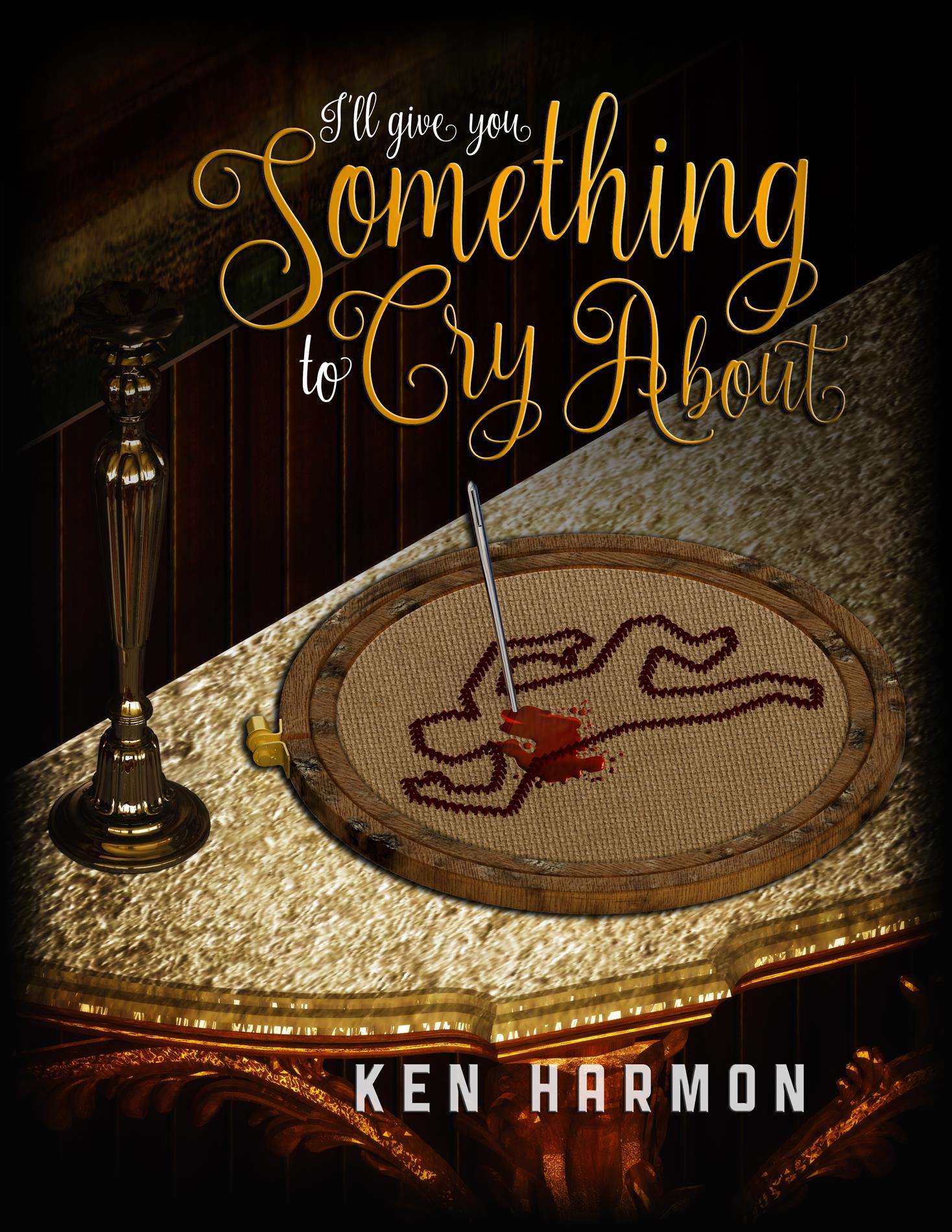
No one out-suffers Mrs. Grace Geneva - not lepers, or pilgrims, and certainly not the poor excuse for sickly in little Carpenter, NC. That the top of the prayer list is no longer Mrs. Grace purview upsets her to no end, and when a string of suspicious deaths dispatch the competition, the old girl connives to keep the murders unsolved. She knows how, too, since the local coroner is a hopeless, hapless, and hexed mama’s boy who will never amount to anything. Just how Mrs. Grace raised him. Bless his heart.
Das E-Book können Sie in Legimi-Apps oder einer beliebigen App lesen, die das folgende Format unterstützen:
Veröffentlichungsjahr: 2020
Ähnliche



















Ken Harmon
Table of contents
1
2
3
4
5
6
7
8
9
10
11
12
13
14
15
16
17
18
19
20
21
22
23
24
25
26
Epitaph
Cover Design
by
Jon Buckley
JONBUCKLEY.COM
for my sister
Also by Ken Harmon
The Fat Man - A Tale of North Pole Noir
Alas, Pulp Yorick - The Jester's Hat Always Rings Twice
The English Major Mafia
Scrooge & Marley Detective Agency
1
In Carpenter, NC, it was common knowledge that in her younger days, Catherine Pettigrew had more pricks in her than a second-hand dartboard. But when The Cancer attacked in her sunset years, Catherine’s scarlet was whitewashed into something akin to a lullaby. The Cancer, The Sugar, The Slow Aneurysm were curses from The Almighty, vengeful scourges so powerful that their very names were whispered. If The Whatever was catching, you didn’t want it to hear you and come looking for you. That was just inviting trouble. Even though the Klan fizzled in Carpenter, the tongues wagged, because young Catherine Pettigrew ruined every spare sheet in town, seeing her looking more curdled than the Devil’s buttermilk reminded everybody just how awful getting smited could be. Hearts softened and folks forgot the blistering Catherine gossip of yore. Instead, they discussed her condition at length and shook their heads at how The Cancer was ransacking her once beautiful carcass. If Catherine had been sent packing by a jealous lover or from the bite of a copperhead while shucking the corn of every Tom, Dick and Harry out behind the Pettigrew mausoleum, her death would have been expected and most would have thought that she got what she deserved. Respectable Carpenterites would not have even gone to the funeral for the free food.
But watching the vivacious and bright Catherine wilt like meringue at an August picnic caused many to spare Catherine the rod. Seventy-seven was too young, and Catherine flew to the top of the prayer list with what was her anticipated angel wings on early loan. Folks in Carpenter grieved for Catherine, winced at her pains and shared her suffering. And when Catherine took a turn for the better, they rejoiced. The prayers and medicine were working and, while not cured, Carpenter would get to keep their now beloved Catherine for a few months or more. They upped their petitions to God and marveled at the bonafide miracle happening in their midst. It was a better sign from Heaven than those yahoos on the news that found a picture of Jesus on a ham.
So when they woke one Tuesday and heard that Catherine Pettigrew had passed on in the night, Carpenter suffered a collective kick to the gut. They trolled past her casket, humbled and shaken. The shock of the sudden loss made Catherine Pettigrew’s service especially mournful. But worse than Danny Whitesides’ rouge job on Catherine’s death mask (the undertaker’s cataracts were clearly acting up again), worse than the fact that the church hospitality women ran out of paprika for the deviled eggs ( "and deviled eggs aren’t worth a thing without the paprika!"), and even worse than how Mrs. Keever was nimbly fingering the funeral organ like she was playing the seventh-inning stretch at the fast-pitch ladies’ softball games was the racking, open-wound, down-right pitiful, heartbreaking mourning of Miss Grace Geneva.
Miss Grace was, in Carpenter vernacular, “eat up” with grief. She camped at the edge of the family receiving line, clouds of used Kleenex at her feet, heaving tears as if ending a drought depended on it. Miss Grace’s shoulders trembled like a wet kitten, which couldn’t be doing her back one bit of good. And everyone knew Miss Grace’s back had been giving her trouble since roughly about Deuteronomy. The Pettigrew family had to lean in to hear condolences over Miss Grace’s wails. Her cries were loud and rumbling, like a mix between a kettle drum and that lion from the Wizard of Oz movie.
“What am I going to do?” Miss Grace would ask as folks looked at Catherine Pettigrew in the box. “She was my friend and now I don’t have her no more! What am I going to do?” And since there was no answer to such, the Carpenter citizenry could only pat Miss Grace’s quaking shoulders and tell her, “It will be alright. You’re going to be fine. Don’t go on so. Catherine wouldn’t want you to. It will be alright.”
Miss Grace would smile feebly at such charity and nod that what they said might be true, Lord willing. The mourners would shuffle off, heartsick that they could not do more for such a sweet, little old lady. It must be hard to be near the end of your path and watch friends pass away, dropping one by one, like petals off a rose. “Poor Miss Grace,” they said. “Bless her heart.”
The “bless your heart” was a balm to Miss Grace, the tonic that kept her going. And it was rough going, indeed. Not a single one of her 79 years had been easy. Folks were not sure just how much sunshine was in Miss Grace’s life before she arrived in Carpenter back in 1965, but they wouldn’t have put money on any odds more than a partly cloudy life. She came to town that autumn single, 24-years old, and with a young son in tow. The boy had a mouthful of a name, Addergoole Senter Geneva, and no visible promise of living up to it. Miss Grace did the boy no favors by shortening Addergoole to “Addy,” practically gelding him before he got out of kindergarten. A quick reconnaissance with the Britannica at the Carpenter Public Library told the town’s nosey parkers that Addergoole was an Irish name that meant “between two fords.” Irish, they surmised, was probably code for Catholic, so they thought Miss Grace Geneva had some nerve bringing her pretty, young, bead-swinging self and her bastard son into the group that was planning to build the Bethlehem Lutheran Church. However, they adopted a “Judge not, that ye not be judged” mindset, except in small groups where one could whisper and speculate on the sins of others while God was busy with orphans way the hell off someplace.
But as the weather cooled, hearts thawed, and Carpenter’s female cabal decided that young Miss Grace was harmless enough. Grace got herself a job at the accountant’s office and made a good, simple life for herself and Addy. She certainly wasn’t snaking into Bethlehem Lutheran and inspiring a lot of coveting thy neighbor’s britches like that little hussy Catherine Pettigrew with her short skirts and go-go boots. That girl caused all the husbands to suck in their paunches so much that they walked like cripples who just got the magic touch. The ladies of Bethlehem Lutheran thought the men’s gaits might be false advertising, causing prospective parishioners to think that Pastor Doug Benzmiller was fixing things with alter calls and the laying-on of hands, and that was clearly not the case. Pastor Doug was two generations removed from the Fatherland, and he worked church like a dairy farm. You fixed yourself and made it quick. There was a church to build.
No, the ladies decided, young Miss Grace was doing her part to help, despite a possible past allegiance to Rome. She brought treats for bake sales, sewed choir gowns, doing anything she could do to help the young congregation raise money for a new building. And the ladies noticed that she always wore one of two dresses every Sunday, so she could not be, like Catherine Pettigrew, coming to church simply to cast her bread on the river of Lutheran men. Though, after a while, anyone with eyes in their head could see that Miss Grace had become smitten with Mitch Popper. Folks later said, as a point of fact, that when she set her cap for Mitch Popper was when Miss Grace’s streak of tribulation in Carpenter really and truly commenced in earnest.
Mitch Popper was the high school’s music teacher, a flutist-for-hire, and the closest thing to what Carpenter figured a eunuch to be. He wore a whistle around his neck for maintaining classroom authority, but the very blowing of it was a strain – a condition that stymied making a living as a career flutist, too. If someone was going to go to the trouble of orchestrating an event that required flute playing, you certainly didn’t want to pay good money to watch the veins in Mitch Popper’s receding hairline bulge out while he puffed through some Beethoven something or other. (In truth, many of Carpenter’s young boys cheerfully sacrificed time in the woods or with balls and gloves to watch Mr. Popper play, as there was always a chance that some random note would cause the flutist’s vein to explode and his brains would gush out like John F. Kennedy’s.) Mitch Popper was a fussbudget, an artist, and a ticking brain bomb, making him the de facto pet to the elder ladies of Carpenter. They insisted that Mitch Popper be the choir director for the new Bethlehem Lutheran Church, though they did suggest he leave his whistle at home. When the charter members would finally manage to actually build a church, they did not want to have to worry about Mitch Popper’s brains staining the new parquet floor.
But Pastor Benzmiller would not wait until a church was built proper. He wanted a place for his congregation to congregate during construction. And while Jesus did insist that He would indeed be where two or three were gathered in His name, the Good Shepherd probably did not expect His sheep to gather in the showroom at Tutterow Ford.
Pastor Benzmiller’s new church gave Ronny Tutterow the excuse he was looking for to vamoose his wife’s attachment to the high-falutin’ Presbyterians. Ronny found the Presbyterian pews and sermons uncomfortable and was looking for a change. He signed on early with Pastor Benzmiller’s call to build a new Lutheran church, but soon realized he’d gotten more than he bargained for. Pastor Benzmiller put Ronny to work, writing checks, chatting up customers, and attending countless meetings. And when Bethlehem Lutheran finally managed a quorum of souls to worship together, Pastor Benzmiller pointed out to Ronny that the showroom at his dealership wasn’t doing anything Sunday mornings.
Ronny Tutterow wasn’t keen on the idea at first. Opening the place for a few hours on Sunday would mean lights, heat, and by now he knew what kind of operator the pastor was. Nothing from the offering plate would be coming Ronny’s way. (“Would they use a hubcap for the offering plate?” Ronny wondered as he tallied up what this little spiritual quest was going to cost him.) Ronny also knew that his stable of salesmen were charlatans. Their lack of scruples helped Tutterow Ford be a top dealership, so Ronny often looked the other way on many of their shenanigans. The boys also kept a cache of well-thumbed, smut magazines in their desks for days when no one was kicking the tires. They called their magazines “parts catalogs” and were none too careful about keeping them hidden. The last thing Ronny needed was some Lutheran battle-axe snooping around on a Sunday morning and seeing just how easy it would be for Miss October to catch pneumonia. Ronny knew if he cracked down on his boys too much, they might pack up and go sell Chevys. Instead, Ronny decided to convert the boys, offering bonuses to those who came in on Sunday mornings to push the Ford Fairlanes and Mustangs and Town and Country wagons off to the side and set up folding chairs in the showroom. The boys happily obliged because they soon discovered that Fords were apples in Bethlehem Lutheran’s Eden. Lutheran hymns were tuneless slogs in the first place, and Mitch Popper’s choir leadership wasn’t helping. So while the hymns droned, many worshipers were seen putting a covetous eye to the Ford lineup, and they couldn’t resist the temptation help to peek inside a vehicle during the sharing of the Peace. Ronny Tutterow’s infidel salesmen would then amble over and offer a bite of forbidden fruit in the form of skilled chin-wagging about bucket seats or four-in-the-floor or enough horsepower to outrun the ponies of the Apocalypse, which was usually what closed the deal. As fishers of men for the church, the salesmen couldn’t even find the water, much less bait a hook. But as fishers for Ronny Tutterow Ford, very few got away. Sales practically tripled while Bethlehem Lutheran was under construction and Ronny felt blessed – except when Pastor Benzmiller put the squeeze on for a bigger tithe. Nothing got past that pulpiteer.
As Christmas approached, the Bethlehem Lutheran brain trusts decided to put on a holiday pageant to raise money and boost awareness that their building would be finished later that Spring and that all were welcome. The program was called The Road to Bethlehem. Mitch Popper was in charge and Miss Grace happily volunteered to be his Girl Friday. Folks noticed how well those two got along. Grace Geneva seemed to relax Mitch Popper to the point where one nearly forgot about the bulging vein in his forehead, it was subdued so. There was talk that Mitch Popper might possibly give up living with cats, make an honest woman of Miss Grace, and theirs would be the first wedding in Bethlehem Lutheran Church.
In The Road to Bethlehem, Mitch Popper staged the big moments of the birth of Baby Jesus in the Ronny Tutterow Ford showroom. They did face the challenge of having to incorporate various Ford vehicles into the story as Ronny could not roll cars in and out of the showroom every night. So they improvised. Herod’s palace was a Ford Crown Victoria. Herod shouted decrees from the luxurious front seat, and slaves polished the hubcaps. Mary and Joseph journeyed to Bethlehem in a Mustang, which was like a donkey with chrome. At least both had four on the floor. The shepherds camped at a Town and Country Wagon, complete with ersatz wood side-panels to symbolize their rustic and humble station. For the manger scene, animals and wise men all crowded into the bed of a Ford pick-up, creating a kind of tailgate party for the Baby Jesus. Instead of weenies, there was myrrh. Audiences would amble from vehicle to vehicle and watch how Christ came to Earth. Ronny Tutterow also appreciated the fact that, subliminally, it was also suggested that the House of David was a Ford family from way back. You just couldn’t buy that kind of advertising.
Little Addy Geneva was a bit of a faraway fella and at the age of testing limits. Addy tended to go where his curiosity led him, and more than once he was found playing in the parts department while Miss Grace was busy helping Mitch Popper rehearse TheRoad to Bethlehem. To try and keep an eye on him, Miss Grace assigned Addy to the In Excelsis Deo choir. Addy and other children were put in a dark corner, dressed in robes, and given halos crafted out of coat hangers and tinsel. Each child also held a foil pie pan that had a Christmas light duct taped to it. When the shepherds looked to the sky for the heavenly host, someone plugged in the string of Christmas lights and the bulbs in the foil pans illuminated the angel children with the brilliance of high-beams on a semi. It was a dazzling sight and the beauty of it was marred only by the fact that every single, solitary time the lights were plugged in, little Connie Percy screamed like a kitten run through a cheese grater. No one could soothe Connie’s fears, though one of the shepherds quietly offered to use his staff to relieve the little brat of a few molars.
But the second night of the performance, Connie Percy was not the problem, though her constant, nerve-grinding disquietude did contribute to the tragedy that later became legendary.
Bored, Addy put down his foil pie plate and wandered off, no one thinking twice that a little angel boy was overseeing various scenes of the Christmas story. It was when Addy ventured into the cab of the manger scene pickup that he lit the fuse to catastrophe. Children are fascinated by buttons and knobs, and Addy was no exception. The result of this fascination was that Addy released the parking brake and shifted the manger truck into drive. The showroom floor, it was soon discovered, was not particularly level, and before you could say ‘Merry Christmas’, the entire manger scene started to roll. Mary, Joseph, the wise men, and an assortment of barnyard animals panicked and vaulted out of the truck bed like it was the Hindenburg, enabling the pickup to gain speed. Whether it was out of some deep-seated deviltry or just simple-mindedness, Addy steered the manger pickup directly toward the In Excelsis Deo choir. When Connie Percy saw the grill of the truck barreling toward her, she released a shriek and her bladder. The In Excelsis Deo choir turned into a chaotic mob, children dropped the pie pans and lights and bolted for sanctuary. When the puddle of Connie’s urine reached the live Christmas lights, the inferno commenced. There was a spark, a crackle, and the smell of hot pee. In a flash, the discarded tinsel halos and cotton used to simulate clouds erupted into flame. The manger pickup truck then rolled through the showroom window just behind where the In Excelsis Deo choir had just stood with a thundering crash of glass and metal. The fresh air gave the flames some giddy-up, and a rack of brochures went up like hellfire. Shepherds clutched their chests in pain, children wailed, salesmen scrambled to save their porn from the flames, and Ronny Tutterow swore like a pirate at all of it. The scene looked a lot more like the Second Coming than the First.
When it was discovered that Addy was to blame for the whole fiasco, the vein in Mitch Popper’s brow returned and stayed like a tattoo. Miss Grace Geneva’s Hell-spawn had not only ruined The Road to Bethlehem but her chances of sharing the nuptial couch with choir director as well. Mitch Popper looked at Miss Grace like she just blew burped in a flute recital, never forgiving her for producing such a wayward child. If she could be so careless with Addy, how would she treat his heart? Mitch Popper was an artist after all.
Tragedy and cursedness followed Miss Grace every day after that, it seemed, and now, years later, she had lost her friend, Catherine Pettigrew. How much heavier a cross would the poor old woman have to shoulder?
Much more, it would turn out. For the medicine and prayers for Catherine Pettigrew had truly been helping. The miracle was that The Cancer really had been weakened and tamed. Unused to losing, the disease was then forced to sit back and enviously watch a sly poison silently snuff the life out of its victim.
In truth, Catherine Pettigrew was murdered.
Bless her heart.
2
A recent ghoulish trend in Carpenter was to memorialize their dead with car stickers. The back glasses of vehicles featured decals with ornate script that read like tombstones:
In Loving Memory of Timmy Willis
1977-2001
Frieda Cartwright
1934-1989
Now with the angels
Eddie Abernathy
1966-1980
Lightning Did Strike Twice
Some designs were illustrated with praying hands or a rose, others were adorned with artistic curlicues to suggest an airy and whimsical flight to the hereafter. There were even a few decorated with the rock n’ roll hand sign or a Jolly Roger to suggest that, even in death, that particular soul would sure as hell not spend Eternity kissing some cherub's ass.
As Carpenter’s coroner, Addy Geneva knew how many of them had died. With every commute, the automotive memorials triggered a rote catalog of disease and affliction so the boy who had turned The Road to Bethlehem into a dead end was never, ever really away from death. That cloud of doom along with his mother’s chronic hypochondria understandably sapped Addy into something of a dunce until you got to know him, though very few made the effort. Addy was viewed as a stooped, woebegone dullard who, quite frankly, surprised everyone when he displayed the aptitude to help solve the Barbecue King murder years ago.
Addy had managed that triumph despite his mother’s repeated predictions that Addy would never amount to much. Miss Grace stoned her son to death with cotton balls. Cotton like, “the cotton I had to pick in the field when I was a little girl to put food on the table,” Miss Grace told Addy anytime he had asked for a quarter as a boy. No matter what subject Addy breached with his mother, she had a tale of sorrow to go along with it.
“Look at the train, mommy.”
“I remember when a train cut off the legs of a man who fell asleep on the tracks,” she said. “He was drunk. If I ever catch you drinking, mister, I’ll die.”
“Can we have a dog?”
“And get rabies? I had rabies once and we couldn’t afford all of the shots. I still have a little limp from it.”
“Mom, I’d like to be a doctor.”
“I don’t think you’d be able to fix my back.”
Despite these and many similar exchanges, Addy grew and did indeed study medicine, but was quite certain he wanted nothing to do with patients. He knew all too well how women like his mother could grind a general practitioner to powder, and Addy shunned a future where people filed in and shared what was killing them. Instead, Addy attended to the already dead. Performing autopsies, there were no Homeric litanies of ailments to hear, no awkward conversations of incontinence or intimacies. It was quiet work and less clingy. Addy simply had to poke, prod, and peek around his patient and document the Cause Of Death (COD). At first, his mother beamed a little when Addy earned his medical degree, but then he fulfilled her prophecy of heartbreak taking a job away from Carpenter and, more importantly, away from her. Then Addy further wallowed in sin, shattering the Dixie Do Nots: Thou Shall Not Worship Any Other Woman Besides Mama. Not only did Addy turn commandment numero uno into rubble, but he also let the false idol seduce him into moving to Pittsburgh.
The North.
The interloper’s name was Brisa (Her last name was unintelligible and hinted at a distinctly foreign ancestry, having more consonants than a tough turn at Scrabble). Worse still, the merry moppet was the carnal result of what happened when hormones, Woodstock, and a relatively clean sleeping bag were all handy. Brisa floated through life on the gossamery hope that came from being raised in a commune of artisans. She was not handicapped with trying to “keep up with the Joneses.” Brisa’s relationship to the Joneses was on a higher plane, one of “love and deep kisses of kismet, baby.” Compared to the women of Addy’s formative years, Brisa was positively exotic, like Bathsheba or I Dream of Jeanie. Where Addy saw a romantic mélange of fun, spontaneity, and optimism for his life partner, Miss Grace saw doom – tofu at Thanksgiving, grandchildren with names usually reserved for crayons, and having to meet nudists. Brisa was a dancer, of sorts, and was offered a job in the Guerilla Feet Company of Pittsburgh, a performance militia that raised awareness about rape, genocide, and the benefits of soy through “free-flow choreography and improvisation.” She bewitched Addy into joining her, where the two lived on love, art, and the minor sum Addy earned working at the Pittsburgh morgue as one of the Steel City’s junior medical examiners.
Brisa and Addy’s “Left-Bank” life lasted two years until Addy seemed somewhat less effusive about Guerilla Feet’s latest production, Slaughterhouse Jive. Conceived and choreographed by Guerilla Feet’s hypnotic founder, Gazim, Slaughterhouse Jive “put healing feet on society’s blindness to the hormones and calamity that THE MAN was feeding us through dead mammals.” What Addy saw instead was Brisa skip and jerk across the stage to a soundtrack of mooing cows with a piece of bologna taped across her eyes. Or olive loaf. Addy’s face must have betrayed his embarrassment, for it was not two days later that Brisa announced that she and Addy were finished. Brisa had found her soul mate in Gazim. Without gloss or charity, Brisa detailed why she preferred Gazim. Gazim wore chaps; Addy wore pleats. Gazim was tan; Addy, doughy. In what proved to be the coup de gras from which Addy never recovered, Brisa explained that, in basic terms of the erotic, Gazim was a jackhammer and Addy a jackrabbit. It did not help that, exalted and roused by Gazim’s hardihoodness, Brisa later became a sex therapist of some renown, penning the self-help phenom, Your G-Spot’s Not a Unicorn – Find It Tonight! In the book, she detailed her “arctic years” with Addy without bothering to change his name.
“You had no business thinking you could make a girl like that happy,” Miss Grace told Addy when he hang-dogged it back home. Miss Grace’s carping revealed that not only had his mother read Brisa’s memoir but that she also agreed that Addy could never manage to be a chaps man. And while expressing her agreement about Addy’s shortcomings while he was down may not have been especially kind, it was the most direct route to keeping him down. Only then would the position of Carpenter’s coroner look like a step up to her boy.
Carpenter was one of the last of the municipalities where the coroner was chosen in a general election. Medical examining and performing autopsies was not especially interesting work, especially in Carpenter where one could more than likely guess that the C.O.D. was either Lucky Strikes, Pabst Blue Ribbon, or lard. Since no one would volunteer for the job, Carpenter passed a law to elect medical examiners and then set about nominating doctors without consultation, essentially guilting doctors to perform their civic duty. But all that changed in 1948 when Doctor Jick Jay actually wanted to be coroner, employing the campaign slogan:
Stick with Jick for Coroner
He’s a Servo-crat!
This election strategy started in the Truman administration, and Carpenter stuck with Jick because he was a Servo-crat, handling the medical examining duties of Carpenter and the surrounding hamlets for a small stipend and little thanks. Of course, there wasn’t much need for a coroner, since the expert opinion was usually only needed when a death was deemed suspicious or unusual. Throughout his tenure, Jick “took a peek under the hood” when most anyone died, suspicious, unusual, peculiar or not, out of general curiosity and to help grease the various machinations of death administration. In a community where The Cancer, The Sugar, and The Stroke were regularly planting citizens like bulbs, such machinations could easily overwhelm a three-clerk office where they wouldn’t know an 8-hour day if it slapped them in the face. Naturally enough, Jick’s Servo-cratic attitude was expected of his successor. As he was poor Miss Grace’s son and, since he had made a fool of himself with The Yankee Hippy, Jick hand-picked Addy (“I’ve known him since he damn near burned Ronny Tutterow’s Ford place down”). With the old man’s endorsement, Addy was easily elected, though no one else ran. Carpenter did not expect him to light the world on fire, but that’s just what Addy did when he noticed that the Barbecue King’s C.O.D. was more than peculiar. It was suspicious.
Rudy Fluke was the Barbecue King the moment he opened Swine Fluke’s Barbecue in Carpenter. The pithy marketing strategy - Catch a good pork at Swine Fluke’s! – certainly got people’s attention, but it was Rudy’s sorcery of meat, sauce, and embers that achieved his coronation. Give Rudy a shank, some smoke, and a few hours and you’d savor a cut of meat so tender you’d think it was spun. Combine that carnivore ambrosia with Fluke’s secret Creekwater Sauce and the result was something akin to culinary pornography, especially if you added hushpuppies to the orgy. The area’s dining tradition quickly became that one went to G.L.’s Fish Fry on Friday nights, Swine Fluke’s on Saturday night and your momma’s for Sunday dinner. Over the years, the effect of this tradition garnered a dietary holocaust that kept Addy, the undertaker, and the designer of back windshield memorials in business. It was also why the lackadaisical clerks of death administration were forever backed up like a cheese judge. Addy had no choice but to be a Servo-crat.
Rudy Fluke’s death, while sad, was not a surprise. Everything about Rudy was hoggish, especially his girth. As big as a parade balloon, he could only manage a waddle, and one did not need to be a pulmonary expert to know that even such a minor output of perambulation was turning Rudy’s heart into a wet sock. If Rudy came to your table to hear your praises for his brisket, the walk would cause him to have to sit with you a spell. He did not help his condition by picking scraps off your plate. Rudy then curtailed his exercise of waddling out to the smokers by hiring Flay McCraw to be his pit boss. A brooder whose disposition matched the simmering pestilence of his death metal t-shirts, Flay was not much for conversation, but he was a true barbeque savant, exceeding Rudy’s high standards for tenderness and bark. For that, Rudy treated Flay like a son and mused that the Swine Fluke might, one day, be his.
That one day came when Rudy Fluke was found at the bottom of his cellar stairs, deader than chivalry in a whorehouse. With the help of 20 pallbearers who worked in shifts, Rudy Fluke was laid to rest on a sunny morning. All of Carpenter mourned him, singing In the Garden and raising toasts and tributes at the funeral feast lovingly prepared by the new owner of Swine Fluke’s, Flay McCraw – who even wore a polo shirt, as his only clean tee for the death metal band, Worm Choker, would have been in poor taste at the funeral.
Addy had the death certificate prepared. Myocardial failure and bodily trauma were a foregone C.O.D. But before the outbreak of pallbearer hernias, before In the Garden, and before the serving of the death brisket, silent, studious, Addy Geneva noticed that Rudy’s skull was not altogether intact. It was the back of his skull, in particular, that was caved considerably, a wound that did not simply tally with some lardo falling down stairs face first. And a few days after the funeral, Addy’s suspicions were further aroused with the results of select coroner tests that revealed traces of ash and rust in Rudy's head. Addy now believed that it was homicide that sent Rudy Fluke to hog heaven.
Addy notified Lieutenant Crystal Ruth of the Carpenter Police department, as she was the only officer who insisted Addy ever look for suspicious causes of death just to make sure she wasn’t missing the opportunity to “take down a perp.” Lieutenant Crystal Ruth was one of the few women on the force and the only one of rank. The lieutenant considered many of her co-workers to be “mouth-breathing, bottom-feeding bubbas with a badge” who only pursued a law enforcement career so they could drive like they had new tires at Daytona. Lieutenant Crystal Ruth, however, enlisted to not only force Crime to pay, but to take every nickel Crime had, boil them in oil, and pour the scalding ooze down Crime’s guilty throat until Crime shitted ashes. Lieutenant Crystal Ruth was given a wide berth.
Addy tried giving Lieutenant Crystal Ruth a wide berth during the investigation, but his lab was small and he was often close enough to feel the mixture of hate, doubt, and anxiety burning off of her like a wood stove. She quizzed him nightly for weeks about the what’s and what-ifs of Rudy Fluke’s injury, and she had a habit of tapping her gun while she chewed Addy’s answer, unnerving the shy coroner to no end. With a stack of glossy photographs from the autopsy in hand, Addy hypothesized that Rudy’s skull met with a blunt instrument and provided the lieutenant with approximate configurations of the murder weapon. So when Lieutenant Crystal Ruth returned to the Swine Fluke to query Flay about any disputes between Rudy and any customers, she happened to deduce that one of Flay’s pit rods was noticeably, if not considerably, warped. Right then, Lieutenant Crystal Ruth knew she had her man.
In truth, the Lieutenant had tapped her holster and told Addy early on that Flay was a Person of Interest (P.O.I.) in the C.O.D. because of Flay’s girlfriend, Gina Painter, with whom Lieutenant Crystal Ruth had some history. ( Tap-tap) They went to high school together; the Lieutenant never warmed to Gina. Gina was a size zero with a D-cup; she had a ponytail and straight teeth. She was perfect and knew it. ( Tap-tap) Gina flaunted this perfection as the primary baton twirler and face of the marching band. The caption with her yearbook picture proclaimed “Gina Painter – Majorette and The Major It.” ( Tap-tap). Though a curvy blonde now, in high school Crystal played the tuba and had the figure to match. ( Tap-tap-SMACK) But behind the majorette’s sparkle, Lieutenant Crystal Ruth suspected an ambitious, conniving snake woman who would one day bring someone to ruin. That someone was Flay McCraw.




