


7,00 €
Mehr erfahren.
- Herausgeber: Sachin Naha
- Kategorie: Fachliteratur
- Sprache: Englisch
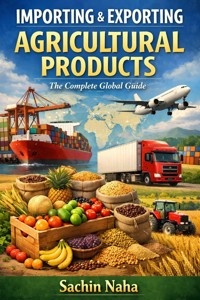
Importing & Exporting Agricultural Products: The Complete Guide is a practical and comprehensive handbook for anyone involved in international agricultural trade, agribusiness, food exports, and global food supply chains. This book clearly explains agricultural import export procedures, food import regulations, phytosanitary standards, Incoterms, customs clearance, cold chain logistics, total landed cost, international payments, cargo insurance, and risk management using simple and structured language. It addresses real-world challenges such as perishability, food safety compliance, labeling laws, export documentation, supplier verification, and shipment rejection risks. Designed for exporters, importers, traders, logistics professionals, and food entrepreneurs, this guide helps readers build compliant, profitable, and sustainable agricultural export-import businesses while navigating global food markets with confidence.
Das E-Book können Sie in Legimi-Apps oder einer beliebigen App lesen, die das folgende Format unterstützen:
Veröffentlichungsjahr: 2025
Ähnliche




















Table of Contents
Chapter 1: The Unique Nature of Agricultural Trade
Chapter 2: The Global Food Trade Ecosystem
Chapter 3: Exporter and Importer Role Definition
Chapter 4: Internal Export Readiness Assessment
Chapter 5: Identifying Market Opportunities and Product Fit
Chapter 6: Advanced Market and Competitor Research
Chapter 7: Understanding Total Landed Cost
Chapter 8: Import Regulations and Government Compliance
Chapter 9: Phytosanitary and Food Safety Standards
Chapter 10: Food Labeling, Additives, and Consumer Law
Chapter 11: Supplier and Source Verification
Chapter 12: Contract Structuring and Legal Safeguards
Chapter 13: Incoterms and Risk Allocation
Chapter 14: Export Documentation and Certification
Chapter 15: Packaging, Grading, and Product Preparation
Chapter 16: Cold Chain and Transport Planning
Chapter 17: Cargo Insurance and Financial Risk Protection
Chapter 18: Secure International Payment Systems
Chapter 19: Customs Clearance, Inspection, and Release
Chapter 20: Distribution, Traceability, and Long-Term Success
Importing & Exporting Agricultural Products: The Complete Global Guide
About the book
Importing & Exporting Agricultural Products: The Complete Global Guide is a comprehensive, practical book that explains every critical step of international agricultural trade, from farm sourcing to global distribution. Designed for exporters, importers, agribusiness owners, traders, and logistics professionals, this book covers agricultural export procedures, food import regulations, phytosanitary standards, market research, Incoterms, total landed cost, cold chain logistics, customs clearance, international payments, and risk management. It focuses on real-world challenges such as perishability, food safety compliance, labeling laws, documentation, cargo insurance, and supplier verification, helping readers avoid costly mistakes and shipment rejections. With clear explanations and structured guidance, this guide equips readers to build compliant, profitable, and sustainable agricultural import-export operations in global food markets.
Author
Table of Contents
Chapter 1: The Unique Nature of Agricultural Trade
Chapter 2: The Global Food Trade Ecosystem
Chapter 3: Exporter and Importer Role Definition
Chapter 4: Internal Export Readiness Assessment
Chapter 5: Identifying Market Opportunities and Product Fit
Chapter 6: Advanced Market and Competitor Research
Chapter 7: Understanding Total Landed Cost
Chapter 8: Import Regulations and Government Compliance
Chapter 9: Phytosanitary and Food Safety Standards
Chapter 10: Food Labeling, Additives, and Consumer Law
Chapter 11: Supplier and Source Verification
Chapter 12: Contract Structuring and Legal Safeguards
Chapter 13: Incoterms and Risk Allocation
Chapter 14: Export Documentation and Certification
Chapter 15: Packaging, Grading, and Product Preparation
Chapter 16: Cold Chain and Transport Planning
Chapter 17: Cargo Insurance and Financial Risk Protection
Chapter 18: Secure International Payment Systems
Chapter 19: Customs Clearance, Inspection, and Release
Chapter 20: Distribution, Traceability, and Long-Term Success
Chapter 1: The Unique Nature of Agricultural Trade
Introduction: A Ship That Cannot Wait
At dawn in a coastal port, a container of mangoes waits to be cleared. The fruit was harvested just days ago, ripened under a tropical sun, and packed by hands that understand its fragility. Every hour matters now. A delay at customs, a minor temperature fluctuation, or a missing document could turn months of farmer effort into financial loss. This is where agricultural trade reveals its true nature. Unlike machines or minerals, agricultural products are alive—or were alive very recently. They breathe, age, spoil, and respond to climate, care, and time. Importing and exporting agricultural products is not merely a commercial activity; it is a race against nature, governed by biology, seasons, and trust. This is why agricultural trade is fundamentally different from industrial trade, and why it demands sharper judgment, faster action, and deeper regulatory intelligence.
Why Agricultural Trade Is Unlike Any Other Trade
When a trader exports steel or electronics, the product remains largely unchanged from factory to final destination. In agriculture, change is constant. A shipment of apples continues to respire. Grains absorb moisture. Meat reacts to temperature. Flowers wilt silently if mishandled. This biological reality makes agricultural trade uniquely sensitive and unforgiving. Decisions must be made quickly, often with incomplete information, and mistakes are rarely reversible. Agricultural trade operates at the intersection of commerce and ecology, where natural processes continue even after the sale is signed.
Perishability: Trading Against Time
Perishability is the most defining feature of agricultural trade. Fresh fruits, vegetables, dairy, meat, seafood, and flowers have limited shelf lives that cannot be negotiated. Even processed agricultural products, such as grains or oilseeds, face risks of spoilage, infestation, or quality degradation. This forces exporters and importers to think in hours and days rather than weeks and months. Logistics must be precisely synchronized—harvesting schedules aligned with shipping slots, cold chains maintained from farm gate to retail shelf, and contingency plans prepared for port congestion or weather disruptions. In recent years, smart sensors, real-time temperature monitoring, and AI-driven logistics forecasting have become essential tools, reflecting a global trend toward data-driven perishability management.
Biological Risk: When Nature Intervenes
Agricultural products carry biological risks that industrial goods do not. Pests, pathogens, fungal infections, and invasive species can travel invisibly within shipments. A single contaminated consignment can threaten an importing country’s entire agricultural ecosystem. This is why agricultural trade is surrounded by phytosanitary and sanitary regulations, inspections, and certifications. Exporters must understand not only their own country’s standards but also the biosecurity concerns of destination markets. Recent global experiences with pandemics and climate-driven pest outbreaks have intensified scrutiny, making compliance knowledge as valuable as price competitiveness.
Seasonality: The Clock of the Earth
Unlike factories that operate year-round, agriculture follows the rhythm of seasons. Harvest windows are short, market supply fluctuates sharply, and prices can swing dramatically within weeks. A bumper harvest in one hemisphere may coincide with scarcity in another, creating opportunities—but only for those who anticipate timing accurately. Seasonal dependence means that trade decisions are often made months in advance, based on weather forecasts, crop reports, and geopolitical conditions. Modern traders increasingly rely on satellite data, climate analytics, and predictive models to manage seasonal uncertainty, reflecting a shift from reactive to anticipatory trade strategies.
Quality Variability: No Two Harvests Are the Same
In industrial trade, standardization is the norm. In agricultural trade, variability is inevitable. Soil quality, rainfall, temperature, farming practices, and post-harvest handling all influence the final product. Even within the same shipment, size, color, taste, and texture may vary. This makes quality assessment both an art and a science. Contracts must account for tolerances, grading systems, and dispute resolution mechanisms. Trust between buyer and seller becomes critical, often built over years of consistent performance. Today, blockchain-based traceability and digital quality certification are emerging as innovative solutions to manage variability while enhancing transparency.
Regulation: The Invisible Architecture of Trade
Agricultural trade is governed by some of the most complex regulatory frameworks in global commerce. Food safety laws, maximum residue limits, labeling requirements, sustainability standards, and ethical sourcing expectations differ across countries. A product legally sold in one market may be rejected in another due to a minor compliance gap. This regulatory density requires traders to develop deep, continuously updated knowledge. In recent years, sustainability, carbon footprint disclosure, and social compliance have moved from optional to essential, reshaping market access and consumer trust worldwide.
From Price to Purpose: The New Paradigm of Agricultural Trade
Today’s agricultural trade is no longer driven solely by price and volume. Consumers demand traceability, safety, sustainability, and authenticity. Importers look for resilience rather than just efficiency, valuing diversified sourcing and risk mitigation. Digitalization, climate resilience, and ethical trade practices are redefining competitive advantage. The successful agricultural trader is now part logistician, part biologist, part compliance expert, and part storyteller—able to communicate the journey of food from field to fork.
Conclusion: Trading with Life in Mind
Agricultural trade is unique because it deals with life and its remnants, not inert objects. Perishability forces speed, biological risk demands vigilance, seasonality requires foresight, and quality variability calls for trust and transparency. These factors together explain why agricultural trade cannot be approached with the same mindset as industrial trade. It requires tighter control, faster decision-making, and deeper regulatory understanding. In a world facing climate uncertainty, food security challenges, and rising consumer awareness, mastering the unique nature of agricultural trade is not just a commercial skill—it is a responsibility. Those who respect its complexity and work in harmony with nature do not merely move goods across borders; they help sustain global nourishment itself.




