



1,99 €
Mehr erfahren.
- Herausgeber: Quickie Classics
- Kategorie: Wissenschaft und neue Technologien
- Sprache: Englisch
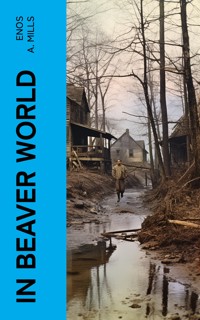
In Beaver World is Enos A. Mills's intimate natural history of Castor canadensis, distilled from years of patient vigils beside mountain streams. Chapter by chapter he unfolds the beaver's life cycle, social organization, and architectural craft—dams, lodges, canals—linking each to seasonal rhythms and risk. His prose couples anecdote with measurement and plain exposition, situating the beaver as a keystone engineer whose hydrologic works expand wetlands and diversify habitat. The result is a narrative that anticipates ecosystem ecology while remaining rooted in vivid field scenes and the cadence of early twentieth‑century American nature writing. Mills, a Colorado naturalist, guide, and key advocate of Rocky Mountain National Park, wrote from a life embedded in the high country. Managing a lodge and leading expeditions, he kept notebooks on nearby colonies through droughts and winters—experience that grounds his plea to recognize beavers as conservators of water and soil. Scholars of environmental history, field naturalists, and readers curious about nonhuman engineers will find the book instructive and restorative. It is recommended for those engaged in watershed restoration, rewilding, or climate adaptation, and for general readers seeking lucid, humane science writing with enduring practical relevance. Quickie Classics summarizes timeless works with precision, preserving the author's voice and keeping the prose clear, fast, and readable—distilled, never diluted. Enriched Edition extras: Introduction · Synopsis · Historical Context · Brief Analysis · 4 Reflection Q&As · Editorial Footnotes.
Das E-Book können Sie in Legimi-Apps oder einer beliebigen App lesen, die das folgende Format unterstützen:
Veröffentlichungsjahr: 2026
Ähnliche















In Beaver World (Summarized Edition)
Table of Contents
Introduction
At the confluence of quick water and patient industry, In Beaver World explores how a modest, tireless rodent engineers forests and rivers into living architecture while weathering predation, season, and human pressure, revealing a drama in which persistence and community reshape the wild even as the wild—ice, drought, flood, hunger—pushes back, and in which attentive watching becomes its own ethic, a way of meeting another intelligence without taming it, so that the reader sees both the fragile vulnerability of a creature at work and the immense resilience of the landscapes it steadily, audaciously builds.
Written by Colorado naturalist and conservation advocate Enos A. Mills, In Beaver World belongs to the tradition of early twentieth‑century American nature writing and natural history. Rooted in firsthand fieldwork across North American streams and mountain valleys—including the beaver country of the Rockies—it invites general readers into the geographies where dams, ponds, and meadows grow from gnawed sticks and mud. Composed during the flourishing conservation era that also produced new parks and protections, the book fuses observation with public education, presenting a carefully assembled portrait of Castor canadensis in its habitat and grounded primarily in firsthand observation.
The premise is disarmingly simple: follow beavers at work and rest through weather, seasons, and generations, and let their choices illuminate the logic of a watery world. Mills observes at dusk and dawn, patient in snow and silence, shaping his findings into narrative sequences that carry the immediacy of a field journal and the poise of an essay. The voice is measured and hospitable, firm about evidence but generous with wonder. Stylistically, episodes of close description alternate with brief explanations of behavior, producing a paced, scene‑rich account that remains accessible to readers new to natural history.
From lodge to canal to dam, the book’s most striking theme is engineering as a form of life: collective labor that sculpts water into habitat and drafts safety from design. Mills portrays cooperation without romantic gloss, attentive to apprenticeship, routine, and the costs of error. He notes the reciprocity between beaver works and their neighbors—how ponds nurture plants, shelter fish and birds, and moderate the flow that nourishes downstream places—while stressing how vulnerability persists. The result is an ecological picture in which ingenuity and environment co‑create each other, and in which survival depends on both invention and restraint.
Another thread follows the uneasy history between people and beavers, acknowledging how economies once thinned their numbers while asking readers to look, now, with patient curiosity rather than possession. Mills’s fieldcraft emphasizes distance, timing, and the discipline of seeing without intruding; he writes as a guide who refuses to harry his subjects into revelation. In this, the book offers an ethic as much as a study: that attentiveness yields knowledge, and that respect enlarges it. The human figure is present but modest, providing scale, context, and occasional inference while ceding the stage to the creatures whose waters he enters.
For readers today, the book’s relevance is practical as well as poetic. Conversations about river restoration, rewilding, drought resilience, and biodiversity increasingly turn to the beaver as a living partner in repairing watersheds, and Mills supplies a textured baseline for understanding what such partnership entails. His accounts of ponds that slow water, meadows that spread moisture, and timber choices that balance need with regeneration align with contemporary interest in nature‑based solutions without reducing animals to tools. The narrative cultivates ecological memory and civic imagination, inviting communities to see management as collaboration rather than control, and curiosity as a civic virtue.
Ultimately, In Beaver World offers a sustained encounter with otherness that feels intimate without being possessive. Its pages slow the reader to the tempo of ripples and woodchips, where small decisions aggregate into landscapes, and where attention itself becomes a form of care. As literature, it unites clarity with quiet drama; as natural history, it records behaviors and patterns whose significance continues to unfold in policy, science, and stewardship. To read it now is to step beside a thoughtful guide into a resilient, working landscape and emerge with sharpened senses, a steadier patience, and a widened sense of kinship.
Synopsis
In Beaver World, American naturalist Enos A. Mills presents an early-twentieth-century account of the lives of beavers based on field observations in the Rocky Mountains. Written in an accessible, closely detailed style, the book follows the animals through their habitats and routines, emphasizing what careful watching can reveal about their engineering and social habits. Mills frames beavers not as curiosities but as persistent workers that shape entire stream valleys. Organizing his material around places, tasks, and seasons, he traces how colonies occupy a site, alter its water, and maintain their settlements, steadily building a portrait of an animal whose behavior transforms landscapes.
Mills grounds the narrative in repeated visits to numerous colonies, returning across months and years to witness construction, maintenance, and family cycles. He takes note of water levels, the arrangement of cut wood, the placement of canals, and the wear of well-used trails, allowing patterns to emerge from accumulated detail. By moving quietly at twilight and in darkness, he records the industry of largely nocturnal workers without disrupting their routines. Throughout, he avoids speculative claims, preferring examples from specific ponds and dams to illustrate how beavers respond to weather, scarcity, and disturbance, and how their decisions collectively stabilize a chosen site.
A central thread examines beaver architecture. Mills describes dam building as an adaptive process rather than a fixed plan, with animals testing, packing, and revising structures until water reaches a protective depth. He follows the gathering of sticks, mud, and stones; the placement of braces; and the constant patching of leaks. Lodges appear as insulated living spaces sited for safety, with underwater entrances linked to a safeguarded food cache. Canals extend reach into groves, easing the transport of heavier limbs. Through these cases, the book underscores how incremental effort—cut by cut, layer by layer—creates durable works that withstand storms and seasons.




