


0,49 €
Mehr erfahren.
- Herausgeber: e-artnow
- Kategorie: Poesie und Drama
- Sprache: Englisch
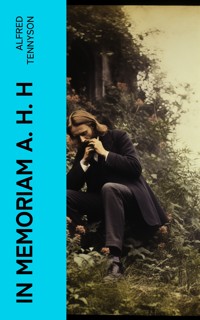
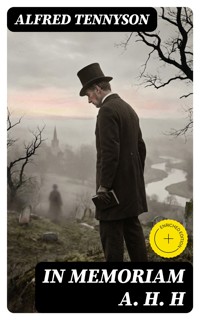
In Memoriam A.H.H. is a poem by Alfred Tennyson. The original title of the poem was "The Way of the Soul", in memory the poet's beloved friend Arthur Henry Hallam.
Das E-Book können Sie in Legimi-Apps oder einer beliebigen App lesen, die das folgende Format unterstützen:
Veröffentlichungsjahr: 2023
Ähnliche



In Memoriam A. H. H
Table of Contents
I
I held it truth, with him who sings To one clear harp in divers tones, That men may rise on stepping-stones Of their dead selves to higher things.
But who shall so forecast the years And find in loss a gain to match? Or reach a hand thro' time to catch The far-off interest of tears?
Let Love clasp Grief lest both be drown'd, Let darkness keep her raven gloss: Ah, sweeter to be drunk with loss, To dance with death, to beat the ground,
Than that the victor Hours should scorn The long result of love, and boast, 'Behold the man that loved and lost, But all he was is overworn.'
II
Old Yew, which graspest at the stones That name the under-lying dead, Thy fibres net the dreamless head, Thy roots are wrapt about the bones.
The seasons bring the flower again, And bring the firstling to the flock; And in the dusk of thee, the clock Beats out the little lives of men.
O, not for thee the glow, the bloom, Who changest not in any gale, Nor branding summer suns avail To touch thy thousand years of gloom:
And gazing on thee, sullen tree, Sick for thy stubborn hardihood, I seem to fail from out my blood And grow incorporate into thee.
III
O Sorrow, cruel fellowship, O Priestess in the vaults of Death, O sweet and bitter in a breath, What whispers from thy lying lip?
'The stars,' she whispers, ‘blindly run; A web is wov'n across the sky; From out waste places comes a cry, And murmurs from the dying sun:
'And all the phantom, Nature, stands With all the music in her tone, A hollow echo of my own, A hollow form with empty hands.'
And shall I take a thing so blind, Embrace her as my natural good; Or crush her, like a vice of blood, Upon the threshold of the mind?
IV
To Sleep I give my powers away; My will is bondsman to the dark; I sit within a helmless bark, And with my heart I muse and say:
O heart, how fares it with thee now, That thou should'st fail from thy desire, Who scarcely darest to inquire, 'What is it makes me beat so low?'
Something it is which thou hast lost, Some pleasure from thine early years. Break, thou deep vase of chilling tears, That grief hath shaken into frost!
Such clouds of nameless trouble cross All night below the darken'd eyes; With morning wakes the will, and cries, 'Thou shalt not be the fool of loss.'
V
I sometimes hold it half a sin To put in words the grief I feel; For words, like Nature, half reveal And half conceal the Soul within.
But, for the unquiet heart and brain, A use in measured language lies; The sad mechanic exercise, Like dull narcotics, numbing pain.
In words, like weeds, I'll wrap me o'er, Like coarsest clothes against the cold: But that large grief which these enfold Is given in outline and no more.
VI
One writes, that 'Other friends remain,' That ‘Loss is common to the race'? And common is the commonplace, And vacant chaff well meant for grain.
That loss is common would not make My own less bitter, rather more: Too common! Never morning wore To evening, but some heart did break.
O father, wheresoe'er thou be, Who pledgest now thy gallant son; A shot, ere half thy draught be done, Hath still'd the life that beat from thee.
O mother, praying God will save Thy sailor,—while thy head is bow'd, His heavy-shotted hammock-shroud Drops in his vast and wandering grave.
Ye know no more than I who wrought At that last hour to please him well; Who mused on all I had to tell, And something written, something thought;
Expecting still his advent home; And ever met him on his way With wishes, thinking, 'here to-day,' Or 'here to-morrow will he come.'
O somewhere, meek, unconscious dove, That sittest ranging golden hair; And glad to find thyself so fair, Poor child, that waitest for thy love!
For now her father's chimney glows In expectation of a guest; And thinking ‘this will please him best,' She takes a riband or a rose;
For he will see them on to-night; And with the thought her colour burns; And, having left the glass, she turns Once more to set a ringlet right;
And, even when she turn'd, the curse Had fallen, and her future Lord Was drown'd in passing thro' the ford, Or kill'd in falling from his horse.
O what to her shall be the end? And what to me remains of good? To her, perpetual maidenhood, And unto me no second friend.
VII
Dark house, by which once more I stand Here in the long unlovely street, Doors, where my heart was used to beat So quickly, waiting for a hand,
A hand that can be clasp'd no more,— Behold me, for I cannot sleep, And like a guilty thing I creep At earliest morning to the door.




