


Erhalten Sie Zugang zu diesem und mehr als 300000 Büchern ab EUR 5,99 monatlich.
- Herausgeber: epubli
- Kategorie: Geisteswissenschaft
- Sprache: Englisch
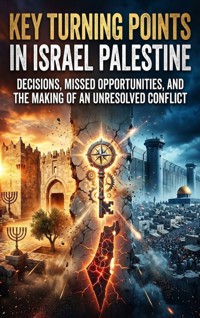
Every conflict has its hinges—moments when a different decision, a different agreement, or a different response might have altered the course of history. The Israel-Palestine conflict is defined by such moments, each one layered with competing narratives, geopolitical pressures, and the lived experiences of millions of people caught between competing claims to the same land. This book traces the pivotal junctures that shaped the conflict from the late Ottoman period through the British Mandate, the 1948 war, the Oslo negotiations, and into the twenty-first century. Drawing on declassified documents, diplomatic correspondence, and testimony from participants on all sides, it examines the decisions made—and those deliberately avoided—by state actors, international bodies, and local leadership at each critical moment. The focus is not on assigning blame but on understanding causation. How did specific agreements succeed or collapse? What role did external powers play in shaping outcomes on the ground? How did civilian populations experience and respond to each turning point? By grounding analysis in primary sources and historical context, this book offers readers a rigorous, balanced framework for understanding one of the modern world's most contested and consequential conflicts—one that continues to shape international relations, humanitarian law, and regional stability today.
Sie lesen das E-Book in den Legimi-Apps auf:
Seitenzahl: 220
Veröffentlichungsjahr: 2026
Das E-Book (TTS) können Sie hören im Abo „Legimi Premium” in Legimi-Apps auf:
Ähnliche















Table of Contents
Chapter 1: The Late Ottoman Period: Seeds of Conflict
The Ottoman Empire: A Diverse Mosaic
Economic Factors and Land Ownership
Nationalism and Identity Formation
The Role of External Powers
Responses to Change: Political Mobilization
Legacies of the Late Ottoman Period
Chapter 2: The British Mandate: Conflict and Contradictions
Understanding the Balfour Declaration
The Promises and Responsibilities of the Mandate
Rising Tensions: The Arab Revolt
Jewish Agency and Arab Leadership: Competing Narratives
The Role of International Politics
Missed Opportunities for Dialogue
Legacy of the British Mandate
Chapter 3: The 1948 War: A Defining Moment
The Context of the 1948 War
Key Decisions by Zionist Leaders
Palestinian Responses and Decisions
The Impact of International Players
Human Experiences During the Conflict
Long-term Consequences of the 1948 War
Chapter 4: Refugee Crisis: Displacement and Memory
The Emergence of the Refugee Crisis
The Role of Memory and Identity
Survival and Resilience Among Refugees
The International Community's Role
Contemporary Challenges for Palestinian Refugees
Hope for Resolution and Reconciliation
Chapter 5: The Role of External Powers: Allies and Adversaries
Introduction to External Influences
The United States: A Central Ally
The Soviet Union: Competing Interests
Regional Players: Allies and Adversaries
The Role of International Organizations
Missed Opportunities and Consequences
Chapter 6: The Six-Day War: A Shift in Dynamics
Prelude to Conflict
Mobilization and Miscommunication
The Outset of the Six-Day War
Territorial Gains and Their Implications
International Responses to the Six-Day War
Long-term Consequences and Cycles of Conflict
Chapter 7: Peace Efforts: From Camp David to Oslo
The Camp David Accords: A Glimmer of Hope
The Aftermath of Camp David
The Road to Oslo: Shifting Dynamics
The Oslo Accords: A Historic Agreement
Challenges in Implementation
Lessons Learned: Missed Opportunities
Chapter 8: The Second Intifada: Unraveling Trust
The Spark of the Second Intifada
The Role of Leadership
International Reactions
Human Impact and Civilian Experience
The Role of Media and Information
Lessons and Legacies
Chapter 9: The Role of Media: Narratives and Influence
Media as a Catalyst for Change
The Power of Narrative Framing
The Role of International Media
Impact of Social Media
Media Responsibility and Ethics
Future of Media in Conflict Reporting
Chapter 10: The Human Cost: Civilian Experiences
The Daily Struggles of Civilians
Education and Youth in Conflict
Health Care Challenges
Stories of Resilience and Hope
The Role of Humanitarian Organizations
Voices of the Affected: Personal Testimonies
Chapter 11: Current Status Quo: Tensions and Resistance
Historical Context of the Current Status Quo
Ongoing Tensions in the Region
Resistance Movements and Their Evolution
Israeli Perspectives on Security and Authority
The Role of International Actors
Civilian Experiences and Humanitarian Issues
Aspirations for Peace and Resolution
Chapter 12: Future Prospects: Paths to Resolution
Understanding the Current Landscape
Lessons from History
The Role of International Actors
Engaging Local Populations
Possible Frameworks for Resolution
The Role of Technology and Media
Reflections on the Path Forward
Chapter 1: The Late Ottoman Period: Seeds of Conflict
This chapter explores the late Ottoman period, which set the stage for modern conflicts over land and identity in the region. It discusses the social, political, and economic transformations that affected both Jewish and Arab populations. The chapter examines the varying perceptions of territory, belonging, and governance during this time.
The Ottoman Empire: A Diverse Mosaic
The late Ottoman Empire was characterized by its multicultural and multi-religious society. This diversity laid the groundwork for future conflicts as various groups vied for influence and recognition. Understanding this period is crucial for grasping the different narratives that emerged later.
1. Ottoman administration included Arabs, Jews, and other ethnicities, each with unique rights and roles.
The late Ottoman Empire was a complex tapestry where various ethnic and religious groups coexisted, including Arabs, Jews, and Christians. Each group was recognized under the millet system, which allowed them autonomy in matters of personal law and certain community governance. This administration fostered a sense of identity among these groups, yet it also accentuated differences and competition for influence.
While the central Ottoman authority held nominal power, local leaders often acted independently, responding to their communities' needs. This situation led to varied interpretations of rights and privileges, depending on local governance structures and the changing dynamics of power. Understanding these unique roles helps contextualize the grievances that arose later, particularly surrounding issues of sovereignty and representation.
2. Economic changes facilitated migration, especially of Jewish populations, altering demographic balances.
During the late Ottoman era, significant economic transformations were taking place. The introduction of modern agricultural practices and railways improved connectivity and commerce. However, these changes attracted many Jewish migrants seeking better opportunities in what was then considered Palestine. Contributing to this demographic shift, the early Zionist movement aimed to establish a Jewish homeland and encouraged migration.
This influx of Jewish settlers began to alter the demographics of the region, creating new tensions with the Arab population, who perceived a threat to their land and livelihoods. As communities adapted to these economic shifts, the resulting demographic changes intensified existing rivalries over land ownership and resource allocation, laying the groundwork for future conflict.
3. Local governance influenced by religious and national identities created tensions over territorial claims.
The late Ottoman period saw a rise in local governance that was heavily intertwined with religious and national identities. This system gave rise to distinct political dynamics, as various communities sought to assert their claims to land based on historical and cultural ties. For instance, Arab leaders began to perceive the increasing Jewish presence as a direct challenge to their sovereignty.
The resulting tensions were not just about land but extended to broader claims of national identity and legitimacy. Disputes over property rights and territorial claims increasingly hitched themselves to narratives of belonging—defining who was entitled to inhabit and govern these lands. This interplay between identity and governance was crucial in setting the stage for future confrontations.
4. The rise of nationalist movements among Arabs and Jews sparked competition for political recognition and resources.
The late Ottoman period marked the emergence of nationalist movements among various ethnic groups, notably among Jews and Arabs. As these movements gained momentum, they sought political recognition and aimed to mobilize their communities around common identities and goals. The Jewish national movement, fueled by the desire for a homeland, contrasted sharply with growing Arab nationalism that prioritized self-determination and cultural revival.
This competition led to increased friction over political representation and institutional resources. Both groups began to articulate their claims to the land and governance, deepening divides and fostering mistrust. The competition was not merely ideological; it had practical implications for land ownership, economic opportunities, and social hierarchies, setting a precedent for the contentious interactions that followed in the ensuing decades.
Economic Factors and Land Ownership
Economic developments in the late Ottoman period significantly impacted land ownership and agricultural practices. These changes contributed to rising tensions between Jewish and Arab populations over agricultural land and resources.
1. Land reforms aimed at modernizing agriculture prompted disputes over land title and ownership rights.
During the late Ottoman period, the government implemented a series of land reforms designed to modernize agriculture. These reforms sought to improve productivity by introducing more efficient farming techniques and consolidating land ownership. However, this modernization process led to significant disputes regarding land title and ownership rights.
Many existing Arab landowners found themselves in a precarious position, as they faced challenges to their property claims. The reforms often favored those who could legally prove clearer titles, which created tension among local farmers. Moreover, the lack of comprehensive record-keeping exacerbated the ambiguity surrounding land ownership, leading to further disputes. As claims intensified, so did the competition between Jewish immigrants and Arab landholders, laying a foundation for future conflict.
2. The influx of Jewish immigrants bought land for agricultural settlements, leading to disputes with local Arab farmers.
The late 19th and early 20th centuries witnessed a significant influx of Jewish immigrants to Palestine, many of whom sought to establish agricultural settlements. These immigrants often purchased land from absentee landlords, which inadvertently intensified local tensions. Traditional Arab farmers saw these transactions as encroachments on their livelihoods and heritage.
As new Jewish agricultural communities emerged, clashes over land appropriation and usage became commonplace. Local Arab villagers felt marginalized as their access to land and economic opportunities diminished. This situation not only fostered ill will between Jewish settlers and Arab farmers but also set a precedent for ongoing disputes that would define the region's socio-economic landscape, complicating their coexistence.
3. Economic competition intensified feelings of alienation and resentment among the Arab population.
The economic landscape of the late Ottoman period was marked by increasing competition between Jewish immigrants and the native Arab population. Jewish agricultural settlements often had access to modern techniques, funding, and networks that Arab farmers lacked. This disparity fostered a sense of alienation among the local Arab population, who viewed the newcomers as threats to their economic stability and cultural identity.
This competition not only affected agriculture but also extended to various sectors, including trade and commerce. Economic friction boiled over into social tensions, leading to a growing resentment that would resonate through subsequent generations. The feeling of being marginalized within their own lands ultimately contributed to a broader sense of dissatisfaction that would later fuel political tensions between both communities.
4. Changes in agricultural practices transitioned traditional economies, creating socio-economic disparities.
The transition to modern agricultural practices during the late Ottoman period fundamentally altered the traditional economic structures in Palestine. Jewish settlers often introduced advanced farming methods, which conflicted with longstanding Arab agricultural practices. This shift created economic disparities that affected livelihoods and social hierarchies within the region.
As Jewish settlers thrived, local Arab farmers struggled to compete, leading to a widening economic gap. The reliance on modern agricultural techniques also shifted the labor market, pushing many traditional farmers out of business or into lower-paying jobs. Consequently, these changes not only economically disenfranchised many Arabs but also added layers of social discord. The resulting socio-economic disparities laid fertile ground for animosities that would play a crucial role in the escalation of conflict in the region.
Nationalism and Identity Formation
The emergence of nationalism during the late Ottoman period played a key role in shaping identities among both Jewish and Arab communities. This section explores how these evolving identities contributed to a sense of belonging but also stoked conflict.
1. Zionism emerged as a political movement, fostering Jewish aspirations for statehood and cultural revival.
Zionism, which began to coalesce in the late 19th century, became a significant political movement advocating for the re-establishment of a Jewish homeland in Palestine. This movement was motivated by increasing anti-Semitism in Europe and a desire for cultural and national revival among Jews. Prominent figures like Theodor Herzl articulated the necessity of Jewish statehood, emphasizing the importance of cultural identity and self-determination.
The establishment of the Zionist movement spurred waves of Jewish immigration to Palestine, significantly impacting the demographic and social landscape. These immigrants arrived with varying perspectives, ranging from agrarian socialism to religious aspirations. As they engaged in land purchases and agricultural projects, they fostered a sense of hope and purpose within their communities. However, this budding national identity simultaneously generated suspicion and unease among the Arab population, foreshadowing future conflicts over land and resources.
2. Arab nationalism gained momentum, emphasizing a shared identity and aspirations for independence from Ottoman rule.
During the late Ottoman period, Arab nationalism emerged as a powerful force, binding diverse communities together through a shared cultural identity and historical narrative. This movement sought to establish a political presence for Arab peoples who felt increasingly marginalized under Ottoman rule. Intellectuals and activists emphasized a common language, history, and destiny, fostering unity among various Arab groups.
The Arab Awakening, fueled by widespread discontent with colonial practices and longing for self-determination, was marked by public demonstrations and literary expressions that celebrated Arab heritage. Figures like Sati' al-Husri promoted ideas of a single Arab nation, advocating for political autonomy and reform. As the desire for independence gained momentum, tensions with Jewish nationalist movements folded into the broader struggle for territorial integrity and cultural identity, intensifying the path towards conflict.
3. Competing national narratives led to mistrust and misunderstanding between communities.
The rise of both Zionism and Arab nationalism during the late Ottoman period led to competing narratives that substantially fueled mistrust between Jewish and Arab communities. Each group interpreted their aspirations and historical claims through a lens of deep-seated national pride, often positioning the other as an existential threat to their existence.
This narrative competition not only exacerbated tensions but also influenced local politics and societal interactions. Propaganda, literature, and political discourse frequently framed disputes over land and rights in zero-sum terms, where the fulfillment of one group’s aspirations was perceived as a direct impediment to the other’s needs. Such misunderstandings entrenched divisions, making it increasingly difficult for both sides to envisage a cooperative future, thereby laying the groundwork for unresolved conflicts that would manifest in later decades.
4. Cultural events and publications helped reinforce both Jewish and Arab identities, often framing each other as threats.
Cultural productions played a critical role in defining and solidifying both Jewish and Arab identities during this turbulent period. Throughout the late Ottoman era, literature, art, and public events were leveraged to express national aspirations and articulate distinct cultural narratives. Newspapers, pamphlets, and books not only documented the aspirations and grievances of each community but also fueled animosities through provocative and often biased portrayals of the 'other.'
This cultural framing often depicted rival communities as threats to their existence, with Jews characterizing Arabs as impediments to their civilizational progress and Arabs perceiving Zionists as colonial intruders. Such narratives contributed to an escalating cycle of suspicion and disregard, where cultural expression seemed increasingly intertwined with political animosities. Consequently, the very means by which communities sought to define themselves often intensified the existing divisions, making reconciliation more challenging as the conflict unfolded.
The Role of External Powers
As the Ottoman Empire faced decline, external powers began to exert influence in the region. This section examines how foreign interests complicated local dynamics and intensified conflicts.
1. European powers viewed the decline of the Ottomans as an opportunity to expand their own influence in the region.
As the late Ottoman Empire weakened, European powers recognized a strategic opportunity to extend their dominance in the Middle East. The decline was perceived not solely as a collapse but as a chance to reshape the geopolitical landscape. Nations such as Britain, France, and Russia began to project their interests into the region, often competing for control of vital trade routes and resources.
This desire for influence was underscored by the growing importance of oil as the industrial revolution progressed. Consequently, local dynamics were overshadowed by external ambitions. The imperialistic mindset often overlooked the nuances of local governance and identity, laying the groundwork for deep-seated resentments that would manifest in later conflicts.
2. Diplomatic engagements often prioritized geopolitical interests over the needs of local populations.
The diplomatic interactions among European powers frequently prioritized their strategic interests rather than addressing the aspirations of local populations. Treaties and agreements were made in backrooms, often sidelining the voices of the very people whose lives would be most affected by these decisions.
This top-down approach created a disconnect between foreign powers and local communities. For instance, the imposition of borders or political structures without consultation bred feelings of alienation among both Jewish and Arab populations. The failure to consider the local context in shaping political objectives contributed to a legacy of misunderstanding and conflict that persists to this day.
3. The Balfour Declaration later framed Jewish aspirations within wider geopolitical strategies without consulting local Arab populations.
In 1917, the Balfour Declaration marked a pivotal moment that illustrated the disregard for local sentiment in favor of broader geopolitical objectives. It expressed British support for the establishment of a "national home for the Jewish people" in Palestine, yet did so without consulting the local Arab population, who constituted the majority.
This declaration not only fueled Jewish aspirations but also intensified Arab apprehensions regarding their own national identity and rights. The decision underscored a pattern where external powers shaped the future of the region based on self-interested considerations, further complicating the already delicate relationships within the diverse populations of the area.
4. The manipulation of ethnic and religious divides by foreign powers exacerbated existing tensions.
Foreign powers often exploited existing ethnic and religious divides to further their interests, significantly aggravating local tensions. By playing different communities against each other, these powers aimed to maintain control over a tumultuous region. The promotion of certain groups over others not only impacted political dynamics but also altered social relationships.
This manipulation has had lasting ramifications, as the seeds of distrust sowed during this era remain visible today. The divisions deepened by foreign interventions not only complicated peace efforts in the subsequent decades but also entrenched narratives of grievance that have perpetuated cycles of violence and conflict in the region.
Responses to Change: Political Mobilization
The changing political landscape prompted both Jewish and Arab communities to mobilize politically. This section highlights their responses to the challenges of modernization and external pressures.
1. Jewish organizations began political lobbying for recognition of their rights under Ottoman rule.
During the late Ottoman period, Jewish organizations, motivated by a burgeoning sense of national identity, actively began lobbying for recognition of their rights. Central to this movement was the desire to receive formal acknowledgment of their status and protections under Ottoman law. The increasing influx of Jewish immigrants highlighted the need for structural representation within the imperial framework. Organizations such as the Alliance Israélite Universelle sought to advance educational and cultural rights, thereby fostering a broader Jewish renaissance.
This political mobilization was not without challenges. Jewish communities faced skepticism from the Ottoman authorities, who were wary of any movements that might undermine their sovereignty. Despite this, the lobbying efforts built a foundation for future negotiations, demonstrating a shift from local community concerns to broader political engagement. Through petitions and alliances with reform-minded Ottoman officials, Jewish leaders aimed to redefine their place within the social and political fabric of the empire.
2. Arab leaders formed groups to assert their rights and fight against foreign encroachments on their political power.
In response to the changing dynamics of the Ottoman Empire, Arab leaders recognized the necessity of collective political action to safeguard their rights and interests. Various groups and societies emerged, aiming to counteract the foreign encroachments threatening their political autonomy. These organizations articulated a vision of Arab identity that transcended local affiliations, focusing instead on shared cultural and political goals.
Among these efforts, the establishment of the Arab Cultural Clubs and the Greater Arab Assembly signified a critical step towards political mobilization. Leaders emphasized the importance of reform and unity against foreign dominance, seeking greater representation in the imperial governance structure. This movement was characterized by a dual commitment to preserving traditional governance and adapting to modernization pressures, setting the stage for future conflicts over authority and representation.
3. The establishment of political institutions reflected growing awareness of global political movements.
The late Ottoman period witnessed the emergence of political institutions, representing a deeper awareness of the global shifts occurring within the context of nationalism and statehood. Both Jewish and Arab communities began to form political bodies that mirrored contemporary political trends seen in Europe and beyond. This institutional development was pivotal as it signified a transition from informal community groups to more structured forms of political representation.
Jewish organizations established institutions like the World Zionist Organization to advocate for their national aspirations on an international stage. Simultaneously, Arab leaders began establishing their political clubs and societies, channeling local and regional grievances into a more cohesive platform. These institutions not only sought recognition within the Ottoman framework but also aimed to engage with international political movements, reflecting a broader understanding of self-determination and rights in the global arena.
4. Activism increased tensions as both communities sought allies and support from foreign powers.
The growing political activism among Jewish and Arab communities during the late Ottoman period led to increasing tensions, particularly as both sides sought external allies to bolster their respective claims. Jewish organizations strategically engaged with European powers, leveraging support from sympathetic nations to enhance their position within the Empire and globally. This strategy was driven by the belief that international endorsement was paramount for survival and legitimacy.
On the other hand, Arab leaders, wary of foreign influences, equally sought to secure their interests by appealing to local populations and international allies opposed to foreign intervention. The quest for foreign support often took the form of alliances, negotiations, and public diplomacy, resulting in an increasingly polarized environment. This dual pursuit of external backing heightened suspicions between the communities, fostering a climate of competition and hostility that would shape future political landscapes.
Legacies of the Late Ottoman Period
The complexities of the late Ottoman period set the stage for future conflicts by embedding rival claims to identity, territory, and governance. This section discusses how these legacies are felt in ongoing disputes today.
1. Historical grievances from this era continue to influence contemporary narratives and conflict resolutions.
The late Ottoman period laid the groundwork for enduring grievances that significantly influence Israel-Palestine narratives today. Historical injustices, such as land dispossession and unequal governance, fostered deep-seated resentments among both Jewish and Arab communities. These grievances manifest in contemporary discourses, where each group cites past injustices to justify their political claims and rights to the land.
For many Palestinians, collective memories of Ottoman land policies resonate as reminders of historical injustices. Concurrently, Jewish narratives often emphasize their historical connection to the land, reinforcing their claims. This intertwining of historical grievances complicates conflict resolution efforts, as parties struggle to navigate the legacy of their shared past. Acknowledging these underlying grievances is crucial for diplomats and peace negotiators seeking to build a framework for lasting peace.
2. Initial patterns of displacement and migration established a precedent for future waves of conflict.
The late Ottoman period witnessed migratory patterns and displacements that would come to haunt the region during the twentieth century. As political and economic transformations unfolded, local populations found their social structures irrevocably altered. Jewish immigration, enabled by shifting policies, led to changing demographics, creating tensions with the Arab inhabitants.
This era set a precedent for future displacements, marked by both voluntary and forced migration. The influx of Jewish settlers in response to European anti-Semitism and the quest for a national homeland exacerbated existing Arab fears of displacement, leading to rising hostilities. These initial movements not only foreshadowed the 1948 Nakba but also highlighted how early patterns of migration and displacement continue to resonate in contemporary debates regarding refugees and their right to return.
3. The competition over resources foreshadowed later territorial disputes and wars.
Resource competition, particularly concerning land and water, was a critical factor during the late Ottoman period that paved the way for future territorial disputes in the region. As agricultural practices evolved and modernized, access to fertile land and water resources became increasingly contentious between Jewish settlers and Arab farmers.
This competition laid the groundwork for later conflicts, as rights to land became intertwined with national identities and survival. The early skirmishes over these vital resources not only foreshadowed the extensive territorial battles of the twentieth century but also shaped the socioeconomic conditions that fueled conflicts. Recognizing the historical context of resource management and competition is essential for understanding the motivations behind hostile actions in later periods.
4. The unresolved issues regarding identity and governance echo in modern political dialogues and conflicts.
The late Ottoman period saw emerging national identities, which have continued to evolve, often leading to competing claims for governance and representation. The lack of resolution around these issues fosters persistent conflicts, as both Palestinians and Israelis invoke their historical narratives to assert their present-day identity and political claims.
Debates over governance—from the Ottoman administrative structures to contemporary statehood aspirations—are still central to current conflicts. As both groups grapple with their national identities, the unresolved nature of these historical dialogues fuels ongoing instability. To forge a path toward reconciliation, it is vital to address these identity issues and their implications for governance, ensuring that the diverse narratives of both peoples are recognized and respected in any future negotiations.
Chapter 2: The British Mandate: Conflict and Contradictions
The British Mandate introduced new complexities into the region. This chapter focuses on key agreements, such as the Balfour Declaration, and how they were interpreted by different communities. It highlights how colonial policies fueled tensions and missed chances for peaceful coexistence.
Understanding the Balfour Declaration
The Balfour Declaration of 1917 was a significant milestone in the history of the Israel-Palestine conflict. This section examines the declaration's language, intent, and its implications for both Jewish and Arab populations in the region. By exploring different perceptions of the declaration, we can better understand its role in shaping future conflicts.
Key point 1: Origins of the Balfour Declaration
The Balfour Declaration, issued on November 2, 1917, emerged from a confluence of political motives during World War I. British Foreign Secretary Arthur Balfour articulated a statement that expressed support for establishing "a national home for the Jewish people" in Palestine. The timing was crucial; Britain aimed to rally Jewish support for the Allied war effort while simultaneously undermining the Ottoman Empire, viewed as a central adversary in the conflict.
Underlying this declaration were historical ties, with significant Jewish communities already present in Palestine. Yet, the declaration was ambiguous, lacking clarity on the rights of non-Jewish communities in the region. This lack of clarity would lead to divergent interpretations and escalating tensions. Various British politicians and diplomats saw the declaration as a strategic move, influenced by sympathetic Zionist leaders and desires to secure U.S. support. Thus, the origins of the Balfour Declaration are deeply intertwined with wartime strategy and colonial ambitions.
Key point 2: Jewish perspectives on the declaration
For many Jewish communities, the Balfour Declaration represented a moment of hope and validation of their aspirations for a homeland. It was celebrated by Zionist leaders, who interpreted it as a potential turning point in their struggle for self-determination. The declaration catalyzed Jewish migration to Palestine and spurred fundraising efforts to bolster this transformative movement.




