


7,19 €
Mehr erfahren.
- Herausgeber: Pushkin Children's Books
- Kategorie: Für Kinder und Jugendliche
- Sprache: Englisch
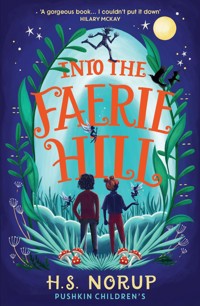
As soon as Alfred arrives at his granny's cottage, he feels like he's being watched. There are steep cliffs and dark forests all around, teeming with unfamiliar life - even odd little faerie creatures only Alfred can see. When free-spirited Saga bursts into his life, he begins to appreciate the beauty of these places that have always scared him.But this special world is under threat: Alfred's dad is working on a project to dig a giant tunnel through the landscape for a motorway. As he joins Saga in the community protests against the plan, Alfred draws ever closer to the strange world of the faerie creatures, following a thread that seems to be leading him deep into secrets from his family's past.
Das E-Book können Sie in Legimi-Apps oder einer beliebigen App lesen, die das folgende Format unterstützen:
Veröffentlichungsjahr: 2023
Ähnliche












![Tintenherz [Tintenwelt-Reihe, Band 1 (Ungekürzt)] - Cornelia Funke - Hörbuch](https://legimifiles.blob.core.windows.net/images/2830629ec0fd3fd8c1f122134ba4a884/w200_u90.jpg)


3
5
For Far—my dad—and all fathers who raise children on their own
67
Contents
1
The Cottage Under the Forest
Alfred stopped on the garden path, slowed his heartbeat and concentrated on becoming invisible. He thought about his jeans turning the faded, peeling brown of the gate behind him. He focused on his T-shirt becoming a mass of sun-speckled leaves. And he imagined his dark, unruly curls becoming the twigs of a corkscrew hazel. This time, though, his little trick didn’t work. It didn’t make the feeling of being watched disappear.
Ahead of him, Dad was skipping towards the red door of Granny’s cottage, jumping over cracked stones with easy familiarity and the movements of a carefree boy.
After closing the gate, Alfred looked up at the limestone cliff that rose behind the cottage. At the top of the cliff, tall trees leant out from the edge, stretching their branches over the thatched roof. Tree roots formed deep lines in the rock face. They looked like pointy teeth, ready to gobble the cottage in a single bite.
Alfred shuddered. Maybe all his dark-forest nightmares stemmed from here. The place was even more sinister than he recalled from his visit five years ago. He only remembered 10staying here once, but of course he knew that he was born in this cottage and had lived in it the first months of his life, until Dad took him away.
In the past twelve years, the two of them had lived in ten different cities, in six different countries, on three different continents. A stream of nannies had taught Alfred their mother tongues. An even bigger stream of bullies had used those languages to taunt him. Granny had travelled to visit them wherever they called home.
‘Come on, Alfie,’ Dad said from the front step. ‘Mum, we’re here!’ he called, as he opened the door.
A crow cawed. Two black birds took off from the roof and swooped down towards Alfred, coming so close he ducked. The slab of granite he was standing on wobbled. He put the foot of his longest leg down on the next stone.
Something scuttled around under the hedge of brambles.
‘Does granny have a cat?’ he called, without getting an answer. Careful not to lose his balance, Alfred crouched and peered under the thorny branches.
‘A cat? That one calls us a cat, Little Father,’ a high-pitched, screechy voice said.
‘Is it him, Little Mother? It is, isn’t it?’ a slightly less screechy voice replied.
‘Hello,’ Alfred said. ‘Who’s there?’ He thought he could see a pair of eyes reflecting the light. An odd musty smell mixed with the scent of roses.
‘Is he speaking to us?’ the first voice, the one called Little Mother, asked.
‘Never mind that. We must tell Her at once, Little Mother.’
Whatever was hiding under the brambles scuttled away. Leaves shook and white petals floated to the ground.11
Alfred stood up and craned his neck. On the other side of the hedgerow, poppies and dandelions dotted a green meadow. The long grass swayed in a zigzag pattern. Clouds of downy tufts rose and blew away.
Could it have been small children? It didn’t sound like children, but the grass wasn’t tall enough to hide adults, and he couldn’t believe anyone would be able to crawl away so fast. Perhaps talking animals? He rolled his eyes at himself. Probably it was all in his head.
Somehow, whenever he was in the countryside surrounded by nature, Alfred’s imagination went into overdrive. He often had the feeling something was watching him. A few times, he’d imagined seeing glimpses of weird creatures. Once, when he’d been swimming in the sea, an ugly catfish had warned him of an undertow near the shore. Or so he’d imagined.
The cat, or whatever it was he’d actually seen just now, disappeared in the direction of the trees.
As he stepped from stone to stone, Alfred tried not to look up at the forest. He focused on avoiding the cracks and only raised his eyes as far as the cottage. The red door was open. He could hear Dad’s and Granny’s voices. But it was as if his gaze was being pulled upwards to the half-circle of panelled windows above the door.
Alfred gasped. A small face up there was staring back at him. He stopped abruptly, tried to still his racing heart, become unnoticeable, unseeable, invisible. It still didn’t work.
The face was unnaturally long. Black, deep-set eyes narrowed. A tongue flicked out—a forked tongue.
All his nightmares came awake in his mind. His breathing grew shallow. So many times, this exact face had invaded his dreams and made him wake up screaming. He hadn’t known 12where it came from. He hadn’t remembered. But it was here, from Granny’s cottage.
Quickly, his eyes sought out the panelled windows on either side of the door. Two of his other nightmare figures were there. In one window stood a carved wooden bear with its nose in the air as if it were sniffing. Its head had almost human features. In the other stood a wood-carved eagle in flight, its wings spread wide. Its eyes were clearly human, and it was scowling at him with a cold glare that gave him the chills.
Alfred glanced back up above the door. Like fun-mirrors, the old windows must’ve been skewing the features, because now the forked tongue was still, the eye sockets empty, and it was just a strange face carved out of a small wooden log.
He wondered if his mother had found the woodcarvings scary too. If she had liked it here…
He often wondered about his mother. Who had she been? Did he resemble her at all? Most of all, he wondered whether she’d been like Dad, someone easy-going who fitted in everywhere without having to make an effort. Or whether she’d been like him, a fish out of water, always an outsider.
The hope of learning more about her was the only reason he’d agreed to stay in the cottage.
Granny pushed past Dad out onto the front step. A strand of long dark hair had escaped her bun and swept across her forehead.
‘Alfred,’ she called. She didn’t rush out to hug him or say any of the usual things, like how lovely it was to see him again and how much he’d grown since Christmas. Instead, she looked up and left and right with a worried frown. ‘Don’t stay out there. Come inside!’
‘Why?’13
‘Don’t dawdle now.’
Limping slightly, Alfred hurried the last steps.
A whisper went through the trees far above, and a flutter of leaves, like green snow, fell behind him, as Alfred entered the cottage, crossing the threshold.
2
The Forbidden Woodcarvings
Granny hugged him. Alfred was almost as tall as her now. At least, the left side of his body was. The right side, his right leg, was 5.3 centimetres shorter.
With the front door closed, the main light in the narrow hallway came from the half circle of windows above the door. On the white-washed wall behind Granny, the shadow of the rectangular shape with its forked tongue seemed to be licking the air. But the tension he’d felt outside in the garden was gone. Now it was just a carved piece of wood.
‘Do you still remember your way around my castle?’ Granny let go of him and pointed to the room with the wood-carved bear. ‘Kitchen.’ She continued moving clockwise, pointing at the remaining four doors. ‘My bedroom. That’s the bathroom. The guestroom. And finally, the front room.’
Alfred looked into the front room, past the eagle he had seen from the garden path. Behind a velvety armchair was a window to the side of the cottage with another wooden sculpture. From where he stood, he couldn’t see what it was.
‘I’ll just get your suitcase,’ Dad said.
Granny called something after Dad, out of the front door, 15but Alfred wasn’t listening. It felt like he was hooked and being pulled towards the far window. He stepped into the front room, his eyes fixed on the floor to avoid looking at the eagle. But he couldn’t avoid seeing the dark V-shaped shadow its wings made on the rug by the sofa. As Alfred neared it, the shadow danced. The V-shape narrowed and widened, as if the eagle had beaten its wings.
Alfred stopped and stared at the back of the bird. The whole wooden sculpture was the size of a small cat, from the stand—a flat disc the claws gripped—to the tips of the raised wings. It didn’t move.
Determined to face the carved figure right away, he reached out and grabbed hold of the stand to avoid touching the bird itself. As he turned the eagle round, his gaze slid from the smooth, pointed claws over the feathered legs to the plumage of the breast. Each individual feather was so finely carved it looked real. Above, the beak glistened in a beam of sunlight. The eyes pierced him. They seemed to stare all the way into his soul.
‘Don’t touch that,’ Granny yelled, interrupting his thoughts. She rushed into the room and pushed past Alfred. ‘It’s not a toy!’
Like Alfred, she only held the stand, as she rotated the eagle until it faced the window and the garden beyond. She took care to position it exactly as it was before he’d touched it.
‘Sorry,’ Alfred mumbled, and hurried back to the hallway.
Granny followed him, saying, ‘Please don’t play with my woodcarvings. They’re… kind of special.’
Alfred wanted to say that he wasn’t playing with the eagle, that he wasn’t a little kid who played with toys any more, and that he’d just wanted to take a closer look at it. But he didn’t get the opportunity.16
Dad came out of the guest room, squeezing past him and Granny.
‘Change your shoes, Alfie,’ he said, as he ducked under the doorway to the kitchen.
‘Did you listen to the radio in the car?’ Granny followed Dad. ‘Another disappearance.’
Dad shut the kitchen door, but Alfred heard his muffled voice asking, ‘There’s been more than one?’
After a glance back at the eagle, Alfred went into the guest room. Without looking at the window sill, he sat down on the narrow bed, extracted his indoor shoes from the suitcase, and put them on.
A dresser stood in a corner of the room and a small wardrobe behind the door. Granny’s enormous loom, covered by a white sheet, took up most of the remaining space. He could see the wooden frame and the foot-treadle. One of her acclaimed tapestries hung above the bed. It was an abstract, but he was almost certain it depicted a river running through a forest. A friendly forest. Light seemed to shine out from the blue-green threads of the water.
He didn’t remember seeing this particular tapestry at her exhibition in Tokyo, but he liked it. Had it already been here when his mother had stayed in the room? Had she liked it?
Quietly, he opened the drawers of the dresser, one by one. They were full of yarn in all the colours of the rainbow. The wardrobe contained nothing but rolled-up tapestries and small woven samples. There wasn’t anything under the bed. He even tilted the mirror on the dresser to look behind it. But there was nothing there. No trace of his mother anywhere in the room.
And why would there be?
It had been more than twelve years since she’d been here. 17More than twelve years since she’d died here, a few weeks after he was born. Alfred couldn’t help wonder if Dad had died a little too that day. Why else had he erased everything about Alfred’s mother from his mind and turned her into a taboo subject? The mere mention of her name made him shut down any conversation and bury himself even deeper in his work.
When Granny visited, she’d avoided the subject too, but Alfred had learnt many small details from her. On one visit, she’d let slip that his green eyes were the exact same colour as his mother’s—and Granny knew colours better than anyone. On another, she’d compared their olive skin tones, which were so unlike her own and Dad’s pale complexions. And, whenever she saw him swimming, she always mentioned how proud his mother would’ve been.
His mother’s name was Nereida—he knew that, without remembering who’d told him. He sometimes spoke the strange name out loud to himself before falling asleep. Saying it had become a nightly ritual, ever since Dad had said they would be moving home.
Home. It was such an odd word to use for a place he couldn’t remember. As if this was where they belonged.
Alfred couldn’t delay any longer. He got up to look at whatever monster was on the window sill. Without touching it, he leant over the small wooden sculpture. Like the other figures, it faced the outside, almost as if it was keeping watch.
He didn’t remember the little mole that stood there from his nightmares. The tiny eyes and ears were small knots in the wood on either side of a large snout. The forepaws were oversized. Every joint and crease on the twelve digits that stuck out in front of the animal were visible. The pointed fingernails leant against the glass.18
When he left the room, he heard Granny’s and Dad’s raised voices through the closed kitchen door.
‘I told you already. He shouldn’t stay here,’ Granny said.
‘I can move the loom.’
‘It’s not about the loom. You know I’m too busy colouring yarn to weave in summer. Besides, I’m going to be at the market most days.’
‘Mum, please… I’ll be working day and night. And you used to take me to the market all the time.’
Alfred went into the bathroom. When he closed the door behind him, he couldn’t hear them any more. In pitch blackness, he searched for and found the switch. Leaning against the cool outer wall, he unlocked his phone, wanting to watch a video clip that could distract him. But his phone had no connection. He couldn’t find a single Wi-Fi network either.
There wasn’t a window in the bathroom, and it had to be right up against the limestone cliff. Would the cottage wall grow out of the cliff, or could there be a narrow gap behind the house?
He tried to imagine the space outside. Anything to avoid thinking about what he had overheard. But it was no use. Granny didn’t want him here. Now that he thought about it, it was strange that he’d only visited once since he was a baby.
If she didn’t want him here, he wanted to stay even less. He’d much rather be bored in a hotel room all day, while Dad was at work, than stay here. It had been ridiculous to think he could find a trace of his mother in the cottage—why would there be, when Dad didn’t even own a photo of her?
He slammed the bathroom door so they could hear him coming. As he entered the kitchen, Granny and Dad sat at the round table, talking about whether it was likely to rain.
3
Not Just Another Tunnel
‘We’ve just agreed that you’ll be staying here the next two weeks, Alfie. I’ve left a note with my new phone number and the number of the hotel, next to Granny’s phone. You’ll have to use the landline. There’s no mobile coverage here. No internet either.’
‘I know,’ Alfred muttered.
Granny nodded and smiled, but Alfred noticed worry-wrinkles around her eyes and a deep frown above her specs.
‘I’ll start looking for a flat for us so we can get settled before the new school year begins.’
They had already talked about all this, and it was as if Dad were speaking rehearsed lines in a school play. At the thought of starting a new school yet again, Alfred’s stomach clenched.
‘Can I have some milk, please?’ he asked.
Granny sprang up and poured him a glass. ‘Remind me to put milk out later for the…’ She cleared her throat. ‘For the hedgehogs.’
Perhaps it had been hedgehogs he’d heard under the brambles. But hedgehogs couldn’t run that fast, could they? Or speak.20
‘Alfie, are you listening? Granny’s talking to you.’
‘I was just saying that the refurbished sports centre is right next to your new school. Been in the papers a few times.’ Granny passed him a plate of roast chicken with mashed potatoes, gravy and peas.
‘He already knows that, Mum. Right, Alfie? I told you they have an Olympic-sized pool. That’s why we chose that school, remember?’ Dad reached over the table and ruffled Alfred’s hair. ‘They actually have a decent team, Mum. Placed second in the regionals. With Alfie on their side, they could go to nationals.’
‘I don’t want to join the swim team.’
‘Of course you’ll join the swim team,’ Dad said, then turned back to Granny. ‘The coach is very keen. Offered to do some trainings with him in the last two weeks before term starts.’
Alfred wished he could jump in a pool right now. He was used to training three hours daily. After weeks without swimming, he longed for that feeling of being one with the water. But swimming was one thing. Being part of a team was another. He’d tried his best at the last three schools, and it still wasn’t enough. He still didn’t fit in.
Just last month, he’d won every discipline except backstroke at a regional competition, and he’d had to talk to a journalist after the prize ceremony. His teammates had congratulated him. He’d felt great, and even a little sad that he was about to move away.
The interview meant he was last to enter the cafeteria, where the team sat around a table with their coach. They had been right inside the entrance. But when Alfred reached the double doors, he crouched to retie his shoelaces. That’s when 21he heard them. Not his own team at first, but the boy who’d come second in both 1,000-metre races.
‘Where’s your freak?’ he asked.
‘On his way to the Paralympics,’ Oscar from Alfred’s team answered.
‘Hope he doesn’t have to walk to get there,’ someone said, and the entire table erupted in laughter.
‘Come now, boys,’ Coach said, chuckling.
Alfred had stilled his breath and concentrated on becoming as uninteresting as the concrete wall behind him. It wasn’t hard. He’d slipped right past them, in plain sight.
The following two weeks, until term ended, he’d feigned an injury, so he wouldn’t have to attend practice. He hadn’t said goodbye to anyone, and he wouldn’t ever see them again—they lived on the other side of the world.
When he emerged from the memory, Alfred discovered he had made a square gravy pool in his mashed potatoes.
‘I wish there was a pool for you here in the village,’ Dad said.
‘The Millers have a swimming pool.’ Granny held a bowl towards him. ‘More peas?’
‘Mum. They already had that pool when I was a kid. It’s eight metres long and shallow in one end. The lake would be better. It’s only a thirty-minute walk.’
‘Or I could just come with you to the city, to use that amazing Olympic-sized pool, and pop back to Granny’s whenever you’re busy. Didn’t you say the city’s just on the other side of the forest?’
Dad shook his head. ‘There’s a reason we’re building a tunnel.’
‘As the birds fly, the city’s only four kilometres away,’ Granny explained.22
‘But there are no roads through the forest, and the rock face on the other side is even higher than the one behind the cottage,’ Dad added. ‘From here, it takes almost forty minutes to drive around the entire hill to the city.’
‘Thirty-five,’ Granny corrected, dragging Dad into a discussion about the world’s tiniest road.
Alfred almost zoned out when they argued about where Dad might save two minutes if he was driving from the headquarters of his new company in the city to the tunnel building site he had been hired to lead.
‘There’s a shortcut,’ Granny said. ‘If you take the lane at the second—’
‘But the track up towards the sinkholes has been closed off, hasn’t it?’
Alfred looked up from the fence of peas he was building round the gravy pool.
While they were driving here, Dad had been telling him about the geology of the region and the two cone-shaped mountains—extinct prehistoric volcanos—they could see from the car. Suddenly, Dad had stopped talking and listened intently to the radio news. The reportage had made no sense to Alfred at the time, but now some of the pieces fell into place.
‘Is that the site they mentioned on the radio?’ he asked. ‘Did someone disappear after falling into one of those sinkholes?’
It was as if he’d said something wrong.
Granny sighed. Dad pushed his plate away, although he hadn’t finished eating.
‘Yes,’ Dad said, and got up. ‘An engineer. I’d better get going. Early start on my new job tomorrow.’
‘I told you, you shouldn’t have accepted that job. Nothing good will come of drilling into that hill and disturbing the… 23inhabitants,’ Granny said. ‘Even though it’s nice to have the two of you nearby,’ she hastily added.
‘What do you want me to say, Mum? I had to take this job. It isn’t just another tunnel.’
Confused, Alfred looked from one to the other. Dad had been consulting on tunnel projects everywhere they had lived: tunnels underneath cities, tunnels through mountains and tunnels below water. He always said every project had its own challenges, but a tunnel was a tunnel. So why wasn’t this just another tunnel?
4
The Girl and the Tree Sprite
Dad grabbed his phone and car keys from the table.
‘I’ll come with you to the car,’ Alfred said. ‘I think, er… my, er, lucky medal might’ve fallen out of my pocket onto the seat.’ The old silver medal, the first medal he’d ever won, was smooth to touch and made his fingers tingle. He usually kept it in his pocket, which was also where it was right now.
‘Please, let me come with you, Dad,’ he said as soon as they were out of earshot.
‘Alfie… The project’s a mess—I’ll be working round the clock. You’ll be fine here for a week or two, won’t you?’ Dad slowed his pace to match Alfred’s.
Alfred didn’t answer. The back of his neck prickled. The sense of being watched was just as bad as when they’d arrived.
Outside the gate, the hedgerow blocked the view of the cottage. Alfred took a deep breath. He could see far over rolling hills clad in yellow and green and the lane that wound down between them to the lake. The water glinted and winked at him. The sight calmed him so much he almost forgot the pouncing forest above the cliff.25
He was about to plead again, when a woman called out to Dad.
‘So it’s true. Robbie. You’ve actually come home.’ She was walking towards them along the lane, flanked by two children.
‘Did you ever leave, Vera?’ Dad rounded the car and kissed the woman’s cheeks.
Alfred was in doubt about his invisibility trick, so he ducked back into the garden, edged his way in between two shrubs and stilled his breath. He hoped the people hadn’t been able to see him for the car. He didn’t want to meet anyone yet.
The hinges of the gate squeaked. A girl walked into the garden.
‘Hello,’ she called. ‘I saw you. I know you’re here.’ She rotated on the spot, searching for him.
She looked odd. On purpose, it seemed, as if she wanted to stand out. Her ginger hair was scraped into four buns—two at the top like mouse ears and two at the back. Over her striped leggings, she wore a denim skirt that was inside-out. The long white washing label fluttered like a banner at the side hem. Her round glasses and muddy hiking boots were the only things about her that didn’t look out of place.
After spotting him, she smiled and came nearer.
‘Hi, I’m Saga. Are we playing hide-and-seek?’ The front of her red hoodie was covered in pins and badges, saying things like Save the Forest, Global cooling now! and I’m an eco-warrior.
Before Alfred could answer, several things happened at once.
The other child—if it was a child—came jumping into view. It was skinny and only about a metre high. When it landed on the third stepping stone, a cacophony of caws erupted. A swarm of black birds took off from the trees above the cottage.26
On closer inspection, it wasn’t a child. The little creature resembled a stick insect that had been enlarged. Its limbs were leafless twigs. The body ended in a long, rounded oval. From where Alfred stood, he could only see a slit in the side of what he supposed was the head.
The murder of crows reached the garden. Cawing, they encircled the creature in a blurring dark spiral of flapping wings.
The stick figure ignored them and sprang on. In a low growl that sounded like groaning floorboards in an old house, it grumbled, ‘Can somebody stop those nasty birdies from making so much noise? This one body cannot think.’
Then the creature raised its head towards the half-circle window above the door where the fork-tongued figurine stood. It began to tremble. A choking rattle from deep in its throat creaked. Shaking and convulsing, as if in pain, it fell to the ground, even before the crows attacked.
Saga raced to the little fellow, calling, ‘Mr Tumbleweed!’
She tried to pick him up, but the twiggy limbs kicked and bashed. Birds flew under her arms and pecked at the creature. They didn’t seem to harm her.
‘Are you going to help or what?’ she yelled, turning her head back towards Alfred for a second, hitting a crow with one of her buns so it flew straight down and bumped its beak against a stepping stone. ‘I need to get him away from the birds.’
Alfred emerged from the scrub. He ran at the crows, trying to shoo them away, but they didn’t even change their flight patterns.
‘Hold his legs. If he doesn’t kick, I can pick him up.’
Alfred latched onto first one, then another of Mr Tumbleweed’s legs. Saga got a better hold on his body. Together 27they carried the creature back towards the gate, chased by the crows. The moment they stepped out of the garden, the birds flew away, and the little body went limp.
‘Is he okay?’ Alfred asked.
Saga cradled the thing in one arm. She put her ear towards his little face. A knot stuck out above the gash that was his mouth. ‘He’s breathing. He’ll recover.’ She frowned and pushed her glasses, which had slid down her nose, back into place. ‘I’ve never seen him attacked like this before.’
‘What is he?’ Alfred brushed lichen off his hands. The creature’s legs and arms were covered in it.
‘You don’t see a toad, do you? I can’t believe it! Everyone else thinks Mr Tumbleweed is a toad. Even Mum and my sisters.’
On the far side of the car, Dad and Saga’s mum were still chatting as if nothing had happened.
‘He’s a faerie creature. A tree sprite or wood elf or something like that. I’m not quite sure. He doesn’t speak.’ She said it as if it was the most natural thing in the world. As if faeries were real.
The creature clearly wasn’t human, and it wasn’t an animal or an insect. Alfred didn’t know a word in any of the six languages he spoke that would be a better description than faerie. Except perhaps elf or sprite, which were just as much fantasy creatures.
He thought back to a holiday by a mountain lake. In among the trees there, he’d seen unlikely animals—a large dog with antlers, a rabbit wearing a pinny, and a fox the size of a horse. When he’d tried to get closer to them, they had vanished. He’d always thought they were purely imaginary.
The creature in Saga’s arms had spoken, though. He was almost certain.28
‘He’s been with me since I was born,’ Saga continued. ‘Mum always says he was a gift from my faerie godmother. Perhaps one day I’ll kiss him, and he’ll turn into a prince!’ She stared at Alfred with a frown, as if he were a bigger mystery than the weird little thing in her arms. ‘I can’t believe you can actually see him for what he is.’ She shook her head pensively. ‘It’s a pity you’ll be moving far away again. I think we could’ve been friends.’
Alfred frowned. ‘Why do you think I’ll be moving?’
‘I’m just guessing you won’t be staying when the tunnel project closes down. Will you?’
The tunnel project closes down? What was she on about?
‘Oh, my!’ Saga’s mother exclaimed, drawing his attention. Her hand shot up to cover her mouth. ‘He looks so much like her.’
Alfred ignored Saga’s comment about the tunnel project and hurried over next to Dad.
‘I can’t believe it’s been twelve years.’ Saga’s mother sniffed, then smiled at Alfred. ‘Do you know…’ she sniffed again. ‘Do you know, I was the first person who ever saw you.’
‘Even before I did,’ Dad said. ‘Vera delivered you.’
‘Just two days before Saga was born. You’re practically twins.’
Alfred wanted to ask how he looked like his mother, but Dad had caught sight of Mr Tumbleweed.
He stared at the creature and frowned.
‘Twelve years and I’m still not used to that toad,’ Saga’s mum said. ‘It sleeps in her bedroom and follows her around like an old, faithful dog.’
‘A toad?’ Dad muttered.
‘Mum, some birds attacked him. Can I treat his wounds with iodine?’29




