



7,19 €
Mehr erfahren.
- Herausgeber: Pushkin Children's Books
- Kategorie: Für Kinder und Jugendliche
- Sprache: Englisch
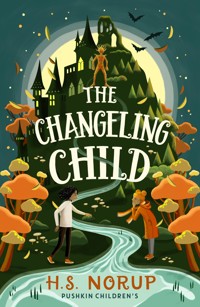
'A gripping, moving, perfectly crafted story... one of my books of the year' Sinéad O'Hart, author of The Eye of the North Freja arrives in Singapore during the month of the hungry ghost, when old spirits are said to roam the streets. She's struggling to settle into her dad's new, 'happy' family, and dreams only of escaping home and leaving this hot, unfamiliar city. Then one night, a mysterious girl in a white dress appears in the garden. Freja follows this figure to lush, secretive corners of the city, seeking to understand the girl's identity. Her search will lead her to an old family mystery - one that must be unravelled before the month is over, to allow both girls to be freed from the secrets of the past.
Das E-Book können Sie in Legimi-Apps oder einer beliebigen App lesen, die das folgende Format unterstützen:
Veröffentlichungsjahr: 2020
Ähnliche















![Tintenherz [Tintenwelt-Reihe, Band 1 (Ungekürzt)] - Cornelia Funke - Hörbuch](https://legimifiles.blob.core.windows.net/images/2830629ec0fd3fd8c1f122134ba4a884/w200_u90.jpg)



3
5
For my mum, Lis Sidelmann Jørgensen (1942–1990) Always part of my life. 6
Contents
—1—
You can’t see the stars here in Singapore. Ghostly, dimmed spots fade in and out on a sky that’s not black but a murky, yellowy grey.
“I can’t see the stars today, Freja.” That’s what Mum always says when she’s sad. Even if it’s the middle of the day.
Are the stars invisible here, or is it just me?
I give up on finding a star, and slump back into the cushions on the deep window seat. The only sound in the silent house is the low hum of the air-con unit. It blasts cool air down on my shoulders. Flyaway strands of hair blow into my eyes. I think about retying my ponytail.
It’s midnight, but I’m wide awake. My watch still shows the time in Denmark. Six o’clock. I don’t want to set it to Singapore time yet. Perhaps I have jet lag, because it feels like my whole body is confused.
I’m not sure when yesterday ended and today began. The two have blended into one endless day, where too many things happened. I remember looking at my watch exactly 8twenty-four hours ago, at six o’clock. That was when Aunt Astrid, Mum’s sister, handed me over to Dad in Copenhagen airport, like I was a parcel being passed on.
Outside the window, tips of twigs scratch against the glass. The tree’s so close I think I could jump to the nearest thick branch, if I had to escape. But where would I go?
Singapore is 10,071 kilometres away from home. The distance is almost impossible to understand. Once, with my scouting troop, we hiked thirty kilometres in one day, to get the activity badge. Even if I walked that far every single day, it would take more than eleven months to get back to Mum.
In the light from the yellowy sky, I can make out shapes in the room. My suitcase lies open on the floor, spilling a jumble of stuff I had to take out to find my pyjamas. The only other things I’ve unpacked are my compass and the Swiss Army knife Dad gave me last summer for my eleventh birthday.
A beanbag leans against an empty bookcase. Two framed posters hang above the bed. One is of Mount Everest and the other of a jungle waterfall. Dad might have chosen them. And only them. Everything else in the room is pink and girly. Chosen by Her. My stepmother. Clementine.
I open the window to take a closer look at the tree, because a scout should always be prepared. The hot air that streams inside is sticky and dense, making me cough. It smells like something somewhere is burning. That calms me a bit, because bonfire smoke is my favourite scent.
Cicada song and something louder—frogs or perhaps toads—sound like an orchestra during warm-up. If they’re toads, then I hope they’re edible, unlike the ones we have 9in Denmark. I’ll ask Dad tomorrow. It sounds like there are lots of them, and that could be handy in a survival situation.
I’m glad I have rope in my suitcase, because the thick branch is further away than I thought, and it’s too risky to jump from the first floor. Below, outdoor lights are burning on the covered terrace. Part of a sun lounger is visible next to the swimming pool. Behind the pool, which isn’t even fenced in, the lawn and an overturned tricycle lie in half-darkness under a row of palm trees and flowering bushes. At the back of the garden, where a high hedge blocks the view of the neighbours, something’s moving.
A tall man sneaks along the hedge. He’s talking. I pull the window almost closed and creep back until I’m kneeling on the floor, peeking down into the garden.
The man is near the house before he steps out of the shadow under the trees. Light from the terrace falls on his yellow hair. It’s Dad! He must be on the phone again, having another business call with someone in London or New York.
I get up and lean out of the window.
“Dad,” I call in a stage whisper, expecting him to look up and wave.
He doesn’t. Still muttering, his arms by his sides, his hands empty, he turns and walks away from the house. He’s wearing PJ bottoms and a T-shirt. No pockets. So where’s his phone?
“Dad,” I call again, a bit louder. He still doesn’t react. Why can I hear him, when he can’t hear me? And who’s he talking to at this hour, if he isn’t on the phone?
When Dad reaches the high hedge and changes direction again, a bright patch starts following him. It looks like a person. As they get closer to the house, I see that it’s a girl 10in a knee-length white dress. Graceful as a ballet dancer, she cranes her long neck. One thin hand—with the palm turned up—stretches towards me, in either a dance move or a plea for help.
Dad isn’t talking any more, and he doesn’t pay any attention to the girl. It’s almost as if he doesn’t know she’s there. Before they emerge from the shadows, the girl pirouettes and turns away, with a swirl of waist-length dark hair.
Who is she? And what’s she doing here in the middle of the night?
I get down and rummage through the suitcase to find my big torch. But when I return to the window, the girl has vanished. And so has Dad.
The stairs creak. Dad crosses the landing outside my room. If he can’t sleep either, perhaps we can go downstairs and have a night-time chat. I want to ask him about the girl.
After springing across the room, I open the door and stick my head out, just as the door to the master bedroom closes. In the glow from the night light on the landing, I notice the letters again. Wooden animal letters glued to the outside of my door: a frog, a rabbit, an elephant, a jellyfish, an alligator. They spell my name: FREJA.
I remember a door with letters like these when I was little. I think there was a monkey too. But there’s no M in my name, so that memory must be false.
The letters remind me that this isn’t just a holiday. That this is my room. My room for the next year, in my new home, with my new happy family.
—2—
After another glance down into the empty garden, I flop onto the bed and lie on my back, drawing circles on the ceiling with the beam of my torch. I catch a small gecko in the light. Lizards, Clementine called them, when she screamed for Dad to get rid of one downstairs. This one’s right above my head, hanging from its cute miniature hands and feet. Its tiny heart makes its rubbery body quiver.
“Hey Lizzie,” I whisper.
Hang in there, she seems to say. Turned topsy-turvy, she dances to the wall and straight down behind the framed poster of Mount Everest.
But I’m not sure I can.
I roll myself into the duvet and try to pretend it’s Mum, hugging me like she did yesterday morning. Through her sobs, she kept repeating that this was a wonderful opportunity for me. She was crying so much my cheeks were wet with her tears. I didn’t cry—I never cry—but I wouldn’t let 12go of Mum. When Aunt Astrid said it was time to leave, a nurse had to help her prise us apart.
The pretend hug isn’t working.
As I roll out of the duvet, it hits the bedside table. The pink lampshade wobbles. My Swiss Army knife falls down, hitting the floor with a thwack.
The familiar smooth shape is cold when I pick it up, but quickly warms in my hand under the pillow. Remembering that I nearly lost it, my heart starts thumping. If Dad hadn’t asked me to check my pockets before he hoisted my suitcase up onto the conveyor belt, they would have taken my knife at security, and that would’ve been a catastrophe.
Since the divorce, I’ve flown to London to visit Dad loads of times on my own. I’ve always remembered to put the knife in my suitcase. But while we were waiting in the queue at the check-in counter, Aunt Astrid and Dad had a long, hushed conversation about Mum, and that made me forget.
Aunt Astrid was winding the extra-long sleeves of her home-knitted cardigan around her thumbs, enlarging some of the holes. Sentences and bits of orange yarn fluff drifted back to where I stood behind them.
Twice she said, “Freja needs to be part of a normal, happy family,” and three times: “I don’t blame you, Will.” She only once whispered, “Now Marianne can focus on her own healing, without having to worry about Freja,” but I heard it as clearly as if she’d shouted it through a megaphone, because that’s the reason I’ve agreed to leave home. To leave Mum. Without me there, perhaps she can stop being sad.
Thinking about Mum makes my belly ache. I get up and go back to the window to look for the mysterious girl. 13
Nothing stirs in the garden. But I can’t wait until tomorrow to ask Dad about her.
On tiptoes, I cross the landing to the master bedroom door. At home, I’d barge into the room and cuddle up next to Mum under her duvet. But here… I raise my hand to knock, then lower it again. Because if I knock, it might not be Dad who answers.
On the way back to my room, I hurry past the other door with wooden letters. There’s a whole zoo—with bears and lions and elephants and other animals, but no monkeys—spelling out Billy and Eddie.
My mind skips back to when Dad and I were sitting in the enormous plane to Singapore. He took my hand in both of his and said, “I’m so, so happy you’re coming to stay with us. The twins are going to love having a big sister.”
I’m sure he felt me trying to pull away, because he gripped my hand tighter. But by then there was no turning back; the doors were closed and the plane was taxiing out to the runway.
“Your shooting-star wish came true,” I said.
“It really did. That was a fantastic week, wasn’t it?”
I nodded.
Last summer, on our canoeing trip in the Swedish wilderness, I’d used every one of my new Swiss Army knife’s thirty-two features—even the fish scaler and the hook disgorger. It had been the best holiday ever. At least, until the last evening.
After a day of paddling, we’d eaten a meal of two campfire-grilled trout I’d caught and gutted all by myself. Like the other nights, we’d been lying on our sleeping mats, 14between our rain-poncho bivouac and the bonfire. Dad had been telling a story from when he was young and went on mountaineering expeditions. I’d told him about the raft we’d built at scout camp. We’d made it out of old oil drums, logs and rope, to escape an imaginary wildfire. That’s my favourite thing about being a scout: learning to survive.
Trillions of bright stars had been lighting up the dark-blue sky. Then one of them fell, leaving a blazing trail. Dad had told me his wish was that I’d come and live with them in Singapore. It ruined everything.
In the aeroplane seat next to me, Dad beamed, as if he’d completely forgotten I had said no. As if he didn’t know I was coming with him against my will.
And here I am, on the other side of the world.
Back in bed, I try to spot Lizzie without turning on the torch. When I can’t find her, I close my eyes, but it’s impossible to fall asleep. My head is too full of new impressions: the enormous plane, the endless pattern of the carpeted airport corridors, palm trees and exotic flowers, and cascading water inside the air-conditioned terminal.
Outside the terminal, the air was so hot and choking that it felt like being hugged by someone sweaty you don’t like. But before I could tear off my hoody, we’d jumped into a freezing cold taxi, and Dad rattled off the address.
“ECP can? Got jam on PIE, lah.” The taxi driver squinted at us in the rear-view mirror.
“Can,” Dad said. He was writing messages on his phone, like he’d been doing while we waited for our luggage and at the immigration counter.
“I didn’t know you speak Chinese, Dad?” 15
“Chinese? Ha!” He leant towards me and whispered, “That’s English. Well, Singlish. Everyone cuts all unnecessary words when they speak.”
“People must be very busy, if they don’t have time to speak in full sentences.”
“You’re right about that.” He frowned and stared back down at his screen.
The driver sped up and slowed down repeatedly, tapping out a rhythm on the accelerator. It made me rock back and forth and feel slightly carsick. I rested my head against the window.
Gnarled trees spread their arms above all eight lanes of traffic. Beams from the setting sun were filtered through the web of branches.
Dad was on his phone, talking about contracts and dollars.
When we drove over a bridge, up above the crowns of the trees, an immense Ferris wheel and a skyline of weirdly shaped buildings appeared. The sky glowed orange behind them.
I sat up straight. I’d never seen anything like it. It was as if I’d time-travelled to a futuristic planet. But before I had a chance to study the buildings, they were gone, and we were on a busy road with coloured lights and throngs of people everywhere. Moments later there were fewer people and more trees—orderly lines of trees—and many high-risers, some so thin they looked like matchsticks that could easily break.
The taxi stopped on a quiet street, outside the gate to a detached two-storey house. Dad pressed a buzzer on the gate, and the front door flew open. 16
The twins came running outside, yelling, “Daddy, Daddy!”
After putting our suitcases down, Dad swung both of them around. They were all laughing. Clementine pulled me into an awkward side-hug, in which her chin bumped against my cheek. She asked about the trip, before she joined their group in a family hug. A happy family hug.
She freed one arm and held it towards me, waving me closer, but Eddie or Billy—I can’t tell them apart—wiggled down. He picked up a toy car. When the other twin followed, the family hug dissolved. The boys chased each other into the house, running away from me. It was probably for the best.
—3—
There’s a bright edge along the side of the darkening curtains, when I wake up. My watch says it’s almost six o’clock, so I guess it must be noon here. I can’t wait to ask Dad about the girl and what he’s planned for us to explore today.
From the room next door, I can hear squeals and the quiet voice of Maya, the maid, shushing the twins. Last time I saw them, before they all moved from London to Singapore, the boys could only crawl and were too small to get into trouble. Now, they’re running around, climbing up on things, falling down. I’ll have to find a way to avoid them.
My trouser pockets clang when I put on my combats. They might be a bit warm for Singapore, but none of my shorts have as many useful pockets, and I need space for my compass, a map, the Swiss Army knife, my notebook and the rest of my survival kit, if I’m to go hiking with Dad.
In my very own en-suite bathroom, I wash the gunk out of my eyes. There’s no point taking a shower before going hiking. Although I let the cold tap run for a while, the water 18stays lukewarm. Lizzie the lizard observes me from above the mirror. My hair’s a bird’s nest of yellow straw. When I pull it back into a ponytail, Lizzie nods in approval.
While I’m padding downstairs, I survey the big open room. On the right, the lounge—with its two white sofas, pastel-coloured cushions, and small tables with vases and flowers—looks like something from a glossy magazine. In the clinic’s waiting room last week, Aunt Astrid chuckled at a page with white furniture just like this and toddlers in matching white dresses and ironed shirts, saying, “Guess they don’t eat strawberry jam in that house.”
Left of the staircase is the dining area and a door to the kitchen. There’s one placemat at the far end of the dining table. Clementine sits at the other end. A pair of dark sunglasses on top of her head holds her shiny black hair in place. Her long red nails tap-dance on the keyboard of her laptop.
“Morning,” I mumble.
“Good morning, Freja.” She turns to me, smiling widely, as if she’s actually happy to see me. “Did you sleep well? Are you hungry? What would you like? Toast? Yoghurt? Fruit? Orange juice?”
I shrug and nod. She saunters into the kitchen in her bare feet—they don’t wear shoes indoors here, she told me last night—and brings back a tray with all the things you’d normally get in a hotel. Including strawberry jam.
“Maya prepared everything for you and the other two monkeys a while ago.”
“Thanks.”
“Let me just share this post,” she says, while I take a slice of melon. 19
“Where’s Dad?” I ask, when she’s shut her laptop.
“Your daddy had to go to the office.”
“He left?” I put the toast I’ve buttered down. I can’t believe Dad would go to work on the first day I’m in Singapore! He told me he has the rest of the week off, so we could explore the island.
“But look at this little surprise he left for you.” Clementine hands me a gift-wrapped box.
Inside is a new iPhone.
“It’s all set it up with Wi-Fi and I entered your daddy’s and my own numbers, before I wrapped it,” Clementine says. “We’ll discuss rules for how much you play on it, later.”
I wish Dad had done those things. Perhaps he hasn’t even bought the phone himself. Her voice seems to be coming from far away. The bite of toast grows in my mouth and doesn’t want to be swallowed.
“I know your mummy didn’t have… er… a chance to go shopping with you, so I bought you a few absolutely necessary staples.” From one of the dining chairs, she lifts three gleaming shopping bags. “It was so much fun buying girly clothes for once…”
She begins taking things out of the bags and drapes them across the table: a white top with frills, pink cut-offs, a red swimsuit, a pale pink bikini with frilly edges and a matching sundress, a white summer dress, a dress with pink dots, and two pairs of flip-flops—pink and red.
“I couldn’t decide, so I took both,” she says with a giggle. Both pairs have heel straps, like the ones for small kids.
Last time I wore a dress, I was in third grade. It was at Aunt Astrid and Uncle Paul’s anniversary. Mum only noticed 20I wore shorts underneath the skirt when I was playing tag with my cousins on the dance floor. It’s one of the times I remember hearing her laugh a real belly laugh.
I know I should be grateful, and I’m trying to smile, but I can’t imagine ever wearing any of it. Frilly and white clothes are utterly useless in survival situations. And there’s an overall lack of pockets. Mum wouldn’t have bought me these kinds of clothes.
I push the thought away, because she didn’t buy the clothes I’m wearing now. Aunt Astrid did.
I swallow. It feels like there’s still a lump of toast stuck in my throat.
“I suppose this isn’t exactly your style, so I also found these for you.” Clementine extracts three plain T-shirts and two pairs of combat shorts. One pair is light brown, and the other is my favourite shade of olive green. Both have flowery embroidery on their side pockets, which are so big they make up for the decorations. I want to put the olive ones on right away.
“Thank you,” I say, pulling the shorts towards me and feeling the soft cotton of the T-shirts. The red swimsuit turns over as I pull. It has a small zipped pocket on the back—large enough for my Swiss Army knife.
Mum’s far away, and Dad isn’t here. Clementine is. For a moment, I want to hug her. If I’m not careful, I’m going to end up liking Clementine. Her smile is so big and obvious with that red lipstick, as if she wants to infect everyone with her own happiness. As if it were easy to make other people happy.
—4—
After the twins have taken their nap, we walk to the Botanic Gardens. Clementine wants us out of the house while the pest control men are fumigating. They begin “fogging”, as she calls it, before we’ve left.
“Can the other insects survive?” I ask. The whole garden is already hidden under a mosquito-killing mist. “Beetles and bees are really important.”
“It’s more important that we don’t get dengue fever. Last year there was an outbreak in our area.” Clementine hurries away from the house and the foul-smelling, poisoned air.
The Botanic Gardens are beautiful. Plants in hues of lush green, with colourful explosions of exotic flowers, line the pathways. Tourists flock around statues and take selfies in front of water fountains. They waddle through themed areas with signs describing the flora in great detail. Hordes of men in yellow wellies rake and sweep, grooming the gardens. It’s all very impressive, but it has nothing to do with the kind 22of wilderness I like. I guess that’s going to be hard to find here in Singapore.
We feed fish and terrapins in one of the lakes. Every time a small turtle head pops out of the water to gobble one of the pellets they’ve thrown, the twins giggle. Their shiny black hair stands up at the back. It sways when they rock the double stroller back and forth. I’m glad Clementine keeps them strapped in.
On the way back, we pass a thicket of mangrove trees. Countless roots fan out around their trunks and plunge into the swampy bank of the lake. Half-hidden behind this natural shelter, a huge monitor lizard sweeps its metre-long tail over the ground, right next to the path. Clementine walks faster, but I stay a moment to watch it scrape in the dirt, searching for insects and worms. It looks prehistoric, like a dinosaur who forgot to die out.
The mist and the stink are gone when we return to the house, but Clementine wants to keep the twins indoors. I go to the pool in my new red swimsuit. It fits me perfectly and my Swiss Army knife fits perfectly in the little pocket.
I walk to the far end of the lawn, but there isn’t a back entrance where the girl I saw last night might’ve slipped out of the garden. Thinking back, it seems strange and unreal. Why didn’t Dad pay any attention to the girl, when she was so obviously trying to get him to notice her?
The long trip and the time difference had made me a bit woozy. Perhaps I dozed off while sitting in the window seat and dreamt the whole thing. 23
After a swim, I lie on a lounger and try to read. The sun has disappeared behind the trees. It’s still hot and so humid, it feels like the air is perspiring. Although I’m not moving, beads of sweat slide down my arm. They drip from my elbow and land on a flip-flop. One of the new red ones. My swimsuit isn’t dry, but it’s not the least bit cold. There’s no risk of catching a chill, like there would be at home.
Inside, Clementine’s working on her laptop. Every now and then I hear her talking on the phone. She’s arranging some kind of fancy party.
The hum of distant traffic and cicadas makes me drowsy. The muggy air is like a heavy duvet, pressing down on me. The letters in my book run together. Yawning, I put the paperback down and jump into the pool.
The water cools me and the black spots in my vision disappear. Lying back, I float, with lazy kicks of my feet, from one end of the pool to the other.
Suddenly, I have the eerie feeling that someone’s watching me.
But there’s no one on the terrace or inside the house behind the sliding glass doors. Nothing stirs in any of the upstairs windows either.
Standing up in the pool, I turn slowly and scan the garden.
In the dappled shade under a palm tree near the hedge, I spot a white shape.
The reflections on the water make it difficult to see clearly into the shadows, but I think it’s the girl from last night.
“Hi,” I call over, and I wade through the water towards her. “I’m Freja. Who’re you?” 24
The girl just stands there. She looks like she could be my age. If I have a friend who lives around here, it will be much easier to avoid spending time with the twins.
As I pull myself out of the pool, I glance down for a split second. When I look up again, she’s gone, as if by a trick of light.
“Hey, wait! D’you live next door?” I sprint across the grass and stop where she stood.
There’s no sign of her. The air under the tree is chilly, as if cooled by air con. Goose pimples appear on my arms. The wet swimsuit feels cold.
I’m right by the gap in the hedge, and I press branches of a shrub aside, trying to enlarge the hole, expecting to see into the next garden.
I peer through the opening. There’s a panelled wooden fence behind the hedge, and a board is missing. On the other side, water trickles in the metre-deep drain, and a car drives past. It's a side street, not a garden.
Even though I’m thin, I’d never get through the narrow gap in the fence. If the girl climbed over, then I’m impressed, because it’s high and smooth, without any ridges or footholds.
She can’t have vanished into thin air. There must be a trick to getting in and out of the garden. Perhaps a secret passage.
I’m going to find her so she can show me.




