


1,99 €
Niedrigster Preis in 30 Tagen: 0,00 €
Niedrigster Preis in 30 Tagen: 0,00 €
Mehr erfahren.
- Herausgeber: Musaicum Books
- Kategorie: Ratgeber
- Sprache: Englisch
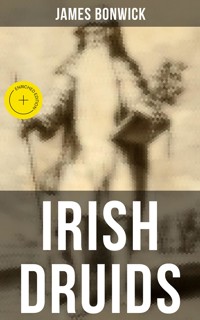
In 'Irish Druids' by James Bonwick, readers are taken on a detailed exploration of the history and practices of the ancient Druids in Ireland. Bonwick dives into the religious beliefs, rituals, and societal roles of these enigmatic figures, shedding light on a fascinating aspect of Celtic culture. Written in a scholarly and informative tone, the book provides a comprehensive overview of Druidism and its influence on Irish society. Bonwick's work is rich in historical references and archaeological evidence, making it a valuable resource for anyone interested in Celtic studies or religious history. The book serves as a window into a mysterious and often misunderstood aspect of ancient Irish life. James Bonwick, a respected historian and folklorist, brings his expertise to 'Irish Druids', drawing on years of research to present a thorough account of Druidism in Ireland. His passion for preserving and sharing the cultural heritage of the Celts is evident in the depth of detail and analysis found within the pages of this book. As a renowned authority on Celtic history, Bonwick's work continues to be a cornerstone for scholars and enthusiasts alike. For readers seeking a scholarly and in-depth exploration of the ancient Druids in Ireland, 'Irish Druids' by James Bonwick is a must-read. Whether you are a student of history, folklore, or Celtic spirituality, this book offers a compelling look into a significant aspect of Ireland's past. Bonwick's meticulous research and engaging writing style make this book a valuable addition to any library. In this enriched edition, we have carefully created added value for your reading experience: - A succinct Introduction situates the work's timeless appeal and themes. - The Synopsis outlines the central plot, highlighting key developments without spoiling critical twists. - A detailed Historical Context immerses you in the era's events and influences that shaped the writing. - A thorough Analysis dissects symbols, motifs, and character arcs to unearth underlying meanings. - Reflection questions prompt you to engage personally with the work's messages, connecting them to modern life. - Hand‐picked Memorable Quotes shine a spotlight on moments of literary brilliance. - Interactive footnotes clarify unusual references, historical allusions, and archaic phrases for an effortless, more informed read.
Das E-Book können Sie in Legimi-Apps oder einer beliebigen App lesen, die das folgende Format unterstützen:
Veröffentlichungsjahr: 2022
Ähnliche








Irish Druids
Published by
Books
Table of Contents
Introduction
Between dim pre‑Christian rites and the encroaching light of Christianization, Irish Druids probes how a culture remembers what it cannot fully recover. James Bonwick approaches the subject as an investigator of traces: scattered chronicles, persistent folkways, and stories that gesture toward an older religious imagination. Rather than offering an unbroken narrative, the book assembles evidence into suggestive patterns, asking readers to listen for echoes within landscape, language, and ritual memory. Its abiding tension lies in balancing reverence for the past with scrutiny of sources, producing a study that is at once evocative and cautious about what can be claimed with certainty.
James Bonwick’s Irish Druids is a work of nineteenth‑century antiquarian nonfiction that surveys spiritual traditions associated with pre‑Christian Ireland and their survivals in later lore. Written and published in the late nineteenth century, it reflects the era’s appetite for comparative religion and the cataloging of national antiquities. Its setting is historical rather than novelistic: Ireland’s mythic past and early medieval transitions form the book’s field of inquiry. The volume synthesizes materials available to its time, presenting them in a methodical, reference‑minded manner characteristic of Victorian scholarship, without claiming definitive closure on contested questions.
Readers encounter a guided tour through figures and practices attributed to the druidic milieu, along with the sacred places, seasonal observances, and symbols that frame them within Irish tradition. Bonwick’s voice is earnest and synthesizing, drawing together classical notices, early Irish writings, and vernacular sayings into a layered portrait that privileges collation over storytelling. The style is discursive, evaluative, and occasionally conjectural by the standards of its day, yet it aims for clarity and breadth, offering an accessible entry point into a topic where the documentary record is fragmentary and often debated.
It is a study of continuities and breaks: how rites migrate into custom, how sacred offices shift into clerical or poetic roles, and how landscapes preserve meanings when texts do not. The book foregrounds encounters between indigenous belief and Christianity, examining points of accommodation as well as moments of erasure. Nature itself—stones, trees, waters, and sky—emerges as a persistent theater of devotion, suggesting a spirituality entwined with place. Throughout, Bonwick raises questions about memory, authority, and transmission, asking what survives, what changes, and what modern readers must acknowledge as irretrievably lost.
Because the subject resists straightforward documentation, the work operates within a comparative framework typical of its century, sometimes placing Irish materials alongside accounts from other ancient religions to illuminate possible affinities. That method invites productive hypotheses while also demanding careful, critical reading of the assumptions underlying such juxtapositions. Modern audiences can recognize both the diligence of the compilation and the constraints of its sources, including the biases of classical writers and the retrospective framing of medieval authors. The book remains most valuable when approached as a curated archive of references rather than a final verdict.
For contemporary readers, Irish Druids matters as more than an antiquarian curiosity. It helps clarify how narratives about Celtic antiquity are constructed, circulated, and contested, a useful lens amid renewed popular interest in ancestral traditions. The attention to ritual embedded in landscape resonates with current studies in environmental humanities and heritage preservation. Equally, the text provides an early map of debates that continue today—questions of authenticity, syncretism, and appropriation—encouraging a discerning approach to cultural memory that honors sources while resisting romantic simplifications. It also models how careful citation can coexist with imaginative reconstruction, a balance still sought in public histories and museum interpretation.
Approached with historical awareness, the book offers a thoughtful passage into Ireland’s older religious imagination without claiming to possess it. Readers will find a steady accumulation of testimonies, interpretations, and conjectures presented in measured prose, inviting reflection rather than spectacle. As an introduction to the topic, it supplies coordinates—names, motifs, places—that later scholarship may refine, but it retains a distinctive value as a witness to nineteenth‑century inquiry. To read Irish Druids today is to engage both the subject and the study of the subject, a double perspective that rewards patience and curiosity.
Synopsis
Irish Druids by James Bonwick is a late-nineteenth-century inquiry into the pre‑Christian religious landscape of Ireland and the figure of the druid within it. Bonwick assembles testimony from classical writers, medieval Irish manuscripts, antiquarian reports, and living folklore to sketch the structures of belief and practice that preceded and overlapped early Christianity. Throughout, he emphasizes the fragmentary and partisan nature of the evidence, noting that much survives through Christian redactors or external observers. The book’s stated task is comparative as well as descriptive, setting Irish materials beside those of Britain and continental Celts, and, at times, broader Indo‑European parallels.
Early chapters delineate who the druids were said to be in an Irish context: a learned order associated with sacred lore, divination, law, and education. Bonwick collates saga references and legal notices portraying druids as advisers to chieftains, arbiters of ritual correctness, and keepers of memory in a predominantly oral culture. He distinguishes them from, yet links them to, bards and seers, tracing how functions overlapped across priesthood, poetry, and jurisprudence. Training, discipline, and the disciplined use of speech emerge as recurrent motifs, as do depictions of druids mediating between human communities and the unseen powers governing fate, seasons, and social harmony.
He next surveys rituals and cosmologies attributed to pre‑Christian Ireland. Seasonal observances tied to fire and light are explored alongside reverence for wells, trees, and prominent stones. Methods of augury and ordeal appear as techniques for discerning divine will, while invocations and charms are presented as specialized speech acts. Bonwick situates such practices within wider Celtic patterns known from Britain and Gaul, noting likenesses without erasing local distinctions. He also inventories beings and names preserved in literature and folk belief—gods, heroes, and otherworldly races—treating these as refracted memories of earlier cults rather than as a single authoritative pantheon.
Material traces occupy a substantial portion of the study. Bonwick catalogs megalithic tombs, stone circles, and standing pillars, asking what, if anything, they reveal about druidic rites. The discussion extends to the inscribed Ogham alphabet, the storied Stone of Destiny, and the ceremonial landscape of royal sites such as Tara. He devotes particular attention to Ireland’s round towers, reviewing competing nineteenth‑century theories of origin and purpose and weighing arguments for pre‑Christian or ecclesiastical associations. Throughout, he favors an evidential survey over definitive verdicts, using monuments and inscriptions to frame questions about continuity, adoption, and the reinterpretation of sacred space.
The narrative then turns to the meeting of old faith and new. Drawing on hagiographies and annals, Bonwick recounts episodes in which saints confront or outmaneuver druids, reading these contest scenes as both theological polemic and testimony to a transitional era. He examines how practices could be redirected rather than erased, with holy wells, seasonal fires, and hilltop gatherings persisting under Christian auspices. Rather than presenting conversion as a single rupture, the book treats it as a long accommodation in which language, sites, and festive calendars were recoded, leaving traces that later folklore and local custom continued to transmit.
Social institutions form a parallel strand. Bonwick considers the learned classes in relation to early Irish law, the authority of poets, and the organization of knowledge in schools and households. He surveys funerary customs and wakes, charms and amulets, and stories of omens or taboo as survivals or echoes of an earlier religious ethos. In each case he assembles testimonies rather than pressing a single thesis, inviting readers to notice recurring symbols—fire, boundary, oath, and blessing—across legal formulae and folk usage. The result is a portrait of religion as practice embedded in governance, kinship, and everyday speech.
While some comparative leaps reflect its era, Irish Druids endures as a compact gateway to sources and debates about Ireland’s ancient religion. Its value lies less in conclusive reconstruction than in mapping the questions—about priesthood and poetry, monument and myth, rupture and survival—that organize the field. By juxtaposing texts, place‑names, monuments, and living traditions, Bonwick offers a framework for thinking about cultural memory and religious change without presuming a single master narrative. The book’s lasting resonance is in its invitation to read Ireland’s sacred past as a layered palimpsest, cautious about certainty yet attentive to durable patterns.
Historical Context
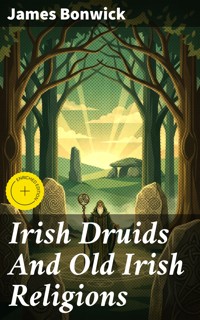
Irish Druids and Old Irish Religions by James Bonwick appeared in the late Victorian period, widely cited as 1894, when Britain and Ireland were saturated with interest in antiquity. Bonwick, an English-born educator and historian (1817–1906), assembled popular syntheses from libraries and learned societies rather than original fieldwork. His subject is pre-Christian Ireland, viewed from London and Dublin’s scholarly institutions, notably the Royal Irish Academy and the Royal Society of Antiquaries of Ireland, whose publications shaped public discourse. The work addresses religion, ritual, and lore attributed to “Druids,” engaging an audience already exposed to lectures, museum displays, and serial essays on Celtic antiquity.
The historical Druids known to classical writers belonged chiefly to Iron Age Gaul and Britain. Authors such as Julius Caesar, Strabo, Pliny the Elder, and Tacitus described priestly castes, sacrifices, and legal authority, though their accounts were filtered through Roman agendas. Evidence for Druids in Ireland is far thinner and mostly retrospective. Ireland’s conversion to Christianity in the fifth century, associated with the mission of Saint Patrick, produced hagiographies that depict confrontations with magicians or Druids at royal sites such as Tara. Early medieval Irish law tracts and annals preserve pre-Christian terms and institutions, giving later scholars a framework—however fragmentary—for reconstructing ritual and belief.
Much of what nineteenth-century readers knew of early Ireland came through medieval manuscripts and their modern editions. Compilations like the Book of Leinster and the Book of Ballymote, along with narrative collections such as Lebor Gabála Érenn and the Annals of the Four Masters, provided myths, genealogies, and pseudo-history. Scholars including John O’Donovan, Eugene O’Curry, James Henthorn Todd, Whitley Stokes, and Kuno Meyer edited, translated, or analyzed these texts. The Brehon Law Commission (1852–1907) published volumes of the Ancient Laws of Ireland. The Ordnance Survey’s nineteenth‑century place‑name work gathered local lore, creating a textual base that writers like Bonwick mined for religious themes.
An older antiquarian tradition framed how Druids were imagined. Eighteenth‑century writers such as William Stukeley and Charles Vallancey linked megaliths and customs to biblical or oriental origins, proposals later criticized but widely read. In Wales, Iolo Morganwg’s late eighteenth‑century “Gorsedd” ceremonies fostered a British Druid revival intertwined with the Eisteddfod. In Ireland, scholars like George Petrie and the Kilkenny Archaeological Society (later the Royal Society of Antiquaries of Ireland) advanced more careful study of monuments, even as popular culture retained romantic images of “Druid altars.” Bonwick’s audience approached Irish paganism through this blend of speculative ancestry and improving archaeological caution.
The nineteenth century also professionalized field archaeology. General Augustus Pitt‑Rivers promoted stratigraphic recording and typology in the 1880s, influencing practice across Britain and Ireland. Megalithic tombs and ceremonial sites—such as those at Brú na Bóinne (Newgrange, Knowth, and Dowth)—were increasingly documented by surveyors and antiquaries. Ogham inscriptions drew scholarly attention; Sir Samuel Ferguson’s 1887 study surveyed examples in Ireland, Wales, and Scotland. Expanding museum collections in Dublin and London exhibited prehistoric and early medieval artifacts to the public. This evidentiary turn tempered earlier conjecture and supplied Bonwick with material anchors for discussing ritual, magic, and memory.
Intellectual currents of the era favored broad comparison across religions and cultures. Edward B. Tylor’s Primitive Culture (1871) articulated an evolutionary anthropology of animism. F. Max Müller popularized comparative mythology through Indo‑European linguistics. James G. Frazer’s The Golden Bough began in 1890, interpreting ritual, kingship, and seasonal rites. Theosophical and occult societies also promoted interest in ancient wisdom. In Ireland and Britain, collectors such as T. Crofton Croker, Lady Wilde, and Douglas Hyde preserved stories of fairies, holy wells, bonfires, and seasonal customs. Bonwick’s discussions of fire rites, sun symbols, and magic reflect this synthesis of folklore archiving and comparative theorizing.
The political and cultural climate of the 1880s–1890s heightened demand for narratives about Ireland’s past. The Land War (1879–82) and Home Rule bills of 1886 and 1893 sharpened debates over identity and sovereignty. The Gaelic League, founded in 1893 by Douglas Hyde and others, promoted the Irish language. A wider Celtic Revival in literature and art—seen in Standish O’Grady’s heroic histories and W. B. Yeats’s early works—celebrated indigenous tradition. In this atmosphere, pre‑Christian religion became a resource for cultural self‑definition. Bonwick’s volume participated by collating tales, laws, and antiquities that seemed to illuminate an ancient, distinctly Irish spiritual inheritance.
As a synthesis, the book mirrors late Victorian strengths and weaknesses. It assembles classical testimonies, medieval Irish texts, folklore, and material remains, yet sometimes treats pan‑Celtic claims or solar and serpent cult theories with a credence typical of the time. Its tone valorizes Ireland’s antiquity while measuring it against universal patterns proposed by comparative scholars. That dual impulse—national recovery and global schema—reveals how nineteenth‑century readers framed pagan Ireland. Today the volume is read as a document of its moment, straddling antiquarian enthusiasm and the emerging rigor of philology and archaeology, and implicitly critiquing modernity through fascination with ancestral rites.
Irish Druids
PREFACE
Ireland, whether viewed from an antiquarian or an ethnological point of view, is one of the most interesting countries in the world. It is not the less an object of attention from the fact, that in its early history there are traces of nearly every kind of pagan belief.
It is curious that its literary treasures should have been so long neglected. Of late years, thanks to literary and scientific societies, including the new association fostered by Sir C. Gavan Duffy, Irish MSS. have engaged much thoughtful investigation.
The author of this work, conscious of the importance of inquiry into ancient faiths, has collected such information upon Irish religions as a lengthened course of general reading has thrown in his way, since it may benefit those who have less leisure or opportunity for research. He is content to state various views, presented in quotations from writers, rather than to put forth any special conjectures of his own. Examinations of old myths and folklore will often throw light upon current notions of nationalities.
This sketch of the ancient Irish mind might help to confirm the conviction that Religion, in the sense of a reverence for something beyond the individual, has been ever associated with human nature. Anything, however apparently absurd to some of us, that tends to restrain vice, and exalt virtue, is not to be despised in the development of our race. The heathen Irish had a worshipful spirit. As to their morals, they certainly honoured woman more than did the favoured Jews or accomplished Greeks.
The Druids, forming one subject of this publication, are still an enigma to us. They were, doubtless, neither so grandly wise, nor so low in reputation, as represented by tradition. Their ethical lessons must have assuredly prepared the way for Christian missions.
However open to criticism in literary merit, the book claims some kindly consideration, as coming from one who, in his seventy-seventh year, retains a confiding hope in the march of human intellect, and the growth of human brotherhood.
JAMES BONWICK
Norwood.
January 1, 1894
PART I IRISH DRUIDS
WHO WERE THE DRUIDS?
This question has agitated the minds of the learned for a long period; and various, as well as contradictory, have been the replies. Tradition preserves their memory as of a pious and superior race, prominently associated with the British Isles and France, and, in a lesser degree, with Belgium, Holland, Germany, and the lands of Scandinavia.
Much romance has been long attached to them. We hear their chants in the Stone Circles. We listen to the heaven-inspired utterances of the Archdruid, as be stands on the capstone of a cromlech, in the eye of the sun, surrounded by the white-robed throng, with the bowed worshippers afar. We see the golden sickle reverently cutting off the sacred mistletoe. We follow, in imagination, the solemn procession, headed by the cross-bearer. We look under the old oak at the aged Druid, instructing disciples in mystic lore, in verses never to be committed to writing. We gaze upon the assembly of kings and chieftains, before whom the wise men debate upon some points of legislation.
Then, again, we recognize the priests as patriots, resisting the invaders of their homes, and loudly chanting the Battle Hymn. We are at the convocation of Brehons, in their deliberations on law, and, awestruck, wait upon the observers of sun and stars, or of the signs of the times in the investigation of terrestrial phenomena. We go with them to the judgment upon offenders of an unwritten code, and witness the dread ordeal, or the fiery human sacrifice.
But our inquiry is, What has Irish tradition or literature to say to these interesting details concerning Druids?
Were the Irish Druids like those of whom we read belonging to other lands? Did they spring up from among the Irish people, or were they strangers from another and distant shore? Could they have formed a distinct community, like the tribe of Levi, intermarrying among themselves only? Amidst much ignorance, and even barbarism, can the Druids have been distinguished by the learning and refinement attributed to them?
With our conceptions of the ancient religions of Ireland, should we credit the Druids with the introduction 'of Sun worship, Serpent reverence, and the adoration of Idols? Were they, on the contrary, new corners, arriving subsequent to the establishment of these various forms of paganism, and merely known a little before the rise of Christianity in Erin?
WELSH OR BRITISH DRUIDISM.
Druidism has been of late years so persistently appropriated by the Welsh, that English, Scotch, and Irish have seemed to have no part in the property. Even Stonehenge has been claimed by the Welsh, on the very doubtful story of the Britons, Cæsar's Teutonic Belgæ, being driven by Romans to Wales. The true Welsh--the Silures, or Iberians--were in the land before the Romans appeared. Gaels from Ireland, Cymry from Scotland and England, Belgæ from Germany, Bretons, Britons, Saxons, Normans, English, Irish, and Flemings go to make up the rest. We know nothing of Welsh prehistoric races.
Even allowing cromlechs, circles, and pillar-stones to be called Druidical, there are fewer of these stone remains in Wales than in Scotland, Ireland, England, or France. As to other antiquities, Ireland is richer than Wales in all but Roman ruins.
It is hard upon Ireland that her Druids should have been so long neglected, and the honours of mystic wisdom become the sole possession of Wales. It is true, however, that the Irish have been less eager about their ancestral glory in that aspect, and have not put forward, as the Welsh have done, a Neo-Druidism to revive the reputation of the ancient Order. But Ireland had its Druids, and traditionary lore testifies that country in the acknowledgment of those magi or philosophers.
The Welsh have a great advantage over the Irish in the reputed possession of a literature termed Druidical[1q]. They assume to know who the Druids were, and what they taught, by certain writings conveying the secret information. The Irish do not even pretend to any such knowledge of their Druids. The Welsh, therefore, look down with pity upon their insular neighbours, and plume themselves on being the sole successors of a people who were under true Druidical teaching, and whose transmitted records reveal those mysteries.
The revival of the ancient faith, in the organization called Druids of Pontypridd,--having members in other parts of Wales, but claiming a far larger number of adherents in America,--has given more prominence to Druidical lore. The fact of the late simple-minded but learned Archdruid, Myfyr Morganwg, a poet and a scholar, after thirty years' preaching of Christianity, publicly proclaiming the creed of his heathen forefathers, has naturally startled many thoughtful minds. The writer can affirm, from personal knowledge of Myfyr, that he was no pretender, but an absolute believer in the tenets he taught; it is not therefore surprising that students of anthropology should inquire into this revival.
Such teaching is quite different from the Neo-Druidism which arose a few years ago, and whose imaginative interpretation of writings in Welsh, under the names of Taliesin, &c., were endorsed by several distinguished ministers of the Christian religion. Neo-Druidism was brought forward at Eisteddfods, and works were written to show that Welsh Druidism was simply the truth as recorded in the biblical account of the Hebrew Patriarchs.
The Pontypridd Archdruid held quite another doctrine. He embraced within his fold not only Abraham, Isaac, and Jacob, but the promulgators of Hindooism, Buddhism, and all the ancient systems of so-called idolatry. He recognized his principles in them all, as they simply represented the forces of Nature, under the guise of personalities.
The mantle of the octogenarian leader has fallen upon Mr. Owen Morgan, better known as Morien, long an able and voluminous writer for the Press. His version of Welsh Druidism can be studied in the recently published Light of Britannia. He assumes for his Druids the priority of learning. From the mountains of Britain proceeded the light which produced the wisdom of Egypt, Babylon, Persia, India, Phœnicia, Judea, and Greece.
They who deem this too large a draft upon faith for acceptance, will assuredly discover in that unique work a mass of curious facts bearing upon ancient science, and be constrained to admit that the Light of Britannia is not the product of unreasoning Welsh enthusiasm, but is among the most candidly expressed books ever printed.
It was Dr. Lanigan who asserted, "The Christian missionaries early opened schools in opposition to Druids." It was the opinion of Arthur Clive that much Druidism "blended with the Christian learning of the seventh and subsequent centuries." The same might be affirmed of Welsh Druidism. Alluding to an astronomical MS. of the fourteenth century, Clive says, "I believe that it, or rather the knowledge which it contains, is a Druidic survival, a spark transmitted through the dark ages." Gomme tells us, "that Druidism continued to exist long after it was officially dead can be proved."
Dr. Moran, Bishop of Ossory, in his Irish Saints, associates the Welsh Saint David with an Irish Druid. St. David was the son of an Irish Christian lady. He came to Menevia, on the Welsh promontory, made a fire on the shore, and its smoke filled the land. The Bishop then goes on to say:--
"The owner of the district was an Irishman, named Baya, a pagan and a Druid. He was one of those successful rovers who years before had carved out territories for themselves on the Welsh coast, and continued to hold them by the sword. He was filled with horror when he saw the smoke that arose from St. David's fire, and cried out to those that were with him, 'The enemy that has lit that fire shall possess this territory as far as the smoke has spread.' They resolved to slay the intruders, but .their attempt was frustrated by a miracle. Seeing this, Baya made a grant of the desired site, and of the surrounding Country, to St. David, whose monastery quickly arose."
Welsh patriotic zeal would receive a shock from Professor O'Curry's statement. "It appears then that it was from Erinn that the Isle of Mona (Anglesey) received its earliest Colony; and that that colony was of a Druidical people." This view has been supported by other testimony. The Welsh Cerrig Edris (Cader Idris) has been identified with the Irish Carrick. Carrick Brauda of Dundalk, like Carig Bradyn of Mona, was renowned for astronomical observations.
Owen Morgan, in the Light of Britannia, has brought forward authorities to support his theory that the Welsh, at any rate, could claim for ancestors the Druids of classical writers. But Leflocq declares the language of the so-called Welsh Druids of the early Christian centuries is modern; and that even Sharon Turner--"for the mythological poems dare not assign them to the sixth century, nor attribute them to Taliesin." He considers the mystery of the Bards of Britain consists of a number of Christian sentences, interpreted according to the arbitrary system of modern mysticism; and concludes, "Such are the narrow bases of the vast pre-conceived system of our days as to the true religion of the Gauls."
But Rhys in Celtic Britain asserts that "the Goidelic Celts appear to have accepted Druidism, but there is no evidence that it ever was the religion of any Brythonic people." Again, "The north-west of Wales, and a great portion of the south of it, had always been in the possession of a Goidelic people, whose nearest kinsmen were the Goidels of Ireland."--"The Brythonic Celts, who were polytheists of the Aryan type; the non-Celtic natives were under the sway of Druidism; and the Goidelic Celts, devotees of a religion which combined polytheism with Druidism." He says the word Cymry "merely meant fellow-countrymen"; though, as he adds, "The Cymry people developed a literature of their own, differing from that of the other Brythonic communities." He makes Carlisle the centre of their influence before coming down into Wales.
The assumptions of Welsh advocates may not be very satisfactory to scholars, and all we know of Irish Druids furnishes little evidence for romantic conclusions; but why should tradition hold so tenaciously to the theory? Making all allowance for extravagance of views, and their variety, it is not easy to explain these early and particular accounts.
Although Welsh Druidism is represented by Welsh writers as being so different from the Gaulish, as pictured by French authors, or the Irish of Irish scholars, a few words may be allowed from the publication of the enthusiastic Morien of Wales.
"It is evident," says he, "that the Druid believed in the eternity of matter in an atomic condition, and also in the eternity of water; and that the passive, that is, the feminine principle of the Divine nature, pervaded both from eternity."--"He imagined a period before creation began, when darkness and silence pervaded illimitable space."--"The Sun is the son of the Creator, who is referred to by the Druids as the higher sun of the circle of Infinitudes above the Zodiacal Sun."--"Wherever the solar rites relating to the ancient worship had been performed, those places were still regarded by the masses as sacred."
The Annwn[1] of Morien is Hades or Erebus, and that "of northern ideas is cold." Of the Archdruid he says, "The Divine Word incarnate, such was our Druidic High Priest;" especially when standing on the Logan stone. The Holy Greal was the cauldron of Ceridwen, or Venus. The Druids' ecclesiastical year commenced at midnight, March 20-21.
God was regarded through the symbol of three letters / | or rods, representing the light, or descent of rays, the true Logos, Hu, the divine Sun, was the Menw incarnate. The grave is the matrix of Ced, who bears the same relation to Venus as the Creator does to Apollo the Sun. The twelve battles of Arthur, or the Sun, relate to the signs of the Zodiac, Morien observes two sects in Druidism--the party of the Linga, and that of the Logos. His Druidism is simply solar worship,--or, in another sense, pure Phallicism. According to him, "The Christian religion is scientifically arranged on the most ancient framework of British Druidism."
A perusal of Morien's Light of Britannia will give the reader an explicit account of the mystery of Welsh Druidism, but fail to prove its identity with Irish Druidism; although the connection of Ireland with Wales was most intimate before the Danish invasion, traditional Irish saints having converted to Christianity their wilder neighbours of North and South Wales, as they did of those in Cornwall and other places.
The Druid, according to Morien, and his distinguished master, the Archdruid Myfyr Morganwg, was a more picturesque individual than the person figured by Irish writers, and he is strictly associated with so-called Druidical circles, cromlechs, &c. Stonehenge and Avebury, not less than Mona and Pontypridd, are claimed as the scenes of their performances. All that tradition has represented them, or poets have imagined them, the Druids were in the estimation of modern Welsh authorities.
"Theirs were the hands free from violence, Theirs were the mouths free from calumny, Theirs the learning without pride, And theirs the love without venery."
They were more than what Madame Blavatsky said--"only the heirs of the Cyclopean lore left to them by generations of mighty hunters and magicians." They were, as Diodorus declared, "Philosophers and divines whom they (Gauls) call Saronidæ, and are held in great veneration." Myfyr left it on record, "That the Druids of Britain were Brahmins is beyond the least shadow of a doubt."
Much has been written about Druids' dress, their ornaments, and the mysteries of their craft,--as the glass boat, the cup, the cross, &c. Archdruid Myfyr, at Pontypridd (not Dr. Price), explained to the present writer, his processional cross, with movable arms; his wonderful egg, bequeathed from past ages; his Penthynen, writing rods, or staff book; his rosary,--used by ancient priests, not less than by modern Mahometans and Christians; his glass beads; his torque for the neck; his breastplate of judgment; his crescent adornments; his staff of office, &c.
The staff or Lituus was of magical import. Wands of tamarisk were in the hands of Magian priests. The top of such augur rods were slightly hooked. One, found in Etruria, had budded in the hand. The barsom, or bundle of twigs, is held by Parsee priests. Strabo noted twigs in hand at prayer. The Thyrsus had several knots. Prometheus hid the fire from heaven in his rod.
Glass was known in Egypt some three or four thousand years before Christ. Amber beads--Hesiod's tears of the sisters of Phœbus--were in use by Phœnicians, brought probably from the Baltic. Torques have been found in many lands. As Bacon remarked, "Religion delights in such shadows and disguises."
Nash, in his remarks upon the writings of Taliesin, writes:--"The only place in Britain in which there is any distinct evidence, from the Roman authorities, of the existence of Druids, should be the Isle of Anglesey, the seat of the Irish population before the migration (from Scotland) of the Cambrian tribes, the ancestors of the modern Welsh." He thus fixes the Irish Druids in Wales.
While history and philology are tracing the great migration of Cambrians into North Wales from Scotland, where their language prevailed before the Gaelic, why is North Britain so little affected with the mysticism associated with Welsh Druidism? A natural reply would be, that this peculiar manifestation came into Wales subsequent to the Cambrian migration from the Western Highlands through Cumberland to the southern side of the Mersey, and did not originate with the Cambrian Druids. It must not be forgotten that two distinct races inhabit Wales; the one, Celtic, of the north; the other, Iberian, dark and broad-shouldered, of the south. Some Iberians, as of Spain and North Africa, retain the more ancient language; others adopted another tongue. Many of the so-called Arabs, in the Soudan, are of Iberian parentage.
No one can read Morien's most interesting and suggestive Light of Britannia, without being struck with the remarkable parallel drawn between the most ancient creeds of Asia and the assumed Druidism of Wales. The supposition of that industrious author is, that the British Druids were the originators of the theologies or mythologies of the Old World.
Ireland, in his calculation, is quite left out in the cold. Yet it is in Ireland, not in Wales, that Oriental religions had their strongest influence. That country, and not Wales, would appear to have been visited by Mediterranean traders, though tradition, not well substantiated, makes Cornwall one of their calling-places.
IRISH DRUIDISM.
Turning to Irish Druidism, we may discern a meaning, when reading between the lines in Irish MSS., but the mystery is either not understood by the narrators, or is purposely beclouded so as to be unintelligible to the vulgar, and remove the writers (more or less ecclesiastics) from the censure of superiors in the Church. Elsewhere, in the chapter upon "Gods," History, as seen in lives of Irish heroes and founders of tribes, is made the medium for the communication, in some way, of esoteric intelligence. If the Druids of Erin were in any degree associated with that assumed mythology, they come much nearer the wisdom of British Druids than is generally supposed, and were not the common jugglers and fortune-tellers of Irish authorities.
As the popular Professor O'Curry may be safely taken as one leading exponent of Irish opinion upon Irish Druids, a quotation from his able Lectures will indicate his view:--
"Our traditions," says he, "of the Scottish and Irish Druids are evidently derived from a time when Christianity had long been established. These insular Druids are represented as being little better than conjurers, and their dignity is as much diminished as the power of the King is exaggerated. He is hedged with a royal majesty which never existed in fact. He is a Pharaoh or Belshazzar with a troop of wizards at command; his Druids are sorcerers and rain-doctors, who pretend to call down the storms and the snow, and frighten the people with the fluttering wisp, and other childish charms. They divined by the observation of sneezing and omens, by their dreams after holding a bull-feast, or chewing raw horseflesh in front of their idols, by the croaking of their ravens and chirping of tame wrens, or by the ceremony of licking the hot edge of bronze taken out of the rowan-tree faggot. They are like the Red Indian medicine men, or the Angekoks of the Eskimo, dressed up in bull's-hide coats and bird-caps with waving wings. The chief or Arch-Druid of Tara is shown to us as a leaping juggler with ear clasps of gold, and a speckled cloak; he tosses swords and balls into the air, and like the buzzing of bees on a beautiful day is the motion of each passing the other."
This, perhaps, the ordinary and most prosaic account of the Irish Druid, is to be gathered from the ecclesiastical annals of St. Patrick. The monkish writers had assuredly no high opinion of the Druid of tradition; and, doubtless, no respect for the memory of Taliesin or other members of the Craft.
Nevertheless, we should bear in mind that these same authorities took for granted all the stories floating about concerning transformations of men and women into beasts and birds, and all relations about gods of old.
O'Beirne Crowe has some doubt about Druid stories and primitive missionaries. He finds in the Hymn of St. Patrick the word Druid but once mentioned; and that it is absent alike in Brocan's Life of St. Brigit, and in Colman's Hymn. "Though Irish Druidism," says he, "never attained to anything like organization, still its forms and practices, so far as they attained to order, were in the main the same as those of Gaul."
Those Christian writers admitted that the Druids had a literature. The author of the Lecan declared that St. Patrick, at one time, burnt one hundred and eighty books of the Druids. "Such an example," he said, "set the converted Christians to work in all parts, until, in the end, all the remains of the Druidic superstition were utterly destroyed." Other writers mention the same fact as to this burning of heathen MSS. Certainly no such documents had, even in copies, any existence in historic times, though no one can deny the possibility of such a literature. The Welsh, however, claim the possession of Druidic works. But the earliest of these date from Christian times, bearing in their composition biblical references, and, by experts, are supposed to be of any period between the seventh and twelfth centuries. Villemarque dates the earliest Breton Bards from the sixth century; other French writers have them later.
At the same time, it must be allowed that early Irish MSS., which all date since Christianity came to the island, contain references of a mystical character, which might be styled Druidical. Most of the Irish literature, professedly treating of historical events, has been regarded as having covert allusions to ancient superstitions, the individuals mentioned being of a mythical character.
A considerable number of such references are associated with Druids, whatever these were thought then to be. Miracles were abundant, as they have been in all periods of Irish history. The Deity, the angels, the spirits of the air or elsewhere, are ever at hand to work a marvel, though often for little apparent occasion. As the performances of Saints are precisely similar to those attributed to Druids, one is naturally puzzled to know where one party quits the field and the other comes on.
A large number of these references belong to the Fenian days, when the Tuatha Druids practised their reported unholy rites. Thus, Teige was the father of the wife of the celebrated Fenian leader, Fionn MacCurnhaill, or Fionn B'Baoisgne, slain at Ath-Brea, on the Boyne. But Matha MacUmoir was a Druid who confronted St. Patrick. St. Brigid was the daughter of the Druid Dubhthach. The Druid Caicher foretold that the race he loved would one day migrate to the West.
In Ninine's Prayer it is written--
"We put trust in Saint Patrick, chief apostle of Ireland; He fought against hard-hearted Druids."
As told by T. O'Flanagan, 1808, King Thaddy, father of Ossian, was a Druid. Ierne was called the Isle of learned Druids. Plutarch relates that Claudius, exploring, "found on an island near Britain an order of Magi, reputed holy by the people." Tradition says that Parthalon, from Greece, brought three Druids with him. These were Fios, Eolus, and Fochmarc; that is, observes O'Curry, "if we seek the etymological meaning of the words, Intelligence, Knowledge, and Inquiry."
The Nemidians reached Ireland from Scythia, but were accompanied by Druids; who, however, were confounded by the Fomorian Druids. At first the Nemidians were victorious, but the Fomorian leader brought forward his most powerful spells, and forced the others into exile. Beothach, Nemid's grandson, retired with his clan to northern Europe, or Scandinavia; where "they made themselves perfect in all the arts of divination, Druidism, and philosophy, and returned, after some generations, to Erinn under the name of the Tuatha de Danaan[3]." The last were most formidable Druids, though overcome in their turn by the Druids of invading Milesians from Spain.
There were Druids' Hills at Uisneath, Westmeath, and Clogher of Tyrone. The Draoithe were wise men from the East. Dubhtach Mac Ui' Lugair, Archdruid of King Mac Niall, became a Christian convert. The Battle of Moyrath, asserted by monkish writers to have taken place in 637, decided the fate of the Druids. And yet, the Four Masters relate that as early as 927 B.C., there existed Mur Ollavan, the City of the Learned, or Druidic seminary.
Bacrach, a Leinster Druid, told Conchobar, King of Ulster, something which is thus narrated:--"There was a great convulsion. 'What is this?' said Conchobar to his Druid. 'What great evil is it that is perpetrated this day? 'It is true indeed,' said the Druid, 'Christ, the Son of God is crucified this day by the Jews. It was in the same night He was born that you were born; that is, in the 8th of the Calends of January, though the year was not the same. It was then that Conchobar believed; and he was one of the two men that believed in God in Erinn before the coming of the faith."
Among the names of Druids we have, in Cormac's Glossary, Serb, daughter of Scath, a Druid of the Connaught men; Munnu, son of Taulchan the Druid; and Druien, a Druid prophesying bird. D. O. Murrim belonged to Creag-a-Vanny hill; Aibhne, or Oibhne, to Londonderry. We read of Trosdan, Tages, Cadadius, Dader, Dill, Mogruth, Dubcomar, Firchisus, Ida, Ono, Fathan, Lomderg the bloody hand, and Bacrach, or Lagicinus Barchedius, Arch-druid to King Niall.
Druidesses were not necessarily wives of Druids, but females possessed of Druidical powers, being often young and fair.
Some names of Druidesses have been preserved; as Geal Chossach, or Cossa, white-legged, of Inisoven, Donegal, where her grave is still pointed out to visitors. There was Milucradh, Hag of the Waters, reported to be still living, who turned King Fionn into an old man by water from Lake Sliabh Gullin. Eithne and Ban Draoi were famous sorcerers. Tradition talks of Women's Isles of Ireland, as of Scotland, where Druidesses, at certain festivals, lived apart from their husbands, as did afterwards Culdee wives at church orders. On St. Michael, on Sena Isle of Brittany, and elsewhere, such religious ladies were known. Scotch witches in their reputed powers of transformation were successors of Druidesses.
Several ancient nunneries are conjectured to have been Druidesses' retreats, or as being established at such hallowed sites. At Kildare, the retreat of St. Brigid and her nuns, having charge of the sacred fire, there used to be before her time a community of Irish Druidesses, virgins, who were called, from their office, Ingheaw Andagha, Daughters of Fire. The well-known Tuam, with its nine score nuns, may be an instance, since the word Cailtach means either nun or Druidess. On this, Hackett remarks, "The probability is that they were pagan Druidesses." Dr. O'Connor notes the Cluan-Feart, or sacred Retreat for Druidical nuns. It was decidedly dangerous for any one to meddle with those ladies, since they could raise storms, cause diseases, or strike with death. But how came Pliny to say that wives of Druids attended certain religious rites naked, but with blackened bodies? Enchantresses, possessed of evil spirits, like as in ancient Babylon, or as in China now, were very unpleasant company, and a source of unhappiness in a family.
The Rev. J. F. Shearman declared that Lochra and Luchadmoel were the heads of the Druids' College, prophesying the coming of the Talcend (St. Patrick), that the first was lifted up and dashed against a stone by the Saint, the other was burnt in the ordeal of fire at Tara, that the Druid Mautes was he who upset the Saint's chalice, and that Ida and Ona were two converted Druids.
The Synod of Drumceat, in 590, laid restrictions on Druids, but the Druids were officially abolished after the decisive Battle of Moyrath, 637. The bilingual inscription of Killeen, Cormac--IV VERE DRVVIDES, or "Four True Druids," was said to refer to Dubhtach Macnlugil as one of the four, he having been baptized by Patrick.
Dr. Richey may be right, when he says in his History of the Irish People:--"Attempts have been made to describe the civilization of the Irish in pre-Christian periods, by the use of the numerous heroic tales and romances which still survive to us; but the Celtic epic is not more historically credible or useful than the Hellenic,--the Tam Bo than the Iliad." It is probable that the readers of the foregoing tales, or those hereafter to be produced, may be of the same opinion Not even the prophecy of St Patrick's advent can be exempted, though the Fiacc Hymn runs --
"For thus had their prophets foretold then the coming Of a new time of peace would endure after Tara Lay desert and silent, the Druids of Laery Had told of his coming, had told of the Kingdom."
Ireland had a supply of the so-called Druidical appendages and adornments. There have been found golden torques, gorgets, armillæ and rods, of various sorts and sizes. Some were twisted. There were thin laminae of gold with rounded plates at the ends. Others had penannular and bulbous terminations. Twisted wire served for lumbers or girdle-torques. A twisted one of gold, picked up at Ballycastle, weighed 22 oz. Gorgets are seen only in Ireland and Cornwall. The Dying Gladiator, in Rome, has a twisted torque about his neck.
The gold mines of Wicklow doubtless furnished the precious metal, as noted in Senchus Mor[2]. Pliny refers to the golden torques of Druids. One, from Tara, was 5 ft. 7 in. long, weighing 27 ozs. A Todh, found twelve feet in a Limerick bog, was of thin chased gold, with concave hemispherical ornaments. The Iodhan Moran, or breastplate, would contract on the neck if the judges gave a false judgment. The crescent ornament was the Irish Cead-rai-re, or sacred ship, answering to Taliesin's Cwrwg Gwydrin, or glass boat. An armilla of 15 ozs. was recovered in Galway. The glass beads, cylindrical in shape. found at Dunworley Bay, Cork, had, said Lord Londesborough, quite a Coptic character. The Druid glass is Gleini na Droedh in Welsh, Glaine nan Druidhe in Irish.
The Dublin Museum--Irish Academy collection--contains over three hundred gold specimens. Many precious articles had been melted down for their gold. The treasure trove regulations have only existed since 1861. Lunettes are common The Druids' tiaras were semi-oval, in thin plates, highly embossed. The golden breast-pins, Dealg Oir, are rare. Some armillæ are solid, others hollow. Fibulæ bear cups. Torques are often spiral. Bullæ are amulets of lead covered with thin gold. Circular gold plates are very thin and rude. Pastoral staffs, like pagan ones, have serpents twisted round them, as seen on the Cashel pastoral staff.
Prof. O'Curry says--"Some of our old glossarists explain the name Druid by doctus, learned; and Fili, a poet, as a lover of learning." But Cormac MacCullinan, in his glossary, derives the word Fili from Fi, venom, and Li, brightness; meaning, that the poet's satire was venomous, and his praise bright or beautiful. The Druid, in his simple character, does not appear to have been ambulatory, but Stationary. He is not entitled to any privileges or immunities such as the poets and Brehons or judges enjoyed. He considers the Druids' wand was of yew, and that they made use of ogham writing. He names Tuath Druids; as, Brian, Tuchar Tucharba, Bodhbh, Macha and Mor Rigan; Cesarn Gnathach and Ingnathach, among Firbolgs; Uar, Eithear and Amergin, as Milesians.
For an illustration of Irish Druidism, reference may be made to the translation, by Hancock and O'Mahoney, Of the Senchus Mor. Some of the ideas developed in that Christian work were supposed traditional notions of earlier and Druidical times.
Thus, we learn that there were eight Winds: the colours of which were white and purple, pale grey and green, yellow and red, black and grey, speckled and dark, the dark brown and the pale. From the east blows the purple Wind; from the south, the white; from the north, the black; from the west, the pale; the red and the yellow are between the white wind and the purple, &c. The thickness of the earth is measured by the space from the earth to the firmament. The seven divisions from the firmament to the earth are Saturn, Jupiter, Mercury, Mars, Sol, Luna, Venus, From the moon to the sun is 244 miles; but, from the firmament to the earth, 3024 miles. As the shell is about the egg, so is the firmament around the earth. The firmament is a mighty sheet of crystal. The twelve constellations represent the year, as the sun runs through one each month.
We are also in formed that "Brigh Ambui was a female author of wisdom and prudence among the men of Erin--after her came Connla Cainbhrethach, chief doctor of Connaught. He excelled the men of Erin in wisdom, for he was filled with the grace of the Holy Ghost; he used to contend with the Druids, who said that it was they that made heaven and the earth and the sea--and the sun and moon." This Senchus Mor further stated that "when the judges deviated from the truth of Nature, there appeared blotches upon their cheeks."
It is not surprising that Dr. Richey, in his Short History of the Irish People, should write:--"As to what Druidism was, either in speculation or practice, we have very little information.--As far as we can conjecture, their religion must have consisted of tribal divinities and local rites. As to the Druids themselves, we have no distinct information." He is not astonished that "authors (from the reaction) are now found to deny the existence of Druids altogether." He admits that, at the reputed time of St. Patrick, the Druids "seem to be nothing more than the local priests or magicians attached to the several tribal chiefs,--perhaps not better than the medicine-men of the North-American Indians."
As that period was prior to the earliest assumed for the Welsh Taliesin, one is at a loss to account for the great difference between the two peoples, then so closely associated in intercourse.
The opinion of the able O'Beirne Crowe is thus expressed:--"After the introduction of our (Irish) irregular system of Druidism, which must have been about the second century of the Christian era, the filis (Bards) had to fall into something like the position of the British bards.--But let us examine our older compositions--pieces which have about them intrinsic marks of authenticity--and we shall be astonished to see what a delicate figure the Druid makes in them." On the supposition that Druidism had not time for development before the arrival of the Saint, he accounts for the easy conversion of Ireland to Christianity.
It is singular that Taliesin should mention the sun as being sent in a coracle from Cardigan Bay to Arkle, or Arklow, in Ireland. This leads Morien to note the "solar drama performed in the neighbourhood of Borth, Wales, and Arklow, Ireland."




