


Erhalten Sie Zugang zu diesem und mehr als 300000 Büchern ab EUR 5,99 monatlich.
- Herausgeber: THP Ireland
- Kategorie: Abenteuer, Thriller, Horror
- Sprache: Englisch
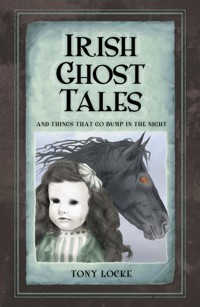
Do ghosts exist, do supernatural beings walk the land and do creatures linger in the shadows. Are legends of blood-sucking creatures based on some truth found on the edges of reality? Within these pages Tony Locke will take you on a journey through the magical land of Erin. You will explore castles and graveyards, and be introduced to banshees, warlocks, spectres, poltergeists and the Undead. You will read about the spirit of a child that possesses a doll, the vengeful druid who guards a tomb and the ghost of a cannibal woman who enjoyed eating children. Based on the myths and legends of Ireland, these tales have been collected and retold by professional storyteller Tony Locke. So why not pull up a chair and sit awhile? You know you're never too old for a story.
Sie lesen das E-Book in den Legimi-Apps auf:
Seitenzahl: 246
Veröffentlichungsjahr: 2015
Das E-Book (TTS) können Sie hören im Abo „Legimi Premium” in Legimi-Apps auf:
Ähnliche

















To Angela, Amanda and Siobhán
ACKNOWLEDGEMENTS
This book would not have been possible without the help and support of a number of people. My wife spent endless hours both proofreading and illustrating the stories in this volume. Her advice and encouragement were invaluable. I would also like to acknowledge the help and support of my family and my publisher, whose guidance throughout is deeply appreciated.
I acknowledge, too, all storytellers past and present. A story does not become a story until it is shared and in the sharing it makes the journey a little shorter and a lot more enjoyable.
Finally, thank you to all those things that go bump in the night, be they real or imaginary.
CONTENTS
Title
Dedication
Acknowledgements
Introduction
1. The Banshee
2. Duckett’s Grove
3. Horrible Happenings at Hungry Hall
4. Haddock’s Ghost
5. Noreen, the Ghost Doll
6. Francis Tumblety (1833-1903)
7. The Barnes Mystery
8. Leap Castle, the Most Haunted Castle in Ireland
9. Legends of Howth Castle
10. Loftus Hall
11. Ross Castle
12. The Legend of Petticoat Lucy
13. The Arney Woman
14. The Bogeyman
15. Rawhead
16. Mary Butters (
c
. 1770-1850)
17. The Coffin
18. The Miser’s Coffin
19. The Cooneen Ghost
20. The Hellfire Club
21. The Irish Resurrection Men
22. Margorie McCall
23. The Undead Priest
24. Abhartach, the Vampire
25. The Legend of Carrickaphouka Castle
26. The Open Grave
27. The Black Hag of Shanagolden Abbey
28. The Ghost of Shanagolden Abbey
29. The Radiant Boy
30. The Changeling
31. The Scarecrow
32. Alexander Colville, the Devil Doctor
33. Florence Newton, the Witch of Youghal
34. Lady Betty (1750-1807)
35. Biddy Early (1798-1874)
36. The Lighthouse Keeper
37. A Druid’s Ghost
38. The Island Magee Witches
39. The Black Dog
40. The Black Pig
41. The Black Cat
42. The Black Goat
43. The Pooka
44. The Poltergeist of County Mayo
45. Things That Go Bump in the Night
About the Author
Copyright
INTRODUCTION
Do ghosts exist? Do supernatural beings walk the land? And do creatures linger in the shadows? Are legends of bloodsucking creatures based on some truth found on the edges of reality? In this collection, Tony Locke will take you on a journey through the magical land of Erin. As you turn the pages, you will find a host of dark spectral beings just waiting to take you by the hand, from banshees to the undead, witches and warlocks to the vengeful druid who guards a tomb. You will explore castles and graveyards and you will be introduced to the spirit of a child that possesses a doll, the horror of being buried alive and the cannibal woman who enjoyed eating children. As night-time approaches and darkness descends you may turn on the light but remember this: it is because of the light that shadows exist.
Stories told by the ancients around campfires right up to tales told by present-day storytellers or seanchaithe are here, waiting for you to begin your journey.
So why not pull up a chair and sit awhile? You know you’re never too old for a story.
Things that go Bump in the Night
There are ghosties and ghoulies that can give you a fright
When you’re tucked up warm in your bed.
There are things that sometimes go bump in the night –
Or are they just inside your head?
A creaking staircase, a scratch on the door,
A poltergeist carries its head.
The sounds of footsteps crossing the floor –
My god, I’m afraid of the dead.
They may not be real, but that’s not how I feel
As I lie here shaking in fright,
I don’t know why I make such a big deal
When things go bump in the night.
Now please do not laugh or think me a fool
just because I’m afraid of the dead.
you see, life is cruel and now I’m a ghoul
and I’m lying here under your bed.
I’m sorry for making you feel so afraid
As you lie there, shaking with fright
But you see now I’m dead, I’m inside your head –
A thing that goes bump in the night.
1
THE BANSHEE
NATIONWIDE
When most people mention a banshee they speak of it as a harbinger of death. However, the banshee’s true role, according to Irish folklore, is as a protector or guardian-angel spirit. She appears shortly before a death occurs in one of the families she guards. I describe it as a ‘she’ for the banshee is traditionally female in appearance.
The banshee’s method of foretelling death in times past differs from the present day: now she wails and wrings her hands as a general rule, but in the old Irish tales she is often described as washing human heads and limbs, or bloodstained clothes, until the water runs red with human blood. This would take place before a battle. So it would seem that over the course of the centuries the banshee has evolved and adopted more acceptable habits.
Depending on the observer, the banshee can appear in many different guises. Sometimes she is young and beautiful and sometimes she is old and haggard. One person may describe her as tall and thin while another will describe her as very small and old.
The banshee is said to follow certain old Irish families, usually those that have an O or Mac prefix, but this may not always be the case as there have been many references to banshees appearing before the death of certain Anglo-Norman families or Anglo-Irish families. It has been suggested that a banshee will even follow a family that emigrates and reference has been made to Irish families whose descendants in countries such as America or Australia have been visited by a banshee.
Traditionally the banshee will appear before a death and wail and scream. She will be heard by members of the family but may also be heard by others in the area. One such incident occurred in 1938 when the Giant’s Grave in County Limerick was excavated and the bones taken to a nearby castle. It was said that those who heard the wailing of the banshee described it as if ‘every banshee in Ireland was keening’. This may not be that unusual as there have also been reports of large numbers of banshees forecasting the death of major religious or political figures.
In 1437, King James I of Scotland was approached by an Irish seer or banshee who foretold his murder at the instigation of the Earl of Atholl. This is an example of the banshee appearing in human form. There are records of several human banshees or prophetesses attending the great houses of Ireland and the courts of local Irish kings. In some parts of Leinster, she is referred to as the keening woman whose wail can be so piercing that it shatters glass. In Kerry, the keen is experienced as a ‘low, pleasant singing’; in Tyrone as 'the sound of two boards being struck together’; and on Rathlin Island as ‘a thin, screeching sound somewhere between the wail of a woman and the moan of an owl’.
The banshee is associated with the goddess in Irish mythology known as the Morrigan who is said to appear before a battle. She is also described as the ‘washer at the ford’. It has been suggested that she appears as a young woman who washes the clothes or shrouds of those who will lose their lives in the upcoming battle. The banshee may also appear in a variety of other forms, such as that of a hooded crow flying over the field of battle, a stoat, a hare, or a weasel – in fact most animals associated in Ireland with witchcraft.
The banshee is also known as the White Lady of Sorrow and the Lady of Death. Unseen, banshees attend the funerals of the beloved dead. Although sometimes she can be heard wailing, her voice often blends in with the mournful cries of others.
It is not known when the banshee first appeared but the first records to make mention of her date from the early eight century. She is said to be based on the old Irish tradition of women singing a lament to mourn the passing of a family member. This is commonly referred to as ‘keening’. Keeners were often frowned upon by the Christian Church and as punishment were said to have been turned into banshees by God. Another common explanation of the legend is that the cry of the barn owl is mistaken for that of the banshee. In ancient battles, owls would screech and take flight if they noticed an army approaching, which would forewarn the defending army. It is this screech that became associated with the banshee story.
2
DUCKETT’S GROVE
COUNTY CARLOW
There are several stories attached to Duckett’s Grove, giving it a well-rounded paranormal history. One of the main stories is that of the banshee. In Irish folklore, she’s often known to have long, flowing hair and to wear cloaks or shrouds. She is also known to use a comb to lure people. If you touch the comb, you will suffer dire consequences.
The banshee at Duckett’s Grove is said to have been a woman who William Duckett had an affair with. She was the daughter of a local farmer who died while riding her horse. After her death, her mother put the ‘Widow’s Curse’ on William and thus the Duckett banshee was born. It has been suggested that the banshee was heard wailing before a number of deaths on the estate. Witnesses claimed to have heard continuous wailing coming from the castle towers and this was said to have resulted in the sudden death of a woman who was walking along one of the paths. On another occasion a housekeeper saw the banshee several times in the castle and, fearing for her life, she abandoned her post, never to return. A man saw and heard the banshee as he walked within the walled garden of the property, then his mother died the following day. Coincidence or not?
There are other stories told about Duckett’s Grove. One story concerns a man on horseback who was riding by when his horse suddenly stopped and stared at the gate. The horse refused to move until the man placed his rosary beads on the horse’s neck. It then resumed its journey. How do you explain that? Could it be another coincidence?
In 1933 a fire broke out at the castle. Some people said that they had seen smoke coming from the castle a week earlier and their swift action at the time saved the castle. However, one week later they were not so lucky. The cause of the second fire was never determined.
The banshee is not the only spirit that is said to haunt Duckett’s Grove. Past members of the Duckett family, and even their servants, have been seen and heard on the property. There have been eyewitness accounts of mysterious lights, noises, voices, shadows, and ghostly figures appearing. On several occasions the sounds of servants working in the kitchens downstairs were heard, yet upon investigation nothing has been found. A phantom horse and carriage has also been seen in front of the castle. Could this carriage have been the Death Coach, on which the banshee is said to accompany the newly deceased on their final journey?
3
HORRIBLE HAPPENINGSAT HUNGRY HALL
COUNTY KILDARE
Hungry Hall is an old place name in the townland of Barreen and is situated approximately 150 yards south of Balraheen crossroads and one mile north of Rathcoffey. The name originates from a tragic series of events that took place in the 1800s. The gruesome story involves the disappearance of a number of young boys in the Rathcoffey area. Despite intensive searches and thorough investigations no trace of the missing children was ever found.
One day a man travelling in the Balraheen area close to Rathcoffey was passing by a house and needed to light his clay pipe. The house, in which an old woman and her son dwelled, was a thatched house with a half door. One record suggests that her son was away from the house at the time as he was a soldier in the British Army. The traveller was in the habit of getting a light for his pipe from the woman in the house. On this occasion he called the woman’s name, but he got no reply. As the door was open he decided to enter the house and light the pipe himself. There was a large pot over the fire. The traveller bent down to the fire to light his pipe. As he did so, he saw the foot of a young boy projecting from the pot. The unfortunate man got such a shock he immediately ran out from the house screaming.
The woman was arrested and eventually brought before the local magistrate, Thomas Wogan Browne from Castlebrown, now Clongowes Wood. The incident can be dated to the period when Wogan Browne served as magistrate: firstly, for some years before 1797 and secondly, for a four-year period between 1806 and 1810. At her trial she was accused of cannibalism. She pleaded guilty to the charge. Apparently she enticed the children into her house by offering them food. Wogan Browne was a landlord in the area. He informed her that he had many fine bullocks on his property and asked why she hadn’t just stolen one of his cattle if she was that hungry. To this she replied, ‘Your lordship, if only you tasted the flesh of young boys,’ which she described as being tastier than veal, ‘you would never eat another scrap of animal meat.’ This remark horrified the court and she was sentenced to death.
Executions during the period would usually take place at the scene of the crime. For instance, many highwaymen that were apprehended and convicted of robbery in the eighteenth and nineteenth centuries were brought back to the scene of their crime and hanged there. The execution of this woman took place close to her house at Barreen. There was a large tree beside the house, next to which there was a gate that led to the fields behind the house. A rope was attached to a branch of the tree and she was hanged.
One problem that arose was how to dispose of her remains. As one convicted of eating human flesh, she could not be interred in consecrated ground. This problem was solved by placing a barrel of tar under her body and setting it alight. Her body soon fell into the barrel and was consumed by the flames. She was regarded in the area as a witch and it has been suggested that her execution is the last recorded burning of a witch in the locality.
The house where she lived was never again occupied and soon became a ruin. The house and the adjoining division of land came to be known as ‘Hungry Hall’. In later years a black dog thought to be the witch in disguise was often seen running from Hungry Hall to the roads nearby.
The story of the horrific events at Hungry Hall was often told to children in order to get them to bed early, which is one of the reasons why the story survived in folklore. I must admit, it wouldn’t get me off to a good night’s sleep.
4
HADDOCK’S GHOST
COUNTY DOWN
One of the most famous ghost stories in Ireland is the story of Haddock’s ghost. It is a tale about a ghost who returns to right a wrong. James Haddock was a farmer who lived just outside Belfast. He died in 1657 but his spirit returned in order to demand justice be done and the rightful heir to his property recompensed. This story has added interest as the ghost of James Haddock was acknowledged by the celebrated bishop of the time, Dr Jeremy Taylor.
James Haddock had made a will in which he stipulated that his wife Arminell should receive his manor house and the land surrounding it. His young son John Haddock was to receive the rest of his property when he reached the age of 21. The executor of the will was a Mr Davis. Several years after James Haddock died Davis married Arminell and they had a son. Davis then altered Haddock’s will and named his own son as the beneficiary of James Haddock’s property instead of John Haddock, the rightful heir.
Davis might have succeeded with his deception except for a number of unusual events. Late one night at the end of September, Francis Taverner, a good friend of the late James Haddock, was on his way home to Hillsborough when his horse suddenly stopped on the Drum Bridge near Brumbeg. Taverner climbed down from his horse and attempted to lead it across the bridge when suddenly a figure in a white coat appeared. Taverner was shocked to see that this figure bore an uncanny resemblance to his old friend James Haddock, who had died five years previous. The ghostly figure begged Francis Taverner to help his son get his rightful inheritance but the stunned Taverner refused, jumped on his horse and galloped away.
Taverner was to claim later that a great wind rose up and he heard the sound of hideous screeches.
When he arrived home, Taverner fell to his knees and asked God for his protection. The following night, just after midnight, Taverner was sitting by the fire with his wife when James Haddock appeared again. Taverner’s wife didn’t see the ghost of Haddock as it appealed to her husband for help. Haddock pleaded with Taverner to go to his widow and tell her that justice must be done for their son John. Once again Taverner refused so the ghost visited him every night for the next month.
Shaken and afraid, Taverner left his home and fled to Belfast to take refuge with a friend, but it did him no good. Haddock’s ghost simply followed him. The ghost then demanded that Taverner go to Arminell and scold her in the harshest possible terms for her treatment of their young son. If Taverner continued to refuse then the ghost warned him that there would be severe consequences.
Taverner became desperate and went to his chaplain, John South. He confided in him all that had happened and begged him for guidance. The chaplain went to see the vicar of Belfast, Dr Lewis Downes, and the three men went to see Davis to share the ghost’s message with him. Davis laughed at them and refused point-blank to surrender the land.
The ghost of John Haddock told Taverner to take the matter to court. Taverner explained to the ghost the futility of such an action; he had no witness.
‘Never mind,’ said the ghost, ‘I’ll be there and I’ll appear when called upon.’
The court case to return the estate to John Haddock was held in Carrickfergus. The opposing council abused Taverner and challenged him to call upon his ghostly witness if he could. He even went as far as mocking Taverner and shouting, ‘James Haddock, James Haddock’. His tone became even more insulting as he uttered his third summons, to which he received a rather unexpected response.
It was reported that a loud clap of thunder shook the courthouse and a ghostly hand draped in a shroud slowly appeared from the witness box and a spectral voice sounded, ‘Is this enough?’
The courtroom erupted into chaos and, needless to say, the case was settled very quickly afterwards. Davis left the courthouse, heckled by the jeers and catcalls of onlookers. But Davis never made it home. As he was riding back to his house, he was thrown from his horse and broke his neck. After this, Haddock’s ghost never bothered Francis Taverner again. The tale of Haddock’s ghost was the talk of the countryside, so Bishop Jeremy Taylor held an inquiry and, after hearing all the evidence and listening to the accounts of all the witnesses, he deemed the story of James Haddock’s ghost to be true.
It was, he said, ‘the only ghost who ever answered a summons in a court of law’.
But there’s one final twist in the story. James Haddock was buried in Drumbeg parish church graveyard in the seventeenth century but it is said that his tombstone will not stand upright. Even after repeated attempts to place it in an upright position, it continues to fall over. It still lies flat on the ground of the family plot to this day, surrounded by moss and grass.
5
NOREEN, THE GHOST DOLL
COUNTY MAYO
There are two things that scare me: clowns and dolls. Don’t ask me why. I know they are irrational fears but there you have it. We’re all afraid of something, whether it’s the supernatural or something as simple as a knock on the door. I’d hate to be locked into a doll museum late at night with those evil-looking little glass eyes following me everywhere. Now, as a reasonably sane person (depending on your point of view), I realise that ghost dolls or haunted dolls aren’t real, but the irrational side of me wonders whether they might be …
A few years ago a woman I’ll call Mary bought an old doll she saw in a charity shop window. It was worn and a little sorry-looking but it had a certain attraction that she couldn’t explain.
When Mary returned home she put the doll on a chair in her bedroom. All went well for a couple of weeks until, one night, Mary had difficulty sleeping. She kept waking up from a nightmare. This was to happen night after night. Mary said that in her dream she was starving and her clothes hung loose and ragged from her thin body.
‘I remember looking out through a small window into the yard and seeing other people. They had the appearance of skeletons covered with yellow-looking skin. They didn’t walk; it was more of a shuffle. It was then that I would wake up with a terrible thirst.’
Mary started to leave a sandwich and a drink on her bedside table so that she could eat if she woke up in the middle of the night but even though she ate a big meal before bedtime and consumed the sandwich and drink when she woke during the night, it didn’t seem to work. She still woke up in the morning starving.
A visit to her doctor didn’t help either. She was given sleeping pills and told that she was suffering from anxiety brought about by some as yet unknown cause. The doctor told her to try to think of any changes she had made to her life recently, any new people she had met or new foods she had started eating, but Mary couldn’t think of anything that would account for her strange dreams. She began to look very drawn and dark shadows appeared under her bloodshot and tired eyes. She became nervous and was afraid to sleep. Soon people who knew her began to comment on her appearance. Some even began to suspect that she was suffering from some illness.
Her best friend eventually decided to question Mary to see if she could offer her any help. They sat at the kitchen table. One of the questions she asked her was whether Mary had introduced anything new or different into her home recently. The only thing Mary could think of was her purchase from the charity shop, the old doll. Her friend asked Mary if she could see the doll. Of course Mary thought that her friend had lost her mind but nevertheless she went to her bedroom and brought the doll into the kitchen.
As soon as she saw the doll her friend’s face changed. She began to cry and she looked incredibly sad. She told Mary that the doll was extremely sad and didn’t know where she was. She desperately wanted love and missed her mammy.
Over the next couple of weeks things got worse – cold air, unexplained noises, and the sound of a young child crying. Mary called her friend.
Her friend suggested that they call on the services of a local woman who had a reputation for being sensitive to those who have gone before. Some suggested that she had psychic abilities. Mary didn’t really believe in that sort of thing but she was willing to try anything, so she agreed.
When the woman arrived she knew immediately that there was a spirit in the house. She decided to conduct a séance and found that the spirit, which was in the body of the doll, was willing and eager to communicate. The spirit said that her name was Noreen and that she was only six years old when she died. Her father had left her and her mammy to find work on the roads scheme but didn’t come home so after a week or two her mammy had gone to look for him. Her mammy promised to be back shortly and told her to be a good girl. She was left with what little food they had. But even though she had been very good, her mammy and daddy didn’t come home. Eventually she decided to go looking for her parents as she had no food left and she was very hungry. She walked for days but the only people she saw were also starving. There was a very bad smell in the air and it made her feel sick.
Eventually she reached a small town and there she saw a big stone building. She thought it was bigger than the landlord’s house and was not surprised when she saw nuns outside. They were handing out bowls of something hot, so Noreen joined the long line. She said she was afraid that it would all be gone by the time she got to the front but eventually she was given a bowl of thin soup. The nun asked her where her parents were. Noreen told her she didn’t know, so the nun took her into the building and there she remained. She couldn’t get out. She said that shortly afterwards she began to feel very cold and everything was dark.
Mary couldn’t understand this until the medium explained that Noreen was describing her death. After some research Mary and her friends discovered the place Noreen had described. The stone building from her story turned out to be a workhouse, long gone now. The people who died there were buried in a mass grave; men, women, and children all thrown in together with no proper burial service. No record was kept of the children who died and were buried there so nothing could be done for Noreen’s spirit.
She still sits on her little chair in Mary’s bedroom but now she appears to be a little happier. Mary talks to her every night and Noreen feels loved at last. Sometimes Mary can hear singing at night. It is the sound of a child’s voice.
6
FRANCIS TUMBLETY (1833-1903)
LOCATION UNKNOWN
What is it that makes a series of horrific murders so fascinating for a particular group of people? This is the story of the first set of murders to cause a media frenzy and it remains unsolved. The mystery is as captivating today as it was over 120 years ago. There have been countless books written about it, television programmes and films made about the events, as well as stage shows and stories. Yet no one was ever apprehended, no one was convicted, no one ever served a single day in prison and the crimes remain unsolved. There is as much speculation now as there was in 1888-1891 as to who committed these horrific murders. The question remains: ‘Who was Jack?’
The last to fall victim to the knife of the Ripper was an Irishwoman called Mary Kelly, but there was another Irish connection. One of the least likely suspects was a rather dubious character called Francis Tumblety (1833-1903) who was thought to have been born in Ireland, although he may have been born in Canada. However, he certainly had Irish parents, named James and Margaret, and he was one of eleven children. He spent his early years in Rochester, New York, and it was there that his rather unsavoury personality was forged. Neighbours remembered him to be a dirty scruffy boy who was uneducated and always getting into trouble. By the time he was a teenager, Tumblety was working for a shady pharmacist and was also selling pornographic material. It looks like his life was mapped out.




