


Erhalten Sie Zugang zu diesem und mehr als 300000 Büchern ab EUR 5,99 monatlich.
- Herausgeber: The O'Brien Press
- Kategorie: Für Kinder und Jugendliche
- Sprache: Englisch
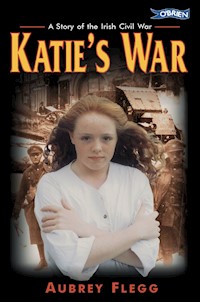
When Katie's father returns from the Great War, he is shell-shocked, his personality destroyed. Now, four years later he has more or less recovered, but another war is breaking out, this time at home in Ireland. The Treaty with the British has been signed by Michael Collins, but many disagree with it and want to continue the war for full independence. The country is on the brink of civil war. There are divided loyalties in Kate's family, and she has to choose whom she will support. Finally, she and the Welsh boy Dafydd make a bold plan to destroy an arms cache…
Sie lesen das E-Book in den Legimi-Apps auf:
Seitenzahl: 289
Veröffentlichungsjahr: 2012
Das E-Book (TTS) können Sie hören im Abo „Legimi Premium” in Legimi-Apps auf:
Ähnliche














![Tintenherz [Tintenwelt-Reihe, Band 1 (Ungekürzt)] - Cornelia Funke - Hörbuch](https://legimifiles.blob.core.windows.net/images/2830629ec0fd3fd8c1f122134ba4a884/w200_u90.jpg)




Reviews
KATIE’S WAR
— A STORY OF THE IRISH CIVIL WAR —
‘Very, very impressive indeed’ Robert Dunbar, The Gay Byrne Show
‘the writing is resonant and strong … the gripping climax is compelling reading’ Inis magazine
‘a dramatic book, full of history and action … 10 out of 10’ A child’s review, The Wicklow People
Special Merit Award to The O’Brien Press from Reading Association of Ireland
‘for exceptional care, skill and professionalism in publishing, resulting in a consistently high standard in all of the children’s books published by The O’Brien Press’
KATIE’S WAR
Aubrey Flegg
DEDICATION
To Jennifer and to the people of North Tipperary whose hospitality we enjoyed for three memorable years
ACKNOWLEDGEMENTS
I have received a lot of help during the writing of this book, chiefly with the history of the time. I must thank my mother, whose library of books and memories provided the core of my research. Pat Ryan of the Nenagh Guardian allowed me to leaf through his paper’s precious archive of back numbers. My thanks to local historians: Michael Joy of Curragh, who lent me his detailed notes on the history of the slate country around Portroe, and Sean Kierse of Killaloe, who helped me particularly with aspects of Katie’s education. Local historians must be the answer to the writer’s prayer.
Gordon Herries Davies and Geoffrey Martin advised me on aspects of war in the trenches. Philip Smyly helped me with Dafydd’s train journey through Dublin and also with a vivid personal memory of a Crossley Tender full of Black and Tans. Bobby Buckley helped me with the Latin Mass and Ms B. Davies of UCD kindly translated Dafydd’s few words of Welsh for me. My thanks to all of these. Any inaccuracies or biases which may have crept in are entirely of my making.
Finally, my thanks to my wife Jennifer, who has supported my aspirations as a writer over many years of aspiration. And to Íde ní Laoghaire and all at the O’Brien Press, who have worked so hard to make a book out of a mere manuscript.
CONTENTS
Reviews
Title Page
Dedication
Acknowledgements
1 The Black Dogs
2 The Handsome Soldier
3 Dafydd
4 Up the Republic
5 Frog!
6 Civil War
7 Informer!
8 Matches!
9 Hidden Arms
10 The Royal Court
11 Gunpowder
12 Traitor!
13 Secrets in Welsh
14 Father’s Poppy
15 Haymaking
16 Surprise Visitor
17 Dafydd’s Plan
18 Counting Elephants
19 A Miracle from God!
20 The Search
Epilogue
A Brief History of Katie’s Times
About the Author
Copyright
CHAPTER 1
The Black Dogs
Katie knew she was dreaming. She even forced her eyes open for a moment. The grey light of an early summer morning filtered in at the window, but still the black dogs were after her. This was an old dream, a dream from her past. Why wouldn’t the dogs leave her alone? Her eyes closed and the dream swirled around her like a fog.
She stood ankle-deep in mud; a cold wind plucked at her frock. In the distance the sky flickered, and the grumble of great guns told her where ‘some poor souls were getting a pasting’. She knew the dogs were there, moving silently through the trenches, stepping over dead men. She wanted the guns to stop. She might hear the dogs coming then, their panting perhaps, or the sucking noise of their paws in the mud.
At her feet a wounded soldier sat leaning against her knees. One hand had been shot away and the stump was crudely bandaged. The black dogs didn’t want him for that, oh no, not for a mere wound. They wanted him for Katie’s secret. They had guessed it – but they didn’t know for sure. She could hear them taunting her.
‘Give up your secret, Katie,’ they howled. ‘We know he’s your father, we know about his hand too, but what about his mind, Katie? Go on! Admit it – he’s mad, Katie – mad as a hatter.’ A deep shudder passed through her. ‘Shame can turn people mad you know … go on, Katie, ask him why he ran away …’
‘No,’ she whispered, forcing the sound out. Then loudly, ‘NO!’
As if at her command the grumble of guns died away. The dogs disappeared. Light burst from the clouds to the east and fell on swathe after swathe of brilliant red poppies. She bent and helped her father to his feet and they walked home together through the poppies with the sun behind them.
* * *
When Katie woke, the grey of early morning had, as if by magic, given way to bright sunlight. It glanced across the lace curtains which stirred in the air at the window. For a moment she was tense. Why was she here? What about school? Then, with a tingle of relief, she remembered she was on holiday. Father had taken them out of school two days early as a protest at the leaks in the roof. On Friday, school would break up anyway for the longest summer holidays ever. Three whole months while the teachers went back to class themselves to learn Irish.
She lay on her back in bed and stretched out comfortably towards its four corners. A delicious feeling of peace and contentment swept over her. She smiled, thinking of her teacher. Poor Miss Kennedy – she had looked so worried. Not a word of Irish and she was going to have to teach it! She thought about her own future too. Father said that now the fighting was over she could go to the Sisters of Mercy Secondary School in Nenagh. It was only seven miles and she could cycle that easily. In winter she could board with her cousin Dolores. It would be fun to stay in a real town, and Dolores knew everyone. ‘Secondary school!’ she said to herself with satisfaction.
The homely sounds of the farmyard came up to her from below, along with the occasional clatter from the kitchen and the voice of her mother. Katie strained to hear who she was talking to. She could not distinguish any words, but the pitch of the voice was familiar. It was her elder brother Seamus. Her mother and Seamus were always talking; they would discuss politics, the war with the English, which was now over, thank God, and other things that Katie had put out of her mind since her father had come back from the war – the Great War, that is, that was fought in the trenches in France. Seamus was two years older than she and, at seventeen, should be helping run the farm, but it was her thirteen-year-old brother Marty who was the real farmer.
Seamus was always up to something. She must find out what he and Mother were scheming about now. She heard his voice rise angrily for a moment. Ever since Mr Collins had come back from London having signed a treaty with the English that Mr DeValera did not like, Mother and Seamus had sided with Mr DeValera, while Father held fast to Mr Collins. Perhaps, if she were going to secondary school, she should learn something about politics?
She could hear Marty now, talking to the cows, slapping their backsides as he drove them down from the byre. They could only milk three cows at a time in the byre, so they were brought in in two lots. Six cows is a good number; you’re well off with six cows to milk. She closed her eyes and imagined Peter milking, cap down over his forehead, his head pressed against the cow’s flank. Peter was the cowman, and the everything-else-man for that matter. The jets of milk would make a lively ping-ping in the pail to begin with, then as the pail filled, the sound would become rich and frothy.
Nailed boots scraped in the yard. That was Father – she could tell from the slight limp he still had from the war. The steel hook, which replaced the hand he had lost, clinked on the milk churn as he handled it out of the byre. With the comforting sun glancing through the curtains, Katie let her mind drift back to that dreadful time four years ago when Father had come back from the war. She was only eleven then.
* * *
She had gone with her mother to meet Father at the station in Nenagh. They all stepped back as the huge steam-engine hissed past, the driver leaning from the cab, the fire from the fire-box gleaming red on his face. It was winter, and clouds of steam blew up from between the carriages. Doors swung open and passengers climbed down, but there was no sign of Father. She turned to look up at Mother, who was standing on tiptoe searching for him in the crowd. Then Katie turned back, the steam parted, and there he was, standing in the throng of passengers and cases. He was wearing a cumbersome great-coat and his left arm was in a sling, the cuff pinned back over where his hand had been. She had been told about the hand; she was a big girl and was ready for it.
‘Father!’ Katie called, hurtling down the platform. She grabbed him about the waist and looked up at his face. But Father just stood there. He did not even look down. Amid the bustle and clatter and smell of hot steam she hugged him, gazing up, while he stared out over her head.
Mother came and kissed him, but he looked over her shoulder too towards something neither of them could see. When they compared notes later they told each other he had smiled, but that was just because it was what they wanted to believe. Then, like a blind man, he allowed them to lead him away.
For a whole year he did not speak, but ate his meals and then walked stiffly back to his place beside the range. Doing her homework with Marty at the kitchen table, while her mother mended or darned, Katie would look up from the pool of light cast by the lamp and try to penetrate the blackness around him. Were those sunken, staring eyes looking at her? She would try not to think of them, but then she would imagine their glint in the darkness, pulling her towards him. She could not think of him as her father, not yet, but time and again her eyes rose and she found herself straining to see him in the dark corner of the room.
One day, pretending to be cold, she abandoned her place at the kitchen table and moved the little table, which was usually pushed back against the wall, over near where he sat.
‘It’s closer to the range,’ she said, by way of explanation. She brought in a spare oil lamp and put it on the table beside her where it cast a safe glow of yellow light over the table and her work. She could see his hand out of the corner of her eye, but the dreadful staring face was hidden.
‘Hurray!’ said Marty. ‘The mutter-machine has gone.’
‘I don’t mutter!’ she protested.
‘Here’s me with both fingers in my ears till they meet in the middle, and she says she doesn’t mutter.’
‘They meet in the middle because there’s nothing in between!’ Katie answered.
‘Now, children!’ Mother intervened.
This place near her father became Katie’s favourite position in the evenings. She read slowly in those days, pronouncing the words carefully; she liked words, almost as much as she hated numbers. She would rush at numbers, meeting them head-on, until in the end, they seemed to scatter over the slate she was working on like frightened chickens. And she did mutter. She would forget about Father a lot of the time now.
‘Twelve hens at one shilling and sixpence each?’ she read one evening. Then, calculating, ‘So, twelve sixes are seventy-two, now divide by twelve, that’s … Oh! Lord help me, it’s six again, but are these hens or shillings?’ Tears of frustration trickled down her face. It was her third try at the sum. Suddenly, out of the darkness, her father’s hand moved.
Very slowly, it came towards her, advancing into her pool of light. She watched, terrified but fascinated. Something momentous was happening. She wanted Mother to see, but her tongue seemed stuck to the top of her mouth. She could neither speak nor move. The hand touched her arm and she tried not to flinch. It was not cold, as she had imagined, but warm. It rested on her arm as lightly as her mother’s silk scarf. She stared at it. Gradually her own right hand came over and rested for a moment on his. A sob rose from deep inside her. Her mother looked over. ‘What’s the matter, child?’ But the hand had gone.
‘It’s these blessed sums,’ lied Katie.
‘Now, don’t you swear! Leave the old sums till morning. It’s time for bed.’
That was how it had started. From then on, as Katie worked, she recited her homework aloud for Father. No-one else noticed, but then, no-one listened to Katie’s mutterings anyway. After a while she started telling him little bits about the day amongst her mutterings: about the funny things Marty had done, or which cow was calving. He still did not speak but gradually his face lost its dead look. Mother saw it first.
‘Katie,’ she said, ‘I think you have a way with your father. Your mutterings seem to be doing him good. I can see him listening.’
Easter brought spring-cleaning and whitewashing. Even Father was evicted from the kitchen while the whitewash was applied. He and Katie sat among the primroses on a bank above the house.
‘Beautiful,’ he said.
That was all. His first word and Katie didn’t even notice.
‘I love primroses,’ she said, then caught her breath. ‘Father, you spoke!’ Stopping only to give him a kiss, she rushed down to tell the others.
* * *
Katie lay back in bed smiling at the memory of that moment when Father had spoken. They had all congregated in the kitchen, Father looking pleased but dazed, and there among the buckets of whitewash they had an impromptu party of tea and soda bread; there was nothing else as it was Lent, but the tea went to their heads like wine. Katie was praised and hugged as if it was she, not Father, who had talked.
She was twelve that May. Come summer, it seemed obvious to everyone that Father was on the mend, and Katie felt that it was all her own work.
‘Leave the washing now, child,’ her mother would say. ‘Take your father up by the slate quarries, he needs a breath of fresh air.’ The sun shone and everyone seemed happy.
But quite suddenly, for Katie, it all changed.
* * *
Together Katie and Father explored the slate quarries and trod the roads and lanes for miles around. He followed where she led. He seldom spoke and her chatter seemed to wash over him. If she left him and went to pick flowers or ran ahead to hunt the devils from her legs because his slow walk could be tiresome, he would just stand where she had left him, often with a half-smile on his face. She would come back to him then and slip her hand into his, always her left hand into his right. His smile would widen like a blind man’s when his keeper returns.
‘Beautiful,’ he would say, and the little squeeze he gave her hand would leave her wondering if it was the view, or the sunshine, or perhaps even she who was beautiful.
It happened first in early summer. The new-mown hay lay in silver ribbons in the fields. A piece of twisted metal, broken off from a mower, was thrown beside the road. Suddenly Father stopped and gripped Katie’s arm. She looked up, surprised. To her horror she saw that his face had gone rigid and chords stood out on his neck. He was staring at the piece of metal, apparently addressing it.
‘A hundred and sixty-four men you killed last night,’ he said, low and menacingly. Then he shouted, ‘Answer me, damn you!’ Katie cried out as her father’s fingers closed on her arm like steel. ‘Who made you to kill and maim? These were my men, my body, my legs, my heart, torn apart by you!’ This was more than he had ever said since coming home. There were flecks of foam at the corners of his mouth. Katie looked desperately up and down the road, torn between wanting help and hoping no-one would see. He turned to her, eyes piercing, demanding attention.
‘You want to know why I ran?’ he demanded. ‘I’ll tell you.’ She wanted to cover her ears and scream. Even now she had to shut her mind to what he told her then because he talked of the unspeakable things of war – the stench of bodies, dying friends, and running – running. Eventually he stopped, exhausted. The madman’s grip on her arm loosened. She gazed at him in horror, ready to run, but a puzzled half-quizzical smile came over his face.
‘That’s funny,’ he said, his speech suddenly set free and his voice normal now. ‘That bit of metal reminded me of the war.’ He shook his head. ‘Not for your ears, my child,’ and gave her the gentlest squeeze with his good arm. They walked on. A stoat peered from a wall, and he pointed it out to her.
‘Look at it’s sharp little face, Katie,’ he said.
But Katie’s world was shaken. The ground which had seemed so firm under her feet only moments ago now seemed wobbly and uncertain, like a quaking bog.
‘That bit of metal, Father …?’ she ventured tentatively.
‘What?’
Katie was only inches away from him and looking up into his face, but she could swear that he had already forgotten about it.
‘God love you, child. Just some old memories. Haven’t you cured me of all that?’
She turned away and looked up the road. Two black dogs were trotting purposefully towards them. A shiver went down her spine though she had never been afraid of dogs.
‘There’s two fellows up to no good,’ said Father. At the sound of his voice the dogs stopped, stared, and then turned away over the bank and vanished out of sight into the fields beyond. What had they heard? Katie wondered foolishly, peering in the direction they had gone.
To begin with, the attacks of madness or whatever it was were frequent, and always came when they were alone and far from home. Katie started having nightmares then, and the black dogs came into her dreams trying to hear what Father said. Her nightmares were not just about the horrors of war; there were dreams too in which men in white coats came to take her father away. Terrified that she would lose him, Katie told no-one, not even her mother. Was Father a madman? No one must know – ever! Gradually Father’s attacks became less and less frequent; he even lost the habit of throwing back his head to ease the tightening muscles in his neck. There seemed to be no point in telling Mother then – he was better, and it was Katie who had cured him.
* * *
From her bed Katie listened to the whistling below in the yard and smiled. What on earth had got her dreaming of the black dogs again? Happily, that time was long over now. It was time to think of herself and of the summer ahead.
CHAPTER 2
The Handsome Soldier
‘Katie, are you going to lie in bed all day?’ Mother called from the yard, banging lustily on the basin of hen-feed as she called, ‘Chook, chook, chook, chook.’
Katie pulled up her knees, then shot her legs down again so that the sheet billowed out over the end of the bed. She swung her feet on to the rush mat beside her bed and cocked her head. She could hear the hens pecking on the corrugated iron sheet in the open cart-shed opposite; it sounded like rain on a tin roof. She got up, knelt on the window ledge and leant out. The top of her mother’s head was just disappearing back into the house below. Late-comers among the hens were hurrying towards the shed, their necks stretched out. Marty was standing by the byre door. He looked up, saw Katie, and began an exaggerated yawning and rubbing-eyes routine. His bare feet were covered with muck.
‘Wash your feet,’ she called. He kicked one foot up and wiggled his toes at her. Then he pretended to try to lift the other leg, using both hands, and nearly fell over. Despite herself, Katie laughed and ducked back into the room. Against the wall by the door was a wash-stand. On it was a china basin with red painted roses, and a tall china jug that nearly matched. The soap dish was a saucer which she’d chosen because it also had roses on it. She leaned forward to look in the mirror. A broad freckled face, two blue eyes and an unruly mass of red hair looked back at her. The face was still smiling from Marty’s antics, so she stuck her tongue out at it, then she dipped a hand into the water jug and gave two token dabs at her face, one on each cheek, and reached for the towel. She was just burying her face in it when she stopped. The visitors! She’d forgotten about the visitors. She wasn’t sure whether her heart sank or not. It was a Welsh man, a friend of her father’s from the war, coming to advise him about reopening their slate quarry. He was bringing his son – for the experience apparently. She wondered what he’d be like. She was fifteen; perhaps he’d be Seamus’s age and working now?
To begin with she had been angry at the thought of having visitors at the beginning of the holidays. But now, rather to her surprise, she realised she was looking forward to the visit. She poured water from the jug into the basin. She imagined the boy in her mind. She’d never felt any real need for boys and most of the nicer ones had left school at fourteen. Anyway, she’d had Father to look after – perhaps the boys had kept away because he was always there. She wasn’t going to start bothering about them now. Laughing at herself, she scooped water over her face and neck and washed thoroughly before taking her best frock from behind the curtain which closed off the press in the corner. She had a pleasant feeling of anticipation. Father had promised to take her with him when he went to collect the visitors in the horse and trap; a trip into Nenagh was special. She battled briefly with her hair until she could catch it at the back with a ribbon, then she poured the water from the basin into the enamel bucket under the wash-stand and ran downstairs.
‘Oh Katie,’ said her mother, seeing her dressed up, ‘I should have said – the train will be late. The postman looked in to say there has been some trouble in Dublin. The train will not be in till twelve or later.’ Katie hesitated, wondering if she should go back up and change. Then she noticed that her mother had stopped working the bread dough that was caking on her hands.
‘What’s the matter? What sort of trouble? You look worried, Mother.’
‘I am worried …’ she hesitated, ‘I think there may be fighting.’
‘How can there be? Isn’t the war against England over? We have Home Rule now, haven’t we?’
‘We have and we haven’t, child. The sad fact of the matter is that we can’t trust the English. For as long as we have to swear allegiance to their king they have us like a pig on a string, and that’s how they think of us too. Any excuse and they’ll take back what they’ve given, and they have the forces to do it too. We want them out of Ireland – all of Ireland – once and for all. I can see that treaty splitting us apart like a badly snagged turnip.’
‘Well, it won’t split our family, Mother,’ said Katie, leaning forward, avoiding the doughy hands and kissing Mother on the cheek. ‘I won’t let it.’
‘I hope you’re right, chick. I hope you’re right.’ Mother placed the moist dough into a floured baking tin and slid it into the range. ‘Well then. Your porridge is inside the pigs by now. Will you have an egg?’
* * *
Katie loved a ride in the trap. Since she was tiny she had liked the bounce of the springs and the feeling of being locked in once the little door at the back of the trap was closed. She used to think that she had only to say the right word and Barney, farm horse that he was, would spread wings and together they would fly out over the patchwork of fields of her beloved Tipperary. They would swoop down then and gallop so low over Lough Derg that his hooves would catch the blue wave-tops and the wheels would spin in the foam. Then they would rise up and fly over the little harbour of Garrykennedy and look down on the castle and the up-turned faces of the people unloading the turf that had come all the way from Galway in barges blown on brown sails. This morning Barney seemed to catch her enthusiasm and, for a while at any rate, they clipped along at a fine rate between the hedges, making for the main road.
Father had made a loop in the left rein for his hook, but the horse needed little guidance. They could see the line of the main road before they got to it from the white dust clinging to the hedges. The loose chippings had been recently rolled and the pot-holes filled in, so it felt almost as smooth as if driving on tar when they turned on to it. There was little traffic on the road, just a few carts, but Father kept a look out for the steam-roller. Father often said that Barney was too flighty for a farm horse and certainly, if Barney had a mortal dread in the world it was of this hissing, clanking, smoking monster. If they came upon it by surprise they might find themselves back home or even in the county Clare before they could stop him! They met no monsters, and Father let Barney walk as they came into Nenagh.
They clopped down Kenyon Street and turned into the station yard. They could see the line, and there was no sign of a train. Father went to ask about it, leaving Katie in the trap holding the reins. She looked about with interest at all the activity. A squad of soldiers marched in, halted and were then dismissed. Some lit cigarettes while others looked for shade. An army lorry backed towards her. Perhaps they were expecting supplies on the train. Barney shifted uneasily and Katie wished she was holding his head instead of sitting in the trap, but that would mean dropping the reins while she got out. One of the soldiers in the station doorway hitched his rifle up on his shoulder and walked over. He talked quietly to Barney and stretched up to scratch the horse on the nose. Then his hand slipped down till he was holding the bridle. The lorry backed past.
‘Steady, boy,’ the soldier said, and looked up at Katie.
‘He’s quiet,’ she said.
‘I know that old lorry, it can backfire like a field-gun,’ he said, smiling.
Katie looked down into a brown, sunburned face. It was screwed up against the light. She wanted to say something but her wits seemed to have deserted her.
‘He’s tired as well,’ she managed finally.
‘Come far?’
‘Portroe way.’
‘That’s over towards the Shannon, isn’t it?’ He couldn’t be much older than Seamus, and not a local either. Galway perhaps, from his accent.
‘Yes.’ She pulled her thoughts back. ‘Up at the slate quarries.’ Why couldn’t she think of anything better to talk about than old slates?
‘Your father in the quarries?’ he asked, tipping his head towards the station where Father had disappeared.
‘He was till they closed for the war; one of the small quarries.’
‘Will they open again?’
‘That’s what he’s trying to do now.’
One of the soldiers over by the station shouted something and followed it with a guffaw of laughter. The soldier frowned and their conversation faltered. He hitched his rifle up on his shoulder. The sun shone on the oiled wood. Katie found herself staring, fascinated. This was a gun, a real gun, like her father talked about; she’d never been close to one before. It was beautiful but yet terrible at the same time. Was it really made for killing people? It seemed extraordinary that this shiny piece of wood and oiled metal carried death, and for whom?
‘Is it heavy?’ she asked.
‘Oh, you get used to it,’ said the soldier, following her eyes. ‘We’re not supposed to put them down in case they get stolen. It seems there’s fighting in Dublin.’
‘Who could be fighting now?’ Katie asked.
‘Soldiers like me fighting soldiers like me.’
‘Irish soldiers fighting Irish soldiers? That sounds silly.’
‘Yes it is. I thought the treaty Mr Collins brought back was good enough, something to build on; it gave us the Free State, and isn’t it freedom we were looking for? But no, the Republicans want nothing less than a Republic – no king. They’re ready to fight us for it too.’
‘You?’
‘Yes, us – the army. So we call them Rebels, and they call us Staters, while the English split their sides laughing. So, there you are,’ he said with a grin.
Katie thought of what Mother had said that morning. She didn’t know what to say. Was she a Rebel or a Stater? She wanted him to go on talking but a gap was yawning in their conversation. Why had her mouth gone dry? On the butt of the rifle was a triangular patch of lighter wood set into the darker stock.
‘What’s the yellow triangle for?’ she asked, nodding towards it.
‘Somebody got a bullet or a bit of shrapnel in it, I reckon,’ he said.
‘Was he … hurt?’ she said, unhappy at having raised the subject. She had nearly said ‘killed’.
‘Not by me, at any rate,’ the boy laughed. ‘I suspect he got the fright of his life though. Maybe it saved him,’ he added with a smile, as if to reassure her.
Katie warmed to him. It was nice to have someone reassuring her. She liked him; the day was turning out well. At that moment a bell rang in the station and the signal changed with a clunk.
‘That’ll be the train,’ said the soldier, and Father appeared from the door leading to the platform, walking rapidly.
‘Just coming in now,’ he said. ‘We’d better watch Barney, he might think it’s a steam-roller.’
‘You go on, Sir, the Miss too, I’ll hold him. He’ll be all right.’
Father noticed the soldier for the first time. ‘Well, thank you very much, young man. Come on, Katie.’
The boy reached up and pulled the horse’s head down on to his shoulder and fondled its ears. He smiled at Katie as she passed.
They could see the train approaching down the line as they walked on to the platform. A thin jet of steam shot up once, then twice, and two shrill whistles came down the line.
Everyone stepped back as the engine hissed by. Katie was reminded of the day she had come to fetch her father, but the vapour did not linger as it had on that cold December day. Doors swung open as the train slowed. Her father stood on tiptoe searching over the sudden bustle on the platform. Katie could sense that he was excited.
‘There he is – that’s Griffith, with the cap – Mr Parry to you – and that must be Dafydd.’ He started thrusting his way through the crowd. Katie struggled after him. She could see the man Father had pointed to looking about him, but no sign of his son. A pale gawky lad was helping a lady, his mother perhaps, with a case that looked too heavy for him.
‘Griffith!’ Father was pumping the man by the hand.
‘Sergeant O’Brien, it’s good to see you again.’
‘Call me Eamonn, or I’ll start calling you Captain.’
‘There’s a threat for you!’ and both men laughed, still gripping hands, reluctant to let go.
‘Now, where’s that son of mine?’ asked Mr Parry, looking around.
CHAPTER 3
Dafydd
Katie stood frozen, eyes riveted on the boy who was now grinning amiably up at the two men. It was the sickly lad she had seen. He too wore a cap. His head was small, his ears large; he had a short body with long arms and legs. He seemed to alternate between big and small all the way down, ending in half-mast trousers and a pair of huge hobnailed boots. Katie found herself staring at him in disbelief. Where was the handsome Welsh boy she’d imagined waiting to sweep her off her feet? This boy looked pale and frail with black smudges under his eyes. Only that Father had told her on the way to the station that he was fifteen, she’d have said he was Marty’s age, no more. She thought of the picture she had built up of him that morning and felt foolish and resentful all in one. Then she realised they were all looking at her. She tore her eyes away from where they had lodged, on his boots. She could feel a blush rising. It started at her neck and burst on to her face like a flame. The boy seemed to notice. He blinked, as if to adjust to a bright light.




