


0,00 €
Mehr erfahren.
- Herausgeber: River Otter Books
- Kategorie: Für Kinder und Jugendliche
- Serie: Katie Watson Mysteries in Time
- Sprache: Englisch
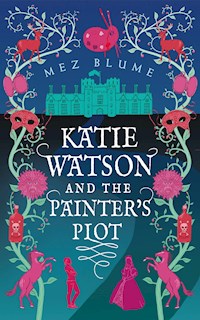
“Sherlock meets Shakespeare in this time-travel, murder mystery with a twist of magic.”
Visiting an old manor house is hardly Katie’s idea of an adventure. But then, Otterly Manor is not just any old house…
When an enchanted painting whisks Katie back in time to Shakespeare’s England, she lands in the middle of a perilous adventure beyond her wildest imagination. Luckily, she finds an ally in Sophia, a young princess who disguises Katie as her chambermaid. But before Katie has time to find her feet, murder strikes at the King’s Banquet, sending Otterly Manor into mayhem.
Can Katie navigate through a maze of suspicious maids, looming lords, and one very peculiar master painter to discover the true villain before it’s too late?
If she succeeds, could she lose her chance of ever getting home again?
Sie lesen das E-Book in den Legimi-Apps auf:
Seitenzahl: 301
Veröffentlichungsjahr: 2017
Ähnliche









![Tintenherz [Tintenwelt-Reihe, Band 1 (Ungekürzt)] - Cornelia Funke - Hörbuch](https://legimifiles.blob.core.windows.net/images/2830629ec0fd3fd8c1f122134ba4a884/w200_u90.jpg)






download the audibook free
As a thank you for downloading this ebook, here is the audiobook version, narrated by the author, for FREE!
Simply click the image to download or go to:
http://mezblume.com/audiobook/
Katie Watson and the Painter’s Plot
Mez Blume
First published 2017 by River Otter Books
Copyright © Mez Blume 2017
All rights reserved.
No part of this book may be reproduced in any form or by any electronic or mechanical means, including information storage and retrieval systems, without written permission from the author, except for the use of brief quotations in a book review.
PB ISBN: 978-1-9999242-0-1
EBook ISBN: 978-1-9999242-1-8
For Mom and Dad, who raised me on daily, healthy doses of the things that matter most, like good stories.
Contents
Note from the Author
1. The Doomed Summer
2. Otterly Manor
3. I Spy
4. The Green Man’s Secret
5. Vagabond
6. New Shoes
7. The Chambermaid
8. A Royal Announcement
9. The Blank Canvas
10. Sneezing Suspicion
11. The Swap
12. Preparations
13. A Royal Welcome
14. A Royal Disaster
15. Midsummer Night’s Mayhem
16. Powder, Treason and Plot
17. The Black Sheep
18. New Duties
19. Whodunnit
20. The Hunt
21. The Painter’s Wagon
22. The Plan
23. Last Hope
24. Close Calls and Bad News
25. Caught
26. An Audience with the Queen
27. Ride to the Rescue
28. The Earl’s Court
29. Goodbyes
Epilogue
Acknowledgements
Get the Audiobook FREE!
About the Author
Note from the Author
For those readers among you who know a bit about history, you might recognise a few real-life characters in this story, for example King James I, Queen Anne of Denmark and William Shakespeare.
These and other characters in the book belong to History, and, while I tried to give them an accurate and fair representation, their words and deeds in the following pages are all purely made up.
Nevertheless, you might just discover quite a few things about life in Shakespeare’s England through Katie’s adventure. After all, there is no better portal to the past than a book!
A note about Katie Watson’s use of English:
Like the author, Katie has spent a great deal of time both in the United States of America and Great Britain. That is why you will find some sneaky British terms and spellings slipping into her narrative. For example, cosy instead of cozy, colour instead of color, travelling instead of traveling, and car park instead of parking lot.
1
The Doomed Summer
“Have a good trip,” I told Fergie and Francis as I pushed a bowl of pellets into their crate. “At least you’ll be going on an adventure this summer. Not like some of us.” Fergie squeaked, which might have been sympathy in guinea pig language. But judging by their blank expressions as they furiously nibbled their pellets, I wasn’t convinced they really understood how I was feeling.
There was a ding dong from the doorbell. “That’ll be your ride,” I informed the guinea pigs. I hoisted my duffel bag over one shoulder, then squatted to pick up the crate from its place below the hooks where all my riding ribbons hung. As I stood up, the ribbons brushed against my hair, as if to tease me. I gritted my teeth and turned away.
Waddling down the hallway, I stopped in front of Charlie’s room. His door was open, but he had his back to me, taking the posters from his wall and rolling them up for packing. The room looked as sad and bare as an undecorated Christmas tree. The sight of its blandness made me feel hollow and lonely, like things would never be the same again. Why did this summer ever have to come?
Normally, summers couldn’t come soon enough. I would count down the days on my horse wall calendar until we could pack up our bags and head off to England to visit my grandparents. Charlie and I call them Nan and Pop, and we’ve spent every summer with them since I was born. That was part of “the deal” when my English mum agreed to marry my dad and move to America.
Summers in England really are superb. Nan and Pop live in an old farm house in Kent with woods, blackberry brambles, an old barn and even a wishing well. Charlie and I always played orphans out there, pretending to live in the barn and make wishes into the well that one day we would live in a palace with servants to bring us tea and extra buttery scones on silver trays whenever we liked. Then, when Nan called us into the house for tea time and brought us a tray of fresh baked scones, we’d imagine she was our servant and laugh at our secret joke. Nan said we were cheeky, but always with a smile.
Of course our games became more sophisticated later on, when I got old enough to start reading murder mysteries. Then Charlie became Sherlock Holmes and I was his right-hand man, Watson; we’d think up all kinds of crimes to solve around the farm and the village.
As I stood there remembering it all, the crate tipped, and one of the guinea pigs gave a loud, complaining reek. I moved away from Charlie’s open door before he could turn around. I didn’t feel like talking; and anyway, all he ever talked about these days was the new life awaiting him in Scotland and all the exciting things he planned to do at university. He didn’t have time for silly games with an eleven-year-old sister anymore. He had real adventures to look forward to now.
I hobbled downstairs. Dad had got to the door first and was chatting to Miss Thaxton. When she noticed me, her eyes widened and her mouth stretched into an unusually toothy smile.
“Hi there, Katie. Now don’t you worry about those guinea pigs. They are going to get loads of attention up at the barn while you’re away. The kids will adore them.”
“I know,” I said, then added a “Thank you.” We stared awkwardly at each other for a second before I finally got the nerve to ask the question burning in my throat. “How’s Gypsy?”
With that over-the-top smile plastered on her face, Miss Thaxton answered, “Oh, he’s great!”
“Is anyone, you know … riding him these days?” I asked with dread nibbling at my stomach.
Miss Thaxton still smiled but looked pityingly at the same time. “He has a new rider, yes. But Katie, Gypsy will never forget you. I’ve seen hundreds of riders and horses; you two have a truly special bond. And when you get back from your summer travels, you know you can always come and visit him, don’t you?”
I swallowed and nodded, then slipped quietly into the dining room while Dad carried the guinea pigs out to Miss Thaxton’s truck.
I let my duffel bag drop to the floor and sank into my chair at the table. Mum set a bowl of porridge down in front of me. I could feel her eyeing me, the way she does when she knows I’m upset but doesn’t want to set me off on one of my “contrary moods.”
“Raisins?” she asked brightly.
I shook my head.
“Maple syrup?”
I poked at the lumps of oats and shook my head again.
“Don’t be silly. You love raisins and maple syrup.”
Without looking at Mum, I reached down and pulled the mystery novel I was reading from my duffel bag. Propping it open on the table, I pretended not to notice as she sprinkled raisins and syrup into my porridge.
“How’s the book?” she asked.
I shrugged and grumbled, “Better than real life.”
“Oh? Real life’s not so bad, is it? After all, we’re flying to England tomorrow, and then who knows what sort of fun Nan and Pop have planned for you all?”
“You and Dad and Charlie will be having all the fun up in Scotland.” I should’ve stopped there, but there was still a lot of steam inside me that needed venting. “I still don’t see why I have to stay behind while you ‘settle him in’ and go hiking and see otters and puffins and … and …”
“You know why, Katie,” Mum chided in a gentle voice. “This is a special time for Charlie. And besides that, the doctor thinks you need to take it a bit easy until we’re sure you’re 100 per cent recovered. You’ll have a chance to visit the Highlands some time. In the meantime, why not at least try to enjoy your holiday with Nan and Pop? They’re so looking forward to spending time with you.”
“It’s still not fair,” I grumbled under my breath and leaned over my book with my head in my hands.
With one stealthy movement, Mum slipped the book out from under me and turned it over to look at the back cover. “A mystery, eh? This does look good. Have you ever noticed that in books ... the good ones, at least ... the main character has to go through difficulties, sometimes enormous, challenging changes out of their control?”
I didn’t answer, but Mum carried on. “Isn’t that what sets the adventure going? All the change and challenge? Isn’t that what makes it a story worth reading?” She handed me back the book. “Just something to think about.”
Then she turned right on her heels and started scrubbing the porridge pot before I had the chance to exercise my contrary mood. So frustrating that we are so much alike, I thought. From our lanky limbs and strawberry-coloured hair to our love of riding horses. Mum always knows what I’ll argue back before I do and always has me blocked.
I knew what I wanted to say. Maybe that’s how it worked in books — maybe characters have to go through all sorts of rubbish to get their adventures. But it didn’t make me feel any better, and it certainly didn’t persuade me that having my life turned upside down was any kind of adventure worth having.
I forced down my porridge and carried the bowl to the sink. Mum wiped her hands on the tea towel and walked over to my duffel bag at the same time. “Are you sure you’ve packed everything, Kate? I don’t want Nan having to go to the shops a dozen times for things you’ve forgotten.” She leant down to pick up the bag and let it drop into the chair with a grunt. “My heavens! What have you got in here? Your entire library?”
“It’s just clothes and a few books,” I spat out, rushing over. But before I could step in, she’d unzipped the bag and found them: the riding helmet and boots I’d stuffed right down at the bottom, hoping they’d stay hidden there until Mum and Dad and Charlie went off to Scotland and left me alone with Nan and Pop. Mum would never agree to let me go to riding camp; she would want me to follow the doctor’s orders and take it easy. But if I asked my grandparents nicely enough, they were sure to give in. At least they would have. Now I was busted.
“Katie, what is this?” She held out the riding helmet, her eyebrows raised and waiting for an explanation.
“I just thought I could try again over the summer. I won’t have anything else to do.”
“Katie …”
“Mum, I know I can do it if I just—”
“KATIE!” Mum took a deep breath, then spoke in a low, calm voice. “We’ve been through this. I know how badly you want to ride again. And I admire your determination, I really do. But, love, maybe you’re just not ready yet.”
I looked away from her, a puff of hot air fuming from my nostrils.
She took a step nearer and stroked my hair, the very patch of hair that hid the large, uneven scar across my scalp. “Your accident with Gypsy was a terrible, traumatic thing to go through. Most girls would never dream of riding ever again after that. Be patient with yourself. The time will come. There’s no need to rush it.”
I jerked back from her hand. “But I am ready! I’ve got to ride, Mum. You don’t know what it’s like not being able to do the thing you love most in the world!”
Mum looked uncertainly at me for half a moment. Maybe she was coming around after all!
Then she shook her head, and my heart sank. “I’m sorry, Katie. I don’t want you going near a horse while your dad and I are away. Nan and Pop wouldn’t know what to do if something happened, and … I just … I don’t want you getting hurt again.”
My eyes started stinging, and I could feel my chin quivering. Everything seemed to be caving in on me all at once, and I lost it. “It’s not fair!” I shouted as my eyes went blurry. “Gypsy was my best friend, and I’ve lost him. Now Charlie’s going away forever, and you’re leaving me alone all summer and won’t even let me try to ride again!”
Charlie chose just that moment to saunter into the kitchen with his hiking pack strapped to his back and ask, “How do I look? Ready to take on the Highlands?”
Mum gave him a look that meant not now, for Pete’s sake. I wish she hadn’t. It only made him take note of my red face and puffy eyes. I spun away from Mum, still standing there holding my riding helmet, pushed past a speechless Charlie and his hiking pack, and ran out of the front door, narrowly missing Dad as he walked up the driveway. I didn’t stop until I got to the old tree swing in the back yard.
I couldn’t stand it. I knew when the others felt sorry for me — the poor little girl who fell off her horse and went into shock every time she tried to get back on. I used to be good! Gypsy and I used to ride like champions, to jump, to fly! Now I was just a pathetic eleven-year-old with a scar on her head and a sheltered, adventure-less life.
Everything had changed for me. Everything felt so uncertain … except for one thing. Unless a miracle happened, this summer would be the worst of my life.
2
Otterly Manor
The journey to England felt like old times. Charlie and I imagined everyone we met on the plane was a suspect in our made-up murder mystery. Once I laughed so hard, my complimentary Sprite came gushing from my nostrils, and then we both laughed so hard the flight attendant came to check everything was alright. I almost managed to forget the wretched reality: this was the last time we’d be going to Nan and Pop’s together before everything changed.
But all the old tummy knots came back as soon as Pop collected us at the airport. Of course I was happy to see him; but on the drive home, I wished he would just talk about the weather or anything other than the upcoming trip to Scotland and how magnificent the Highlands would be this time of year. If I’d felt the bitter sting of missing out before, by the time we got to the farmhouse, I was boiling with it.
Nan set out tea for us in the conservatory, but I could hardly enjoy my buttery scone loaded with clotted cream and jam. All she wanted to talk about was Charlie’s big move to university and all the wonderful experiences he would have. I found I’d lost my appetite and held the second half of my scone under the table until Oscar, my grandparents’ cocker spaniel, stealthily put it away with one wet chomp.
After tea, Pop had the brilliant idea of pulling out some of his old trekking photos from the attic to show Dad and Charlie. Normally, I never miss a trip up to the attic. You never know what mysterious object from the past you may find up there, from my great grandmother’s gramophone with its huge copper trumpet to Mum’s collection of riding trophies. But this time I hung back to help Nan and Mum clear away the tea things.
“Are you feeling alright, Katherine?” Nan eyed me sideways and pursed her lips the way she always does when she’s being shrewd, making her dimples twice as deep. “I must say, you look a tad flushed.”
I shrugged as I handed her a stack of plates. “Just tired from the journey, I guess.”
“I don’t doubt you are! Why don’t you go upstairs and have a lie down until dinner? It won’t do to have you coming down with a fever. Pop and I have planned some lovely Days Out for the three of us.”
A Day Out is Nan and Pop’s code word for an educational trip: visits to museums, historic monuments, famous gardens, the occasional castle. All interesting in their own way, and Charlie and I always find a way of turning Days Out into live action detective stories. But a Day Out to some old building with no Charlie to joke around with? That was hardly the sort of adventure I was looking for, the sort my life seriously lacked.
Nan carried on, happily scrubbing away at the plates. “Pop discovered a really fine old house that’s been sitting right under our noses all this time in a neighbouring village. Otterly Manor, it’s called. Have a look beside the telephone, Katherine. I do believe Pop’s got a brochure about it.” She craned her head around and nodded towards the little table under the telephone. “Would you believe, it was built in the sixteenth century and such a specimen! We thought we’d go and explore it tomorrow after we drop this lot off at the station. What do you think, Katie dear?”
I forced what I hoped appeared to be a believably genuine smile.
“You see, Katherine?” Mum piped in. “An adventure already budding!”
I turned my head so Nan wouldn’t see me roll my eyes.
Mum shot me a stern glare back, but transformed it magically into a smile as Nan turned around from the sink.
I felt a little ashamed, but I was also fed up. “C’mon, Oscar. Let’s go outside,” I said, patting my leg so he would follow me. Reluctantly, I picked up the brochure on my way to the door with no intention of actually looking at it, but to keep Nan happy. But after a few minutes of sitting on the wishing well, looking blankly down into its black depths, I unfolded the brochure and let my eyes skim over it. They travelled immediately to the words Riding at Otterly Manor, and my heart gave a little leap. I continued reading hungrily. Otterly Manor boasts one of the largest remaining royal hunting grounds in the country. Experience riding horseback like the ladies and lords of old at Otterly Manor’s Equestrian Centre.
I folded the brochure back up and wedged it into my pocket. I wouldn’t dare let Mum see this. She had said I was strictly to stay away from horses; but surely it couldn’t hurt me just to go and look at them, could it?
Yes, it could. I knew it would be torture to come so close yet not be able to ride. But that didn’t matter. I needed to be near horses … to prove to myself that I wasn’t afraid so I could prove it to Mum and everyone else. For just a moment, I allowed my imagination to paint a picture of me on Gypsy, galloping across an ancient forest. It was just a thought, but the thought alone was so exhilarating, I now felt tomorrow’s Day Out to Otterly Manor couldn’t come soon enough.
The next morning, the dreaded goodbyes came and went in the dreary, dewy dawn at the train station. Being left behind still stung, but now part of me was eager to see them go.
“Be good, Katie,” Dad said. “We’ll be thinking of you all the time.”
“Keep a sharp eye on things, Watson,” Charlie said. “And here. This is for you.” He handed me a tatty, pocket-sized, leather-bound book with The Hound of the Baskervilles embossed in gold on the binding.
“But this is your copy. I can’t take it.”
“Yours now. I’m promoting you to head detective in my absence. Just don’t forget to write me with all the juicy mysteries you unravel.” He smiled and ruffled up my hair. I clutched the book to my chest with a lump in my throat.
Lastly, Mum pulled me into a tight hug, then held both my forearms so we were eye-to-eye. “Try to enjoy yourself, Katie. You never know what may happen.” She smiled, then added with extra emphasis, “And Katie, please, be careful.”
I hugged Mum and waved them off as the train pulled away. But all I could think was how much I didn’t want to be careful. I didn’t want to be babied. I wanted an adventure, and I was going to have to find one. Maybe one would be waiting for me at Otterly Manor …
3
I Spy
Back at the farmhouse, Nan and Pop appeared to have forgotten all about our plans for a Day Out. They both settled down in their chairs to read the papers. I inwardly groaned as I stalked up to my bedroom and took Charlie’s leather copy of The Hound of the Baskervilles from the bedside table. Curling up under my duvet with Oscar sprawled across my feet, I tried to get lost in the story of a wealthy heir who begs the help of Sherlock Holmes and Dr. Watson when he is cursed by a demon dog. But a few pages in, I gave up and put the book down. It wasn’t that the story was boring — I’d loved every Sherlock Holmes mystery I’d read so far, and this was Charlie’s favourite. But reading it then only gnawed at the miserable, discontented feeling in the pit my stomach. I didn’t just want to read an adventure … I wanted to live one. That imaginary picture of me and Gypsy galloping across the royal hunting ground reappeared in my mind like a cruel joke. Like that was ever going to happen. I squeezed my eyes shut, thinking maybe I would just sleep the summer away, curled up in my nest like Fergie and Francis, but all alone … a lonesome little hibernating rodent.
My hibernation plan came to a swift end.
“Katherine?” Pop rapped his knuckles once on the door before poking his head around to look in on me. “Feel up to an outing? Nan’s packed a picnic to write home about. My own rhubarb crumble for dessert,” he added, his bushy white eyebrows wiggling up and down. They stopped wiggling and knitted together. “Unless of course you’re feeling poorly?”
“No,” I said, pushing the duvet back and swinging my legs to the floor. “I’m fine. I’ll be right down.” Eager to set off, I stuffed my spy journal down into my backpack, then picked up The Hound of the Baskervilles and fanned my thumb through its gold leaf pages. “Why not?” I thought, and nestled it down into the bag as well. It could be a good distraction if things didn’t go so well with the horses.
Although we spent every summer in England, it always took me by surprise just how grey and bleak the days could be. Still, the countryside glowed emerald green against the grey sky, and the hedgerows and little village gardens were in full summer bloom.
At the end of a quaint village road lined with gift shops, tea shops and pubs, Pop turned into a drive with a gatehouse. Tall, cast-iron gates barred the way. A lady with a name badge strolled drowsily out of the gatehouse and scanned a card Pop held out to her.
“Welcome to Otterly Manor,” she said, half yawning. Next thing, the gates creaked open and we were driving down a green, sweeping valley carpeted in patches of thick bracken.
“Keep your eyes open.” Pop nodded towards the window. “Otterly Manor boasts one of the country’s oldest deer parks. Been here since medieval times. If you’re lucky, you’ll spot the white hart himself.”
“If you spot the white hart, you will be lucky, as the old superstition has it,” Nan added.
I peered out of the window, looking for movement in the bracken. Sure enough, as the road wound upward through a lane of massive, gnarled oaks, I spotted a rack of antlers protruding up through the high undergrowth. The stag trotted forth, completely unafraid of our car, and Pop stopped the car as he led his family of downy does and speckled fawns in procession across the road to graze on the other hillside.
“Wow!” I caught myself mouthing before I remembered that Dad and Mum and Charlie would soon be seeing wild reindeer that would probably dwarf these little tame ones. But these park deer were pretty, and I told Pop so when I caught his eyes smiling at me expectantly through his bushy white eyebrows in the rear-view mirror.
The road threaded upwards through the trees until it levelled out onto a wide, flat meadow that had partly been turned into a gravel car park. As soon as Pop turned onto the gravel in search of a parking space, we saw it, straight ahead: a monstrosity of stone soared up out of nowhere. The house — if you could even call it a house — was much grander than I’d imagined. With its great, stone face, stacks of chimneys, crenellated towers and turrets all piled up on top of each other, it was more of a cross between a castle and a town.
“Here we are!” Nan chirped as Pop turned off the engine. “What do you think of it, Katherine?”
“It’s … big,” was the most creative response I could come up with at that moment.
Pop chuckled. “Big is right! We’re going to need our vittles before we tackle the inside. Winny, how about those sandwiches?”
Finishing my sandwich and swigging down the last gulp of ginger beer, I shivered and pulled my hands inside my hoodie. Cold as I was, I was dying to go off in search of the riding centre. We must be close, I thought; and as the thought crossed my mind, I heard the wonderful sound of a horse whinnying in the distance. I strained my eyes to see through the oak trees and could just make out the bobbing movement of a cantering horse and rider in the distant meadow.
“I know what’ll warm you up,” Pop said, snapping me out of my trance. “Let’s give Oscar some exercise, then we’ll head for the house. What do you say, Katherine?”
I nodded. “Looks like there’s a big field over there,” I said, pointing to the meadow where I’d seen the horse.
Nan stayed behind to tidy up the picnic while Pop and I took Oscar to play. Pop found a field much closer to the house than the meadow where I’d seen the rider, but at least it gave me a good view of the Manor’s old stables, now used as a warehouse for storing old displays and gardening tools.
Oscar went wild when Pop produced his tennis ball in its plastic sling. Pop knows I love dogs, so he always lets me take charge of slinging the ball. I held the sling back behind my head, then flung it forward, catapult style, sending the tennis ball soaring like a home-run hit. Oscar shot forward to catch it just before it hit the ground.
After a few minutes of the chase, Oscar was panting and my socks were properly soaked through. I stuffed the ball sling into my backpack and hoped Pop would suggest stopping by the café; but he said it was time to find Nan and warm up inside the house.
The only trouble was, inside the vast, cavernous stone house felt even colder than outside! We walked through the first gate tower into a grassy courtyard with marble statues. On the opposite side of the courtyard, we were met by another mass of stone towers, turrets and latticed windows. Then through another passage into a stone courtyard where a sign with an arrow pointed to an arched doorway in a wall decorated with antlers like an old hunting lodge. Finally, following the arrow,we entered the house … or a tiny part of the house, anyway.
Just inside, an ancient-looking man in a thick winter coat greeted us in the dark passageway, dabbing his elongated nostrils with a handkerchief. “Welcome to the Great Hall of Otterly Manor. The tour begins here and is self-guided. Oh, and for the little girl …” He picked up a booklet from a side table and offered it to me with a soppy smile. It had a silly cartoon drawing of a young girl in frilly clothing on the cover. A speech bubble came from her mouth with the invitation, “Can you spot these missing objects in the house? Put an X beside each object you find to win a prize at the end of the tour.”
“Good luck, ducky,” the old man said. “Extra points for finding the Green Man. He’s a tricky one to spot.” And he gave me a wink that looked rather like he’d got something in his eye.
“Thanks.” I smiled, then promptly turned away, dropping the smile and stuffing the pamphlet into my hoodie pocket. Honestly, why did everyone seem to think I was a baby? I didn’t want to spot missing objects. In fact, I didn’t want to be in that draughty old house at all. All I could think about was the horse and rider I’d seen out on the grounds, unaware of the wind and drizzle as they galloped across green meadows. Meanwhile, here I was playing a game of I Spy all to win a stupid pencil eraser.
Nan and Pop had already started their self-guided tour in the next room, which, according to the plaque on the wall, was the Great Hall, and I could hear them whispering in raptures over every little detail through the doorway. I scuffled along after them, my wet tennis shoes squeaking against the chequered stone floor tiles. Once inside, my eyes travelled automatically up and up to the high, wooden ceiling that reminded me of a honeycomb, then around the walls where dozens of life-sized portraits hung.
Ok, I had to admit, it was a pretty impressive dining room. Of course, it would have been better had there been a fire in the gigantic hearth. And better still had Charlie been there to laugh at the ridiculous-looking people in the portraits, especially the man in the stiff, silk suit with a lace collar, high-heeled shoes with big bobbles on top and a silly, pointed goatee beard. An engraved golden plate on the frame informed me the frilly man was the Second Earl of Dorset. If only Charlie had been there, he’d have made up the most wonderful whodunit scenario. Was it Mr Fancy Pants with the fire poker in the Buttery? Or was it Lady Pugnose with a hairpin in the Orangery? Just the thought of what Charlie would say made me giggle the tiniest of private giggles, yet it echoed around the cavernous room, right up to the honeycomb ceiling. One of the wardens — a poodle-haired old lady — gave me a disapproving scowl, and I was all too glad to follow Nan and Pop out of the Great Hall and into the Great Staircase.
I must say, I felt a small blip of excitement walking up that staircase. It was one of those wide, wooden ones with heavy banisters like the deck of a pirate ship. The walls were painted with interesting designs of dogs and birds, lounging ladies and musical instruments. And at every turn, a wooden leopard perched on top of the banister posts, showing off a coat of arms.
“What’s with all the leopards?” I whispered to Pop who was inspecting a pane of stained glass.
“Oh, that.” Pop grinned, always pleased for the chance to show off a bit of trivia knowledge. “That, you see, is the heraldic symbol of the Buckville family. Thomas Buckville, the First Earl of … er, what was it?” He took his glasses from his coat pocket and quickly consulted his guidebook. “Ah, that’s it. First Earl of Dorset. Anyway, he had the leopards installed when he took over the place and redecorated it.”
“Oh,” I said, trying to sound impressed.
The Great Staircase led to a long passage, and I do mean long, as in bowling alley long! Not only was it long, it was dark and creepy, and, as Mum would say, “wonderfully wonky”. The floors sloped one way, the walls another. And creepier still, all down the wood-panelled walls hung old portraits of stuffy, sombre-looking gentlemen and ladies in what looked to me to be very uncomfortable clothing. I walked hastily along the wonky gallery towards the only source of light at the very end, but I couldn’t shake the feeling that all those eyes followed me, marking my every squeaky step.
I was glad to leave the portrait gallery, but my goodness! This house went on forever like a maze! There was bedroom after parlour after airing room; you name it and there was a room for it in Otterly Manor. And Nan and Pop couldn’t seem to get enough of rooms!
At last we came to another large, much more open gallery with billiard tables and lots more huge, hanging paintings. A medium-sized one in the corner caught my eye. It was of a girl, about my own age probably, but dressed just like a little queen with golden braids woven tightly around her head. Still, she didn’t have the same snooty look as most of the other portrait characters. Somehow she was so lifelike, like someone I might make friends with at school. Her round, rosy cheeks gave her a kindly look and her face sparkled with a pair of clever blue eyes, though there was a speck of sadness in them as well. A bird perched on her finger, and her other hand rested on the head of an enormous grey dog.
My imagination had just begun to play with the thought of what it would be like to live in that golden-haired girl’s world when I heard Nan whispering excitedly to Pop behind me. Nan collects special porcelain pieces, and she had just come across a glass case full of what must have been extra special pieces by the look on her face. A hefty warden sitting nearby stood up and approached the case with a smug look of information. Sure enough, the three of them were deep into plates, wash basins and figurines before you could say “China”. There was no doubt about it — I was going to be stuck in this musty gallery for eternity.
I tried to pass the time by peering out of the latticed window at the end of the hall in hopes of seeing the horse and rider again. I had no luck, though, so instead I tried matching up the different outbuildings to their labels on a plaque in the window ledge. By the time I’d spotted the stables, the kitchen garden, the dairy, the jail and the brewhouse, all three times each, my stomach had started grumbling. When would this tour finally come to an end and a trip to the café?
I felt so antsy waiting that, without really thinking, I pulled the I Spy pamphlet from my hoodie pocket and thumbed through it. There was the leopard statue; I put an X in the box beside it. To my surprise, the next page featured the painting of the girl with the big grey dog that had caught my eye. The caption beside it just said Portrait of Sophia Brunswick-Lüneburg, 1606. I put an X beside Sophia’s portrait, and kept flipping.
A few pages later, I stopped to look at a rather funny-looking object. At first it looked just like a wreath of leaves carved into wood, but on a second take, a pair of eyes, a flat nose and grinning lips appeared right in the middle of the foliage with leaves growing out of its nostrils and mouth and forming his leafy eyebrows. Green Man was all the caption said. So that




