


Erhalten Sie Zugang zu diesem und mehr als 300000 Büchern ab EUR 5,99 monatlich.
- Herausgeber: Pushkin Children's Books
- Kategorie: Für Kinder und Jugendliche
- Sprache: Englisch
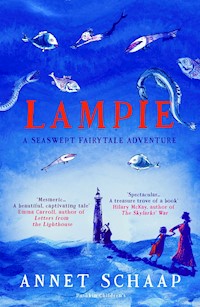
SHORTLISTED FOR THE CARNEGIE AWARD 2020AN OBSERVER BEST BOOK OF 2019 'An astonishing, mysterious seaswept story... Dazzles with darkness and glitters with light' Cerrie Burnell, author of Harper and the Sea of Secrets Every evening Lampie the lighthouse keeper's daughter must light a lantern to warn ships away from the rocks. But one stormy night disaster strikes. The lantern goes out, a ship is wrecked and an adventure begins. In disgrace, Lampie is sent to work as a maid at the Admiral's Black House, where rumour has it that a monster lurks in the tower. But what she finds there is stranger and more beautiful than any monster. Soon Lampie is drawn into a fairytale adventure in a world of mermaids and pirates, where she must fight with all her might for friendship, freedom and the right to be different.
Sie lesen das E-Book in den Legimi-Apps auf:
Seitenzahl: 362
Veröffentlichungsjahr: 2019
Das E-Book (TTS) können Sie hören im Abo „Legimi Premium” in Legimi-Apps auf:
Ähnliche













![Tintenherz [Tintenwelt-Reihe, Band 1 (Ungekürzt)] - Cornelia Funke - Hörbuch](https://legimifiles.blob.core.windows.net/images/2830629ec0fd3fd8c1f122134ba4a884/w200_u90.jpg)





For my sister Mirjam
For the children we were
For that one summer in the hay,
when we read and read and read…
“I want it,” said the little mermaid, turning as pale as death.
“But you’ll have to pay me too,” said the sea-witch. “And what I ask is no trifle.”
—The Little Mermaid, Hans Christian Andersen
And the ship with eight sails
And with fifty cannons
Will disappear with me
—The Threepenny Opera, Bertolt Brecht
CONTENTS
Part One
THE LIGHTHOUSE
MATCH
An island barely attached to the mainland, like a loose tooth on a thread, is called a peninsula. On this small peninsula, there is a lighthouse, a tall grey one that swings its light at night over the small town by the sea. It stops ships from smashing into the rock that is so awkwardly positioned in the middle of the bay. It makes the night a little less dark, and the vast landscape and the wide ocean a little less vast and wide.
In the house beside the tower, Augustus the lighthouse keeper lives with his daughter. They have a small garden and a little rocky beach, where something or other is always washing ashore. They often used to sit there all evening, with the light turning in circles far above their heads. Augustus would make a fire, and small boats sailed up from the harbour, carrying a crew of pirates. They came to sit around the fire and eat grilled fish and sing all night long. They would sing drinking and eating songs, sad songs and longing songs, and terrifying songs too, songs about the Secrets of the Sea, which made the girl both happy and scared, and so she would usually climb up onto her mother’s lap.
But no pirates come sailing along any more, and her father has stopped making fires.
By the time dusk falls, the lamp must be lit. It is always the girl who lights it. Every night, she climbs the sixty-one steps, opens the rusty little door that covers the lens, lights the wick, winds up the mechanism that turns the lamp, shuts the door, and the job is done.
It was hard work when she was younger, but now her arms have grown strong and her legs can easily climb up and down the steps twice a day. Three times if she forgets the matches. That happens sometimes, and then her father always grumbles at her.
“It’s almost dark and the lamp’s not lit! What if a ship is lost, child? What if it runs aground on the rocks and it’s all my fault? No – all your fault! Hurry up! Climb those stairs! Or should I just do it myself? I’m going to…” He’s already getting up out of his chair.
“I’m on my way,” the girl mutters, taking the matches from the drawer. The box rattles quietly. There’s only one match left.
Must buy more matches tomorrow, she thinks. Don’t forget.
The girl knows though, that remembering can be difficult. She always has so much inside her head: songs, stories, things she has to learn, things she wants to forget but that keep coming back. When she needs to remember something, she often forgets it, but she always remembers whatever she wants to forget.
As she climbs the stairs, she comes up with a little trick. What was it she wanted to remember? Oh yes. In her mind, she picks up a matchbox and then places it on a table in the middle of her head – with a little lamp shining onto the box, so that it will be the first thing she sees when she wakes up tomorrow morning. Or so she hopes. What kind of lamp? One with a shade of green enamel with a worn golden edge. Her mother used to have a lamp like that by her bedside. But that is one of the things she would prefer to forget.
Think of another lamp, Lampie, she tells herself.
Because that’s her name. Lampie.
Her real name is Emilia. But that had been her mother’s name too. And her father had always found it annoying when two people looked up as he called out the name, and then, later, he never wanted to hear that name again. So he calls her Lampie instead.
“You’re not the brightest of lights though, are you, Lampie?” he always says whenever she forgets something or trips over, usually when she is carrying something like hot soup.
Lampie climbs upstairs with the last match. She has to be very careful. It must not go out before the lamp is lit, because then… Shipwrecks and an angry father. She is not sure which would be worse.
She twists the wick and fluffs it up, so that it will light properly. Then she takes the match out of the box and gives it a stern look.
“Do your best! I mean it! Or I’ll…”
Or she’ll what? What would a match think was the worst threat of all? Being blown out? Snapped in two? No, she knows what it is.
“Or I’ll throw you into the sea,” she whispers. “And you’ll be so wet that you’ll never burn again.” Until it washes ashore, of course. On a hot beach somewhere, where it will dry out in the sun and…
“Lampie!” Her father’s voice is so loud, even though it is coming from sixty-one steps below. “The light! NOW!”
Usually he has been asleep for ages by this time of day, snoring away in his chair. But not tonight. She strikes the match. A tiny, useless spark. And again. This time there is a proper flame and the smell of sulphur. That’s good. She cups her other hand around the match and brings it to the wick. Come on! The flame hesitates a little, before growing bigger.
“Flame, flame, burn hot and quick.
Drink the oil and eat the wick!”
she quietly sings to herself, as she looks into the bright light. She could feel a bit of a knot in her stomach before, but it is starting to loosen now.
Close the door, wind up the mechanism, done.
“Matches, matches, must buy matches,” she sings as she walks back down the stairs. Must remember to buy matches.
But still, she forgets.
STORM
And of course, the next day, there is a storm on the way. A bad one.
The weather has been perfectly calm all day, but now the seagulls are screeching restlessly and the dogs will not stop whining. They can feel the threat in the air, their owners say, looking anxiously up at the sky.
Late in the afternoon, clouds begin to gather on the horizon. The sky above the sea turns as grey as lead, and the sun goes into hiding.
No twilight today, it whispers. I’m off.
Everything starts to turn black outside.
Inside, a girl stands in front of an empty drawer, her face white with horror.
She has spent the whole day digging for mussels among the slippery rocks, because they taste so good and cost nothing. She also found sandworms for the chickens and driftwood for the fire, which she laid out to dry in the garden. Then she had a quick look for a special shell or a bottle with a message in it, but she did not find anything interesting. By the time she raised her head again, it was dark and she knew she needed to light the lamp. And that was when she finally remembered what she had forgotten, all day long.
Outside, the darkness falls in silence. The town has just a moment left.
A moment to dash outside and bring in the washing and fasten the shutters. To close the shops, to call the children inside.
“Oh, can’t we play just a bit longer? Go on! Just a bit?”
“No, not even a little bit. Get inside, now!”
A moment for the old fishermen to nod their heads, their eyes gleaming as they mutter and mumble: “Yes, yes. It’s going to thunder for sure. Like it did that one time, you know, and that other time when… When there was the Easter Storm, and the North Cape Storm in February, when the sheep went flying through the air and the ships crashed onto the beach.” It surely won’t be as bad as that, will it? Or will it? They slowly sip their milk. Everything was worse in the old days, they know, but maybe it could be even worse. Who knows, maybe they still haven’t seen the very worst.
The wind begins to blow.
“Lampie? Lampiewhereareyou?” Her father’s voice runs all the words together. “Lampieisthelamplit?”
“Yes, yes,” mutters Lampie. “I’ll just go and get some matches.”
She puts her scarf on, grabs her basket and runs out of the house. The wind tugs the door from her hands, slamming it behind her.
“Thank you, wind,” says Lampie. It’s always best to be polite to the wind. Then she dashes, slipping and sliding, through the garden, along the path, to the town.
The sea washes over the rocks, as the waves get higher and higher.
A narrow path of stones, as uneven as a set of bad teeth, runs from the peninsula to the mainland. Even at high tide, they stick up above the water. Lampie jumps from stone to stone. The wind blows into her face and pulls at the basket with the chamois cloth inside. The cloth is for wrapping up the matches to keep them dry, later, on the way back. Yes, she will have to come all the way back too. She tries not to think about that yet. That is not too hard, as the wind blows all the thoughts out of her head.
“Thank you, wind. Thanks again.” She hopes that the wind is maybe a bit like a friend.
But then Lampie’s friend tries to push her off the rocks and into the sea. Her shoes are already soaked through and are slipping on the stones. But there are wooden posts here and there that she can hold on to for a moment to catch her breath.
Not that far to go now, she thinks, but she can’t see all that well. Sand is blowing into her face, along with other bits and pieces that the wind has picked up from the beach. Clumps of seaweed, branches, pieces of rope.
Presents, Lampie. Look!
She brushes them out of her hair. Dear wind, angry wind. I don’t need them, thank you. I don’t need anything. All I need is matches.
That makes the wind really mad, and it starts pelting her with rain. Within a few seconds, she is drenched and the wind blasts at her, making her even colder. She fights back.
“Stop it. Now!” she pants. “Get off, wind! Down!”
The wind is not a dog. It does not listen to her. It runs and jumps up at her again and again!
But there are the steps. Lampie slips and slides her way over to them, falling and bumping her knee, but then she grabs the handrail and pulls herself up. And there, finally, is the quay.
In the harbour, the ropes are all slapping against the masts. An orchestra: drumbeats, shrieking, and the first crashes of thunder. Lampie cannot hear her own footsteps as she runs along the quay. The storm tries to blow her down the wrong street, but she knows the way, even in the dark.
No one is out on the streets. The houses stand calmly, braving the storm. They are not afraid of being blown away. The trees brace themselves, losing leaves and branches. A metal bucket rolls by, rattling. All the shutters are closed, and all the shops are shut.
Down alleyways, down streets. When she is almost there, the rain turns into hail, and the wind throws handfuls of it into her face. Ouch, ouch! She shields herself with her arms and runs on. There is the street with Mr Rosewood’s shop. The wind tugs at her basket one last time.
Go on, give it to me. Such a lovely basket to throw around, to blow so far, all the way to another country, or…
“Get off!” Lampie screams, holding on tightly to the basket. So the wind throws more hail instead.
But then she is there. There is the shop. The vegetable crates have been taken inside, the shutters are closed, the light is off. The door is locked. Of course it is, who would want to go shopping now?
“Me!” cries Lampie. “It’s me! Mr Rosewood! Open the door!”
The wind even blows her voice away. She can barely hear herself. She pounds on the door with her fists. “Mr Rosewood!”
Fool, pipsqueak. Don’t think anyone will hear you. I’ll blow your voice away. I’ll blow you away. I’ll blow you in two. And I’ll blow out all the matches you light. It’ll be a breeze! Ha ha!
Her friend who is not a real friend rolls about, howling with laughter.
The wind’s right, thinks Lampie. What am I doing? She’s cold and her legs are trembling. Will she have to go all the way back now? Without any matches?
She screams one more time, at the top of her voice. “Mr Rosewooood!!!”
A small light appears, at the back of the shop. Someone walks to the door, carrying a candle. It is the grocer, Mr Rosewood, in a dressing gown and a scarf. When he sees Lampie, he hurries to the door, slides the bolt and opens up. An enormous gust of wind blows Lampie through the doorway. The shop bell rings away like crazy.
“Um, hello,” says Lampie, shivering. “Do you have any matches?”
“Close the door, close the door!” shouts Mr Rosewood, and together they push the door against the storm until it clicks shut. Instantly, there is quiet. The hail clatters against the windowpanes, but that is outside. Lampie stands there, panting and dripping.
“What did you say, child? Have you come all the way from the lighthouse, through that storm?”
“We’ve run out of matches. And the lamp needs to be lit.”
Mr Rosewood gasps. “It’s not lit? Yes, of course it needs to be lit! Tonight of all nights! But you’re not going back out into that storm.”
“Yes, I am,” says Lampie. “I have to.” She tries to sound firm, but her voice comes out as a strange squeak. She wrings her scarf out a little and notices that her feet are standing in a big puddle.
“Come upstairs with me for a moment.” The grocer lays one hand on her wet shoulder. “Dry clothes, warm milk. Child, you’re freezing. You can’t…”
She shakes off his hand. “I have to get back! Two boxes, please. Will you put it on our account?”
“That’s insane!” Mr Rosewood shakes his head. “This storm will be the death of you!” But he is, above all, a grocer, a salesman, and his hands are already searching through the store cupboard. “Swallow Brand, right? Top Quality? But first you need to warm up. I mean it. Whoever would send a child out in this—”
“Frederick? Who’s there?” Mrs Rosewood’s voice, calling down the stairs.
“It’s Lampie. She’s here to buy matches.”
“Lampie? From the lighthouse?”
“Yes. How many Lampies do you know, woman?”
“Send her up here!”
“That’s exactly what I was going to do.”
Tutting and sighing, Mr Rosewood takes off Lampie’s soaking scarf, hangs it over an oil drum and gives her his scarf to wear instead. The wool tickles her wet cheeks.
“Take off your shoes down here and then you can get out of your wet things upstairs, and we’ll…”
“No, thank you,” says Lampie. “I need to get home.” The scarf slips off and falls onto the floor but, without stopping to pick it up, she wraps the matches in the chamois cloth and puts them in her basket.
Then she hurries back outside.
BASKET
Meanwhile Augustus is sitting at home, cursing.
He has emptied all the drawers onto the floor, pulled all the clothes out of the wardrobe. The floor is scattered with saucepans and shirts, with cups and dried peas. But there are no matches. Anywhere.
He curses Lampie and he curses himself. The fire has just gone out, and the stove is as cold as a stone. He hurls the useless hurricane lamp across the room. The hail rattles against the window. What should he do? There is nothing he can do! Absolutely nothing! And where has that child got to?
He hauls himself up there, limping on his good leg, up all sixty-one steps to the lamp room. She is not there either, and the wind almost blows him over the railing.
The waves crash against the tower. They are as high as a house, great green beasts that want to swallow everything and smash it all to pieces. He is not worried about his tower, but he is worried about the ships that will be blown into the bay in the pitch darkness. Above the storm, he thinks he can already hear the cracking and creaking of ships’ bows being ripped open. And that is his fault. No, it’s that child’s fault, that wretched child. Where on earth could she be?
He peers out, trying to pierce the darkness. Please. Don’t do this to me. Please, don’t fall into the sea, come home safely. Please…
Scowling, he chases his thoughts away. Wishing is not going to help. What he wanted most of all did not happen. And the one thing he really, truly did not wish for, well, that did happen. No one ever listens to him.
So go on, thunder away all you like. Fine. Let the ships smash themselves on the rocks. Why should he care? Let the child blow away, that wretched child.
The wretched child is walking home through the storm. Or at least she is trying to.
She is no longer talking to the wind. They stopped being friends long ago, and now it is blowing right into her face.
She is making very slow progress. Stumbling across the town square, which is littered with branches and leaves, she heads for the quay, for the steps that lead down to where the path of stones begins.
Lampie swallows. The wind chases the sea over the steps, almost onto the quay. The path to the lighthouse can only be seen by the white foam splashing up as the waves break on the stones. Will she really have to go into the water? Will she have to swim?
She looks at the lighthouse, a darker silhouette against the dark sky. Her father is inside, probably pacing in furious circles, she can picture his face perfectly and how angry he is with her, she sees him stumbling, constantly looking at the door, she sees the door, the door knob, all she has to do is reach out her hand, she can already feel it against her fingertips…
Clutching the basket tightly, Lampie steps into the water.
At first it is not so bad, at first there are wooden posts and she finds her footing on the stones. The wind shrieks around her.
Hello, hello, my friend, are you back again? Have you really come to play this time?
Child, child, lighthouse child,
Are you as strong as the sea so wild?
“Yes!” screams Lampie above the storm. “Yes, I am! Yes, I am that strong!”
She struggles her way from stone to stone. The pitch-black water swirls around her, rising higher and higher, its cold biting into her calves, her knees, her thighs. Her heart is thumping.
But when she looks back, she is halfway there. The hardest part is still to come, but she has already done half of it.
“You see, wind! You can’t…”
The wind rips the basket out of her hand. It blows it high, spinning it in a little pirouette above her head, just to tease her, and then carries it away, with matches and all. To another country with another beach, to another child, who will find it tomorrow. Lampie watches the little dot disappear into the dark sky. She screams in fury and immediately gets a mouthful of seawater. It is salty and cold, and she is already chilled through, and now she has lost everything. Her tears are salty too – she can’t taste any difference.
She looks around. The lighthouse is as far away as the harbour, both out of reach for such a small girl in such a big sea. But she does not need to go home now, of course, not without matches.
The water rises higher and higher, and her feet lose their hold on the stones. She can swim, but she doesn’t.
Fine, she thinks, then I’ll come to you, Mother.
Her father is sure to be sad, but he was sad already. She lets herself sink.
She does not feel the cold bodies coming to swim beneath her in the water, the cold arms taking hold of her. Swirling green hair, like seaweed, billows in the waves.
Voices chuckle and chortle: “Oh my, a soul, a little drowned soul!”
Her head is lifted above the waves. She is pulled to the lighthouse island and dumped onto the stones.
“No two-legs in our water!”
That is where Lampie is lying now, beside her own front door, while out at sea a ship hits the rocks.
ROCK
And, as always, the next day the sun rises again. The water lies in the bay, perfectly still, as if slightly ashamed.
Waves? Us? No, of course not.
Storm? whispers the wind terribly quietly. No, no, that wasn’t me. It brushes Lampie’s face, like a hand stroking her cheek.
Mother? She is confused for a moment. Mother? Am I dead?
In her head she hears her mother laughing softly. No, my sweet child. You’re not dead.
Oh. Lampie is almost sad. Really?
Really. It’s not your time yet. Don’t you hear the seagulls? Don’t you smell the water? You’re still here.
Lampie smells the salty water and hears the cries of the gulls. She feels the little stones sticking into her back and feels how wet her dress is. She opens her eyes a little and, through her lashes, she sees the lighthouse, high against the clouds. She does not know how she got here, but she remembers everything else.
I was too late, Mother.
Yes, my sweet child. You were too late.
Is Father really angry?
Yes, he’s really angry.
With me.
Yes, with you too. And me. And himself.
But there was nothing I could do about it! Lampie yells at the clouds. I tried so, so hard. I really did!
I know you did, her mother says. You were very brave.
But not brave enough.
Exactly brave enough. Only my child could be that brave. Come on now, go inside. You’ll get poorly in those wet clothes.
Yes, poorly, says Lampie. She closes her eyes again, just for a moment. Very sick and then dead and then I’ll be with you.
She sees her mother shaking her head. That’s not what’s going to happen. On your feet, my sweet child.
Lampie sighs and scrambles to her feet. She is stiff and cold and she can feel bruises all over. She climbs onto the doorstep and opens the door.
“Father?” The room is dark and the floor is scattered with the contents of cupboards and drawers. The stove door is open and her father’s chair is lying on its back among the socks, the peas, the ash. She does not see her father though, just crumpled sheets in the bed.
She walks to the stairs, crunching and slipping. “Father? Are you there?”
Has he climbed all the way up the stairs? With his leg?
*
At the top, Augustus is looking out to sea, with his hands on the balustrade, which is red from the rust and white from the seagulls’ droppings. Lampie walks over to stand beside him. Neither of them speaks; the mild breeze blows through their hair.
Down below, leaning on the rock in the middle of the bay, there is a ship. It is clinging to the rock like a sick child to its mother. The bow is splintered, the masts are broken and pointing in all directions. The sails hang limply, flapping in the wind. Planks and barrels and pieces of ship are floating all around. From the other side, from the harbour, comes the sound of shouting, and men in small boats are sailing back and forth.
Lampie feels herself turning ice cold. She bites her lip. This is her fault. This happened because of her.
She looks up at her father, at his greying red hair blowing in the wind, at the stubble on his chin. His eyes, too, are red-rimmed. Has he been awake all night? She tries to sniff his breath without him noticing, but all she can smell is salt and rust. He is furious with her, and she can understand why. Maybe he will never say another word to her, not for the rest of his life.
But then Augustus speaks.
“Listen to me,” he says. His voice sounds creaky, as if he has not spoken for a very long time. “And remember this well. I was up all night, repairing the lens. The mechanism, I mean.”
“Why? Was it broken?” asks Lampie. “There was nothing wrong with it yesterday.”
Her father grabs her arm and squeezes, hard. “There’s no need to go and look!” he says. “Just listen. Listen and repeat after me. My father…”
“Ow… um… my father,” says Lampie.
“Was up all night…”
“Was up all night…”
“Repairing the lens.”
“Repairing the lens. And who do I have to say that to?”
“To anyone who asks. And I didn’t get it fixed until this morning, but by then it was too late.”
“Oh, I see,” says Lampie. “But…”
“Repeat the words.”
“And you didn’t get it fixed, um… until this morning, and…”
“But by then it was too late.”
“But by then it was too late. But that’s not true. It wasn’t broken, so that’s lying, isn’t it? And… Ow!”
Her father glowers at her. “So what do you want me to say? That my child, this child here, forgot to fetch the matches, so all this is her fault?”
“No,” squeaks Lampie.
“Well, then. So you know what you need to say, don’t you?”
Lampie nods and her father lets go of her arm. “I, um…” she says. “So should I say that I helped and, um… passed you the screwdrivers and pliers and whatnot?”
“Whatever you like,” says Augustus. “Suit yourself.”
“Oh, and we can make our hands black, so that it’ll look like we…”
Her father grabs her shoulder and gives her a good shake. “This is not a joke!”
“I didn’t say it was,” whispers Lampie. She looks at her hands on the railing, at the shattered ship. Did any sailors drown?
“Well, can you remember that?”
“Yes, Father.”
“So repeat the words one more time.”
“Um… my father, er… worked all night to repair the light, um, the lens, because it was broken and it wasn’t fixed until, um…”
“This morning.”
“This morning. But by then it was too late.”
“Right, and that’s what we have to say.”
Her father’s hand is still gripping her shoulder; it hurts a bit, but she does not mention it. She hopes this is his way of saying that he is glad she did not drown and that she is safely home again. And that it does not matter if she forgets something now and then. Everyone forgets things sometimes, eh? Including him. And that it is not her fault.
And maybe Augustus really does want to say all that.
But he remains silent.
BLAME
Augustus sits in silence in his chair, his half-leg on a stool. Lampie brings him a cup of tea, which he does not drink, and then later some food, which he leaves untouched. She has learnt to leave her father in peace when he is like this, to stay in the shadows, not to draw too much attention to herself.
Because if she says something or makes a noise or laughs… It has become worse recently, and sometimes she is glad that he lost his leg, that she is faster than him, and that she can hide and wait until it is over, until her father has his normal eyes again and can see her clearly.
Augustus is so angry that he is shaking inside. And he is frightened too. That ship – this is really bad. Someone has to be blamed for it – he is well aware of that. And how does blame work again? Blame is a rotten egg that is tossed to and fro, from one person to the next, going around and around. No one wants to catch it, no one wants to have that mess all over them when it finally explodes.
In his mind, he can picture it flying through the air. The person who has lost the cargo will throw the egg to the ship owner. The ship owner will toss it on to the captain. The captain will then fling it to circumstances beyond his control. An act of God! The storm! Those huge waves! That dangerous rock in the middle of the bay! But just you try taking a rock to court. Try squeezing it slowly until all the money has been recovered. All you’d end up with is sore fingers.
But who then? Who will catch the egg? Who will get the blame? Wait a moment. The lighthouse! It wasn’t working! Negligence on the part of the town! The mayor glares at the councillor, the startled councillor stares at the harbour master, and the harbour master looks around for the person who… And suddenly everyone is looking in his direction.
The lighthouse keeper. Of course. That is where the egg needs to go. He sees it flying towards him, and it is about to burst. He can already smell the stinking muck inside it.
He really wishes he had something to drink, but he has finished everything. All he has is empty bottles and rusty water.
That afternoon, Lampie walks along the sea path to the town to buy a new packet of matches. She does not want to go, but it has to be done. They can’t have another night with no light.
The harbour is busy. Big ships and small boats are mooring up and then setting off again. Pieces of wreckage are being brought to land, and crates and barrels. She hardly dares to look, but she does not see any drowned sailors. There are plenty of beachcombers and timber thieves though, loading all kinds of floating debris into their boats in the shadow of the pier. Seagulls circle overhead and steal anything that can be eaten.
Lampie quickly makes her way through the hustle and bustle on the quayside, scared that someone will recognize her, will call after her: Hey, aren’t you?… Why wasn’t the lamp lit last night? Have you people gone mad?
The street with the grocer’s shop is calmer today. Mrs Rosewood is standing behind the counter. She is a couple of heads shorter than her husband, and she looks at Lampie with small, cold eyes.
“Oh, so you’re still alive, are you?” She does not sound too happy about that. “He went running after you yesterday, my Frederick. Did you know that? No, you didn’t, eh? Didn’t you hear him shouting? Of course not. Because of that storm. And the hail. He went out there to take you his scarf, would you believe? And of course he caught a cold himself, because that’s what he’s like. And you didn’t even notice, did you?”
Lampie shakes her head. She can hear Mr Rosewood coughing upstairs.
“So now he’s barking away in bed. And who has to look after the shop? And him as well?”
Maybe she should reply, “You, I suppose,” but Lampie knows better than that.
“Two boxes of Swallow, please,” she says. “And would you put it on our account?”
The grocer’s wife leans over the counter. “On your account, eh?” she says. “Again. Do you know how much you already have on account?”
Lampie shrugs. She has a vague idea. It’s a lot. Has been for weeks now. They have been so short of money recently.
Mrs Rosewood slides a sheet of paper over the counter to her. She pulls it out as if she had it ready and waiting. “There,” she says. “Go on. Read it out loud. I think you might be shocked too.”
Lampie looks at the words on the paper. Here and there she sees an E, the first letter of her name. Otherwise it is all just lines and dots, slowly blurring together. She does not want to cry. She does not want to talk to this woman. What she wants to do is to buy matches and then go home, light the lamp and crawl into bed.
Mrs Rosewood takes back the list and clears her throat. “Potatoes,” she begins. “Two and a half sacks. Three gallons of milk. Three! Beans. Six loaves of bread, three currant buns… Why are you eating currant buns if you can’t even pay for bread? That’s what I’d like to know. And that’s before I even get started on the alcohol. Just take a look at that!”
Lampie wishes she could just walk out of the shop. Mr Rosewood never makes a fuss; he always notes it down whenever she has no money. And sometimes he even quietly forgets to make a note. She sighs.
“I’ll bring some money tomorrow,” she says. “Honestly. But I need some matches now, Mrs Rosewood. The lamp has to be lit.” Upstairs she hears thumping and more coughing.
“It certainly must,” says Mrs Rosewood. “But why should we pay for it? Tell me that.”
Lampie does not reply, because she can’t think of anything to say.
Mrs Rosewood picks up the list again. “There are already three packets of matches on the list, the most expensive ones too.”
Fine then, no matches, thinks Lampie. And that means another night of darkness, another ship on the rocks.
“Do you know how expensive—”
“Hilda!” Mr Rosewood shouts down. “Give that child a box of matches.”
“Why should I?”
“Now!” Lampie sees big bare feet and blue striped pyjama bottoms coming part of the way down the stairs. “Have you gone mad?”
“Me?” shouts the woman. “You think I’ve gone mad? You must be talking about yourself! You gave your scarf away, you’re giving half of the shop away, and now you’re… No, stay upstairs. You’re ill!”
Coughing, Mr Rosewood comes downstairs and into the shop.
“And without your slippers too,” says his wife, pointing. “And without a scarf. For that little… But no, I’ll just shut up, shall I?”
“Ah,” says Mr Rosewood, with another cough. “Wouldn’t that be nice?” He picks up a big box of matches and hands it to Lampie. “Go on. You’d better run.” He places a hand on her shoulder and gently pushes her towards the door. “It’s getting dark.”
Lampie runs out of the door, past the rack of clinking bottles, but her father will have to fetch those himself – she is just glad to be out of the shop.
“I’m making a note of it, mind you!” comes Mrs Rosewood’s voice from the shop. “So that’s four packets of matches. Four!”
Up at the top of the lighthouse, she lights the big lamp. Her hands are shaking a little. She deliberately does not look at the ship, which is still out there. Her gaze drifts the other way, to the town, to the harbour, where the water is calmly licking at the quay. In the twilight, she sees something moving.
There, along the sea path, a line of people is approaching, almost black in the late evening light. They are men in big hats, with sticks in their hands. At the back is a woman in a dress. She trips and stumbles on the uneven stones, falling a little behind. As they come closer, Lampie sees who she is: the teacher from the school she went to for a very short time.
Lampie can’t remember her name. Slowly the line approaches the lighthouse. Lampie feels a knot in her stomach. This is what they have been waiting for all day, she suddenly realizes. She quickly heads down the stairs, dashing over the smooth steps. “Father, some people are…”
“I’ve seen them,” Augustus croaks. He is standing at the window, with his back to her. “Go to your room.”
“Why do I have to—”
“And don’t come out until I call you. You understand?” Her father follows her and slams the door behind her. “And remember what I told you this morning!” he whispers through the crack in the door.
What was it again? thinks Lampie. Oh yes.
WHACK
Augustus leans on his stick. His leg is shaking, but he is not going to sit down; he does not want to be shorter than the men who are walking around his living room.
The fat sheriff has brought two deputies, just boys, with fluffy blond hair and pimples. They are striding around his house as if they live there, touching all his belongings. They are allowed to. And Augustus is not allowed to throw them out.
The woman in the grey dress does not touch anything. She just stands there, looking at him and at everything in the room as if it is too dirty to touch. She makes Augustus nervous.
What was it that he had come up with again? What was it that he wanted to say? Keep calm, that’s the most important thing. Breathe slowly. Don’t get angry. Stay polite. Say, “Yes, sir.” Otherwise you’ll only make things worse.
Yes, sir. Of course, sir. My sincere apologies, it’ll never happen again. No yelling, no cursing. Hang your head.
He can’t help thinking of Emilia, who always used to say that sort of thing to him: Don’t yell, Augustus. Don’t kick chairs across the room, darling. And certainly not the sheriff!
Now she’s dead and he has to say those things to himself. He sighs. He is not very good at it, but he has to do it. For Lampie.
“My, my,” says the sheriff. “What a thing. What a storm, eh? We won’t forget that one in a hurry. And that ship. Smashed right into the rock, it did. Bang! Did you hear it?”
“Saw it,” says Augustus. “You can see it from the tower.”
“Well,” says the sheriff, shaking his head. “Well. Must have been quite a climb, with that leg of yours. Bang it went. Crack! In two pieces! It’s a blessed miracle no one drowned. Do you know how much it costs, a ship like that, Waterman?”
“No idea,” says Augustus. He turns around and snatches something from the blonder deputy sheriff. “Hands off!”
It is Emilia’s mirror, the mirror that has been hanging there on a nail, hanging there since… since for ever. It belongs there. He hangs it back up and sees his own face. It is very pale and his eyes are wide and scared. Keep breathing.
The deputy sheriff raises an eyebrow at his boss. Want me to beat him to death? is clearly what he means. Now? Or shall I wait until later?
Later, says the sheriff with a nod. We have plenty of time.
Keep breathing. Yes, sir. What was the question again, sir? Lampie had better stay in her room.
“Five thousand dollars is what a ship like that costs – at least.” The sheriff slowly nods. “I don’t have that kind of money lying around. Do you?”
Augustus gives a snort. “Not with what you pay me.”
“That’s true,” says the sheriff. “We pay you. And would you just remind me what we pay you for?”
“To light the lamp.”
“Exactly. You said it.”
“Which is particularly important in a storm!” One of the deputies has come to stand beside the sheriff, and he is nodding his head, just like his boss. He is holding the drawer of cutlery from the kitchen.
“Exactly…” the sheriff says again. “Exactly. And what a storm it was yesterday. My goodness me.” He rubs his hands. “So, tell me, was the light on yesterday?”
“No, sir.”
“And why not?”
Augustus sighs. He has already told them twice. “Because the lens was broken, the mechanism. I worked all night to…”
“Oh, yes, that’s what you said.”
“And it wasn’t fixed until morning. And by then it was…”
“Too late,” the sheriff says, completing his sentence.
“Um… yes. And I’m sorry. And it won’t happen again.”
The sheriff brings his face close to the lighthouse keeper’s. Augustus can smell that he’s had a drink. Oh, he could really do with one himself right now.
“My deputy has just been upstairs,” says the sheriff. “That lens is working perfectly.”
“Yes, it is now! But it wasn’t last night, I had to fix the whole—”
“Does that happen often?”
Augustus shrugs. “Sometimes. That thing’s old.”
“And did we know about that? Have you ever reported it to the town hall? Sent a letter? Requested a replacement?”
“What? You expect me to be able to write now? I’m a lighthouse keeper, that’s what I am.”




