


6,99 €
Mehr erfahren.
- Herausgeber: No Exit Press
- Kategorie: Krimi
- Sprache: Englisch
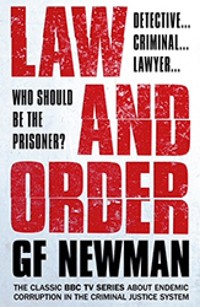
A seminal series about the British criminal justice system, examining endemic corruption from the perspectives of the police, the criminal and the solicitor. The novels in this omnibus edition became the basis of the groundbreaking and controversial television series Law & Order. In the wake of a bungled armed robbery, the series focuses on Jack Lynn, a villain already known to the police; Inspector Fred Pyle, a cynical Scotland Yard Detective determined to nick him, and Alex Gladwell, a cunning lawyer who's perverting the system in order to get him off. As we are told the story from three different perspectives - The Detective's Tale, The Villain's Tale and The Brief's Tale - shocking questions begin to gather force: was Lynn even at the robbery? Do the police have any real evidence? Do the courts really want justice done? Do prisons change or simply reinforce criminal behaviour? 'GF Newman secured himself a place in television history... a brutal assault on the police and the manner in which some of them operate' Daily Express
Das E-Book können Sie in Legimi-Apps oder einer beliebigen App lesen, die das folgende Format unterstützen:
Veröffentlichungsjahr: 2018
Ähnliche




















LAW & ORDER
A seminal series about the criminal justice system, examining endemic corruption from the perspectives of the police, the criminal and the solicitor. The novels in this omnibus edition became the basis of the groundbreaking and controversial television series Law & Order.
In the wake of a bungled armed robbery, the series focuses on Jack Lynn, a villain already known to the police; Inspector Fred Pyle, a cynical Scotland Yard Detective determined to nick him, and Alex Gladwell, a cunning lawyer who’s perverting the system in order to get him off. As we are told the story from three different perspectives – The Detective’s Tale, The Villain’s Tale and The Brief’s Tale – shocking questions begin to gather force: was Lynn even at the robbery? Do the police have any real evidence? Do the courts really want justice done? Do prisons change or simply reinforce criminal behaviour?
‘GF Newman secured himself a place in television history… a brutal assault on the police and the manner in which some of them operate’ – Daily Express
About the author
GF Newman has written more than a dozen novels; 27 feature-length teleplays for the show he created and produced, Judge John Deed; the award-winning two-part drama The Healer; stage plays for the Royal Court Theatre; and a feature film, Number One. His 60-part radio drama, The Corrupted, is BBC Radio 4’s biggest ever drama commission, and returns to BBC Radio 4 in June.
Contents
LAW & ORDER
About the author
Title
Contents
Prologue
Chapter 1
Chapter 2
Chapter 3
Chapter 4
Chapter 5
Chapter 6
Chapter 7
Chapter 8
Chapter 9
Chapter 10
Chapter 11
Chapter 12
Chapter 13
Chapter 14
Chapter 15
Chapter 16
Chapter 17
Chapter 18
Chapter 19
Chapter 20
Chapter 21
Chapter 22
Chapter 23
Chapter 24
Chapter 25
Chapter 26
Chapter 27
Chapter 28
Chapter 29
Chapter 30
Chapter 31
Chapter 32
Chapter 33
Chapter 34
Chapter 35
Chapter 36
Chapter 37
Chapter 38
Chapter 39
Chapter 40
Chapter 41
Chapter 42
Chapter 43
Chapter 44
Chapter 45
Chapter 46
Chapter 47
Chapter 48
Chapter 49
Chapter 50
Chapter 51
Chapter 52
Chapter 53
Chapter 54
Chapter 55
Chapter 56
Chapter 57
Epilogue
‘The ultimate expression of law
is not order, it is prison.’
Prologue
‘OF COURSE, THE RAMPS AND fit-ups, and trade-offs,’ he said over the rim of his glass, ‘are something decent coppers deplore. But without them you’d never nick anyone worthwhile.’
Fred Pyle, a detective with the Metropolitan Police for nearly fifteen years, knew how to control his face muscles so gave nothing away in his expression and there was no irony in his voice.
The only problem with those kind of deals was when they drew a complaint and you got your collar felt. To say so would be to state the obvious.
#
The man at the bar drinking with him nodded, and finished the gin and tonic. He was a detective chief inspector, subject to the same conditioning, with similar thought patterns which helped him do the job. The dci wasn’t a deep thinker – the job didn’t need that. Keeping your numbers up and giving the impression you were winning was all that was required.
At one time living by such a simple philosophy was easy. These days there were obstacles to the faith: some juries no longer believed policemen; the Complaints Investigation Bureau impeded them; a commissioner favouring the uniform and decimating the cid, while expressing in public that autonomy made detectives too much of a law unto themselves.
Action by the CIB was causing the cid aggravation and taking up many detective man-hours. There were outstanding complaints against eighteen of one hundred and ten Squad officers, four of whom were under suspension, the legacy of a massive operation which brought Avon and Somerset policemen to London to investigate wrongdoing. The irony was when the ‘Turnip Squad’ returned home its officers faced an investigation by the Yorkshire cid.
Detective Inspector Fred Pyle was under investigation. Tony Simmons, the dci drinking with him, bore the brunt of senior officers’ irritation at this state of affairs. Each new complaint gave the Commissioner ammunition.
‘The investigation will run its course, Fred.’
‘They already interviewed me once this week.’
The dci gave a grim smile. ‘That was for your own lot.’ The latest complaint was against the senior detective sergeant on Pyle’s squad.
‘A waste of time,’ he said. ‘No wonder so many villains keep their liberty.’
‘Maybe it’s too many cid earning, Fred.’
‘I wish I was,’ Pyle replied, sharing the joke. ‘I keep getting missed out, Tony.’ He smeared brown sauce on his onion bhaji and pushed it into his mouth, chewing it twice and washing it down with scotch. ‘Another one before I shoot off?’
‘I got one to meet, Fred.’ The dci looked at his watch. He was night-duty officer and should remain at the Yard, but was visiting a woman off the manor. ‘Make it a quick ’un.’
1
‘THE THING IS,’ HE SAID with didactic force, ‘what chance you got with the filth? No chance. Them slippery bastards’ll cop a nice earner and still go and nick you, they want you.’
‘Maybe they don’t want me very much, Jack. You think that’s right?’
‘I wouldn’t make a book on it.’
The man at the bar told him how, having been picked up by the cid with stolen bearer bonds, he bunged the di to pull himself clear. It sounded reasonable, but Jack Lynn felt something wasn’t quite kosher, like this villain was pumping him. He tried to remember what he’d heard about him having been picked up and then released. He’d never worked with him, but knew he was a reliable thief. That guaranteed nothing. He could be looking for a body to trade for his own liberty.
Lynn motioned to the woman behind the bar.
‘I’ll get this, Jack – when you’re ready, Sal.’ He turned back to Lynn. ‘Maybe you’re right. I dunno. You gotta take a chance. Know what I mean?’
Lynn glanced away, his gaze circling the smoke-filled club. A card game was in progress at a table in the corner and he wondered about having a few hands before going to his meet.
‘I mean, what can you do about it anyway?’ he said without looking at the man. ‘Fuck all, they come back and nick you. You go to court and scream about them fitting you or about the filth nicking your bit of dough, but you’re up before a wrong sort of judge, you see what good it does. Old Bill make sure you go up in front of a wrong ’un, ’specially if their case is a bit iffy.’
He reached round for the new glass of Pils that was placed in front of him, deciding this man was looking to grass him for his own liberty. The skin on Lynn’s face prickled with indignation.
‘They give you your bit of liberty, them cunning bastards done it for a reason,’ he said, winding him up. ‘Not just for the earner you bunged ’em.’
‘Leave off, Jack. That’d mean I’d have to go on the trot.’
‘I would,’ Lynn advised. ‘I wouldn’t even go home.’
‘T’rific. My missus and kids would love that. I might as well be away doing bird.’
‘’Talk like a mug,’ Lynn said. With a wife and two children whom he thought the world of, he knew he’d sooner be dodging Old Bill than having family visits in prison.
‘You know Ray Turner – tucking up banks with a Visa card he was, having a right good earner. Done about six grand’s worth then coming out of a bank in Hammersmith, zoomp! A car pulls in front of his, bang tight,’ – demonstrating with his hands. ‘He was ready to have a fight but the geezer who gets out of the car is a ds on the Squad. Driving along off-duty he spots Ray – just instinct.’
‘He didn’t know him? Fucking poxy luck!’
‘S’not the best of it,’ Lynn said. ‘This Old Bill nicked every penny off him. Well, you expect that – he did leave him the Visa card so he could go again for himself. What the dirty cunny done was give Ray to the Fraud Squad. When they nicked him, he hadn’t done enough to give them an earner too!’
‘Is that right, Jack? Snaky, no-good bastards.’
‘You should to go on the trot, my son,’ he advised, his attention going back to the card table. Someone got up to leave. Lynn slid his cuff off his Rolex with its eighteen carat gold expanding bracelet, deciding he wouldn’t have time to get involved in the game.
#
‘What did I tell you? Regular as clockwork,’ the balding man said from the passenger seat.
Light from lamps around the perimeter of the car park spilled over the few cars that remained. One of them was the Jaguar XJ6 belonging to Jack Lynn. He spent a lot of time looking after the car; believing there was no point having a nice car unless it was kept near the mark. He was watching the main entrance to the dog track as the last of the luckless punters left on foot, his attention on a security truck approaching the stadium. The gates were opened by a white-coated attendant as the heavy van veered left up the ramp towards the enclosure. Two guards with night sticks and wearing helmets climbed out with secure boxes and disappeared through the stadium.
‘Sometimes we’re not quite ready for them,’ his passenger said. ‘Depends how much we took. Cash has to be collected from around the stadium, counted and sorted.’
Lynn knew these details so well he could recite them in his sleep.
‘What happens if you’re not ready?’ He already knew the answer but wanted to hear it again.
‘The guards make themselves a cup of coffee and wait. The money can’t stay there overnight.’ He hesitated. ‘You know we was robbed once before?’
‘Not recently though,’ Lynn said.
‘A year ago, the safe was cut open. Now they won’t leave the money overnight. Before the takings got left from the Thursday and Saturday meetings and banked the following Monday.’ Again his passenger told him about his job, how having started work at the Tote not long after the war, the injustices he had suffered, getting passed over for promotion.
‘There’s no prob’ if the guards don’t appear again within a couple of minutes?’ Lynn said, bringing the conversation back to the present. ‘Their mate in the van don’t ring Catford nick?’
‘No. Sometimes they’re in there twenty minutes – when we’ve had a big night.’
‘What’s the best night you’ve seen, Andy?’
‘About seventy grand, it was. On the Saturday before the last bank holiday money kept pouring in. No one could pick a winner. The Tote jackpot was seven grand, even that didn’t go. They’d like a few more like that.’
‘Wouldn’t be bad, seventy grand for a night’s work.’ There was expectation in Lynn’s voice.
‘The average is nearer forty-five thousand, though.’ He glanced at Lynn as if afraid that figure might cause him to lose interest.
‘In nice used notes what you don’t have to go again on,’ Lynn said. ‘How bad’s that? No problem spending them; no hungry placer grabbing the lion’s share.’
This wasn’t something his passenger knew anything about, and Lynn chose not to explain the pros and cons of selling stolen money.
‘Look, I’d best get back,’ the man said and glanced at his watch by the light slanting through the windscreen. ‘They might start wondering.’
‘Yeah, don’t make yourself sussy, Andy, ’n fuck it up.’
‘The thing is, when’s it likely to happen? You got any idea?’
Lynn held back, not wanting him to have such information and getting over-anxious on the chosen night. ‘’S hard to say. The sooner the better.’
‘I’d make sure I’m off sick that week.’ He gave a nervous laugh.
‘Be nice to get a look at the office where the money’s counted, ’fore I decide definite, like,’ Lynn said. The office was where he was planning to have it.
‘Be a bit difficult.’ He seemed embarrassed at not being able to lay this on. ‘Getting a job as a cleaner or something is the only thing I can suggest.’
Lynn wasn’t happy about this man seeing his face; letting everyone in the office clock him too would make him amillion for a pull by Old Bill.
As if attempting to redeem himself, Andy said, ‘I could get impressions of the key to that door from the corridor.’
‘Good. Do them in cuttlebone, not soap, so you don’t leave traces on the key. Forensic scientists can detect soap weeks later. They’d know right off it was an inside job. S’not bolted, that door, while they’re in there?’
‘I’ve never known it.’ He checked his watch again. ‘Look, I’d really best get back. You’ll pop down Saturday night, will you?’
‘I’ll take another look.’ He smiled again. ‘We’ll have a nice little earner here.’
‘I could certainly use it. I’ll see you then.’
‘I’ll give you a bell, Andy. Mind how you go.’
Lynn watched him hurry across the car park, amused at how this law-abiding geezer at the age of sixty-two turned to crime and the grievances that brought him to this. How many other people must there be like him with information about money their employers handled, people who’d never get such an opportunity, instead would retire with the company’s thanks and only a bundle of resentments? Mugs.
The two security guards reappeared, each with a cash container. Lynn knew their routine, not just from this operation, but watching others like it. He was a blagger and plotting for weeks, noting every detail, however small, was part of what he did. He was lucky, but how long that might last wasn’t something he wanted to dwell on. Despite the risks he could contemplate no other line of work as he loved the life, the freedom, the money.
One of the guards rapped the van with his nightstick and the small hatch slid open. The money containers went in and the door closed again before they unlocked the cab of the van and climbed in. The glow from a match illuminated the interior as one lit a cigarette while the other filled out his log.
Lynn dismissed the possibility of hitting it here, knowing the guards would, for the few quid they earned, try all sorts to protect it. He could not understand that mentality. It wasn’t their money, why should they care? The other disadvantage was it would be in full view and might attract have-a-go Joes. All it needed was for someone to slam those gates shut, or block the exit with a couple of cars, with the third guard inside the truck on the radio calling for help. Legging it with cash containers wouldn’t be easy, and some boxes dumped dye on their contents. Going after the money in the Tote office was the surest bet.
The car engine started with a satisfying surge of power. High-performance cars were a part of his lifestyle and having a new one was important, even though the finance company owned a large chunk of it. Pushing the stick to drive, he let off the brake. The Jaguar purred out of the car park after the security truck. He wasn’t planning on following it, but was heading north, back across the Water.
The grey XJ6 came through the junction at the bottom of Oxford Street and into Tottenham Court Road just as the lights changed. A reflex made him glance through the driver’s mirror for any lurking policemen. He didn’t take chances when driving, preferring not to give the police any kind of opportunity. Making a left-hand signal, he parked on a yellow line, knowing at that time of night he was safe from the clampers. Climbing out, he locked the door then walked around the car checking the other doors were locked, even though it was within sight of the police station. He had no faith in the police to recover any stolen car. Reassured, Lynn checked in the direction of Goodge Street, then towards Oxford Street, uncertain what he was checking for. Habit.
Just turned forty and having got there without seeing it as a watershed, he saw no reason to change his way of life. He was earning plenty from his trade and believed he could continue until he had earned enough to retire to Spain. His earnings gave him a comfortable lifestyle. He both dressed and lived well, with hand-stitched suits to cover his well-built frame, his choice being conservative on account of his wife going with him when he chose them. He considered himself a sharp dresser and, unless out doing a bit of work, he preferred being suited and booted. He wore large gold links in French cuffs and Fabergé Hero deodorant. His dark, wavy hair was beginning to recede and he wore it short, getting it cut about every three or four weeks. There was little about his appearance that identified him for what he was. He had a flattish face, and someone once said his eyes were a little too close-set, but there was nothing he could do about that. His face wasn’t stark or memory-jogging. Like many villains, he believed in the individual and free enterprise, and had voted Conservative at the last three elections.
Satisfied that he wasn’t being watched, he eased the camel-hair coat off his shoulders, as though taking some rucks out of the back, and stepped into the unlit doorway of the after-hours drinker where he had been earlier that night. There was no doubt now about making the one at Catford, so he needed to put a firm together.
No light appeared behind the door in answer to the bell, but he heard a board creak and knew someone was there. The door cracked open on the narrow entrance hall. ‘Hello, Chas,’ he said in a familiar manner to the man who then opened the door. ‘How’s it going?’
‘There’s one or two Old Bill in, Jack,’ the doorman warned. ‘Thought I’d mark your card, you know what I mean?’
‘They must have an office here, I think,’ Lynn said.
‘They’re just knocking out some bent scotch, s’all.’
Beyond the darkened hallway was a small reception area where coats could be deposited. There was a door which led to the lavatory shared by both men and women, and a payphone fixed to the wall beneath which crates of empty beer bottles were stacked. At one time there had been a book for signing in guests. The room beyond, which comprised the main club, was L-shaped, with little more than the bar and a makeshift proscenium arch where sometimes a stripper or an off-key singer would perform. The whole works including the seating couldn’t have cost the owner more than a grand to set up.
Often any number of what he’d call reliable people could be found here drinking, but the filth weren’t shy about frequenting the place, as the booze was free to them. At the bar two detectives were drinking with the owner. Lynn went to the opposite end. For the low-rent card games and bit of off-track betting that went on the proprietor was obliged to entertain the local Old Bill when they were in. The alternative would be to shut up and find another manor. Ache.
‘Pils, Sal,’ he said to the barmaid and turned to check out the club. The card game in the corner was still going, with only one of the players from earlier. He caught the eye of one of the others, and gestured, offering him a drink. ‘Whatever John’s drinking, Sal.’
She peered through the cigarette smoke and identified John Tully, then reached for the vodka bottle. Lynn put a fiver on the bar and didn’t get any change.
‘Nicking a nice few quid, John?’ he said, setting the drink in front of him.
‘Wish I was, Jack. Haven’t had a hand yet. A ten,’ Tully said to the table, and showed his card, stopping another player going nap and taking the pot.
‘Fuck my luck!’ The blocked player sounded irritated. ‘I could’ve done that the other way.’
‘Cheers, Jack.’ Tully put another two pounds into the pot.
‘You wanna sit in, Jack?’ one of the players asked. ‘Might change my fucking luck.’
‘Gotta get my bit of spends somehow.’
‘Gonna stand you in a score, son,’ the player said, doing a quick count of the pot.
‘Well, let’s see if I can’t nick a nice few quid here.’ His mood was buoyant, a winning mood, he decided. He separated a twenty-pound note and threw it into the pot. Extra cards were added to the limited number used in Napoleon to accommodate the additional player. Lynn took off his jacket and put it on the back of his chair.
At the table there were two prospects for the work he had in mind. John Tully was the favourite as Lynn didn’t know the other man well and wouldn’t ask him unless he was stuck. He would wait till the game was over before putting it to Tully as there were too many grasses around to mention anything here. How whispers about what you were plotting got picked up he didn’t know, nor any way to prevent it happening. Someone you put it to thinking they were doing you a favour would casually mention it to the wrong person. Dangerous.
He was right about his luck. He took two hundred and fifty pounds out of the first pot, a hundred and sixty out of the second. There wasn’t a third.
‘You always was a jammy git,’ Tully said as they drove away from the club in Lynn’s car.
It was late and there was little traffic about, apart from a few empty cabs cruising around.
‘Thought Tony Holder was gonna block me on that last hand. He was well sick, wan’ he?’
‘Can’t say I was pleased, Jack. Know what I mean? Thought I was gonna nick that. ’Been handy, pay the rent.’ Tully was short, with a powerful build and a large head and stomach He was in his early thirties and had been a villain ever since childhood, as far as Lynn knew.
‘Where you living now?’ Lynn said. He had offered him a lift, assuming he still lived his way, which was Kentish Town.
‘Same place, more or less – Swiss Cottage. Got a flat with this married woman – she’s got a couple of kids,’ Tully explained.
‘Yourn?’ Lynn asked.
‘Leave off! – nice kids, though.’ He smiled. ‘S’pose I am like a father to them. The ol’ man pissed off.’
‘Happens all the time, John.’
‘Yeah. No-good slag!’ Tully said.
There was silence in the car for a moment.
‘This is a nice motor, Jack. How long you been running this?’
‘S’only six months old. Trouble is, you go and make too many Old Bill sick driving about in a car like this. They’re such jealous fuckers. They have to wipe their mouths though – it’s clean.’ He glanced at the villain next to him, at the road, then at Tully again, assessing him. ‘What you been doing lately, John? Any work?’
‘Why, got something in mind, Jack?’
‘Soon. Could be very nice.’
‘I could be interested. But the thing is, I got something of my own coming off, know what I mean? Depends what you got in mind, Jack, and when it’s going, I s’pose.’
‘S’blag at Catford dog track,’ Lynn said.
He looked over at Tully, expecting some kind of reaction, but the villain just stared through the windscreen, like he was considering the proposition. ‘I’m light about two, I reckon.’
‘I always thought you had a regular firm, Jack. ’S what I heard.’
‘No, nothing that definite.’ He hesitated. ‘Well, Stevie Murry and Terry Hutt got nicked on that one down at London Bridge a couple of months ago.’
‘Yeah, I was offered some of that, know what I mean?’
‘You did well to give it a miss. They were well lollied. The filth ought to let them have bail, I should say. Help ’em out. They’re stuck down in Brixton waiting to go up.’
‘Well, Peter Collins has been waiting seven months to go up the steps. S’fucking murder. You gone and done your bit of bird ’fore you even get weighed off on a guilty, know what I mean?’
A grin spread across Lynn’s face. The remand situation wasn’t funny, but he tried to keep a sense of proportion. Time on remand came off your sentence. ‘This one I got in mind’s gonna be worth about six or seven apiece, ’a bit of luck.’
That impressed Tully. ‘As much as that?’ he said and whistled.
‘S’gotta be there, no problem.’ He resisted elaboration, wanting anyone to come in with him to be on a realistic prospect rather than for promises he couldn’t fulfil.
‘The thing is, Jack, I’m committed to this other one. What I mean is, it’s all down to when yourn’s going off, know what I mean? It’s one I was putting together myself over at Abbey Wood.’
‘I can’t say definite yet. I gotta take another look on Saturday. It’s gotta be soon, be silly just leaving it. I mean, if I know about it then someone else might.’
‘Oh yeah, you’re better off doing it. Look, give us a bell at the weekend. M’ plans should’ve firmed up by then, ’a bit of luck. I definitely do fancy it, Jack.’
‘What’s your number? The thing is, I don’t wanna leave it much later than Sunday.’
‘I’ll know, won’t I? I’ll be able to tell you.’ He picked up a business card from the top of the dashboard and scribbled his phone number on the back of it. ‘If I ain’t in, I’ll be down the hall. My Ann’ll know where I am.’ He propped the card on the dashboard. ‘Why don’t you give Ginger Chapman a bell, ’you’re short-handed? He was looking for something.’
‘He’s a fucking hippy. You can’t rely on people like that, John,’ he said. ‘Probably be well doped-up.’
‘His hair’s a bit long, is all,’ Tully said. ‘Do the next right here, Jack.’
‘S’enough, John – long hair.’ He wouldn’t ring Chapman, he decided, as he followed Tully’s directions to a block of council flats. ‘I’ll give you a bell on Sunday, then.’
‘Yeah. Good luck, Jack.’
2
AT THIS STAGE OF PLOTTING half his time seemed to be spent sitting in cars watching the prospect, or waiting to meet someone. If someone didn’t show, or he failed to see what he needed to see, he’d wonder if the job was going to work out or if he shouldn’t find something else.
Lynn spent another Saturday evening at Catford dog track watching the security truck, waiting for the guards to emerge with the money, timing them as though a few seconds would somehow make a difference. He followed them out past Catford Bridge railway station and watched them turn left onto Catford Road. He then turned right into Ravensbourne Park Road and parked his wife’s Austin Metro and switched off the lights.
He was waiting for his man from the Tote. When he had spoken to him earlier Lynn had blanked the idea of meeting in the car park again, in case someone noticed them. Making another excuse to leave the office might cause someone to remember this when the blag went off. The filth wouldn’t take long to crack someone like Andy Harrison. Lynn wondered about him now, whether he might not become a prime suspect anyway.
Maybe the man hadn’t told him things he ought to know before making the final decision. On the plus side Andy Harrington didn’t know anything about him.
Through the driving mirror Lynn saw a maroon Montego crawl along the line of parked cars. He put his arm out of the window and signalled to the driver. The car tucked into the space behind, and his contact joined him in the Metro.
‘All right?’ Lynn inquired.
‘Yes, fine. We had a good night.’
‘I’ll drive around the block,’ Lynn said, starting the car. ‘Otherwise we might get done for sus. It only needs someone in the street to do a busy and call the police. Two men in a parked car in a Neighbourhood Watch area are a million. Unless they think they’re gays!’ He laughed.
‘Don’t go too far. I haven’t locked my car.’
‘That’ll be safe enough. They’re all spades around here – they only nick big motors.’
The older man gave him an uncertain look, before glancing back at his car. ‘We had a good night,’ he said again. ‘We took in just over forty thousand.’
Lynn didn’t comment, but divided that by four, with a bit extra to him for his Xs. A nice earner. ‘D’you get an impression of that key?’ he asked.
From a large wad of tissue paper his contact produced a four-inch piece of cuttlebone. Lynn reached up and put on the light to inspect the impressions as he drove. They were well formed, and his man had had the foresight to take two of each side of the key.
‘You done well, Andy. My key man will cut one from that all right. I’ll send it to you to test.’ He switched out the light.
‘I was a bit worried in case it wasn’t right.’ He smacked his hands together in an excited manner, as though concluding some business. ‘When do you think? When you might do it?’
‘A couple of weeks, I’d say. ’Bit of luck.’ He sensed his disappointment and glanced sideways at him. ‘You desperate or something?’
‘No! No, of course not,’ he replied. ‘It just seems to be going on forever.’
‘I know what you mean. Try not to think about it till it’s done.’
His man gave a nervous laugh. ‘A nice few quid will be handy – they owe me.’
‘You’ll get it soon enough.’ Lynn turned the car round to head back.
There was a lot to do in putting one together, besides getting the firm, things he wouldn’t consider telling his man about. There were tools to get, the sort to cause the right effect; cars to get rung as it was no good dragging one off the street to risk having your collar felt before you even got to the blag. The cars had to be parked with confidence on the getaway route he’d worked out. There was no way to tell what might happen in traffic and this would probably prove the most unpredictable part.
Arrangements took time. His immediate problem was getting his team. No point completing moves on cars, guns or anything else until he had a firm for the job. He was beginning to wonder about that as names were scratched from his shortlist, faces who, for various reasons, couldn’t make it. Two said right off they didn’t fancy making one, without hearing what it was. He preferred a straight blank, then he knew it wasn’t anything wrong with the blag.
Following these knockbacks, Lynn considered reducing the number he needed, but decided four, including himself, was the minimum. Five would be better. If his regular team hadn’t been nicked or had got bail, they’d have had a taste, if only to provide for their families while they were away. He thought about the job they had been nicked for, and why he hadn’t gone for it. Something had felt wrong about it and he followed his instinct in these things. Now he was getting a bad feeling about Catford.
#
The Plough on Clapham Common was a popular lunchtime pub of a weekend with food and Karaoke on offer. He didn’t often come south of the water to do his drinking, and was using the pub now to meet a villain. All he ever came to South London for was business.
Alan Parker suggested the meet as he lived not far from the pub. Now Lynn felt irritated by the choice as there was no room to sit down and have a quiet chat.
‘Sorry, pal,’ he said to acustomer as he elbowed his way out from a short section of bar as another man tried to get in. He made his way to Alan Parker, who was pressed into a corner, and gave him his pint. ‘S’fucking murder, this.’
‘Where else have they got, Jack?’ Parker said. He was in his early thirties, about three inches shorter than Lynn, with a deceptive build. Looking at him you might have thought he couldn’t do much, but Lynn knew different. He appeared older than he was, and around his vivid-blue eyes were blocks of flesh that sometimes developed on boxers’ faces. His blond hair was too long, but Lynn was prepared to make an exception here as it was stylishly bunched in a ponytail.
Glancing round, making sure no one was listening, Lynn said, ‘You looking for a bit of work, Alan?’ There was no need to qualify the work.
Without even asking what it was, Parker said, ‘I don’t think so, Jack. I mean, I wouldn’t do you no favours getting involved – I’m getting a lot of aggro from the filth on account of some videos I done a couple of weeks ago.’
‘Fuck a duck!’ Lynn said. He had been convinced Parker would have some of it. ‘I thought there was s’posed to be a recession on.’
Parker scoffed. ‘You wouldn’t thinkso, would you? Try moving two thousand video cassettes.’
Lynn watched him sip his beer, then said, ‘I’d take a chance, you fancy it?’
‘No, I don’t think so. I mean, I got Old Bill up my daily. They call round so often, they should move in. I’ll bring you ache, Jack.’ He sipped more beer. ‘You stuck?’
‘Can’t get no one to work with me. You’d think I was a fucking grass!’
‘Sorry, Jack. I’d like to have some of it.’
Lynn finished his drink and left.
The bottom of his list was coming into sight. Again he considered whether the difficulties he was having were an indication for him to give the entire prospect a miss as a whole new set of negative feelings came about the blag. Right then he chose to ignore them. It was going ahead; there was a little firm to be had somewhere.
#
The telephone bell was just audible beneath the soundproof canopy near the tea bar. Punters on the nearby tables made no move to answer it. Neither did John Tully as he considered his shot.
Since the arrival of snooker on the tv, Sunday lunchtime was no longer a quiet affair at the snooker hall – nor any other time, come to that. There were games in progress on each of the fifteen tables that transversed the deep room in threes. The room was dim, not much light got through the shaded windows, while the lamps over the tables were designed to light the playing area.
‘John!’ the man who ran the hall called, bending to look beneath the hood. ‘Telephone, son.’
John Tully didn’t respond but played his shot and straightened up to watch the ball run. It didn’t go where he intended. ‘Fuck it,’ he said and moved along the table where his opponent, Micky Fielder, was leaning on his cue.
‘Your old lady chasing you for dinner, John?’ Fielder said.
‘S’what comes of being in love, Micky.’
He glanced at Fielder who stayed watching him as he went to the phone, sensing his curiosity. Fielder was that sort of bloke, always making himself busy, asking questions that caught you off guard and which you found yourself answering. Tully always felt he said too much even when he hadn’t. One of these days he would find himself grassed.
With his own job on Tully knew it wasn’t possible for him to make the one Jack Lynn was offering, but he was tempted as he listened to him down the phone. He so wanted to say yes to it, as he knew he’d stand to earn more than he would from his own one. That alone wasn’t enough to persuade him. His blag was his blag, and being the governor was important to him. The fact that he’d earn less was something he’d live with.
‘Sorry, Jack. I’d like to help you out. This one I’ve been plotting’s going off. Know what I mean? I do fancy yourn. Sounds like a right good earner.’
‘Oh yeah, it should be,’ Lynn said.
‘I don’t suppose there’s any chance it’s gonna be put back?’
‘No, I wouldn’t have thought so, John. It’s gotta be done.’
‘Pity, that,’ Tully said, as if still half-tempted.
‘Yeah, that’s the way it goes. Another time, John.’
‘You want me to put anyone in touch, I hear of anyone?’
‘You hear of someone tasty. Be bit slippery, son.’
‘Yeah, ’course. See you, Jack.’ He replaced the phone and ducked out from under the canopy, hesitating to reassure himself he wanted his own blag more than Lynn’s.
When he got back to the table Micky Fielder was chalking his cue. Tully glanced over the green baize.
‘Oh,’ Fielder said, by way of an apology, ‘I nicked the yellow, brown and green.’
‘Down to me, is it?’ Tully retrieved his cue and considered the three balls left on the table. ‘Not a lot of chance here, have I? What’s in it, Micky?’
‘About six.’ Fielder waited for him to line up the blue. ‘Get your marching orders, John?’
‘Naw. It was Jack Lynn,’ he replied, and played his stroke, taking blue. ‘He’s got one going off down at Catford – he’s a bit light-handed.’
‘He’s a good ’un. Right nice fella,’ Fielder observed. ‘You having some?’
‘Wouldn’t mind.’ He moved round the table to look at the pink. ‘I’ve got enough on my plate. You want I could put you in, Micky.’
‘Me? The fuck I want some of that. S’not my game, is it, blagging?’ Fielder said.
Tully stooped and tried for the pink, pushing Lynn’s blag from his mind.
3
‘SO I GAVE HER A PULL,’ he said, hitching up his trousers which had slipped off his large waist – a habit and most of the time he wasn’t aware that he was doing it. Eric Lethridge was standing by one of the thirty desks placed in lines in the Robbery Squad’s office at Scotland Yard. ‘Well, we get back to her room, this dss hotel she’s staying in – I mean, a right fucking rat’s nest you can’t believe – you know, you don’t care with one about sixteen on the firm and you got the raving popcorn. S’all she was, I swear to you,’ he added for any doubters. ‘So she says, she says, “Do you want to make love to me?” just like that. “Well,” I said, “it’s either that or you’re nicked!”’ He shook his head in anticipation of the conclusion. ‘So, I’m giving her a right seeing to when, casual as you like, she says, “Oh, I s’pose I ought to tell you, I’m attending the Charlotte Street clinic for this discharge I get”… ah, it slaughtered me!’ As he reached this point in his story, his hip-grinding movements, resembling those of too large a dog on too small a bitch, ended and he jerked back, arching his spine as though withdrawing fast from the infected girl.
His audience exploded with laughter. The four detective constables, aged from mid-twenties to late-thirties, were around the desk where one of them, Ray Jenkins, had stopped halfway through typing a report. They were part of the night relief, which was one of the ten separate squads, each employing ten men under a detective inspector.
The Squad office was forty feet long by twenty wide and crowded with furniture. The desks, belonging to no particular detective, were littered with typewriters and computer screens, plastic filing trays, some spilling Styrofoam cups. Chained to the desk nearest the door was the huge duty book, into which were entered all investigations and movements of detectives. On other tables at the side of the room were telephones; eight more phones hung on the wall under acoustic canopies with filing cabinets jammed against walls. These still got a lot of traffic as detectives kept their paperwork moving, even though most searches these days were done on the computer. The whole area wore an impersonal look, with neon lighting bleaching the life from everything.
A telephone started ringing. Often phones were answered fast as it could mean a job away from the hated paperwork. Now no one jumped. Lethridge told himself it was because his story gripped them, but not even the dc who was typing nearest to the ringing phone bothered, nor the detective with his feet on the next desk. Tonight they were waiting to go on raids and didn’t want to get involved elsewhere.
When the laughter died, Lethridge smiled and went to answer the phone himself.
Glancing at the dc, he said, ‘You lazy bastard, Warren, couldn’t you answer this?’
dc Warren Slater, the only one doing any work, glanced up as he continued hitting computer keys, swearing when he made a mistake.
‘Robbery Squad,’ Lethridge said into the phone, ‘Sergeant Lethridge.’ The voice down the line asked for his governor. ‘You’ve got the wrong office. You want the dis’ office. I don’t think he’s in.’
‘’Course he ain’t,’ the voice said, ‘we was supposed to have a meet.’
‘Hang on a minute, I’ll check.’ Lethridge laid the phone down and went out, hitching up his trousers.
He was forty-four years old, and overweight. Tiredness hung over him like a pall on account of his pursuing women with the same obsession he went after villains. His appetite was huge, and he enjoyed the reputation: if it moved Eric Lethridge would stiff it. Despite edicts to the contrary he freely associated with villains, which was how he kept his ear to the ground and his numbers up. His fleshy face wore a disdainful look, having been a policeman a long while and a detective sergeant for six years, with no expectation of making di. To do that he would have had to go back into uniform then re-apply for cid. Returning to uniform, at whatever rank, wasn’t a promotion as far as he was concerned – few detectives chose to go back into uniform. His dark, sleeked-down hair with its high, off-centre parting made him look like a 50s Brylcream ad, and his clothes had an outdated appearance, like he was waiting for that particular fashion to come round again. Separated from his wife, he often found himself at a loose end, while during his marriage he rarely got home for dinner. There had always been reasons not to, there still were, only now excuses weren’t necessary.
Detective inspectors on the Squad worked out of a single office, smaller than the main squad room, with four desks between the ten dcs who worked there at various times during the twenty-four hours – rare indeed was the time when all the dcs were in the office together. Like all the offices on the fourth floor, it was cluttered with filing cabinets and screens, and had a familiar impersonal look.
Detective Inspector John Redvers was the only person there. Lethridge knew he should have been at home trying to sleep in readiness for the raid their two squads were joining forces to make later on. Instead he was seated at his desk in his overcoat, like he was on the point of leaving, but the pile of reports he was checking said different. Scotch in a Styrofoam cup stood on the desk, the bottle tucked away in the bottom drawer out of sight. None of the governors objected to the drinking that went on, but they would have objected to an open bottle of Johnnie Walker advertising the fact.
‘Fred around, guv?’ Lethridge asked. ‘Guv’ was how most detectives addressed more senior officers.
‘Had one to meet, didn’t he? A snout, I think,’ Redvers said, lifting his eyes from the report.
‘He’s on the phone now. I thought he might have popped back.’
‘Stuck up one somewhere,’ Redvers surmised. He finished the scotch in the cup. ‘You want one downstairs, Eric?’
‘Aren’t you going home?’
Redvers glanced at his watch. ‘’S hardly worth it.’
‘Let me get a number from chummy. S’not exactly hectic in there.’ Spending an hour in the Tank, their bar on the ground floor, would help relieve the monotony.
Rising with a dismissive laugh, Redvers said, ‘The time the night tour find anything more than their pricks to pull, Eric…’ It was said without rancour. There was rivalry between the individual squads, but not animosity. ‘I’ll see you downstairs.’
When Lethridge got back to the phone, whoever had made the call was gone. He dropped the handset back on the rest, and put the call from his mind.
4
UNDERGROUND TRAIN MEETS WITH GRASSES were favoured by Fred Pyle. They were casual and anonymous and almost always safe. People never noticed their fellow passengers on the underground, and avoided eye contact, even though the seats were arranged opposite one another. Here people might have epileptic fits, break a leg, get raped, while other passengers would look away to avoid getting involved.
The Circle line was his preference, as the train passed through St James’s Park station, across from the Yard. Like so many of his contemporaries, he avoided unnecessary expenditure of energy, otherwise he’d never have got through the sort of day he often had to put in. The only trouble with these meets was their unreliability. Again he checked the time before glancing along the platform to the opening of the tunnel. The signal showed green but there was no sign of an approaching train. He looked at the other people on the platform, registering their details: two Asians; a female secretary who, he decided, had worked late for her boss, then turned down his subsequent offer, and a young couple wearing leather jackets. His gaze moved on across the tracks. The prospects were no better there. He was feeling impatient.
At forty-three Fred Pyle inclined towards heaviness, too much scotch and snacking at irregular hours was the cause. He didn’t mind what or when he ate. His height of five-ten didn’t help to disguise his extra weight, nor his fleshy face and thickening jowls. He still had his own hair, which pleased him – it was a grey-sand colour and cut short. He wasn’t a follower of fashion, unlike two of his detectives who sported ponytails. Pyle wore a small knot in his Squad tie on a blue button-down collar – his navy blue suit his wife bought for him from M&S. He never dressed as well as he had on division, when he and another detective nicked some villains breaking Austin Reeds, the men’s outfitters. They had helped themselves to half a dozen suits each and twice as many shirts. He never talked about what he earned or blagged, but kept his own counsel… having learnt to detach himself from emotion he was able to control the muscles around his mouth and eyes so his face was often expressionless and gave nothing away. Eyes were the most revealing part of the face, and Pyle avoided betraying his thoughts by developing a cold glaze. The fact that he often worked long, exhausting hours helped in this. The most revealing thing about Detective Inspector Fred Pyle was that he revealed nothing of himself. He rarely smiled, apart from at the odd joke, or dropped his guard. If he showed anything resembling feelings it was often to gain some advantage. He got married as a young constable to a wpc and had stayed married despite the strains the job put on their relationship. Their two children, both in their early teens, kept them together. If asked, he would say he was neither unhappy in his marriage nor happy. Family always came second. Work was his priority.
Checking his watch as the west-bound train burst out of the tunnel, he felt annoyed at his long wait and decided if his grass wasn’t on this train he’d give him a miss.
Pyle gave no sign of seeing his contact as he boarded the carriage and walked its length, checking out the other passengers. None of them showed any interest in him, not even when he took a seat next to Micky Fielder in the near-empty carriage. His grass was flamboyant in his choice of clothes, like he had a need to be noticed – he was 40 with thick dark hair which was well-cut and he wore an expensive three-quarter black leather coat, which looked as though it had just been nicked. His lamp-tanned face was mobile and his eyes darted around the whole time.
‘Did you miss one, Micky?’ Pyle asked. This meet had been set for as near ten o’clock as a train passing through St James’s Park station could be.
‘They cancelled a bastard train, didn’t they? Try’na save money, the Underground.’
‘I thought you’d blanked me.’
‘I wouldn’t do that, guv. I tried giving you a bell.’
Pyle said nothing, but Fielder needed little prompting to tell all he knew about any crime going off. He was a compulsive grass. Some needed all sorts of promises before they would impart their information, and sometimes only with a direct threat to their liberty. Most grasses responded to threats; that was how Fielder had fallen under his spell: nicked for a break-in Pyle had let him bargain for his liberty. He always listened to such propositions as it made no difference to him whether a villain like Fielder went down or not. All the while the grass offered him information he’d get whatever immunity Pyle could give him.
‘Picked up a nice little whisper, didn’t I? Very nice.’ Fielder waited, as if expecting him to acknowledge this. Pyle was better at waiting. ‘Ever heard of Jack Lynn? Outta Kentish Town.’
Even though he kept a catalogue of villains, some going back years, that particular name meant nothing to him. ‘What’s he do, Micky?’
‘Blags is what I hear – s’posed to be one or two nice little tucks down to him. He’s well active. He’s putting one together now. He’s short-handed, looking to get another couple, he is.’
‘You in line?’ It was a perverse compliment.
‘Me, guv? Leave off. Robbery’s not my game, is it?’ He flexed his shoulders, adjusting his coat. ‘A bit of screwing does me. You go pulling blags with other villains you wind up grassed, know what I mean?’ Fielder seemed unaware of the irony in this.
‘What’s he putting together? Did you find out?’
‘Course, that’s why I called you. The Tote down at Catford dog track. S’what I heard.’
‘Ambitious, Micky. Be a nice earner they have that off.’ He glanced round as the train slowed in the tunnel for a signal, then picked up speed again.
‘He’s a bit near the mark, this one, guv…’ Fielder gave an anxious look. ‘I’d say so. He could get it done all right, this blagger. You any idea what that’d come to, guv? That Tote? It was done just last year, it was. It was worth about thirty grand then.’
Pyle remained unimpressed. That way he extracted maximum information from this particular grass. ‘I know it was, Micky, but they were only banking their takings once a week. Securicor collect it now after each meet.’
‘It’s still got to come to a nice few quid.’
‘When’s it supposed to go off?’
That question discomforted Fielder and he shifted in his seat. It was obvious he hadn’t got the information needed to capture the blaggers bang to rights.
‘Ain’t got that for you yet, guv. My party didn’t give me it.’
‘S’not a lot of value then, son, is it?’ Pyle didn’t conceal his disappointment. ‘What d’you think the chances are?’
Taking up the challenge, Fielder said, ‘Oh, should be a doddle. Just means punting around a bit more. I should be able to get it all right.’
‘I’d appreciate that, Micky. Be a nice earner off the insurance for you if we nick them.’
The train ran into Victoria Station. Both of them watched the doors slide open, saying nothing as passengers climbed in at their end of the carriage. Some walked along the aisle away from them. When underway again with the rattle of the wheels almost drowning their conversation, Pyle said, ‘You okay for a bit of dough?’
‘Oh yeah,’ Fielder replied, like he was eager to impress. ‘I had it off the other night.’
‘Pleased to hear it, Micky,’ he said as if not interested in the details, and then slipped in with, ‘Anything worthwhile?’
‘I tucked up this office in Putney.’ He gave the location of the break-in. ‘A bit of cash and some blank Amex – it was a doddle. They could have put a notice out, know what I mean? When I get those travellers’ cheques placed it’ll have been a right good ’un.’ He hesitated and glanced at the detective. ‘The thing is, guv, could you do anything with them?’
Pyle considered the question. At one time he would have taken them, but nowadays American Express travellers’ cheques were too much aggravation. Or maybe it was the thought of his current trouble with the Complaints Investigation Bureau that made him hesitate. Still he went through the motions to encourage his grass. ‘What do they come to?’
‘There’s just over two grand’s worth.’
‘What were you expecting? A monkey?’ That was an optimistic figure. A twoer would be a more reasonable expectation.
‘Wouldn’t be bad, would it?’
‘I’d say. I’ll have a word with someone,’ Pyle said, extending hope. ‘Mind how you go, Micky, if you knock them out yourself. I don’t want to have to spring you from some local nick. Specially if you haven’t dug up anything more on this Catford blag.’
Fielder gave a sheepish grin, as if believing he was joking. He had a lot to learn, Pyle thought. His grass would never grow old enough to know the half of it.
5
THE FOURTH FLOOR CORRIDOR OF the main block at Scotland Yard was like an endless neon-lit square tube with sectional offices off it. Those along the left-hand side belonged to the Robbery Squad, and most of their doors remained open as if to invite anyone in. On occasions the dcs’s door was shut if he was having a meeting, and sometimes the two Squad superintendents would close their door for the same reason. It was rare for the dcis’ door to be closed. The doors on the opposite side of the corridor to offices used by Criminal Intelligence were always shut. They guarded information with obsessive fervour as their inquiries often went on for months, sometimes years, before they came up with enough target villains. After that amount of collar it was disheartening to have the suspect given prior warning of a raid. It happened. Pyle had done it himself.
Stepping from the lift, he shuffled along the corridor feeling tired. Perhaps it was his age, or too much scotch, but more and more night-duty was leaving him weary. His kids had woken him too early and now he’d struggle to stay awake through the night shift. Since leaving his grass he hadn’t thought about his information, instead he had been in an after-hours club, hoping to meet another villain. Now back at the Yard Jack Lynn occupied him.
The dcis’ office was deserted, with all the lights burning. He needed to talk to Tony Simmons about the blag at Catford. This office was the same size as that he shared, but with only three desks. There was more noticeboard area, all of it filled both with announcements about vacancies in various constabularies and papal-like edicts from the Commissioner; there were angry memos from different departments about reports or forms or tests not returned in the correct fashion, along with ‘Wanted’ posters and circulars – it was a week’s reading.
What he had would keep but as he started out one of the telephones rang. He answered it. ‘Chief Inspectors’ office.’
A man down the line asked for the dci by name. ‘He’s just stepped out. Can I take a message?’ The caller wanted to know how long he would be. ‘Can’t say,’ Pyle told him, and wondered if this was a grass. He doubted it as dcis weren’t that active. ‘Tell him Terry called.’ Pyle replaced the phone and scribbled the message on the pad along with the time, two-twenty.
In the Squad office there were a dozen or more detectives hanging around like lads on an outing waiting for the coach to arrive. Men from John Redvers’ squad were creeping back to assist the night-duty squad with their Method Index raids. Only three of the detectives so far present were busy, taking the opportunity during this lull to catch up on their paperwork. At any given moment all would have paperwork outstanding. The ‘hated’ was something to put off until necessity dictated.
‘Haven’t any of you got homes to go to?’ he said as he passed a group of detectives.
‘Chance’d be a nice thing, guv,’ dc Ray Jenkins replied – a familiar complaint.
‘Well, you’d only sleep, or give the old lady some,’ – regardless of the female detective present. He got away with such remarks because whatever was their lot was his too.
He continued along the office to find Jack Barcy, the number two ds on his squad, at a desk hammering out a report on a typewriter. He knew Barcy would rather have been hammering a statement out of a suspect. He was tall, lean and hungry-looking, with cold, emotionless eyes. There was no doubt about his role on the squad: violence specialist, ever ready to give stick. Paperwork for him was hated more than by any other detective on the Squad.
‘Found your true vocation, Jack?’ he mocked.
Barcy scowled as his fingers continued to smash down on the keys, like he wanted to break them. Because of his poor application to paperwork he would never rise above his present rank, and only because of his better-than-average results did he keep his place on the Squad. A lot of detectives had been booted for much less than Barcy got away with.
‘Where’s the duty chief?’ Pyle asked. ‘He out?’ He assumed he was from what Tony Simmons had said in The Feathers earlier that evening.
‘I think he popped over the Middlesex Hospital to give that nurse one!’
Pyle glanced at the clock. ‘That probably means a late start on these raids.’
‘You got one to meet then, guv?’ Barcy asked, leaning back in his chair.
‘Me? I’m a respectable married man, Jack.’
‘I’ve heard you say your prayers too, guv.’
‘Gotta get promotion somehow, son.’ He didn’t smile. ‘D’he say when he’d be back?’
‘Not to me.’
‘Couple of hours’ sleep before court tomorrow would be handy. That’s not a prospect if we don’t do these raids as planned. There’s an active party called Lynn. Jack Lynn, with a double “n”, I think. A blagger out of Kentish Town. Have someone pull his CRO file, will you? I’m going to get my head down for an hour or so.’




