


15,59 €
Mehr erfahren.
- Herausgeber: CICO Kidz
- Kategorie: Für Kinder und Jugendliche
- Sprache: Englisch
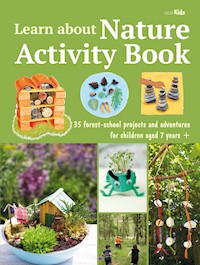
Discover the wonders of the natural world that surrounds you! Start with In The Garden – where you can build a bird feeder, or an insect hotel. Growing Fun has projects for plants that can be grown in small spaces, such as a miniature garden and a tiny terrarium. The Outdoors Indoors includes craft ideas for things you've collected – a leaf picture frame, a shell wind chime and some pine cone animals! Finally, head to Outdoor Crafts and Games with activities for camping. Here you can find out how to make a treasure trail and a river race game, along with much more. Every project has a skill level of 1, 2, or 3, and comes with easy-to-read instructions and adorable, step-by-step artworks that will guide you along the way.
Das E-Book können Sie in Legimi-Apps oder einer beliebigen App lesen, die das folgende Format unterstützen:
Veröffentlichungsjahr: 2022
Ähnliche











![Tintenherz [Tintenwelt-Reihe, Band 1 (Ungekürzt)] - Cornelia Funke - Hörbuch](https://legimifiles.blob.core.windows.net/images/2830629ec0fd3fd8c1f122134ba4a884/w200_u90.jpg)



Learn about Nature
Activity Book
Learn about Nature Activity Book
35 forest-school projects and adventures for children aged 7 years +
This edition published in 2022 by CICO Books An imprint of Ryland Peters & Small Ltd
20–21 Jockey’s Fields
341 E 116th St
London WC1R 4BW
New York, NY 10029
First published in 2013 as My First Nature Activity Book
www.rylandpeters.com
10 9 8 7 6 5 4 3 2 1
Text © CICO Books, plus the project makers listed on page 128
Design, illustration, and photography © CICO Books 2013
The author’s moral rights have been asserted. All rights reserved. No part of this publication may be reproduced, stored in a retrieval system, or transmitted in any form or by any means, electronic, mechanical, photocopying, or otherwise, without the prior permission of the publisher.
A CIP catalog record for this book is available from the Library of Congress and the British Library.
ISBN: 978 1 80065 094 7
E-ISBN: 978 1 80065 138 8
Printed in China
Series consultant: Susan Akass Editors: Susan Akass, Katie Hardwicke Designer: No Days Off, Barbara Suñiga Step artworks: Rachel Boulton Animal artworks: Hannah George For photography credits, see page 128.
Art director: Sally Powell Head of production: Patricia Harrington Publishing manager: Penny Craig Publisher: Cindy Richards
Contents
Introduction
Collecting materials
Getting started with crafting
Other useful techniques
Getting started in the garden
Plant ideas
Chapter 1:
In the Garden
Fairy posies
Bird feeder
Wheelbarrow veg garden
Wooden nesting box
Insect hotel
Pebble birdbath
Seed bombs
Peanut heart
Climbing bean archway
Chapter 2:
Growing Fun
Tiny terrarium
Rain boot bulbs
Stop-motion bean pot
Herb head flowerpots
Miniature garden
Cress caterpillar
Edible flower colander
Chapter 3:
The Outdoors Indoors
Nature stones
Shell wind chime
Bark rubbing picture and twig frame
Leaf picture frame
Leaf print Easter eggs
Butterfly shell magnets
Leaf and flower paper
Pine cone animals
Nature journal
Chapter 4:
Outdoor Crafts and Games
Fruity boats
Driftwood game
Twig raft
Natural garland
River race game
Treasure trail
Teddies’ wigwam
Pebble games
Beach monsters
Conker creatures
Templates
Suppliers and resources
Index and acknowledgments
Introduction
Nature is wonderful! We all enjoy watching things grow or getting outside into the yard, the park, or into wild places. There’s so much to see and do, so much to explore, and so many interesting things to collect. This book is full of great ideas that will make you even more fascinated by nature and which will get you outside even more often, by showing you exciting projects for making, doing, and growing.
In this book there are four chapters: In the Garden—which is full of fun projects to start you gardening and to make your garden more wildlife-friendly; Growing Fun—with great ideas for growing things inside your home or just outside on a doorstep or windowsill; The Outdoors Indoors—which is packed with craft projects using bits and pieces you can pick up on woodland walks or at the seaside; and finally, Outdoor Crafts and Games—which gives you ideas for all kinds of different games and activities to do while you are out and about in the great outdoors.
Most of these projects are very simple and use very few special materials but, to help you know where to start, we have graded them with one, two, or three smiley faces. The grade one projects are simple, quick, and use materials that you are likely to have in your craft cupboard. Grade two projects are a little more difficult, take a little longer, and may need materials that you will have to buy specially. Projects with three smiley faces are more challenging and require special equipment or materials.
Take a look at the Collecting Materials section (see pages 8–9) for ideas on what to look for and when. Getting Started (see pages 10–13) will also give you some useful tips and instructions for skills such as tying knots, planting seeds, and keeping safe. So get outside, get making, and have fun!
Project levels
Level 1
These are quick, easy projects that can be made with materials in your craft cupboard.
Level 2
These projects take a little longer and may need some special materials.
Level 3
These projects require special materials and may need help from an adult.
Collecting materials
Whenever you are out and about, keep your eyes peeled for suitable crafting materials. You will be amazed at the variety of natural treasures you can collect right outside your back door throughout the year.
When you are out and about Think Green!
•Always respect nature.
•Only take things from the ground, try not to damage living plants.
•Never take living creatures out of their environment.
•If you turn over rocks or logs put them back how you found them and watch out for bugs or wildlife that may be hiding underneath.
•Be careful when you pick berries, nuts, or fruit as these can be poisonous—always check with an adult before you collect them.
•Watch out for bugs—wasps feed on fallen fruit and take care not to disturb wasp, bee, or ant nests.
•Never touch mushrooms and fungi as these are often deadly poisonous, and make sure that you are aware of any plants that should not be touched, like poison ivy—always ask an adult if you’re not sure.
•Take all your litter home with you.
•Close all gates so farm animals don’t escape from fields.
•Always take care near water—never enter water to fetch a boat or twig that has blown out of reach.
What to collect and when
Remember always to wash your hands well after you have been outside collecting, making, or playing.
Winter When the trees and hedgerows are bare, look out for pieces of bark, interesting shaped twigs and dried out seed heads.
Spring and Summer Enjoy the wild flowers and fresh green leaves. Most wild flowers should be left to grow where they are, but you could pick a few common ones like buttercups and daisies and some pretty grasses or beautiful fronds of ferns and other leaves. (You could also ask permission to pick some garden flowers.) Use them fresh for some projects or take them inside and dry them to use later. Dry them by hanging them in a warm, dry place, or press them between pieces of paper, under a pile of books, or in a flower press.
Fall (Autumn) This is the best season to go foraging—whether for blackberries for a blackberry and apple pie or for colored leaves and all the many different types of seeds you can use in your craft projects.
All year round Evergreen trees can provide you with pine cones and interesting leaves to use on printing projects and for your homemade paper (see page 84), while shells, pebbles, driftwood, and sea glass can be gathered at the beach whatever the season.
Foraging essentials
When you go out always dress for the conditions:
•In winter—wear warm clothes, a waterproof jacket, and rain/wellie boots (so you can tramp through dirt and puddles)
•In summer—wear long trousers and trainers (so you don’t get scratched or stung by nettles) and a sun hat and sun block (so you don’t get burnt)
•All year round—take a waterproof jacket for unexpected showers!
Don’t forget to bring something to carry your finds in—a pail (bucket), a basket, or a plastic bag will do fine. Egg cartons are good for putting small finds in to keep them safe. A back pack will keep your hands free for climbing and exploring.
Reusing and recycling
People who care about nature reuse and recycle.
Check your garden and shed for:
•Old terra-cotta flower pots and saucers
•Roofing tiles
•Pieces of timber
•Worn out rain boots/wellies
•A broken wheelbarrow
•Lengths of twine
•Almost finished pots of paint
•Old potting mix (compost) bags All of these are used in different projects in this book.
Check your house for:
•Empty jars for storing your finds such as seeds, shells, and small pebbles
•Old newspapers—essential for covering the work surfaces while you craft
•Old gift wrap as it often comes in great patterns and colors
•Tissue paper
•Computer print outs unused on one side
•Cardboard boxes—shoeboxes, cereal packets, egg cartons, etc—these are good for storing your finds in
•Scraps of fabrics and ribbons
•Fruit such as melons and mangoes—remind your family to keep the skins whole when they peel them so you can make fruity boats (see page 96)
Getting started with crafting
For the projects in this book collect what you can from nature, and reuse and recycle bits and pieces from your house or backyard and shed. You will also need a store of craft materials to get you going. These are the basics:
Glue
•PVA is suitable for most projects in the book. It is safe and easy to use, but can be messy so make sure that you cover your work surface with newspaper before you start. It takes a little while to dry, so be patient.
•Glue sticks are good for sticking paper together but are not strong enough for heavier materials.
•Modeling clay is useful for attaching things together that may not stick well with glue, such as twigs, conkers, and seeds.
Paint
•Poster paints are good for crafting because they are nontoxic and washable. For a basic kit, buy red, yellow, and blue, which can be mixed together to create lots more colors, and white and black to lighten and darken them.
•Get a selection of inexpensive paintbrushes in different sizes. Always wash them well after use.
•Paper plates are good for mixing paints on. Use old yogurt pots for paint and glue.
•For some projects you will need water-based latex (emulsion) house paint and varnish. Try to use pots left over from decorating but always ask first.
•Acrylic pens are an easy way of adding fine details to decorations.
String
•Nothing is more useful than a piece of string. For these nature activities try to use string made from natural fibers such as raffia, jute, and sisal which will eventually rot away if left outside.
•When you are out and about try using natural materials such as long grasses, reeds, or climbing plants, such as vines, to bind sticks together.
Scissors and knives
•For many of these craft activities you will need strong sharp scissors—always be careful when using or carrying them.
•As you get older you may be allowed a pen knife when you are out in the wild. Make sure that you are taught how to use it properly, always cutting away from you or down onto a firm surface.
Blowing eggs
If you’d like to keep your Leaf print Easter eggs (see page 80), then it is a good idea to blow the egg first. You can use blown eggs for other craft projects, too.
1You may need to ask an adult to help. Using a needle, prick a small hole in one end of the egg and a slightly larger hole at the other end.
2Push the needle into the egg and prod it around to break the yolk. Holding the egg over a small bowl, blow (don’t suck!) through the small hole. The egg yolk and white will come out through the larger hole into the bowl.
3Place the empty eggshell under running water to gently clean the inside.
Other useful techniques
Tying a strong knot and braiding (plaiting) string can come in useful when you’re out and about, in the garden, or making something at home.
Reef knot
This is a strong knot to tie two pieces of string together or to tie two ends together to make a loop.
1Take the left end of the string, pass it across the right end and twist it underneath.
2The ends have now swapped places. Take what has now become the right end and pass it over the left end, twist it underneath, and bring it up through the loop you have just made.
3Now pull all the ends tight.
4This little rhyme will help you remember: “Left over right and under, right over left and under.”
Braiding (plaiting)
This makes a strong length of twine or string that can be used for hanging heavier things, like the bird feeder on page 20.
1Knot three equal pieces of twine or wool together at one end. Hold the knotted end firm with a bulldog clip, stick it down with some tack, or put a heavy book on top (or ask someone to hold it for you).
2Take the right strand over the middle strand—this then becomes the middle strand.
3Take the left strand over the middle strand – this then becomes the middle strand.
4Keep repeating right over middle, left over middle, until you reach the end. Tie the strands together in a knot.
Getting started in the garden
Some of the projects involve growing plants. Here are a few guidelines to help you to sow seeds and look after your growing plants, so that your flowers, herbs, and vegetables are healthy and strong.
Gardening materials
•Hand trowel
•Hand fork
•Garden scissors
•Watering can
•Garden twine
•Bamboo canes
•Gardening gloves
•Rain boots/wellies
•Suitable clothing that you don’t mind getting covered in dirt
•Potting mix (compost)
•Gravel
•Plant pots and containers
Garden safety
•Wear a pair of gardening gloves whenever handling soil or material like well-rotted compost in the garden. This will prevent you picking up harmful bacteria.
•Don’t eat anything without asking permission and washing it first.
•Always wash your hands after you’ve been gardening.
•Don’t pick leaves, flowers, or berries without asking permission first—some garden plants are poisonous.
Growing seeds
You can buy seeds in packets from a garden center or collect your own from seed heads in the garden to plant the following year. (Check that the seeds aren’t poisonous.)
To plant seeds in a pot or container:
1Fill the container with potting mix (compost).
2Firm it down gently to leave a level surface.
3Scatter the seeds thinly on top.
4Cover with soil or potting mix— about 1/2 inch (1 cm) deep for most small seeds.
5Water and put them in a warm, light place to germinate.
•If you are planting seeds inside, to help the seeds germinate you can make a mini greenhouse by placing a clear plastic freezer bag over the pot and securing it with an elastic band. Remove it after the seeds have germinated.
•If you have planted seeds in the container they are going to grow in, you may need to thin them out a little so that they have room to grow. Check the seed packet for how big the spaces should be and pull out the weaker seedlings until there are big enough gaps between the plants that are left.
Scattering the seeds
Thinning out seedlings
Planting out
When planting into a container, or directly into the soil in the garden, you need to prepare the plant and dig a hole.
1Make sure that you give the plant a good drink of water in its pot about an hour before you begin planting.
2Prepare your planting hole by digging a space twice as wide as the plant pot, forking over the bottom and giving it a good watering.
3Take your plant carefully out of its pot, place it in the hole, making sure it is planted at the same depth as it was in the pot.
4Push the soil back into the spaces around it and firm the soil down well.
5Then give it another good watering.
Watering
Plants need a lot of water to keep them healthy, especially when they are young or newly-planted and when the weather is warm and dry.
•You will need to water small seedlings and plants in pots almost every day if the weather is dry.
•The best time to water is early morning and evening because less water will evaporate in the sun in this way—but if you see your plants wilting and drooping in the heat, then don’t wait!
•For larger plants, such as climbing beans, which you have planted into the ground, a thorough watering once a week is better than a little bit every day, because it will make the plant grow longer deeper roots.
•Try to have a watering can with a fine rose (the part with holes at the end of the spout) so that it pours a very gentle shower. This is less likely to wash away small seedlings. You can also water seed trays and plant pots by standing them in a bowl of shallow water for 15–30 minutes (the larger the pot, the longer you leave it).
Tying-in
Tie plants to a cane with a figure eight. Take the twine twice round the cane, twist it and then tie it loosely around the plant stem.
Plant ideas
If you’ve caught the gardening bug and want to grow and plant different plants in containers, or in the garden, you may be finding it difficult to decide what to grow. To make choosing easier, here are themed lists of some fun and exciting plants. Whether you’ve got a large garden or yard, or just a window box, there are some great plants to try.
Salad-bowl garden
•Lettuce ‘Lollo Rosso’
•Spinach ‘Bordeaux’ (red stem, baby leaf)
•Lettuce ‘Mizuna’
•Scallion/Spring onion
•Cherry tomato ‘Tumbler’
•Cucumber
•Lettuce ‘Little Gem’
•Edible carrot leaf (grown for leaves, not roots)
•Mustard
•Radish
•Beet/Beetroot ‘Bulls Blood’ (grown for its leaves)
•Tatsoi
Crazy fruit and vegetables
•Brussels sprouts ‘Red Delicious’ (purple sprouts)
•Chard ‘Bright Lights’ (mix of white, red, pink, gold, and orange stems)
•Strawberry ‘Maxim’ (fruit as big as a small hand)
•Tomato ‘Tigerella’ (stripy fruit)
•Squash ‘Turks Turban’
•Borlotti bean ‘Lamon’ (pink and white blotched pods and mottled beans)
•French bean ‘Purple King’ (dwarf purple beans)
•Cucumber ‘Crystal Lemon’ (round, yellow fruit)




