


2,99 €
Mehr erfahren.
- Herausgeber: Creative Quill Press
- Kategorie: Für Kinder und Jugendliche
- Sprache: Englisch
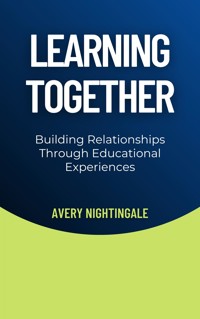
"Learning Together: Building Relationships Through Educational Experiences" is a groundbreaking exploration of the power of intergenerational learning. Avery Nightingale delves into how educational experiences can foster deep, meaningful connections between students, teachers, caregivers, and communities. This book highlights the transformative role of community-based learning (CBL) and the unique insights gained from engaging college students in intergenerational settings. Nightingale presents compelling observations and measurable outcomes that showcase how these experiences not only prepare students for their futures but also instill a strong sense of belonging and commitment to their communities. By weaving together the perspectives of various generations, this book provides invaluable insights into creating educational environments that benefit both individuals and society as a whole. Whether you are an educator, student, or community leader, "Learning Together" offers a roadmap to building stronger relationships through shared educational experiences.
Das E-Book können Sie in Legimi-Apps oder einer beliebigen App lesen, die das folgende Format unterstützen:
Veröffentlichungsjahr: 2024
Ähnliche








Learning Together: Building Relationships Through Educational Experiences
Avery Nightingale
Published by Creative Quill Press, 2024.
This is a work of fiction. Similarities to real people, places, or events are entirely coincidental.
LEARNING TOGETHER: BUILDING RELATIONSHIPS THROUGH EDUCATIONAL EXPERIENCES
First edition. August 28, 2024.
Copyright © 2024 Avery Nightingale.
Written by Avery Nightingale.
10 9 8 7 6 5 4 3 2 1
Table of Contents
Title Page
Copyright Page
Introduction
The Importance of Building Relationships in Education
Creating a Positive Learning Environment
Collaborative Learning Strategies
Using Technology to Enhance Educational Experiences
Promoting Inclusivity and Diversity in Education
Fostering Social and Emotional Learning
Encouraging Active Student Engagement
Developing Effective Communication Skills
Building Teacher-Student Relationships
Parent and Community Involvement in Education
Assessing and Providing Feedback on Student Progress
Supporting Students with Special Needs
Cultivating a Growth Mindset in Education
Enhancing Critical Thinking and Problem-Solving Skills
Integrating Arts and Creativity in Education
Promoting Global Citizenship Education
Addressing Bullying and Promoting Kindness
Implementing Project-Based Learning Approaches
Encouraging Independent Learning and Self-Reflection
Using Experiential Learning to Deepen Understanding
Incorporating Outdoor and Environmental Education
Building Resilience and Grit in Students
Supporting Teacher Professional Development
Nurturing a Love for Lifelong Learning
Empowering Student Voice and Agency
Strengthening School-Home Partnerships
Promoting Health and Well-being in Education
Advancing STEM Education
Exploring Career and Vocational Education
Adapting to Remote and Online Learning Environments
Conclusion
Introduction
In this chapter, we provide an overview of what we learned about relationship development during the intergenerational learning experiences that caregivers and children, as well as older adults, adults, and college students, shared. We describe how college students and community-based learning (CBL) experiences are situated in the directionality of fostering membership in the intergenerational community setting. We present observations of the learning process as well as the measurable learning outcomes for students, in terms of both being readied for their futures and for the opportunity to observe the returns on their commitment to community. We describe the role of the interconnected individuals, institutions, and communities in the establishment and maintenance of powerful learning experiences, providing both societal and individual benefits.
As students and teachers from diverse backgrounds participate in high-quality, high-reciprocity learning experiences, a number of facilitators can enhance the learning and relationship-building process. Many skills needed for effective practice and assimilation of new information and experiences emanate from the abilities of highly skilled teachers. In this case, students were challenged with new learning; when the outcomes also were new or different from usual experiences, apprehension increased. Students' concerns about whether they would be accepted as "reasonably capable" by organizational partners were somewhat reduced, however, by the orientation experience during community service learning.




