


4,49 €
Mehr erfahren.
- Herausgeber: L'Isola dei ragazzi
- Kategorie: Für Kinder und Jugendliche
- Sprache: Englisch
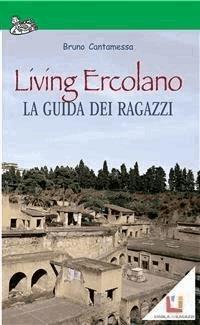
Una città intera sepolta dalla furia del vulcano. Secoli trascorsi tra buio e silenzio e poi, finalmente, la riscoperta avvenuta per uno strano caso.La fascinosa Ercolano, con le sue terme, i templi, le semplici botteghe e abitazioni, torna a vivere in questa guida per ragazzi per la prima volta realizzata in versione bilingue, italiano e inglese. Strumento agile e utilissimo, consentirà a tutti i giovani incantati dalla magia del passato di partire per un viaggio a ritroso nel tempo alla scoperta della città cancellata e dei suoi antichi abitanti.
Das E-Book können Sie in Legimi-Apps oder einer beliebigen App lesen, die das folgende Format unterstützen:
Veröffentlichungsjahr: 2015
Ähnliche













![Tintenherz [Tintenwelt-Reihe, Band 1 (Ungekürzt)] - Cornelia Funke - Hörbuch](https://legimifiles.blob.core.windows.net/images/2830629ec0fd3fd8c1f122134ba4a884/w200_u90.jpg)






Instructions for use
The entrance to the Herculaneum archaeological site has long been the ceremonious monument in Corso Resìna, built in 1927 and dominated by one word: Herculaneum. A new future entrance is planned on the side facing the sea. Proceeding from this monumental entrance, a long ramp stretches straight down to the dig. Spread below is the entire excavation: small and embedded in the earth, but inordinately pleasing to the eye. A tuff wall, over 25 metres high, divides the ancient city from the modern, impressive in its testimony of how hard it must have been for the diggers to extract the Roman city from the clutches of the compact tuff that filled and covered it to the brim. All around hangs the city as we know it, with modern houses almost leaning on the excavations. From a bird’s-eye view, the ancient city seems to be part of the modern one. It is only far from the Corso Resìna traffic, down below, in the midst of the unexpected silence of the ancient Roman homes that another city, another time is discovered, a place where time stands still, but which is sure to have had a more man-friendly environment in its time. At the end of the ramp, an iron bridge crosses the ditch above the ancient beach, leading directly to the whereabouts of the III north-south road. However, the best perspective can only be found still lower, down the ramp and the tunnel that lead to the front of the ancient harbour. The stairs and the tunnel are dug in the tuff bank. Outside, is a humid trench dense with water plants. A walkway extends to the foot of the ancient tuff stairway that once led from the beach to two different city entrances, past two ancient fornixes (used to shelter boats and goods) and up between two terraced areas. On 24 August, 79 AD, it was a lovely sunny day. Late that morning, a sudden deafening roar emerged from the bowels of the earth and the Vesuvius burst open. A column of black smoke rose for miles, darkening the sky. A fearful darkness fell over the Vesuvian cities of Herculaneum, Pompeii, Stabia, the opulent villas and the village of Oplonti. Ash and lapillus, roaring cascades of water and earth clods fell thick from the sky. Mortal gases dispersed and incandescent lava slowly made its way down from a new volcanic cone that took shape at impressive speed, in the midst of mournful howls and tongues of fire. In fear for their lives, the inhabitants of Herculaneum and all the other neighbourhood villages tried to escape. A few of those who fled towards Naples probably made it safely. Many plunged down to the tiny harbour in the hope of fleeing by boat. But the seaquake drove them back, drowning some of them. Trapped between the deranged sea and the deluge of water and fire from the volcano, many sought refuge in the passages of the harbour dock. There, in the dark of night, they fell in the grasp of two surges of incandescent gas moving at 30 metres per second at a temperature of 400°C. In an instant they were all dead. A flow of blistering mud, several metres high, invaded the city, hiding it from view. After three days the drama was complete. No trace of Herculaneum remained. The mud solidified into tuff and with the passage of time, more volcanic lava flowed down the slope (the most impressive flow occurring much later, in 1631). Herculaneum literally vanished from view. It was only a question of time before it was forgotten. Only the words of a few ancient writers handed down the name, together with that of Pompeii, Stabia and Oplonti. As to the whereabouts of the Vesuvian cities, for many centuries, no one would know where they were. According to ancient historians Sventonius and Cassius Dione, after the tragedy, the Emperor Titus, crowned a few months after the death of his father, Vespesian, was the first to organise rescue operations. The eruption had caused tremendous damage. Stabia, Sorrento, Nocera and Salerno were repaired. Few things could be recovered from Pompeii, which was enshrouded in ash and lapillus. But Herculaneum was completely buried, swallowed by 20 metres of mud that was beginning to harden. Gone. Out of reach. With regard to the eruptions, ancient authors wrote: the most famous and versed is definitely Pliny the Younger, who watched the event from Miseno, while his uncle, Admiral Pliny the Elder, was dying in Stabia, suffocated by gas during a rescue attempt from the sea. Memories of the place where the tragedy took place in 79 AD survived for a long time, at least until the end of the Western Roman Empire in the V century. A beautiful map conserved in Vienna, the Peutinger table () bears witness to the above. Though published by Konrad Peutinger in 1591, the map dates back to the XIII century. It’s strange for a medieval map to show the names of cities that disappeared centuries ago along with any knowledge of their location. Yet, there they all are, on the : Pompeii, Stabia, Oplonti and somehow, even Herculaneum. The explanation lies in the fact that despite its medieval origin, the map is a faithful copy of Roman roads around the III century. Its format probably derives from the World Map prepared by the great Marcus Hispanicus Agrippa (64 BC - 12 AD), friend and son-in-law of the great Roman Emperor, Ottavianus Augustus.
Lesen Sie weiter in der vollständigen Ausgabe!
Lesen Sie weiter in der vollständigen Ausgabe!
Lesen Sie weiter in der vollständigen Ausgabe!
Lesen Sie weiter in der vollständigen Ausgabe!
Lesen Sie weiter in der vollständigen Ausgabe!
Lesen Sie weiter in der vollständigen Ausgabe!
Lesen Sie weiter in der vollständigen Ausgabe!




