


6,99 €
Mehr erfahren.
- Herausgeber: No Exit Press
- Kategorie: Krimi
- Sprache: Englisch
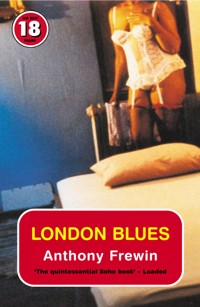
The chance discovery of a 30 year old blue movie leads back to the film's maker, Tim Purdom, and the London of the late fifties and early sixties. Purdom was a pioneer of the B&W British porno film and a figure on the periphery of the Profumo sex scandal. He directed eight films...but who was directing him and what was their hidden agenda? And where is Tim now? London Blues explicitly and unremittingly details the hidden world of Soho vice and London's demi-monde at the time when the grey 1950s were giving way to the 'swingin' sixties'. It is a dramatic and compelling venture into the secret history of our time - a provocative and totally original novel.
Das E-Book können Sie in Legimi-Apps oder einer beliebigen App lesen, die das folgende Format unterstützen:
Veröffentlichungsjahr: 2005
Ähnliche


















The chance discovery of a 30-year-old blue movie leads back to the film’s maker, Tim Purdom, and the London of the late fifties and early sixties. Purdom was a pioneer of the B&W British porno film and a figure on the periphery of the Profumo sex scandal. He directed eight films…but who was directing him and what was their hidden agenda? And where is Tim now?
London Blues explicitly and unremittingly details the hidden world of Soho vice and London’s demi-monde at the time when the grey 1950s were giving way to the ‘swingin’ sixties’. It is a dramatic and compelling venture into the secret history of our time - a provocative and totally original novel.
‘The quintessential Soho book’ – Loaded
‘A forceful, striking thriller’ – Time Out
‘The most intriguing British writer since Derek Raymond’ – Bizarre
‘Fifties atmosphere, powerfully evoked’ - Literary Review
LONDON BLUES
Touch Blue Your wish will come true. – Mother Goose’s Melody (circa 1765)
Anthony Frewin
http://www.noexit.co.uk/index.php
For N and S, who might be tempted to agree with Ambrose Bierce’s definition of a novel.
Contents
Title Page
Dedication
Part One
1: On Green Dolphin Street
2: Sometimes I’m Happy
Part Two
1: All the Things You Are
2: Intermission Riff
3: Red Top
4: Epistrophy
5: Dizzy Atmosphere
6: Algo Bueno
7: Misterioso
8: Brilliant Corners
Part Three
1: Bye-ya
L’Envoi: Now’s the Time
A Note on the Typeface
About the Author
Copyright
Part One
1
On Green Dolphin Street
God has a hard-on for paranoids.
– Dan Nordau (circa 1968)
IF TIM PURDOM hadn’t made all of those black-and-white porno movies in London back in the early 1960s he’d probably still be alive today. I mean officially alive … because, of course, nobody can be sure, really sure, that he is dead. They hope he is, but they don’t know.
If you’re quietly going about shooting blue films with static camera set-ups and too much use of the zoom lens in dingy single rooms at the Hotel Exquisite, Bayswater, featuring a Notting Hill Gate minicab driver flat on his back with one buxom girl astride his loins and another astride his face, for example, what enemies are you going to make? Eh? What enemies? You might get arrested, but you’re not going to make any enemies. But Tim did. Somehow, somewhere, he did.
Tim was a pioneer of the British porno film. He directed nine films altogether, but who was directing him and what was their agenda, and where is Tim now?
I’ll tell you where it started for me, give you the background and recount to you how it unfolded and then you’ll know as much as I do. See what sense, if any, you can make of it.
Gibbous moon rising. A shy wind through the trees. Susurrus. November. Late in the year. Late in the day. A fat Saturday meandering its way to an end and merging insensibly with a lazy Sunday.
I pulled the curtain across, turned over in the bed and lit a cigarette. The room was dark now aside from the television. I was watching a video of Mike Hodges’ GetCarter. It’s a noir masterpiece – the kind of movie that’s produced about once every twenty years in the British film industry.
Michael Caine is Jack Carter, a gangster whose brother has been found dead in Newcastle, apparently from an accident – he’d been drinking and driving. Carter thinks it’s fishy. There’s more to it. Jack has a nose for villainy.
It’s a film about nasty people in nasty situations. Jack Carter may be a crook but he’s self-righteous and determined. He doesn’t flinch at cruelty. He’s smart and deliberate. And he’s got self-respect.
The film opens on Carter standing behind French windows looking out. He’s with some gangsters, the ones he works for in London and they’re enjoying a slide showing of black-and-white porno stills projected on a screen.
Caine is looking pensive and mean. He’s worried and concerned. He’s got a different agenda and the other thugs sense this.
‘We don’t want you to go up north, Jack.’
But Jack is determined. He’s already made up his mind.
Then Jack’s on the train heading north from King’s Cross. He’s looking at the other passengers and out the window and reading Raymond Chandler’s Farewell,MyLovely.
There are evening shots and then it’s night as the train pulls into Newcastle-upon-Tyne station. Newcastle in the north of England.
Later, there’s a superb cameo in the film of a provincial gangland boss, Kinnear, played by John Osborne, the playwright. Kinnear speaks with a semi-educated nasally voice that has a built-in resignation.
Jack is rescued from some hoods who are chasing him by Kinnear’s girlfriend in a white sports car. This is Glenda.
Glenda takes Jack back to her flat. They make love on her bed, reflected in the large mirror that serves as a headboard. Afterwards she goes to the bathroom and runs a bath. She lies in it smoking a cigarette, her heavy make-up still in place. She’s smoking the cigarette like it’s the last one she’ll ever have and, indeed, it is.
Beside the bed is an 8mm projector. A roll of film is laced up and ready to turn over. It’s a blue film. Local porno. Glenda has already said she appears in it. Jack switches the projector on. The projector turns over and throws a picture on to the small screen at the foot of the bed.
The film is a mute black-and-white production called Teacher’sPet. A schoolgirl gets out of a car. Inside a house she is shown into a room by a ‘mistress’ played by Glenda.
As Jack watches he realises that the young girl is his brother’s daughter (though she may well be his daughter, the film is ambiguous). Tears silently roll down Jack’s face as he stares at the screen. The drama unfolds. Set pieces. Jack knows what is coming next. A bit of this and then a bit of that. Anyone can write the script.
As I’m watching Michael Caine watch the film the sound is cut. I can see Carter call out something to Glenda in the bathroom. She mouths something but the sound has gone. And now the picture goes too. It’s there and then it isn’t and I’m left with a black screen with streaking white noise. From downstairs I hear the grandfather clock chime midnight.
Fuck!
I paid £15 for this bootleg tape. A prime copy of the full uncut version … supposedly.
I run the tape fast forward. Nothing. Further fast forward. Still nothing. Just blackness.
As I light another cigarette the screen catches my eye. The black has given way to a solid grey, as though something is about to appear. I stare at the screen waiting for Michael Caine and the rest of GetCarter. I wait and the grey remains. Suddenly, in black and white, there’s some film leader and the rapidly descending numbers of 10-9-8-7-6-5-4-3-2-1. They’re over in as many seconds and the screen is now white. Then:
FUCKADUCK FILMS
presents
The words have been handwritten on white card with a thick black marker. The first line in caps and the second in lower case.
The card very nearly fills the screen. It’s being held by someone whose fingers can be seen in the two top corners. Fingers with long false fingernails painted red. I assume it’s red as the film is grainy black and white, and scratched.
And now a second card appears:
in association with
PRICK-A-DILLY PRODUCTIONS
rapidly followed by a third:
THE BOYFRIEND’S
SURPRISE VISIT
From the title alone I’d guess this is an authentic 1960s blue movie. A genuine slice of the underside of Swingin’ London. A porno pic. A blue movie. A stag. A smoker. A loop. Call it what you will.
Is it here? Am I going to see it?
Yes.
The opening shot. Two of them. A blonde. A brunette. Two dolly birds in their late teens, early twenties. Both with the heavy eye make-up one associates with graduates of Dusty Springfield University. The brunette is wearing a floral patterned dress and white high-heeled shoes. Her hair is cut short. She has a pixie face with small eyes and large lips. The blonde has her hair straight and uncut. She’s wearing a black skirt and a white blouse. She’s the more attractive of the two but there’s something hard about her angular features. She’s stealing glances at the camera every so often and holding herself back. She would rather not be doing this but for some reason she is. The brunette is playing the role to the full.
The two girls are sitting on the floor of a room that looks like a bedsit (and indeed it is, or was). In front of them is a portable record player with an LP spinning. They are swooning over some photographs of Cliff Richard in a magazine, kissing him, holding him to their breasts, closing their eyes and thinking how wonderful it must be to be possessed by such a fella.
The room interests me more now than the girls. To their left is a small old threadbare two-seater sofa which has been put hard against the footboard of a high double bed, one of those old beds that stands about a metre off the ground. I remember as a kid being taken on holidays in the 1950s when every hotel room had just such a bed. They were ancient even then. Massive hardwood head-and footboards that looked like they would last a million years and, indeed, would have had not changing fashions ousted them. I can only see about a third of the bed and on it seems to be a quilted eiderdown, and not the more usual candlewick bedspread, usually a sinequanon of British sixties porno pix. The other obligatory prop of the genre is the Lloyd Loom chair but I can’t see one in frame. Should the camera pan on the tripod, however, I would bet my pristine first edition copy of TheCryingofLot49 that one would sail into view (it didn’t, so just as well). In the background some heavy ceiling-to-floor curtains have been closed over the windows that occupy the centre of a wall with peeling arabesque wallpaper. To the right of the drapes – a tailor’s dummy, a torso bereft of limbs on a stand. Is this going to feature in the action or is it just standing there in splendid surrealist isolation?
On the right wall was a sink in the corner with an odd-looking Ascot heater above it. The Ascot was the object that officially confirmed a room had changed its identity and was now a bedsit. This was objective, scientific proof that nobody could dispute. Landlords put them in for quick, cheap hot water so the renters wouldn’t clutter the bathroom they shared with ten others (indeed, in some cases, it obviated the need for a bathroom altogether).
On this side of the sink was a table and above it, pinned to the wallpaper, were postcards and photographs. Then a big bulky armchair, a close relative to and contemporary of the sofa, followed by a largish bookcase that disappears from frame.
I wondered where this bedsitter was? Earls Court was the favourite locale, and if not there South Kensington or Swiss Cottage? No, Swiss Cottage did not seem right. How about Ladbroke Grove? More likely. A pound on Earls Court then, 50 pence on South Ken and 25 on the Grove. I would later find that my last bet was topographically the nearest: this little example of the secret cinema was shot in Bayswater, on Porchester Road, near the top of Queensway, a little over three-quarters of a mile to the east of Ladbroke Grove.
The camera is still statically staring down at the girls who continue cooing and oohing at Cliff. I’m wondering what will happen next? A dream sequence with a Cliff clone? And, God Almighty, there were enough of them about in the late fifties and early sixties! Hard to credit, eh?
The blonde looks to the camera and then quickly looks away. Whoever is behind the camera is giving her directions and telling her not to look into the lens. She stands up, kicks her shoes off, pulls up her dress, takes her panties down, steps out of them and throws them towards the sink. All of these actions are done with an expression of bored defiance – I don’t have to do this! Pouty and spoilt. Very well, if I have to, then.
The brunette looks up from Cliff and says something to the blonde. She says something in reply and then sits down on the floor peering over the brunette’s shoulders at the photographs. The brunette turns and gently pushes the blonde back until she is flat on the carpet with her legs towards the camera. The blonde reaches over for the magazine and is reunited with Cliff as the brunette lifts her skirt, opens her legs, and begins gently massaging her almost hairless blonde pussy, all glistening and shiny (with baby oil?). The blonde begins moving her hips in a circular motion as the brunette’s fingers explore more deeply. The camera zooms in until the action largely fills the frame. Now the brunette’s head comes into view, led by her tongue which follows the course taken by her fingers over the labia and on to the clit. Her hair keeps falling forward and obscuring the action and, it seems, responding to instructions the brunette quickly pushes it back behind her ear (the punters have to see what is going on). She’s licking with her eyes closed, giving herself up to the part.
The camera pulls back slowly to the full framing of the opening footage. The two girls stand up and begin undressing until they are both naked. They embrace and run their hands up and down each other’s bodies. The blonde is still shooting glances at the camera.
They walk to the left and the camera, still on the tripod, pans and follows them without moving from its original position. The blonde sits on the edge of the bed, opens her legs, and the brunette goes down on her again. The blonde, to show how much she is really enjoying this, opens her mouth, rolls her head and stares at the ceiling.
I can now see more of the room. Behind the bed, against the wall to the left of the curtains is a mirrored dressing table piled high with books, mainly paperbacks. Above it is a painting in an ornate, carved if now worn frame. The glass appears to be cracked and the years of dirt, grime and, no doubt, cigarette smoke render it impossible to identify, at least on a video dupe of a twenty-five-year-old 8mm loop.
On this side of the bed at the head is a small, low bedside table with a Bakelite radio, an overflowing ashtray and some more paperbacks. By the foot of the bed is a squat television on an upturned packing carton angled for viewing from the bed.
Above the bed is a large poster of … Charlie Parker! Bird is holding his alto and smiling. He’s in a suit. One of those striped double-breasted creations the boppers favoured. He’s staring out across the bedroom as the blonde and brunette gently rock to and fro in a sixty-nine position, the brunette uppermost. Bird’s presence strikes me as incongruous, there’s something too hip about him for a British blue movie. The ambient décor of home-grown stags has always been kitsch, terminal kitsch. If ever there’s a painting on the wall it’s the Oriental girl with green skin framed in white plastic that Boots the Chemists used to sell. That or a painting of a steam train or a Spitfire or the Italian kid with tears in his eyes. But Bird?
The couple uncouple and the brunette produces an unzipped banana from somewhere and gently inserts it into the blonde’s vagina. The blonde starts staring at the ceiling again and impersonating ecstasy. The camera now moves: it and the tripod upon which it is fixed are lifted, carried nearer the bed, and set down. A slow zoom in to show the magical wedding of banana and labia in glistening, anatomical detail. The brunette’s hand moves the fruit in, out, in and around. She’s wearing false nails painted red, or certainly a dark colour. Were these the hands featured in the title card at the beginning?
After what seems an eternity of reciprocating motion the camera pulls back to the medium shot. The director should have told the blonde this because she is caught unawares. Instead of abandoning herself to the plateaux of pleasure she’s scratching her nose and yawning. Somebody does say something to her because in a trice she’s back to rolling her head and staring at the ceiling. And still the banana hasn’t worn out. The brunette is diligently, if not mindlessly, pumping away with it.
Looking at the part of the room now visible and linking it with what was seen of the right-hand side I could see it was pretty spacious. The ceiling is high too. This is in a Victorian town house carved up into bedsits. The wall on the right was probably put in to divide the room.
The film so far has been one take. The first cut now occurs: same camera set-up with the two girls on the bed. The brunette is kneeling down with her buttocks towards the camera. The blonde is listlessly masturbating her with the neck of a bottle. The camera zooms in to show the penetration in greater detail but the available light at this angle is limited.
Another cut and the girls are fondling each other’s breasts and kissing. The lens gently zooms in until lips and two extended touching tongues fill the screen. There’s a slow pull back to a medium shot of the girls sitting on the edge of the bed. The brunette opens her legs and pulls back her lips as far as they will go. The blonde touches her with a hesitant middle finger and then moves it down and into her until it is lost within. The zoom lens brings the subject forward until it fills the whole screen. It holds for several beats and then pulls back as the blonde removes her finger and the brunette closes her legs.
The girls are now startled by something off-screen. A noise, perhaps? They duck under the bed’s covers and wait. From camera right a figure walks into frame. He stands staring at the bed with his back to the camera. He’s wearing tight-fitting cord trousers, Chelsea boots and a dark shirt. His hair is blond and longish (for the time), coming to just over his ears. He steps forward and pulls back the eiderdown to reveal the two naked girls underneath doing their best to act sheepish and embarrassed. He undresses quickly and pulls the girls from the bed. They kneel down in front of him, one on either side. The guy looks like he’s in his early twenties. His features are sharp but not stern, almost like a young Paul Newman. He’s smiling and enjoying himself.
The blonde takes his semi-flaccid circumcised member and begins rubbing it, deliberately and purposefully. She then sucks it with not much enthusiasm, barely taking more than its head in. The brunette comes over for a suck and does it with gusto, showing the blonde how it should be done.
The guy is now as hard as he’s ever likely to be. He sits on the edge of the bed and pulls the blonde towards him. She climbs on him with her back to the camera and he’s soon inside her. He supports her buttocks with his hands, parts them for the camera and gently moves her up and down. Her co-operation seems zero. The brunette kneels down in front of them to get a better look. Now the girls change position for another few feet of 8mm footage.
The brunette climbs off and kneels down on the bed. The guy stands up, turns, parts her buttocks and starts to fuck her from behind. The blonde manoeuvres herself round on the far side so she can caress the other girl’s back. The detail isn’t too clear from this distance and I wonder why the zoom lens isn’t used for an anatomical close-up.
The guy withdraws and the blonde flops down with her legs open waiting for him. He seems to have some difficulty getting into her and then he’s in and she’s off staring at the ceiling again. The guy fucks her in what must be a difficult position, supporting himself on his right arm so that he’s well above her, with his left leg at an awkward angle, so that the punters won’t miss any of the action. Not that one can make out much from this distance. Again, why not a zoom? The brunette sits on the other side of the blonde caressing her breasts.
The guy withdraws quickly and the brunette reaches forward and rubs him as he ejaculates over the blonde’s breasts. The blonde turns her head away to stop any come ending up on her face and then slowly gazes down at her breasts as if to say: what on earth is that?
The brunette leans forward and pulls the now detumescent penis to her mouth for a final quick suck. She then turns and scoops some come in a teaspoon that has appeared as if by magic and offers it to the blonde who opens her mouth and takes it in. She probably didn’t swallow it, but whether she did or not we will never know as the film now cuts to a title card, again the black marker on white card:
That’s all, Folks!
THE END
Copyright NGN MCMLXIII
Another card follows:
Watch out for our COMING attractions!
And then:
THE MIRACLE WANKER
FLORENCE OF ARABIA
and
SPLENDOUR IN THE ASS
Soon on a wall near you!!
Whoever made this had a rare sense of humour, certainly for the genre. The allusive coming attractions would seem to validate the joky copyright line of MCMLXIII (1963): the originals for these punning titles were all feature films released here in London in 1961 or 1962, years I can remember pretty well, cinematically speaking, as I had just left school and went to the pictures regularly, usually twice a week.
This was the first sixties porno film I had seen in nearly twenty years. I had forgotten how amateurish they were. Not only amateurish but almost simple and innocent, like a saucy Victorian pin-up. Artless and unaffected. I remembered that everyone in them looked like someone you could have gone to school with. They were the kids next door and the film could well have been made next door. Now the porno films from Germany, America and Scandinavia are shot professionally in good colour, with sync sound, incidental music and glam girls tarted up and expensively dressed like a page three bimbo opening a supermarket (well, in the opening scenes anyway – they soon strip off). But I guess it’s what you’re used to, what you grew up with. If I’m honest with myself I have to admit there’s a nostalgia factor in the appeal of these loops. They’re the first ones I saw, they are the ones I associate with my youth, with parties where I smoked my first dope, with the whole sixties whirligig.
The first blue movie I ever saw was at a party in a church in Chelsea, or rather a small chapel that had been converted into a house by a newspaper photographer who then lived there. I went with a girlfriend called Sarah Breakspear who I can still vividly recall after all these years. The only redhead I’ve ever gone out with. In the middle of the party someone switched on a little 8mm projector and we all enjoyed an hour’s worth of sleaze. It was fun, there was a lot of laughter. Try doing that at your average party now.
I’m thinking about the film and the sixties generally when I get an epiphanic answer to the question as to why the zooms lens was used in the first half of the film but not the second. The reason was simple. The guy who appeared in the film was the director/cameraman. Of course! When he was in front of the lens there was no one to operate the camera. He was the auteur (if stags are allowed such a thing) and, further, it was his room the movie was shot in. After all, didn’t he look the sort of guy who would have a picture of Bird on his wall?
The video had continued turning after the end of TheBoyfriend’sSurpriseVisit … showing nothing but solid black. But now there was movement and sound – the end credits of GetCarter were rolling, but I wasn’t taking any real notice. I was still thinking about the blue movie. Who was the guy? What was his background? Did he make any other loops? Where is he now? What’s he doing? Who was the blonde? Who was the brunette? Where are they now? Did they travel by bus, underground, taxi or car to the shoot? What did they do immediately afterwards? What did they work at? Where are they now? If they’re married, do their husbands know about their work in the movies? Why did they appear? How much were they paid?
TheBoyfriend’sSurpriseVisit. Not a very original title but then the whole genre is formula stuff right down to and including the title. Boyfriend implies in this context a sexual relationship, and if he’s surprising his girlfriend she’s obviously doing something naughty. What you think you’re getting you usually get.
Years ago I had an inventory of British dirty films seized by the police from a wealthy collector and dealer who lived in St John’s Wood. I remember going through the list and thinking how dreary and unimaginative the titles were. There were some 500 of them. Nearly half were of TheBoyfriend’sSurpriseVisit kind – titles like CaughtintheAct,TheHandyMan,TheCastingCouch,GeishaGirl,NightNurses, and so on. The next largest group were the explicitly direct, GetFucked,ArseLovers,DildoDelights, and similar. Out of this long list only three were really memorable – two for their humour and the third for its sheer bizarreness. The humour award goes to LosEffectosdeLaMarihuana with Incestral [sic] Home in second place. This is what passes for urbane wit in this neck of the woods. The oddest title was stolen from a British theatrical musical of the 1940s written by Ivor Novello: PerchancetoDream. What a genteel title for a fuck film even if it does feature a dream sequence.
As I lay in the darkness edging into sleep the film kept running through my mind. Who were the girls? Who was the guy?
The director’s name I would later discover was Timothy Purdom. Well, that was the name he sailed under in the early sixties. He was christened George Eric Purdom. His friends called him Tim or Timmy. Why? I don’t know. And I never did find out.
George Purdom. George Eric Purdom. He wasn’t an Eric. There was nothing about him that was Eric-ish, or George-ish. Given names that were misnomers, both of them. He was a Tim or a Timmy, the name suited him far better. A name he could live with. But where are you now, Timmy? Where indeed?
Timmy’s a mystery all right. A real mystery. But, as I would discover, he was a mystery in an even bigger mystery. Forget about answers, we don’t even know the questions.
This is a lost mystery of Lost London.
I step off the underground train, walk along the platform and up the stairs. There is no ticket collector so I drop the ticket into a waste-bin and continue bouncing along in my new Reeboks and out on to the street. Queensway. Back in the 1960s it was a bohemian sort of place whereas now it seems mainly populated by Arabs, the less well-off Arabs, the ones that can’t afford Sloane Street and thereabouts.
It’s a cold Sunday afternoon and big rain clouds are massing in the sky, yet the place is as bustling as Oxford Street on a Saturday morning.
To the south is the Bayswater Road and that part of Hyde Park that dissolves into Kensington Gardens, while to the north is Westbourne Grove where I now head. Up past the old Whiteley’s department store on the left, now revamped as some co-operative boutique collective with flags flying at high mast above it, and then across the Grove.
I continue, in an easterly direction, past the road that leads up to the Porchester Baths, past the old ABC Cinema.
I turn left on to Porchester Road and stop. I’m standing outside the Royal Oak pub, a place that looks like it must have been here for a hundred years or more. It’s a pub with more local than passing trade I would guess, an unprepossessing place that probably hasn’t changed since the war and one that won’t until the day a developer gets planning permission to demolish and redevelop, then it’ll become part of what it already seems – another part of Lost London.
And there’s Timmy drinking at the bar, just in there, only a few yards away from me … but nearly thirty years ago. He’s part of Lost London too, the Valhalla of Memory. All the parameters are right except for that of Time. We could have met. Yes, indeed.
I turn my head slowly. I know what to expect from sly peripheral vision glances. What was there is no longer there. I’m dealing in the vanished. The stuff of memories. The London that is gone.
Here was Albert Terrace, built in the late 1850s or early 1860s. A tall terrace of mid-Victorian stock design – open basement, mezzanine, plus three storeys. Brick with stucco. Built originally for the middle levels of the middle classes who could not afford to live in the swankier area to the south along the Bayswater Road (which itself was for those who could not afford the airy elegance of Cubitt’s Belgravia on the other side of Hyde Park). One family (and servants) in each house with their horses and carriages kept around the back in the mews. But a special configuration of late nineteenth-century topography and demography resulted in the terrace descending into cheap multi-occupancy … and the plaster cracked and the wallpaper peeled and the carpets on the stairs got more and more threadbare while the rainwater pipes rusted and bracken and moss sprouted in the hopper-heads.
I raise my head slightly and then slowly open my eyes and see what used to be there. I picture it as it was. Then I see what is there now and I see how the whole corner of Porchester Road and Bishop’s Bridge Road has been redeveloped in clean crisp brick. Gone is Albert Terrace and the mews behind and the other buildings. The past has been jettisoned like the rubble of Albert Terrace. Spacious expensive apartments rising high and protected above Westbourne Grove and the Royal Oak. And here incorporated into the design at street level is a Pizza Express facing the south, and a Budgen’s supermarket fronting Porchester Road. There is where Timmy’s crowded and untidy room would have been, just there I would say, behind an ornamental balcony that also no longer exists. Now a sheer wall of brick.
This corner here is murmurous with time. Somewhere the past is still the present. Somewhere … there’s music …
How high the moon?
Tim is now loading a reel of 8mm black-and-white film into the movie camera. A Charlie Parker or Thelonious Monk record might be playing on his portable record player. It’s the early 1960s and then when you were young your future, your life, had only one limitation and that was your imagination. If you could think of it you could do it. Anything was possible. It always is in the past.
‘Hi. Come in.’
‘Sit down … would you like a drink … or something?’
‘No.’
‘You got any Pepsi?’
‘No, I haven’t. I’ve got some lemonade … I think.’
‘No.’
‘You’re Elaine?’
‘Yes.’
‘You work with Brenda?’
‘No. We’re just friends.’
‘Elaine and me went to school together.’
‘Uh-huh.’
‘Yeah. Elaine works in a shoe shop.’
‘In the West End?’
‘Marble Arch.’
‘But I’m going after a better job.’
‘Good.’
‘It will be if I get it.’
‘I hope you do.’
‘I will.’
‘This your place?’
‘I live here. Yes.’
‘Not very modern, is it?’
‘Suits me.’
‘Yeah.’
‘Brenda says you’re going to pay us £10 each.’
‘A tenner each … that’s right.’
‘We get paid now?’
‘As soon as we’ve finished.’
‘Yeah. What’s this going to be called then?’
‘I haven’t decided.’
‘See, he doesn’t know. I asked before … said he didn’t know.’
‘Well, probably something like SurprisedbytheBoyfriend.’
‘You’re the boyfriend?’
‘I’m the only fella here.’
‘What have I got to do?’
‘We can run through it … run through it in a minute when I’ve got the lights fixed … but it opens with you two alone here and you start getting fruity and playing with each other.’
‘Oh, yeah?’
‘Yeah. And then I discover … I surprise you when I walk in and we have a threesome.’
‘So you appear in it?’
‘Yes.’
‘Who looks after the camera when you are … doing it?’
‘Nobody. It’s on a tripod. It looks after itself.’
‘I don’t want to get pregnant.’
‘You won’t. I’m not going to come inside you.’
‘I’ve got to catch my bus at nine o’clock.’
‘I’ve never heard of any of these records … where do you get them from? I haven’t heard of … any … this lot.’
‘Jazz shops.’
‘Jazz … I don’t like jazz.’
‘Where are the records from these Cliff Richard sleeves?’
‘There aren’t any. I just have the sleeves.’
‘You just collect sleeves … so it looks good?’
‘No. They’re props for this … the film.’
‘Props?’
‘Just props … in the film.’
‘Don’t you have anything worth playing?’
‘There’s a Beatles EP there somewhere. Put that on.’
‘The who?’
‘The Beatles … you know … from Liverpool.’
‘I like Cliff.’
‘He’s all right.’
‘You know Roy?’
‘Who’s he?’
‘My boyfriend.’
‘That Roy.’
‘Yes. He’s my new boyfriend. He works in a record shop. The Melody Bar … in Charing Cross Road.’
‘That sounds exciting. Can he get records cheap?’
‘No. But Cliff Richard went in there last week and there were riots … and the police were called. SummerHoliday got to number seven in the Hit Parade this week.’
‘Did he meet Cliff?’
‘Yes … and he got his autograph for me!’
‘Can he get me one?’
‘If Cliff comes back in the shop, he can.’
‘He’s the tops.’
‘Even my old gran likes him.’
‘Everyone does.’
‘Even the police.’
‘And Elvis does too.’
‘Does he?’
‘Yeah. I heard this geezer say it on the radio.’
‘When’s he going to be ready?’
‘Soon. He has to get all the lights and that right. They pay him a lot of money for this. That’s how he can pay us a lot.’
‘Only a tenner!’
‘That’s more than I earn a week at Maison Eve. And you don’t earn that selling shoes!’
‘I never said I did, did I?’
‘It’s good … for an hour’s work.’
‘You see those photos in the paper today of Elizabeth Taylor wearing all that jewellery? Over £100,000 worth!’
‘What I saw today was a really nice black dress in a boutique in Old Bond Street. It was six guineas and I’m going to get it.’
‘That’s nice. I’m going to save it. We’re getting married soon and we need every penny.’
‘To Roy?’
‘I hope so.’
‘Does he know you’re doing this?’
‘Course not, stupid!’
‘Let’s just run through it … are you sure you two don’t want a drink?’
‘A drink?’
‘Yes.’
‘No.’
‘This isn’t going to be shown over here, is it?’
‘No, it isn’t. I told you. It’s being exported to Thailand.’
‘Thailand?’
‘That’s miles away, Brenda.’
‘Thailand? Near India, The other side of India … so don’t take your holidays there!’
‘Where?’
‘Thailand. In Thailand.’
‘Shouldn’t think so. We only ever go to the coast someplace. Someplace … like Ilfracombe … or Cromer.’
‘I’ve been to Cromer.’
‘Lots of boys there.’
‘But more in Ilfracombe.’
‘We went in my dad’s Dormobile.’
‘Lucky thing!’
‘Yes. He saved really hard for it.’
‘I don’t want to miss my last bus.’
‘You won’t.’
‘I’ve got to get up early in the morning. I’m helping my sister-in-law.’
‘I mustn’t get my hair in a mess. I’ve only just had it done.’
‘You won’t.’
‘I don’t want what it cost me going down the drain. Seven- and-six it was.’
‘That’s steep. We don’t charge that.’
‘Let’s do a dress rehearsal.’
‘Can’t you just film it?’
‘We have to get it right.’
‘I’m cold.’
‘So am I.’
‘I’ve put the electric fire on … full.’
‘I’m all goose pimples now.’
‘It won’t show on the film.’
‘Can I put the gas fire on?’
‘If it worked you could.’
‘Belongs in a museum.’
‘Put that Beatles record on.’
‘It’s Please,PleaseMe.’
‘Yeah.’
‘This bedcover is filthy … don’t you ever wash it?’
‘Are we ready?’
‘Where did I put the spoon?’
‘It’s on the bed there … the other side.’
‘Here it is.’
‘Leave it there.’
‘Are you both ready?’
‘I am … yes.’
‘Yes.’
‘Sure you don’t want to run through it again?’
‘Ready? Ready … OK, then. I’m going to start the camera … and don’t get in the way. The camera has to see everything. Everything. But don’t look into the camera. I’ll tell you … as we go along. OK? Running. Now. Action!’
A dowdy run-down pre-war council estate in Harpenden, Hertfordshire. A house more run-down than the others. A battered, rusted Ford Capri jacked up in the front garden and adjacent a redundant washing machine with weeds growing up around it.
The woman standing by the front door looks like Elaine’s grandmother would have looked in 1963. But it’s Elaine herself. She’s wearing black slacks, a white blouse, a red bra. White high-heeled shoes. She’s been married twice and divorced twice. She looks lived-in, as they say. She was fifty last week.
‘It wasn’t me and anyway I can’t talk to you as I’ve got to pick my granddaughter up from the nursery.’
That evening when she was all alone she would look into the bathroom mirror, explore the intricate topography of her face, and say, ‘I was young and silly then … but very attractive … very attractive.’ She would stare into her eyes for some time and wonder: where have those thirty years gone?
A crematorium. Neat and ordered. Avenues of remembrance. Trained creepers and pruned roses. A tired fountain.
Here’s a plaque set in the wall:
BRENDA JENNIFER BUTLER
7 July 1944 – 3 March 1965
‘Now in Heaven’
Our Precious Daughter
Mum and Dad
She was crossing the road. Walking across the Edgware Road just south of Kilburn. Two black guys in a stolen car, stoned out of their minds. Hit and run.
I look at the plaque again … one of the two memorials to her existence.
NICK ESDAILLE: Perhaps the sixties, the 1960s, started at midnight on 1 January 1960? Perhaps they started half an hour later? Perhaps they didn’t get going until 1966 when Time magazine had that cover story about ‘London – The Swinging City’? Was it 1966? I’m not sure. Yeah, it was 1966. Yeah, I always remember that because it was the same year as the Moors Murders trial. Perhaps … perhaps the sixties, the 1960s ….
This Yucatan is really goooood!
So … so … what I’m saying is … that you … is that you can ask a dozen different people and you’ll get a dozen different starting dates. The sixties, I always think, didn’t really get going until about 1964 and didn’t end until about 1972 or 1973. The early 1960s were, in every way, the fag end of the fifties – post-war austerity, drab, predictable … and not very imaginative or stylish.
You see the 1940s didn’t end until about 1956. Then it was the 1950s until 1963 or ‘64 or so.
So Tim, you know, was a child of the 1940s who came of age in the 1950s and when he was out and about in London in the early 1960s it was still very fifty-ish. But I think he was, in his own way, one of those formative guys who sort of … uh … pointed the way. He was heading in the direction a lot of other people would go, but a good few years earlier. I suppose you could say he was one of the precursors of Swingin’ London, in his own way … even if his was a life on the margin.
Yeah … paranoia … paranoia … there was a lot of paranoia about then. In fact it was a child of the sixties. No, it wasn’t all dope related. Dope paranoia is local, personalised stuff. Pretty small beer: me and my friends and whether that guy in the bar is going to shop me to the local drug squad. That kind of thing. Part of the drug culture. What I’m really talking about is what you might call political paranoia. Political in the big sense of the term. Conspiracies that affect the way we live and the way we perceive things. Conspiracy theory, if you like, as opposed to the ‘accident’ theorists like … like, say Christopher Andrew and his ilk. These guys see all sorts of conspiracies with the left wing … communist and socialist conspiracies all over the place, the enemy within and all that, but as soon as someone thinks they see a right-wing conspiracy or plot these guys are on the platform shouting ‘Conspiracy theorist!’ You know, as a put-down.
I date it from 1963, the paranoia. There were two events then that got it rolling. First, the arrest and alleged suicide of Stephen Ward, the osteopath at the centre of the Profumo Affair. And then, a few months later, Lee Harvey Oswald supposedly shooting John F. Kennedy. But this was a double whammy: two days after Jack Kennedy got it Oswald got it too! Shot in the police basement in Dallas by a small-time Mafia hood, Jack Ruby!
Now, who really was Stephen Ward? Who was Oswald? Who was Ruby? Thirty years later now, are we any the wiser? Are we any the wiser in real terms? We know a bit more, sure, but we don’t have any definitive answers. Plenty of surmises. Plenty of hunches. But no smoking guns. No true confessions.
There was, I think, a mutually reinforcing feedback between the drug paranoia and the political paranoia. A dope smoker who is pretty sure that the local drug squad is up to no good – you know, licensing dealers, selling off seized quantities, fitting up people – is more likely to look at Lee Harvey Oswald and think, hold on a minute! What’s really going on here? What’s the real score? What’s the subtext?
I can’t speak for other countries but for the generation that grew up here in the 1950s and 1960s dope got you looking at things in a different way. You found yourself questioning things your parents never did. That political sophistication may be the only valid legacy of the sixties. We’ll see.
Nobody has the Big Picture. Even people on the inside don’t have it, but, of course, their picture is a lot more comprehensive than the one you put together on the outside. I don’t think Timmy ever thought he had it or, if he did, he never confided it to me. Nothing much at all was known at the time. The odd strange occurrence, the odd half-digested rumour, the odd suspicion. Nobody was sitting down and trying to put it all together. You couldn’t catch it in a single focus. When you are working on a newspaper you hear things all the time. There’s a kind of overload. You prick your ears up when there is something that is of immediate use. But the rest? It goes to the back of your mind … then out of your mind. Unlike American papers we don’t have journalists working long-term on Big Stories. Your typical hack wants the big one placed on his desk – all trussed-up and oven-ready.
Sure, I was interested in these things and I made all sorts of inquiries and spent a long time with Tim but where could I have gone if I had nailed it? Do you think any sheet in Fleet Street would have touched it? Those were the days when every newspaper editor used to have a photograph of the Queen on his desk. These were the chaps who went to church every Sunday. God. The Queen. My Country. Truth was an unstable commodity that changed from day to day.
What was it that Carlyle said about history? History is present politics. Uh-huh. These guys would have told you truth is present politics. Nobody had to lean on them and say ignore this one, old boy. They didn’t have to be told this. They knew what was expected of them. Now it’s changed a bit, but not that much. There are other outlets now and television too and there you’ll find some of the best shit-stirring investigative reporting around.
So, you hear this type of thing and you can’t do much with it. And you can’t do much with it because you haven’t got the half of it. It’s like being blindfolded and let loose in a library. You know it’s all there but how are you going to find what you are looking for?
Tim didn’t have the full story. Couldn’t have. But he sensed that there was something going on and he sensed that he might have been manoeuvred but he didn’t know why and, really, how. You can be used and not realise you are being used. You can also be used, realise you are being used, but misunderstand why and how you are being used. He got wind of something being afoot but that was it. You know something’s there but you don’t know what it is.




