


1,99 €
Mehr erfahren.
- Herausgeber: Quickie Classics
- Kategorie: Gesellschafts- und Liebesromane
- Sprache: Englisch
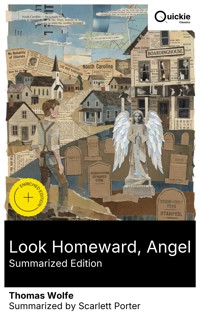
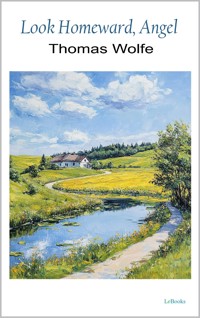
Look Homeward, Angel (1929) follows Eugene Gant from boyhood in Altamont—Wolfe's Asheville—toward artistic awakening. A modernist Bildungsroman, it marries Whitmanesque cadences and Proustian memory to raw regional realism. The stonecutter father, boardinghouse mother, and the titular angel—Milton's echo—organize themes of appetite, mortality, and departure, while long, incantatory sentences enlarge provincial life into national myth. Born in Asheville in 1900, Wolfe drew directly on his mother's boardinghouse and his father's monument shop, transmuting family tumult into art. Trained as a dramatist at UNC and Harvard's 47 Workshop under George Pierce Baker, then teaching in New York and traveling Europe, he delivered the vast O Lost, which Maxwell Perkins condensed, preserving its grief over Ben's death and its candid hometown portraits. Readers who relish ambitious, musical prose and the American artist's coming-of-age—from Joyce to Faulkner—will find this essential. Approach for its luminous sentences and thickly realized Southern milieu; stay for its restless intelligence about home and exile. Few novels render provincial experience so capaciously or so movingly. Quickie Classics summarizes timeless works with precision, preserving the author's voice and keeping the prose clear, fast, and readable—distilled, never diluted. Enriched Edition extras: Introduction · Synopsis · Historical Context · Author Biography · Brief Analysis · 4 Reflection Q&As · Editorial Footnotes.
Das E-Book können Sie in Legimi-Apps oder einer beliebigen App lesen, die das folgende Format unterstützen:
Veröffentlichungsjahr: 2026
Ähnliche










Look Homeward, Angel (Summarized Edition)
Table of Contents
Introduction
A restless spirit stands at the crossroads between the fierce gravity of home and the beckoning distances of the wider world, compelled to wrest meaning from family passions and town routines, to test the limits of memory and desire, and to discover whether the hunger to belong can live alongside the hunger to become, as the pulse of a small Southern town beats against the tempo of an emerging self, and the ordinary textures of streets, boardinghouses, and a stonecutter's yard are transformed into the raw material of art and the forging heat of a young conscience.
Thomas Wolfe's Look Homeward, Angel is an American Bildungsroman that blends lyrical realism with autobiographical intensity. First published in 1929 in the United States, the novel appeared as Wolfe's debut under the editorship of Maxwell Perkins. Its action unfolds primarily in Altamont, a fictional mountain town modeled on Asheville, North Carolina, during the turn of the twentieth century and the years that follow. The narrative examines domestic life, commerce, and community rituals in a region negotiating the pull of tradition and the pressures of modernity. Within this social landscape, Wolfe charts a formative struggle whose emotional scale far exceeds its provincial coordinates.
At the center stands Eugene Gant, a boy of voracious curiosity shaped by a household whose energies converge and collide. His father, a gifted and erratic stonecutter, anchors a shop thick with marble angels and epitaphs; his mother, practical and driven, manages boarding properties and pursues security. Siblings crowd the rooms with their own tempers and loyalties, while the town's storefronts, trains, and schoolyards press close. From this dense environment Eugene gathers impressions, books, and ambitions, sensing both the shelter and the constraint of his origins. The novel follows his awakening without predetermining outcomes, tracing crucial beginnings rather than definitive ends.
Readers encounter a voice propelled by abundance: sinuous sentences, ardent cadences, and panoramic catalogues that swell from the intimate to the mythic. The narration moves mainly in the third person yet often seems to pulse from within Eugene's sensitivities, producing a fusion of social portrait and private reckoning. Scenes unfold in vivid episodes, each saturated with sensory detail and an almost symphonic momentum. The tone ranges from exuberant to elegiac, illuminating joy, embarrassment, rage, and wonder with equal intensity. The effect is immersive and demanding, a rhythm that rewards unhurried attention and invites rereading to catch patterns missed in first ascent.
Threaded through the story are themes of belonging and estrangement, the shaping force of family, and the perilous glamour of ambition. Wolfe returns repeatedly to time's pressure - how the present is haunted by the unmastered past - and to the problem of making art from the very people and places one loves. The stone yard's angels and inscriptions concentrate the novel's meditation on mortality, while the bustle of boardinghouses crystallizes questions of money, class, and transience. Education promises escape and refinement, yet every new horizon exposes fresh limits. The book asks what kind of self can be built without surrendering the ground of home.
For contemporary readers, Look Homeward, Angel endures as a searching portrait of how identity forms at the intersection of place, economy, and imagination. Its depiction of a small Southern community reveals the attractions and constraints of local belonging in a mobile, aspirational nation, a tension still palpable in debates about migration, education, and opportunity. The novel also models the risks of autobiographical candor, prompting reflection on privacy, accountability, and artistic freedom. Its language, by turns lush and combustible, demonstrates how style can carry experience across time, making a formative American landscape legible to new generations negotiating their own departures and returns.
Approached with patience and curiosity, the novel offers both a vivid archive of early twentieth-century American life and an intimate study of growth. Readers may encounter period attitudes and language that reflect the era's hierarchies and blind spots; acknowledging these contexts sharpens, rather than diminishes, the book's value as a historical and ethical document. What remains most striking is the restless intelligence at its core, which refuses tidy resolutions yet honors the formative power of place. To read it is to witness an artist learning how to see, and to feel how seeing alters the fragile arrangements we call home.
Synopsis
Look Homeward, Angel (1929) is Thomas Wolfe’s debut novel, a sprawling American coming-of-age narrative that follows Eugene Gant from birth to the threshold of independence. Set in the fictional mountain town of Altamont, North Carolina, the book blends intimate family portraiture with the restless energies of a young nation entering the twentieth century. Wolfe presents a lyrical, intensely observed record of childhood impressions, social textures, and the formative pressures that shape a mind intent on escape and understanding. The story proceeds chronologically, tracing growth amid clamor: business booms and downturns, seasonal rituals, and the converging appetites of kin, community, and self.
At the center stands the Gant family, whose conflicts and affections generate much of the novel’s momentum. Eugene’s father, W. O. Gant, is a gifted, volatile stonecutter and monument dealer, given to grand enthusiasms and destructive drinking. His shop, crowded with statuary and a weathered angel, exerts a magnetic pull on the boy’s imagination. Eugene’s mother, Eliza, practical and ambitious, channels her energies into property and the management of a bustling boardinghouse known as Dixieland. Older brothers and sisters complicate the household with rivalries, loyalties, and departures. The domestic scene is one of constant flux, where love, pride, and need continually collide.
From Eugene’s earliest years, the novel charts the awakening of a precocious, observant child who devours books and maps the town’s streets with restless curiosity. School offers both stimulus and constraint, while the home remains a stage for the father’s rhetorical flourishes and the mother’s careful economies. Wolfe portrays the child’s sensory life in dense detail—sounds, odors, and snatches of conversation—showing how memory assembles a private cosmos from ordinary things. The stone angel, looming in the shop, becomes a silent emblem of aspiration and fixity. The boy learns to measure himself against that mute grandeur, even as family arguments unsettle him.
Altamont itself emerges as a living organism, shaped by merchant chatter, courthouse gossip, church music, and the whistle of passing trains. Through Dixieland’s succession of boarders—salesmen, professionals, seekers, and drifters—Eugene encounters a chorus of regional voices and ambitions. The town’s prosperity swells and ebbs, revealing the hopes of small entrepreneurs and the hard limits imposed by circumstance. Seasonal festivals, funerals, and school ceremonies sketch a civic calendar by which he learns belonging and estrangement. Wolfe lingers on storefronts, weather, and food, not as decoration but as the texture of a world that both nourishes and confines an expanding imagination.
As Eugene enters adolescence, growth accelerates into bewilderment: he grows tall, his senses sharpen, and his emotions outrun explanation. Teachers, classmates, and a few sympathetic adults kindle his confidence, while rivalries and humiliations expose the cost of standing apart. A formative attachment to a visiting young woman introduces the drench of first love and the ache of transience, fixing in him an appetite for beauty that is inseparable from loss. Meanwhile, books, theater, and talk become laboratories of identity. Wolfe tracks these surges without melodrama, showing how exhilaration and shame alternately propel and stall a youth hungry for the world.
Family life, never settled, grows more precarious as fortunes swing and bodies fail. W. O. Gant’s brilliance coexists with outbursts and remorse, and periods of sobriety cannot wholly mend the damage of excess. Eliza’s drive to accumulate property offers stability yet tightens its own constraints, binding children to chores and the needs of tenants. Illness visits the household and town, teaching Eugene the language of fear and care. Siblings seek livelihoods, quarrel, and sometimes vanish for months, their returns altering the fragile balance. Through these cycles the boy acquires a somber knowledge of limits, and a deeper sympathy for weakness.
Education opens a corridor outward. Sent first to preparatory study and then to the state university, Eugene encounters new disciplines, mentors, and forms of debate. The campus broadens his reading and tests his convictions; late-night conversations promise a path from imitation to voice. He begins to write with greater purpose, sketching from memory and observation, though uncertainty about craft and vocation persists. The freedom of travel and study sharpens his sense of distance from home, yet letters, visits, and obligations tether him to Altamont’s demands. Wolfe keeps the line taut between exhilaration and homesickness, ambition and filial duty.
Between terms and after milestones, Eugene returns to Altamont, discovering that time alters both the rooms he knew and the meanings they once held. Parental aging, shifting alliances among siblings, and the steady commerce of the boardinghouse compel reckonings he can no longer postpone. Conversations with his father reveal a kinship in hunger and pride; negotiations with his mother reveal the price of security. The stone angel, unchanged amid flux, gathers significance as emblem and goad. The young man senses that belonging may require departure, and that memory, not geography, will determine what portion of home he can carry.
Without disclosing its final movements, the book endures for the sweep and intensity with which it renders a Southern town, a turbulent family, and the formation of an artist’s consciousness. Look Homeward, Angel marries a modernist attention to memory with a traditional bildungsroman arc, asking what it means to leave, to remain, and to transmute experience into language. Its images—most notably the carved angel—bind private longing to public symbol. Published as Wolfe’s first novel, it established a voice capacious enough to contain desire and doubt, suggesting that the search for home is inseparable from the search for self.
Historical Context
Thomas Wolfe’s Look Homeward, Angel, published by Charles Scribner’s Sons in 1929, is a roman à clef rooted in the author’s youth in Asheville, North Carolina, fictionalized as "Altamont." Born in 1900, Wolfe came of age as the United States moved from the Gilded Age into the Progressive Era and the upheavals of World War I. The title echoes John Milton’s Lycidas ("Look homeward, Angel") and signals the book’s elegiac tone. Set chiefly in the first two decades of the twentieth century, the narrative observes a Southern mountain town ordered by boardinghouses, churches, schools, and railroads, the institutions that structured everyday life.
Asheville’s historical setting informs the novel’s texture. Linked to national markets by rail in the late nineteenth century, the city became a health and resort destination, drawing visitors to its mountain climate and sanatoria. The Grove Park Inn opened in 1913, emblematic of boosterism and tourism. Boardinghouses proliferated to serve migrants and travelers, shaping domestic economies the book depicts. Wolfe’s father, W. O. Wolfe, ran a marble works and dealt in stone statuary; an Italian angel he sold in 1906 now stands in Oakdale Cemetery in Hendersonville, North Carolina, a factual artifact that resonates with the novel’s title and memorial imagery.
The era’s legal and social order was defined by Jim Crow segregation. North Carolina’s 1900 constitutional amendment effectively disfranchised most Black voters, and public facilities, schools, and transportation were segregated by law. Protestant churches dominated civic life, with revivalism and denominational networks shaping morals and community oversight. Temperance activism culminated in statewide prohibition in North Carolina in 1909, preceding national Prohibition in 1920, restructuring businesses and social habits. These forces formed the background against which families pursued work, status, and respectability. The novel’s attention to ritual, respectability, and social boundaries reflects the constraints imposed by race, class, religion, and law in the period.
Education expanded dramatically during Wolfe’s youth. The University of North Carolina at Chapel Hill grew in enrollment and ambition; President Edward Kidder Graham (1914–1918) promoted a "university of the people," linking campus to state reform. In 1918, playwright Frederick H. Koch founded the Carolina Playmakers, fostering folk drama and student authorship; Wolfe wrote and staged early work there. After graduating in 1920, he studied at Harvard under George Pierce Baker in the 47 Workshop, a pioneering course in dramatic writing. This institutional network—public schooling, state university, and elite graduate training—mapped a path for talented Southerners seeking cultural mobility and professional authorship.
World War I and its aftermath reshaped the landscape Wolfe inhabited. The United States entered the war in 1917; universities organized Student Army Training Corps units in 1918, including at UNC, integrating military drills with coursework. The 1918 influenza pandemic brought widespread illness and closures. Migration and mobility accelerated as railroads connected small towns to regional cities, while the Great Migration drew Black Southerners northward to industrial jobs. These upheavals heightened awareness of mortality, opportunity, and change for young Americans. The novel’s preoccupation with departure, ambition, and loss echoes a generation negotiating wartime disruption and the fragile promises of modern life.
When Look Homeward, Angel appeared, American literature was in a modernist phase concerned with memory, subjectivity, and broken forms. Works like Sherwood Anderson’s Winesburg, Ohio (1919) and Sinclair Lewis’s Main Street (1920) had probed small-town life, while the Southern Renaissance gathered momentum with writers such as William Faulkner. Wolfe’s expansive, lyrical prose aligned with this ferment. His editor at Scribner’s, Maxwell Perkins—also known for shaping F. Scott Fitzgerald and Ernest Hemingway—guided the book through extensive cuts from a sprawling manuscript. Published in 1929 amid mounting economic anxiety and the stock market crash, the novel reached readers during a national mood of uncertainty.
The book’s autobiographical method drew directly from recognizable settings and people, provoking controversy in Asheville. Local readers identified figures and felt exposed, a response reported in contemporary accounts, and Wolfe’s relations with his hometown were strained for years. Yet critics praised the work’s vitality and scope. The subtitle, A Story of the Buried Life, invokes Matthew Arnold’s poem "The Buried Life" (1852), framing the narrative as a search for submerged desire beneath social performance. In portraying entrepreneurial hustle, booster rhetoric, and the business of lodging and memorials, the novel examines how early twentieth-century commercial values intersected with private longing and art.
Seen against its historical moment, Look Homeward, Angel records a Southern community negotiating modernity—migration, higher education, mass culture—while bound by regional hierarchies and memory. Its institutions—schools, churches, small businesses, and trains—anchor characters who yearn for escape and understanding, reflecting national debates about opportunity and belonging. Wolfe’s technique blends documentary detail with heightened introspection, placing a regional story within American modernism’s broader critique of conformity and restless ambition. Without resolving the tensions it portrays, the novel captures the promise and costs of early twentieth-century change, and it remains a vivid testimony to the era that shaped its author and his fictional town.
Author Biography
Thomas Wolfe (1900–1938) was a major American novelist whose expansive, autobiographically inflected fiction helped define a strain of twentieth-century prose that married Southern regional memory to modernist ambition. Emerging at the end of the 1920s, he became known for an immersive narrative voice, sweeping catalogs, and intensely detailed scenes of American life. Writing primarily in the novel and short story, he sought to encompass the breadth of experience—youth, art, travel, and the search for identity—within books of remarkable scale. Though his career was brief, his impact on the American novel’s scope and music has endured, shaping later writers’ sense of possibility.
Raised in Asheville, North Carolina, Wolfe studied at the University of North Carolina at Chapel Hill, where the Carolina Playmakers under Frederick Koch encouraged his early efforts in drama. He continued at Harvard University, working in George Pierce Baker’s celebrated 47 Workshop, which emphasized craft, revision, and production. Several student plays were staged, but the discipline of scene construction and the mentorship he received ultimately pushed him toward prose. By the mid-1920s he had moved to New York, teaching at New York University while revising large manuscripts and absorbing the city’s theatrical and publishing cultures that would inform his mature work.
In New York Wolfe forged a formative relationship with Maxwell Perkins at Charles Scribner’s Sons. He delivered a sprawling manuscript later known as O Lost; through extensive editorial collaboration, it became Look Homeward, Angel (1929). The novel’s lush, rhapsodic style and its frank, thinly veiled portraiture drew wide attention—admiration for its vitality, and controversy for its candor—establishing Wolfe as a new force in American letters. Its bildungsroman arc and capacious evocation of place announced his central preoccupations: memory, ambition, and the elusive idea of home. Early reviews recognized both the exuberance and excess that would remain hallmarks of his prodigious imagination.
Wolfe traveled frequently, especially in Europe, writing prodigiously in hotels and boarding houses while continuing to refine his method. Of Time and the River (1935) extended his earlier project with similar intensity and breadth, tracing a young writer’s education across American cities and abroad. It became a bestseller and confirmed his national prominence. That same year he published From Death to Morning, a short-story collection that showed his lyric power in shorter forms. Together these books consolidated his reputation for grand design and musical prose, while also revealing his dependence on exacting editorial partnership to harness the sheer volume of his material.
Wolfe’s prose blended romantic expansiveness with modernist techniques. He admired the cadenced amplitude of Walt Whitman, the memory-driven structures of Marcel Proust, and the psychological depth and stream-of-consciousness possibilities explored by James Joyce. In his hands, American places—mountain towns, New York streets, transatlantic trains—became arenas for ecstatic inventory and longing. He favored long sentences, incantatory repetitions, and sensory accumulation, seeking nothing less than a total orchestration of life’s flux. The editorial shaping provided first by Perkins demonstrated the creative tensions between raw abundance and form, a dynamic central to both the making of his books and later debates about authorship.
Restless to change course, Wolfe left Scribner’s in the late 1930s and signed with Harper & Brothers, where editor Edward C. Aswell undertook the enormous task of organizing his latest manuscripts. Before the new phase could fully unfold, Wolfe fell gravely ill in 1938 and died that year in his thirties. Aswell prepared The Web and the Rock (1939) and You Can’t Go Home Again (1940) from the unfinished materials, followed by The Hills Beyond (1941). These posthumous books broadened his portrait of America and the writer’s quest, while also spotlighting how editorial stewardship can complete, and complicate, an author’s legacy.
Despite a career spanning little more than a decade, Wolfe’s influence has persisted. His audacious scale and lyrical urgency inspired later American writers who sought to fuse personal history with national tapestry. Scholars continue to study his manuscripts to understand composition, revision, and the role of editors in shaping modern classics. Memorials, archives, and literary prizes sustain public interest, while his novels remain fixtures in courses on American modernism and Southern literature. Read today, his work offers a resonant meditation on belonging and aspiration in a changing nation, and a reminder of how ambition and craft can expand the novel’s reach.




