


0,49 €
Niedrigster Preis in 30 Tagen: 1,99 €
Niedrigster Preis in 30 Tagen: 1,99 €
Mehr erfahren.
- Herausgeber: Booksell-Verlag
- Kategorie: Poesie und Drama
- Sprache: Englisch
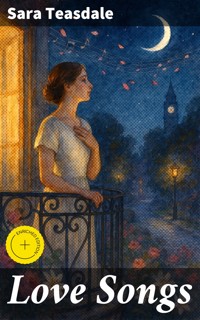
In her acclaimed collection "Love Songs," Sara Teasdale skillfully weaves a tapestry of emotion and longing that resonates with the themes of love, loss, and the human condition. The eleven poems in this volume are marked by a lyrical quality and attention to musicality, embodying the early 20th-century Romantic tradition while also drawing upon the Symbolist movement. Teasdale's use of vivid imagery and elegant simplicity invites readers into her world of intimate reflection, where love is both a source of ecstatic joy and profound sorrow. The collection serves as a poignant commentary on the complexities of romantic relationships, capturing moments of tenderness and heartache with remarkable sensitivity. Sara Teasdale (1884'Äì1933) was a pivotal figure in American poetry, known for her exploration of feminine experience and emotional depth. Her own tumultuous love life and struggles with mental health informed her writing, allowing her to articulate the nuances of affection and solitude. Teasdale's ability to express raw emotion through carefully crafted verse reflects both her personal experiences and a broader cultural search for connection in an increasingly mechanized world. "Love Songs" is a must-read for anyone seeking to understand the intricacies of the heart, and it will appeal to lovers of poetry seeking both solace and inspiration. Teasdale's work communicates timeless truths about the beauty and pain of love, making it an evocative addition to the library of any literary enthusiast. In this enriched edition, we have carefully created added value for your reading experience: - A succinct Introduction situates the work's timeless appeal and themes. - The Synopsis outlines the central plot, highlighting key developments without spoiling critical twists. - A detailed Historical Context immerses you in the era's events and influences that shaped the writing. - A thorough Analysis dissects symbols, motifs, and character arcs to unearth underlying meanings. - Reflection questions prompt you to engage personally with the work's messages, connecting them to modern life. - Hand‐picked Memorable Quotes shine a spotlight on moments of literary brilliance. - Interactive footnotes clarify unusual references, historical allusions, and archaic phrases for an effortless, more informed read.
Das E-Book können Sie in Legimi-Apps oder einer beliebigen App lesen, die das folgende Format unterstützen:
Veröffentlichungsjahr: 2019
Ähnliche















Love Songs
Table of Contents
Introduction
Holding within its measured cadences both tenderness and restraint, Love Songs by Sara Teasdale traces the paradox that love seeks union while guarding the fragile self, celebrating moments of radiance even as it acknowledges the shadows of separation, time, and mortality, and inviting readers into an intimate music where longing, joy, and quiet courage coexist, balancing the personal and the universal, the spoken and the unspoken, in lyrics that glow with clarity and leave resonant silences beneath their song, a poised meditation on desire’s bright beginnings and its thoughtful aftermath, offering solace in its measured simplicity.
Love Songs is a collection of lyric poems published in 1917 in the United States, emerging at a moment when modern life and the First World War were reshaping sensibility, yet its focus remains intensely personal and musical. Written by American poet Sara Teasdale (1884–1933), the book helped consolidate her reputation for clarity of expression and emotional precision. In 1918 it received the Columbia University Poetry Prize, a precursor to the Pulitzer Prize for Poetry, marking its contemporary esteem. Rather than unfolding a narrative, the volume gathers discrete songs that approach love from multiple angles, creating an acoustic rather than geographic setting.
Readers approaching the book can expect brief, finely honed lyrics that privilege cadence and tone over plot, achieving intimacy through understatement. Many poems use a first-person address and a direct, conversational surface, but beneath that simplicity lies careful design, with turns that reveal shifts from rapture to restraint, or from expectancy to reflective calm. The mood moves within a narrow but resonant spectrum—tender, luminous, occasionally solitary—so the experience is cohesive, like listening to variations on a theme. The voice rarely declares; it suggests, allowing the reader to inhabit the pauses as much as the words, which lends the volume lasting quiet power.
Themes arise organically from this approach. Love appears as ardor and as discipline, as promise and as memory, and as a space in which vulnerability is not weakness but a dignified openness to risk. Transience is central: moments flare and pass, and the speaker often weighs what can be kept against what must be honored and released. Nature images frequently echo human feeling, yet they do not merely decorate; they frame the scale and tempo of desire and patience. The book asks what it means to be fully present to joy and to loss without bitterness, and to protect one’s inner clarity.
Teasdale’s craft sustains these questions through sound. Her lines are typically brief and balanced, with clear stresses, unobtrusive rhyme, and patterns of assonance and alliteration that make the poems apt for reading aloud. The diction is plain but exact, avoiding ornament in favor of images that show rather than explain. Many pieces move in quatrains or similarly compact stanzas, their closures gently chiming rather than grandly concluding. Variations in meter prevent monotony, allowing the musicality to feel fresh across the sequence. This restraint—music without excess—gives the collection its distinctive poise, and helps its feeling register as both immediate and carefully shaped.
For readers today, the book’s appeal lies in its candor without spectacle and its assurance that subtle feelings deserve precise art. In an era of rapid expression, the poems demonstrate how brevity can deepen attention, and how a measured voice can convey intensity without strain. They also offer a historical vantage: an early twentieth-century American woman articulating desire, gratitude, and disappointment with authority and tact, within the conventions of her time yet attentive to personal agency. The collection invites reflection on boundaries and reciprocity, on how to love without self-erasure, and on the sustaining roles of memory, patience, and quiet joy.
Approached slowly, Love Songs becomes a companionable book—one to dip into for a single spark or to read in sequence for the cumulative arc of feeling it traces across its many facets. It rewards rereading, as the modesty of the surfaces reveals a sturdier architecture of echo and contrast. Its recognition in its own day situates it within the American lyric tradition, yet it remains approachable for newcomers to poetry. Above all, it offers an experience of intimate music: restraint that heightens emotion, clarity that honors complexity, and a humane steadiness that can make even the most personal moments feel hospitable.
Synopsis
Love Songs, published in 1917, is a collection of short lyric poems in which Sara Teasdale traces romantic feeling from first desire to recollection and calm. The book does not tell a story with characters and plot; instead, it presents a sequence of moments that suggest an arc. The speaking voice addresses a beloved, the self, and the natural world, moving between exultation and quiet restraint. Clear images of light, night, seasons, and the sea recur throughout. The diction is plain and musical, favoring brevity and repetition for emphasis. Read together, the poems form an intimate progression through awakening, union, doubt, loss, and renewed inward balance.
The opening group introduces the promise of love as a source of beauty and vitality. Early poems emphasize expectancy, quickened senses, and the willingness to risk for joy. Springlike imagery, flowing water, and bright skies are common, framing desire as a natural surge rather than a purely private impulse. The speaker values intensity, yet also notices how moments pass swiftly. The textures are luminous and direct, often built from small, vivid details rather than elaborate description. This beginning establishes the collection's tone: love appears as both gift and task, something to be welcomed wholeheartedly, even as its brightness hints at its transience.
As the sequence develops, the poems dwell on courtship and mutuality. Addressed to a near or absent beloved, they hold anticipation alongside restraint. The speaker negotiates closeness and independence, asking what can be surrendered without losing selfhood. Conversations are implied by repeated addresses and responses imagined across distance. Rhythm and rhyme underscore the pulsing swing between presence and absence, hope and uncertainty. Landscape and weather mirror these shifts, with calm nights and sudden winds marking emotional turns. The prevailing mood remains ardent, but patience and measure enter, shaping desire into sustained attention rather than simple rapture.
Midway, the poems record fulfillment in quiet scenes as well as heightened moments of embrace. Love is pictured not only as passion but as shared stillness, a candlelit room, a walk, a whispered promise made without fanfare. In this phase, Teasdale balances the sweetness of closeness with awareness that perfection is precarious. Images of petals, flame, and evening underscore both radiance and fragility. The language remains spare, allowing suggestion to carry weight. Joy is affirmed, yet time presses gently at the edges, reminding the speaker that nothing held can be held without change. The tone is tender, poised, and unsentimental.
A turning comes with poems that admit strain, misunderstanding, or separation. Without accusation, the speaker recognizes differences that cannot be resolved by feeling alone. The mood cools, and silence begins to signify as strongly as speech. City streets at night, windows, and closed doors appear as settings for inward solitude. Teasdale's compact lines sharpen, leaving spaces that suggest what cannot be said. Love's ideal remains present as a measure, yet the poems acknowledge the limits of human constancy. The sequence pivots from immediate desire to recollection, preparing for a quieter register where memory organizes what passion once rushed.




