


7,49 €
Mehr erfahren.
- Herausgeber: Rob Botwright
- Kategorie: Wissenschaft und neue Technologien
- Sprache: Englisch
📘
Unlock the Secrets of Cybersecurity with Our Exclusive Book Bundle!
Are you ready to take your cybersecurity skills to the next level? Dive into our meticulously curated book bundle, "Malware Analysis, Digital Forensics, Cybersecurity, and Incident Response," and become a true guardian of the digital realm.
🔍
What's Inside the Bundle?
Book 1 - Introduction to Malware Analysis and Digital Forensics for Cybersecurity
- Lay a strong foundation in malware analysis.
- Uncover the intricacies of digital forensics.
- Master the art of evidence discovery in the digital world.
Book 2 - Malware Detection and Analysis in Cybersecurity: A Practical Approach
- Get hands-on experience in malware detection techniques.
- Understand real-world applications of cybersecurity.
- Learn to identify and analyze malware threats effectively.
Book 3 - Advanced Cybersecurity Threat Analysis and Incident Response
- Dive deep into advanced threat analysis.
- Harness the power of threat intelligence.
- Become a proactive threat hunter in the digital wilderness.
Book 4 - Expert Malware Analysis and Digital Forensics: Mastering Cybersecurity Incident Response
- Unravel the intricacies of malware analysis.
- Master memory forensics.
- Respond decisively to security incidents like a pro.
🌐 Why This Bundle?
Our book bundle is your one-stop resource for comprehensive cybersecurity knowledge. Whether you're a budding cybersecurity enthusiast or an experienced professional, you'll find value in every volume.
🚀 What Sets Us Apart?
- Practical Insights: Our books provide practical, real-world insights that you can apply immediately.
- Expert Authors: Authored by seasoned cybersecurity professionals, these books offer invaluable expertise.
- Step-by-Step Guidance: Each book guides you through complex topics with clear, step-by-step instructions.
- Cutting-Edge Content: Stay up-to-date with the latest cybersecurity trends and techniques.
- Community: Join a community of learners and experts passionate about cybersecurity.
💡 Who Should Grab This Bundle?
- Cybersecurity Enthusiasts
- IT Professionals
- Digital Forensics Analysts
- Incident Response Teams
- Security Consultants
- Students Pursuing Cybersecurity Careers
🔒 Secure Your Digital Future
In a world where cyber threats evolve daily, your knowledge is your greatest defense. Equip yourself with the skills and expertise needed to protect your digital assets and those of others.
Don't miss this opportunity to become a cybersecurity powerhouse. Grab your bundle today and start your journey towards mastering the art of cyber defense!
📦 Limited Time Offer
This exclusive bundle is available for a limited time only. Act fast and secure your copy now to embark on a transformative journey into the world of cybersecurity and digital forensics.
🔐 Protect What Matters Most
Your digital world is waiting – defend it with knowledge and expertise. Grab your bundle now and become the cybersecurity hero you were meant to be!
👉 Click "Add to Cart" and Secure Your Bundle Today!
Das E-Book können Sie in Legimi-Apps oder einer beliebigen App lesen, die das folgende Format unterstützen:
Veröffentlichungsjahr: 2023
Ähnliche

















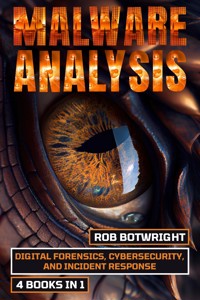
MALWARE ANALYSIS
DIGITAL FORENSICS, CYBERSECURITY, AND INCIDENT RESPONSE
4 BOOKS IN 1
BOOK 1
INTRODUCTION TO MALWARE ANALYSIS AND DIGITAL FORENSICS FOR CYBERSECURITY
BOOK 2
MALWARE DETECTION AND ANALYSIS IN CYBERSECURITY: A PRACTICAL APPROACH
BOOK 3
ADVANCED CYBERSECURITY THREAT ANALYSIS AND INCIDENT RESPONSE
BOOK 4
EXPERT MALWARE ANALYSIS AND DIGITAL FORENSICS: MASTERING CYBERSECURITY INCIDENT RESPONSE
ROB BOTWRIGHT
Copyright © 2023 by Rob Botwright
All rights reserved. No part of this book may be reproduced or transmitted in any form or by any means, electronic or mechanical, including photocopying, recording, or by any information storage and retrieval system, without permission in writing from the publisher.
Published by Rob Botwright
Library of Congress Cataloging-in-Publication Data
ISBN 978-1-83938-530-8
Cover design by Rizzo
Disclaimer
The contents of this book are based on extensive research and the best available historical sources. However, the author and publisher make no claims, promises, or guarantees about the accuracy, completeness, or adequacy of the information contained herein. The information in this book is provided on an "as is" basis, and the author and publisher disclaim any and all liability for any errors, omissions, or inaccuracies in the information or for any actions taken in reliance on such information.
The opinions and views expressed in this book are those of the author and do not necessarily reflect the official policy or position of any organization or individual mentioned in this book. Any reference to specific people, places, or events is intended only to provide historical context and is not intended to defame or malign any group, individual, or entity.
The information in this book is intended for educational and entertainment purposes only. It is not intended to be a substitute for professional advice or judgment. Readers are encouraged to conduct their own research and to seek professional advice where appropriate.
Every effort has been made to obtain necessary permissions and acknowledgments for all images and other copyrighted material used in this book. Any errors or omissions in this regard are unintentional, and the author and publisher will correct them in future editions.
TABLE OF CONTENTS – BOOK 1 - INTRODUCTION TO MALWARE ANALYSIS AND DIGITAL FORENSICS FOR CYBERSECURITY
Introduction
Chapter 1: The Cybersecurity Landscape
Chapter 2: Understanding Malicious Software
Chapter 3: Digital Forensics Essentials
Chapter 4: Tools and Technologies for Analysis
Chapter 5: Static Malware Analysis Techniques
Chapter 6: Dynamic Malware Analysis Methods
Chapter 7: Incident Response Fundamentals
Chapter 8: Network Forensics and Malware
Chapter 9: Rootkits and Persistence Mechanisms
Chapter 10: Real-World Case Studies in Cybersecurity
TABLE OF CONTENTS – BOOK 2 - MALWARE DETECTION AND ANALYSIS IN CYBERSECURITY: A PRACTICAL APPROACH
Chapter 1: Introduction to Malware Detection
Chapter 2: Malware Taxonomy and Characteristics
Chapter 3: Setting Up a Malware Analysis Environment
Chapter 4: Static Analysis Techniques
Chapter 5: Dynamic Analysis Methods
Chapter 6: Signature-Based Detection with YARA
Chapter 7: Behavioral Analysis and Sandboxing
Chapter 8: Incident Response Strategies
Chapter 9: Network-Based Malware Detection
Chapter 10: Advanced Malware Analysis and Threat Intelligence
TABLE OF CONTENTS – BOOK 3 - ADVANCED CYBERSECURITY THREAT ANALYSIS AND INCIDENT RESPONSE
Chapter 1: The Evolving Threat Landscape
Chapter 2: Advanced Threat Actors and Techniques
Chapter 3: Threat Intelligence Gathering
Chapter 4: Cybersecurity Incident Response Frameworks
Chapter 5: Incident Identification and Triage
Chapter 6: Advanced Malware Analysis Techniques
Chapter 7: Memory Forensics and Volatile Data Analysis
Chapter 8: Network Forensics and Traffic Analysis
Chapter 9: Advanced Threat Hunting
Chapter 10: Post-Incident Analysis and Remediation
TABLE OF CONTENTS – BOOK 4 - EXPERT MALWARE ANALYSIS AND DIGITAL FORENSICS: MASTERING CYBERSECURITY INCIDENT RESPONSE
Chapter 1: Cyber Threats in the Modern Landscape
Chapter 2: Advanced Malware Classification and Analysis
Chapter 3: Digital Forensics Techniques and Methodology
Chapter 4: Leveraging Advanced Analysis Tools
Chapter 5: Memory Forensics and Artifact Extraction
Chapter 6: Network Traffic Analysis and Intrusion Detection
Chapter 7: Threat Intelligence Integration
Chapter 8: Incident Response Playbooks and Automation
Chapter 9: Insider Threats and Advanced Adversary Detection
Chapter 10: Strategic Incident Response Planning and Execution
Conclusion
About Rob Botwright
Introduction
In an age dominated by technology and the interconnectedness of our digital lives, the guardians of our virtual realm face an unending challenge. Cyber threats loom large, evolving into formidable adversaries that constantly test the limits of our defenses. It is in this ever-shifting battleground of the digital world that the book bundle "Malware Analysis, Digital Forensics, Cybersecurity, and Incident Response" emerges as an indispensable guide.
This comprehensive bundle, comprised of four distinct volumes, delves into the heart of cybersecurity, offering a holistic understanding of the intricate and dynamic landscape of cyber threats and defenses. Each book, with its unique focus and depth of knowledge, equips readers with the tools and insights needed to navigate the complexities of modern cybersecurity.
In Book 1, "Introduction to Malware Analysis and Digital Forensics for Cybersecurity," we embark on our journey by laying a solid foundation. Here, we explore the very essence of malware, dissecting its anatomy and understanding its behavior. We delve into the realm of digital forensics, uncovering the techniques used to uncover hidden digital evidence. This introductory volume equips readers with essential knowledge, ensuring they are well-prepared for the challenges that lie ahead.
Book 2, "Malware Detection and Analysis in Cybersecurity: A Practical Approach," takes us further into the practical aspects of malware defense. With a focus on real-world applications, this book introduces various malware detection approaches, from the conventional signature-based methods to the more sophisticated heuristic and behavioral analysis. Readers gain a hands-on understanding of how to detect, analyze, and respond effectively to malware threats.
As we progress to Book 3, "Advanced Cybersecurity Threat Analysis and Incident Response," we ascend to a new level of expertise. Here, we explore advanced threat analysis techniques and delve into the minds of sophisticated adversaries. The importance of threat intelligence and proactive threat hunting becomes evident as we prepare readers to confront evolving cyber threats head-on.
Finally, in Book 4, "Expert Malware Analysis and Digital Forensics: Mastering Cybersecurity Incident Response," we reach the pinnacle of our journey. We unravel the intricacies of malware analysis, master memory forensics, and become adept at incident response. This book equips readers with the skills and knowledge needed to dissect malware with surgical precision and respond decisively to security incidents.
Throughout this bundle, we emphasize the indispensable role of collaboration and communication within the cybersecurity community. Effective teamwork, both within organizations and across the industry, is key to mitigating cyber threats and fortifying our collective digital defenses.
As we embark on this comprehensive exploration of malware analysis, digital forensics, cybersecurity, and incident response, we invite readers to join us on a journey through the depths of cyberspace. In the face of relentless cyber threats, knowledge is our greatest weapon, and it is this knowledge that this book bundle seeks to impart.
The digital realm is constantly evolving, and the defenders of cyberspace must evolve with it. With each page turned and each concept grasped, readers will become better equipped to safeguard our digital future. Welcome to the world of "Malware Analysis, Digital Forensics, Cybersecurity, and Incident Response" – your guide to mastering the art of cyber defense in an age of relentless threats.
BOOK 1
INTRODUCTION TO MALWARE ANALYSIS AND DIGITAL FORENSICS FOR CYBERSECURITY
ROB BOTWRIGHT
Chapter 1: The Cybersecurity Landscape
Next, let's discuss emerging cyber threats. In the ever-evolving landscape of cybersecurity, staying informed about the latest threats is crucial for individuals and organizations alike.
These emerging threats often exploit new vulnerabilities or leverage innovative attack vectors. As technology continues to advance, so do the capabilities of cybercriminals and threat actors. It's a constant game of cat and mouse between security professionals and those seeking to breach security measures.
One notable category of emerging threats is related to the Internet of Things (IoT). With the proliferation of connected devices, from smart thermostats to industrial control systems, there are more entry points for cyberattacks. Hackers can target these devices to gain access to networks and potentially cause significant damage or data breaches.
Moreover, cloud computing has become a vital part of modern business operations. While the cloud offers numerous benefits, it also introduces new security challenges. Misconfigured cloud settings or inadequate access controls can lead to data exposure or unauthorized access.
Ransomware attacks have also evolved, becoming more sophisticated and damaging. Attackers now engage in double extortion, not only encrypting victims' data but also threatening to release sensitive information if a ransom is not paid. This tactic increases the pressure on organizations to meet attackers' demands.
Supply chain attacks have gained prominence in recent years as well. Instead of directly targeting a company's systems, attackers compromise trusted vendors or service providers, enabling them to infiltrate the target organization's network indirectly. This tactic can have far-reaching consequences, impacting multiple organizations within the supply chain.
Nation-state-sponsored cyberattacks remain a significant concern. Governments and state-sponsored groups conduct cyber espionage, cyberwarfare, and cybercriminal activities to achieve their strategic objectives. Such attacks can target critical infrastructure, government institutions, or private corporations, posing substantial risks to national security and the global economy.
Emerging threats aren't limited to technology. Social engineering attacks, such as phishing and spear-phishing, continue to be effective methods for gaining unauthorized access to systems or compromising user credentials. Attackers craft convincing messages that deceive individuals into taking actions that benefit the attacker, like clicking on malicious links or downloading infected files.
To combat these threats effectively, organizations must adopt a proactive approach to cybersecurity. This involves continuous monitoring, threat intelligence sharing, and the implementation of robust security measures. It's also crucial to educate employees about security best practices and the importance of remaining vigilant against social engineering attacks.
As a part of this proactive approach, organizations should regularly update and patch their systems to address known vulnerabilities. Vulnerability management programs help identify and prioritize patches based on the potential impact of an exploit.
Network segmentation and access controls can limit the lateral movement of attackers within a network, reducing the potential damage in case of a breach. Additionally, the use of multi-factor authentication (MFA) adds an extra layer of security by requiring multiple forms of verification before granting access.
Threat intelligence feeds and services provide organizations with valuable information about emerging threats and the tactics, techniques, and procedures (TTPs) of cyber adversaries. This information enables organizations to tailor their defenses and response strategies accordingly.
In summary, the world of cybersecurity is in a constant state of flux, with emerging threats posing significant challenges to individuals and organizations. Understanding these threats, adopting proactive security measures, and staying informed about the latest developments in the cybersecurity landscape are essential steps in defending against cyberattacks.
Understanding the importance of cybersecurity awareness is crucial in today's digital age. It's not just a concern for IT professionals or security experts; it's a responsibility that extends to every individual who uses digital technology.
The digital realm has become an integral part of our lives, from personal communication to business operations and critical infrastructure. With this increasing dependence on technology, the risks associated with cyber threats have grown exponentially.
Cyberattacks can have severe consequences, ranging from financial losses and data breaches to reputational damage and even threats to national security. It's not just about protecting sensitive information; it's about safeguarding our way of life in an interconnected world.
Cybercriminals are constantly evolving, devising new techniques and exploiting vulnerabilities in software, hardware, and human behavior. They target individuals, organizations, and governments alike. The ubiquity of the internet and the sheer volume of connected devices provide ample opportunities for these adversaries to exploit.
To address these challenges effectively, we need to recognize that cybersecurity is everyone's responsibility. It's not a problem that can be solved solely by the efforts of cybersecurity professionals or IT departments.
Cybersecurity awareness begins with understanding the risks and threats that exist in the digital space. It involves recognizing the different forms of cyberattacks, such as phishing, malware, ransomware, and social engineering. Awareness helps individuals identify suspicious activities and potential threats, enabling them to take proactive measures to protect themselves and their digital assets.
Furthermore, cybersecurity awareness extends to understanding the importance of strong passwords and the significance of regular updates and patches. Neglecting these aspects can leave vulnerabilities that cybercriminals are quick to exploit.
An essential aspect of cybersecurity awareness is recognizing the value of personal information. Our digital presence, including social media profiles and online accounts, contains a wealth of personal data. Protecting this information is not just about privacy; it's about preventing identity theft and cybercrimes that can have devastating consequences.
Businesses and organizations also bear a significant responsibility in promoting cybersecurity awareness among their employees. Training and education programs should be in place to ensure that staff members are informed about best practices and the latest threats.
Employees play a vital role in an organization's cybersecurity posture. They are often the first line of defense against social engineering attacks like phishing. A well-informed employee is less likely to fall victim to such tactics.
Moreover, businesses must implement robust cybersecurity policies and practices. These include access controls, network security measures, data encryption, and incident response plans. Regular security audits and assessments can help identify weaknesses and ensure that protective measures are up to date.
The consequences of a cybersecurity breach can be financially crippling for a business. Beyond immediate financial losses, there are often long-term impacts, such as damaged reputation and loss of customer trust. Cybersecurity awareness, coupled with robust cybersecurity measures, can significantly reduce the risk of such breaches.
Government bodies also play a crucial role in promoting cybersecurity awareness and setting standards for digital safety. Cybersecurity regulations and frameworks provide guidelines for organizations to follow, helping to create a safer digital environment for all.
Collaboration is key in the fight against cyber threats. Public-private partnerships, information sharing, and threat intelligence exchange are essential elements in building a collective defense against cyber adversaries.
Ultimately, the importance of cybersecurity awareness cannot be overstated. It's about safeguarding our digital lives, protecting our personal information, and ensuring the security and resilience of our critical infrastructure.
Cybersecurity awareness is not a one-time effort; it's an ongoing commitment. It requires staying informed about the evolving threat landscape, being vigilant in our online activities, and taking proactive steps to mitigate risks.
In today's interconnected world, cybersecurity is a shared responsibility. It's a responsibility that falls on individuals, organizations, and governments alike. By raising awareness and taking collective action, we can better defend against cyber threats and create a safer digital environment for everyone.
Chapter 2: Understanding Malicious Software
In the vast landscape of malware, one of the most well-known and commonly encountered types are viruses. These malicious programs, named after their biological counterparts, share some similarities with their natural counterparts, specifically in their ability to spread and infect. Viruses are designed to attach themselves to legitimate files or programs, essentially embedding their malicious code within these innocent-looking carriers.
When an infected file or program is executed, the virus is activated, and it can then replicate itself and spread to other files, often throughout the entire computer system. This replication and spread mimic the behavior of biological viruses, which can propagate from host to host.
Unlike viruses, worms are standalone malicious programs that do not need to attach themselves to other files or programs to spread. They are capable of self-replication and can propagate independently by exploiting vulnerabilities in networked devices or software.
Worms can rapidly infect numerous computers across networks, making them particularly dangerous. They often target vulnerabilities in operating systems, email clients, or network services, taking advantage of security weaknesses to gain access and replicate.
A key distinction between viruses and worms is that viruses require user interaction to initiate their code, such as running an infected program or opening an infected email attachment, while worms can spread autonomously once they exploit a vulnerability.
Both viruses and worms can cause significant harm to computer systems and networks. They can corrupt or delete files, steal sensitive data, disrupt system operations, and provide unauthorized access to malicious actors. The impact of these malware types can range from minor inconveniences to major security breaches.
To protect against viruses and worms, it's essential to employ robust antivirus and antimalware solutions that can detect and quarantine infected files or remove malicious code. Regular software updates and security patches are also crucial in preventing these malware types, as they often exploit known vulnerabilities that are patched by software vendors.
Furthermore, user education plays a critical role in defense against viruses and worms. Individuals should exercise caution when opening email attachments or downloading files from untrusted sources, as these are common infection vectors.
Maintaining strong password practices and practicing good cyber hygiene, such as avoiding suspicious websites and email links, can go a long way in mitigating the risks associated with these malware types.
It's worth noting that the lines between different types of malware are not always clear-cut. Some malware can exhibit characteristics of both viruses and worms, making classification a challenge. Additionally, the landscape of malware is continually evolving, with new variants and hybrid forms emerging regularly.
In summary, viruses and worms represent two distinct but related categories of malware. Viruses attach themselves to legitimate files or programs and require user interaction to initiate their malicious code, while worms are standalone programs that can self-replicate and spread independently, often exploiting network vulnerabilities. Protecting against these malware types requires a combination of robust security measures, including antivirus software, software updates, user education, and strong cybersecurity practices.
Now, let's delve into two other significant types of malware: Trojans and Ransomware. First, let's explore Trojans.
Trojans are malicious programs named after the famous wooden horse from ancient Greek mythology. Similar to the deceptive nature of the legendary horse, Trojans disguise themselves as legitimate software or files, tricking users into unknowingly installing them. Unlike viruses and worms, Trojans don't replicate or spread independently; instead, they rely on social engineering tactics to infiltrate systems.
Once inside a computer or network, Trojans can carry out a variety of malicious actions. They may create backdoors, providing unauthorized access to cybercriminals. Some Trojans are designed to steal sensitive data, such as login credentials or financial information, while others might serve as a delivery mechanism for additional malware.
Ransomware, on the other hand, is a particularly insidious type of malware that has gained notoriety in recent years. This malicious software is aptly named because it "kidnaps" a victim's data, encrypts it, and then demands a ransom in exchange for the decryption key. Ransomware attacks can be devastating for individuals and organizations alike.
The impact of ransomware goes beyond the immediate financial demand. It can disrupt critical operations, lead to data loss, and result in significant downtime. In some cases, victims may choose to pay the ransom, but there's no guarantee that they will receive the decryption key, and it may encourage further criminal activity.
Ransomware comes in various forms, including encrypting ransomware, which locks files or entire systems, and screen-locking ransomware, which prevents users from accessing their devices or data. There are also ransomware-as-a-service (RaaS) offerings, which allow cybercriminals to easily launch ransomware attacks without significant technical expertise.
The delivery methods for Trojans and ransomware can vary. They often arrive as email attachments, malicious links, or disguised downloads from untrusted sources. Social engineering plays a crucial role in tricking victims into opening these malicious payloads, emphasizing the importance of user education and awareness.
Protecting against Trojans and ransomware requires a multi-layered approach. Robust antivirus and anti-malware solutions can detect and block these threats. Regular software updates and patch management help eliminate vulnerabilities that malware can exploit.
Backing up data is also essential. Regularly backing up files to offline or secure cloud storage ensures that even if data is encrypted by ransomware, you have a clean copy to restore. However, it's crucial to maintain secure backup practices to prevent ransomware from infecting backups.
User education remains a key defense. Training individuals to recognize phishing emails, avoid suspicious downloads, and exercise caution when clicking on links can significantly reduce the risk of falling victim to Trojans and ransomware.
Additionally, some security solutions employ behavior-based detection techniques, which can identify and stop malware based on its actions rather than relying solely on known signatures.
Lastly, having an incident response plan in place is critical. In the unfortunate event of a malware infection, organizations need a well-defined plan to contain, eradicate, and recover from the incident.
In summary, Trojans and ransomware represent two prominent and dangerous categories of malware. Trojans rely on deception to infiltrate systems and can perform various malicious actions, while ransomware encrypts data and demands a ransom for its release. Defending against these threats requires a combination of technical defenses, user education, secure backup practices, and incident response preparedness.
Chapter 3: Digital Forensics Essentials
Let's explore the role of digital forensics in investigations. Digital forensics is a specialized field within cybersecurity and law enforcement that focuses on the collection, analysis, and preservation of digital evidence to investigate cybercrimes and other illicit activities.
In today's digital age, digital devices and technology are integral to our personal and professional lives. We use smartphones, computers, tablets, and other digital devices to communicate, work, shop, and conduct various activities online. This increased digital footprint has also created new opportunities for criminals to engage in cybercrimes, ranging from hacking and identity theft to fraud and cyber espionage.
Digital forensics plays a vital role in uncovering evidence related to these cybercrimes. It involves the systematic examination of digital devices and electronic data to identify, preserve, and analyze information that can be used in legal proceedings. This evidence can be critical in both criminal and civil cases, helping to establish facts, attribute actions to specific individuals or entities, and support investigations.
Digital forensics encompasses a wide range of activities and techniques. These include data acquisition, where investigators gather digital evidence from various sources such as computers, mobile devices, servers, and cloud storage. The process must be conducted carefully to ensure that the integrity of the evidence is maintained, so it remains admissible in court.
Once data is acquired, digital forensic analysts employ a variety of tools and methods to examine it. This examination can reveal a wealth of information, including user activities, communications, file access, and even deleted data. Analysts use specialized software and hardware to recover and analyze digital artifacts.
One essential aspect of digital forensics is data preservation. Investigators must ensure that evidence is protected from tampering, loss, or destruction. This involves creating forensic copies of data that are kept in a secure, unaltered state for analysis while maintaining the original evidence's integrity.
The forensic analysis process can uncover a range of digital evidence, including emails, documents, chat logs, browsing history, and more. This evidence can be used to reconstruct events, identify potential suspects, and provide a timeline of activities. Digital forensic experts are often called upon to testify in court as expert witnesses to explain their findings.
Digital forensics is not limited to criminal investigations. It is also valuable in civil cases, internal corporate investigations, and regulatory compliance. For example, in the corporate world, digital forensics can help uncover evidence of employee misconduct, intellectual property theft, or data breaches.
In addition to traditional digital devices like computers and mobile phones, digital forensics extends to emerging technologies. This includes investigating IoT (Internet of Things) devices, wearable technology, and cloud-based services, which are increasingly relevant in modern investigations.
Moreover, as technology evolves, so do the challenges in digital forensics. Encrypted data, secure messaging apps, and anonymization techniques pose hurdles for investigators seeking to access critical evidence. As a result, digital forensic experts must continuously update their skills and techniques to keep pace with technological advancements.
The field of digital forensics is interdisciplinary, involving aspects of computer science, law enforcement, legal proceedings, and cybersecurity. It requires a deep understanding of both technology and the legal framework surrounding digital evidence. Investigators must follow strict ethical guidelines and legal procedures to ensure the admissibility of digital evidence in court.
In summary, digital forensics is a critical component of modern investigations, providing the means to uncover digital evidence and support legal proceedings. Its role extends beyond criminal cases to civil litigation, corporate investigations, and regulatory compliance. As technology continues to advance, the importance of digital forensics in the realm of cybersecurity and law enforcement will only continue to grow.
Let's delve into the critical topic of legal and ethical considerations in the field of digital forensics. Digital forensics, as we discussed earlier, involves the systematic examination of digital devices and electronic data to collect and analyze evidence for use in legal proceedings. In the process of conducting digital investigations, professionals must adhere to a set of legal and ethical principles to ensure the integrity and admissibility of the evidence they uncover.
One of the foundational principles in digital forensics is the need for a lawful basis to conduct an investigation. This means that investigators must have the appropriate legal authorization, such as a search warrant or court order, to access and examine digital evidence. Without legal authorization, the collection of digital evidence may be deemed illegal and inadmissible in court.
Furthermore, investigators must be aware of the scope and limitations of their legal authority. For example, a search warrant may specify the devices or data that can be examined and the timeframe within which the investigation must occur. Deviating from these parameters can raise legal and ethical concerns.
Privacy considerations are paramount in digital forensics. Investigators must balance their duty to collect evidence with the rights of individuals to privacy. This includes respecting Fourth Amendment protections against unreasonable searches and seizures in the United States and similar legal principles in other jurisdictions.
In many cases, digital forensic investigations involve examining personal devices or data belonging to individuals who are not necessarily suspects in a criminal case. In such situations, forensic experts must exercise extreme care to avoid infringing upon the privacy rights of innocent parties.
Another key ethical consideration is the preservation of evidence integrity. Digital evidence is often fragile and susceptible to tampering. Digital forensic experts must follow strict procedures to ensure that evidence remains unaltered and admissible in court. This involves creating forensic copies of data, maintaining a chain of custody, and documenting every step of the examination process.
In addition to legal and privacy concerns, ethical considerations extend to professional conduct. Digital forensic experts are expected to uphold high ethical standards and maintain objectivity in their investigations. They must avoid biases and conflicts of interest that could compromise the integrity of their findings.
Transparency and accountability are crucial aspects of ethical digital forensics. Investigators should be prepared to document and explain their actions, methodologies, and findings in a clear and understandable manner, particularly when presenting evidence in court. This transparency ensures that the legal process remains fair and just.
Furthermore, digital forensic experts should stay up-to-date with evolving laws and regulations related to digital evidence. In the dynamic field of technology, legal standards and requirements can change rapidly. Staying informed about these changes is essential to conducting investigations within the bounds of the law.
Cross-border considerations are increasingly relevant in digital forensics, as evidence and digital devices can transcend national borders. Investigators must be aware of international legal frameworks, such as mutual legal assistance treaties (MLATs), which govern the exchange of evidence between countries. Ensuring compliance with these treaties is essential when conducting international investigations.
Ethical digital forensics also involves a commitment to continuing education and professional development. The field is constantly evolving, with new technologies, encryption methods, and cyber threats emerging regularly. Digital forensic experts must remain adaptable and well-informed to effectively navigate these challenges.
Lastly, ethical considerations extend to the responsible handling of sensitive and confidential information. Digital forensic experts often encounter highly sensitive data during their investigations. Safeguarding this information and ensuring its confidentiality is essential to maintaining trust and credibility in the field.
In summary, legal and ethical considerations are fundamental to the practice of digital forensics. Adhering to legal requirements, respecting privacy rights, preserving evidence integrity, maintaining professionalism, and staying informed about evolving laws and technologies are all essential components of ethical digital investigations. By upholding these principles, digital forensic experts play a critical role in the pursuit of justice while ensuring that the rights of individuals are protected.
Chapter 4: Tools and Technologies for Analysis
Let's embark on an exploration of the fascinating world of malware analysis tools. These tools are the Swiss Army knives of cybersecurity professionals, enabling them to dissect, understand, and combat malicious software. In this digital age, where cyber threats loom large, malware analysis tools are indispensable weapons in the battle against cybercriminals.
First, it's important to understand what malware analysis is all about. At its core, malware analysis is the process of dissecting and examining malicious software to gain insights into its functionality, behavior, and purpose. This process is akin to dissecting a biological specimen to understand its inner workings, only in the realm of cybersecurity.
Now, let's delve into the primary types of malware analysis: static analysis and dynamic analysis. Static analysis involves examining the malware without executing it. Analysts inspect the code, file structure, and characteristics of the malware to identify potential threats and behaviors. It's like studying the blueprint of a building to understand its design and potential vulnerabilities.
On the other hand, dynamic analysis involves executing the malware in a controlled environment, such as a virtual machine or sandbox. Analysts observe how the malware behaves when it's active, looking for signs of malicious activity like network communications, file modifications, or system changes. Dynamic analysis is like observing a wild animal in its natural habitat to understand its behavior.
Now, let's talk about the essential tools used in malware analysis. Antivirus software is often the first line of defense against malware. While it's not a dedicated malware analysis tool, it plays a crucial role in detecting and quarantining known malware. It's like having a security guard at the entrance of your digital world, checking for threats.
Next, we have disassemblers and decompilers. These tools are used for static analysis, allowing analysts to reverse engineer executable files and scripts to understand their code structure. It's like taking apart a complex machine to see how its various components work together.
Debuggers are another indispensable tool in the malware analyst's arsenal. They allow analysts to step through the code of a program, inspecting its memory and variables in real-time. Debuggers are like detectives at a crime scene, looking for clues and anomalies in the evidence.
Packet analyzers and network sniffers are vital for dynamic analysis. They capture and analyze network traffic generated by malware, helping analysts understand its communication patterns and potential command and control servers. These tools act like eavesdroppers, listening in on conversations between the malware and its handlers.
Sandboxes are isolated environments where malware can be safely executed for dynamic analysis. They provide a controlled space for observing the behavior of malware without risking damage to the host system. Think of sandboxes as secure laboratories where researchers can study dangerous organisms.




