


Erhalten Sie Zugang zu diesem und mehr als 300000 Büchern ab EUR 5,99 monatlich.
- Herausgeber: Pushkin Children's Books
- Kategorie: Für Kinder und Jugendliche
- Serie: The Red Abbey Chronicles
- Sprache: Englisch
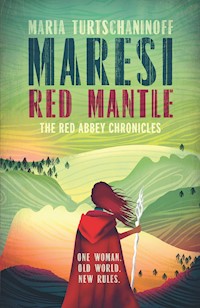
Maresi returns in the thrilling conclusion to the feminist fantasy epic The Red Abbey Chronicles For Maresi, the Red Abbey was a haven of safety, in a world ruled by brutal men. But now she is a woman and it is time for her to leave. Armed with the wisdom of the the First Mother, she returns home to Rovas, a land of forest-clad mountains and rushing rivers, where the superstitious village folk struggle under the rule of a cruel governor. But Maresi meets with more resistance than she bargained for, and soon finds she must use all the terrible force of the Crone's magic to protect her people. Can she find the strength to do so when her heart is filled with love for the first time? Maresi Red Mantle is a thrilling, moving tale of womanhood and fighting for what is right. Maria Turtschaninoff was born in 1977 and has been writing fairy tales since she was five. She is the author of six novels about magical worlds, has been awarded the Finlandia Junior in 2014, the Swedish YLE Literature Prize, the Swedish Cultural Foundation in Finland Award and has twice won the Society of Swedish Literature Prize. She was also nominated for the Astrid Lindgren Memorial Award in 2013 and 2017 and the 2017 CILIP Carnegie Medal.
Sie lesen das E-Book in den Legimi-Apps auf:
Seitenzahl: 535
Veröffentlichungsjahr: 2019
Das E-Book (TTS) können Sie hören im Abo „Legimi Premium” in Legimi-Apps auf:
Ähnliche













![Tintenherz [Tintenwelt-Reihe, Band 1 (Ungekürzt)] - Cornelia Funke - Hörbuch](https://legimifiles.blob.core.windows.net/images/2830629ec0fd3fd8c1f122134ba4a884/w200_u90.jpg)




Praise for
THE RED ABBEY CHRONICLES
“Walks the knife edge so thrillingly I read it in one sitting”
KIRAN MILLWOOD HARGRAVE,AUTHOR OFTHE GIRL OF INK AND STARS
“A great addition to the growing feminist fantasy genre”
SCOTSMAN
“Incredible… if you like Louise O’Neill’s Only Ever Yours, you’ll love this”
AMBER KIRK-FORD, THE MILE LONG BOOKSHELF
“A tale of sisterhood, survival and fighting against the odds that will capture the hearts of both teen and adult feminists alike”
LUCY POWRIE, QUEEN OF CONTEMPORARY
“A rich, powerful vision – thrilling, harrowing and exhilarating by turns… It grips like a vice and enchants like a distant song”
JONATHAN STROUD, AUTHOR OFTHE AMULET OF SAMARKAND
“I cannot recommend this book enough… If you enjoyed The Handmaid’s Tale or Only Ever Yours then you’ll love this. It’s tragic and painful and hopeful and empowering and I just loved it”
MAIA AND A LITTLE MOORE
“Reading it, I felt empowered. I felt proud to be a woman, and of who I am”
ONCE UPON A BOOKCASE
“A great read for teens and adults alike… the lives of so many women described in this book is heart breaking and yet ultimately empowering”
INDEPENDENT BOOK REVIEWS
“Exquisite… I could talk forever about how much I love Maria Turtschaninoff’s writing”
INK DROPS BOOKS
“Bears comparison with the best of Ursula K. Le Guin”
HELSINGIN SANOMAT
“A haunting fable”
SUZY FEAY, FINANCIAL TIMES
“Turtschaninoff weaves a hypnotic spell… at once contemporary and timeless”
GUARDIAN
“Combines a flavour of The Handmaid’s Tale with bursts of excitement reminiscent of Harry Potter’s magic duels”
OBSERVER
“Should appeal to fans of Ursula K. Le Guin… A lucid, layered, deeply engaging story”
METRO
“Stands out for its startling originality, and for the frightening plausibility of the dangerous world it creates”
TELEGRAPH
“It’s rare to find a YA fantasy with such polished writing… Utterly satisfying and completely different”
BOOKLIST,STARRED REVIEW
“Dark, powerful and original… it really stands out in a very crowded YA marketplace. Thrilling, suspenseful and gloriously feminist”
THE BOOKSELLER
“A beautifully painted, fantastical setting like no other; this story will resonate with me for a long time”
BEN ALDERSON, BOOKTUBER
“Atmospheric, immersive and definitely original, Maresi has a quiet urgent magic that makes her story powerful, poignant and memorable”
FOR BOOKS’ SAKE
“A book full of courage. Dark, brave and so gripping you’ll read it in one sitting”
LAURA DOCKRILL
* * *
MARIA TURTSCHANINOFF was born in 1977 and has been writing fairy tales since she was five. She is the author of many books about magical worlds, for which she has been awarded the Swedish YLE Literature Prize, the Finlandia Junior Award, the Swedish Cultural Foundation in Finland Award, and has twice won the Society of Swedish Literature Prize. She has also been twice nominated for both the Astrid Lindgren Memorial Award and the CILIP Carnegie Medal, and nominated for the Nordic Council Children and Young People’s Literature Prize. The Red Abbey Chronicles began with Maresi, which is being translated into 21 languages and will be made into a film.
For Travis, now more than ever
These scriptures consist of the letters of Maresi Enresdaughter, sent from her homeland of Rovas to the Red Abbey during the reigns of our thirty-third and thirty-fourth Mothers. In Rovas, Maresi became known as Maresi Red Mantle, banisher of frost, tamer of beasts and guardian of the dead, she who brought forth an avalanche and released the dead into the realm of the living.
These letters have been added to the Red Abbey archives by Sister O, archivist and servant to the Crone, and by her successor. These archives are incomplete, but all occurrences pertinent to the Abbey are documented here, lest we forget the events that unfolded in Rovas during the first two years following Maresi’s return to her native village. They shall remain significant to Rovas for all time.
Contents
FIRST COLLECTION OF LETTERS
Spring
Venerable Sister O,
I write this by the light of a crackling fire. Making fire was no easy task this evening. Rain has fallen continuously throughout most of our journey through the mountain pass, so all the wood is wet, as is my woollen cloak. The sounds of the trade convoy surround me: conversation and laughter; the whinnies and bells of horses and mules; the animals’ grinding jaws as they endeavour to snatch newly sprouted leaves from among the twigs. I can smell the smoke of the campfires, and spits of meat roasting slowly above them. One of the guards following the convoy had a good hunt today and shared out mountain sheep among the travellers.
It is early evening, the sky is still light, and a pale moon hangs above the low mountain peaks. The convoy reached the crest of the mountain range today, and the lowlands of Rovas extend below us to the north.
I have nearly arrived at my destination, and have formed an idea of how we may arrange the delivery of letters to and from the Abbey, so I am beginning my correspondence now, as we agreed. Annual trade convoys travel the long distance between Masson, the port town of Valleria in the south, and Namar, the walled city of the Akkade people on the high grassland plains north of Rovas. I believe the wisest option would be to send two bundles of letters per year, in spring and autumn. The letters may then arrive within a few moons. I have made sure to speak with several tradesmen and women along the way to let them know that whoever delivers letters from Rovas to Menos can expect handsome payment. I would think it best if the greater portion of this sum were paid when the letters reach their destination.
You told me that you would read my words aloud to the other sisters at mealtimes in Hearth House. This is only right, for they are the ones who have equipped me with the wealth of knowledge I am now carrying out into the world. This and the Mother Abbess’s silver will help me to found a school in Rovas. But please Sister O, will you do me the service of reading my letters alone first? You know my ways: I blather on and write far too much. You told me that I must record all of my experiences, for many things of great significance to the Abbey may happen, even if am unaware of their significance at the time. But I might also describe events of no relevance, in which case I would prefer that you choose only what is truly important. And perhaps some things will be intended for your eyes only, Sister O. I trust you will know when this is the case.
I am going to view these letters as a continuation of the text I wrote four years ago documenting the spring when the men came to Menos to take Jai away. Now, as then, I do not feel strong enough for the task. Now, as then, I will do my best to fulfil the task anyway, despite my shortcomings. I hope you will share my writings with the novices. It will be good preparation for others like me who intend to venture out into the world and spread the Abbey’s knowledge after their education.
I know that everyone was concerned that I might be hurt or robbed on my journey, but everything has gone well. I have joined forces with a number of convoys in exchange for a small payment. This has provided me with protection against highway robbers and other dangers. The convoys are always escorted by several armed guards. Yet we have seen no robbers, and have heard wolves only from afar. They were too distant even to alarm my mule. Of course, I have almost certainly paid exorbitant prices for things at times, like the first convoy I joined that gave me a cart to ride in. Then I made friends with a travelling tradeswoman from Valleria named Ajanie, who told me I should have bartered them down to at least half the price. Still, I have learnt a valuable lesson, and plenty of silver remains in my purse. Ajanie advised me to sleep with it under my head.
When this first convoy branched west towards Devenland I had to travel on foot for several days before I managed to buy a retired old mule from a merchant. She has long, soft ears that obscure my view when I ride her, and her broad back is almost comfortable. The merchant who sold her mentioned no name, and perhaps he never gave her one. I call her Grey Lady, in honour of our highest peak on Menos, White Lady Mountain. She has walked this route many, many times before, bearing brick tea and salt on her back to the far-away land of the Akkade people. The merchant said that she is too old to manage that path again. The mountains between Rovas and the Akkade plains are high and the climb is strenuous for an old mule. My intended route is not as long or difficult, but I still feared that the low peaks that form the southern boundary of Rovas might be too much for her. I dismounted and walked through the most treacherous parts, when stones were slipping under foot and hoof, and it felt as though each step took us as far backwards as forwards.
The road we are following is known as the Horse Trail, because it is used to herd strong Akkade horses to the south, where they command a high price. We have not encountered any horse convoys, for spring is not a wise time to lead large herds of animals along roads damaged by the rain, snow and storms of winter. The northbound convoys travel in spring, when tradesmen bring sought-after goods from the southern lands to the north where people are longing for sweets, spices and a little luxury after the hardships of winter. Ajanie showed me the silver jewellery she buys in the markets of Masson. It is too plain for the wealthy citizens of Irindibul, so she undertakes an annual journey to Namar. It is a great distance, but in the walled city people pay well for items considered too modest for Irindibul nobility. When Ajanie reaches Namar she trades her silver jewellery for wool, which she then brings down to the south-east and Lagora, which Ajanie described as a mosaic city by the sea, and trades the raw wool for spun yarn and tapestries. Then she travels back to Valleria and sells her wares for pure gold.
Ajanie has seen so much of the world. For a Vallerian she has travelled a great deal: as far west as the land of the longhorns, as far north as the Akkade plains, and as far east as Lagora.
It has been fascinating to see the landscape change over the course of my journey. From Valleria’s archipelago with its rainbow of boats at every little harbour, across vast marshlands where salt is harvested, to the Vallerian lowlands full of grape and olive groves, and the vibrant capital city of Masson. I would like to have seen Devenland as well, but it is too far west. I am trying to imagine the tea plantations on the mountain slopes. I joined a Devenian convoy after leaving Valleria behind, and first smelt the delicious aroma of brick tea. It is transported north to the Akkade people, who drink nothing else.
Of all the people I have encountered, few have heard tell of the province of Rovas. Ajanie said that she has travelled through the region many times but never knew it had a name. To her it was only ever north-west Urundien. Naturally I felt obliged to tell her all about Rovas. The fire is providing a little light yet, so I will write down what I told her, to preserve the history of Rovas in the Abbey’s archives.
Long ago Rovas was an independent land, but our nearest neighbour to the south-east, Urundien, was ever hungry for more territory and riches. During one of their military campaigns, Rovas fell under their dominion, and an alliance was sealed through the marriage of their king to the daughter of a Rovasian chieftain. Since then the Sovereign of Urundien has always appointed a nádor, a governor to rule over “the unruly forest folk”. The nádor enforces tax collection and trade tariffs. The Rovasians are farmers and woodcutters. The farmers are in a constant battle with the forest itself, which always threatens to reabsorb the cleared farmland, and so they never manage to grow more than the most basic of provisions for their families. The woodcutters, timber-rafters and fur-trappers live tough, solitary lives deep in the forests, travelling wherever they are hired or where game abounds. The people of Rovas are free men and women: the farmers own their farmland and woodland, but the large game belongs to the Crown and only the Sovereign of Urundien may hunt it and allot hunting rights as a token of his favour. Large hunting parties from Urundien often enter the forest in autumn.
However, our freedom is limited by poverty, ignorance and hard toil. Furthermore, the nádor’s levy of taxes is frequent and merciless. The villages often suffer from serious illness and malnutrition. Superstitions and delusions are rife, which is precisely what I hope to rectify when I reach my native village of Sáru and found my school. It feels like a very small step, but it is a start. Ajanie told me that schools are starting to become more common in the cities of Valleria and Devenland, though naturally only for the sons of rich families.
My long journey has given me a lot of time to think about my future school. You said several times that I must have patience, and not expect the villagers to send their daughters to my school straight away, but I am sure that they will when they see the benefits of true knowledge.
Tomorrow I bid farewell to Ajanie and the rest of the convoy as they diverge to the north-west. They are to cross the flat lowland area, and in seven to eight days, depending on the weather, they should reach the wooded foot of the mountain range that divides Rovas from the Akkade lands. It will surely take them a long time to climb it, but a gentler descent awaits them on the other side, for the vast plains of the Akkade people span a high plateau, with a very different climate from that of Rovas.
I will write again once I am closer to my home village.
Your novice, MARESI
Dearest Jai,
I plan to write separate letters to you and Ennike, but that does not mean you cannot read each other’s, unless I specifically ask you not to. I cannot say when I will be able to send them, so I have decided to write a series of letters instead of one continuous text. That way I will have them ready to send as soon as an opportunity arises.
Can you believe it? I have finally arrived in Rovas! Well, the southern outskirts of Rovas, in any case. My village is a long way from these gentle, rolling lowlands, deep in the mountainous woodlands. The convoy I have been following took a different course this morning, and I have spent the entire day journeying through the early Rovasian springtime all alone. I am seeing and experiencing everything differently now that I have no one but my mule for company. Each time I cross a gurgling spring stream it is an adventure in itself. Each time I see the roofs of houses peek over the horizon or from behind a bend in the road I feel a tingle in my stomach—whom might I meet today? A part of me always hopes that it is my own village, though I know it is still several days north-east from here, and I do not recognize these surroundings. Yet, what if everything has changed in the years I have been away? The village might not be in the same place!
I have set up camp for the night, sheltered under some bushes, and soon I will be sleeping with only my mule and the wind for company. It is overcast tonight, otherwise I would gaze up at the stars; but just the knowledge that the stars are up there is comfort enough. The stars are there, and the moon too, and they are looking down on you, dear Jai.
I will write more once I am home.
Your friend, MARESI
Venerable Sister O,
It has been raining for seven days now.
It never stops. It is a fine, constant rain that leaves everything drenched: me, my mule, my luggage. I am keeping warm inside the cloak Jai gave me, but I have not been dry in a long time. The branches are dripping and the stones are slippery. I have found shelter for the night in a half-ruined cowshed with most of its roof intact, so at least I will not be rained on during the night. I have not succeeded in making a fire, as I have no dry firewood, so this letter will be shorter than the last, because the daylight is fading.
Grey Lady and I have passed many villages that resemble Sáru: several homesteads built in a circle or crescent, dotted with outbuildings, and fields and pastures spreading out in the surrounding forest. In the south every field has its own fence, but as I near my homeland in northernmost Rovas the fields are gathered together, with shared fences.
I have spent many nights sleeping under an open sky. In the summers when I was little, my mother, my sister Náraes and I would sometimes stay out in the forest for a long time picking berries. Mother taught us how to build a shelter of branches and twigs to protect ourselves from wind and light rain, and this is what I have been making each night—beside streams swelling with meltwater and spring rain, beside serene forest tarns, and on slopes with far-reaching views across valleys and mountains, where smoke from unseen chimneys is the only sign of human dwellings.
It is not easy to find one’s way through this forest. Though I grew up here, and was toddling through woodland as soon as I could walk, and though I am familiar with this forest and its ways, I am also familiar with its dangers and how treacherous it can be. Rovas is a wooded land for the most part, apart from some rocky, mountainous terrain where no trees grow. Our most important trade routes, indeed travel routes in general, follow the rivers. Yet these rivers generally flow from north-west to south-east, and as I came from the south-west, I have not been able to travel via the waterways. This would have been easier and quicker, as we discussed before I left. The Horse Trail, which I followed to begin with, runs through the western part of Rovas from the south-west to the north. The villages are linked by woodland paths that are often no more than cartwheel tracks, but these go directly from village to village, and so are not best suited for long-distance travellers.
Each time I have doubted the way, when a path has forked or disappeared into the undergrowth, Grey Lady has chosen the way with perfect composure, and each time I have soon realized that she made the correct choice. She is smarter than I, this mule. I do not know what I would have done without her.
I have travelled through the spring, witnessed the first sprouting leaves, and birdsong has followed me along my path. Yet it seems like an eternally timid spring that never manages to take the leap and burst into full greenery and warmth. The farther north I go, the cooler the regions become and the later spring arrives. It never occurred to me that spring, which brings mild breezes and good travelling weather to Menos, is a time of rain in Rovas.
I believe that I am following the same route that I took south eight years ago when I left Rovas, but I cannot be certain. It was so long ago, and everything was so new and frightening that I did not pay very close attention to the route. I was only a child, loaded onto a cart and driven away from Rovas to the southern mountains. From there I was transferred onto a donkey’s back, led along the mountain pass and loaded onto another cart for the remainder of the journey to Valleria. I fear I may not be able to find my village. It is an unremarkable settlement, and when I ask the folk I meet in the villages they only shake their heads in answer.
And Sister O, there is another thing I fear, and I can only admit this to you: I fear hunger.
At the Abbey I got used to always having a full belly. Sometimes we had simple, humble fare, but in any case I have not had to go hungry in eight years. Now I am met by the faces of people who know the true meaning of hunger, and I remember. I remember when we slaughtered our last pig. I remember going hungry for so long that I forgot what it was like to feel full. I remember eating things not intended for human consumption: rotten seeds, leaves and grass, animal carcasses, boiled leather. I remember the taste of bread made with sawdust. I remember how swollen my stomach became, and how thin Anner’s limbs were, and how diarrhoea weakened her body day by day.
It appears that the recent harvests have been plentiful. The village folk have bread to give me and sometimes they invite me into their homes and feed me porridge and hard rye bread, and once I was even given salted fish. People only eat meat at this time of year if they have had several good harvests in a row. Approaching the villages, I am met by little flocks of hens and sheep, and pig-men herding long-legged, shaggy pigs while playing willow pipes. I remember making pipes from pussy willow when I was a girl, and still recall the taste of the green willow. It does my heart good to hear them. During the hunger winter all the animals in our village were slaughtered.
Nonetheless, it is evident that these people have known hunger, before I left and while I have been away. The children are stunted and not nearly as round and rosy as our junior novices. No one has any extra body fat. The animal flocks are small in relation to the size of the villages. I am afraid, Sister O. Of course, I knew that life here would be different from the one we lead at the Abbey, but there is so much that I had forgotten.
Most of all I am afraid of what awaits me when I eventually find my village. Is everybody still alive?
I am trying to be strong, Sister O. I am trying to be brave. Yet there are days when my heart is as heavy and dark as the wool of my cloak.
Yours, MARESI
Dearest Jai,
It was early evening when I suddenly recognized where I was. I saw a babbling brook where I used to play as a child! I saw the meander where we used to race our leaf boats, and the footbridge we would run to and cheer our crafts on. I was tired, and so was my mule, and I was about to set up camp for the night, but the sight of the brook filled my limbs with renewed vigour and my heart with a longing so strong that not even a stubborn mule could stop me. I dismounted to lighten her load, and led her over the footbridge and in among the newly ploughed fields. There was no proper road to follow, only a path that ran along various ditches; but even in the fading light, my feet found their way. Jump here; careful of the slippery edge of this ditch; this is where mushrooms grow in autumn. I led my mule, and she must have sensed my excitement because she was less resistant than usual.
I approached the village from the south rather than from the forest path that runs to Jóla, the neighbouring village to the west. I stood on the hillside overlooking two black fields and saw the houses nestled together against a backdrop of deepening dusk. Between me and the village the mill stream flowed, urgent and thick with foam after the rapid rains of spring. On the other side of the stream was a medley of barns and sheds, and beyond them were four houses facing in towards each other to form a protective ring around a central yard. The forest surrounded them like a dark curtain. Smoke was streaming from all four chimneys, but there was not a soul to be seen. Nothing but a little light seeping out from the edges of the closed window shutters. The animals were in their barns and hen houses for the night. My heart had not pounded so intensely since what happened in the Abbey crypt.
My mule snorted and began plodding down the path that runs between the fields, and I followed slowly. The stream was surging, and even slopped onto the footbridge, making the planks slippery. With the rush of the stream filling my ears, I walked in among the houses that leant into each other, low and grey. The air smelt of manure and smoke and wet earth. I took a deep breath, and it made my chest ache. I tethered my mule to our home’s guardian tree. There before me was my mother and father’s cottage, grey and dark in the rain, just like the last time I had seen it. I walked to the door and lifted my hand to knock. In that moment, the moon rose above the trees and shone its light upon the worn wood. I opened my fist, ran my fingers along the flaking wood and thought of all the doors in the Abbey: the brown door of Hearth House with its bready scent, the rose-patterned marble door of the Temple of the Rose, and the honey-gleaming double doors to the library in Knowledge House. I leant on the door and inhaled deeply. It smelt of damp wood.
In Rovas people enter each other’s homes freely during the daytime, but come nightfall the doors are latched. I knocked.
“Who goes there?” came a deep man’s voice. My father’s voice. I was barely able to muster a response.
“Blessings on your hearth, Father.”
There was a moment of silence, followed by the sound of the latch being lifted from the inside. Then the door swung open and I was dazzled by light. All I could see was a tall, thin figure before me. Then two strong arms pulled me into an embrace and my father mumbled into my hair.
“My daughter. My daughter, my daughter, my daughter.”
Then I heard my mother’s voice. My eyes had begun to adjust to the light, and over Father’s shoulder, I saw her. She was sitting by the fireplace with knitting in her lap, holding her hands over her heart.
“Maresi. Is it really you?”
I loosened myself from Father’s embrace and looked up into his dear face. He was just as I remembered him: warm brown eyes; a large, broad nose; flat, protruding ears. Only he had more wrinkles and his beard was a little greyer.
Mother rose from her chair and came towards me with outstretched hands. Her braid of thick brown hair shone in the hearth light, and she did not look much changed either. She was even thinner than when I had left, if such a thing were possible. I took hold of her hands and we looked at one another. She tried to speak, but only shook her head, her eyes filled with tears. She pulled me close and held me tight.
“I thought I’d never see you again—never again, I thought. My child, are you home now?”
“Yes Mother,” I replied. “I am home now.”
Mother smelt just as I remembered, of flour and cabbage and wool. Immediately I began to weep. I wept like the nine-year-old I was when I left my mother and father and everybody I had ever loved. I never wanted to let Mother go again.
Her bony shoulders against my body. Her hands stroking my hair. I felt them more intensely, more deeply, than anything I had ever felt in my life.
She withdrew suddenly and exclaimed through sobs: “Oh, but you’re soaked through! This won’t do, you’ll get all sooty!”
I undressed in front of the fire while Mother found me some dry clothes, and I looked around our beloved old cottage. Everything was exactly the same: the trodden earth floor with a thick layer of clean straw; the table and benches at the hearth; my parents’ and Akios’s bedrooms along one side of the house; the little animal pen in the entranceway. The shutters were closed against the night and the rain, and a glorious fire blazed in the fireplace.
“This will have to do,” Mother said, handing me a striped skirt with embroidered flowers around the hem and a threadbare, short-sleeved smock. As I dressed, she hung my own clothes up by the fire to dry. She eyed the trousers and shirt with an incredulous expression. Then she handed me a woven belt of red, white and black.
“I was thinking of you when I wove this,” she said. “With each colour I wove in my hope that you were still alive and that we’d see each other again some day.”
Just as I tied the belt around my waist Akios came through the door and stamped the mud from his boots. When he caught sight of me he stopped and his eyes grew large.
“Maresi!” he cried. “My sister!”
It felt strange to be called “sister” by a man, and by someone who truly is my own flesh and blood. I grinned.
“Akios! You have grown a beard!”
He stroked his downy chin and grinned.
“Can’t be a farmer without a beard,” he answered.
I ran to my brother and embraced him tightly. But Akios embraced me more tightly still. Then he tugged at a wisp of my wind-tangled hair.
“Scraggle-hair,” he teased.
“Knobble-knees,” I replied, and poked him in the belly, but realized that the old nickname no longer suited him. I am two years older than Akios, but he has grown a head taller than me, and not even the loose nightshirt he was wearing could hide the fact that his shoulders were broad and his arms were firm with muscles. His hair, once the same shade of nut-brown as Náraes’s and mine, had lightened and was hanging down to his shoulders.
“Little brother, you are all grown up!” I exclaimed, and we both laughed until we could hardly breathe.
There was no time to exchange stories at such a late hour. We were all tired and content simply to sit in each other’s company and look at each other’s faces in the dying firelight, while Mother fed me up with hard bread and the last scrapings of the evening porridge. She kept leaning over to touch my hair, my cheeks, my hand.
“Tomorrow I’ll cook something good and tasty,” she said. “To celebrate.”
“Tomorrow,” I repeated with a yawn.
Finally I was warm and dry. Akios offered me his bed in his small room, saying that he would sleep on the ledge above the fireplace. I could hardly wait to crawl under the blanket Mother had woven and sleep to the faintly familiar sound of rain on the wood-shingle roof. But there was something I had to ask first.
“Náraes. Is she…?”
Father looked at me questioningly, then smiled and took my hand.
“Náraes is alive and well. She has her own household and family now. You’ll see her tomorrow.”
I am writing this in the little bedroom, with one small tallow candle as the only source of light. The others are already sleeping, for dawn brings another day of hard toil. I am almost falling asleep too, but I wanted to write to you first, and to capture this feeling of being safely indoors, full and dry and warm. Home.
It is good to be home, Jai.
Your friend, MARESI
My dear Ennike Rose,
I am home and I have spent my first night under my parents’ roof. I awoke with a dry mouth and thick head and could not remember where I was. I was lying on a real mattress, and not the bare ground as I had got used to on my journey. I could smell clean bedclothes and wool. I could hear murmuring voices and the dull patter of rain against the wood-shingle roof. For a moment I thought I was back in my bed in Novice House, but the sounds and smells were all wrong.
I opened my eyes when the aroma of rowanberry porridge filled my nostrils. Though Sister Ers cooks up all sorts of delicious dishes in Hearth House, no one can make rowanberry porridge with honey like my mother. I sat up and realized where I was—home! Home in my parents’ house, under a blanket woven by my own mother. I threw on a smock, blouse and skirt and tamed my hair as much as I could.
Father and Akios were sitting at the table with a grown woman with a thick, nut-brown braid, and two small children—one on her lap, the other on Father’s. Mother stood at the hearth stirring something in a great iron pot, which Father had bought from a pedlar when I was very little.
“There she is now,” said Father. “Come and say hello to your nieces.”
The woman with the brown braid was my elder sister Náraes! Passing the little one to Akios, she stood up and wrapped her arms around me.
“You’re alive,” she said. “You’re really alive! Mother came to tell us early this morning but I almost didn’t believe it.” She let go and looked at me in earnest. “I’ve seen you in my dreams, Maresi. I’ve seen you walk in the shadows of death.”
“I have indeed walked there, but not through death’s door,” I replied, equally earnest, gazing upon my sister. I barely recognized her. She is three years older than I, and when I left Rovas she was younger than Heo is now. She has aged. Her cheeks are hollow and her eyes appear large in her narrow face. Her hair is still thick and shiny, and she wears it in a long braid down her back with several unruly curls around her face. I used to think that you looked alike, but now she is a grown woman while you are the Rose, a blooming maiden.
And she is with child.
“Come, you must meet your nieces,” said Náraes. “That little savage on Father’s lap is Maressa.” She looked at me with a hint of shyness. “I named her after you. I hope you don’t mind.”
I looked at the girl. She is a little over three years old, with fair curls like a fluffy cloud around her face, and curious brown eyes that inspected me seriously. I took Náraes’s hand and squeezed it.
“Thank you,” I whispered.
“And the baby is Dúlan, born last spring. She’s teething.”
Dúlan was sitting on Akios’s lap, gnawing on her hand, dribbling saliva down her chest. She has the same bright, wide eyes as Geja, but her legs and cheeks are not as chubby as Geja’s were at that age.
“And when is the third coming?” I asked.
Náraes glanced down at her belly and smiled. “In autumn, after harvest. I’ll be at my biggest just when I’m most needed in the fields! Tauer says it’s a boy.”
Tauer is an old man in the neighbouring village whom the local villagers often turn to for advice on ailments and childbirth.
“Come and sit now,” said Mother, and set the porridge out on the table. “It’s late and the men have to return to the fields.”
When I looked at Father and Akios I saw that their hair was wet. They had already been out working. I felt ashamed.
“It’s the journey, Mother. I was so tired, I never usually…”
She came and kissed me on the forehead. “I understand just fine. Nobody’s blaming you, Maresi.”
“I have to go out first,” I mumbled.
I took down my red cloak, nearly dry now, from the hook by the door where Mother had hung it up the previous evening. I went outside wearing the cloak draped over my shoulders and Father’s great big boots on my feet.
The morning was almost over. It was raining and there was hardly any birdsong. I followed the path around the corner to the privy, which is where it has always been, with one of the best views over the village. I saw the stream running through the valley behind the outbuildings. Around the village spanned the fields, dark and muddy, and beyond them the forest, dark and silent in the falling rain. Smoke was rising from the chimneys and, unlike the previous night, the village showed signs of life. There was a clatter from a cow barn as a girl threw the breakfast leftovers to a flock of pecking hens. She did not see me and I did not recognize her, but by her age I guessed that she must be Lenna Adonsdaughter, who was a babe in arms when I left Rovas. A woman with a sweeping brown skirt was fetching water from the stream, but I could not see who she was from such a distance.
When I was finished in the privy I suddenly remembered Grey Lady and rushed to where she was, still tied to the home tree. She glared at me with her mouth full of freshly sprouted twigs. I rubbed her between the ears and begged her forgiveness a hundredfold before untying her and leading her down to the stream for a drink. We encountered no one and I hurried her along as fast as I could. My mouth was watering at the thought of Mother’s rowanberry porridge.
The house was full of clattering spoons and chatter. I kicked off Father’s boots, hung my cloak up by the door and shook the water from my hair. My place at the table was waiting. I took a seat and was presented with a bowl of steaming porridge. My family, my own flesh and blood, were talking and laughing around me, but I was too busy eating to speak.
“Who is your husband?” I finally managed to say through a mouthful of food. Náraes smiled.
“Jannarl.”
I looked up.
“From next door?”
She smiled. “Yes. That’s where I live now.”
I dimly recalled a fair-haired youth with blemished skin who used to joke around with Náraes whenever we took grain down to the mill by the stream to be ground. I looked at my sister. It was strange to think of her as a married woman with two children and a third on the way. Strange that she shared her bed with a man every night, and no longer lived at home with Mother and Father. Jannarl’s father had a respectable farmstead, with more fields and a larger house than ours. Now Náraes has moved there, left our family and become a part of his. Now she and Jannarl’s mother run the home together.
“Does Máros still live there?” I asked. Náraes nodded. Máros is Jannarl’s little brother, around the same age as Náraes. We often used to play together. There was Máros, Náraes, my best friend Sannarl, Marget from White Farm, and me. Máros is deaf, but we invented all manner of hand signals and used facial expressions and understood each other very well.
“Now Maresi, you must tell us everything.” Mother scooped more porridge into a bowl and brushed a strand of hair away from her forehead. She sat down on the bench next to Father and gave the bowl to Maressa, who stuffed the spoon in her mouth without taking her eyes off me. “Where have you been? What has happened to you? How did you make it back to us?”
“On a mule.”
Everybody laughed, but Maressa looked at me seriously. “Your own mule?” she asked, and I was surprised at how well she spoke.
“Yes, my very own. Her name is Grey Lady.”
Father looked surprised. “That one outside? We’ve room in the animal pen, if you want to bring it in.”
“Not now Enre,” said Mother impatiently. “Let Maresi speak!” She picked up her spindle and continued on the thread she had started spinning. I have never seen Mother with idle hands.
So I told them everything. It was not easy to condense eight years into a single narrative, nor was it easy to talk of the most important and difficult of things, like when I opened the door to the Crone’s realm and slayed all the men who came to Menos to do us harm. I decided to leave that story for the time being. The time for that will come later. Instead I described the island of Menos and my journey there with convoys and boats. I told them how lost I felt to begin with. I described Abbey life and the Abbey itself, the grey-stone buildings (nobody in Rovas has seen such a thing; here they build with timber), the mountains and olive groves, and the never-ending sea. I told them about the sisters and all their expert knowledge, about the different houses and the significance of being called to a house. I explained that we harvest bloodsnails, which bring us the silver we need for provisions. I described my friends—you and Jai and Heo—and how we all came to Menos for different reasons from different lands. I tried to tell them all about Knowledge House and its treasure chamber, and how much I love to read, but it is difficult to explain to people who cannot read or write. I recounted how I came to the difficult decision to leave the Abbey, to return home and share my knowledge.
“A school,” Mother said dubiously. “What would you do there?”
“Teach the children to read and write, first and foremost. Then counting, and a little history, about the nearby provinces.”
“What good would that do?” Mother gave me a bemused look and spun her spindle with increased momentum. “There is nothing to read here, and as soon as the children are old enough they help on the farm, just as you did when you were little. And nobody leaves the village except maybe to marry someone from a neighbouring village.”
I tried to think of a response that would not offend Mother, who could neither read nor write. But when
I looked into her loving eyes, I could think of nothing to say. “I think it’s a fine idea,” said Father. “I’ve always known there was something special about you, ever since you were little and you’d make up all those long stories for Akios.”
Mother stiffened at Father’s words. I glanced at her and saw a furrow form between her brows and her lips close into a hard line. It was an expression I do not remember from my childhood.
Náraes stood up and lifted Dúlan into her arms. “I have to go and start cooking. Jannarl will be home soon for his midday meal.”
“I want to see the mule,” said Maressa decisively.
“You can see her on the way out. Come now.”
Náraes held out her hand and Maressa slid down from the bench and followed her to the door, where Father helped them put on their cardigans and caps.
Once they were gone, Father and Akios got dressed and went out into the rain to continue their work. I helped Mother to clear the table, filled a kettle with water from the large tub by the door and sat down to wait for it to boil. Mother put more wood on the fire and wiped her hands on her apron.
My family has changed. Father’s beard has turned grey, Akios has become a young man, and Náraes has gone through the greatest change of all: from girlhood to womanhood and motherhood. Yet Mother looks the same as always. Thick, brown hair. Warm, kind eyes. Chapped hands. A tight braid wrapped around her head, and a striped apron tied over her home-woven skirt with the traditional Rovasian pattern of embroidered flowers along the hem. She is thinner than before, and a little more solemn. I remember a mother who laughed heartily and often.
Until Anner died.
“How long your hair’s grown! It reminds me of my mother’s, so thick,” said Mother, stroking my head. “You speak differently too.”
“They speak another tongue on Menos,” I replied. “My mouth is not quite used to our language yet.”
“Was it hard to learn?”
I cast my mind back to the experience of arriving on Menos and understanding nothing. I longed for home so much I thought I would die. My only solace was you, Ennike Rose, and your kindness. Have I ever thanked you for that? I thank you now. I do not know whether I would have survived if you had not taken care of me, if you had not taught me the language, sweetly and patiently, if you had not held me at night when I soaked my pillow with tears.
“Yes,” I whispered. “It was very difficult.”
Mother stood quietly awhile with her hands pressed against her heart. She reached out a hand as though to touch me, but then pulled it back.
“I’ll run and fetch a comb,” said Mother, and disappeared into her bedroom. She returned with a well-worn comb that I recognized from my childhood.
“I have lost a lot of hair to that comb in Náraes’s hands,” I said with a frown.
Mother smiled and placed one hand on my shoulder. “Now now, turn around.”
She started on my tangled mound of hair. I shut my eyes and enjoyed the feeling of my mother’s hands in my hair, the smoke from the hearth in my nostrils and the lingering taste of rowanberry and honey on my tongue.
“You weren’t here for your hair braiding ceremony,” said Mother thoughtfully. “You were too little before you went away. And now you’re far too old.”
“My moon blood flows now.”
“Yes, of course it does, you’re seventeen after all.”
Mother can count. Most people here can, to count the animals in the evenings and the eggs in the baskets and the sheaves in the fields. But few can count above twenty.
The braiding ceremony is performed when a girl receives her first moon blood. On the fourth day they comb and braid her hair and then she wears it bound for ever more, as a sign that she has become a woman. I do not want to braid my hair. We never do on Menos, and I choose not to here either. I decided to change the subject.
“Tell me a story, Mother.”
“Me?” Mother scoffed. “You’re the one with stories to tell.”
“A ballad then. Any one you like.”
Mother was quiet for a moment. She had reached my neck, and the comb was scraping my skin and making me wince. She started to sing.
A great strong silky paw
Honey paw all alone
Up in the sky so black
Sought a stronger groom…
It was almost like a dream: to hear my own mother’s voice; to feel her loving hands in my hair; to hear her sing to me, like she always used to when I was little. There is no ballad that Mother does not know. It was a while before I could steady my voice enough to speak.
“Have you been to Murik to visit Auntie lately, Mother?”
“No. We haven’t been there in a long time. You know how much there is to do here on the farm, and whenever I’ve got time to spare, Náraes needs help with the children. The roads have been so bad this spring, and we had a lot of snow this winter. We don’t have a horse any more, you see, so we can’t ride the sleigh like we used to. The roads aren’t as safe as they were either. But we’ve had word from Kárun Eiminsson that they’re alive and well in Murik. Do you remember Kárun? He’s a woodcutter and hunter and lives in a little hut near Jóla so he gets about more than the villagers.”
I shook my head. I remember no one called Kárun. There is so much I have forgotten.
“Have you no animals to tend to?”
“No. Not any more. We had to slaughter them all last hunger winter.”
“But… Did we not buy a pig after that? Just before I left.”
Mother’s combing hand paused. “We’ve had more than one hunger winter, Maresi. Three years ago the drought claimed even the rye. We were forced to borrow seed and food from the new nádor to survive.”
“We have a new nádor?”
“Yes. After the second famine, the Sovereign of Urundien decided to replace the old nádor. We don’t know why—they never tell us anything.” I noticed that she lowered her voice as she spoke of the nádor, as if someone might overhear. “Maybe because nobody could pay their taxes after all the famine. The new nádor’s not like the others. The last one mainly kept to his castle and left us in peace, save for when the taxes were due. But this one now…” She hushed her voice, as if the very walls were listening. “We’re all in debt to him.”
I turned around so abruptly that the comb tore at my hair.
“How large are Father’s debts?”
“Large. But don’t you worry yourself about them.” She leant forward and squeezed my shoulders. “We’re so glad to have you home again, Maresi. Let’s not speak of hardships on your first day home.” She leant back and lifted a strand of my hair, which was now smooth and tangle-free. “I see no harm in skipping the ceremony and simply braiding your hair now. Got to be done sometime. Would you like one braid or two?”
I turned around and gently took my hair out of her hand. “I no longer bind my hair. It is not done on Menos.”
She regarded me for a moment. She dropped her hand to her side.
“The water’s boiling. Do you want to wash or dry?”
We spoke no more of it, but I can see that my refusal to bind my hair worries Mother. Or else it irks her, like an itching mosquito bite.
Now it is time for me to curl up in bed.
Yours, MARESI
Dearest Jai,
I have been home for a handful of days now. I am not yet sure what to make of it. I am tired—please forgive me if I come across as bad-tempered.
I spent the first day helping Mother around the house, and kept mainly indoors. I was tired and feeling fragile. I wanted to avoid people’s prying eyes. Instead I asked Mother about everybody else in the village. She said only that everything was the same.
“What would change here?” she said. But she is wrong. Nothing has changed in her eyes. To me, after leaving and returning, much is different.
My friend Sannarl, whom I used to play with almost every day, died shortly after I left Rovas. Her father was a woodcutter and their family lived in a little cabin outside the village with no farmland. When the hunger winter came, after an early frost had claimed most of the rye, and heavy rain washed away the remainder, there was no longer anyone to sell them food. By autumn the whole family had taken to the road to beg. Only the mother and Sannarl’s younger sister returned. My father’s mother also died the year after I left, weakened by hunger and age.
I miss Grandmother. I remember her soft, wrinkled cheeks and the gentleness of her voice when she spoke to her grandchildren.
Babies have been born in my absence, here and in the neighbouring village. The village itself is the same. The buildings are where they have always been. They have not changed since my father was a boy. Jannarl’s father has built an extra room for Jannarl and Náraes and their children, but for the most part the houses look the same as they always have, though perhaps a little shabbier. There are fewer animals than I remember from my childhood, but more than there were when I fled the famine. My playmates have grown up and their parents have grown old, but life continues just as before: with hard toil from daybreak to nightfall.
On the evening of the second day, after we had eaten, Mother cleared the porridge pot from the table and told me it was time I thought about visiting the neighbours.
“So they know our daughter is well and truly home.”
I understood that this was important to her. She had sheltered me from curious visitors so that I might rest, but now she wanted to show me off to the village as an honour on our home.
“I cannot go empty-handed,” I said, and Mother and Father nodded. Everyday visits do not require gifts, but this was no everyday visit. Rovasians always exchange small gifts to mark special occasions.
“You can go tomorrow,” said Mother. “That’ll give you time to prepare.”
Later that evening I unpacked the salt I had bought in Valleria, and the red woollen fabric our Mother Abbess had smuggled into my bag before I left. I cut out four pieces and sewed them into small pouches. Then I embroidered some simple shapes on them, the first that came to mind: a rose, an apple, a shell. I used black and white yarn from Mother’s stash. I can picture you raising your eyebrows in surprise, thinking, “but Maresi is useless at sewing”. Well, embroidery is in fact a time-honoured Rovasian tradition and my mother and Náraes taught me the techniques from a very young age. I filled the pouches with salt, which is an expensive commodity here. All salt trade has to go via Urundien, and all the mines in Urundien and its vassal states are owned by the monarch. The Kyri River (which flows to the east of our village, and alongside the city of Kandfall, the seat of the nádor’s castle) is commonly known as the salt river, because it is used to transport the salt from the mountain mines all the way to Irindibul.
The following day I was ready to set out with my pouches. I went to visit the neighbouring farm first. It felt like the least intimidating option. I knocked and stepped inside without waiting for an answer, as is the custom here. Máros was the first to bid me welcome, making the sign we would use as a greeting when we were children. He lost his hearing after a bad fever as a boy, but we never let this get in the way of our games.
Their house had not changed but for the new door that led into the new room where my sister now lives with her family. The earthen floor was firmly trodden and covered in crisp straw, a fire burned in the hearth, and there was a long hearthside table laid with a gaily embroidered tablecloth. Jannarl’s mother Feira was well known for her skill with a needle.
“Well now, here she comes, our special guest,” said Feira, rising from her seat by the hearth, where she had been spinning. She looked just as I remembered her: grey hair tightly braided and pinned up around her crown, a linen blouse and brown-striped skirt covered with an embroidered apron. Around her wrists and ankles she wore brightly coloured woven bands twisted together in the old Rovasian style. She was as thin as ever, and as slow to smile. “Father, fetch the horn.”
Maressa came running from the newly built little room where she lives with her parents and little sister, closely followed by Jannarl and Náraes. Dúlan had been sitting on her grandfather Haiman’s knee, but Haiman stood up, put her down on the floor and went to fetch the drinking horn from where it hung on the wall. Then he lifted down the jug of firewater from a shelf, filled the horn and limped over to me. Haiman has limped ever since I have known him. His leg was injured in an accident involving a harrow when Jannarl was a boy.
I drank from the horn feeling very ceremonious. This was a new experience for me. Father has offered the horn to our guests many times, but I had never been the honoured guest invited to drink first. The horn was then passed around, and even Maressa was allowed a sniff of the contents. She wrinkled her nose. “Blurgh!”
I offered the red pouch of salt to Feira who accepted it stolidly, but Náraes’s eyes grew wide. Feira gingerly placed the pouch next to the jug of firewater.
It was oddly formal sitting at the neighbours’ table and talking about the spring sowing and the past winter. I noticed Feira looking at my unbound hair, but she said nothing. Máros’s gaze did not leave my face for a single moment, and I wished I could tell him everything about my journey and my time on Menos. But when I made an attempt to signal “island” to him with my hands, it became clear that our shared symbols fell short. How could I describe land surrounded by water to a person who has never seen anything beyond our village and the nearby forest? The farthest he has been from home is the offering grove and burial grove in the hidden valley. He knows trees and fields, but we do not share the vocabulary to describe the ocean.
After a while I thanked them politely and continued to White Farm, so called because the door frame is carved from real silverwood from the burial grove. Nobody would ever lift an axe or knife to one of the rare white trees of the burial ground, for fear that it would bring bad luck to their home and family for generations. But sometimes skilled carvers would pick up storm-fallen branches and carve knife shafts or candle-holders or other smaller objects from the ever-white, stone-smooth wood. I have never seen a door frame made from silverwood other than the one at White Farm.
The moment I knocked, Marget opened the door and threw her arms around me.
“Maresi!” she cried in my ear. “Maresi!”
I held my old friend at arm’s length and looked at her. I am a head taller than her now. Her eyes shone as she looked at me, just as Ennike’s always do. She has a broad, determined chin, large nose and dark eyebrows.
“Mother told me you were home again, but I didn’t quite believe it,” she said, inspecting me as closely as I was inspecting her. “You haven’t braided your hair?” she said in wonder, fingering a brown strand. “And what a cloak you have!”
For a moment I felt embarrassed about wearing it. It is so costly and fine, so unlike anything the folk of Rovas are used to seeing.
“Let the girl in,” came an old woman’s voice from inside the house, and Marget led me inside. And there, seated around their red-painted table as if they had been expecting me, the whole family was gathered: Marget’s little sister Lenna (who is younger than Akios), their mother Seressa, and grandmother Kild. Only the father Ádon was missing.
“Father’s out tending to the animals,” Marget explained before I could even ask. “We’ve a cow and a pig,” she continued proudly.
“Bought with borrowed money,” muttered Kild, but nobody seemed to pay attention to the old woman’s words.
The woman of the house raised a horn of firewater to me, and once again I drank and passed the horn around before presenting my gift.
“Goodness me!” exclaimed Seressa. “You’ve clearly done well for yourself out in the big wide world. We thought we’d never see you again, Maresi, so we did.”
Lenna set the drinking horn aside, sat back down and returned to her handicraft. “Else we didn’t think you’d return with virtue and honour intact. That’s what Grandmother said anyway.” She looked at me innocently. “Do you, Maresi? Have your honour intact?”
She did not know what she was asking, but the elder women did, and I caught Seressa looking me up and down. Marget hushed her sister angrily, but I looked her straight in the eye.
“Yes I do, Lenna. According to your definition, and mine.”
I sat down at the table and looked at the other women. They all had something in their hands: Lenna was engaged in some simple needlework, Marget was working on a beautiful embroidery and Seressa was spinning. Only Kild’s eyesight was too poor to manage crafts. It felt strange to sit there as a guest, taskless, while everyone else was working.
“So I said to her, I said, your eggs aren’t worth that much,” Seressa continued the conversation I must have interrupted with my arrival. “I gave her a bit of cheese, and told her that would have to do!”
Kild nodded. “She’s always been one for high prices. It’s just her nature, but she’s no stranger to a bit of haggling.”
“Maresi, what did you use to wear in that abbey of yours?” asked Marget.




