



0,49 €
Niedrigster Preis in 30 Tagen: 1,99 €
Niedrigster Preis in 30 Tagen: 1,99 €
Mehr erfahren.
- Herausgeber: DigiCat
- Kategorie: Gesellschafts- und Liebesromane
- Sprache: Englisch
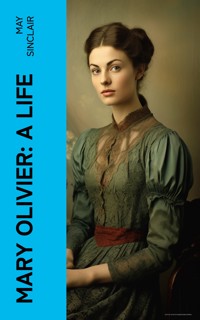
In "Mary Olivier: a Life," May Sinclair crafts a poignant semi-autobiographical narrative that immerses readers in the complexities of a woman's emotional and intellectual evolution during the late Victorian era. Sinclair's prose is characterized by its modernist sensibilities, utilizing stream-of-consciousness techniques to intricately explore the protagonist's internal struggles and relationships. Set against a backdrop of societal constraints, the novel delves into themes of identity, feminism, and the quest for autonomy, positioning Mary Olivier as a forerunner of the modern female narrative. May Sinclair, a pioneer of feminist literature and a significant figure in the early 20th-century literary scene, drew on her own experiences as a suffragette and advocate for women's rights. Her progressive views and deep understanding of psychological intricacies enabled her to create complex characters that defy the conventions of their time. Sinclair's works often challenge societal norms, and "Mary Olivier" serves as a testament to her commitment to portraying the authentic lives of women, as well as exploring the intersections of art and personal experience. This remarkable novel is highly recommended for readers interested in feminist literature, psychological realism, and those who appreciate a rich, introspective narrative. Sinclair's ability to weave intricate emotional landscapes makes "Mary Olivier: a Life" an essential read, providing insights not only into the protagonist's life but also into broader societal changes in women's roles and identities. In this enriched edition, we have carefully created added value for your reading experience: - A succinct Introduction situates the work's timeless appeal and themes. - The Synopsis outlines the central plot, highlighting key developments without spoiling critical twists. - A detailed Historical Context immerses you in the era's events and influences that shaped the writing. - A thorough Analysis dissects symbols, motifs, and character arcs to unearth underlying meanings. - Reflection questions prompt you to engage personally with the work's messages, connecting them to modern life. - Hand‐picked Memorable Quotes shine a spotlight on moments of literary brilliance. - Interactive footnotes clarify unusual references, historical allusions, and archaic phrases for an effortless, more informed read.
Das E-Book können Sie in Legimi-Apps oder einer beliebigen App lesen, die das folgende Format unterstützen:
Veröffentlichungsjahr: 2022
Ähnliche
















Mary Olivier: a Life
Table of Contents
Introduction
Mary Olivier: A Life traces the quiet battle between a woman’s awakening intellect and the mesh of filial love, social duty, and habit that would shape it into submission, following how a mind learns to desire, to resist, to interpret the promises of culture and the claims of home, and how tenderness toward others entwines with pressures that narrow the self, so that the very sources of care become the theater of struggle for freedom, sustained attention, and the right to make a life from thought as well as feeling, without mistaking gratitude for silence or mistaking inward clarity for a failure of love.
May Sinclair’s novel belongs to early twentieth-century modernism and the psychological Bildungsroman, first published in 1919 and set largely in England during the closing decades of the nineteenth century and the years that follow. It is not a social panorama but an intimate domestic chronicle, observing parlors, schoolrooms, and the rituals of respectability as closely as inner weather. Within these bounded spaces, Sinclair stages a life-long confrontation between inherited ideals and a growing critical intelligence. The book’s experimental resolve serves its realism: it seeks not events alone but the sensation of living through them, registering how thought hardens, slips, doubles back, and sparks.
At its simplest, the novel follows Mary from quick, observant child to self-aware adult, marking shifts in consciousness rather than parading external drama. The narration keeps close to her perceptions, compressing years into flares of recollection and dilating a moment until it reveals its pressure points. Syntax loosens to accommodate sensation; then it tightens around analysis. The effect is at once tender and exacting, sympathetic to bewilderment yet unsparing about compromise. Readers encounter a mind that is learning how to read the world, to value silence and solitude, and to question inherited certainties, without the story forfeiting mystery or momentum.
Central to Mary’s development is the friction between familial devotion and an appetite for intellectual and moral independence. The novel studies the mother–daughter bond with unusual steadiness, showing how love can become a discipline and how duty can do real, if unintended, violence to nascent freedoms. Education—formal and self-directed—emerges as both refuge and battlefield, while friendship and nascent attachments test the meanings of loyalty. Sinclair probes the pull of religious habit and the allure of secular reasoning without staging a simple conversion tale. What persists is the question of what one owes to others, and what one owes to oneself.
Formally, the novel’s daring lies in its fidelity to the textures of thought as they change across a life. Early passages attend to a child’s synaptic leaps, the way sensation precedes concept; later sections trace abstraction, irony, and the disciplined solitude required by reflection. Time moves with memory’s logic, not the calendar’s: repetitions acquire new meanings, and small incidents become hinges. Sinclair uses rhythmic variation and shifts in diction to register growth without recourse to commentary. The result is a portrait of consciousness that honors uncertainty and partial knowledge while allowing readers to feel the stakes of each inward turn.
For contemporary readers, the novel’s questions sound newly immediate: How does one balance care for family with the labor of making a self? What educational freedom is necessary for a life of the mind, and who grants it? Sinclair’s attention to the costs of compliance, the pressures of respectability, and the invisible work demanded of daughters resonates with ongoing conversations about gender, caregiving, mental load, and autonomy. The book also models a way of reading attention itself—how we allocate it, how others claim it, how it shapes ethics—offering a vocabulary for experiences that often go unspoken yet determine the shape of lives.
Encountered today, Mary Olivier: A Life stands as both narrative and method, a succinct example of how modernist technique can serve moral inquiry without spectacle. It invites slow reading, attentiveness to cadence, and tolerance for quiet revelations, rewarding the reader with a cumulative portrait rather than a chain of surprises. Published at a moment when English-language fiction was redefining its possibilities, Sinclair’s work helped clear space for interiority as a subject in its own right. Its enduring power lies in the seriousness with which it treats the growth of a consciousness—and the ordinary, exacting circumstances that enable or impede it.
Synopsis
May Sinclair’s 1919 novel Mary Olivier: A Life follows its heroine from early childhood into middle age, composing a portrait of consciousness shaped by family, culture, and memory. Using a fluid, interior style associated with literary modernism, Sinclair traces how sensations, fragments of speech, and private reasoning cohere into a self. The narrative unfolds within an English middle-class household ruled by convention and piety, where Mary learns to read the adult world as intently as she reads books. Rather than plot-driven shocks, the novel advances through perception and reflection, mapping the subtle changes that define a life lived under close domestic scrutiny.
Mary’s earliest years form a landscape of rooms, voices, and prohibitions that she tests with curiosity and stubborn intelligence. She adores language and turns to reading as a sanctuary, but the very habits that strengthen her mind set her at odds with adult expectations. The household’s moral code is personified by a devoted, exacting mother whose love is tangled with control, while a gentler father offers comfort without real authority. Among older siblings who often command the family’s attention, Mary must assert herself to be seen. Her private observations crystallize into questions about truth, obedience, and the fairness of rules applied to girls.
Adolescence sharpens conflicts that childhood only hinted at. Mary’s schooling is partial and precarious, always vulnerable to interruption by household needs. She seeks sustained study—of poetry, languages, and the structures of thought—but is instructed that dutiful service matters more than intellectual ambition. The mother’s anxieties about propriety intensify, curbing Mary’s movements and friendships, while the father’s conciliatory instincts leave the dominant order intact. As her siblings chart futures beyond the house, Mary confronts the asymmetry between their sanctioned independence and her prescribed self-effacement. The narrative registers frustration and wit in equal measure, revealing a mind that refuses to accept the limits set for it.
In young adulthood, the family’s unspoken bargain tightens: Mary’s presence is indispensable at home, and her compliance is interpreted as contentment. Prospects that might lead outward—further study, work, or marriage—are weighed with the same domestic calculus that has always governed her life. A tentative intimacy arises that tests her resolve, yet the pull of obligation, and of a moral logic shaped by maternal authority, complicates every choice. Sinclair keeps the focus on Mary’s inward negotiations, showing how the wish to be responsible can obscure what one genuinely desires. The household remains the stage on which all ambitions must either adapt or be relinquished.
As responsibilities accumulate, Mary’s inner life grows more searching. She interrogates the religious certainties that structured her upbringing, sifting doctrine against experience, and finds both comfort and strain in belief. Reading remains a lifeline, not for escape but for clarity, as she considers how thought and feeling might coexist without self-betrayal. Illness, aging, and the ordinary attritions of family life press on her sense of purpose, compelling a revised understanding of patience, kindness, and personal integrity. The prose mirrors this deepening inquiry, interleaving past and present to show how memory refashions pain into meaning while leaving some questions resistant to closure.
The later movement of the novel observes the household altering through departures and losses, while Mary continues to negotiate what she owes others and what she owes herself. Care emerges as both vocation and constraint, a field in which love can be exacting without being redemptive. Episodes of muted defiance—choosing how to read, where to walk, whom to visit—carry moral weight within small circumstances. Without announcing decisive breaks, the narrative suggests shifts in Mary’s self-conception, as she learns to name what she can and cannot give. The account remains intimate and unsensational, attentive to the ordinary heroism of sustained attention.
Mary Olivier: A Life endures for its precise rendering of female consciousness within the strictures of Victorian and early twentieth-century domesticity. Sinclair’s method demonstrates how a life may be shaped less by events than by the meanings a mind confers upon them, anticipating later developments in psychological fiction. The novel questions inherited ideals of duty and sacrifice without caricaturing those who uphold them, and it preserves ambiguity around the costs of independence. By closing on reflective rather than conclusive notes, it honors complexity while inviting readers to consider the conditions under which thought, affection, and freedom can coexist.
Historical Context
Mary Olivier: A Life (1919) by the English novelist and critic May Sinclair unfolds within late Victorian and early twentieth‑century England, tracing a woman’s development inside a respectable middle‑class household. Sinclair, born in 1863 in Cheshire, wrote at a moment when narrative technique was shifting toward psychological depth, and she became one of the first British writers to employ sustained interior monologue. The book’s temporal span and domestic milieu place it amid entrenched hierarchies of class, church, and family. Its emphasis on consciousness and memory situates the novel within early modernism, while its settings echo familiar institutions—parish life, girls’ schooling, and genteel provincial neighborhoods.
Victorian domestic ideology set the framework. The ideal of female self‑sacrifice, popularized in Coventry Patmore’s long poem The Angel in the House (1854–1862), sanctified obedience, purity, and devotion to family. Legal reforms slowly modified women’s status: the Married Women’s Property Acts of 1870 and 1882 allowed wives to own earnings and property, yet authority within the home and church remained patriarchal. The Elementary Education Act (1870) expanded basic schooling, and the Girls’ Public Day School Trust (founded 1872) opened academic avenues for middle‑class girls. Still, daughters were commonly directed toward domestic duty rather than professional or scholarly ambition, shaping expectations the novel interrogates.
Opportunities for advanced study widened unevenly. The University of London became the first in the United Kingdom to award degrees to women in 1878. Cambridge allowed women to sit for Tripos examinations from 1881 but refused full degrees until 1948; Oxford established women’s halls in 1879 and finally granted degrees in 1920. In politics, organized suffrage grew: the National Union of Women’s Suffrage Societies formed in 1897 to pursue constitutional methods, while the Women’s Social and Political Union, founded in 1903, adopted militancy. These currents inform the pressures and hopes surrounding an intellectually ambitious woman educated in a culture wary of her independence.
Religious observance shaped household authority and moral feeling in late nineteenth‑century Britain. Evangelical currents within the Church of England, alongside vigorous Nonconformist traditions, emphasized personal piety, discipline, and scriptural reading, reinforcing the moral seriousness of family life. Sabbatarian practices regulated leisure, and parish networks organized charitable duty and respectable sociability. May Sinclair herself was raised by a devout, disciplinarian mother in Rock Ferry, Cheshire, an experience biographers note as foundational for her portrayal of conscience and filial duty. The novel’s atmosphere reflects this inheritance: a social world where maternal religiosity and respectable habit can direct, restrain, and define a daughter’s choices.
Medical and psychological discourse also informs the period’s understanding of women’s inner life. Late‑Victorian medicine frequently labeled distress as 'nervous' or 'hysterical', and rest cures, associated with S. Weir Mitchell, circulated on both sides of the Atlantic. Meanwhile, scientific psychology advanced, from William James’s Principles of Psychology (1890) to the early spread of psychoanalysis in Britain; the British Psycho‑Analytical Society was founded in 1919. Sinclair was a prominent critic of fiction and, in a 1918 essay on Dorothy Richardson, popularized the term 'stream of consciousness.' Mary Olivier adopts sustained interior focus to register education, desire, and duty as felt experience, not only social prescription.
Sinclair wrote into a literary field moving from Victorian realism toward modernist experiment. Psychological realism associated with Henry James prepared readers for interior focus, while contemporaries such as Dorothy Richardson (Pilgrimage began 1915) explored women’s consciousness at novel length. Circulating libraries like Mudie’s still exerted commercial pressure for moral respectability, yet post‑1900 publishers increasingly backed innovative forms. World War I reshaped cultural priorities; Sinclair volunteered with an ambulance unit in Belgium in 1914 and published A Journal of Impressions in Belgium (1915). Issued in 1919, Mary Olivier’s introspection resonated with postwar readers attuned to memory, loss, and the reassessment of inherited norms.
Industrial and urban growth had, by the late nineteenth century, produced prosperous provincial suburbs and commuter belts, where respectability, thrift, and religious conformity structured daily life. Expanding railways and postal networks fed a vigorous periodical culture and access to books. Public Libraries Acts (from 1850) enabled municipal libraries, supporting self‑education. Schooling diversified: grammar schools and high schools for girls multiplied, while the Oxford and Cambridge Local Examinations (established 1857 and 1858) offered recognized benchmarks. Such institutions formed the intellectual scaffolding available to a studious girl, even as domestic service, family duty, and conventional courtship were still presented as the central horizon of womanhood.
Mary Olivier ultimately reflects and critiques its era by juxtaposing institutional progress with persistent private restraint. Its late‑Victorian setting reveals how legal reforms and educational openings could coexist with maternal authority, religious scruple, and social expectations that curtailed women’s autonomy. The novel’s modernist attention to memory and sensation challenges a moral code that prizes compliance over self‑realization, echoing wider debates about the New Woman and the value of women’s work and intellect. Published in 1919, it reads as a postwar reckoning with the nineteenth century: an examination of how a culture’s ideals inhabit—and sometimes imprison—the very minds they seek to guide.




