


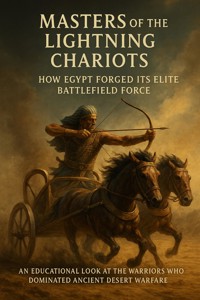
Masters of the Lightning Chariots: How Egypt Forged Its Elite Battlefield Force E-Book
David Patterson
Erhalten Sie Zugang zu diesem und mehr als 300000 Büchern ab EUR 5,99 monatlich.
- Herausgeber: epubli
- Kategorie: Geisteswissenschaft
- Sprache: Englisch
Before the rise of great empires and standing armies, Egyptian chariot warriors ruled the battlefield with unmatched speed, precision, and coordination. Masters of the Lightning Chariots offers general readers an educational and accessible journey into the world of these elite fighters—how they trained, how they fought, and how they shaped the military identity of ancient Egypt. Through clear explanations and vivid storytelling, the book explores the craftsmanship behind lightweight wooden chariots, the careful breeding of horses suited for desert climates, and the teamwork required between driver and archer. Readers will discover how chariot units functioned as mobile strike forces, intelligence gatherers, and symbols of royal power. Drawing on archaeological finds, relief carvings, palace archives, and reconstructed equipment, the narrative reveals how Egypt adopted and perfected chariot tactics during the New Kingdom, competing with Hittite, Mitanni, and other regional powers. It also examines major battles—such as Kadesh—to illustrate how chariot strategy influenced diplomacy, territorial expansion, and pharaonic prestige. Designed for curious readers seeking clarity and insight, this educational account brings Egypt's wheeled warriors into sharp focus, celebrating their skill, discipline, and innovation.
Sie lesen das E-Book in den Legimi-Apps auf:
Seitenzahl: 169
Veröffentlichungsjahr: 2025
Das E-Book (TTS) können Sie hören im Abo „Legimi Premium” in Legimi-Apps auf:
Ähnliche


















Table of Contents
Chapter 1: The Birth of Chariot Warfare
Understanding the Origins of Chariotry
The Evolution of Horse Domestication
The Craftsmanship of Chariot Design
Teamwork: The Driver and the Archer
Societal Impact of Chariotry in Egypt
Chariot Warfare’s Legacy in Egypt
Chapter 2: The Craftsmanship Behind the Chariots
The Anatomy of the Chariot
Materials Used in Chariot Construction
Construction Techniques of Ancient Chariots
The Role of Innovation in Chariot Design
Chapter 3: Breeding the Perfect Steed
Understanding the Importance of Horse Breeding
Ideal Traits of Desert Horses
The Breeding Process: Techniques and Practices
Training the Chariot Horse
The Role of Environmental Adaptation
Legacy of Egypt’s War Horses
Chapter 4: Training the Warrior Elite
The Foundations of Training
Developing Strategic Minds
Mastering Chariot Control
The Role of Mental Resilience
Chapter 5: The Dynamic Driver and Archer Team
Understanding the Roles
The Art of Communication
Chariot Maneuvering Techniques
The Importance of Speed and Precision
Chapter 6: The Role of Chariot Units in Battle
Chariots as Reconnaissance Units
The Support Role of Chariot Units
Chariots in Rapid Assaults
The Tactical Versatility of Chariot Warfare
Chapter 7: Chariots and Egyptian Military Identity
The Chariot as a Status Symbol
Training for Excellence: The Chariot Warriors
Chariots and Warfare Strategies
Chariots in Major Battles
Chapter 8: Rivalries and Competitions: Hittites and Mitanni
The Rise of Rivalries
Advances in Chariot Warfare
The Battle of Kadesh
The Role of Diplomacy
Chapter 9: Key Battles and Chariot Strategy
The Battle of Kadesh: A Turning Point
Chariot Warfare Strategies Across the New Kingdom
Key Enemies: Hittites and Mitanni
The Impact of Chariot Warfare on Territorial Expansion
Chapter 10: The Art of Chariot Warfare Tactics
Understanding Chariot Maneuvers
Formations in Battle
Coordinated Attacks and Teamwork
Adapting to Battlefield Conditions
Lessons from Historical Battles
Chapter 11: The Fall of the Chariot Age
Shifts in Warfare Strategies
The Rise of Infantry
Changing Terrain and Geography
Legacy of the Chariot Warriors
Chapter 12: The Legacy of the Chariot Warriors
Historical Significance
The Chariot as a Symbol
Training and Social Structure
Battles That Shaped History
Cultural Narratives and Legacy
Bringing the Legacy of Chariot Warfare to Life
The Evolution of Chariot Design
The Art of Horse Breeding
Teamwork: The Driver and Archer Dynamic
Chariot Units: Mobile Strike Forces
Chapter 1: The Birth of Chariot Warfare
The world of ancient warfare transformed dramatically with the introduction of the chariot. In this chapter, we explore how chariot warfare was born in the deserts of the Near East and why it became a pivotal force for the Egyptians. We will examine the early designs, the evolution of horse domestication, and the cultural impact of chariotry on early Egyptian society.
Understanding the Origins of Chariotry
The concept of the chariot emerged from the need for enhanced mobility and speed on the battlefield. This section looks at the earliest uses of chariots in warfare, how they differed from previous methods of combat, and their historical context within the Near East.
Chariots as a Revolutionary Innovation
The introduction of the chariot revolutionized warfare in the ancient Near East, marking a significant departure from traditional infantry combat. Chariots offered enhanced mobility, enabling rapid maneuvers and quicker strikes against enemy forces. This innovation combined speed with the power of archery, allowing warriors to shoot arrows while on the move, creating a highly effective combination of assault and defense.
Furthermore, chariots acted as mobile command centers, allowing leaders to direct troop movements and communicate strategies across the chaotic battlefield. Their presence signified elevated status and technological advancement, which not only impacted military strategies but also influenced social and political structures. As chariotry developed, it became a symbol of elite power, shaping the identity of nations and their rulers while demonstrating how warfare could be both an art and a science.
Early Prototypes of Chariots in the Near East
The earliest prototypes of chariots can be traced back to the late Neolithic and early Bronze Age, around 3000 BCE, where wooden frames were initially developed for transport purposes. As horse domestication progressed, these early vehicles evolved into war chariots, specifically designed for combat. By incorporating lightweight materials and improved wheel designs, these innovative structures became versatile machines, characterized by speed and agility.
Archaeological finds reveal that early chariots were often pulled by oxen, showcasing their gradual adaptation for warfare. Although these initial designs lacked the sophisticated technology seen in later Egyptian chariots, they laid the groundwork for the elaborate constructions eventually used in battle. As neighboring cultures exchanged ideas, the basic prototype transformed into a fearsome instrument of war, reflecting the ingenuity and adaptability of ancient engineers.
The Transition from Infantry to Chariot Warfare
The shift from infantry dominance to chariot-centric warfare marked a pivotal moment in military history. Initially, battles were fought predominantly by foot soldiers armed with spears and shields. However, as the effectiveness of chariots became apparent, militaries began reconfiguring their strategies. The flexibility provided by chariots allowed for quick flanking maneuvers and surprise attacks, resulting in a tactical advantage over slower, heavily armored infantry.
This transformation demanded not just innovative technology but also a change in training and discipline among troops. Soldiers needed to learn how to coordinate as units, relying on precision and communication between the charioteer and the archer. Consequently, this transition altered the fabric of warfare, fostering new tactical doctrines and leading to victories that would secure the dominance of the chariot in ancient military engagements.
Influence of Neighboring Cultures on Egyptian Chariot Design
The designs and tactics of Egyptian chariots were significantly influenced by interactions with neighboring cultures, particularly the Hurrian and Hittite peoples. As Egyptian forces encountered these regions, they adopted various aspects of chariot technology, including improvements in wheel construction and the integration of more powerful horse breeds. These innovations allowed Egyptian armies to create more resilient and maneuverable chariots, enhancing their battlefield effectiveness.
Trade and warfare facilitated an exchange of ideas that led to rapid advancements in chariotry. Egyptian charioteers began to incorporate regional tactics, such as the use of lighter, swifter chariots, which contrasted with the bulkier designs found within the Egyptian standard. This cultural interchange not only fortified Egypt's military capabilities but also helped shape the political landscape of the region, as stronger, more mobile armies continually shifted the balance of power throughout the ancient world.
The Evolution of Horse Domestication
The effectiveness of chariot warfare is closely tied to the domestication and breeding of horses. This section explores how early Egyptians transformed wild horses into powerful companions for war, focusing on breeding techniques and selection.
Understanding horse breeds suitable for desert conditions
The selection of horse breeds capable of thriving in desert environments was essential for the success of chariot warfare in ancient Egypt. Egyptian warriors primarily relied on horses from the Arabian lineage, known for their endurance, speed, and agility. These horses adapted well to arid climates, capable of tolerating heat and scarcity of water.
Moreover, Arabian horses are characterized by their slim build, which reduces heat retention, and their ability to travel long distances across harsh terrains. The selective breeding practices employed by early Egyptians prioritized these attributes, often coupling mares and stallions based on their physical traits and temperaments suitable for battle.
Through careful observation and breeding, ancient Egyptians developed horses that not only excelled in speed but also demonstrated the temperament required for the high-stress conditions of warfare. This deep understanding of horse breeds would provide a crucial advantage on the battlefield, as cavalry units relied on the unique strengths of these animals.
The role of horse health and training in warfare
Effective chariot warfare hinged significantly on the health and training of the war horses. Proper nutrition was vital; horses required a diet rich in grains and forage to maintain their stamina and health. Careful management of their diet ensured that these animals could perform under the intense stresses of battlefield conditions, which often included long chases and rapid maneuvers.
Training was equally critical, involving rigorous routines that familiarized the horses with the sounds and sights of battle. Techniques included acclimatizing the horses to the chariot and desensitizing them to loud noises or sudden movements, helping them remain calm in chaotic situations.
This dedication to training not only improved the horses' capabilities but also fostered a strong bond between horse and driver. Such partnerships were essential, as the success of chariot units relied on seamless communication and trust between both horse and rider, enabling rapid responses during warfare.
Daily preparations and care of war horses
Daily preparations for war horses were an intricate blend of care and training that ensured their readiness for battle. Each day began with grooming, which not only maintained the horse's hygiene but also allowed handlers to inspect for injuries or signs of illness. This routine fostered a close relationship between the horse and its caretaker.
Handlers would then conduct warm-up exercises, such as light trotting or lunging, to prepare the horses' muscles and improve their agility. Following this, tactical drills were conducted, allowing both horse and charioteer to practice maneuvers essential for combat, such as quick turns, stops, and sudden accelerations.
Additionally, adequate rest was crucial. Horses needed downtime to recover from training and maintain their overall health. This emphasis on care and preparation highlighted the Egyptians’ understanding that a well-cared-for horse was not only a tool of warfare but a valued companion vital to their military success.
Comparative analysis of horse tactics versus infantry
The use of chariots revolutionized tactics in warfare, offering distinct advantages over traditional infantry. Chariotry provided a mobile force capable of rapid strikes, disrupting enemy formations with unprecedented speed. Horses enabled these chariots to maneuver quickly across the battlefield, making them harder for infantry to counter.
For instance, while infantry units primarily relied on formation and close combat, chariot units could employ hit-and-run tactics, outflanking enemies and targeting key positions with their archers. This mobility was especially effective against slower-moving troops, creating a dynamic battlefield where strategy and reaction times were pivotal.
Yet, it is essential to recognize that infantry still played a crucial role in warfare. They provided a stable foundation for many armies, fortifying positions and engaging in direct combat when necessary. Thus, the combination of chariots and infantry tactics created a balanced and effective military strategy, leveraging the strengths of each component in ancient Egyptian warfare.
The Craftsmanship of Chariot Design
The creation of chariots was an art form that combined functionality with craftsmanship. This section details how the design of lightweight wooden chariots allowed for speed and maneuverability, making them pivotal in battle.
Materials used in the construction of chariots
The construction of ancient Egyptian chariots was heavily reliant on quality materials that ensured durability and performance. Primarily crafted from lightweight woods such as cedar and acacia, these materials provided both resilience and ease of handling. Cedar, known for its strength and resistance to warping, was often imported, showcasing the trade networks of the time.
In addition to wood, iron and bronze were gradually incorporated into the chariot's fittings. These metals were used for bolts, reinforcements, and weapons, enhancing the overall functionality of the chariot during battle. Furthermore, the artistry in the design often featured intricate carvings and decorative elements that reflected the wealth and power of the owner, revealing cultural significance beyond mere practicality.
Design features that improved battlefield performance
Chariot design underwent numerous modifications that greatly enhanced their performance on ancient battlefields. One key innovation was the incorporation of a lightweight frame, which allowed for remarkable speed and agility. This was crucial in the deserts of Egypt, where the ability to maneuver quickly could decide a battle's outcome.
The open structure of the chariot, often equipped with a simple yoke system, optimized space and reduced excess weight. This design accommodated a driver and an archer, facilitating efficient communication and execution of complex maneuvers. Additionally, low profiles were standard to prevent the chariot from toppling over, providing stability during high-speed operations.
Innovations in wheel and axle construction
Innovations in wheel and axle design were pivotal in enhancing the functionality of Egyptian chariots. The wheels were typically made of wooden spokes, which made them lighter than solid wheels, allowing for greater speed and less friction on sandy terrain. This spoke-and-rim construction also provided strength without the added weight, enabling quick turns and fast acceleration.
The axles were designed to be sturdy yet flexible, aligning with the terrain's contours to preserve balance and control. These innovations meant that chariots could maintain their composure during rapid maneuvers, essential for the hit-and-run tactics employed by the Egyptian warriors. The overall engineering of these components reflects a deep understanding of mechanics that would resonate through centuries of military evolution.
How chariot designs suited both drivers and archers
Effective chariot designs took into account the distinct roles of both drivers and archers. The layout was strategically crafted so that the driver could concentrate on maneuvering the chariot while the archer was poised to unleash arrows at enemy forces. The placement of the archer allowed for a steady platform while facilitating quick aim and fire.
Moreover, special grips were designed for the archers, enabling them to handle their bows efficiently even while the chariot was in motion. This seamless integration of function enhanced teamwork and coordination, allowing both fighters to operate as a single unit. The dual-role functionality not only increased the effectiveness of chariot units but also showcased the sophistication of Egyptian military strategies in warfare.
Teamwork: The Driver and the Archer
The synergy between the chariot driver and the archer was crucial for successful operations. This section highlights the roles of each warrior, their training, and the importance of teamwork in the heat of battle.
Defining the roles of chariot driver and archer
The chariot team, consisting of a driver and an archer, was essential to the success of ancient Egyptian warfare. The driver, often a skilled horseman, was responsible for controlling the chariot's speed and maneuverability. His role required a deep understanding of the terrain and exceptional reflexes to navigate the battlefield with precision. This allowed the chariot to evade enemy attacks while positioning for a strategic advantage.
The archer, positioned at the rear, wielded a powerful bow to provide long-range support. His responsibility was not only to aim and shoot at targets but also to coordinate movements with the driver. Together, they created a dynamic partnership where the driver would position the chariot for an optimal attack while the archer unleashed a barrage of arrows at enemy formations. This seamless interplay made them formidable adversaries on the battlefield.
Training routines for synchronization
To develop the vital synchronization between driver and archer, extensive training routines were established. These routines focused on building a strong rapport through repetitive practice, reinforcing the natural instincts of both team members. They would often train on varied terrain, simulating the unpredictable conditions of battlefield environments. This practice enabled them to respond effectively to sudden changes.
Moreover, drills involved running through coordinated maneuvers, where the driver would execute sharp turns while the archer learned to maintain balance and aim effectively. Over time, this training fostered an intuitive understanding of each other’s actions, turning instinctual reactions into a well-honed tactical dance. The success of such teamwork meant that they could react swiftly during combat scenarios, changing tactics as required to exploit weaknesses in enemy lines.
Strategies during combat scenarios
During battle, the chariot team's strategy relied heavily on their ability to execute rapid maneuvers while maintaining effective fire. The driver would engage in hit-and-run techniques; swiftly approaching enemy lines to allow the archer to rain arrows before retreating to safety. This tactic leveraged their speed, allowing them to frustrate and disorient their opponents.
In addition, the chariot's mobility allowed them to gather intelligence on enemy formations and strategies, relaying vital information back to their commanding officers. They would often flank enemy positions or create distractions, drawing attention away from troop movements. This multi-dimensional approach to warfare highlighted the effectiveness of the chariot duo in both offensive assaults and defensive countermeasures during complex combat scenarios.
How communication was achieved in fast-paced environments
In the chaos of battle, effective communication between the driver and archer was crucial. They relied on a combination of visual signals and pre-established cues to ensure seamless coordination. For instance, a slight tilt of the driver’s body could indicate a direction change, allowing the archer to prepare for an immediate shot without verbal commands. This non-verbal communication was vital in maintaining focus amid the noise and confusion of war.
Additionally, the rhythm of the chariot itself served as a communication tool. As the chariot moved, the bouncing motion would indicate speed changes: a jolt could signal the need to fire quickly, while a steadier pace might mean to prepare for an evasive maneuver. Over time, the duo developed an innate understanding of each other's cues, which allowed them to function as a singular unit in the heat of battle, greatly enhancing their effectiveness on the battlefield.
Societal Impact of Chariotry in Egypt
The advent of chariot warfare did not just change military tactics; it transformed Egyptian society. This section investigates how the use of chariots influenced social structures, prestige, and military hierarchy.
The status of charioteers in Egyptian society
In ancient Egypt, charioteers held a prestigious position within society, often revered as elite warriors. Their skill in operating the chariot, which required a unique combination of horsemanship and archery, set them apart from traditional infantry. Charioteers were typically drawn from the nobility or affluent classes, reflecting their status through their training and the resources invested in their gear.
Their esteemed role was not just economic but also cultural, as charioteers often participated in ceremonial events and royal hunts, further solidifying their significance. Their valor on the battlefield earned them accolades and rewards, which were depicted in various forms of art, emphasizing their contributions to Egypt's military might. The social dynamics fostered by the dominance of chariot warfare ultimately led to the creation of a specialized class of warriors, sharply delineating the societal hierarchy within ancient Egyptian civilization.
How chariotry contributed to the Pharaoh's power
The introduction of chariot warfare was instrumental in enhancing the Pharaoh’s authority and dominance over rivals. Chariots represented not only a tactical advancement in warfare but also a powerful symbol of royal might. Their effective deployment in battles allowed Pharaohs to expand territorial boundaries and assert influence over neighboring regions.
As a result, Pharaohs gained prestige and divine legitimacy through military victories facilitated by chariotry. The success of campaigns was frequently celebrated in inscriptions and temple reliefs, showcasing the Pharaoh as a heroic figure. This tactical shift transformed the perception of leadership within Egypt, reinforcing the notion that military prowess was inherent to royal identity and maintaining control over the populace through both fear and admiration.
The shift in military resources and strategies
With the rise of chariotry, ancient Egyptian military strategies underwent a significant transformation. Chariots required not only the specialized horses but also trained drivers and archers, leading to a shift in how military resources were allocated. This necessitated the development of breeding programs for superior horses suitable for the harsh desert terrain, changing the agricultural focus within society.
Furthermore, professional military units specialized in chariot warfare emerged, which in turn influenced battlefield tactics. The once static formations of infantry began to adapt to incorporate chariots as mobile strike forces, capable of rapid movement and devastating aerial assaults. This strategic evolution not only increased battle effectiveness but also allowed for more intricate planning of campaigns, ultimately redefining Egyptian warfare in the Near East.
Cultural representations of chariotry in art and literature
Chariotry in ancient Egypt left a profound legacy on artistic and literary expressions, serving as a vehicle to convey the power and valor of the civilization. The prevalence of chariot imagery in tomb paintings and temple reliefs illustrates not only the technological innovation but also its revered status in Egyptian culture. These artworks often depicted battles and hunting scenes, portraying charioteers as noble figures engaged in heroic feats.
Additionally, literary texts and inscriptions celebrated the achievements of chariot warriors, framing their prowess in the context of divine favor and duty to the Pharaoh. Such narratives reinforced the cultural significance of chariotry as quintessential to Egyptian identity. Over time, these artistic representations helped immortalize the chariot as a symbol of might, creating a lasting impact on how future generations viewed their ancient past, and influencing their own social values.




