


0,49 €
Niedrigster Preis in 30 Tagen: 1,99 €
Niedrigster Preis in 30 Tagen: 1,99 €
Mehr erfahren.
- Herausgeber: Booksell-Verlag
- Kategorie: Krimi
- Sprache: Englisch
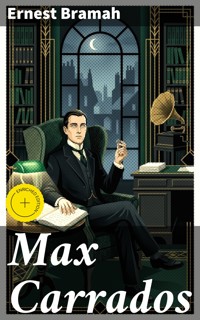
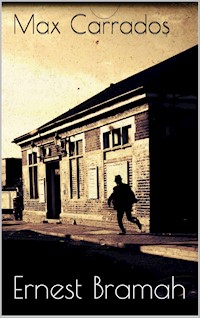
"Max Carrados" presents a captivating collection of detective stories featuring the blind yet astute protagonist, Max Carrados, who navigates a visually driven world with unparalleled insight. Written in the early 20th century, this work exemplifies the transition in detective fiction, moving from the conventional sleuths of Arthur Conan Doyle to a more innovative approach that challenges readers to think beyond sight. Bramah'Äôs intricate plotting, combined with a rich, evocative narrative style, evokes a profound sense of atmosphere that engages readers deeply, while underscoring the theme of perception beyond mere observation. Ernest Bramah, an English author renowned for his imaginative storytelling and wit, was influenced by his own experiences and the intellectual currents of his time. An advocate for the potential of those with disabilities, Bramah'Äôs creation of Max Carrados reflects his fascination with human capability and the idea that blindness does not equate to ignorance or helplessness. His background in journalism and literature also informs the sharp dialogue and clever reasoning displayed throughout these tales. "Max Carrados" is a must-read for fans of detective fiction and those interested in a fresh perspective on crime-solving. Bramah'Äôs vivid characters and clever narrative style will captivate not only enthusiasts of the genre but also readers curious about the limits of perception and the power of intellect. This collection is an enlightening journey into the art of deduction without sight, making it a timeless addition to any literary collection. In this enriched edition, we have carefully created added value for your reading experience: - A succinct Introduction situates the work's timeless appeal and themes. - The Synopsis outlines the central plot, highlighting key developments without spoiling critical twists. - A detailed Historical Context immerses you in the era's events and influences that shaped the writing. - A thorough Analysis dissects symbols, motifs, and character arcs to unearth underlying meanings. - Reflection questions prompt you to engage personally with the work's messages, connecting them to modern life. - Hand‐picked Memorable Quotes shine a spotlight on moments of literary brilliance.
Das E-Book können Sie in Legimi-Apps oder einer beliebigen App lesen, die das folgende Format unterstützen:
Veröffentlichungsjahr: 2019
Ähnliche











Max Carrados
Table of Contents
Introduction
This collection gathers eight short stories by Ernest Bramah under the title “Max Carrados,” presenting a concentrated view of one of his most distinctive series. The purpose here is not to survey Bramah’s wider range across other books, but to bring together, in a single sequence, a representative set of investigations associated with Max Carrados. The volume is designed for readers who want a coherent entry point into these tales as well as for those returning to them for their craftsmanship. Each story stands independently, yet benefits from being read alongside the others.
paragraphs like these are often introduced as “mysteries,” but the Carrados narratives are best approached as short-form detective fiction with a particular emphasis on method. Bramah writes within the tradition of the puzzle story, where inference, observation, and reasoning are the primary engines of suspense. The texts included are prose stories rather than novels, essays, or dramatic pieces, and they are arranged to foreground their shared concerns: the presentation of a perplexing circumstance, the careful narrowing of possibilities, and the eventual illumination of what at first appears opaque. Their pleasures lie in structure as much as in outcome.
Max Carrados is presented as a detective who is blind, and the series repeatedly invites the reader to reconsider how knowledge is acquired and tested. Without overstating any single episode, the stories consistently draw attention to perception, to the disciplined use of detail, and to the difference between assumption and demonstration. Bramah uses this premise to explore how social cues, habitual thinking, and overconfidence can mislead, while patient attention can reveal patterns that others overlook. The result is not simply a novelty of character, but a sustained imaginative framework for investigating uncertainty and for staging the contest between appearances and proof.
Across “The Coin of Dionysius,” “The Knight’s Cross Signal Problem,” and “The Tragedy at Brookbend Cottage,” Bramah shows a preference for enigmas that are concrete and sharply framed: a small object, an observed signal, an unsettling event in a confined setting. The situations are set up so that the reader can appreciate the logic of the inquiry without needing specialized background, and the narratives tend to proceed by successive clarifications rather than sensational escalation. This is detective fiction that relies on the intelligibility of clues, on the careful calibration of what is known and unknown, and on the satisfaction of seeing disorder rendered coherent.
The collection’s middle stories—“The Clever Mrs Straithwaite,” “The Last Exploit of Harry the Actor,” and “The Tilling Shaw Mystery”—extend Bramah’s interest in human performance: the roles people adopt, the stories they tell about themselves, and the ways outward manner can conceal motive. The plots remain grounded in detection, but the texture often includes social observation, misdirection, and a wry attention to how reputations are made and used. Bramah’s style favors clarity and economy, and his effects depend less on melodrama than on timing, on the precise placement of a telling detail, and on the steady pressure of rational inquiry.
In “The Comedy at Fountain Cottage” and “The Game Played in the Dark,” Bramah continues to mine the contrast between the ordinary surface of domestic life and the hidden arrangements that create a mystery. The recurring atmosphere is one in which small shifts—an object out of place, an unexpected movement, an improbable coincidence—deserve to be treated as meaningful. Such stories underline a central signature of the Carrados series: the transformation of apparently minor evidence into decisive understanding. The reader is encouraged to participate, weighing competing explanations, learning to distrust the obvious, and recognizing how easily perception can be managed.
Read together, these stories demonstrate why Bramah remains a significant name in early twentieth-century detective fiction. The Carrados tales show how a strong conceptual premise can be sustained across multiple variations without losing freshness, and how craftsmanship in short fiction can deliver both entertainment and intellectual rigor. The unifying themes—reason under constraint, perception as a disciplined practice, and the exposure of error—connect the collection’s diverse cases into a single artistic project. This volume offers a compact but substantial encounter with Bramah’s methods: lucid prose, controlled plotting, and a continuing confidence in the power of inference.
Historical Context
Ernest Bramah’s Max Carrados stories emerged from late-Victorian and Edwardian Britain, a period marked by rapid urban growth, expanding literacy, and a thriving market for short fiction. By the 1890s–1910s, mass-circulation magazines and cheap reprint volumes helped popularize detective tales among a widening middle-class readership. London’s dense networks of clubs, railways, and commercial streets supplied believable settings and plausible mobility for criminals and investigators alike. The collection reflects this environment: mysteries hinge on social observation, commodities, and everyday routines rather than exotic melodrama, aligning with contemporary tastes for rational entertainment and recognizable modern life.
Carrados belongs to the “Golden Age before the Golden Age,” when Sherlock Holmes’s success (beginning 1887) reshaped expectations for deductive method and the charismatic consulting detective. Bramah wrote with that backdrop, but he also responded to a growing interest in specialized expertise and the limits of perception. The stories use careful inference, tactile clues, and attention to habit in ways consistent with late nineteenth-century confidence in empiricism. At the same time, Bramah’s choice of a blind detective challenged simplistic assumptions about disability, drawing on a broader Edwardian fascination with psychology, sensation, and the science of how people know what they know.
The period’s expanding bureaucracy and professional policing influenced how mystery plots were constructed and received. The Metropolitan Police and its Criminal Investigation Department had become established reference points, while forensic practices—photography, cataloguing, and more systematic evidence-handling—were increasingly visible in public discussion. Bramah’s narratives often position Carrados as an independent mind who outpaces official procedure, a common trope that reflected both admiration for modern institutions and suspicion of their rigidity. Readers accustomed to reports of urban crime, sensational trials, and investigative breakthroughs could appreciate stories where small material traces and procedural details drive the solution.
Fin-de-siècle anxieties about property, theft, and circulation of valuables also shaped recurring motifs. Britain’s economy relied on global trade and financial instruments; coins, collectibles, and portable wealth carried not only monetary value but historical and symbolic meaning. Public museums, antiquarian societies, and an expanding market for artifacts fostered fascination with provenance, authenticity, and fraud. Such cultural conditions made plots involving rare objects, substitution, and misdirection especially resonant. Bramah’s attention to the handling, movement, and concealment of objects reflects an era when commodities travelled quickly and when authenticity could be contested in both markets and courts.
Social stratification and domestic service remained central features of British life, and the collection repeatedly exploits the information channels created by those hierarchies. Country cottages, suburban villas, and rented rooms were not merely backdrops but nodes in a social system where servants, tenants, and respectable visitors moved through spaces with uneven access and suspicion. The Edwardian emphasis on respectability meant that scandal, inheritance, and marital reputation could be as motivating as money. Bramah’s mysteries draw plausibility from these tensions: secrets travel along class lines, and wrongdoing often depends on assumptions about who is seen, believed, or permitted to notice.
Technological change provided new opportunities for both crime and detection. By the early twentieth century, telegraphy and the telephone were increasingly present in business and policing, while rail travel and improved road networks expanded suspects’ range of movement. Mechanical locks, safes, and signalling devices, alongside standardized timekeeping, encouraged puzzle-like problems that readers could imagine confronting in modern workplaces and households. Bramah uses such material modernity not as spectacle but as structure: technology creates constraints, generates new kinds of trace evidence, and invites clever exploitation of routine systems, making ingenuity—rather than violence—the engine of suspense.
The Edwardian press culture that surrounded Bramah shaped contemporary reception. Newspapers and magazines blended entertainment with didactic interest in criminology, and readers enjoyed narratives that mirrored the logic of real-world reporting while remaining safely fictional. The short-story form suited serial publication and encouraged tight plotting, memorable twists, and a recurring protagonist who could anchor varied scenarios. Carrados’s calm reasoning and detached wit fit a readership accustomed to the gentleman amateur as a stabilizing figure amid social change. Bramah’s tone balances irony with procedural seriousness, reflecting the era’s preference for intellectual games framed by familiar social manners.
Finally, the years leading to and following the First World War altered how readers interpreted themes of perception, vulnerability, and resilience. While many of Bramah’s Carrados stories are rooted in prewar confidence, their emphasis on adaptability and careful interpretation of imperfect information resonated in a society increasingly aware of uncertainty. The war’s injuries also sharpened public attention to disability and rehabilitation, lending added poignancy to a blind detective portrayed as capable and authoritative. Across the collection, the interplay of modern systems, social convention, and individual ingenuity reflects Britain’s transition from Victorian certainties toward a more complex twentieth-century sensibility.
Synopsis (Selection)
Max Carrados (stories featuring the blind gentleman-detective)
Across these eight cases, Max Carrados solves puzzles by pairing rigorous logic with finely trained senses, turning apparent disadvantages into a distinctive investigative edge.
The tone is urbane and lightly ironic, with recurring motifs of misdirection, social performance, and the gap between what seems obvious and what is provable.
THE COIN OF DIONYSIUS
A rare coin and the claims surrounding it draw Carrados into a dispute where scholarship, greed, and deception blur the line between expertise and trickery.
The story emphasizes observation and inference over action, using antiquarian detail to explore how value—cultural and monetary—invites fraud.
THE KNIGHT’S CROSS SIGNAL PROBLEM
A puzzling sequence of signals and timings suggests a hidden communication scheme, and Carrados works to decode the pattern behind the apparent noise.
It leans toward the technical and procedural, focusing on how systems can be exploited and how small anomalies reveal deliberate design.
THE TRAGEDY AT BROOKBEND COTTAGE
A grim incident at a secluded cottage presents conflicting appearances, prompting Carrados to reconstruct events from subtle physical and behavioral traces.
The mood is darker and more domestic than many entries, concentrating on motive, opportunity, and the fragility of respectable surfaces.
THE CLEVER MRS STRAITHWAITE
A formidable woman maneuvers through a situation where intelligence and social tact become tools as sharp as any lockpick, catching Carrados’s attention.
The piece highlights Bramah’s interest in role-playing and reputation, with a wry tone about how cunning can operate within everyday propriety.
THE LAST EXPLOIT OF HARRY THE ACTOR
An actor’s skills in disguise and stagecraft spill into real-world intrigue, and Carrados must weigh performance against reality to understand what is being attempted.
The narrative plays with theatricality as both motif and method, stressing impersonation, audience manipulation, and the ethics of deception.
THE TILLING SHAW MYSTERY
An enigmatic affair centered on property, access, or a constrained setting becomes a test of how well ordinary assumptions match physical possibility.
Its appeal lies in fair-play reasoning and precise reconstruction, foregrounding how environment and routine can conceal deliberate acts.
THE COMEDY AT FOUNTAIN COTTAGE
A seemingly light domestic situation turns into a carefully knotted problem, and Carrados approaches it with dry humor and exacting attention to detail.
The story balances comedy of manners with detection, showing how misunderstandings and social masks can be engineered into cover.
THE GAME PLAYED IN THE DARK
A crime shaped by darkness, concealment, and sensory uncertainty invites Carrados to demonstrate how nonvisual cues can outclass confident sighted assumptions.
It crystallizes the collection’s signature contrast between appearance and evidence, with tension built from controlled perception rather than spectacle.




