



0,99 €
Niedrigster Preis in 30 Tagen: 1,99 €
Niedrigster Preis in 30 Tagen: 1,99 €
Mehr erfahren.
- Herausgeber: Booksell-Verlag
- Kategorie: Poesie und Drama
- Sprache: Englisch
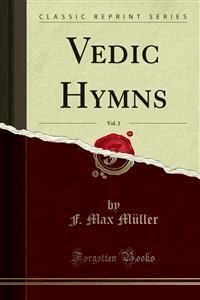
In "Memories," F. Max Müller crafts a poignant exploration of the intersections between personal reflection and cultural history. This collection of essays delves into the philosophical and historical implications of memory, examining how our recollections shape our identities and influence our understanding of civilization. Written in Müller's characteristic lucid prose, the work interweaves personal anecdotes with broader discussions of myth and language, echoing the Romantic tradition that emphasizes emotional depth and introspection. Set against the backdrop of late 19th-century Europe, "Memories" offers a nuanced contemplation of how the past informs the present. F. Max Müller, a renowned philologist and cultural scholar, was deeply influenced by his extensive studies in linguistics, philosophy, and theology. His career as a leading figure in the field of comparative religion and mythology provided him with a unique lens through which to analyze memory's role in various cultures. Müller's scholarly pursuits, coupled with his personal experiences as an immigrant and a scholar, greatly shaped his views on the interplay of memory, identity, and cultural heritage, making "Memories" a significant reflection of his intellectual journey. Readers seeking a profound engagement with the nature of memory will find "Memories" a captivating addition to their literary repertoire. Müller's insightful synthesis of personal narrative and scholarly analysis invites contemplation and encourages readers to reflect on their own experiences. This book is not merely an exploration of recollections; it is a call to understand how our memories shape the narratives of our lives and societies. In this enriched edition, we have carefully created added value for your reading experience: - A succinct Introduction situates the work's timeless appeal and themes. - The Synopsis outlines the central plot, highlighting key developments without spoiling critical twists. - A detailed Historical Context immerses you in the era's events and influences that shaped the writing. - A thorough Analysis dissects symbols, motifs, and character arcs to unearth underlying meanings. - Reflection questions prompt you to engage personally with the work's messages, connecting them to modern life. - Hand‐picked Memorable Quotes shine a spotlight on moments of literary brilliance. - Interactive footnotes clarify unusual references, historical allusions, and archaic phrases for an effortless, more informed read.
Das E-Book können Sie in Legimi-Apps oder einer beliebigen App lesen, die das folgende Format unterstützen:
Veröffentlichungsjahr: 2019
Ähnliche










Memories
Table of Contents
Introduction
At once a personal testament and a mirror of an age, this book traces how a scholar’s private recollections can illuminate the public life of ideas, showing memory as a bridge between lived experience and the long, unfolding history of language, religion, and culture.
Memories is a work of memoir by Friedrich Max Müller, the German-born philologist and pioneering comparativist who made his career at Oxford in the nineteenth century. Situated mainly in the academic and cultural milieu of Victorian Britain, with formative glances back to continental Europe, it gathers reflections composed late in his life and career. First encountered today, it reads as both an intellectual autobiography and a social document, positioned at the intersection of philology, the study of religion, and the networks of correspondence and conversation that sustained scholarly inquiry during the late nineteenth century.
Rather than offering a continuous narrative, the book presents episodes and meditations that trace the making of a scholar: a youth steeped in languages, an education shaped by European universities, and a vocation realized in Britain’s academic life. Readers meet a thoughtful, urbane voice, attentive to anecdote yet anchored in method. The style is reflective and measured, alternating between gently paced reminiscence and crisp, clarifying argument. The mood is gracious and inquisitive, inviting readers not into private scandal or revelation, but into the workshop where ideas are tested, refined, and set into wider conversation.
At its center lie questions that still matter: how languages relate, how myths travel and transform, how traditions can be compared without being diminished, and how scholarship ought to engage the public. Memory becomes a method as much as a subject, a way to hold in view the contingencies of personal life alongside the pressures and possibilities of intellectual ambition. Throughout, one senses the era’s confidence in learning and its anxieties about authority, translation, and belief—themes that lend the book a productive tension between sympathy for the past and scrutiny of received explanations.
The setting is less a single place than a principled vantage point: lecture rooms and libraries, salons and correspondence, the international circuits through which philology and comparative religion took shape. Within this milieu, the book sketches encounters with contemporaries and debates that defined fields, always more interested in the exchange of ideas than in the drama of personalities. Its craft lies in clear exposition and an unfussy elegance of tone: explanatory without pedantry, humane without sentimentality. The result is a portrait of a life lived through study, and of study lived in dialogue with a rapidly changing world.
For present-day readers, the book’s relevance lies in its articulation of intellectual cosmopolitanism and its frank view of the limits of any one perspective. It models curiosity across traditions while acknowledging the responsibilities that attend comparison and translation. It also registers the institutional dynamics of knowledge—patronage, public lectures, publishing ventures—and invites reflection on how ideas circulate beyond specialist circles. By foregrounding method and motive, it encourages a generous skepticism: respectful of sources, careful with categories, and aware that the language we use to describe other cultures invariably reveals our own assumptions.
Approached as a companion to Müller’s better-known scholarly enterprises, this memoir offers context rather than conclusion, a map of commitments that shaped decades of work. It will reward readers interested in intellectual history, religious studies, the history of linguistics, and the lived textures of Victorian scholarship. The pace is unhurried, the voice courteous and lucid, the insights cumulative. What it promises is not a final word on debates that continue today, but a disciplined, humane example of how to remember one’s way into clarity—an invitation to think with the past in order to read the present more wisely.
Synopsis
Memories by F. Max Müller is an autobiographical account that traces the author’s life from childhood to his mature years as a prominent scholar of language and religion. Written with a chronological focus, it records formative influences, decisive opportunities, and the development of his ideas. Müller outlines the circumstances that led him from German schools to European universities and ultimately to Oxford, where he built his career. The narrative explains how personal relationships, patronage, and institutional settings shaped his projects. Drawing on letters, diaries, and recollections, he presents key milestones and collaborations, aiming to preserve a factual record of people, places, and scholarly undertakings that defined his era.
The book opens with Müller’s early years in Germany, highlighting a family background steeped in literature and music and the legacy of his father, the poet Wilhelm Müller. He recounts classical schooling, the disciplined study of languages, and the atmosphere of German intellectual life that encouraged rigorous inquiry. Early teachers and mentors are acknowledged for directing his attention to philology and comparative study. While describing the cultural environment of his youth, Müller focuses on habits of work formed in gymnasium and university preparation. These foundations, he notes, set the course for his later commitment to linguistic evidence, careful editing, and the value of original sources.
His university chapters describe studies at Leipzig and Berlin, where philology became a vocation. Encounters with leading scholars and exposure to Sanskrit intensified his interest in Indo-European languages. He details seminar methods, the importance of accurate texts, and the promise of comparative grammar. A decisive move to Paris brought instruction under Eugène Burnouf and access to significant collections. There, Müller resolved to prepare an authoritative edition of the Rigveda, laying the groundwork for a career in critical editing and commentary. The period also includes observations on the shifting political landscape of mid-nineteenth-century Europe and its effect on academic mobility.
Müller then narrates his relocation to England, emphasizing introductions that opened doors in London and Oxford. He gained access to manuscripts and printing resources necessary for a Vedic edition, facing technical challenges in typesetting and proofreading Indic texts. Support from patrons and colleagues enabled steady progress, and early volumes established his reputation. The book describes the practical routines of scholarship—collations, correspondence, and the negotiation of publishing logistics. Settling in Oxford, Müller forged institutional ties that would shape his future appointments. He presents this move as a turning point, affirming the close link between scholarly ambition, infrastructure, and sustained editorial work.
As his projects advanced, Müller reached broader audiences through lectures on the science of language. These lectures outlined the principles of comparative philology, linguistic families, and historical change in grammar and vocabulary. He summarizes methodological points, stressing evidence-based comparison and caution against speculative etymology. The lectures, widely attended and published, expanded his influence beyond specialist circles and drew responses from supporters and critics. In Memories, Müller situates these engagements as part of normal academic debate, noting how public discourse helped clarify terms, refine classifications, and align his philological aims with accessible exposition.
The narrative proceeds to institutional and editorial responsibilities. Müller recounts applying for posts, including the Boden Chair of Sanskrit, and subsequently serving Oxford as Professor of Comparative Philology. He emphasizes sustained teamwork, from typesetters to translators, in bringing ambitious series to completion. A central undertaking is the Sacred Books of the East, a multivolume effort to translate Asian religious classics. The book records selection criteria, collaboration with international contributors, and editorial standards. Müller presents the series as a resource for comparative study, intended to broaden access to primary materials and to provide a neutral textual basis for understanding diverse religious traditions.
Interwoven with academic milestones are elements of personal life. Müller recalls his marriage to Georgina Adelaide Grenfell, family routines in Oxford, and a domestic environment that supported long hours of research. He sketches a wide circle of acquaintances—scholars, clergy, statesmen, and writers—across Britain and the Continent. Travel, honorary distinctions, and visiting lectureships are noted as part of a typical nineteenth-century scholarly itinerary. He describes the practicalities of funding, the role of publishers, and the social obligations surrounding university life. These chapters document the networks that sustained large editorial enterprises and the everyday conditions under which research and teaching proceeded.
Later chapters address continuing debates and publications. Müller summarizes his Gifford Lectures and related works on natural, anthropological, and psychological aspects of religion. He clarifies that terms like “Aryan” denote linguistic affiliation rather than race, recording misunderstandings and scholarly rejoinders. Exchanges with contemporaries, including sharp critiques, are presented as part of disciplinary consolidation. The narrative notes he did not travel to India, relying instead on texts, informants, and correspondence to guide interpretation. He reflects on the responsibilities of translation and the limits of conjecture, emphasizing the importance of precision, transparency, and respect for primary sources.
Memories concludes with reflections on the transformation of scholarship during Müller’s lifetime. He highlights progress in philology, the expansion of libraries and presses, and the emergence of comparative religion as a field grounded in accessible texts. The closing pages sum up his intention to connect European and Asian intellectual traditions through accurate editions and cautious generalization. Acknowledging collaborators and institutions, Müller frames his career as a record of collective effort. The book’s overall message is clear: patient, well-documented comparison can bridge cultures and disciplines. It offers a succinct record of a scholar’s methods, milestones, and the infrastructure that made them possible.
Historical Context
Memories by F. Max Müller unfolds across the nineteenth century, beginning in the small Anhalt residence of Dessau, where Müller was born in 1823, and moving through Leipzig, Berlin, Paris, London, and ultimately Oxford. Its setting is the Europe of the Vormärz and, later, the consolidated nation-states of the 1870s and 1880s, while India, under East India Company rule and then the British Crown after 1858, forms the distant yet central horizon of his scholarly life. The book’s time and place are those of railways, parliaments, censorship, and university reform, where philology, theology, and imperial administration intersected in laboratories, libraries, and lecture halls.
The post-Napoleonic settlement of 1815 created the German Confederation under Austrian hegemony, with resurgent princely states such as Prussia and Saxony shaping cultural policy. Müller’s youth in Dessau and schooling in Leipzig were marked by the conservative order of Metternich, press censorship, and rising yet restrained German nationalism. Universities like Leipzig and Berlin became engines of Wissenschaft, fostering Greek, Sanskrit, and comparative studies. The death of his father, the poet Wilhelm Müller, in 1827, and the musical-literary milieu of central Germany formed an early matrix for the cosmopolitan erudition that Memories portrays in classrooms, salons, and libraries.




