


Erhalten Sie Zugang zu diesem und mehr als 300000 Büchern ab EUR 5,99 monatlich.
- Herausgeber: epubli
- Kategorie: Geisteswissenschaft
- Sprache: Englisch
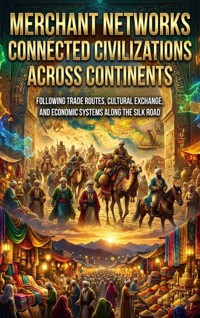
The Silk Road is romanticized as a continuous route carrying exotic goods between East and West. Yet this linear narrative overlooks the complex reality: dozens of interconnected trade networks operated by merchants who rarely traveled the entire distance, goods changing hands through multiple intermediaries, and thriving cities sustained by the infrastructure of caravanserais, currency exchange, and legal frameworks protecting foreign traders. This book traces the Silk Road through merchant letters, customs records, archaeological evidence from trading posts, and travelers' accounts. It examines how Buddhist monks, Nestorian Christians, and Muslim scholars moved alongside commodity traders—spreading religious ideas, artistic techniques, and scientific knowledge. The focus extends beyond silk and spices to include the translators who made commerce possible, the banking systems financing long-distance trade, and the steppe nomads whose political stability determined whether caravans could safely pass. By analyzing the practical mechanics of cross-continental exchange, this work reveals how the Silk Road functioned as an economic and cultural system rather than a single path. It explores how goods, ideas, technologies, and diseases traveled through human networks—showing that connection, not isolation, defined pre-modern civilizations.
Sie lesen das E-Book in den Legimi-Apps auf:
Seitenzahl: 233
Veröffentlichungsjahr: 2026
Das E-Book (TTS) können Sie hören im Abo „Legimi Premium” in Legimi-Apps auf:
Ähnliche

















Table of Contents
Chapter 1: The Heart of the Silk Road: Geography and Early Trade
Understanding the Geography of the Silk Road
Key Trade Hubs Along the Silk Road
Natural Barriers and Their Effects on Trade
Early Trading Practices and Methods
Chapter 2: The Merchants: Profiles and Experiences
Varied Backgrounds of Merchants
Motivations Behind Trade
Challenges Faced by Merchants
Network Building Among Merchants
Chapter 3: Goods on the Move: The Varied Cargo of the Silk Road
Beyond Silk: The Diversity of Goods
The Trade of Ideas: Intellectual Goods
The Role of Marketplaces and Trade Centers
Motivation Behind Trade: What Drives Traders?
Chapter 4: The Role of Caravanserais: Safe Havens for Travelers
The Architectural Design of Caravanserais
Services Offered at Caravanserais
The Role of Caravanserais in Trade Networks
Caravanserais and Cultural Exchange
Chapter 5: Currency and Trade: Financial Systems across the Silk Road
The Rise of Banking Systems
Currency Exchange Practices
Risk Management in Trade
The Role of Organizations and Guilds
Impact of Political Stability
Chapter 6: The Intermediaries: Translators and Brokers
The Role of Language in Trade
Brokers: The Connectors of Commerce
Cultural Exchange Through Translation
The Economic Impact of Intermediaries
Navigating Legal and Cultural Challenges
The Legacy of Translators and Brokers
Chapter 7: Cultural Exchange: Ideas and Innovations
The Flow of Religious Ideas
Innovations in Technology and Science
Artistic Influences and Styles
The Language of Trade and Translation
Chapter 8: The Impact of Religion on Trade Dynamics
Religion as a Catalyst for Trade
Creating Networks: Monks and Missionaries
Religious Tolerance and Economic Prosperity
Religious Institutions and Merchant Support
The Spread of Ideas through Religion and Trade
The Political Aspect of Religion in Trade
Chapter 9: The Steppe Nomads: Guardians of the Trade Routes
The Lifestyle of Steppe Nomads
Political Structures of Steppe Nomads
Relationships with Settled Communities
Guardians of the Trade Routes
Cultural Influence of Steppe Nomads
Legacy of Steppe Nomads on the Silk Road
Chapter 10: Legal Frameworks: Protecting Traders
The Origins of Trade Laws
The Role of Caravanserais in Legal Protections
Legal Frameworks Across Different Cultures
The Impact of Treaties on Trade Relations
The Role of Brokers and Translators in Legal Transactions
Modern Implications of Historical Trade Laws
Chapter 11: Environmental Challenges: Adapting to Nature
The Diverse Landscapes of the Silk Road
Strategies for Survival in Extreme Weather
Adaptation Through Innovation
The Role of Local Knowledge
Environmental Impact on Trade Dynamics
Lessons from the Past: Sustainability in Trade
Chapter 12: The Legacy of the Silk Road: Enduring Connections
Historical Perspective on Trade Networks
Cultural Exchanges Across Time
The Economic Framework of the Silk Road
Modern-Day Implications of Silk Road Connections
Chapter 13: Disease and Trade: The Dark Side of Connectivity
The Origins of Disease in Trade
The Impact of Pandemics on Trade
Responses to Disease: Social and Cultural Adaptations
Historical Lessons on Connectivity and Vulnerability
Chapter 14: Artifacts of Trade: Archaeological Discoveries
The Importance of Archaeological Findings
Notable Archaeological Sites Along the Silk Road
Artifacts that Reveal Trade Practices
Cultural Artifacts: The Exchange of Ideas and Beliefs
The Role of Nomadic Traders in Archaeological Findings
Preservation and Future Research of Silk Road Artifacts
Chapter 15: Modern Comparisons: Trade Routes Today
Understanding Modern Trade Routes
Cultural Exchange in Contemporary Trade
The Role of Technology in Trade
Challenges in Modern Trade
Chapter 16: Conclusion: Reflections on Trade and Cultural Exchange
The Enduring Influence of the Silk Road
Trade Beyond Goods
The Role of Nomadic Cultures
Historical Perspectives on Trade and Exchange
Connections of the Past: Reflections and Future Horizons
Chapter 1: The Heart of the Silk Road: Geography and Early Trade
This chapter discusses the geographical layout of the Silk Road, highlighting major trade hubs and natural barriers. We'll explore how geography shaped early trading practices and facilitated the movement of goods and ideas across vast distances.
Understanding the Geography of the Silk Road
The Silk Road spanned vast distances, connecting diverse regions. Understanding its geographical layout is crucial for grasping how trade developed. Mountains, deserts, and rivers created both challenges and opportunities for merchants.
Key Point 1: Major geographical features
The Silk Road's geographical features played a pivotal role in shaping trade patterns and interactions among diverse cultures. Stretching over 4,000 miles, the route traversed a variety of landscapes, including mountains, plains, deserts, and plateaus. Key features such as the formidable Tian Shan and Himalayas created natural barriers that influenced the accessibility of certain areas.
The rugged terrain not only presented challenges to travelers but also determined the locations of key trade hubs. Cities like Samarkand and Bukhara emerged as critical nodes, strategically positioned near these geographical barriers, facilitating the exchange of goods and ideas.
Additionally, river systems such as the Amu Darya and Syr Darya provided essential water sources for caravans, while fertile plains supported agricultural production. Understanding these geographical features allows for a more nuanced perception of how they impacted trade routes and the interconnectedness of early civilizations across the Silk Road.
Key Point 2: The role of the Taklamakan Desert in trade
The Taklamakan Desert, one of the largest sandy deserts in the world, posed significant challenges for merchants traversing the Silk Road. Spanning approximately 1,000 kilometers, it became a formidable barrier that influenced trade routes and caravan organization. The harsh climate, extreme temperatures, and lack of resources forced traders to devise innovative solutions for safe passage.
While daunting, the desert also spurred the ingenuity of merchants, leading to the establishment of oasis towns such as Kashgar and Hotan. These towns served as vital resting points where traders could recuperate, replenish supplies, and exchange goods, effectively turning the desert into a network of opportunities despite its inhospitable nature.
The desert’s vast expanse ultimately influenced the timing and frequency of caravans, shaping trade dynamics and the movement of not just commodities but cultural exchanges between East and West. Thus, the Taklamakan Desert was not merely a physical barrier, but a catalyst for adaptation and resilience among traders.
Key Point 3: How the Tian Shan mountains affected routes
The Tian Shan mountains, often referred to as the "Celestial Mountains," formed a crucial segment of the Silk Road, marking a natural boundary that affected trade routes profoundly. Their towering peaks and steep passes created challenges that required careful navigation and strategic planning by merchants traveling along the network.
Caravans often utilized specific passes, such as the Torugart and Irkeshtam, which were essential for connecting Central Asia with the western regions. These passes not only facilitated the transportation of goods but also served as cultural conduits, allowing for the mingling of various civilizations and the spread of ideas, religion, and technology.
The presence of the Tian Shan also encouraged the development of settlements along the foothills, where trade flourished due to improved accessibility. By understanding the influence of these mountains, one can better appreciate the intersections of geography, culture, and trade that defined the Silk Road’s rich history.
Key Point 4: Importance of river systems like the Amu Darya
River systems along the Silk Road, particularly the Amu Darya, were vital to trade and civilization development. This river not only provided crucial water resources for agriculture but also served as a transportation route that facilitated the movement of goods and people. Flourishing settlements along the riverbank became centers of commerce, craft, and culture.
The Amu Darya's seasonal floods enriched surrounding lands, allowing for sustainable agricultural practices, which supported the local economy and fed caravans. In turn, these caravans moved a variety of goods, including silk, spices, and precious metals, extending their influence beyond their immediate locations.
Moreover, the river allowed for the establishment of trade agreements and relations between various cultures, enriching local societies through the flow of ideas, technologies, and art forms. The interconnected nature of river systems with the Silk Road highlights their indispensable role in fostering economic systems and cultural exchanges across vast distances.
Key Trade Hubs Along the Silk Road
Throughout history, certain cities emerged as thriving trade hubs along the Silk Road. These hubs facilitated not only the exchange of goods but also cultural and intellectual interaction.
Key Point 1: The significance of cities like Samarkand and Bukhara
Samarkand and Bukhara stand out as pivotal trade hubs along the Silk Road, serving as melting pots of culture and commerce. Located in modern-day Uzbekistan, these cities flourished during the height of the Silk Road, attracting merchants from diverse regions. Samarkand, known for its vibrant bazaars and architectural marvels such as the Registan, was not just a market; it was a cultural beacon that facilitated the exchange of ideas between East and West.
Bukhara, likewise, thrived as a center for trade and scholarship. Its strategic positioning along trade routes allowed it to become a major stop for caravans transporting silk, spices, and precious gems. The cities' significance extended beyond their economic impact; they also served as cultural crossroads where Islamic, Persian, and Central Asian influences converged. This interaction fostered a rich intellectual environment, giving rise to advancements in sciences, philosophy, and the arts.
Key Point 2: The impact of urban centers on regional economies
The urban centers along the Silk Road, such as Samarkand and Bukhara, profoundly influenced regional economies. These cities generated wealth not only through the direct sale of goods but also by creating an ecosystem that supported various industries, including textiles, metalwork, and ceramic production. The concentration of merchants in these hubs accelerated trade flows, allowing for faster exchanges of not just commodities but also technologies and ideas.
The income generated from trade significantly bolstered local economies, leading to the establishment of banks and financial institutions. This financial infrastructure enabled longer trading expeditions by providing currency exchange, credit, and safe investment opportunities for traders. Consequently, urban centers became not just endpoints for goods but central nodes in a larger economic network that spanned continents, bringing prosperity to their regions.
Key Point 3: Caravanserais as vital support for traders
Caravanserais played a crucial role in supporting trade along the Silk Road by providing safe resting places for weary travelers and their caravans. These roadside inns, strategically located near trade routes, offered lodging, food, and care for animals, facilitating uninterrupted trade journeys across harsh terrains. By providing a safe haven, caravanserais encouraged more merchants to undertake long-distance trade, knowing they had secure places to rest and recuperate.
In addition to physical comforts, caravanserais also served as vibrant community hubs where traders could share knowledge, negotiate deals, and discuss news from distant lands. They contributed significantly to local economies as merchants frequently patronized nearby businesses, fueling economic activity. As a result, these establishments were integral to the Silk Road’s success, enhancing both the safety and efficiency of trade across the region.
Key Point 4: How trade hubs influenced cultural exchanges
The trade hubs along the Silk Road were not only centers of economic activity but also crucibles of cultural exchange. Merchants, travelers, and scholars from diverse backgrounds converged in cities like Samarkand and Bukhara, leading to a rich tapestry of cultural interactions. This environment facilitated the transmission of religious beliefs, artistic styles, technologies, and scientific knowledge across vast distances.
Cultural exchange was evident in various forms, including the spread of Buddhist art from India into Central Asia and the adaptation of Islamic architectural styles in local constructions. The blending of languages, culinary practices, and customs created a unique cultural milieu that enriched all communities involved. Thus, trade hubs acted as conduits for not just goods but also the ideas that shaped civilizations, illustrating how interconnected the ancient world was through the Silk Road.
Natural Barriers and Their Effects on Trade
Natural barriers such as mountains and deserts played a significant role in shaping trade routes. These obstacles forced merchants to adapt their strategies and define the flow of goods.
Key Point 1: Strategies used to navigate mountain ranges
Navigating the formidable mountain ranges along the Silk Road required merchants to employ various strategies to ensure the safe passage of goods. High-altitude ranges, such as the Pamirs and the Tianshan, presented numerous challenges, from treacherous weather conditions to steep, hazardous paths. To circumvent these obstacles, merchants often formed caravans that could offer mutual support and security.
Group travel not only provided safety from bandits but also enabled collective use of resources, such as shared navigational knowledge. Local guides with expertise in high mountain terrains played a crucial role in navigating these routes. Additionally, traders adapted their loads, often reducing the weight of their goods to facilitate easier movement through difficult steep terrains. The establishment of resting places, or caravanserais, along these mountain routes also contributed significantly to the ability of merchants to navigate these barriers, providing them with necessary shelter and supplies.
Key Point 2: Overcoming the challenges posed by deserts
Deserts, characterized by extreme temperatures and scarce water sources, were among the most daunting natural barriers for Silk Road traders. To combat the challenges of deserts such as the Taklamakan and the Gobi, merchants developed specific strategies. One primary tactic involved timing their journeys to exploit the cooler seasons, such as spring and autumn, when weather conditions were less severe.
Furthermore, traders would often travel in well-organized caravans, ensuring that they had sufficient supplies of water and food for the journey. Knowledge of hidden oases and water wells was imparted from local inhabitants to traders, proving invaluable for long-distance travel. Additionally, the practice of intermittently alternating caravan pathways reduced the risk of depletion of resources in specific areas, ensuring that traders could maintain continuous trade routes across these arid expanses.
Key Point 3: Seasonal variations and their effects on trade
The impact of seasonal variations on trade along the Silk Road was significant, influencing both the timing and volume of commerce. Different seasons brought about changes in weather patterns that affected travel conditions, productivity, and the overhead costs for merchants. For instance, harsh winters could render routes impassable, while summer heat could cause delays due to the exhaustion of camels and other pack animals.
Merchants closely monitored these seasonal changes to optimize their routes and schedules. Spring was particularly favored for trade, allowing traders to capitalize on seasonal crops and goods becoming available from various regions, while autumn marked the time for merchants to return before harsh conditions set in. Understanding and adapting to these seasonal dynamics allowed for an efficient exchange of goods, transforming the rhythm of trade into a synchronized dance of supply and demand across regions.
Key Point 4: The importance of local knowledge for traders
Local knowledge proved to be a vital asset for traders navigating the complex terrains of the Silk Road. Merchants relied heavily on the insights provided by local inhabitants who possessed expertise about the geography, climate, and available resources. Such knowledge encompassed everything from identifying safe passages through treacherous mountain passes to discovering reliable watering holes in expansive deserts.
Moreover, local intermediaries facilitated smoother transactions by providing important cultural context, establishing trust, and acting as translators when necessary. This interaction not only enhanced trading efficiency but also fostered cultural exchanges, as merchants often brought back local customs and knowledge to their home regions. Establishing strong relationships with local populations and utilizing their insights effectively established a framework that made trade not just possible but prosperous across diverse terrains of the Silk Road.
Early Trading Practices and Methods
Trading along the Silk Road required innovative methods and practices. Understanding these early trading practices sheds light on the economic systems that developed.
Key point 1: Bartering goods versus using currency
In the early stages of Silk Road trade, bartering was the primary method of transaction. Merchants exchanged goods directly, which required a mutual assessment of each item’s value. This system, although straightforward, posed challenges; the need for a double coincidence of wants meant that both parties had to desire what the other offered, complicating trade in regions where goods varied significantly.
Over time, the introduction of currency revolutionized these exchanges. Coins from various empires—such as the Roman denarius and the Chinese wuzhu—provided a standardized measure of value that facilitated trade across diverse cultures. This new system simplified transactions, making it easier for merchants to buy and sell a broader range of goods without relying on direct barter.
The use of currency also encouraged the growth of markets, fostering more complex economic systems. As merchants began to accumulate wealth, the need for safe storage and efficient exchange systems emerged, laying the groundwork for more sophisticated financial practices in later periods.
Key point 2: The role of intermediaries in trade
Intermediaries played a crucial role in the functioning of Silk Road trade networks. These traders, often well-versed in local customs and languages, facilitated exchanges between distant parties, overcoming geographic and cultural barriers. They were indispensable in connecting producers with consumers and managing the logistics of transporting goods.
Merchants rarely traveled the entire length of the route; instead, they specialized in specific regions or goods. As products passed through various hands, each intermediary added value through their unique knowledge and networks. For example, a silk merchant in China would sell to an intermediary in Central Asia, who might then sell to a trader in Persia.
This system of intermediaries not only enhanced trade efficiency but also fostered cultural exchange. Interactions among diverse groups allowed for a melding of ideas and practices, influencing everything from art to technology as goods traveled along the Silk Road.
Key point 3: The development of trade agreements and contracts
As trade grew on the Silk Road, so did the complexity of transactions, necessitating the establishment of trade agreements and contracts. These legal documents served to protect the interests of merchants, outlining the terms of sale, quality standards, and delivery timelines. Such agreements were vital in ensuring accountability in a trade ecosystem fraught with risks, including theft and fraud.
Written contracts allowed for the documentation of transactions, which contributed to trust and reliability in trade relationships. Merchants learned to navigate diverse legal frameworks, often influenced by local customs and international norms. These early forms of contract law laid the groundwork for more formal legal contracts seen in modern trading systems.
Moreover, the emergence of standardized agreements enabled buyers and sellers from different cultures to engage in commerce more confidently. This legal infrastructure not only bolstered trade but also promoted the concept of fair dealings, ultimately leading to a more interconnected and prosperous economic landscape along the Silk Road.
Key point 4: Cultural practices influencing trade relationships
Cultural practices significantly influenced trading relationships along the Silk Road. The diverse religious beliefs, rituals, and customs of the various cultures involved shaped how merchants interacted. For instance, local traditions regarding hospitality could deeply impact the experiences of traders, creating bonds and fostering trust.
Furthermore, the presence of religious figures—like Buddhist monks and Nestorian Christians—often facilitated trade. Their influence extended beyond goods, as they promoted intercultural understanding and cooperation. These cultural exchanges were instrumental in creating a network of relationships that transcended mere economic transactions.
Additionally, shared festivals and communal gatherings provided opportunities for merchants from different backgrounds to negotiate and form alliances. As cultural practices knitted the social fabric among traders, they encouraged peaceful commerce, ensuring the successful and ongoing exchange of not just goods, but ideas and innovations as well.
Chapter 2: The Merchants: Profiles and Experiences
Meet the diverse individuals who made trade possible. This chapter provides a look into the lives of merchants, their motivations, and the challenges they faced along the Silk Road. We will also analyze the networks they formed and how these connections influenced trade.
Varied Backgrounds of Merchants
The Silk Road was home to a diverse array of merchants, each with their unique backgrounds, cultures, and experiences. Understanding these individuals helps to paint a fuller picture of the trade networks that flourished along the route.
1. Merchants from Different Cultures
The Silk Road was a melting pot of cultures, with merchants hailing from diverse regions such as Persia, Arabia, and China. Each group brought not only unique goods but also distinct cultural practices and perspectives. For instance, Persian traders were known for their exquisite textiles and innovative techniques in craftsmanship, while Arab merchants excelled in the spice trade, introducing exotic flavors and perfumes.
This cultural exchange was not just about goods; it encompassed the sharing of ideas, traditions, and technologies. As merchants interacted with one another, they became conduits of knowledge, allowing ancient practices and philosophies to travel alongside commodities. The rich tapestry of cultures represented by these traders significantly influenced the networks they established, creating a dynamic marketplace that enriched the civilizations along the route.
2. Gender Roles in Trade
While historical narratives often highlight male merchants as the primary figures in trade along the Silk Road, it is essential to recognize the significant roles women played in this economic landscape. Some female merchants emerged as influential figures, successfully managing their own trading enterprises and navigating the complexities of international commerce.
Women like Khadija, the first wife of the Prophet Muhammad, exemplify the entrepreneurial spirit of women in trade, while others operated marketplaces in their own right. Their involvement not only expanded trade networks but also influenced societal norms and allowed for varying degrees of social mobility. Thus, women's contributions to this vibrant trade network were crucial yet often overlooked in the broader narrative of Silk Road commerce.
3. Social Classes and their Impact
Merchants on the Silk Road spanned a wide range of social classes, from wealthy traders with access to significant capital to itinerant peddlers moving between towns selling various goods. This class diversity played a critical role in shaping their trade experiences and opportunities. Wealthy merchants typically enjoyed greater security and resources, allowing them to engage in long-distance trade with lower risks.
In contrast, lower-class traders often relied on local markets and short-distance exchanges, participating in the economy from a different vantage point. The interactions between these two classes created a unique dynamic, allowing for the dissemination of goods and ideas across social barriers and further weaving the intricate fabric of Silk Road commerce. Understanding this social stratification enriches our comprehension of the overall trade ecosystem.
4. Education and Skills
The successful merchants of the Silk Road were not merely traders; many possessed a high level of education and a diverse skill set essential for navigating the complex landscape of international commerce. Multilingualism was a valuable asset, as fluency in various languages allowed merchants to communicate with diverse cultures and negotiate deals effectively.
Additionally, many merchants were trained in navigation, geography, and the intricacies of trade agreements, which enabled them to traverse challenging terrains and ensure safe passage for their caravans. This educational background fortified their role as intermediaries in the exchange of goods, ideas, and innovations, underscoring the importance of knowledge in the thriving networks of Silk Road trade.
Motivations Behind Trade
Understanding why individuals engaged in trade provides insight into the driving forces of the Silk Road. Merchants had various motivations that went beyond mere profit.
1. Economic Gain
The primary motivation for many merchants along the Silk Road was the opportunity to create wealth through trade. Engaging in commerce allowed them to buy goods at a lower price in one locale and sell them at a premium in another. This potential for significant profit was a driving factor, as merchants sought to maximize their returns on investment. The vast distances between trading hubs ensured that even commonly traded goods could yield great profits when transported across these networks.
Moreover, merchants often specialized in particular regions or commodities, allowing them to develop expertise and strategic connections. The demand for luxury items such as silk, spices, and precious metals created lucrative markets where merchants could engage in competitive bidding. Ultimately, the pursuit of economic gain was not merely about personal wealth but also played a critical role in fueling the economies of the civilizations connected by the Silk Road.
2. Cultural Exchange
In addition to the tangible wealth they pursued, many traders recognized the intrinsic value of sharing cultural practices, art, and technology alongside goods. The Silk Road was not solely a conduit for commodities; it served as a vibrant exchange for ideas and innovations. Merchants acted as cultural ambassadors, facilitating the exchange of knowledge in fields such as astronomy, mathematics, and medicine.
This exchange was often reciprocal, as traders brought back new artistic techniques and philosophies from distant lands, enriching their own cultures. For example, the spread of Buddhism, Nestorian Christianity, and various scientific knowledge can be traced through the routes taken by these merchants. Thus, the Silk Road's legacy is as much about its role in fostering cultural understanding as it is about economic transactions.
3. Nostalgia and Adventure
Some merchants were motivated by a sense of adventure, seeking experiences beyond the confines of their homeland. The allure of the unknown, coupled with the stories of prosperous foreign markets tantalized the imaginations of many. For these traders, the Silk Road journey was as much about personal growth and discovery as it was about commerce.
This quest for adventure often led to remarkable accounts of places visited and people met, which they carried back to their communities. The desire to explore different cultures not only opened up new trading opportunities but also cultivated a spirit of curiosity that was essential for cross-cultural encounters. This personal motivation added a rich layer to the narrative of the Silk Road, showing that trade was deeply intertwined with the human experience of exploration.
4. Political Alliances
Trade also served as a means to forge political alliances and gain favor with local rulers. Merchants often navigated the intricate political landscapes of the various regions along the Silk Road. By engaging in trade with powerful local leaders, they could secure protection for their caravans and ensure smoother transactions.
Such alliances could take the form of tribute or gifts that established goodwill, creating a foundation for ongoing trade relationships. Furthermore, as merchants developed networks of connections, they enabled not just economic collaboration but also significant political dialogue between different cultures. This interaction helped stabilize regions and paved the way for economic prosperity, demonstrating that trade was as much about diplomacy as it was about commerce.
Challenges Faced by Merchants
The journey along the Silk Road was fraught with challenges. Merchants had to navigate physical, social, and economic obstacles to ensure the success of their trade.
1. Geographical Barriers
The vast and varied geography along the Silk Road posed significant challenges for merchants. Great stretches of dense deserts, such as the Taklamakan, and formidable mountain ranges, like the Pamirs and the Himalayas, made routes perilous and altered the dynamics of trade. Merchants often had to plan their journeys meticulously, factoring in the seasons and weather conditions to avoid extreme temperatures and sandstorms.
Furthermore, navigating these natural obstacles required extensive knowledge of the terrain. Merchants relied heavily on local guides and established paths that had been traversed by previous caravans. The physical distance and harsh nature of the landscape made journeys long and arduous, often taking months to complete. Overcoming these geographical barriers demanded not only endurance but also a strong social network that could provide resources such as food and shelter along the way.
2. Political Instability
Political instability was a pervasive threat to merchants on the Silk Road. The shifting dynamics of power among various kingdoms and empires could lead to sudden changes in trade regulations, taxes, and tariffs. Each political entity along the route had different laws that affected the merchants’ rights and responsibilities, often causing confusion and uncertainty.
Moreover, conflicts or wars could disrupt entire trading networks, forcing caravans to alter their routes or, worse, abandon them altogether. Merchants had to stay informed about the political climate and forge connections with local rulers to ensure safe passage. In some cases, they would pay bribes or form alliances with influential figures to minimize risks. This intricate dance of diplomacy was essential for maintaining profitable trade relations across hostile territories.
3. Theft and Banditry
The risk of theft and banditry loomed large for merchants traversing the Silk Road. Less secure routes, often avoided by larger caravans, were particularly vulnerable to highwaymen and marauding bands. These thieves capitalized on the isolation of merchants, who were typically burdened with heavy loads of valuable goods.




