


1,99 €
Niedrigster Preis in 30 Tagen: 1,99 €
Niedrigster Preis in 30 Tagen: 1,99 €
Mehr erfahren.
- Herausgeber: DigiCat
- Kategorie: Gesellschafts- und Liebesromane
- Sprache: Englisch
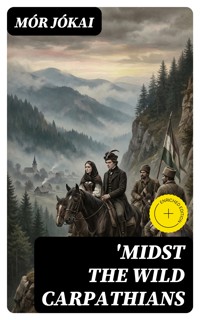
In 'Midst the Wild Carpathians,' Mór Jókai masterfully weaves a rich tapestry of adventure and romance set against the evocative backdrop of the Carpathian Mountains. The novel delves into the lives of its characters, exploring themes of love, loyalty, and the clash between tradition and modernity. Jókai's prose is characterized by a lush, descriptive style that vividly brings to life the breathtaking landscapes and cultural intricacies of the region, inviting readers to experience the deep emotional currents that drive human interaction in a time of upheaval. The literary context of the work reflects the nationalistic sentiments prevalent in Hungary during the 19th century, as Jókai's characters navigate both personal and political conflicts amid the vivid imagery of their homeland. Mór Jókai, one of Hungary's foremost writers, was deeply infused with the spirit and folklore of his native land. His background as a parliamentary journalist and his passionate engagement with Hungarian nationalism undoubtedly influenced the themes present in this novel. Jókai's ability to blend fiction with the sociopolitical realities of his time offers readers not just a story, but a lens into the heart of 19th-century Hungary. 'In Midst the Wild Carpathians,' readers are invited on a captivating journey that balances romance and adventure with cultural reflection. This novel is a celebration of Hungary's landscapes and traditions, making it essential for those interested in Eastern European literature and history. Jókai's masterful storytelling will resonate with anyone yearning for a profound literary experience steeped in the enchanting aura of the Carpathians. In this enriched edition, we have carefully created added value for your reading experience: - A succinct Introduction situates the work's timeless appeal and themes. - The Synopsis outlines the central plot, highlighting key developments without spoiling critical twists. - A detailed Historical Context immerses you in the era's events and influences that shaped the writing. - A thorough Analysis dissects symbols, motifs, and character arcs to unearth underlying meanings. - Reflection questions prompt you to engage personally with the work's messages, connecting them to modern life. - Hand‐picked Memorable Quotes shine a spotlight on moments of literary brilliance. - Interactive footnotes clarify unusual references, historical allusions, and archaic phrases for an effortless, more informed read.
Das E-Book können Sie in Legimi-Apps oder einer beliebigen App lesen, die das folgende Format unterstützen:
Veröffentlichungsjahr: 2022
Ähnliche


















'Midst the Wild Carpathians
Table of Contents
Introduction
In Mór Jókai’s Midst the Wild Carpathians, the struggle between human will and an untamable landscape mirrors the conflict between private loyalties and public power, as travelers, rulers, and outcasts pursue safety, honor, and belonging across ridges where roads vanish, oaths are tested, and the past presses upon the present like weather rolling off the peaks, making every choice feel both intimate and epochal, every refuge provisional, every victory precarious, and every silence heavy with rumor, so that survival itself becomes a negotiation between courage and caution, tenderness and cunning, while the mountains, vast and vigilant, keep their own counsel.
First published in the nineteenth century by the celebrated Hungarian novelist Mór Jókai, Midst the Wild Carpathians stands as a historical-adventure novel rooted in the dramatic topography and cultural crosscurrents of the Carpathian range. Jókai, a master of panoramic storytelling, situates his action in frontier settlements and mountain passes where authority is diffuse and reputation travels faster than law. The English title signals its geographical imagination: a world defined by cliffs, forests, and river valleys, where distance and weather shape politics as much as men do. Readers encounter a recognizably nineteenth-century narrative voice that fuses romantic idealism with keen observations of society.
Without disclosing its turns, the novel’s opening establishes an atmosphere of unease in which journeys are urgent, messages are ambiguous, and hospitality can quickly prove fraught. A handful of intersecting storylines draw together riders, householders, officials, and wanderers as rumor hardens into action, and the mountains dictate both opportunity and delay. The narrative favors vividly staged encounters—at crossings, in halls, along forest paths—punctuated by reversals that feel earned rather than arbitrary. The reader experiences suspense through vantage shifts and a carefully modulated tempo: moments of stillness expand into contemplation of landscape or custom, then contract into swift, decisive motions that reset the stakes.
The voice is capacious and omniscient, yet alert to idiosyncrasy, balancing chivalric warmth with satiric bite. Jókai’s descriptive passages linger on stormlight, animal tracks, and defensive architecture, using the environment not as backdrop but as active pressure on human choices. A playful intelligence colors dialogues and asides, yet the tone never loses moral gravity; comedy, when it appears, clarifies rather than deflates. The translation typically preserves the original’s ceremonial cadences and rhetorical flourish, so that even a brief exchange can carry historical resonance. Pacing alternates between expansive tableaux and tightly framed confrontations, yielding a reading experience at once airy and urgent.
Several enduring themes guide the book’s movement. It considers wilderness and law as rival jurisdictions, asking what kinds of justice can be forged when roads end and codes conflict. It treats honor and loyalty as costly, practical commitments rather than ornaments, testing them against fear, scarcity, and shifting power. It explores identity as a negotiation among lineage, language, duty, and place, with the mountains functioning as a stern tutor. It probes legitimacy—who speaks for whom, by what right—while acknowledging the charisma of rebels and rulers alike. Throughout, personal feeling coils around public consequence, turning private promises into political facts.
For contemporary readers, these concerns are not quaint relics but recognizably modern dilemmas. The novel’s borderland setting illuminates life amid contested jurisdictions, where official maps lag behind human realities—an experience echoed in today’s debates over migration, sovereignty, and regional autonomy. Its attention to rumor, disinformation, and reputation anticipates the social dynamics of our networked age. The Carpathians’ grandeur models ecological humility: terrain and weather rebuke fantasies of total mastery, suggesting a more attentive relationship to place. The book’s mosaic of communities encourages curiosity about difference without romanticizing it, inviting ethical reflection on coexistence, solidarity, and the costs of violence.
Reading Midst the Wild Carpathians today means embracing a generous narrative that rewards patience with cumulative force rather than pyrotechnic shocks. Approach it as both an adventure and a meditation on belonging, noticing how small gestures—hospitality offered, a path shared, a rumor checked—reverberate through the wider order. Attune yourself to the music of the prose, which treats description as argument and landscape as memory. The result is a distinctly nineteenth-century pleasure that speaks across centuries: a vigorous story about human beings making and unmaking community under pressure, and about the ways a mountain world can refine, test, and redeem desire.
Synopsis
Midst the Wild Carpathians, by the 19th‑century Hungarian novelist Mór Jókai, is a historical romance set in the rugged highlands that frame the Carpathian arc. From its opening, the narrative situates readers amid forests, passes, and fortified settlements where shifting allegiances shape daily life. The region stands as a frontier pressed by larger powers, and local society—nobles, soldiers, and villagers—must adapt to uncertainty. An early disturbance in the borderlands brings scattered lives into contact, establishing an atmosphere of vigilance and testing the codes of honor that govern hospitality, fealty, and survival in an unforgiving landscape.
Central to the story are figures whose fates entwine under mounting pressure: an earnest young gentleman seeking a rightful place in a world ruled by rank and reputation; a capable woman whose keen judgment and family ties make her indispensable; and seasoned fighters bred by the mountains, wary of both courts and marauders. Initial encounters reveal mutual suspicion softened by necessity. These characters, different in station but allied by circumstance, confront the practical demands of provisioning, intelligence gathering, and safe passage, while private loyalties and public obligations begin to converge in unpredictable ways.
Jókai uses the topography not merely as backdrop but as active force. The protagonists move through dense forests, wintering uplands, and walled towns where every gatekeeper may be a friend or spy. Skirmishes and narrow escapes underscore how nature and human cunning interlock in a territory where lines of control are porous. Folkways, local justice, and the skill sets of hunters, herdsmen, and couriers lend texture to the action. As rumors sharpen into warnings, the travelers’ circle expands to include guides and go‑betweens, and the path forward becomes a test of resourcefulness as much as of courage.
The narrative widens from road and ravine to halls of power, where competing factions debate security and sovereignty. Jókai portrays councils, embassies, and private parleys in which promises are traded like coin and marriage, rank, and favor serve as instruments of statecraft. Courtiers and captains weigh risks posed by rival empires and by ambitious neighbors closer to home. The protagonists learn that survival depends as much on reading intentions as on wielding steel. Humor and irony flicker amid gravity, as minor figures expose pomposity and the awkward mechanics of rule in a polity forever negotiating for breathing space.
Tensions crest as accusations, arrests, and sudden reversals unsettle fragile arrangements. A strategic stronghold and its approaches become crucial, drawing disparate players toward a reckoning. Plans branch into feints and countermeasures, with secrecy essential and betrayal a constant possibility. Personal vows collide with expedient orders, and the question of whether mercy can avert greater bloodshed shadows urgent decisions. Jókai tightens the threads—journey, intrigue, and romance—into a sequence that tests the limits of trust. A decisive encounter looms, promising resolution of immediate perils while keeping the wider balance of forces uncertain.
Beneath the adventure, the book reflects on identity and autonomy along a contested frontier. Jókai’s characters wrestle with fidelity to kin, conscience, and community under conditions that rarely reward idealism. The mountains, by turns shelter and snare, mirror the moral terrain: beautiful, harsh, and resistant to simple judgments. Authority appears both necessary and compromised; boldness proves essential yet dangerous. The narrative resists caricature, granting even adversaries intelligible motives. Without revealing its final turns, the story channels its energies toward choices that measure honor against necessity, asking what can be preserved when compromise seems the price of peace.
Enduringly, Midst the Wild Carpathians epitomizes Jókai’s gift for fusing panorama and pulse—regional color, political calculation, and swift incident—into a cohesive, humane whole. Its portrait of a mountainous borderland, where small societies absorb the shock of far‑off decisions, retains relevance for readers curious about how communities navigate asymmetry of power. The novel’s blend of risk, wit, and feeling invites engagement without demanding prior expertise, and its restraint at crucial thresholds preserves suspense. In presenting resilience not as slogan but as daily practice, it offers a lasting meditation on persistence amid uncertainty and change.
Historical Context
Mór Jókai (1825–1904), a central figure of nineteenth-century Hungarian literature, set Midst the Wild Carpathians in medieval Transylvania, within the Eastern Carpathians. The narrative moves among Székely communities and mountain strongholds that guarded the kingdom’s eastern frontier. The setting belongs to the Kingdom of Hungary, whose consolidation under Stephen I (crowned 1000) anchored royal, ecclesiastical, and legal institutions across the region. Jókai draws on the dramatic topography of present-day central Romania—forests, narrow passes, and fortified heights—to frame conflicts of allegiance and belief. The chosen milieu provides a historically grounded stage where frontier society, royal authority, and church influence intersect under demanding natural conditions.
Transylvania in the Middle Ages formed a voivodeship under the Hungarian Crown, administered by a voivode from the twelfth century and integrated with counties and privileged communities. The Diocese of Transylvania, centered at Gyulafehérvár (Alba Iulia), was founded under Stephen I around 1009, coordinating ecclesiastical jurisdiction. The Székelys, a distinct Hungarian-speaking group settled on the eastern marches, served as border guards and light cavalry in return for collective privileges. Their self-governing seats (székek) organized defense and justice locally, while remaining under the voivode and the Count of the Székelys. These institutions shape the novel’s background of loyalty, obligation, and contested autonomy.
In the twelfth and thirteenth centuries, Hungarian kings encouraged organized settlement to reinforce the frontier. Transylvanian Saxons received collective rights and established fortified towns such as Sibiu (Hermannstadt) and Brașov (Kronstadt), altering trade and defense patterns. The Teutonic Knights were granted Burzenland (1211–1225) to secure the southeastern passes, built fortifications like Feldioara (Marienburg), and were expelled after conflicts with royal authority. Monastic orders extended church presence; notably, the Cistercian abbey at Cârța was founded in the early thirteenth century. These developments brought diverse legal traditions, ecclesiastical networks, and military resources to the Carpathian borderlands that Jókai evokes as living historical texture.
The Mongol invasion of 1241–1242 devastated much of the Kingdom of Hungary, including Transylvanian settlements and ecclesiastical centers. In the aftermath, the crown promoted stone fortifications and granted lands to encourage castle building and repopulation. Mountain passes—such as Oituz, Gyimes, and Tömös—gained heightened strategic importance, and frontier troops, including the Székelys, were reorganized to improve rapid defense. Timber palisades gave way to masonry keeps and hilltop castles scattered across the Eastern Carpathians. This shift in military architecture and settlement resilience underlies the novel’s atmosphere of precipitous strongholds, vigilant watchtowers, and communities accustomed to threats moving along narrow valleys and ridgelines.
The Christianization of the Hungarian realms, initiated under Stephen I and advanced by successive monarchs and bishops, proceeded unevenly across frontier zones. Parish networks, tithes, and ecclesiastical courts extended Latin Christian norms, while royal decrees targeted practices deemed pagan or customary law at odds with canon law. In Transylvania, diocesan authority at Gyulafehérvár and monastic landholdings deepened church influence. Folk beliefs and rites nevertheless persisted as local traditions, sometimes provoking conflicts of jurisdiction and conscience. Jókai situates characters within this verified historical frame of competing norms, where loyalty to kin, seat, or church could pull individuals in sharply different directions.
Székely society was structured around military obligation, collective privileges, and stratified ranks of free warriors and leading families. Exempt from many taxes in exchange for service, they guarded the eastern marches and maintained strong seat identities in Csík, Háromszék, Udvarhely, and other districts. The Carpathian environment—dense forests, mineral springs, and basalt crags—dictated travel and settlement patterns. Among the region’s medieval ruins is Bálványos Castle in present-day Covasna County, a hilltop stronghold long associated with Székely lore. Such sites anchor the novel’s sense of place, linking family reputations, frontier vigilance, and the imposing landscape that shelters and constrains mountain communities.
Jókai wrote as a veteran of the Hungarian Revolution of 1848 and a prominent public figure in the Austro-Hungarian era after the Compromise of 1867. His historical novels reflect Romantic nationalism’s interest in folk traditions, regional particularities, and emblematic landscapes. The flourishing Hungarian press and publishing networks, along with institutions like the Hungarian Academy of Sciences, encouraged wide readership for accessible national histories in narrative form. By selecting a medieval Transylvanian frontier, Jókai engaged audiences with recognizable historical problems—authority, privilege, confession, and ethnicity—while celebrating cultural resilience and the dramatic Carpathian setting that had become a symbol of Hungarian historical memory.
Within this context, Midst the Wild Carpathians reflects nineteenth-century concerns through a medieval lens: the tension between central authority and local liberties, the consolidation of law against customary practice, and the coexistence—and friction—of neighboring peoples and confessions. Its attention to ecclesiastical and secular institutions, fortified geography, and Székely obligations mirrors documented realities. The work aligns with contemporary Hungarian efforts to define a shared past that honors regional communities. Without divulging plot, its portrayal of conversion, allegiance, and negotiation suggests a critique of rigid dogma and shortsighted power, favoring pragmatism and mutual recognition as foundations for stability on a vulnerable frontier.




