



1,99 €
Mehr erfahren.
- Herausgeber: Quickie Classics
- Kategorie: Religion und Spiritualität
- Sprache: Englisch
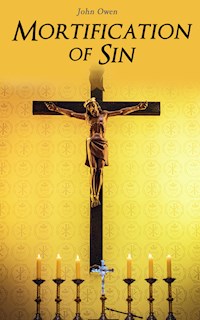
Mortification of Sin is John Owen's classic treatise on sanctification, expounding Paul's charge in Romans 8:13 with Puritan precision and pastoral urgency. Owen dissects the anatomy of indwelling sin, distinguishes counterfeit mortification from Spirit-wrought obedience, and prescribes a disciplined regimen grounded in union with Christ, the Word, prayer, and watchfulness. Written in tightly argued propositions and practical casuistry, it refuses both ascetic self-reliance and lax antinomianism, pressing the memorable axiom: "be killing sin, or sin will be killing you." An Independent divine and vice-chancellor of Oxford during the Interregnum, Owen (1616–1683) combined classical learning with relentless pastoral inquiry. Composed in the mid-1650s alongside companion essays on temptation and indwelling sin, this work arose from university sermons and counsel amid civil turmoil, sectarian excess, and moral weariness. Owen writes as a physician of souls shaped by Reformed scholastic method, personal affliction, and disputes with both legalists and libertines. Readers of theology, pastors, and serious laypeople will find in Mortification of Sin a bracing, deeply consoling manual for growth in holiness. It rewards slow, reflective study, offering diagnostics and remedies that remain startlingly contemporary for anyone intent on resisting sin by the Spirit. Quickie Classics summarizes timeless works with precision, preserving the author's voice and keeping the prose clear, fast, and readable—distilled, never diluted. Enriched Edition extras: Introduction · Synopsis · Historical Context · Brief Analysis · 4 Reflection Q&As · Editorial Footnotes.
Das E-Book können Sie in Legimi-Apps oder einer beliebigen App lesen, die das folgende Format unterstützen:
Veröffentlichungsjahr: 2026
Ähnliche












Mortification of Sin (Summarized Edition)
Table of Contents
Introduction
This is a book about the fierce, daily collision between a believer’s new life and the stubborn gravity of sin. John Owen’s The Mortification of Sin stands as a classic work of Puritan practical theology, guiding readers through the disciplined, Spirit-dependent task of resisting sinful habits. Written by a pastor-theologian known for penetrating analysis and pastoral care, it speaks to Christians who desire growth that is both doctrinally anchored and experientially honest. Rather than offering quick fixes, Owen presents a sober path aimed at lasting change. The result is a searching manual that insists that spiritual vitality requires both clarity about sin and confidence in divine help.
Composed in mid-seventeenth-century England within the milieu of Reformed piety, this treatise takes a concise statement from Romans chapter 8 as its scriptural center and unfolds its implications for everyday discipleship. Its genre is pastoral-theological: instructive, corrective, and practical, written for believers seeking counsel rather than for academic debate. Owen writes out of the Puritan commitment to vital godliness, careful self-examination, and holiness shaped by Scripture. The historical distance is real, yet the pastoral situation he addresses—professing Christians battling recurring sins—remains instantly recognizable. Readers may approach it as a focused exposition that moves from principle to practice with patience, precision, and pastoral urgency.
Because it is not a narrative but an argument, the book offers a measured, cumulative reading experience that rewards slow attention. Owen’s voice is earnest and exacting, marked by logical progression, close engagement with Scripture, probing diagnosis of motives, and concrete directions for obedience. The tone is sober yet hopeful, written by a pastor who expects his readers to struggle and to persevere. Sentences can be extended and terms carefully defined, but the movement remains clear: from what mortification is, to why it matters, to how it is pursued. The overall effect is bracing, practical, and deeply concerned with spiritual integrity.
At its core, the work treats sin not as a surface behavior to be managed but as an indwelling power that must be weakened and put to death by the Spirit. Owen distinguishes mere restraint from genuine transformation, warning against approaches that leave the root untouched. He emphasizes vigilance, honesty, and dependence, insisting that habitual sins cannot be negotiated with or ignored. The aim is not despair but freedom marked by growing hatred of sin and love for righteousness. By tracing how desires are excited, occasions are seized, and habits are formed, the book equips readers to resist in concrete, realistic ways.
All of this is framed by classic Protestant teaching on sanctification, in which the Holy Spirit is the principal agent and human effort is real yet dependent. Owen resists both self-reliant severity and lax presumption, locating the believer’s strength in God’s gracious provision and the ordinary means of growth. He calls for watchfulness, prayer, and the steady use of Scripture, and he explains how motives and ends must be aligned with the gospel. The argument is theological without being abstract, continually returning to the lived experience of believers who desire holiness without slipping into despair, pride, or mere external conformity.
For contemporary readers navigating distraction, compulsion, and cynicism, the book’s realism about the persistence of sin and its hope in divine help remain striking. Its attention to patterns of thought and desire resonates with concerns about habits, environments, and triggers, yet it refuses reduction to technique. Owen invites deliberate self-examination that is neither morbid nor casual, pairing honest diagnosis with clear pathways of repentance and renewal. He offers a vision of change that protects dignity, cultivates courage, and sustains joy. In a culture of quick solutions, this steady, Spirit-dependent approach provides depth, patience, and ballast for long obedience.
Approached with patience and a willingness to reflect, The Mortification of Sin rewards readers with perspective that is both humbling and empowering. Its seventeenth-century prose may slow the pace, but the structure is clear enough to guide study, devotion, or discussion. Without revealing every step of Owen’s counsel, it is fair to say that he equips believers to face their sins neither with panic nor with resignation. The book matters because it refuses illusions and feeds hope, joining rigorous honesty to robust reliance on God. For those seeking durable holiness, it remains a faithful companion for the long work of grace.
Synopsis
John Owen’s The Mortification of Sin, first published in 1656, is a pastoral-theological treatise addressing how Christians should deal with persistent sin. Writing as a Puritan divine, Owen frames his argument around Scripture, especially the exhortation of Romans 8:13, and aims to clarify what it means to put sin to death in daily life. He situates the work within the doctrine of sanctification, neither promising perfection nor excusing failure, but charting a sober, hopeful path for believers. The book unfolds as a sequence of doctrinal clarifications and practical directions, each designed to train the conscience and will under the guidance of the Holy Spirit.
Owen begins by establishing the reality and persistence of indwelling sin in believers. Conversion, he argues, does not remove sin’s presence, but alters the believer’s relation to it, initiating an enduring conflict. He carefully defines mortification as the weakening of sin’s power and the cultivation of contrary graces, rather than the total eradication of sinful tendencies in this life. This framing sets expectations: the goal is not a single crisis, but a steady campaign. By describing how sin operates with deceit and strength, he prepares his readers to recognize patterns, avoid presumption, and adopt a posture of vigilance joined to reliance on divine aid.
From this diagnosis, Owen argues that mortification is an evangelical duty binding on all Christians. He insists that neglect leads to spiritual decline, while mere external reforms or human resolve cannot achieve lasting change. Although he honors discipline, he distinguishes it from methods that only restrain behavior without touching the heart. He critiques remedies rooted in fear, custom, or self-invented austerities, because they neither deal with sin’s root nor honor God’s appointed means. The reader is guided away from legalism and toward a gospel-shaped strategy that seeks inward transformation, ensuring that the fight against particular sins proceeds within a whole-life devotion to God.




