


Erhalten Sie Zugang zu diesem und mehr als 300000 Büchern ab EUR 5,99 monatlich.
- Herausgeber: epubli
- Kategorie: Geisteswissenschaft
- Sprache: Englisch
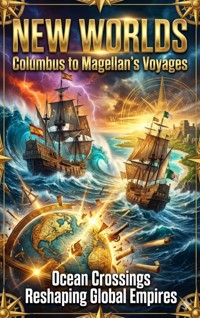
From Palos de la Frontera to the Moluccas' spice ports, Columbus and Magellan's expeditions shattered medieval cartography and ignited imperial rivalry. This book traces their voyages—the Niña, Pinta, and Santa María's Atlantic leap, then Magellan's Strait and Pacific ordeal—revealing navigational daring, crew mutinies, and first encounters that redrew world maps. Drawing from logbooks, royal capitulations, and Pacific archaeology, New Worlds: Columbus to Magellan's Voyages examines how astrolabes, carracks, and cross-cultural exchanges launched the Columbian Exchange and colonial foundations. It portrays exploration as both scientific triumph and human tragedy.
Sie lesen das E-Book in den Legimi-Apps auf:
Seitenzahl: 235
Veröffentlichungsjahr: 2026
Das E-Book (TTS) können Sie hören im Abo „Legimi Premium” in Legimi-Apps auf:
Ähnliche
















Table of Contents
Chapter 1: Setting Sail from Palos de la Frontera
The Political Landscape of Palos de la Frontera
Columbus's Vision: A New Route to Asia
Recruiting the Crew: Diversity and Tension
Technological Innovations and Their Impact
Chapter 2: The Niña, Pinta, and Santa María: Vessels of Change
The Design of the Carracks
The Role of Navigation Instruments
Life Aboard the Niña, Pinta, and Santa María
Innovations that Enabled Ocean Crossings
The Impact of Columbus's Voyages on Trade
Lasting Legacy of Columbus's Ships
Chapter 3: Across the Atlantic: Trials and Triumphs
Outfitting for the Journey
Navigational Challenges
Crew Dynamics
First Encounters and Discoveries
Chapter 4: Encountering the New World: First Contacts
The First Landing: Columbus's Arrival
Indigenous Responses to the Explorers
The Consequences of Contact
Mutinies and Conflicts
The Legacy of First Contacts
Chapter 5: The Return: Triumphs and Reports
The Arrival Back to Spain
The Contents of Columbus's Reports
The Transformation into a Celebrity
Imperial Ambitions and Rivalries
The Response of Indigenous Peoples
Chapter 6: The Rise of Imperial Rivalries: Spain vs. Portugal
Foundations of Rivalry: The Iberian Peninsula
The Treaty of Tordesillas: Dividing the World
Key Explorations and Confrontations
The Role of Maritime Technology
Cultural Exchanges and Conflicts
The Legacy of Spanish and Portuguese Rivalry
Chapter 7: Magellan's Ambitious Quest: Circumnavigation Begins
The Genesis of an Ambitious Voyage
Navigational Innovations
Preparing for the Unknown
Initial Setbacks and Mutinies
The Crossing of the Atlantic
Chapter 8: Navigating the Strait: The Gateway to the Pacific
Mapping the Unknown
The Perils of Navigation
Encounters with Indigenous Cultures
The Role of Leadership During Crises
The Breakthrough: Finding the Passage
Chapter 9: First Encounters in the Pacific: New Horizons
First Contacts: Navigating New Worlds
Cultural Representations: Perspectives and Misconceptions
Conflict and Cooperation: Tensions Arising from Encounter
Navigational Challenges: Charting New Waters
Chapter 10: The Mutiny: Struggles Within
The Seeds of Dissent
Scarcity and Survival
The Role of Influential Crew Members
The Breaking Point
Consequences of the Mutiny
Chapter 11: The Death of Magellan: A Turning Point
The Circumstances of Magellan's Death
The Immediate Aftermath
The Influence of Mutiny
Final Voyage Adjustments
Reflection on Legacy and Impact
Chapter 12: Completing the Voyage: The Return to Spain
The Final Leg: From the Spice Islands to Spain
Encountering Challenges: Mutiny and Morale
The Return Journey: Key Landmarks and Stops
Arrival in Spain: Legacy of the Voyage
Chapter 13: The Legacy of Exploration: Cartography and Knowledge
Transformations in Cartography
The Role of Royal Sponsorship
Impact on Indigenous Perspectives
The Emergence of the Columbian Exchange
Repercussions on Global Power Dynamics
Chapter 14: Economic Impact: The Columbian Exchange
The Nature of the Columbian Exchange
Economic Transformations in Europe
Impact on Indigenous Economies
Diseases and Their Economic Consequences
Chapter 15: Reflection on Human Tragedy: Colonial Consequences
The Impact of Colonization on Indigenous Populations
The Exploitation of Resources and Labor
The Role of Religion in Colonialism
Historical Memory and its Consequences
Chapter 16: Conclusion: A New World Order
The Legacy of Exploration
The Human Experience
The Scientific Advances
The Columbian Exchange
Rethinking Modern Global Relations
Charting a New Course: Embracing Change and Discovery
Chapter 1: Setting Sail from Palos de la Frontera
The journey of exploration begins at Palos de la Frontera, where Christopher Columbus set his sights on the unknown. This chapter examines the initial preparations, the mindset of the crew, and the political climate that enabled such a daring voyage. We explore how the convergence of royal ambition and maritime technology set the stage for what would become a momentous crossing of the Atlantic.
The Political Landscape of Palos de la Frontera
The political climate in Spain during the late 15th century was ripe for exploration. This section highlights the alliances and rivalries that shaped the decisions leading to Columbus's expedition.
Spain's recent unification under Ferdinand and Isabella created a sense of national ambition.
The late 15th century marked a pivotal moment in Spanish history, with the unification of Castile and Aragon under the Catholic Monarchs, Ferdinand and Isabella. This union did not merely consolidate political power but also ignited a fervent nationalistic spirit, driving the desire for exploration and expansion. As Spain emerged as a unified kingdom, the monarchs dreamed of enhancing their prestige and influence across Europe and beyond.
Ferdinand and Isabella recognized that exploration could serve as a vehicle for both national glory and economic gain. This new sense of national ambition fueled the pursuit of overseas territories and trade routes, providing a platform for explorers like Columbus to present their ambitious proposals. The unity between Crown and religion also emphasized the mission to spread Christianity, setting the stage for a deeply intertwined relationship between religious zeal and imperialistic ambitions.
Competing powers, such as Portugal, were already exploring new trade routes, prompting Spain to take action.
During this period, Europe witnessed a fierce competition for maritime supremacy, particularly between Spain and Portugal. The Portuguese, having established a comprehensive network of trade routes along the African coast and into the Indian Ocean, posed a significant challenge to Spanish ambitions. Their successful voyages had not only enriched Portugal but had also heightened rival aspirations within Spain.
In response to this competition, Spanish explorers felt an urgent need to find alternative routes and territories. The possibility of gaining access to the lucrative spice trade and other resources drove Columbus and his contemporaries to seek support from the Crown. The presence of such competitive rivals propelled Spain into action, pushing the monarchy to invest in exploration to ensure that it did not fall behind in the race for global dominance.
The Treaty of Alcáçovas in 1479 limited Spain's access to the African coast, redirecting focus westward.
The Treaty of Alcáçovas, signed in 1479, was a significant diplomatic agreement that primarily aimed to resolve territorial disputes between Portugal and Spain. This treaty restricted Spain's access to trade along the African coast, effectively ceding these lucrative waters to Portuguese control. This limitation proved to be a critical turning point for Spanish exploration.
In the face of restrictions on traditional trade routes, Spanish ambitions shifted westward towards the untapped potential of the Atlantic. Columbus's proposal to find a westward passage to the East Indies was not only a daring venture but also a strategic response to the limitations imposed by the treaty. This shift in focus ultimately resulted in groundbreaking discoveries, as Columbus's journey would lead to the unexpected encounter with the Americas, forever altering the course of history.
Royal patronage was essential for financing voyages, leading Columbus to appeal directly to the monarchs.
Financial backing was a crucial element for the success of any exploratory expedition during this era. The costly nature of maritime voyages meant that explorers required substantial funding to cover ship construction, crew wages, and supplies. Columbus, recognizing the necessity of royal patronage, sought the endorsement of Ferdinand and Isabella to finance his ambitious plans for a westward voyage.
Understanding the potential benefits of such an expedition for their royal ambitions, Ferdinand and Isabella ultimately agreed to provide the financial support Columbus sought. This patronage can be seen as a gamble—investing in the promise of new territories and wealth. The support from the Spanish monarchy signified a transformative moment, as it not only legitimized Columbus's mission but also solidified the Crown's role in the age of exploration, forever tying royal ambitions to the uncharted waters of the Atlantic.
Columbus's Vision: A New Route to Asia
Columbus's idea of reaching Asia by sailing west was revolutionary. This section explores his vision and how it influenced his plans.
Columbus believed that a shorter route to the Spice Islands would yield immense wealth.
Christopher Columbus envisioned a westward journey that would directly connect Europe to the lucrative Spice Islands of Asia. His belief was rooted in the immense wealth generated by spices such as cloves, nutmeg, and pepper, which were highly sought after in European markets. Columbus theorized that a shorter route would not only facilitate this trade but also allow Spain to establish dominance over an irreplaceable resource.
To Columbus, the prospect of wealth was not merely a personal ambition but a national enterprise. The influx of spices promised great returns for the Spanish Crown, potentially rivaling the fortunes amassed by other European powers engaged in Asian trade. This motivation played a crucial role in Columbus's determination to seek patronage and set sail, marking a significant departure from prior European explorations that were often fraught with ambiguity and risk.
His calculations underestimated the Earth's size and the distance to Asia.
Columbus’s navigational proposals hinged upon notably inaccurate calculations regarding the Earth's circumference. He believed that the distance from Europe to Asia via the west was considerably shorter than it actually was. Based on flawed assumptions about the size of the Earth and the extent of land masses, he drastically misjudged the scale of the Atlantic Ocean.
This underestimation posed critical challenges for Columbus when traversing the ocean. His vision of reaching Asia in a matter of weeks translated into a journey of months, as the reality of the vastness of the ocean began to dawn on him and his crew. This miscalculation not only delayed their arrival but also contributed to the mounting tension aboard the ships, setting the stage for conflict and uncertainty during the expedition.
He viewed his mission as a crusade to spread Christianity alongside trade ambitions.
Columbus's aspirations extended beyond mere trade; he perceived his voyage as part of a divine mission to spread Christianity. The potential wealth of the Spice Islands was intertwined with his belief that he was fulfilling a Christian duty, often invoking the concept of “God’s glory” as a motive for his explorations.
This dual purpose resonated with the fervent religious zeitgeist of the period, wherein exploration was often equated with the propagation of faith. Columbus envisioned converting indigenous peoples, believing that spreading Catholicism would demonstrate the power of the Spanish Empire and solidify its reputation on the global stage. This evangelistic fervor would play a key role in the encounter between Europe and Native populations, with lasting consequences for both sides.
Columbus's persistence despite skepticism from learned men reveals his unique character.
Columbus faced significant skepticism from scholars and navigators who challenged his assumptions about the routes and the feasibility of his plans. Despite these doubts, his unwavering confidence and resolute persistence demonstrated a unique determination that set him apart from his contemporaries. His ability to navigate through criticism is a testament to his character, fueling his ambition to achieve what others considered impossible.
Moreover, Columbus’s resolve reflected a broader narrative of exploration during this era; undeterred by the potential for failure, he forged ahead, propelled by both vision and stubborn tenacity. His persistence not only secured the eventual backing of the Spanish Crown but also laid the groundwork for a transformative journey that would irrevocably alter the course of history. This aspect of his personality underscores the complex interplay between aspiration and doubt that defined early explorations of the New World.
Recruiting the Crew: Diversity and Tension
The crew that sailed with Columbus was diverse and represented various social backgrounds. This section examines the dynamics among them.
The crew consisted of experienced sailors, young men seeking adventure, and commoners eager for fortune.
The journey of exploration in 1492 invited a diverse group of individuals to embark on a monumental expedition. Among the crew were seasoned sailors, whose expertise in navigation and seamanship was crucial for the uncharted waters ahead. Their knowledge of prevailing winds and currents was instrumental in ensuring the safety and direction of the voyage.
Additionally, young men, often inspired by tales of glory and discovery, sought adventure beyond the shores of Europe. This mix of ambition and naiveté would shape the dynamic aboard the ships. Commoners, driven by the lure of wealth and new opportunities, also joined the crew, indicating a significant shift in social mobility spurred by exploration. This melting pot of aspirations and backgrounds highlighted the collective hopes and dreams that infused the expedition with its early enthusiasm.
Decisions about the crew reflected social hierarchies, with different levels of authority and expertise.
Recruitment for Columbus’s voyage was not only a matter of skill but also of status and hierarchy within the crew. The upper echelons consisted of appointed officers who wielded considerable authority, owing to their backgrounds and experience. Those with naval prowess were positioned in key roles, which suggested the intent to maintain discipline and chain of command throughout the journey.
Moreover, the selection processes often mirrored the societal structures of the era, reflecting the divisions between nobles and plebeians. This stratification influenced interactions onboard, setting the stage for both cooperation and conflict. It was crucial for Columbus to balance these dynamics to effectively lead a mixed crew through the challenges ahead, ensuring that knowledge, authority, and camaraderie aligned for the voyage’s success.
Initial excitement often masked underlying tensions, particularly around leadership and expectations.
Despite the initial exhilaration of setting sail into the unknown, underlying tensions simmered among the crew. Excitement mingled with uncertainty, as diverse expectations clashed over the hierarchy and authority structure. Some crew members, accustomed to positions of command, resented the leadership decisions made primarily by Columbus and his appointed officers.
As the days at sea turned into weeks, the strain of leadership styles began to surface. Discontent brewed among those who felt their skills were overlooked or undervalued. These tensions were exacerbated by the voyage's hardships, such as harsh weather and dwindling provisions, causing anxiety to escalate. The challenge for Columbus lay in maintaining morale while addressing grievances, as the delicate balance between unity and dissent was critical for the expedition's progression.
Understanding crew personalities was critical, as their morale would significantly impact the journey.
Knowing the crew's personalities proved essential for Columbus as he navigated both literal and metaphorical waters of leadership. Each member brought unique traits—some were resilient and brave, while others displayed apprehension about the long voyage. Recognizing these differences allowed Columbus to harness individual strengths and strategically assign tasks.
High morale was paramount in facing the trials of the Atlantic crossing. A leader’s ability to inspire and motivate could mean the difference between steadfast determination and despair among the crew. Columbus understood that fostering camaraderie and mutual respect would bolster the crew against the unknown challenges of exploration. As the journey unfolded, the psychology of the crew became intertwined with their fate, reinforcing the need for perceptive leadership during critical moments.
Technological Innovations and Their Impact
The technology available at the time set the stage for Columbus's voyages. This section reviews key maritime innovations crucial for exploration.
The development of the astrolabe allowed sailors to determine their latitude at sea.
The astrolabe was a pivotal innovation in maritime navigation, instrumental for explorers like Columbus in determining their latitude while at sea. By measuring the angle between the horizon and a celestial body, typically the sun or stars, sailors could calculate their position with remarkable accuracy for the period. This allowed voyages across uncharted waters more feasible, as sailors were no longer solely reliant on coastal navigation or estimation. The maritime implementation of the astrolabe marked the transition from medieval navigation techniques to more scientific approaches.
As a direct result, Columbus's journey was emboldened; gaining latitude readings not only improved their navigational certainty but instilled confidence in the crew. The astrolabe symbolized a transformative shift in the understanding of space and geography, enabling sailors to traverse vast oceans with a newfound sense of direction. This technology laid the groundwork for subsequent voyages that would profoundly alter global trade and cultural interchanges.
Carracks represented an advancement in ship design, balancing speed and cargo capacity.
Carracks emerged as a revolutionary ship type in the 15th century, effectively addressing the conflicting needs of speed and cargo capacity. These robust vessels were designed with a high rounded hull, which allowed for both stability and ample storage space at a time when maritime trade was becoming increasingly prominent. Columbus's fleet consisted of these ships, enabling him to carry supplies and crew across the treacherous Atlantic without jeopardizing speed.
The adaptability of carracks to various sea conditions also made them invaluable for long voyages. Their design allowed for deeper drafts and larger sails, enhancing their navigational capabilities in open waters. As a result, explorers could venture farther from known landmasses. This technological leap in ship design not only facilitated transoceanic exploration but also set a new standard for future maritime expeditions, shaping the dynamics of global trade and imperial expansion.
Maps of the time reflected both knowledge and speculation, impacting navigational confidence.
The maps of the late 15th century epitomized a blend of established knowledge and speculative geography, profoundly influencing navigation and exploration. Cartographers utilized available information, including explorers’ accounts and rudimentary measurements, to create representations of the known world. These maps often included mythical lands or exaggerated distances, revealing a limited understanding of global geography. Nonetheless, they served as vital tools for mariners.
Columbus's reliance on the maps of his time is indicative of the shifting paradigm in navigation. While some of the maps bolstered confidence, depicting potential new trade routes, they also highlighted the limits of contemporary knowledge. For crews embarking on voyages, these maps represented both promise and peril, fueling the ambition to explore yet also instilling trepidation regarding uncharted territories.
Technological innovations helped mitigate risks associated with extended sea voyages.
The technological innovations of the late 15th century were critical in reducing the inherent risks of extended sea voyages. Innovations such as the magnetic compass and advancements in shipbuilding provided sailors with tools that improved their ability to navigate vast and often unpredictable oceanic waters. The combination of superior ship designs, like the carracks, and navigational tools enabled explorers to undertake longer journeys with a greater sense of security.
Moreover, these advancements fostered a more systematic approach to exploration. Crew members could now employ various techniques to chart their course, improving their chances of survival amid harsh conditions. The ability to better anticipate weather patterns and ocean currents significantly furthered maritime exploration, allowing for the crossing of the Atlantic and establishing connections that would shape the future of empires. In essence, these technological advancements were the backbone of an era that expanded the horizons of global trade and cultural exchange.
Chapter 2: The Niña, Pinta, and Santa María: Vessels of Change
This chapter provides an in-depth look at the three ships that Columbus commanded. We will analyze their design, functionality, and the innovations that made them capable of ocean crossings. The story of how these vessels with different capabilities carried hopes and dreams across the Atlantic illustrates the early maritime endeavors that reshaped global trade.
The Design of the Carracks
The ships Niña, Pinta, and Santa María were all carracks, a type of ship known for its distinctive design that allowed for long ocean voyages. Understanding their construction is key to appreciating their capabilities as vessels that changed the course of history.
Sturdy hull design for durability
The carracks used by Columbus, specifically the Niña, Pinta, and Santa María, featured a remarkable hull design that prioritized durability. Made from oak and pine, these ships were built to withstand the harsh conditions of the Atlantic Ocean. The sturdy hull was essential for long voyages, as it allowed the vessels to endure the relentless forces of wind and wave over extended periods. This critical feature not only ensured the safety of the crew but also provided a reliable platform for navigation across uncharted waters.
Additionally, the construction techniques employed during this period incorporated a clinker-built method, where overlapping planks created a flexible yet strong structure. This allowed the hull to absorb shocks and resist damage from potential collisions with submerged obstacles. In essence, the robust hull design was not merely a testament to craftsmanship; it was a functional necessity that facilitated groundbreaking explorations and altered the trajectory of global trade.
Large sails providing good wind capture
The sail configuration of the Niña, Pinta, and Santa María significantly contributed to their performance on the high seas. Equipped with large, triangular lateen sails and later square sails, these vessels were designed to capture wind efficiently. The combination of sail types enhanced maneuverability and allowed the ships to sail effectively under different wind conditions, thus maximizing their range and operational capabilities.
These sails not only provided the necessary propulsion for long-distance travel but also allowed for better handling during storms and turbulent weather, which was common in Atlantic crossings. The ability to adjust sails quickly in response to changing conditions was crucial for maintaining speed and stability. Overall, the innovative sail design not only exemplified the technological advancements of the time but also played an essential role in the era's ambitious maritime endeavors.
Stable structure suitable for varied sea conditions
One of the standout features of columbus's carracks was their stable structural design, which allowed them to perform well in various sea conditions. The combination of a broad beam and a deep draft enabled these vessels to maintain balance even in turbulent waters. This stability was vital for ensuring the safety of the crew and the integrity of the cargo during long voyages across unpredictable ocean swells.
To further enhance stability, the ships were equipped with a sizeable hull that contributed to buoyancy, allowing them to ride higher on waves and reducing the risk of capsizing. This feature was crucial during the harsh weather conditions encountered on transatlantic voyages. Overall, the stability of the Niña, Pinta, and Santa María not only underscored their design ingenuity but also facilitated the exploration and subsequent colonization efforts that characterized the age of discovery.
Modifications specific to Columbus’s needs
Columbus's expeditions required adaptations to the traditional carrack design to meet specific navigational and operational needs. These modifications included adjustments to the rigging and the cargo layout, allowing for more efficient stowage of provisions, navigational instruments, and trade goods. Such tailored changes ensured the ships were equipped for the lengthy voyages required to reach the New World.
Moreover, improvements in the construction and outfitting of the Niña, Pinta, and Santa María allowed for quicker access to supplies and better living conditions for the crew. The ships were fitted with ventilation systems to improve air circulation and help manage moisture, which was crucial for maintaining the crew's health on extended journeys. In summary, these tailored modifications not only reflected Columbus’s innovative vision but also augmented the carracks' overall functionality in the demanding context of transoceanic exploration.
The Role of Navigation Instruments
Navigation was vital for Columbus’s journey across the Atlantic, and the technology of the time played a significant role. This section will explore the key instruments that guided these ships through uncharted waters.
Use of the astrolabe for celestial navigation
The astrolabe was a revolutionary tool that transformed navigation during Columbus's era. This instrument allowed sailors to measure the angle of celestial bodies above the horizon, which was crucial for determining latitude. By aligning the astrolabe with the stars, Columbus and his crew could ascertain their position at sea, even in the vast, uncharted Atlantic.
The astrolabe was not a stand-alone device; it required skilled interpretation. Navigators needed to accurately read the stars' movements and calculate their position against the charts of the time. Columbus utilized the astrolabe extensively, demonstrating its significance in his voyages. This reliance on celestial navigation marked a departure from earlier methods that relied more on coastal landmarks and rudimentary navigational aids.
Ultimately, the astrolabe exemplified the intersection of science and exploration, helping to empower mariners like Columbus to embark on daring journeys that would alter the course of history.
Development of early compasses for direction
The magnetic compass emerged as a pivotal instrument in navigation, providing sailors with a dependable means to discern direction. Although compasses existed in various forms before Columbus, the refinement of the device allowed for greater accuracy in open waters. This innovation was instrumental in aiding Columbus’s expeditions across the unpredictable Atlantic Ocean.
By indicating magnetic north, the compass enabled navigators to orient themselves even when visibility was limited by fog or storms. The compass became a trusted tool that reduced the uncertainty of maritime travel, allowing Columbus to maintain his course toward the West Indies with confidence.
Moreover, the compass facilitated explorations that were previously considered too perilous. As sailors gathered more knowledge about the world’s geography, the compass contributed to the development of intricate maps and routes that shaped future voyages, setting the stage for burgeoning global trade networks.
Charts and maps showcasing newly discovered territories
As Columbus ventured into uncharted waters, the creation and use of charts and maps became fundamental aspects of navigation. These tools, often hand-drawn and filled with emerging geographical knowledge, represented the shifting perceptions of the world’s layout. Columbus's voyages resulted in the introduction of numerous territories onto the maps of Europe.
Not only did these charts document newly discovered lands, but they also served as reflections of the European mindset towards exploration and colonization. The maps highlighted trade routes and potential territories for exploitation, thus encouraging further expeditions. The blending of exploration data with artistic cartography led to visually compelling representations that sparked interest and fueled the appetites of European monarchies.
Furthermore, the dissemination of these maps revolutionized maritime navigation, allowing other explorers to pursue ambitious voyages, thereby solidifying the age of exploration as a defining period in global history.
Influence of mariners' knowledge on route planning
The intimate understanding of maritime conditions gained by seasoned mariners was crucial to Columbus's route planning across the Atlantic. Rather than relying solely on instruments, early navigators placed great emphasis on collective knowledge accumulated through generations of seafaring experience. This included familiarity with seasonal winds, ocean currents, and celestial events, all of which contributed to more informed decision-making.
Mariners shared insights on the mechanisms of navigation, including the variations in wind patterns that could either facilitate or hinder their journey. Columbus, aware of these factors, incorporated the experiences and recommendations from his crew, blending traditional navigational practices with his ambitions for discovery.
This collaboration highlighted the importance of mariner expertise, ensuring more effective and efficient navigation. Their shared wisdom not only guided Columbus's voyages but also laid the groundwork for future navigational practices that would benefit explorers and merchants across oceans.
Life Aboard the Niña, Pinta, and Santa María
Life aboard Columbus’s ships was a mix of hope and hardship. Understanding the daily routines and challenges faced by the crew highlights the human aspect of these voyages.
Daily tasks and responsibilities of crew members
Life aboard the Niña, Pinta, and Santa María was characterized by a structured hierarchy and a range of daily tasks essential for the functioning of the expedition. Crew members were divided into roles, including sailors, carpenters, and navigators, each with distinct responsibilities. Sailors were primarily tasked with steering the ships, adjusting sails, and maintaining rigging. They worked in shifts, often day and night, ensuring the vessels stayed on course.
The navigators, including Columbus himself, meticulously charted the ships' progress using celestial navigation techniques and navigational instruments such as the astrolabe. Meanwhile, carpenters and other craftsmen were responsible for repairs and maintenance, essential to withstand the harsh conditions at sea. The workload was grueling, and each crew member had to adapt quickly to their responsibilities, creating a tightly-knit community onboard that relied on cooperation for survival.
Challenges of food preservation and nutrition
Maintaining adequate nutrition during long oceanic voyages presented significant challenges for Columbus’s fleet. Fresh provisions quickly degraded, forcing the crew to rely on preserved foods such as salted meats, hardtack, and dried legumes. These rations provided calories but lacked essential vitamins, leading to health issues like scurvy.
Water preservation was another critical concern; it was stored in barrels but often spoiled before consumable. The crew had to ration their water intake carefully, especially as the journey extended beyond their expectations. Columbus's men sometimes resorted to fishing and foraging, hoping to supplement their meager diets with fresh catches from the ocean. This struggle for sustenance highlighted the precariousness of life at sea and the crew’s resilience in the face of nutritional deficiencies.
Social dynamics and hierarchy among sailors




