


Erhalten Sie Zugang zu diesem und mehr als 300000 Büchern ab EUR 5,99 monatlich.
- Herausgeber: Nosy Crow Ltd
- Kategorie: Für Kinder und Jugendliche
- Sprache: Englisch
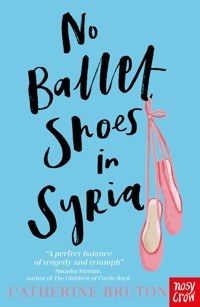
Winner of the Books Are My Bag Readers Award Aya is eleven years old and has just arrived in Britain with her mum and baby brother, seeking asylum from war in Syria. When Aya stumbles across a local ballet class, the formidable dance teacher spots her exceptional talent and believes that Aya has the potential to earn a prestigious ballet scholarship. But at the same time, Aya and her family must fight to be allowed to remain in the country, to make a home for themselves and to find Aya's father - separated from the rest of the family during the journey from Syria. With beautiful, captivating writing, wonderfully authentic ballet detail, and an important message championing the rights of refugees, this is classic storytelling - filled with warmth, hope and humanity. "Wise and kind and unputdownable." - Hilary McKay, Costa Book Prize-winning author of The Skylarks' War "A perfect balance of tragedy and triumph." - Natasha Farrant, author of The Children of Castle Rock "A moving story about one of the big issues of our time, told with wonderful clarity, and incredibly touching." - Axel Scheffler, illustrator of The Gruffalo "A moving, textured story ... Ballet Shoes for the 21st century" - The Times
Sie lesen das E-Book in den Legimi-Apps auf:
Seitenzahl: 248
Veröffentlichungsjahr: 2019
Das E-Book (TTS) können Sie hören im Abo „Legimi Premium” in Legimi-Apps auf:
Ähnliche











![Tintenherz [Tintenwelt-Reihe, Band 1 (Ungekürzt)] - Cornelia Funke - Hörbuch](https://legimifiles.blob.core.windows.net/images/2830629ec0fd3fd8c1f122134ba4a884/w200_u90.jpg)



For Evie
And for the 11.5 million refugee children around the globe who have been forced from their homes and are currently seeking safe haven.
C.B.
Chapter 1
Aya could hear the music floating through the walls. And the woman’s voice: “One, two … port de bras … lift those arms, girls … three, four … straighter – yes! … five, six … eeeee-longate…” The notes of the piano seemed to trickle down through Aya’s limbs, and her fingertips moved involuntarily towards the tune that tinkled through the stuffy air.
The music stopped. Aya wiggled her toes and glanced around. The community centre was crowded – a jumble-sale collection of people, talking in a bustle of different languages. Hot sun spilled through dusty windows and the room smelled of soup and unwashed clothing. And sadness, Aya thought. She sighed and shifted in her seat.
The music started again and Aya glanced upwards. The piano notes were coming from somewhere close by. Upstairs? If she closed her eyes really tight and focused hard enough she could almost – almost – imagine herself back home, in the dance studio in Aleppo. With the heat on her limbs, the white-hot sun falling through the skylight, and the aromas of the city trickling through the windows – dusty streets, car fumes, incense. She smiled as she remembered standing at the barre, tracing her pointed toe through a series of rond de jambes, recalling the dust that sometimes trickled across the floor and that drove Madam Belova mad.
Anyone looking at Aya at that moment would have seen a small girl who looked much younger than her eleven years, holding a sleeping toddler in her arms. She had her eyes closed, and a curious expression danced over her face as her small foot traced circles on the grubby floorboards. A headscarf covered her black hair, and the clothes she was wearing were too big for her – leggings sagged over her skinny limbs and an old dress, which might perhaps have once been her mother’s, hung limply off her tiny frame. And yet there was something about the way she sat – the bird-like tilt of her pinched face – that made her seem as if she belonged somewhere different.
The sounds of music stopped once more and Aya wriggled on the hard plastic seat. She was hungry and Moosa was heavy in her arms. The music made her feel fidgety and restless, and something else she couldn’t find a word for. She shook her head determinedly and sat up straight – she needed to be focused today. To help Mumma.
“How long do you think it will it be?” she asked the woman next to her, who just shrugged. Aya wasn’t sure if she’d even understood.
She glanced around again. They’d been waiting for three hours to talk to the caseworker – a young man with a beard and tired-looking eyes who sat behind a makeshift desk, papers and files piled up around him. Right now he was talking to Mr and Mrs Massoud – the old couple from the hostel who had told Aya that they came from Damascus. Aya heard the words: “Application for asylum … appeal … lawyers … undocumented … hearing.”
“Same old story,” she muttered to Moosa. “Right, Moos! Over and over – wherever we go.”
Moosa shifted in his sleep, making the funny little sucking noises that made Aya want to squeeze him tight. “You sound like a baby rabbit, Moos!” she muttered, planting a kiss on her brother’s grubby, tear-stained face. His hair was damp with sweat, his fingers clasped tightly round Aya’s thumb. She remembered the first time she had held him, the wave of love she had felt then. The feeling she’d had that she would never let anything happen to him – ever.
“Don’t worry, Moosie!” she whispered into his damp cheeks. “Aya’s here. Aya is going to sort it all out. Promise.”
Mumma was sitting next to her. She looked tired and faraway. “It won’t be long now, Mumma,” Aya said.
But Mumma did not reply. She just kept staring up at the dusty windows – as if she could see something through them that Aya could not.
“You OK, Mumma?” Aya asked. “You hungry? I can get you some food? There is soup today.”
But Mumma said nothing.
Just then the door to the community centre swung open and the music spilled into the room, louder now. A quicker piece was playing and Aya found her toes tapping out the beat on the floor.
“One, two, three… Squeeze, two, three… To the barre, two, three… and – photograph! Loooovely, ladies!”
Aya held her breath for a second. “Photograph!” she muttered, half to herself and half to Moosa.
Madam Belova liked to say that too. “Photograph!” It meant a moment of stillness, a pause, catching hold of the music and waiting with it. The notes and the dancer suspended in time – hovering in the air – just for a second.
Suddenly Aya couldn’t sit still a moment longer. She glanced at the queue of people in front of them. It would be ages before they were called. She could slip out – just for a moment – to go and look.
“Mumma, I’m just going out. I won’t be long. I promise I’ll be back to help. And I’ll get you some soup – and bread. You need to eat, OK?”
Mumma turned and nodded, but she seemed to have only half heard. I will make sure she eats properly today, Aya said to herself. And rub her temples the way Dad used to do when she got one of her headaches. And I’ll talk to the caseworker and get everything sorted out. Then Mumma will be able to relax – get better. Be herself again.
Aya carefully uncurled her little brothers’ fingers from her own and laid him down gently in the battered pushchair that Sally – the nice young volunteer who ran the centre – had found for them. Then she stood up and did a little spin on the spot, which – just for a moment – made old Mr Abdul sitting opposite think of a curling autumn leaf, falling through the air.
But Aya was unaware of being leaf-like as she made her way over to the doorway.
She just needed to shake off the fidgety feeling that the music had sent trickling through her limbs. Before she burst!
Chapter 2
It was a relief to be out of there. Away from the smell of old clothes, boiled vegetables, and that other smell, which Aya had decided was sadness. Once upon a time she’d have said that sadness didn’t have a smell. Now it was more familiar than the fast-fading scents of home. Worse than the smell of Moosa’s stinky nappies, worse than Dad’s smelly socks, worse than the boys’ changing room at school – though she wouldn’t have thought that was possible a year ago!
Aya stretched her arms high above her head and looked around the lobby. Manchester Welcomes Refugees was housed in a community centre in a run-down area of the city, where crumbling red-brick terraces crouched in the shadows of dying and derelict tower blocks. So different from the tree-lined streets and sunlit avenues of Aleppo – before the war, that is.
There were posters on the notice board advertising all the other things that went on here. Aya ran her eyes over the confusing words: “Latin and Ballroom Club – All Ages Welcome” … “Hor-ti-cul-tur-al Society” (she sounded out the syllables) … “Zumba Gold” (what was Zumba, anyway?) … “Pilates for Mindfulness” (she had no idea what that meant either!).
Aya remembered sitting at the kitchen table with Dad teaching her English, laughing at the strange-sounding syllables. She could still see Dad’s smiling face – the dark almond eyes, the hint of grey in the stubble on his chin, the small scar on his cheek from when he’d had chicken pox as a child. She pushed the thought away quickly. She couldn’t think about Dad. Not if she was going to keep it together.
The music was much clearer out here and Aya could hear the woman’s voice – speaking English with a slight foreign lilt to it. “Ladies, are we swans on the lake or the ugly ducklings? Let me see grace. Let me see elegance. LOV-ER-LY!”
The music, the voice, the soft thud of feet moving in time seemed to tug at something inside Aya. Like the strings on a tightly bound package, loosening memories she normally buried deep, deep inside.
“Arms, ladies, arms … and fiiiingers! Feel it in every sinew – right to the tips of your pinkie fingers!”
Aya couldn’t help it – she just wanted to look.
She made her way to the staircase and up to the little upstairs lobby. There were benches all around, scattered with a collection of bags and coats and items of clothing. One door seemed to lead to a small office, another led out on to a fire escape. Then there was a pair of white doors with little windows on the top, through which the music was coming. Aya hesitated. It had been so long since she had danced … a whole lifetime ago … another life, almost.
Standing on tiptoe, she could make out a rather battered-looking dance studio, mirrors along one wall and a barre stretching the whole way round. A group of girls were lined up, dressed in black leotards with pink socks and satin shoes. Each girl had her hair pulled back in a bun, though some were neater than others, Aya noticed, as she watched their legs and arms moving in time to the music.
“Straight up like a chocolate finger, la-dies… And no wiggle-waggling as you close!” the teacher was saying. “Now you can all take your hands off the barre – except Miss Dotty, who is seeming to be drunk today, I think.”
Aya watched as the girl at the front of the line – who had skin like melted chocolate, a lopsided bun and a mischievous twinkle in her eye – wobbled even more precariously. The girl (who must be Dotty?) put her hand on the barre to steady herself, biting her lip as if to stop giggling.
“Now, squee-eeze in those bottoms and make your necks very long – like the giraffes…” the teacher was saying, walking down the row of girls.
“Very nice, Ciara!” she said to a slender blonde dancer with limbs like snowy branches.
“No see-sawing, Lilli-Ella,” to a small girl with mousey hair.
“Don’t be making the examiner feel seasick, Grace.” This was to a tall girl with sloping shoulders and glasses perched on her nose.
There was no sand on the floor, and the sky through the windows was English blue, not Syrian gold, but otherwise Aya could have been back in Aleppo. Back at home – before the war – before … everything. And it could have been her own classmates lined up at the barre: Samia, Kimi, and Nadiya and Nooda – the twins who always did everything – everything – together, even going to the toilet.
What had happened to the twins?
The teacher turned and Aya could see her properly now. She was old – very old – and tiny, with a snowy-white head of hair pulled into a bun, and a face round and bright like a wrinkled apple. In a flowing black dress with shiny red character shoes on her tiny feet, she looked each girl up and down with her bright violet-blue eyes, lifting an arm here, touching a head there, just as Madam Belova always used to do.
“Make sure you are speaking with your hands, your toes, your eyes, my dancers!” she was saying. “But, Dotty, do tell your eyes to mind their Ps and Qs!”
Just then the girl called Dotty glanced towards the door and caught sight of Aya. A quizzical expression flitted over her face as she held Aya’s glance. She smiled and just for a second it looked as if she was going to laugh.
The final notes of the music tinkled out and the barre exercise came to an end. The girls relaxed into easy chatter, reaching for water bottles, sorting out hair and pulling up socks as they made their way to the middle of the floor.
Only the girl called Dotty kept her gaze trained on Aya. And as she took a glug of water she winked and grinned.
Aya smiled back. For the first time in months she didn’t feel invisible.
Aleppo, Syria
Aya barely remembered how the war had begun. She must have been small – six or seven maybe. She had a memory of Dad watching the demonstrations on the TV one evening. He had some of his friends from the hospital over and they were talking, arguing about recent events – the protests on the streets of the capital, the arrests, the fighting… They didn’t seem to agree about what was going on. She heard words like “political reforms … civil rights … the release of prisoners … arrests.” Words she didn’t really understand, but that had ugly shapes to them.
“They are angry at the president,” Mumma had explained. Aya wasn’t sure if she was talking about the crowds of protestors, or about Dad’s friends.
Over the next few days she stared at the images on the news. Fighting in the streets of the capital, Damascus. Protestors waving banners, clashing with police. Shots fired, blood on the streets.
“Why are they so angry, Dadda?” she asked.
“They want to make Syria a better country, habibti,” said Dad, rubbing the grey stubble on his chin thoughtfully.
“So why are the police hurting them?”
Dad sighed. “Perhaps people have different versions of better.”
She had looked hard at him then. His almond-shaped eyes looked troubled and he was not smiling. Dad always smiled. Even when he came home exhausted from a long shift at the hospital. He always had a smile for his Aya. For his little dancing girl.
“Will the fighting come here?” she asked. “To Aleppo?”
“I hope not, habibti,” he said. “I hope not. But if it does, I will keep you and Mumma safe. I promise.”
Chapter 3
That night, back in the hostel, Aya could not sleep. The bed she shared with Mumma and Moosa was lumpy, the springs collapsed in one section. The walls were so paper-thin that they could hear everything that was going on in every other room. The family next door were arguing loudly in a language Aya did not understand – the husband shouting, the wife crying. In the room above, a baby wailed, and from somewhere down the corridor she could hear the sound of old Mrs Massoud crying. Poor Mrs Massoud was always crying – for her son who had been taken by government troops in Damascus, and for her daughter, who had been killed by the bombs shortly after. She told Aya that a mother’s fountain of tears flows forever.
But tonight there was also music coming from somewhere down the hall – a man’s voice singing a song in a language that Aya didn’t understand. It made her think of the girls in the dance class. The girl called Dotty who had grinned at her like she was just a normal kid. And Ciara, with the blonde hair and the haughty expression, and the mousey-haired girl – Lilli-Ella – who stuck her tongue out when she was concentrating. Aya’s limbs itched as she remembered. Just thinking about it made her want to dance.
“Not really enough room for that kind of thing in here, eh, Moos!” she whispered to her little brother, who lay like a starfish next to her, his tiny fist clamped tightly round her finger, breathing snottily in his sleep.
She glanced at Mumma, asleep on a chair in the corner, her face creased into its usual anxious frown. Then she pulled a blanket over Moosa and climbed out of bed, reaching as quietly as she could for her rucksack.
They hadn’t been able to bring much when they left Syria. They had fled in a hurry with only the clothes they were wearing and one bag each. Sometimes Aya thought of her room at home and all the treasures she liked to collect: the posters of ballerinas on her wall, the glass animals on her mantelpiece, the pile of cuddly toys on the rocking chair, the tiny snow globe with a dancer frozen in arabesque that Dad had found in the old market … all the things she’d left behind. In comparison, this room – with its single lightbulb, bare walls, ripped curtains and the damp patch on the ceiling – felt more like a prison cell than a home.
“It doesn’t have to be for long,” she had said to Mumma when the lady from the centre first showed them in. “And after the appeal we’ll find somewhere better. Make a proper home – I promise!”
Another promise.
Aya reached to the bottom of the rucksack, where she had packed the ballet shoes. They were wrapped in a couple of plastic bags to keep them dry, and as she unfolded them she could feel the soft satin under her fingers. She hadn’t looked at them or touched them for months, but holding them now made her smile. Dad had bought them for her, just a few weeks before they left. Her first pair of pointe shoes – the most beautiful things she had ever owned. She had no idea where he’d managed to get them from. But Dad was like that. He could do stuff other dads couldn’t.
She remembered dancing in them for the very first time, in the kitchen at home. Patterned linoleum underfoot; Dad sitting at the table with Moosa in his arms; Mumma standing by the sink, hands wet, clapping with delight and laughing about her beautiful ballerina. “Dance for us, Aya!” Dad had said.
Mumma sat up, alert suddenly – the frightened look in her eyes – panting with fear. “Aya? What is wrong?”
Aya quickly shoved the shoes back into her rucksack. “Nothing. It’s OK, Mumma,” she said.
“Has something happened? Has someone come for us?”
“No, Mumma, everything’s good. Go back to sleep. You need to rest.”
The sound of the man singing continued to float along the hallway, as Aya carefully tucked the shoes back into the bottom of her bag – along with the dreams they had briefly set dancing through the cramped little room. Then she climbed back into bed.
Chapter 4
She couldn’t help going back the next day. Even though Mumma’s headache was worse and Moosa was restless. Even though she needed to talk to the food-bank lady about nappies for Moosa. And ask Sally about trying to get a doctor for Mumma. Even though they still hadn’t seen their new caseworker about the appeal. Even though all of that was her responsibility now…
It was the music. The tinkling tune of a piano that had danced through her head all night, and trilled through her fingers all morning. It was school holidays here, so there were dance classes going on all morning, and Aya sat on a hard plastic chair, swinging her legs in time to the music, dancing patterns on the chair leg with her fingers until she felt like she would burst if she didn’t go up for another look.
“Would you be able to watch Moosa, just for a minute?”
She was sitting next to Mr Abdul – the nice old man from Somalia. The day before, Aya had taught him a few words of English and he had started showing her how to play chess. He called her his “young English professor” and shared his peppermints with her.
“I’ll come straight back again,” she said, speaking in the native Arabic they both shared, even though they had come from different corners of the world. “My mumma, she is—”
“She’s disappearing under the waves,” Mr Abdul said, glancing at Mumma, who sat on one of the sofas with her eyes closed.
“She just didn’t sleep well,” Aya said quickly.
“Go, go, little professor,” Mr Abdul said with a smile. “I will keep an eye on the little one!” He waved a hand towards Moosa, who was playing with a box of toys that one of the volunteers had brought along.
“Thank you!” said Aya. “Thank you!”
“No need to thank me,” said Mr Abdul. “We floating people need to look out for one another – or who will? Am I right, little one?”
Aya ran up the stairs, two at a time. The dance class was already in progress. It was mostly the same girls as the day before, moving through the same exercises, the thud of satin slippers on the floorboards, and the rhythmic tap of the teacher’s cane and her sing-song voice echoing around the room. Aya stood by the door, breathless, watching. The blonde girl was there again. And the mousey-haired dancer with the anxious face. The tall girl. The red-head … only the one called Dotty was missing today.
“So you are real!”
Aya spun round quickly, heat flooding to her cheeks.
“I knew it! I knew you couldn’t be a ghost!”
“Ghost?”
“Yeah. I wondered if you were a fairy or something, at first.” The girl called Dotty was throwing down her bag and pulling off bright-pink fluffy tracksuit bottoms and a sparkly crop top to reveal her ballet clothes underneath.
Aya glanced around nervously, suddenly unsure if she was allowed to be here.
“Then I thought you might be the ghost of some long-ago ballet student who had died in a freak pirouette accident,” the girl was saying. Her skin was the colour of the sweet almonds Mumma bought in the covered market in Aleppo. “Or perhaps just keeled over from boredom in one of Miss Helena’s endless barre exercises!” She acted out a dramatic swoon before quickly recovering and adopting a theatrical pose as she declared, “Destined to wander the halls of this community centre forever.”
Aya glanced towards the studio door.
“Sorry – I’m Dotty, by the way.” She stuck out a hand very formally, and Aya reached out her own.
“I am Aya.” Her words came out awkwardly and she bit her lip. She knew she sounded foreign – different.
But the girl called Dotty didn’t seem to notice. “Cool – nice name!” she declared.
She was wearing a different leotard from the one she’d worn yesterday. It had a lace insert across the back and triple straps that criss-crossed daringly over her shoulders. It was the sort of thing Samia would have liked, Aya thought. Samia, who had a different leotard for every day of the week – and two on Sundays. Samia who had lived in the apartment block round the corner from hers. Who she had gone to dance class with since they were six years old, walking along the dusty boulevard hand in hand with their ballet bags slung over their shoulders, Samia talking and talking and Aya listening and laughing.
“You do kinda look like a ghost an’ all,” said the girl called Dotty. She had the same thick, flat northern vowels as Sally and the other volunteer helpers in the centre, Aya noticed. She pronounced ghost like “gurst” and said look with an “oo” of surprise. “I mean, only cos you look a bit old-fashioned,” Dotty went on. “If you don’t mind me saying.”
Aya coloured. She knew what she must look like. In trainers that were slightly too big, a skirt that was slightly too small, a boys’ sweatshirt and a headscarf that looked more like a tea towel, she had become used to feeling different. At least it was better than just being invisible. But today – now – she didn’t want this girl to see her like that.
“Oh, not in a bad way,” Dotty went on, now attempting to tug her unruly black curls up into a lopsided ponytail. “It’s just with you being so thin an’ all. I mean, you can’t really imagine a chubby ghost, can you?”
The words seemed to pour out of her – like bubbles, or glitter, Aya thought. That was like Samia too. Samia’s family had left just before Aya’s. Perhaps they were in the UK now as well. Or Germany. Or France. Or maybe still in one of the refugee camps along the way.
If they had made it out at all.
“OK, so if you’re not a ghost, I’m guessing you’re from the place downstairs?” Dotty was ready now, but stood, hands on hips, surveying Aya, as if she were an exotic species of butterfly or a particularly interesting new flavour of jelly bean.
“Yes.” Aya bit her lip.
“That is pretty cool too,” said Dotty with a cheerful grin. “Not quite as good as a ghost, but I’ve never met a refugee properly either. Where you from then?”
“Syria,” said Aya quietly. “Aleppo.”
“Cool – that place from the news!” Dotty looked excited. “No idea where it is though.”
“Dotty Buchanan!” came a voice from inside the dance studio. “You are late. Very late!”
Chapter 5
Dotty shrugged and grinned. “Alas, duty calls! Nice to meet you though, Syria Girl.” She paused for a second by the door, looking at Aya closely, and her expression changed suddenly. “Hey, I’m dead sorry if I said the wrong thing, by the way. I do that. My mum says I speak without thinking.”
Aya shook her head. “You … didn’t.”
“Dotty Buchanan!” came the voice from inside the studio again. “You will please get in here.”
Dotty was still watching Aya with a look of concern. “Come back – won’t you?”
Aya wanted to say something, but the door to the studio was opening and there stood the dance mistress. Up close, Aya thought she looked even smaller, like a tiny, tough little fairy grandmother. She was much older than Madam Belova, but there was something about the elegance of her movement, the tilt of her chin, that reminded Aya of her old teacher – a kind of indefinable grace that shimmered around the old lady like fairy dust.
“Dotty Buchanan, what are you doing shilly and shallying out here – and so late?”
“Sorry! My mum was in rehearsal, then we got caught in traffic – and then I met Aya.”
The ballet mistress glanced skirtingly in Aya’s direction before tapping her watch and staring significantly at Dotty. “Time, Miss Buchanan!”
“But Aya is a refugee – from Syria,” Dotty explained. “How cool is that, Miss Helena?”
Miss Helena flicked another fleeting glance in Aya’s direction. This time she frowned ever so slightly.
“That is very ‘cool’ but I am thinking that you are the one with the big audition coming up, Miss Buchanan, so perhaps you should spend less time chittering and more time perfecting your développés, yes?”
“Yes, Miss Helena,” Dotty sighed, glancing apologetically at Aya as she started to make her way into the studio. Then she stopped by the doorway. “Hey, could Aya join our class?”
Aya felt as if a swarm of butterflies had suddenly awoken within her belly, coloured wings fluttering.
“I mean, look at the way she stands,” Dotty was saying. “It’s dead obvious she’s a dancer.”
“This class, it is full,” said Miss Helena gently but firmly.
“But—” Dotty cut in.
The butterfly wings scattered like fallen leaves in Aya’s empty belly. For some reason she felt like crying. And she hadn’t allowed herself to cry for weeks.
“But nothing, Dotty Buchanan,” said Miss Helena sharply, though she glanced at Aya again, an odd expression in her eyes. “Let us be getting to the barre!”
Aya blinked hard and tipped her chin up firmly. She hadn’t cried since Dad and she wouldn’t let herself do it now.
“You will come back again!” Dotty whispered as Miss Helena hustled her into the classroom.
“I don’t know,” Aya heard herself say. “I can try.”
“Promise?” said Dotty.
Aya thought of all the promises she had made. To Mumma, to Moosa, to Dad.
Miss Helena was shooing Dotty into the room. She looked back and Aya nodded – ever so slightly.
“OK. I promise.”
Aleppo, Syria
The war came to Aleppo just after Aya’s seventh birthday. Mumma had made the traditional tabouleh, and an almond cake with a ballerina on the top, and she had invited all the girls from her dance class to a sleepover. The evening was so mild that Mumma said they could sleep out on the roof terrace, under the stars.
Samia was dancing around, doing impressions of her favourite pop star. Nadiya and Nooda were making up a routine that looked as if they were one girl, dancing in front of a mirror. Kimi was drawing pictures of ballerinas in pink and lilac and turquoise tutus. There had been music coming from the garden below and the smell of Mumma cooking mahashi in the kitchen.
When the first explosions happened, Aya had thought they were fireworks going off in the eastern part of the city. Fireworks for her birthday.
But Dad came home early from the hospital and she heard him and her mother talking in low, urgent voices in the kitchen. “Protestors shot by government troops … fighting in the Old City,” she heard him say. The beautiful old covered market where Mumma had bought fruit and almonds for Aya’s birthday cake had been damaged, bullet holes pock-marking the walls of the ancient suk.
Mumma gathered all the girls inside. It was not safe to sleep on




