


Erhalten Sie Zugang zu diesem und mehr als 300000 Büchern ab EUR 5,99 monatlich.
- Herausgeber: Nosy Crow Ltd
- Kategorie: Für Kinder und Jugendliche
- Sprache: Englisch
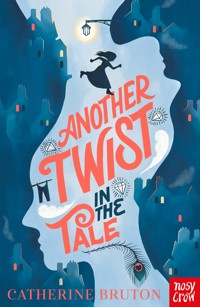
You have heard, no doubt, the tale of Master Oliver Twist - that rags-to-riches boy; the parish orphan who became heir to the Brownlow fortune. But what few know is that was a second Twist - a girl, brought into this world moments ahead of her brother. This is the story of Twill Twist - and her journey through the gambling dens and workhouses of London, as she attempts to make a life for herself, rescue her friends, and uncover the mystery of her past - while meeting some familiar faces along the way... Re-discover the Artful Dodger, Fagin, and Oliver Twist himself, along with a host of fantastic new heroes and villains, in this brilliantly-imagined, rip-roaring sequel to Dickens' much-loved classic.
Sie lesen das E-Book in den Legimi-Apps auf:
Seitenzahl: 248
Veröffentlichungsjahr: 2020
Das E-Book (TTS) können Sie hören im Abo „Legimi Premium” in Legimi-Apps auf:
Ähnliche












![Tintenherz [Tintenwelt-Reihe, Band 1 (Ungekürzt)] - Cornelia Funke - Hörbuch](https://legimifiles.blob.core.windows.net/images/2830629ec0fd3fd8c1f122134ba4a884/w200_u90.jpg)




iii
v
For my wonderful GCSE Class 2018-2020
Matt B, Oscar, Helen, Ben F, Tabby, Ben, Nia, Theo, Evie, Angus, Finley, Emily, Matt M, Adrian, Filip, Ella, Joel, Wilf, Josh
“They were Hard Times, but ever the best of times!”
C.B.
1
Chapter 1
In which we examine the worth of girls and introduce the other Twist in this tale
Girls! The female of the species. The fairer, the gentler … some say the weaker sex. Girls, young ladies, little women: call them what you will, but in this England of 1828 – where our tale begins – the melancholy fact remains that girls are considered not worthless but most certainly worth less than their brothers and fathers and sons and nephews. In short, girls are worth less than boys!
Worth less, how? I hear you ask. Why, quite simply in pounds, shillings and pence. When we calculate what it costs to feed and clothe a female child, particularly of the orphan variety (though gruel and rags be all they are fit for) versus the revenue said girls might yield when – or if – they are fully grown (for many orphans have 2the temerity to die before they have repaid their debt to a society that has contrived to starve them to the grave!) it seems, alas, that employers will pay more for a boy apprentice than they will for a girl. The parish may sell on girl orphans as maidservants or kitchen wenches, but their wages over a lifetime are paltry compared to that earned by their menfolk. Yes, the facts and figures are incontestable: girls are – all in all – worth a great deal less than boys.
And it is this very circumstance that leads to the twist in our tale. Or perhaps I should say the other twist, for indeed there were two: one boy, one girl. My dear reader, you have no doubt heard the tale of Master Oliver Twist: that rags-to-riches Cinderella-boy, the parish orphan who became heir to the Brownlow fortune. But what few know – indeed there are only two on this earth who know the truth – was that the very night when that unfortunate woman birthed young Oliver, she brought forth first a girl babe into this unfeeling world. A second Twist, or really a first – ahead of her brother in every way – for young Miss Twist came out screaming and lusty, hale and hearty.
“’Tis a girl!” declared the midwife of the Mudfog workhouse, a wretched being named Old Sal, who took a sip from a small green bottle and rolled her eyes 3as she beheld the child. “Lawks, a-mercy, ’tis a crying shame! Waste of all that effort, ask me!”
Then that good woman set the girl aside on a little flock mattress, and focused her attention on the puling, mewling, kitten-like creature that was to be Master Oliver Twist.
“A boy, sir!” she declared when Oliver – after some moments of apparent uncertainty – gave forth his first sickly cry. “But a weakly one. Not like to survive, you ask me!”
“Did I ask you? Did I?” blustered the beadle who was in attendance – a corpulent, red-faced gentleman whose waistcoat was cut a little too meanly for his splendidly mountainous belly. “A girl and a boy! Two little burdens on the parish purse! What was this reckless young woman thinking?”
Alas, the thoughts of the reckless young woman, now mother to twins, we shall never know as – having whispered her last desperate words to Old Sal the midwife and pressed some items that will be of significance later in this story into that old crone’s hands – she let out a last gasp in this world and expired.
“Why, the boy might fetch a sum as an apprentice but as for the female.” The beadle – whose name I should here record was Mr Bumble – paused and sniffed the 4air like he was nosing out a good wine. “I fear we must allow Mother Nature to take care of her.”
At this Old Sal – who had been more affected by the last confession of the young mother than the contents of her green bottle were able to overcome – looked up in alarm. “Bu’ she’s a lusty one, Misser Bumble! ’Tis a shame, so it be!”
For she knew what Mr Bumble meant by “Mother Nature’s care”. It was the same “care” the workhouse authorities administered to unwanted kittens and the kitchen dog’s pups, who were tied in a sack and thrown in the canal for the good Lord to “take care on ’em”.
“The last thing this world needs is another squawking female!” blustered Mr Bumble, wheezily standing over Oliver’s deceased mother, a delicate-looking creature with translucent skin and large cornflower-blue eyes, now closed forever. “We’ll take the boy to the cottage orphanage and see what we can make of him, but the other one – the girl…” He pronounced the phrase as if the very vowels were sulphurous. “Let me hear no more of her.”
And so it was that on that snowy night in the town of Mudfog, some distance south of the great city of London itself, the other Twist in our tale found herself dumped a little way down by the riverside on a rubbish 5heap in the snow – a bundle of white rags containing a tiny twist of paper, and a red and screaming infant.
But nobody had informed young Mistress Twist of the prevailing wisdom on the worthlessness of girls. She had not been made aware that young ladies should be seen and not heard, nor that they deserved neither to be fed, nor listened to. And so this particular young lady demanded to be not only heard but fed – and fed right now.
And thus it was that several good citizens of the parish encountered her – passing by the screaming bundle with upturned noses and exclamations on the loose morals of mothers who abandon their offspring to lie screaming in the snow.
And so young Mistress Twist might have ended her days – and this tale – had she not been found by a young lady by the name of Baggage Jones.
6
Chapter 2
In which we are introduced to Miss Baggage Jones and find that the worth of a person is not always measured in pounds, shillings and pence
Baggage had not always been this young lady’s name. Indeed she was quite sure she’d had another name once – but it was long buried in the hazy memories of her fourteen years on earth, for whoever had given it to her had not hung around long enough to impress more than a dim recollection of a sweet face and a soft smile upon young Baggage’s memory. And so her name had been lost, like a penny down the floorboards, or an odd sock in the laundry – or such-like items that seem quite set upon being mislaid. Over the years, this young lady had become so accustomed to hearing herself addressed thus – “Get over ’ere, you baggage… Fetch this, you useless baggage… Get on, you baggage, you” – that she had come to believe that 7Baggage was indeed her name. She had added the surname Jones, being the name of her mistress, which she believed lent a certain elegance and gave her a sense of belonging – to someone at least.
And to be sure Baggage suited her name – as our names come to suit us, or perhaps we them (as sometimes people say our dogs do). For Baggage Jones was a scrawny scrap of a creature with a round flat face, rather crumpled and pale. She had been born with a harelip, and one eyelid drooped a little, the result of an overenthusiastic beating with a wooden spoon (which we shall encounter in the next chapter). So overall, she bore a squashed appearance, as of clothing, hastily scrumpled. But in the middle of this rather odd face was a pair of large grey eyes, the colour of dirty dishwater but with a glow of love about them – though where Miss Baggage Jones could have acquired such a thing in her short, loveless existence was a puzzle. And yet it was this very quality – this love, shall we call it – that made her stop short at the sound of the baby’s wails.
“Why? What ’ave we here?” she exclaimed. “Pots an’ pans an’ pat-a-cakes! A baby – in the snow!”
Baggage peered down at the angry red-faced infant, who instantly stopped crying and stared at her, dark button eyes wet with tears. 8
“Why, who d’you belong to?” said Baggage, looking around, trying to see where this miraculous infant might have sprung from – for, having no mother to educate her on such matters, she was still a little hazy on where babies actually came from. But, seeing nothing and no one to whom the babe might belong, she bent down to pick up the child.
“You poor little mite, you!” she declared. “Ain’t got no one to love you, nor feed you – leavin’ you out in the snow on this terrible night. ’Tis a shame, tha’s what it is!”
The baby seemed to agree with her, for she was placated to be in Baggage’s arms and even more contented when Baggage tore a strip of bread from the package she was carrying and gave it to the babe to suck on.
Baggage looked around again. Several good citizens of the parish passed by, turning their eyes hastily away as good taste dictated. Baggage knew why and she did not judge them. For her fourteen years had impressed upon her strongly that girls were baggage to be discarded.
But somehow she found it impossible to act upon this incontrovertible law of the land.
“Why, what am I to do wit’ you?” asked Baggage, as if the baby might have an answer. “Can’t leave you 9here – woutn’t be right.” Then she sighed heavily, her big dishwater eyes wide with alarm. “Only one thing for it, I s’pose!”
10
Chapter 3
In which we are introduced to the Black Jack Gaming Hell of Camberwell Grove and the owner of the Spoon
“One thing for it”, as it turned out, was Baggage bundling the infant under her threadbare cloak and smuggling her back to the only home she’d ever known.
A word is needed here about the Black Jack Gaming Hell where Baggage resided. A large house at the top of Camberwell Grove, located south of the Thames where the city of London straggled out and expired, the Black Jack was owned by the formidable Madam Manzoni-Jones (more of whom later). This place had earned a reputation as one of the blackest gaming hells in England. By which I mean, a place where extremely well-off young gentlemen – lords, baronets-to-be, heirs to dukedoms, even minor members of royalty – 11came to throw away extremely large fortunes, playing hazard and faro and rouge et noir at the gaming tables. Peers of the realm and foolish young pigeons and venerable members of parliament had been known to lose reputations, fortunes – nay, entire inheritances – on a game of cards or a roll of the dice under the roof of the Black Jack.
Baggage worked in the kitchen, where she had been brought she knew not when nor why, at some time perhaps in the same hazy period of history when her name had been lost. Here she was employed under the strict auspices of the cook and housekeeper Mrs Spanks, a tall, hot poker of a woman whose motto was “Spare the spoon and spoil the child” (the spoon in question being that giant wooden implement with which Baggage came into regular contact).
Also resident at the Black Jack were Madam Manzoni herself, Mr Scapegrace – her lawyer and accountant – and half a dozen “Butterflies”. These beautiful painted creatures fluttered through the gaming rooms where they dealt cards for extremely high stakes, poured whisky in extremely liberal measure and encouraged extremely foolhardy gentlemen into parting with more money at the tables than they could afford. Meanwhile the Butterflies learned to count cards, cheat at poker, 12pick pockets, and wheedle and cajole their favourites into hazarding fortunes for their favours. This they did until their bloom faded, at which point they were cast aside and new silky-winged creatures installed in their place.
Baggage’s one great dream had been to be a Butterfly but at fourteen years her face remained a crumpled disappointment – more of a singed moth than a red admiral or a painted lady – so in the kitchen she stayed, under the auspices of the Spoon, and there she seemed destined to remain.
When Baggage returned that snowy night with the babe in arms, her first aim was to keep her from the view of the Spank and her Spoon. So she made her way straight to the Butterflies’ boudoir – the salon where those winged creatures were getting ready for the evening trade. She burst in, damp and snow-covered, to find a dozen or so beautiful creatures lounging on velvet pouffes in tattered silk dressing gowns, lazily applying make-up in front of liver-spotted mirrors. They were a listless bunch, pale and sad-eyed beneath the paint, but when Baggage declared, “A baby – I found me a snow baby,” they crowded round the little grub excitedly, lit up like Chinese lanterns. 13
“Where’d you find such a fing, Baggage?” demanded Birdy.
“You think Madam will let you keep her?” cooed Pearl-of-the-Night.
“Wha’s her name?” This was Cleopatra (Cleo for short: all of the Butterflies had inherited their names from long-lost predecessors – handed down to each newcomer along with the tattered silk gowns and glittering paste jewels of her trade.)
“Her name is Twill,” said Baggage, who had decided during the journey here that the little one deserved a proper name to call her own. “Cos when she stopped crying, she made the most lovely twilling noise – like a little bird.”
At this point we must suppose Miss Baggage meant a trill, but having received only the scantiest of education, most of it via Mrs Spanks’s Spoon, we should not judge her mistake too harshly.
“Twill Jones is her name,” said Baggage, as proud as any new mother. “And Madam must let me keep her, else what’ll become of her!”
The Butterflies were all in agreement but since all their lives were utterly at the mercy of Manzoni, and all were liable to be thrown out at her will, they privately had their doubts. 14
And at that moment, as if to embody those very doubts, Mrs Spanks appeared in the doorway to the boudoir, wielding the Spoon.
“What,” she demanded, raising that culinary weapon aloft in a most alarming manner, “on ’eaven and earth is that?”
15
Chapter 4
In which we meet the monstrous Madam Manzoni and witness the swallowing of a human being in her own flesh
Baggage had been summoned to Madam Manzoni, which could mean nothing good. This veritable prodigy of a woman – iron lady of the Black Jack of Camberwell Grove – was permanently installed in her “morning room”, where she resided in a chair-cum-bed through morning, noon and night, unmoved and unmoving for over half a century. Indeed, nobody alive – save perhaps Mr Scapegrace, her resident lawyer – could bear testimony to having seen her move from there in living memory.
How had she become thus entrapped? The truth was that Madam Manzoni had once been a diminutive woman – with a tiny, bird-like frame – of singular beauty. But over the years a monstrous accumulation 16of flesh had descended upon her tiny body like lava upon a doomed city, burying the fairy-like girl in waves and waves of white undulating flesh. Her small face was still visible within a Saturn-like circle of chins and her tiny hands floated and fluttered over her giant form so that Baggage sometimes thought she could see the small girl of old trying to claw her way out of the giant, elderly woman’s frame.
How Madam Manzoni had come to own the Black Jack was also shrouded in mystery. Some said she had once been mistress to the Prince Regent; others that she had made her money in the American gold mines of Missouri. Some audaciously suggested that she had once been a Butterfly herself, though to compare her to such will o’ th’ wisps seemed unthinkable. Whatever the case, Medora Manzoni-Jones now ruled the Black Jack with an iron fist, and though she was bodily confined to the morning room, her roaming gaze extended through every region of the house, thanks to the spying eyes of Mrs Spanks. And it was Spanks who had informed her mistress of the new arrival.
“So, Baggage!” Madam Manzoni surveyed the girl with tiny beady eyes that glimmered like currants in the swelling pudding of her doughy face. “You seem to grow more ugly by the day. Is this how you repay 17my kindness? Have I not provided you with a home all these years? I fondly imagined you might one day burst from your cocoon to join the Butterfly boudoir, and yet you have stubbornly insisted on becoming more hideous with each year that passes.” She laughed – an oddly high-pitched sound that seemed out of place coming from her monstrous form.
“I – I – I’m sorry, Ma’am,” stammered Baggage. “I have tried to get prettier…”
“You know the rules of the Black Jack, Baggage,” oozed Madam Manzoni. “Beauty is your duty! Once a Butterfly loses her bloom, she’s out – and even a kitchen maid in this establishment must at least attempt to be ornamental.”
Baggage’s already crumpled face dropped and her eyes pooled with muddy-looking tears. Life under the Spoon might be a bruising sort of existence but the Black Jack kitchens were the only home she had ever known. Fortunately, just at that moment, the Manzoni woman was distracted by the sight of what Baggage was holding.
“What,” she demanded, “are those?”
“These, Madam?” Baggage sniffed loudly and held up a plate of miniature éclairs – a patisserie delicacy that she had been working on in the kitchen and was 18close to perfecting. Madam’s tiny black eyes lit up and her little white hands fluttered in the direction of the plate.
Alas, Madam’s bosom was now so colossal that it was impossible for her even to feed herself, so Baggage obligingly stepped forward and popped one of the mini delicacies in Madam’s open bird-like mouth.
It had the desired effect.
For while Baggage might never earn a place in the Butterfly boudoir by her looks, her tenure at the Black Jack would surely always be assured by her baking. Mrs Spanks the cook was Madam’s spymaster general, but her puddings were stodgy and her pies soggy-bottomed, and it was Baggage’s cream puffs and choux buns, her peach turnovers and ganache horns that made Madam Manzoni’s chins wobble with delight. And if Baggage knew her power to soften Madam’s moods with her pastry wizardry, she also knew she had never needed it more than in this moment.
“It’s a new recipe I’ve been working on,” said Baggage. “Do you like it?”
“Not bad,” said Madam Manzoni, licking her lips with a satisfied purr. “Quite satisfactory! Now, what’s this I hear from Mrs Spanks about you bringing a baby into the house?” 19
“I found her, Madam, and I wondered…” Baggage took a deep breath. “Oh, won’t you let me keep her?”
“Her?” Madam Manzoni’s eyes lit up as they had for the cakes. “Bring the baby to me … and some more of those éclairs while you are at it.”
20
Chapter 5
In which Baggage makes a deal and Twill finds a home
Twill, by the time Baggage brought her to Madam Manzoni, was in a state of great contentment. She had been fed on rich warm milk and washed and cleaned and was now lying in a crate that had once contained aged whisky, looking cherubic, with her big blue eyes, dark curling lashes and a smattering of golden curls upon her head.
“Well, well,” said Madam, when the babe was lifted so that she might see her better. “What a pretty little caterpillar. Where did you say you found the creature, Baggage?”
“In a rubbish heap,” said Baggage. “She looked so cold and hungry. I coutn’t just leave ’er, ma’am!”
“You have a kind heart, Baggage,” said Madam, her 21chins trembling as she spoke. “But how exactly were you planning to feed her, pay for her keep – hmm?”
“I d-don’t know, Ma’am,” stammered Baggage. “I thought—”
“Did you, Baggage? Did you really think? A child is an expensive thing to rear. An investment. The outlay in food alone is considerable, and then there is clothing to think of, other expenses. Did you think of that?”
“No, Ma’am but I hoped—”
“Hoped?” Madam’s chins now wobbled so violently that Baggage was reminded of a giant blancmange. “Hope won’t put food on the table or money in the bank. You cannot raise a child on hope alone!”
“She can share my food,” said Baggage – quite sincere in the offer, even though she herself subsisted on the meanest scraps from the kitchen leftovers and often went to bed hungry. “Oh, Madam, please!”
As it happened, Madam Manzoni had already made up her mind, but she waved her little white hand to indicate that Baggage should feed her another éclair. Then, with her mouth full of chocolate and cream, she heaved her colossal bosom and gave an expressive shrug.
“Very well, you may keep her. But on certain conditions.” 22
“Oh, Madam, anything!”
“It will be your responsibility to keep her out of the way of the Black Jack clientele – no bother, not a whimper are we to hear. It must be as if she were invisible and inaudible.”
“Oh yes, Madam,” said Baggage, and Twill herself responded with a gurgle to express her delight and compliance.
“Caring for her must not interfere with your regular work,” Madam went on, licking her lips to catch the last of the cream.
“It won’t, Madam. I promise!”
“I will agree to feed and clothe the child but she will be indentured to me.” Madam Manzoni paused and Baggage obligingly popped another éclair into her waiting lips so that her next words were delivered through a mouthful of pastry. “Mr Scapegrace will draw up a contract. As soon as she is old enough, she must repay the debt she has incurred.”
“Yes, yes!” In truth, Baggage wasn’t quite sure what an indenture was but she would have said anything to keep Twill.
“And if she blossoms.” Madam Manzoni’s eyes glittered as she eyed the little grub in the box. “If she grows pretty wings, then one day she may enter the 23Butterfly boudoir.”
Baggage’s heart fluttered anxiously, but baby Twill cooed and beamed from her box as if in assent – and thus her fate was sealed.
24
Chapter 6
In which time passes and Twill grows wings
The passing of years wrought many changes across the land. A new young queen came to the throne; a group of downtrodden heroes rose up to fight for the vote – and lost; the first railway opened in London; the fashion for greatcoats came – and went; the iniquitous practice of slavery was abolished – throughout the British Empire at least; and a fire – reputedly started by a jealous mistress – destroyed Lloyd’s Coffee House.
In the Black Jack Gaming Hell, change was also afoot. Baggage herself had grown older but no more beautiful, saved from the rubbish heap only by ever more extraordinary feats of patisserie magic. She had taken to asking Bob, the errand boy from the local butcher’s shop, to search out the latest exotic 25ingredients – herbs and spices and suchlike – on his trips to Borough Market. These she whisked, folded and wove into ever more glorious culinary concoctions. Since Bob did not share the general view on Baggage’s appearance (having a fondness for dishwater-grey eyes and finding her crumpled face reminded him of the lopsided buns to which he was very partial) he was always happy to oblige, and thus Baggage’s baking kept her firmly in Madam Manzoni’s employ.
Time, as our good readers probably know, had made a great impression on the life of the young man known as Oliver Twist. He had passed from orphan-who-asked-for-more; to the runaway-undertaker’s apprentice; to pickpocket-vagabond and smallest member of a gang of housebreakers; to the cherished and adored adopted heir to Mr Brownlow. His fortunes had dipped and roller-coastered and finally risen, and he now sat enthroned in his guardian’s heart as the most beloved and fortunate of boys.
And time had wrought great changes upon his sister too. Young Twill was now – at nearly thirteen years of age – clearly no longer a grub by anyone’s standards. Brought up in the Black Jack kitchens but protected from the Spoon by Baggage (who had proved herself as fierce as Mrs Spanks in defence of her darling), 26Twill had grown into a girl of warm heart, peerless beauty and dauntless temper. For whereas her twin brother Oliver had grown up unloved and neglected for the first decade of his life, Twill was the darling of the Black Jack. Everyone adored her – everyone except Mrs Spanks. The Butterflies petted her, Baggage doted on her, and she was the apple in the rheumy eye of Mr Scapegrace, the wiry old lawyer who stayed at the Black Jack who-knew-why. In any case, Twill was a universal favourite.
The Butterflies taught Twill the art of card-playing and face-painting; Baggage imparted the wisdom of buttercream and blind baking; and Mr Scapegrace taught her to read and write – for Baggage insisted that her Twill should be raised to greater things than the boudoir. In fact, she had long since come to the realisation that life as a Butterfly was as short-lived and precarious as it was glamorous, and she wanted better for Twill.
She was thus determined that her darling should be educated and it had not been difficult to persuade Mr Scapegrace to take on the task of “reading and writing her”, as Baggage put it. The little mole of a man, who spent his days behind a desk, buried under piles of promissory notes and pawnbrokers’ slips and deeds 27of title, refused to accept the pennies Baggage offered him in return for this education. For Twill proved a most delightful pupil – quick, eager to learn and with an insatiable curiosity – so that poor dear, dusty Mr Scapegrace soon found the hour he spent with the girl to be the highlight of his day.
And what of Twill herself – of her hopes and dreams? Well, when she wasn’t skivvying in the Black Jack kitchens, or reading tales of Arabian nights and Trojan horses or puzzling through the riddles of Pythagoras with Mr Scapegrace, Twill lived the life of intrepid adventurer and explorer to rival the great Dr Livingstone himself – and the borough of Southwark was her kingdom.
Twill Jones of the Black Jack was considered the out-and-out leader of the Camberwell Grove kids – the collection of scraps and urchins, kitchen girls and errand boys from Grove Lane right the way up to Denmark Hill. She devised their games, egged them to feats of daring, and organised their raids and battles against the railway workers’ kids from Peckham Rye.
She liked to read in Mr Scapegrace’s books of lands far away, of epic battles fought, pirates on the high seas, of mangrove swamps and rainforests swarming with monkeys and birds of every colour – and she 28dreamed one day of going to all those places. For now the scope of her existence stretched only from Forest Hill to Dulwich Village, but her imagination populated those streets and parks and alleyways with elephants and lions, bloodthirsty plunderers, swamps, forests, coral reefs and golden sands where buried treasures lay.
And so Twill grew up, happy as a sparrow, content as one of the stray cats that lived off scraps from the Black Jack kitchens. The only regrettable consequence of the passing years, as Baggage saw it, was that Twill had begun to show signs of turning into the most glorious of Butterflies. And Baggage was not wrong. If her brother had been considered a cherubic-looking child, Twill shared all his angelic beauty, but her big blue eyes also shone with a fierce light and there was a determined tilt to her chin and firm set to her rose-petal mouth that reflected her fearless temper.
And now Baggage’s every effort was invested in keeping this information from Madam Manzoni. The Butterflies were all enlisted in the effort. Where once they had enjoyed painting the little girl with rouge and wrapping her in their finest silks, now she was banned from the boudoir, allowed to wear only the meanest of rags and, of late, Baggage had resorted to covering her darling’s face with soot to prevent Mrs Spanks from 29catching a glimpse of the beauty of which Twill herself was unaware.




