



0,49 €
Niedrigster Preis in 30 Tagen: 0,00 €
Niedrigster Preis in 30 Tagen: 0,00 €
Mehr erfahren.
- Herausgeber: Musaicum Books
- Kategorie: Geisteswissenschaft
- Sprache: Englisch
Ivan Goncharov's 'Oblomov' is a timeless classic that delves into the life of the titular character, Oblomov, who represents the ultimate epitome of laziness and inertia. The novel is hailed for its depiction of the Russian society in the mid-19th century and the themes of procrastination, ennui, and societal decay. Goncharov's literary style is characterized by its detailed descriptions, introspective passages, and philosophical musings, making 'Oblomov' a profound and thought-provoking read. The novel's narrative structure shifts seamlessly between moments of stagnation and sudden bursts of action, reflecting Oblomov's internal struggles and eventual awakening to the harsh realities of life. Goncharov's insightful portrayal of his protagonist's psychological journey offers a compelling exploration of the human condition. With its rich character development and nuanced social commentary, 'Oblomov' continues to resonate with readers across generations, shedding light on the complexities of human nature and the consequences of inertia. In this enriched edition, we have carefully created added value for your reading experience: - A succinct Introduction situates the work's timeless appeal and themes. - The Synopsis outlines the central plot, highlighting key developments without spoiling critical twists. - A detailed Historical Context immerses you in the era's events and influences that shaped the writing. - A thorough Analysis dissects symbols, motifs, and character arcs to unearth underlying meanings. - Reflection questions prompt you to engage personally with the work's messages, connecting them to modern life. - Hand‐picked Memorable Quotes shine a spotlight on moments of literary brilliance. - Interactive footnotes clarify unusual references, historical allusions, and archaic phrases for an effortless, more informed read.
Das E-Book können Sie in Legimi-Apps oder einer beliebigen App lesen, die das folgende Format unterstützen:
Veröffentlichungsjahr: 2019
Ähnliche







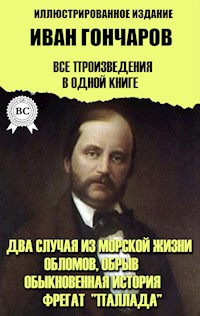

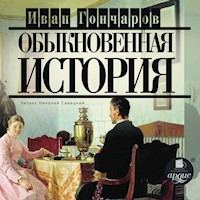










OBLOMOV
Published by
Books
Table of Contents
Introduction
Poised between the velvet gravity of comfort and the restlessness of a changing world, Oblomov traces how habits, privileges, and hopes entangle a kindly man until simple choices expand into moral crossroads for an entire society, asking whether gentleness without action can be innocence, whether energy without reflection can be virtue, and how a life cushioned by routine might resist, absorb, or be shattered by love, friendship, and duty as mid‑nineteenth‑century Russia confronts the pressures of modernization, bureaucratic tempo, and fading aristocratic ease, while language, memory, and idleness weave a quiet drama whose stakes prove both intimate and national.
Ivan Goncharov’s novel, first published in 1859, belongs to the great tradition of Russian realism, combining social satire with an exacting psychological portrait. Its primary stage is St. Petersburg, especially the cramped calm of a bachelor apartment whose stillness becomes emblematic, though country estates and urban promenades also enter the canvas. The book arose on the eve of reforms that would soon alter the empire’s social structure, and it registers that transitional climate without didacticism. Readers encounter a world of civil servants, landlords, and servants, where letters, visits, and rumors move as forcefully as decrees, and where inactivity itself becomes a narrative event.
The premise is disarmingly simple: Ilya Ilyich Oblomov, a gentle landowner living in St. Petersburg, postpones decisions large and small while the world presses at his door. A capable friend urges him toward practical life; a woman’s attention awakens the possibility of change; obligations from the provinces complicate his retreat. Goncharov’s narration moves with patient, lucid rhythms, balancing affectionate humor and sober scrutiny. Scenes unfold in long, textured set pieces—meals, conversations, errands—that feel at once comic and diagnostic. The tone is quietly ironic yet sympathetic, letting readers inhabit the comforts, evasions, and sudden clutches of anxiety that shape this oddly mesmerizing drift.
Much of the novel’s power lies in its meticulous attention to ordinary time: the lingering morning, the unhurried visit, the letter left unread. Goncharov uses a flexible omniscient voice that can widen to social panorama or narrow to the crease in a pillow, and he modulates irony so gently that judgment often arrives after laughter. Interior life surfaces not only through dialogue but through daydreams and recollections that suggest how upbringing shapes preference, fear, and inertia. Domestic spaces have moral weather; errands become parables; even minor characters illuminate systems of dependence. The result is a realist texture that feels persuasive without pedantry.
The book’s central themes gather around the costs and consolations of passivity. Oblomov’s gentleness exposes how kindness can coexist with avoidance, and how institutions built on ease—especially the estate economy—can cushion irresponsibility while also breeding anxiety. In counterpoint, the novel measures the drive of practicality and reform, suggesting both its promise and its blind spots. From these tensions arose a lasting cultural shorthand: the idea of oblomovshchina, a name for the habits of delay, dreaminess, and evasion that the story anatomizes. Yet Goncharov resists caricature, tracing a spectrum of motives—comfort, fear, memory, and fatigue—rather than condemning a single failing.
For contemporary readers, the novel resonates far beyond its century. It speaks to debates over productivity and rest, the seductions of comfort, the moral weight of attention, and the difficulty of sustained action amid distraction. It acknowledges how social structures can indulge idleness while penalizing it, and how self-knowledge does not automatically produce change. In an age of notifications, bureaucratic churn, and precarious ambition, Oblomov’s hesitation feels recognizably human rather than archaic. The book invites empathy without absolution, encouraging reflection on privilege, responsibility, and the value of slowness, while also testing whether slowness can harbor care instead of merely sheltering avoidance.
Approached with patience, Oblomov offers a quietly absorbing experience in which small gestures carry significant force and choices unfold not as spectacle but as pressure. The early chapters establish a tempo whose steadiness is deliberate; as friendships deepen and affection complicates routine, the moral stakes clarify without requiring melodrama. Readers attuned to its wit will find comedy that shades into pathos, and a critique grounded in sympathy rather than scorn. Without revealing outcomes, it is enough to say that the book leaves a lasting question: how should one balance tenderness with responsibility, and what kind of life, finally, deserves to be called awake?
Synopsis
Published in 1859, Ivan Goncharov’s Oblomov follows Ilya Ilyich Oblomov, a mild, well-born resident of St. Petersburg whose life is conducted largely from his sofa. He postpones letters, debts, and social calls, relying on his grumbling but loyal servant, Zakhar, to mediate with the world. The novel opens in a single languid day that reveals a temperament allergic to decision, yet haunted by unfulfilled promise. Through a tone that mingles comedy and melancholy, Goncharov frames the central tension: whether a gentle dreamer, cushioned by habit and privilege, can convert feeling into action in a society itself caught between old routines and impending change.
Pressing matters accumulate around Oblomov: a troubling report from his country estate requires decisions about management, a housing complication demands movement, and friends arrive to draw him into the season’s entertainments. Most leave amused or exasperated by his evasions. Only Andrei Shtoltz, a vigorous friend from youth with Russian and German roots, refuses to indulge the drift. Shtoltz recognizes Oblomov’s intelligence and kindness, yet sees how comfort has hardened into paralysis. He presses him to rise, dress, and engage, promising practical help and a plan. The encounters set two temperaments in motion, one energized by agency, the other soothed by passivity.
The novel pauses to reveal how such habits took root. In a celebrated dream sequence, Oblomov recalls childhood in Oblomovka, a generous, sleepy estate where days flowed without urgency and attentive adults shielded children from exertion. This portrait is affectionate yet critical: routines reward comfort over initiative, and obligations are endlessly postponed. From these early impressions emerges the condition the book would make famous, a generalized slackness that critics later labeled with the hero’s name. By tracing lethargy to a familial and social ethos rather than mere moral failure, Goncharov broadens the story into an inquiry about upbringing, class, and responsibility.
Shtoltz undertakes a campaign to shake Oblomov awake. He proposes regular tasks, clears small obstacles, and brings him into a circle where vitality seems natural. There Oblomov meets Olga Ilyinskaya, whose intelligence and discipline appeal to him as both example and promise. Encouraged by Shtoltz, he begins modest reforms: reading with purpose, walking outdoors, keeping appointments. Under Olga’s gaze, self-reproach turns into tentative aspiration, as if feeling could be trained into will. The narrative balances hope with fragility, showing how routines of idleness resist change even when desire for improvement is sincere and supported by capable, sympathetic companions.
Oblomov and Olga’s growing attachment deepens the novel’s examination of character and choice. Conversations, music, and shared reading suggest a future anchored in mutual cultivation. Yet each step toward commitment confronts the hero’s aversion to strain and complication. Practical issues about income and estate supervision sharpen the test, as do expectations of urban society. Goncharov traces the subtle tug-of-war between momentum and retreat: genuine affection spurs efforts to reform, while anxious self-protection slows them. The chapters keep outcomes open, emphasizing processes of change and the difficulty of sustaining resolve when habits promise immediate ease and ideals demand daily effort.
As pressures mount, another domestic arrangement offers Oblomov a refuge that is gentler, less exacting, and more materially managed by others. In a modest household presided over by a kindly widow, he finds meals, warmth, and uncritical care that soothe his anxieties. Financial matters tied to the estate and to city dealings, however, do not disappear, and acquaintances with mixed motives exploit his trust and reluctance to read the fine print. Shtoltz, observing the slide, argues for clearer decisions, while Olga confronts what she can and cannot change. The strands draw taut without resolving the novel’s central dilemma prematurely.
Oblomov endures as a humane study of passivity and purpose at a historical moment when Russia debated reform, duty, and the future of the gentry. By giving inertia psychological depth and social roots, Goncharov coined a lasting cultural shorthand without denying his characters complexity or dignity. The closing movements clarify the costs of comfort and the demands of agency while avoiding easy verdicts, leaving readers to weigh tenderness against necessity. Beyond its portrait of one man, the book prompts questions about how habits and institutions shape will, and why the desire to live well so often stalls before decisive action.
Historical Context
Oblomov by Ivan Goncharov appeared in 1859, in the St. Petersburg journal Otechestvennye Zapiski, with the celebrated chapter "Oblomov's Dream" earlier printed in 1849. The novel's milieu is the Russian Empire's capital in the 1840s-1850s, under the late reign of Nicholas I and the early reign of Alexander II. Key institutions frame its world: autocratic monarchy, legally enserfed peasantry (until 1861), and a hierarchical civil service regulated by the Table of Ranks. Educated landowners and officials circulate between provincial estates and rented Petersburg apartments, their routines governed by bureaucratic procedures, social calls, and the etiquette of an imperial city consciously modeled on European capitals.
Russia's landed gentry dominated provincial life, drawing income from serf labor through obligations known as barshchina (corvée) or obrok (quitrent). Many proprietors lived away from their estates, entrusting management to stewards, a practice that fostered misreporting, debt, and chronic inefficiency. The capital offered prestige but encouraged dependence on household servants and tradesmen. Urban professionals navigated a paperwork-heavy bureaucracy where advancement depended on rank, patronage, and length of service. This socioeconomic order shaped habits, expectations, and vulnerabilities among owners and officials, including reluctance to undertake enterprise and risk. The novel's domestic spaces and daily rhythms reflect this nexus of absentee ownership, dependence, and bureaucratic routine.
In the 1840s-1850s, Russia's educated society debated Westernizers versus Slavophiles: whether to adopt Western European institutions or cultivate distinctly Russian communal traditions. Thick journals such as Otechestvennye Zapiski and Sovremennik served as arenas for criticism, fiction, and polemic. Under Nicholas I, stringent censorship monitored such debates; the 1849 suppression of the Petrashevsky Circle, and the arrest of Fyodor Dostoevsky, signaled the limits of tolerated dissent. Yet the discussion persisted, shaping literary themes of national character, duty, and reform. Goncharov wrote within this journal culture, addressing readers habituated to seeing novels double as social diagnoses and contributions to ongoing public arguments.
The Crimean War (1853–1856) exposed administrative and military weaknesses, from logistics to command. Defeat damaged Russia's prestige and precipitated a reassessment of institutions. Alexander II, ascending in 1855, initiated discussions that culminated in the Emancipation Manifesto of 1861, with preparatory committees working through 1858–1860. Anticipation of reform permeated educated circles, as nobles weighed changing revenue structures and obligations, and officials considered new legal and local administrative frameworks. The novel's pre-emancipation world captures this threshold moment: traditional hierarchies remain intact, yet conversations about modernization, responsibility, and national renewal increasingly filter into salons, offices, and printed debates.
Russian prose of the era moved toward realism, depicting everyday life and social types. Earlier figures—Pushkin's Eugene Onegin and Lermontov's Pechorin—had shaped the "superfluous man" motif, refined in mid-century works by Turgenev and others. Goncharov developed a related social diagnosis that critics quickly named "oblomovshchina" (Oblomovism). Nikolai Dobrolyubov's 1859 essay "What Is Oblomovism?" in Sovremennik popularized the term, reading the novel as an indictment of a class nurtured by serfdom and habit. Such criticism positioned the book alongside debates about personal energy, civic usefulness, and the capacity of the gentry to adapt to a modernizing state and society.
St. Petersburg itself shaped behavior. As a planned imperial capital on the Neva, it concentrated ministries, courts, and academies, and fostered a culture of rank, visiting, and petitioning. Furnished rooms, boarding houses, and service trades structured daily life for unmarried officials and rent-paying gentry. The city's multiethnic milieu included longstanding German communities, Baltic administrators, and foreign artisans, visible in schools, businesses, and clubs. Contemporary discourse often contrasted perceived German diligence with the Russian nobility's leisurely ethos, a cliché echoed in journalism and satire. Such contrasts, however caricatured, fed arguments about education, discipline, and the habits required for economic and administrative reform.
Mid-century fiction reached readers primarily through serialized publication in "thick journals," which mixed literature with criticism, travelogues, and policy commentary. Authors wrote with periodical deadlines and an audience accustomed to discussing chapters as they appeared. Editors like Nikolai Nekrasov at Sovremennik and staff at Otechestvennye Zapiski curated debates about serfdom, the family, and public service. Censorship still vetted proofs, but Alexander II's early reign modestly eased constraints. This infrastructure mattered for reception: essays, letters, and reviews quickly framed new novels as case studies in national life, encouraging readers to see characters as embodiments of social tendencies rather than mere individuals.
Against this background, Oblomov functions as a mirror to a society suspended between inherited privilege and impending change. It depicts routines and attitudes formed under serfdom and the Table of Ranks, while allowing contemporary conversations about reform, education, and usefulness to resonate through characters' choices and settings. Without relying on sensational events, the narrative maintains focus on everyday habits—letters, visits, accounts—that accumulate historical meaning. Its critique remains specific to the pre-emancipation gentry yet broadly legible as a meditation on institutional inertia. The work's enduring relevance stems from that precise engagement with Russia's mid-nineteenth-century structures and public discourse.
OBLOMOV
PART I
I
One morning, in a flat in one of the great buildings in Gorokliovaia Street[1], 1 the population of which was sufficient to constitute that of provincial town, there was lying in bed a gentleman named Ilya Ilyitch Oblomov. He was a fellow of a little over thirty, of medium height, and of pleasant exterior. Unfortunately, in his dark-grey eyes there was an absence of any definite idea, and in his other features a total lack of concentration. Suddenly a thought would wander across his face with the freedom of a bird, flutter for a moment in his eyes, settle on his half-opened lips, and remain momentarily lurking in the lines of his forehead. Then it would disappear, and once more his face would glow with a radiant insouciance[2] which extended even to his attitude and the folds of his night-robe. At other times his glance would darken as with weariness or ennui[3]. Yet neither the one nor the other expression could altogether banish from his countenance that gentleness which was the ruling, the fundamental, characteristic, not only of his features, but also of the spirit it which lay beneath them. That spirit shone in his eyes, in his smile, and in his every movement of hand and head[2q]. On glancing casually at Oblomov a cold, a superficially observant person would have said, “Evidently he is good-natured, but a simpleton;” whereas a person of greater penetration and sympathy than the first would have prolonged his glance, and then gone on his way thoughtfully, and with a smile as though he were pleased with something.
Oblomov’s face was neither reddy nor dull nor pale, but of an indefinite hue. At all events, that was the impression which it gave—possibly because, through insufficiency of exercise, or through want of fresh air, or through a lack of both, he was wrinkled beyond his years. In general, to judge from the extreme whiteness of his bare neck, his small, puffy hands, and his soft shoulders, one would conclude that he possessed an effeminate body. Even when excited, his actions were governed by an unvarying gentleness, added to a lassitude that was not devoid of a certain peculiar grace. On the other hand, should depression of spirits show itself in his face, His glance would grow dull, and his brow furrowed, as doubt, despondency, and apprehension fell to contending with one another. Yet this crisis of emotion seldom crystallized into the form of a definite idea—still less into that of a fixed resolve. Almost always such emotion evaporated in a sigh, and shaded off into a sort of apathetic lethargy[5q].
Oblomov’s indoor costume corresponded exactly with the quiet outlines of his face and the effeminacy of his form. The costume in question consisted of a dressing-gown of some Persian material—a real Eastern dressing-gown—a garment that was devoid both of tassels and velvet facings and a waist, yet so roomy that Oblomov might have wrapped himself in it once or twice over. Also, in accordance with the immutable custom of Asia, its sleeves widened steadily from knuckles to shoulder. True, it was a dressing-gown which had lost its pristine freshness, and had, in places, exchanged its natural, original sheen for one acquired by hard wear; yet still it retained both the clarity of its Oriental colouring and the soundness of its texture. In Oblomov’s eyes It was a garment possessed of a myriad invaluable qualities, for it was so soft and pliable that, when wearing it, the body was unaware of its presence, and, like an obedient slave, it answered even to the slightest movement. Neither waistcoat nor cravat did Oblomov wear when indoors, since he loved freedom and space[3q]. For the same reason his slippers were long, soft, and broad, to the end that, whenever he lowered his legs from the bed to the floor without looking at what he was doing, his feet might fit into the slippers at once.
With Oblomov, lying in bed was neither a necessity (as in the case of an invalid or of a man who stands badly in need of sleep ) nor an accident (as in the case of a man who is feeling worn out) nor a gratification (as in the case of a man who is purely lazy). Rather, it represented his normal condition[1q]. Whenever he was at home—and almost always he was at home—he would spend his time in lying on his back[4q]. Likewise he used but the one room—which was combined to serve both as bedroom, as study, and as reception-room—in which we have just discovered him. True, two other rooms lay at his disposal, but seldom did he look into them save on mornings (which did not comprise by any means every morning) when his old valet happened to be sweeping out the study. The furniture in them stood perennially covered over, and never were the blinds drawn up.
At first sight the room in which Oblomov was lying was a well-fitted one. In it there stood a writing-table of redwood, a couple of sofas, upholstered in some silken material, and a handsome screen that was embroidered with birds and fruits unknown to Nature.
Also the room contained silken curtains, a few mats, some pictures, bronzes, and pieces of china, and a multitude of other pretty trifles. Yet even the most cursory glance from the experienced eye of a man of taste would have detected no more than a tendency to observe les convenances while escaping their actual observance. Without doubt that was all that Oblomov had thought of when furnishing his study. Taste of a really refined nature would never have remained satisfied with such ponderous, ungainly redwood chairs, with such rickety whatnots. Moreover, the back of one of the sofas had sagged, and, here and there, the wood had come away from the glue. Much the same thing was to be seen in the case of the pictures, the vases, and certain other trifles of the apartment. Nevertheless, its master was accustomed to regard its appurtenances with the cold, detached eye of one who would ask, “Who has dared to bring this stuff here?” The same indifference on his part, added to, perhaps, an even greater indifference on the part of his servant, Zakhar[5], caused the study, when contemplated with attention, to strike the beholder with an impression of all-prevailing carelessness and neglect. On the walls and around the pictures there hung cobwebs coated with dust; the mirrors, instead of reflecting, would more usefully have served as tablets for recording memoranda; every mat was freely spotted with stains; on the sofa there lay a forgotten towel, and on the table (as on most mornings) a plate, a salt-cellar, a half-eaten crust of bread, and some scattered crumbs—all of which had failed to be cleared away after last night’s supper. Indeed, were it not for the plate, for a recently smoked pipe that was propped against the bed, and for the recumbent form of Oblomov himself, one might have imagined that the place contained not a single living soul, so dusty and discoloured did everything look, and so lacking were any active traces of the presence of a human being. True, on the whatnots there were two or three open books, while a newspaper was tossing about, and the bureau bore on its top an inkstand and a few pens; but the pages at which the books were lying open were covered with dust and beginning to turn yellow (thus proving that they had long been tossed aside), the date of the newspaper belonged to the previous year, and from the inkstand, whenever a pen happened to be dipped therein, there arose, with a frightened buzz, only a derelict fly.
On this particular morning Oblomov had (contrary to his usual custom) awakened at the early hour of eight. Somehow he looked perturbed; anxiety, regret, and vexation kept chasing one another across his features. Evidently he had fallen a prey to some inward struggle, and had not yet been able to summon his wits to the rescue. The fact of the matter was that, overnight, he had received from the starosta[4]2 of his country estate an exceedingly unpleasant letter. We all know what disagreeable things a starosta can say in his letters—how he can tell of bad harvests, of arrears of debt, of diminished incomes, and so forth; and though this particular official had been inditing precisely similar epistles during the past three years, his latest communication had affected its recipient as powerfully as though Oblomov had received an unlooked-for blow. Yet, to do Oblomov justice, he had always bestowed a certain care upon his affairs. Indeed, no sooner had he received the starosta’s first disturbing letter (he had done so three years ago) than he had set about devising a plan for changing and improving the administration of his property. Yet to this day the plan in question remained not fully thought out, although long ago he had recognized the necessity of doing something actually decisive.
Consequently, on awakening, he resolved to rise, to perform his ablutions, and his tea consumed, to consider matters, to jot down a few notes, and, in general, to tackle the affair properly. Yet for another halfhour he lay prone under the torture of this resolve; until eventually he decided that such tackling could best be done after tea, and that, as usual, he would drink that tea in bed—the more so since a recumbent position could not prove a hindrance to thought.
Therefore he did as he had decided; and when the tea had been consumed he raised himself upon his elbow and arrived within an ace of getting out of bed. In fact, glancing at his slippers, he even began to extend a foot in their direction, but presently withdrew it.
Half-past ten struck, and Oblomov gave himself a shake. “What is the matter?” he said vexedly. “In all conscience ’tis time that I were doing something! Would I could make up my mind to—to———” He broke off with a shout of “Zakhar!” whereupon there entered an elderly man in a grey suit and brass buttons—a man who sported beneath a perfectly bald pate a pair of long, bushy, grizzled whiskers that would have sufficed to fit out three ordinary men with beards. His clothes, it is true, were cut according to a country pattern, but he cherished them as a faint reminder of his former livery, as the one surviving token of the dignity of the house of Oblomov. The house of Oblomov was one which had once been wealthy and distinguished, but which, of late years, had undergone impoverishment and diminution, until finally it had become lost among a crowd of noble houses of more recent creation.
For a few moments Oblomov remained too plunged in thought to notice Zakhar’s presence; but at length the valet coughed.
“What do you want?” Oblomov inquired.
“You called me just now, barin[6]?” 3
“I called you, you say? Well, I cannot remember why I did so. Return to your room until I have remembered.”
Zakliar retired, and Oblomov spent another quarter of an hour in thinking over the accursed letter.
“I have lain here long enough,” at last he said to himself. “Really, I must rise.... But suppose I were to read the letter through carefully and then to rise? Zakhar!”
Zakhar re-entered, and Oblomov straightway sank into a reverie. For a minute or two the valet stood eyeing his master with covert resentment. Then he moved towards the door.
“Why are you going away?” Oblomov asked suddenly.
“Because, barin, you have nothing to say to me. Why should I stand here for nothing?”
“What? Have your legs become so shrunken that you cannot stand for a moment or two? I am worried about something, so you must wait. You have just been lying down in your room, haven’t you? Please search for the letter which arrived from the starosta last night. What have you done with it?”
“What letter? I have seen no letter,” asserted Zakhar.
“But you took it from the postman yourself?”
“Maybe I did, but how am I to know where you have since placed it?” The valet fussed about among the papers and other things on the table.
“You never know anything,” remarked his master. “Look in that basket there. Or possibly the letter has fallen behind the sofa? By the way, the back of that sofa has not yet been mended. Tell the joiner to come at once. It was you that broke the thing, yet you never give it a thought!”
“I did not break it,” retorted Zakhar. “It broke of itself. It couldn’t have lasted for ever. It was bound to crack some day.” This was a point which Oblomov did not care to contest. “Have you found the letter yet?” he asked.
“Yes—several letters.”
“But they are not what I want.”
“I can see no others,” asserted Zakhar.
“Very well,” was Oblomov’s impatient reply. “I will get up and search for the letter myself.”
Zakhar retired to his room again, but had scarcely rested his hands against his pallet before stretching himself out, when once more there came a peremptory shout of “Zakhar! Zakhar!”
“Good Lord!” grumbled the valet as a third time he made for the study. “Why should I be tormented in this fashion? I would rather be dead!”
“My handkerchief!” cried Oblomov. “Yes, and very quickly, too! You might have guessed that that is what I am wanting.”
Zakhar displayed no particular surprise or offence at this reproachful command. Probably he thought both the command and the reproach natural.
“Who knows where the handkerchief is?” he muttered as he made a tour of the room and felt each chair (although he could not but have perceived that on them there was nothing whatsoever lying). “You lose everything,” he added, opening the door into the parlour in order to sec whether the handkerchief might not be lurking there.
“Where are you going?” exclaimed Oblomov. “’Tis here you must search. I have not been into those other rooms since the year before last. Be quick, will you?”




