


4,79 €
Mehr erfahren.
- Herausgeber: Clink Street Publishing
- Kategorie: Krimi
- Sprache: Englisch
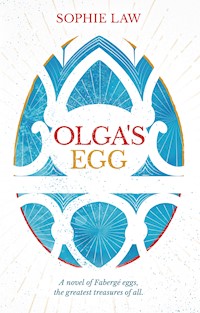
When Fabergé specialist Assia Wynfield learns of the discovery of a long-lost Fabergé egg made for the Grand Duchess Olga Nikolaevna, daughter of the last Tsar of Russia, she appears to be the only person with misgivings. On travelling to St. Petersburg to see the egg, Assia moves among Russia's new rich but finds herself pulled back into a family past she would rather forget. With news that a friend is missing, Assia starts to dig deeper. But does she really want the answers to the questions she is asking? Set in today's glamorous world of Russian art with glimpses into the lives of the last Romanovs as their empire crumbled in the wake of the Russian Revolution, Olga's Egg is an enthralling tale of love, family secrets and the artistic treasures that conceal them.
Das E-Book können Sie in Legimi-Apps oder einer beliebigen App lesen, die das folgende Format unterstützen:
Veröffentlichungsjahr: 2018
Ähnliche














Olga’s Egg
Sophie Law
This is a work of fiction. Names, Characters, businesses, places, events and incidents are either products of the author’s imagination or used in a fictitious manner. Any resemblance to actual persons, living or dead, or actual events is purely coincidental.
for Henrietta
When you touch or hold a Fabergé object, you are in contact with something, coming down to you, not only from the era of the Tsars, but of an ancestry far more ancient; for it is typical of all the Imperial courts there have ever been.
Sacheverell Sitwell
A note on Russian Names
Russian names consist of a first name, patronymic and surname; for example, from War and Peace, Nataliya Ilyinichna (daughter of Ilya) Rostova, sister of Nikolai Ilyich (son of Ilya) Rostov. The majority of Russian names have a diminutive, mostly formed with a range of contractions and suffixes, which can be varied according to familiarity, hence ‘Tanya’ for ‘Tatiana’ with ‘Tanyusha’ being one of the more familiar variations. Other examples are ‘Olya’ for ‘Olga,’ ‘Vika’ for ‘Viktoria,’ ‘Alyosha’ for ‘Alexei’ and ‘Kostya’ for ‘Konstantin.’
Contents
Prologue
Oxford, 1929
Set them, Lord, in bright places of light, in places of green pasture, in places of rest whence all pain, sorrow and sighing have fled away, and where the light of Thy countenance shineth and gladeneth forever all Thy saints.
Grant unto them Thy Kingdom and participation in Thine ineffable and eternal blessings, and to delight in Thine unending and blessed life.
For Thou art the Life, the Resurrection and the Repose of Thy servants who have fallen asleep, O Christ our God, and we render glory to Thee, with Thine Eternal Father, and with Thine All-holy, Gracious and Life-giving Spirit, now and forever and unto ages of ages.
Amen
Father Alexei’s voice was not deep but it was strong and sure. Finishing the prayer, he raised his head to behold the icon of the Vladimir Mother of God before describing the Sign of the Cross, sinking to his knees and prostrating himself so that his knuckles shone white as he clenched his fists on the cold floor. He stayed there for longer than necessary before getting up and moving towards her image. The flames of the candles flickered as he approached and her face was dappled with the light, her eyes alive with tears. He closed his eyes and kissed her.
I
A black cab ran through the blue neon shimmer of the Curzon sign which floated in a shallow puddle on the road. A London sound if ever there was one, thought Assia. There was something very soothing about a city that had just been rained on; heavy umbrellas shaken down, tyres spraying through puddles, sodden coats peeled off in warm, steamy halls. That feeling you get when you have finished crying.
As she shuffled into the cinema lobby next to Ben’s damp woollen shoulder, Assia watched as rich Russian after rich Russian rocked up and rolled out of Porsches, Bentleys and any other Mayfair car you could think of. This was an event to which they brought their wives, not their girlfriends. Assia had begun to respect the men who had retained their first wives but kept mistresses openly; it showed a kind of reverence for the women who had borne their children all those years ago. Russians married when they were very young and often oligarchs-in-the-making had had children in wedlock by the time they were twenty. Then they did a front-wheel skid into money, and everything changed.
‘This place is quite extraordinary, n’est-ce pas?’ Assia cast her eyes around the lobby of the Curzon Mayfair before taking a sip from a squat glass of icy sludge layered with exotic leaves, the sort of thing that was offered by expensive caterers desperate to do something different. ‘Different’ was essential because the people who made it their job to cater to the very rich had realised that when you serve expensive champagne to Russians at drinks parties they slate it because being rude about what you drink shows off your sophisticated palate. Assia had become very used to drinking the finest champagne while the Russian guests complained: This champagne is disgusting, I can’t drink this filth! How can you drink such dish water?
Ben nodded in agreement. ‘Hmm, yeah. Very 70s, very retro. Quite a time capsule.’ He paused and crunched a mouthful of ice while surveying the guests as they arrived. ‘Normally you can rely on the Russians to look pretty vintage fashion-wise but this lot seems to have come on. In fact, you could say they’re giving you London girls a run for your money.’
‘You really don’t get out much, do you?’ said Assia. ‘Rich Russian girls, mostly second generation oligarchy, have been elbowing their way to the front of the fashion pack for a while now.’ Assia lowered her voice. ‘It’s the girls who are new to money who slip up: the Oligarch Girlfriends or Second Wives who take the Versace route, thinking that you can’t look like a hooker if your dress is expensive.’ With her eyes she steered Ben’s gaze to a tall woman with a high ponytail of long peroxided blonde hair. Wearing a thigh-length white snakeskin coat with gold studs around the collar, entire stretches of long leg emerged where the coat ended prompting doubt as to whether she was wearing anything underneath. She was standing next to a dark bull of a man who looked as surly as she did.
‘That coat is probably fresh from the Versace Autumn/Winter 2016 collection and I bet it cost thousands, but she still looks like a tart from Volgograd. You can take the girl out of… and all that.’
‘You might want to be careful what you say, young lady,’ said Ben smirking and rubbing the sleeve of her coat between his fingers. ‘From looking at your coat… hmm… There’s got to be a drop of Russian blood there. In fact, you’ve got to be half-Russian, am I right? Am I right? This coat is just that little bit too sexy on you.’
‘Shh, for goodness’s sake!’ Assia swatted Ben’s hand away and avoided his gaze. ‘I would say something foul to you in Russian, but I don’t want to offend my fellow countrymen.’ She laughed and stirred the melting pile of ice in her glass with the stubby straw. She hadn’t admitted it to herself, but she didn’t like it when Ben tried to seduce her, even jokingly. He turned into a man she didn’t recognise and she felt tricked in some way, as though all he had ever wanted was to get her into bed. Her eyes wandered over his shoulder and she looked suddenly preoccupied. Ben followed her gaze.
‘What is it?’
‘Tanya’s here with some man.’ Assia sighed. ‘Great. Just what I feel like on a Friday night. Get ready for the Tanya Show.’
A beautiful woman with dark shoulder-length hair and fierce eyes came towards them followed by a red-headed man in a pinstripe suit. The man smiled at Assia when he saw her.
‘My sister!’ Tanya pointed at Assia while beaming at her companion expectantly. Her smile split the deep red of her full lips and her eyes wrinkled beguilingly.
‘How do you do, I’m John.’ The man with red hair stepped forward and grasped Assia’s hand warmly. ‘It’s quite incredible meeting Tanya’s doppelganger. I mean, I understand the science of it but it never fails to be utterly surprising to see identical twins. Am I allowed to say it? You are just like her!’
‘Real twins’ said Tanya looking serious, her dark brow furrowed. ‘Not those fertility-clinic multiple-birth type twins.’
‘Well, quite’ said Assia, nodding with mock concern. ‘It’s lovely to meet you. And this is Ben.’ Assia ushered Ben forward and watched as the men shook hands and muttered the platitudes of greeting. She had no idea where her sister had found him, but she liked John immediately. It was hard to put her finger on it but something about him seemed warm and authentic.
‘Little sister, how are you?’ Tanya opened her arms extravagantly, sweeping her fur-trimmed pashmina around her twin. Assia allowed herself to be embraced. It felt strange hugging like this in public; a display of affection for everyone except her. Assia knew that Tanya was just playing to the crowd, to John specifically, showing him how much she loved her darling, sweet identical sister – aren’t we a scream? – and yet a part of her longed to please Tanya again and so she went along with the display of sisterly love.
‘Yes, good, good, thanks.’ Assia wriggled out of the pashmina and folded it back onto Tanya’s shoulder. ‘What are you doing here? We don’t normally see you in the halls of art. Has its siren call seduced you at last?’
‘Hang on, little sister? You just called Assia your little sister. How can that be? Are you really twins?’ John caught Assia’s eye as he asked the question and she grinned at the faux inquisition intended to wind up Tanya.
‘Yes, John,’ said Tanya, knowing she was being played, ‘Assia was born six minutes after me and therefore she is my younger sister.’ She addressed John as a headmistress would a naughty child and he pretended to look chastened.
Tanya continued archly, ‘And to answer your question, Assia, we are here because one of John’s friends is a producer of the film we’re all going to see and obviously I am interested in Fabergé because of Mama. Apparently they are showing a clip of her.’
Assia felt a flare of acid blaze in her stomach. Her cheeks flushed. She was sure that Tanya was studying her, looking for a reaction and her cheeks throbbed even more in defiance. Turning to John she said casually ‘Our mother is in the film?’
John appeared to dip his head in a reverent little bow. ‘Yes, my friend Sam is very much in awe of your mother and he wanted to feature her in the film. He just loved learning about Fabergé and said he devoured her books while he was researching. In fact, he was quite stunned when I said I was stepping out with one of Olga Wynfield’s daughters!’
At this Tanya threw her head back and laughed loudly while John continued. ‘I understand that you work with Fabergé, like your mother did?’ Again, he seemed to bow to Assia and she wondered whether he knew what had happened and was trying to be sympathetic towards the vulnerable twin who had ruined everything.
‘Yes, I do,’ she said and smiled back into his eyes. ‘I consult for a few clients on the acquisition of Fabergé pieces and I curate their collections. I spend half my life on a plane.’
Ben stepped in. ‘Assia is also editing Olga’s Encyclopaedia of Fabergé Eggs for re-publication, aren’t you?’ He touched her arm lightly and moved next to her protectively.
‘Are you? I didn’t know that! Why didn’t you tell me?’ Tanya snapped shut her Bottega Veneta woven leather clutch. The move was strangely aggressive.
‘Thames & Hudson want to update it,’ said Assia matter-of-factly. ‘Obviously there are some recent discoveries to add and new information which has been uncovered since Mama wrote it in 1991. It’s been twenty-five years after all!’
As they followed the drift of people towards the screen doors, Tanya said to Assia under her breath ‘You should have told me that you were editing Mama’s book. I have a right to know!’ Assia looked at Tanya sharply and was about to speak before she was shunted away from her sister by the stop-start movement of the crowd. She knew Tanya wanted to cause a scene but couldn’t and she drew some small satisfaction from this as her sister pursed her beautiful lips and glared at her when she thought John wasn’t looking.
II
The door clanged shut and silenced the whine of the freezing wind. It was as cold inside the building as it was outside, but Konstantin Stepanyan didn’t notice. He knew what a Russian winter was, the fight it demanded, and he had no time for it anymore; no time for the fatty food which his sister nagged him to eat to ward off the cold and no time for the snow which had arrived for its long stay in the city. Standing on the steamy trolleybus on the way there he had thought about all the struggles today’s generation had ahead of them and he pitied them. Russia felt like a new beast now. The status quo had shifted since Communism fell and all the old paths in the snow had gone. Konstantin would never have called himself a die-hard Communist - he was anything but - and yet he couldn’t help but feel that the better devil was the one you knew.
He made his way towards the lift which stank of urine and pressed the stiff button with a well-insulated finger. A tinny noise approached and hovered behind him, accompanied by the sound of chewing. Konstantin turned and saw a youth with shiny black headphones playing with his phone. The boy didn’t look up at him but carried on swiping at the screen of his device. Konstantin hoped that he was good to his grandparents and listened to them. They would tell him that young people spent too much time on their phones and that when they were young they had read or discussed art and ideas with their friends as a way of passing the time. Our world was materially poor but rich in thought, they would say. You young people disappear down a black hole when you’re playing with your phones. You find it impossible to concentrate on anything for more than a minute. How will you ever learn anything?
The lift arrived with a muffled thud and only one of the stiff, metal doors drew back as the other was jammed shut. Konstantin and the youth stepped in and jabbed the button pad on the left to request their floors. Konstantin noted that the boy was going two floors above him and that he would have to hear the incessant bass beat which leaked from his headphones for the whole of his journey up to the eighth floor. When the lift stopped abruptly at his floor, Konstantin got out and turned left down the concrete corridor, wondering at the source of the acrid smell. He was just a few doors away from the door to his daughter’s hallway when he realised that he could hear the sound of the youth’s music behind him. He turned around, baffled because he thought the boy was travelling two floors further up, and saw him ring the bell of an apartment a few doors away and wait for an answer. Pausing a second, Konstantin concluded the boy must have pressed the wrong lift button and carried on to his daughter’s door. She had opened the door to her hallway and was crouching down arranging a series of little shoes and boots on the brown carpet.
‘Vika.’ He bent a little to touch her shoulder and she stood up immediately and hugged him.
‘Pap. Oy, spasibo, Papochka.’ She spoke with her face pressed into his broad chest and then drew back, sniffing loudly. She wiped the tears from her cheek, shut the hallway door and led him into the apartment by his hand. She helped her father take his large shearling coat off and hung it by the door.
‘Alyosh, Papa’s here,’ she said calmly, poking her face around the door frame of the living room. A thin man sprang up off the sofa and embraced Konstantin.
‘How can I thank you, Kostya?’
‘You don’t need to say anything, Alyosh.’ Konstantin patted his son-in-law on the back and smiled softly at him before moving to the corner of the room where a little boy was sitting, propped up by a cushion. Konstantin lowered his large frame slowly so that he was resting on his knees and looked into the face of the blond child who was inspecting a teddy bear.
‘Grandpa’s here, Mishenka. And I’ve brought something for you.’ He plunged his large hand into his pocket and pulled out a small gold sphere. The gold was matt and smooth and Konstantin opened his grandson’s palm and placed the sphere in it. The boy curled his fingers over it and looked up at his grandfather’s grey face. He looked down at his hand again and his lips rounded with concentration, a stream of dribble flowing out of the corner of his mouth.
‘Look inside it, Mishenka.’ Konstantin delicately unfurled his grandson’s fingers from around the yellow orb and, cradling his small hands, helped him to pull its two halves apart. As he did so, a little golden hen with pink eyes rolled out and fell onto the floor on its side. Misha made a gleeful noise when he saw the hen and stretched his arm out to retrieve it. He strained unsuccessfully and his little face reddened with the effort.
‘Careful, Mishenka,’ said his mother. She had appeared next to Konstantin and handed him a glass of amber-coloured tea before picking up the gold hen. ‘Pap, what is this? It’s beautiful.’
‘Don’t worry, he won’t break it. It’s a present for the boy. I wanted him to have something that will last, something that will make him think of me when he is older.’
‘You’ve already given him enough. Did I tell you that we have a date now? – I can’t believe it. I had a Skype conversation with Dr Macfarlane and we will take Misha to see him in Boston next month for the pre-surgery assessment. Then, all being well, they will do the operation three days later.’ Vika stroked her son’s left foot and gave it a squeeze.
‘That is marvellous, darling. I am so pleased.’ Konstantin got to his feet and leant down to pick up Misha. He lifted the small boy up with ease and Misha, still clutching his little gold hen, giggled as his grandfather whisked him about the room in his arms as though dancing a waltz.
‘Thanks to you, Kostya, he may walk one day.’ Alexei didn’t look at anyone as he said this. He was standing by the window of the living room, gazing out at the stretch of brown-streaked snow outside their block of flats. A little child in a psychedelic green ski-jacket was running around holding snowballs, flitting to and from its mother as they walked the frosty paths across the vast complex of hive-like buildings.
‘Don’t say that, Alyosh. You’ll tempt fate.’ Vika stood up and went to the small table in front of the bookshelf where a number of small icons were laid out on a square of pierced white cotton. She blew dust off the wooden icons and straightened their already neat arrangement.
‘Fate has nothing to do with it’ said Alexei, turning from the window and addressing Vika sharply. ‘If Dr Macfarlane can help our son walk, it will have nothing to do with whether we uttered this wish or not. Why is it always this doom-laden outlook?’ He crossed his slim arms and went to sit on the sofa.
Vika glared at Alexei and went over to her father and took Misha from him. She stroked the baby’s soft white cheeks and kissed his nose while Misha played with her hair. Konstantin felt suddenly that he had to leave, that he couldn’t stay a moment longer with this little family that he loved so much. He had done what he came to do and lingering would do no good.
‘You are exhausted, my sweet, I can see that,’ said Konstantin. ‘Worrying wears you down but have faith. Have faith in this marvellous American doctor and let him deal with your worries.’ He touched Vika’s cheek with two fingers and kissed her before kissing the top of Misha’s head. ‘I must go, I am afraid.’
‘So quickly? You have only just arrived! Let me give you something to eat, Papa, you are looking thin.’
‘There’s no chance of me starving when I live with your aunt, believe me! No, I must go, darling, I have to meet someone. I just wanted to see you and Misha and give him his present. Please look after yourselves. Alyosh, goodbye.’ The urge to absent himself was so strong that Konstantin grabbed his coat and started putting it on hurriedly while making his way to the door of the apartment. Vika followed him and stood in the little hallway with Misha on her hip, watching her father anxiously as he laced up his boots.
‘Pap, are you OK? You seem bothered by something.’
Konstantin’s large but deft fingers tied a small knot in his thick laces. He avoided Vika’s worried gaze and fumbled in his pocket for his phone. Eventually he met her eyes which searched his face hurriedly for clues.
‘Is it your health? You don’t have to hide anything from me just because of Misha. I can cope with bad news. I’m used to it.’ She smiled wryly and shifted Misha up her hip.
The worried expression on his daughter’s face made Konstantin temper his swift exit. Vika’s pale skin and the heavy bags under her eyes wounded him and he longed to carry her load for her. He knew that no amount of money would ever stop her worrying about Misha but he wanted to give her hope. Hope was everything. He wanted a new horizon to appear for her and the boy, to give her a reason to get out of bed and go and lift her little disabled son from his cot and tell him that everything was going to be alright.
‘My darling, I didn’t mean to alarm you. I am absolutely fine and nothing’s wrong. I just need to be somewhere and I’m late.’ He held her forearm firmly and pulled her towards him gently, pressing her head onto his chest with his other arm. He stroked her hair and repeated his prayer, knowing that she would be listening to his voice reverberating through his chest as she had done when she was a little girl.
‘Lord Jesus Christ, Son of God, have mercy on me, a sinner.’
He said it three times and then Vika said it with him. Misha looked at them both enquiringly and his bottom lip began to protrude before his face crumpled and large tears fell quickly down his cheeks. Konstantin and Vika laughed at the sorry sight and stopped the recitation.
‘Poor baby, he doesn’t like prayers yet, do you, munchkin?’ Vika hugged him tightly and swayed from side to side to soothe him. ‘I love you, Pap. Please don’t rush in this weather. The ice is not kind.’
‘I know, my love, I know. I am careful, I promise. Take care of yourself too, and the babe. Goodbye.’ He kissed the air and nodded the kisses towards them while pulling the door closed. He stopped in the corridor outside and breathed deeply, hunching his shoulders to prepare for the cold. He walked towards the lift, in his mind’s eye picturing Vika talking to the surgeon and hugging him with gratitude. She would be watching Misha in his little hospital bed and crying joyfully as he wiggled his toes. American nurses would be crowding round the little boy and giving him lots of toys and wholesome food.
He had climbed into the thought so completely that he didn’t look back when the tinny beat from the shiny black headphones positioned itself behind him.
III
The veil of blue light over the walls seemed to pulse and then dimmed. Gradually, people stopped talking and only the sound of icy slosh being tipped up and drained from the bottom of glasses could be heard. The orangey-red curtains which hid the screen were drawn back with a click and an electric hum to reveal the title of the film, ‘Fabergé: Revolution and Romance,’ on a black background above the spiky white signatures of the people from the Board of Film Classification. The title page seemed to swim on the screen for a long time and people started turning round in their seats and staring up at the white light of the projector box as though something had gone wrong.
Suddenly a cymbal clashed. The screen was filled with pinkish grey grains which began to get smaller and smaller and rush away before it emerged that the camera was zooming out from what at first looked like a mountain but turned out to be the Thunder Stone, the colossal granite base of Falconet’s monumental bronze statue of Peter the Great in St Petersburg. Snow lay in the grooves of the rock and the tsar, against a bright blue sky and atop a rearing horse, surveyed the world from the edge of a vast and treacherous mountain top. As the camera continued to stream backwards, the primrose yellow walls and white Corinthian columns of the Admiralty rose up behind Peter who, for a split second, appeared to mount the building as perspective threw it under the hooves of his horse. The questing, wintery notes of Tchaikovsky’s Symphony No. 1 trickled in to accompany aerial views of St Petersburg in all its snow-draped glory. Gradually getting louder and louder, a rich male voice reciting in Russian slid under the music as the camera studied views of the Neva and the palaces that sat on her banks. Assia recognised the insistent iambic pulse of the Introduction to Pushkin’s Bronze Horseman, and noiselessly she chimed in, whispering the lines with the narrator.
In the dim light Ben turned to study her face when he saw her mouth moving out of the corner of his eye and he smiled as he realised that she was joining in. She was entirely at home in this lost world of pre-Revolutionary romance and fantasy, he concluded. Watching her face illuminated by the bright light of the million snowy pixels on the screen, he saw her as a creature distinctly separate from him. All he had ever done was study her and take his cues accordingly. She had never moved in time with him, but then, he had never asked her to. Their whole relationship had been sculpted around the fact that she was going to fall and he was going to catch her.
City of nights, your crystal dusk
Moonless nights, still, clear and bright …
An English voice was translating Pushkin’s verse and extolling the virtues of Peter’s great city while the audience was shown views of the Neva and her many bridges beneath a sky heavy with milky light. Assia knew St Petersburg well and had told Ben about the White Nights in June when the sun never dips far below the horizon and the coalescing dusk is as dark as it gets. Ben had thought it sounded like an insomniac’s nightmare but he had come to realise there was so much about Russia, and Assia, which he didn’t understand.
‘Only a city like St Petersburg could have given birth to a jeweller like Carl Fabergé,’ began the narrator who had a richly timbred voice and was probably a famous actor. ‘A city of the impossible: a northern Venice built on a Finnish swamp. A city which looked to the West but was founded by Russian ingenuity and determination and built on the backs of Russian peasants: a city of contradictions.’
Suddenly Fabergé egg after Fabergé egg appeared on the screen, the image of each one appearing quickly on top of the other so that only glimpses of gold, diamonds and enamel could be seen. It was like looking through a kaleidoscope: at that moment when the brain begins to decipher the snowflake patterns, the picture changes again and moves just outside comprehension. The knowing voice continued, ‘The Easter eggs of Carl Fabergé represent the opulence, beauty and inevitable tragedy of Tsardom in miniature form. Epitomising the art and tradition of Russia in many-faceted ways, the eggs symbolise a time and an age at its peak, on the verge of combustion. No other century could have produced the eggs, and none shall be able to produce them again. Considered to be some of the most valuable works of art on earth, their story began with a disgruntled Tsarina and a small golden hen.’
The film took its audience on a gentle walk through the fairy-tale ascent of Carl Fabergé’s star: the rapture of the Tsarina Maria Feodorovna each year on receiving yet another captivating Easter egg, the many presentation boxes and charming presents which Fabergé’s workshops created for the Imperial family to give as diplomatic gifts, the exceptional skill of the workmasters who oversaw the vast and various output of their craftsmen and the astonishingly modern management style of the man himself. Footage of an interview with Marius von Tiesenmeyer, the slim, aristocratic Fabergé guru of the 70s, made Assia smile as she recalled his tapering Beerbohm-like limbs which he would fold elegantly when sitting. He was speaking about the inspiration for the design of some of the eggs and the painstaking, sometimes year-long, process of making them. He used his left-hand to gesticulate as he talked, turning it elegantly from the wrist as if he were practising a regal wave.
‘The tradition of giving lavish Easter eggs was not begun by the last Tsars, you know. In the 18th century, the goldsmith Jean-Jacques Duc produced an exquisite egg-shaped incense-burner of gold and pale lilac enamel with a painting en grisaille celebrating Catherine the Great. It’s in the Hermitage, should you care to go and inspect it.’ On his knee, he placed one long hand on top of the other. ‘Fabergé, however, made the revival of the practice entirely his own. Over the course of thirty years he made fifty eggs for the Tsars to present to the Empress and the Dowager Empress and even before he had delivered the eggs for one year, he was working on the next year’s creations. Anything could inspire him: the seasons, religion, history, engineering. He made an egg commemorating the Trans-Siberian Railway with a working miniature golden train inside it which winds up with a tiny key, I mean – could you imagine? There was nothing he couldn’t turn his hand to.’
Marius had adored Assia’s mother and they had co-authored a number of books on various Fabergé specialisms with an especially popular edition published to accompany an important exhibition of the Fabergé hardstone animals in the Royal Collection. He lived and breathed Fabergé and had always said that Olga would have to act as the ‘keeper of the flame’ when he was gone; he couldn’t trust anyone else to do it properly. As far as Marius was concerned, Soviet scholarship on the master and his work was dubious at best, while the Americans were far too keen to use Fabergé to promote themselves. ‘They plaster their names all over their collections and bequests. It’s so immodest and so revealing about their origins, or lack of them, I should say.’ He would shake his head very slightly when something irked him, almost as if he were shivering with distaste.
The reach of the film so far appeared to be quite broad, focusing on all of Fabergé’s output, from the delicate cufflinks and charming bell-pushes for St Petersburg’s upper classes to the more popular and affordable silver cutlery made with Moscow’s merchant classes in mind. As the camera lingered on a rainbow display of guilloché enamelled cigarette cases, the narrator elaborated on the point that Fabergé, while designing a vast array of objets, had also pushed the boundaries of craftsmanship. Fabergé chose materials which could be found in Russia’s rich Jurassic quarries, such as moss agate, nephrite and Alexandrite, and he used them inventively. The curator of the Royal Collection was shown at this point talking about Fabergé’s genius for selecting hardstones. Before the camera, in the palm of his hand he held a hardstone toad which he stroked while waxing lyrical about Orskaia jasper, selected by Fabergé for rendering the glistening skin of a brown toad and making it pleasing to touch. Then very carefully, as if cradling a butterfly, he picked up and presented to the camera a sprig of something in a small clear vase. ‘Just look at this spray of wild strawberries made from enamel, hardstones and gold. If you look at the gold stalk in the water, which is rock-crystal, you can see that Fabergé has mimicked the way water distorts the appearance of the stalk, so that it appears to split. Everything is artful and considered; for example, the nephrite leaves allow a certain translucency and the natural inclusions simulate the texture of real leaves. The piece has been made to delight and deceive.’
In the row behind her Assia could hear a Russian with a very deep voice saying loudly that he had a better one in his collection and that in fact his Fabergé pieces were better than the Queen of England’s. His girlfriend laughed and said that he was richer than the Queen of England too. Assia turned around and tried to identify the treasonous couple but it was too dark. Ben put his hand on her knee and mouthed ‘Are you OK?’ Shifting in her seat, Assia nodded and shot him a quick smile before turning back to the film.
‘… it is thought that only fifty Easter eggs were produced by Fabergé for the Imperial family,’ continued the narrator, ‘but this number has been challenged by a number of Fabergé scholars and many believe that Fabergé made two eggs for the Dowager Empress and the Empress in 1917 which were never delivered. The question of whether Imperial eggs were made only for the Empresses has also been asked…’
Her stomach tightened and her heart thumped a steady pace, heaving blood up to her neck and her cheeks. They’re going to show her now, she thought, as she breathed out and acknowledged the chill inevitability. She willed the film to freeze on the Mosaic Egg which was being rotated gently on a spinning socle, its pixel gems mesmerising the auditorium.
Then she saw her mother on the screen. Her name appeared in white letters in the lower left corner before disappearing again: ‘Olga Morozova Wynfield, Fabergé expert, interviewed in The Hunt for Fabergé’s Eggs, BBC One, 2001.’
Olga was sitting on a salmon-pink armchair in front of a bookshelf crammed with large tomes. Her thick blonde hair was twisted into an elegant chignon and she wore a pair of gold and amethyst drop earrings. A raw silk navy blue Nehru-collar jacket framed her neck and emphasised its slender lines.
Olga was nodding as she spoke and her earrings quivered. She sounded defiant.
‘Yes, I believe that there is an Imperial Easter egg made by Fabergé which no one knows about.’ She was looking sharply at the interviewer who was off screen. He must have been expecting her to say more because there was a long silence and then he asked a question hurriedly.
‘And why do you believe this to be the case?’
She smiled now as though indulging a child. Her high cheekbones shone and her eyes narrowed benignly.
‘Alma Pihl. Fabergé’s best designer. She was a genius. A young genius. Do you understand? She designed an egg for the Grand Duchess Olga and it has been a great secret for a long time. I believe that it was the most beautiful of all Fabergé’s eggs.’ She continued in a conspiratorial tone, a Russian accent only faintly discernible.
‘Little Alma Pihl fled Russia for Finland after the Revolution. She made a new life for herself there teaching art in a provincial school and no one knew that she had worked for Fabergé designing Imperial Easter eggs. Can you imagine? She taught calligraphy and drawing for twenty-four years and no one other than her family knew of her former life. But…’ Olga punctuated the air with her index finger. ‘But, one of her students contacted me. She had seen me speaking about Fabergé on television, so she wrote me a letter and told me that she had been a favourite student of Alma’s. In order to encourage this student, Alma had told her about her career as a designer for Fabergé. She confessed that, as well as designing the Mosaic Egg for the Tsarina in 1914, she had designed an egg for the Grand Duchess Olga and that Fabergé himself had said it was the best egg he had ever produced for the Imperial Family.’ Olga stopped speaking as though weighing the significance of the revelation she had just uttered. She moved her hand to rest at the top of her neck, just by her jaw, and a gold bracelet slid down from her wrist and disappeared beneath the sleeve of her jacket.
She continued slowly, confessionally. ‘And so I went to the Holmström albums and began to look at Pihl’s designs again in the light of what this student had told me. These sketch books are the most amazing resource – full of beautiful watercolour designs of jewellery produced by Albert Holmström’s workshops between 1909 and 1915. There was one small sketch for a brooch which leapt out at me: white daisies, rendered almost geometrically, not in the lifelike fashion. You could see that Pihl was experimenting with an idea, playing with the materials and the design. She was working with the motif in the round.’ At this point Olga leant forward slightly in the armchair as though she were uncomfortable.
‘The white daisy, the Beliiy Svetok, was a symbol of “White Flower Day”, an important charitable event in Yalta which was started in 1911 by the Tsarina Alexandra. On that day, the nobility who were holidaying in the Crimea and the townsfolk – everyone – would buy a bouquet of white daisies from the Tsarina, the Grand Duchesses and the Tsarevich who would mingle with the crowds, their baskets full of the flowers and carrying staffs wreathed with them. It was a very happy occasion and the Grand Duchesses loved helping their mother, Olga in particular. Now, call it a hunch, or whatever,’ she waved her hand dismissively, ‘but I believe that the brooch design with the white daisies grew into Pihl’s design for the egg which was made for the Grand Duchess Olga.’
‘Is there any evidence that this egg existed?’
‘There is no evidence, otherwise we would know for certain this egg existed. There are only clues, breadcrumbs. But you know what’s surprising?’ Olga clasped her hands together earnestly. ‘The Imperial eggs are so famous now, it’s hard for us to imagine that they were made, delivered and then simply enjoyed in private by the Imperial Family. There was no fanfare and no public announcement about any of the eggs. There was an exhibition of some of them in 1902 and in 1915, but otherwise they only came to fame after their original owners were slaughtered. Many of the eggs that we know were made were never photographed so we don’t even know what they looked like, not least because very few of the records from Fabergé’s studios survived the Revolution. For me, the biggest clue leading to Olga’s egg lies in the Court Ledgers for 1914. Accounts for that year show that Fabergé was paid over 68,000 roubles, a sum substantially higher than that paid by the Imperial Purse in previous years and the payment is described as having been made for “eggs”. The eggs in question are not itemised and I believe that it was this year that three eggs were made: one for the Dowager Empress – the Catherine the Great Egg; one for the Empress Alexandra – the Mosaic Egg; and one for the Grand Duchess Olga. At the time when they were presented, Easter 1914, Olga would have been eighteen years old, a woman who could receive an egg in her own right, like her mother and grandmother.’
‘And where is Olga’s egg now?’
‘Where are any of the missing eggs? Don’t we all want to know?’ She shrugged as she spoke and wore an apologetic look on her face. ‘It may not have survived the Revolution. It may be in a tin box somewhere waiting to be discovered or it may be part of someone’s collection and they don’t want to share it with the world. It will be difficult to trace something we hadn’t known existed. This is why I am talking to you: if the egg can exist in our consciousness then it is more likely to be found.’
The clip finished and the narrator began to talk about recent Fabergé discoveries. Ben, who had been holding Assia’s hand throughout the interview with Olga, kissed her wet cheek and offered her his handkerchief. She took it without looking at him and buried her face in it. Tanya, who was sitting next to Ben, leaned over him and said loudly to Assia ‘Are you OK? It must be hard seeing Mama. It’s hard for me too.’ Assia knew that Tanya was pretending to be sympathetic for John’s benefit, to make herself look like the caring and concerned sister. They were so unlike the average expectation of twins that Assia found herself disappointing people when she said that she rarely saw her twin sister. She knew that they wanted to believe in the unbreakable bond between twins, how Tanya would know instinctively that Assia was in trouble through some telepathic channel, but she had given up trying to please people on that front and just said, truthfully, that she and her sister led very different lives. She omitted to tell people that she and Tanya had been closer than she ever thought it was possible to be to another human being until the accident had happened and their mother had been killed.
‘Do you want to go?’ Ben squeezed her hand. He knew Tanya was upsetting her and he didn’t want Assia to make a scene that she would regret later.
‘No, no, I’m fine, thanks,’ she whispered back. She didn’t want to go into it with Ben, not here. She smiled meekly, trying to sniff as quietly as possible into the spotted handkerchief. Someone from Wartski was on screen talking about the discovery of the 1887 Egg in Midwest America. She knew the story inside out but it never failed to thrill her. What if the dealer who had bought the small gold egg from an antiques stall for just a few thousand pounds had managed to sell it for its scrap value to be melted down, as he had planned to? What if he hadn’t decided to research his egg on the internet and hadn’t seen an article identifying his item as a missing Fabergé Imperial egg? The intricate ribbed gold egg with a watch inside would have been lost for ever and the ordinary man from America would have destroyed his £20 million golden ticket.




